The Many-in-One Food: How Khichdi Supports Health and Hustle

The Many-in-One Food: How Khichdi Supports Health and Hustle

Ancient Wisdom career tips Health & Prevention Healthy Cooking

Khichdi is for anyone seeking nourishment without complication—busy professionals, students, homemakers, or those healing from fatigue, illness, or the monthly cycle. It’s a dependable one-pot meal that delivers balanced nutrition, comfort, and convenience while remaining easy to prepare, reheat, and customize. For health-focused individuals, it provides healing support and digestive ease. For time-pressed people, it saves decision fatigue and cleanup. And for food lovers, it offers endless scope for variety, toppings, and pairings, making it both practical and deeply satisfying.

The Many-in-One Food: How Khichdi Supports Health and Hustle Read More »

No One Is Your Friend

No One Is Your Friend

Life Advises Management Lessons Practical Life Hacks and Advices Self Learning Spiritual Not Religious

Human connections are often illusions, built on fear, need, and convenience rather than unconditional care. Most friendships are transactional, fragile, and dependent on roles or usefulness, dissolving when circumstances shift or expectations go unmet. True loyalty is rare, and trusting blindly can lead to repeated disappointment. Freedom and resilience arise through embracing solitude, cultivating inner wholeness, and becoming the primary source of one’s own validation and strength. Genuine connection emerges only when bonds are chosen from fullness rather than desperation—relationships that liberate rather than bind, and companionship that complements rather than completes. By standing alone, mastering self-reliance, and discerning the difference between temporary companionship and authentic presence, one discovers the unshakable freedom of being enough in oneself.

No One Is Your Friend Read More »

Aligning Your Career with Innate Talents for Peak Performance

Aligning Your Career with Innate Talents for Peak Performance

Alternate Education Entrepreneurship - Training Higher Education Skills Development and Vocational Training Training, Workshop, Seminars

Aligning a career with innate talents and aptitudes is the cornerstone of long-term fulfillment, high performance, and personal growth. By understanding stable aptitudes, natural talents, and exceptional potential, individuals can make informed decisions that leverage their strengths rather than fleeting interests. Discovering these abilities through self-reflection, feedback, experimentation, and formal assessments enables engagement in meaningful work and the achievement of flow states where skills meet challenge optimally. Strategic application of talents, whether in current roles or through mid-career pivots, combined with continuous skill development, mentorship, and adaptability, ensures sustainable success. Participating in supportive programs, such as those offered by the MEDA Foundation, amplifies both individual potential and societal impact, creating purposeful, resilient, and impactful career journeys.

Aligning Your Career with Innate Talents for Peak Performance Read More »

The Seven Levels of Human Consciousness

The Seven Levels of Human Consciousness

Happy & Simple Living Life Advises Practical Life Hacks and Advices Self Learning Spiritual Not Religious Spirituality and philosophy

The human journey unfolds through seven interconnected levels of consciousness—Manas, Buddhi, Chitta, Ahamkara, Prana, Atman, and Paramatman—each offering a roadmap from the restless, sense-driven mind to the realization of universal unity. By understanding and cultivating these layers, individuals can enhance attention, ethical discernment, emotional resilience, ego refinement, vital energy, and self-awareness, ultimately awakening to the infinite witness within. Integrating ancient Indian wisdom with modern psychology, neuroscience, and practical life applications, this framework empowers personal growth, effective leadership, emotional healing, and spiritual fulfillment, while also inspiring societal transformation through compassion, inclusion, and service.

The Seven Levels of Human Consciousness Read More »

12 Assertive Techniques to Command Any Conversation

12 Assertive Techniques to Command Any Conversation

Life Advises Practical Life Hacks and Advices Self Help 101 Skills Development and Vocational Training

Assertive communication is the art of maintaining dignity, clarity, and authority in the face of aggression, manipulation, or high-pressure questioning. By mastering techniques such as boundary setting, tactical silence, reframing, controlled disclosure, and narrative control, individuals can protect their peace while influencing outcomes with calm conviction. The strategies shared blend psychological insight, negotiation science, and practical tools for everyday life, enabling professionals, leaders, parents, and activists to command respect without hostility. At its core, the message is simple: you cannot control others, but you can always control your tone, boundaries, and responses — and that is where true power lies.

12 Assertive Techniques to Command Any Conversation Read More »

Why Businesses Can’t Afford to Ignore Older and Differently Abled Talent

Why Businesses Can’t Afford to Ignore Older and Differently Abled Talent

Autism Employment High Functioning Neurodivergents Independent Life MEDA Personal Stories and Perspectives Therapies and Interventions

The modern workforce is changing rapidly, and businesses that rely only on traditional hiring pipelines risk falling behind. By embracing unconventional talent pools—particularly older workers through phased retirement and differently abled professionals through inclusive practices—organizations can address critical skill shortages, preserve institutional knowledge, and build more resilient, innovative teams. For SMEs, practical strategies like flexible work arrangements, targeted recruitment partnerships, and low-cost accommodations make inclusion both feasible and profitable. Far from being a charitable gesture, workforce inclusion is a strategic investment that drives long-term growth, enhances reputation, and strengthens alignment with ESG/CSR goals, positioning businesses to thrive in an uncertain future.

Why Businesses Can’t Afford to Ignore Older and Differently Abled Talent Read More »

Autism Diagnosis and Classification

Autism Diagnosis and Classification

Adults with Autism Autism Parenting Autism Treatment Causes & Risk Factors Early Detection and Diagnosis High Functioning Neurodivergents MEDA Personal Stories and Perspectives Therapies and Interventions

Autism Spectrum Disorder (ASD) has undergone significant diagnostic evolution, culminating in DSM-5’s unification of previously distinct conditions such as autism, Asperger’s disorder, childhood disintegrative disorder, and PDD-NOS—a move that simplified labels but obscured crucial differences. The historical trajectory reveals both scientific progress and persistent misunderstandings, while DSM-5’s framework introduces ambiguities, challenges in adult diagnosis, and cultural and gender biases. Screening and assessment tools, though valuable, remain limited by accessibility, age focus, and cultural relevance, particularly in diverse populations. Recognizing adults with autism is critical to preventing mental health crises and promoting functional inclusion. A refined classification model, distinguishing high- and low-functioning autism with subtypes and severity levels, restores nuance, enhances diagnostic precision, supports tailored interventions, and affirms the dignity of autistic individuals. By integrating clinical, research, policy, and lived perspectives, a more humane, evidence-based approach emerges that emphasizes inclusion, individualized care, and the recognition of neurodiverse potential.

Autism Diagnosis and Classification Read More »

Why the Best Rarely Rule: Aristotle on Mediocrity, Power, and the Survival Instinct

Why the Best Rarely Rule: Aristotle on Mediocrity, Power, and the Survival Instinct

Leadership Management Lessons Self Help 101

Aristotle’s enduring insights reveal a paradox at the heart of power: societies rarely elevate the wisest or most capable, but instead choose leaders who feel safe, familiar, and compatible. Practical wisdom (phronesis) teaches that virtue lies in balance, yet power consistently favors stability over excellence, comfort over truth. The truly brilliant often remain in the shadows, either rejected as threats or forced to dilute their vision into palatable simplicity. Leaders, more often symbols than originators, act as shock absorbers who preserve continuity while unseen forces script decisions behind the curtain. From politics to business, charisma and conformity outshine competence, as emotional resonance outweighs rational debate. The path forward lies not in lamenting mediocrity but in cultivating phronesis within ourselves and our communities, redefining leadership as service, integrity, and empowerment—where true change begins.

Why the Best Rarely Rule: Aristotle on Mediocrity, Power, and the Survival Instinct Read More »

Celebrate Mistakes and Spark Transformation

Celebrate Mistakes and Spark Transformation

Ancient Wisdom Happy & Simple Living Self Help 101 Tacit Knowledge

Mistakes are not flaws to conceal but powerful accelerators of growth, resilience, and innovation. By reframing errors as feedback and imperfection as fuel for creativity, individuals, educators, and leaders can transform fear into progress. Classrooms, homes, and organizations that normalize and celebrate mistakes foster psychological safety, curiosity, and adaptability, creating environments where people dare to experiment, persist, and thrive. From Edison’s thousands of failed lightbulb tests to the everyday “oops moments” that shape learning, imperfection proves to be a superpower when embraced with openness, humor, and reflection—unlocking human potential at every level.

Celebrate Mistakes and Spark Transformation Read More »

Cells to Soul: Awakening the Quantum Doctor Within

Cells to Soul: Awakening the Quantum Doctor Within

Ancient Wisdom Happy & Simple Living Health & Prevention Healthy Living Tacit Knowledge

Healing unfolds as a journey of aligning body, mind, energy, and consciousness, where disease is not merely a malfunction but a signal of deeper imbalance and untapped potential. Drawing from the quantum view, health emerges when individuals awaken their inner capacity to choose creativity, dissolve limiting patterns, and harmonize with the ground of being. Integrative medicine—bridging allopathic precision with ancient wisdom and consciousness-based practices—offers a roadmap from survival to transformation, from curing symptoms to realizing wholeness. By embracing daily practices of awareness, compassion, and intentional living, both individuals and practitioners can co-create a future where medicine evolves into a consciousness-centered revolution for personal and collective well-being.

Cells to Soul: Awakening the Quantum Doctor Within Read More »

Types of Mentors and Anti-Mentors : Why All are needed for self growth!

Types of Mentors and Anti-Mentors : Why All are needed for self growth!

Alternate Education Childern's Empowerment Teen Empowerment Tips and Tricks for Students

Finding the right mentors is not just about chasing success but about shaping the kind of person you want to become. Preteens, teens, and young adults often stand at crossroads, uncertain about which advice to trust or whose footsteps to follow. Understanding the many types of mentors—and even “anti-mentors”—helps you recognize guidance in both inspiring and cautionary forms. Whether it’s a loving supporter, a bold challenger, or even someone who unknowingly shows you what not to do, every encounter adds a layer to your growth. This guide helps you see mentors everywhere, with wisdom on how to approach them.

Types of Mentors and Anti-Mentors : Why All are needed for self growth! Read More »

Rethinking Depression and Trauma as Pathways to Healing

Rethinking Depression and Trauma as Pathways to Healing

Happy & Simple Living Health & Prevention Healthy Living

Depression and trauma are not signs of weakness but deeply intertwined disruptions in the brain’s stress and emotion circuits, shaping thoughts, feelings, and even the body. Trauma often “locks” the brain into hypervigilance, while depression dampens motivation, hope, and clarity—yet both conditions can be healed. Understanding how the amygdala, hippocampus, and prefrontal cortex respond to stress reveals that there are no simple on/off switches, but rather patterns that can be rewired through therapy, lifestyle medicine, resilience practices, social connection, and meaning-making. From childhood bullying to adult burnout and late-life loneliness, depression spans all ages, but it need not define anyone’s life. Healing is possible through a blend of science, community, and spirit, pointing us toward transformation rather than despair.

Rethinking Depression and Trauma as Pathways to Healing Read More »

The Japanese Rhythm: Build Lifelong Learning With Ease

The Japanese Rhythm: Build Lifelong Learning With Ease

Ancient Wisdom Self Learning Tacit Knowledge Tips and Tricks for Students

Most people study for hours only to forget nearly everything within days, but Japanese learners overcome the forgetting curve through a rhythm of science, ritual, and consistency. By practicing active recall, breaking learning into small steps, using spaced repetition, embracing kaizen micro-improvements, and focusing through simple rituals, they transform study into a sustainable lifestyle. Their daily rhythm—morning recall, afternoon strategic blocks, evening light reviews, and restorative sleep—shows that mastery comes not from grinding harder but from aligning with how the brain naturally remembers. The result is lifelong learning that strengthens not only memory but also personal growth, resilience, and purpose.

The Japanese Rhythm: Build Lifelong Learning With Ease Read More »

Poverty Paradox: Why Generosity Often Fosters Dependency

Poverty Paradox: Why Generosity Often Fosters Dependency

Ancient Wisdom Tacit Knowledge

Despite decades of international aid and trillions of dollars in development programs, poverty persists in many regions, not because of a lack of resources, but due to flawed systems, misaligned incentives, and institutional control. From conditional lending and structural adjustment programs to tied aid and the sprawling aid-industrial complex, foreign assistance has often fostered dependency, undermined local governance, and eroded social and cultural resilience. Real progress emerges when nations prioritize internal reform, empower local entrepreneurship, invest in human capital, and engage in fair trade, while technology and grassroots innovation amplify self-reliance. Breaking the cycle of poverty requires rethinking aid as a tool for empowerment rather than control, fostering ecosystems where communities can thrive with dignity, autonomy, and sustainable prosperity.

Poverty Paradox: Why Generosity Often Fosters Dependency Read More »

How to pick mentors that Actually help you Grow (how to recieve their mentorship)

How to pick mentors that Actually help you Grow (how to recieve their mentorship)

Alternate Education career tips Childern's Empowerment Eco Systems Friends, Families & Community Tips and Tricks for Students

Young people often find themselves overflowing with energy, ideas, and curiosity yet unsure where to channel it all. Many preteens, teens, and young adults are eager to grow but struggle with navigating whom to learn from, how to ask the right questions, or how to avoid blindly copying others. Mentorship can become a powerful compass, but only if approached wisely. Readers seeking direction, clarity, and practical tools to engage with mentors in a mature, effective way will find guidance here to accelerate their growth without losing authenticity.

How to pick mentors that Actually help you Grow (how to recieve their mentorship) Read More »

Redefining Leadership Through Radical Candor

Redefining Leadership Through Radical Candor

Common Sense Leadership Management Lessons

Radical Candor is a leadership philosophy that bridges the gap between empathy and accountability by urging us to care personally while challenging directly. It rejects the false choices of silence, politeness, or cruelty and instead creates cultures where truth is spoken with respect and trust. Whether in workplaces, nonprofits, classrooms, families, or startups, Radical Candor transforms relationships by fostering psychological safety, accelerating growth, and sustaining authentic human connection. Leaders who embrace it move beyond comfort to courage—cultivating feedback-rich environments where people thrive, organizations innovate, and communities flourish.

Redefining Leadership Through Radical Candor Read More »

Who Is Government?: From ‘They’ to ‘We’

Who Is Government?: From ‘They’ to ‘We’

Common Sense Fundamental Rights Self Learning Social Franchising and Cooperative Enterprises Social Impact Enterprises Tacit Knowledge

Government is often noticed only in its failures, yet it is the quiet backbone of civilization—sustaining infrastructure, health, safety, justice, and economic stability. Far from being an abstract “they,” it is a living network of people, institutions, and shared responsibilities that prevent chaos and enable progress. While stereotypes paint it as inefficient or corrupt, its silent successes—from safe air travel to clean water—are what make daily life possible. To protect and strengthen these systems, citizens must move beyond cynicism, embracing their role through participation, accountability, and innovation. Rethinking government in the 21st century means harnessing technology responsibly, addressing global challenges collectively, ensuring inclusivity, and inspiring young minds to see public service as a mission of impact. Ultimately, government is not separate from us—it is us—and our shared future depends on treating it as a partner in building thriving, resilient communities.

Who Is Government?: From ‘They’ to ‘We’ Read More »

The Weight of What We Do Not Say

The Weight of What We Do Not Say

Common Sense Friends, Families & Community MEDA

History does not end with events; it lingers in memory, silence, and the stories we choose to tell or withhold. Personal identities are inseparable from collective histories, where wars, displacements, and unspoken traumas leave invisible imprints on generations. Memory becomes both archive and wound, silence both shield and violence, and storytelling both survival and justice. The challenge is whether inherited shadows will imprison or empower us. By transforming memory into wisdom, silence into truth, and trauma into resilience, individuals and communities can turn the weight of the past into a compass for empathy, dignity, and renewal—ensuring that remembrance becomes a force for healing and a guide toward a more compassionate future.

The Weight of What We Do Not Say Read More »

Boredom is Not the Enemy: Reclaiming the Lost Power of Boredom

Boredom is Not the Enemy: Reclaiming the Lost Power of Boredom

Ancient Wisdom CxO 101 Happy & Simple Living Management Lessons Self Help 101 Self Learning

In a world overflowing with endless stimulation, boredom has become one of the most misunderstood and avoided states of mind, yet it holds the keys to creativity, self-awareness, discipline, and meaning. Rather than a void, boredom is a signal—an evolutionary nudge pushing us toward growth and reflection—that we increasingly drown out with digital distractions. Avoiding it not only suppresses our brain’s natural capacity for imagination and long-term planning but also fuels a cycle of emptiness, anxiety, and lost purpose. By embracing boredom through intentional stillness, reduced reliance on “cheap dopamine,” and rituals of disconnection, we can rediscover presence, strengthen resilience, and unlock deeper layers of human potential.

Boredom is Not the Enemy: Reclaiming the Lost Power of Boredom Read More »

The Productivity Blueprint: Turning Urgency and Importance into Results

The Productivity Blueprint: Turning Urgency and Importance into Results

career tips Focus Forward Growth Hacking Productivity Self Learning Work from Home

Designed for anyone juggling multiple responsibilities—students, professionals, parents, or creatives—who wants to make their time and energy count, the urgency/importance matrix offers a clear framework for prioritizing what truly matters. Readers will learn how to distinguish between urgent and important tasks, allocate time efficiently, and balance short-term deadlines with long-term goals. By applying these principles daily and monthly, individuals can reduce stress, avoid wasted effort, and make measurable progress toward meaningful objectives, while still carving out space for rest, hobbies, and personal growth.

The Productivity Blueprint: Turning Urgency and Importance into Results Read More »

Politics, Perils, and Promise of Abundance

Politics, Perils, and Promise of Abundance

Happy & Simple Living Life Advises Practical Life Hacks and Advices Spiritual Not Religious

Abundance is not about endless consumption but about creating systems where everyone has enough to thrive—powered by clean energy, equitable housing, proactive healthcare, and universal access to knowledge. It calls for a shift from scarcity-driven competition to collaborative growth, where technology, governance, and culture align to multiply human well-being. Yet abundance also carries risks: ecological strain, inequality, and the erosion of meaning if not anchored in fairness and responsibility. By embracing an abundance mindset, reimagining institutions, and fostering civic participation, societies can design a future where prosperity is regenerative, inclusive, and sustainable—opening pathways for human flourishing across generations.

Politics, Perils, and Promise of Abundance Read More »

The Power of Tactical Empathy to Influence

The Power of Tactical Empathy to Influence

Career Counseling career tips Management Lessons Skills Development and Vocational Training Tacit Knowledge

Negotiation is not about compromise but about connection — a process rooted in empathy, listening, and emotional intelligence rather than logic or force. Drawing from the high-stakes lessons of hostage negotiation and extending into everyday contexts like parenting, teaching, leadership, and community building, the framework emphasizes seeing the human behind the position. It challenges the pitfalls of mechanical tactics, reframes empathy as a philosophy of influence without aggression, and highlights practical pathways to embed these skills into culture, systems, and social ecosystems. At its heart lies a call to transform conflict into collaboration, scaling trust as the true foundation for equity, dignity, and sustainable change

The Power of Tactical Empathy to Influence Read More »

The High Cost of Believing Easy Lies

The High Cost of Believing Easy Lies

Alternate Lifestyle Happy & Simple Living Life Advises Practical Life Hacks and Advices

The timeless metaphor of the Sirens reveals how humanity’s longing for comfort, certainty, and shortcuts makes us vulnerable to dangerous illusions in politics, economics, media, culture, and technology. By dissecting the anatomy of seduction—from cognitive biases and emotional hooks to the repetition of falsehoods—the narrative uncovers the steep costs of surrender: fractured societies, institutional collapse, psychological despair, and ecological ruin. Yet within this warning lies hope: individuals and communities can resist by reclaiming rationality, strengthening media literacy, fostering integrity in leadership, and anchoring themselves in truth and collective responsibility. The path is not easy, but by choosing vigilance over complacency and courage over illusion, societies can steer toward renewal, resilience, and a sustainable future.

The High Cost of Believing Easy Lies Read More »

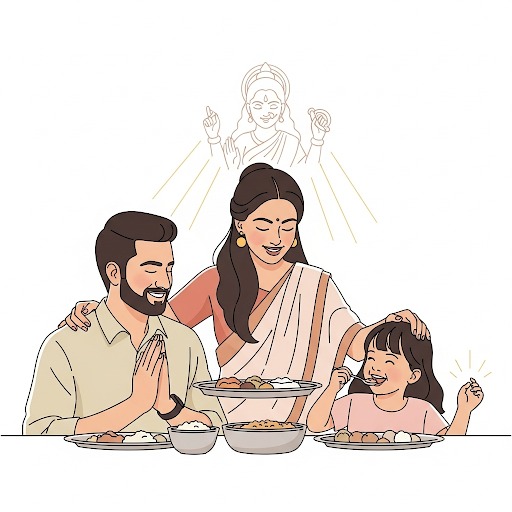
Embodying Annapoorna: The Value of Cooking and Feeding with Love in the Age of Convenience

Embodying Annapoorna: The Value of Cooking and Feeding with Love in the Age of Convenience

Cultural R&D Friends, Families & Community Happy & Simple Living Healthy Cooking Home Remedies Proud Home Maker Psychology Spiritual Not Religious Woman Empowerment

For those who cherish the warmth of home-cooked meals or wish to rediscover their nurturing side, this piece offers a gentle reminder of the deeper value of cooking with love. Whether you are a homemaker, a young woman learning to care for loved ones, or someone seeking meaning in daily routines, you’ll find practical and soulful ways to embody Annapoorna. In an age where convenience often replaces connection, these insights can help transform ordinary meals into acts of love, energy, and nourishment for both the giver and the receiver.

Embodying Annapoorna: The Value of Cooking and Feeding with Love in the Age of Convenience Read More »

Why Men Are Suffering in Silence

Why Men Are Suffering in Silence

Happy & Simple Living Healthy Living Psychology Tacit Knowledge Training, Workshop, Seminars Youth Entrepreneurship Programs

Men today face a silent storm of isolation, depression, and purposelessness—hidden beneath masks of strength, achievement, or anger. Rising rates of suicide, emotional disconnection, and fractured relationships reveal the heavy cost of silence, where suppressed feelings erupt as rage, addictions, or collapse. True strength lies not in denial but in vulnerability, in embracing Jason Wilson’s model of comprehensive manhood that balances warrior and nurturer, protector and peacegiver. Healing begins when men admit their struggles, rest without shame, confront past trauma, and reconnect with themselves and others. Families, workplaces, and communities must share responsibility by creating safe spaces for honesty, compassion, and mentorship. From wounds can come wisdom, and from silence can rise a fuller, authentic masculinity where men rediscover joy, connection, and wholeness.

Why Men Are Suffering in Silence Read More »

Want Love? Be Lovable. Want Respect? Be Respectable.

Want Love? Be Lovable. Want Respect? Be Respectable.

Friends, Families & Community Happy & Simple Living

Many people pour effort into their relationships yet feel unseen, unheard, or unappreciated. If you’ve ever wondered why love feels distant or respect feels lacking, this guide will help you understand the natural exchange that keeps relationships thriving. It’s for women who long to feel cherished, men who want to feel valued, and anyone ready to build deeper, healthier connections. By learning to embody lovability and respectability, you’ll naturally inspire the very love or respect you seek—creating a balanced, fulfilling partnership built on mutual trust and appreciation.

Want Love? Be Lovable. Want Respect? Be Respectable. Read More »

Blueprint for Ethical and Profitable Consulting

Blueprint for Ethical and Profitable Consulting

Entrepreneurship - New Ideas Entrepreneurship - Training Inclusive Business Models Management Lessons

Successful consulting is less about selling and more about engaging — listening deeply, asking the right questions, and co-creating solutions that matter. From the first networking conversation to long-term client partnerships, effective consultants follow a disciplined flow: surfacing needs, uncovering motivations, conducting thorough discovery, and securing commitment through trust and clarity. Execution is anchored in ethics, transparency, and the courage to handle resistance or tough stakeholders with professionalism. True value capture comes not just from solving problems but from documenting impact, building repeatable practices, and nurturing relationships that extend beyond a single project. In the end, the consultants who endure are those who operate as trusted thinking partners, shaping legacies built on integrity, measurable results, and lasting human impact.

Blueprint for Ethical and Profitable Consulting Read More »

How Childhood Trauma Shapes Us

How Childhood Trauma Shapes Us

Ancient Wisdom Happy & Simple Living Parenting Advice

Childhood trauma leaves invisible scars that shape relationships, self-worth, health, and identity, but it does not have to define a life. By confronting toxic family dynamics, understanding long-term consequences, and breaking free from subconscious programming, survivors can reclaim agency and build healthier futures. Healing requires layered approaches—financial independence, emotional boundaries, self-care rituals, therapy, and the harnessing of neuroplasticity—while transformation unfolds when pain is reframed into resilience, compassion, and purposeful action. Beyond individual recovery lies the power to stop intergenerational cycles of dysfunction, strengthen communities, and create a more compassionate society where freedom, not fate, guides human potential.

How Childhood Trauma Shapes Us Read More »

How Presence Unlocks Enlightenment, Healing, and Human Potential

How Presence Unlocks Enlightenment, Healing, and Human Potential

Happy & Simple Living Spiritual Not Religious Spirituality and philosophy Tacit Knowledge

Awakening to the power of the present moment opens the doorway to freedom from compulsive thought, emotional pain, and the illusions of ego. By learning to observe the mind, heal the pain-body through awareness, and anchor into the living presence of the body, one discovers a deeper dimension of peace and clarity that transcends circumstance. Acceptance and surrender reveal true strength, while relationships and daily life become sacred mirrors for conscious growth. Stillness is not emptiness but a fertile state of being that connects us to intuition, creativity, and collective healing. In embracing the Now, life unfolds with greater ease, love, and awakened purpose—reminding us that who we truly are is awareness itself.

How Presence Unlocks Enlightenment, Healing, and Human Potential Read More »

Know Your Consumer : A Guide to Serving Every Type of Audience

Know Your Consumer : A Guide to Serving Every Type of Audience

Common Sense Friends, Families & Community Management Lessons Purchasing Guides and Advices

Creators, curators, and experience designers often struggle to balance familiarity and novelty for their audience. Whether you craft stories, style outfits, design menus, or host events, understanding your consumer’s exposure level is the key to making every interaction resonate. This guide helps you identify different consumer mindsets—from fresh explorers to seasoned enthusiasts to saturated connoisseurs—and adapt your offerings accordingly. By decoding subtle cues, you can create experiences that feel personal, relevant, and memorable, ensuring your work connects deeply, regardless of the audience’s background, expertise, or stage of exploration.

Know Your Consumer : A Guide to Serving Every Type of Audience Read More »

How the Unconscious Shapes Us

How the Unconscious Shapes Us

Entrepreneurship - Training Life Advises Management Lessons Practical Life Hacks and Advices Skills Development and Vocational Training Tacit Knowledge Training, Workshop, Seminars

Our decisions are not as free or rational as we like to believe—neuroscience shows that unconscious processes initiate choices before we become aware of them, while conscious reasoning often acts more as a storyteller than a driver. This article explores the tension between free will and determinism, blending insights from psychology, philosophy, and behavioral science to show that while absolute freedom may be an illusion, our capacity to train responses, refine intuition, and shape habits remains profoundly real. By understanding the dual forces of instinct and reflection—System 1 and System 2—we can learn to decide better, lead wiser, and design systems that honor how the human mind truly works. The ultimate takeaway: who we become is less about abstract free will and more about the conscious practices we cultivate every day.

How the Unconscious Shapes Us Read More »

Why Kindness Provokes Hate

Why Kindness Provokes Hate

Happy & Simple Living Life Advises Practical Life Hacks and Advices

Kindness, when authentic and boundaried, is both a gift and a provocation: it unsettles masks of superiority, exposes stagnation, triggers envy, and disrupts cultural scripts rooted in cynicism and self-interest. Many respond with distrust, projection, or hostility—not because kindness is weak, but because it highlights their own wounds, inertia, or unmet needs. The journey of true compassion requires shadow work, the release of people-pleasing and rescuing impulses, and the cultivation of strength that protects without closing the heart. To remain kind in the face of resistance is not passivity but power—a higher path that liberates both giver and receiver, shaping ecosystems where authentic generosity can thrive.

Why Kindness Provokes Hate Read More »

Art School Is Expensive, Squinting Is Free!

Art School Is Expensive, Squinting Is Free!

Creative Exploration

Whether you’re a fine artist, photographer, designer, or simply someone curious about how visual perception works, learning to “see like an artist” can transform the way you create. Many beginners feel intimidated by complex details, but squinting and other free techniques simplify the visual world into manageable shapes, tones, and colors. By practicing these habits in daily life—during commutes, film-watching, or sketch sessions—you sharpen your ability to recognize form and composition. It’s a zero-cost, flexible, and powerful way to build artistic confidence and clarity.

Art School Is Expensive, Squinting Is Free! Read More »

Non-verbal Communication: Science of Charisma and Human Connection

Non-verbal Communication: Science of Charisma and Human Connection

Amazing Humans Happy & Simple Living Management Lessons Proud Home Maker Tacit Knowledge

Charisma and connection are not accidents but the result of intentional cues—verbal, nonverbal, and behavioral—that shape how others perceive warmth and competence. From posture, gestures, and eye contact to smarter questions and purposeful words, the way we show up can either build trust or quietly undermine it. By becoming more aware of pitfalls like uptalk, fake smiles, or closed-off body language, and replacing them with authentic signals of confidence and empathy, anyone can transform their social presence. Whether in job interviews, public speaking, friendships, or dating, mastery of these cues creates deeper relationships, stronger influence, and lasting impact—all while staying true to one’s authentic self.

Non-verbal Communication: Science of Charisma and Human Connection Read More »

How Intentional Dialogue Transforms Relationships and Leadership

How Intentional Dialogue Transforms Relationships and Leadership

Leadership Management Lessons Self Learning

Mastering conversations is less about eloquence and more about intentionality, empathy, and the discipline of listening deeply. From bridging generational gaps and navigating polarization to avoiding common pitfalls like information overload or passive listening, meaningful dialogue requires conscious effort and practice. When treated as a lifelong discipline, communication becomes a transformative force that enriches marriages, strengthens leadership, and fulfills our deepest human craving for connection. By upgrading everyday exchanges into opportunities for resonance and understanding, we not only build richer relationships but also unlock trust, influence, and lasting impact.

How Intentional Dialogue Transforms Relationships and Leadership Read More »

The Future of AI: Beyond the Hype

The Future of AI: Beyond the Hype

Information Technology Leadership Management Lessons TechForNonTech

Artificial Intelligence is neither a savior nor a destroyer—it is an amplifier of human intent, carrying both immense promise and profound risks. The article traces AI’s evolution from its Cold War roots to today’s generative systems, cutting through myths of omniscience to reveal its real capabilities and limits. It highlights breakthrough trends such as multimodal and agentic AI, alongside advances in quantum and neuromorphic computing, while also confronting the energy, ethical, and governance challenges that define its trajectory. Ultimately, it argues that the defining feature of our future will be human–AI collaboration, shaped by responsible frameworks, global cooperation, and inclusive access. To ensure AI becomes a force for empowerment rather than exclusion, the call is clear: individuals must cultivate literacy, organizations must prioritize ethics and upskilling, policymakers must govern with foresight—and together, we must build an equitable AI future where no one is left behind.

The Future of AI: Beyond the Hype Read More »

Leading with Vision, Vulnerability, and Victory in the Digital Era

Leading with Vision, Vulnerability, and Victory in the Digital Era

Leadership Management Lessons

Digital transformation is no longer a project to be managed but a war to be fought with courage, clarity, and unity of purpose. Executives must evolve from budget allocators to digital warriors, guiding organizations through uncertainty with adaptive strategies, wartime leadership, and human-centered vision. By replacing lagging indicators with outcome-oriented metrics, turning war rooms into academies of learning, and reframing transformation as a continuous campaign, leaders can build organizations that are not only agile and innovative but also sustainable, inclusive, and ethically grounded in the digital age.

Leading with Vision, Vulnerability, and Victory in the Digital Era Read More »

Smart Ways to Understand, Cook and Eat Watery Vegetables

Smart Ways to Understand, Cook and Eat Watery Vegetables

MEDA

Young Indians juggling busy schedules, picky eaters wanting variety, or anyone who struggles to enjoy watery vegetables will find practical hacks here. Watery veggies often feel bland, soggy, or unsatisfying, yet they are light, cooling, hydrating, and packed with nutrients. By learning simple cooking methods, pairing ideas, and Ayurvedic insights, you can turn them into refreshing, filling meals that don’t cause heaviness or lethargy. Whether you crave one-pot solutions, summer-friendly foods, or new ways to use local Indian produce, these tips make veggies both tasty and valuable.

Smart Ways to Understand, Cook and Eat Watery Vegetables Read More »

How Ancient India Mapped the Mind’s Hidden Perceptions

How Ancient India Mapped the Mind’s Hidden Perceptions

Happy & Simple Living Spiritual Not Religious Spirituality and philosophy Tacit Knowledge

Blending ancient Indian wisdom with modern neuroscience, the exploration reveals how the Rishis’ deep understanding of the senses—gross and subtle—anticipated many sensory modalities now recognized by science. From the Bhagavad Gita’s vision of the self mastering the senses, to Patanjali’s pratyahara and Ayurveda’s reliance on inner perception, the journey uncovers a unified view of human perception as both a physical and metaphysical bridge between self and universe. By integrating these insights into meditation, education, health, and conscious living, individuals can cultivate a richer sensory map, deepen self-awareness, and align with the timeless pursuit of harmony between mind, body, and cosmos.

How Ancient India Mapped the Mind’s Hidden Perceptions Read More »

Why Some Communities Flourish : the four types of people and the ‘Bracket Up’ Culture (Part 1)

Friends, Families & Community Growth Hacking Leadership Psychology World Peace

Whether you see yourself as a leader, a go-getter, a steady survivor, or someone seeking a fresh start, the Bracket Up concept offers a framework to help you rise beyond your current limits. It draws on psychology, anthropology, and social dynamics to reveal how communities can be designed so every type of person thrives. You’ll learn how to identify where you fit, understand the forces shaping your potential, and discover practical ways to improve both your own path and your community’s collective future.

Why Some Communities Flourish : the four types of people and the ‘Bracket Up’ Culture (Part 1) Read More »

Think Like Stanford, Act Like a Startup

Think Like Stanford, Act Like a Startup

Entrepreneurship - Training Entrepreneurship Ecosystem Development Management Lessons Youth Entrepreneurship Programs

A powerful synthesis of mental operating systems and structured entrepreneurial frameworks empowers founders to move from inspired ideas to scalable ventures with speed and precision. Drawing on Stanford-caliber models like Design Thinking, Lean Startup, and Customer Development—alongside proven tools such as Moore’s Crossing the Chasm, Sahlman’s Concept of Fit, and Effectuation—it equips innovators to discover real problems, validate solutions, reduce risk, and cross the critical gap from early adopters to mainstream markets. By adopting a mindset of empathy, rapid experimentation, and continuous iteration, entrepreneurs can outpace uncertainty, make smarter decisions, and build ventures that create lasting impact while inspiring a culture of learning and innovation.

Think Like Stanford, Act Like a Startup Read More »

Advisors vs. Consultants

Advisors vs. Consultants

Entrepreneurship - Training Entrepreneurship Ecosystem Development Leadership Youth Entrepreneurship Programs

Business advisors and consultants both aim to enhance business performance, but they operate with distinct approaches and timeframes: advisors focus on long-term strategy, scenario planning, and organizational foresight, acting as trusted partners for leadership, while consultants tackle immediate, well-defined challenges with hands-on solutions and project-based execution. The lines between these roles often blur, as senior consultants adopt advisory-like strategies and advisors may support implementation for strategic projects. Understanding the differences, overlaps, and optimal engagement scenarios enables businesses to make informed decisions, maximize efficiency, and achieve sustainable growth. Career paths in both fields require a mix of education, experience, certifications, networking, and specialized skills, offering opportunities for strategic influence, problem-solving, and long-term impact.

Advisors vs. Consultants Read More »

Corporate Culture Eats Strategy: The Hidden Force That Shapes Organizational Destiny

Corporate Culture Eats Strategy: The Hidden Force That Shapes Organizational Destiny

Entrepreneurship - New Ideas Entrepreneurship - Training Leadership Youth Entrepreneurship Programs

A thriving company culture is the backbone of sustained business success, shaping how strategies are executed, employees engage, and organizations adapt to change. From defining non-negotiable values and embedding them through leadership behavior, hiring practices, and recognition systems, to aligning culture with strategic goals, the journey demands intentional design, transparency, and continuous evaluation. By overcoming barriers such as resistance, leadership inconsistency, and lack of measurement, organizations can create environments that inspire innovation, foster psychological safety, and drive long-term performance. When culture and strategy work in harmony, employees become brand advocates, unlocking both human potential and competitive advantage.

Corporate Culture Eats Strategy: The Hidden Force That Shapes Organizational Destiny Read More »

New Mandate for IT Leaders in the Age of Agility

New Mandate for IT Leaders in the Age of Agility

Entrepreneurship - New Ideas Entrepreneurship - Training Leadership

IT’s role is transforming from a back-office cost center to a strategic driver of business value, innovation, and customer experience. By reframing its narrative, embracing product thinking, fostering an agile culture, and earning trust across the enterprise, IT can position itself as a true partner in value creation. Modern CIOs must master the art of translation between technology and business, shift governance from rigid control to trust-based flow, and lead with courage, empathy, and strategic vision. The path forward demands re-educating the C-suite, aligning teams on shared goals, and demonstrating agility at scale—proving that the seat at the table rightfully belongs to IT because it built the very foundation for the future.

New Mandate for IT Leaders in the Age of Agility Read More »

The Unspoken Effects of Sarcasm on Our Emotions Over Time

The Unspoken Effects of Sarcasm on Our Emotions Over Time

Adults with Autism Childern's Empowerment Friends, Families & Community Happy & Simple Living Psychology View Points

People who are simple and live simpler lifestyles, or process the world more literally—such as neurodivergent individuals, children, and those with gentle temperaments—may find value in exploring the subtle, long-term effects of sarcasm on the subconscious. In environments where wit is prized, sarcasm can create emotional confusion, stress, or even erode trust. By understanding how sarcasm impacts emotional patterns, readers can set healthier boundaries, communicate more authentically, and protect their emotional well-being while still enjoying humor that uplifts rather than unsettles.

The Unspoken Effects of Sarcasm on Our Emotions Over Time Read More »

From Founder CEO to Executive CEO: Mastering CEO Transitions

From Founder CEO to Executive CEO: Mastering CEO Transitions

Entrepreneurship - New Ideas Entrepreneurship - Training MEDA Youth Entrepreneurship Programs

Founder–CEO transitions can make or break a company’s long-term success, yet boards and investors often treat them as crisis responses rather than strategic inflection points. By understanding the nuanced life cycle of leadership—from founder-led passion to professionalized execution—organizations can choose from multiple transition pathways, including the underutilized Build–Operate–Transfer (BOT) model. BOT allows companies to preserve founder vision while embedding operational discipline, ensuring smoother cultural continuity, skill transfer, and reduced stakeholder resistance. When planned early and executed with clarity, such structured leadership handovers safeguard both growth momentum and legacy.

From Founder CEO to Executive CEO: Mastering CEO Transitions Read More »

Your Personality Is Your Personal Reality

Your Personality Is Your Personal Reality

Management Lessons Self Development Tacit Knowledge

Beliefs are not just abstract ideas—they are the architects of identity, behavior, health, and reality itself. From childhood conditioning to daily thought patterns, what we believe about ourselves and the world sets in motion self-fulfilling prophecies, alters our biology, and shapes our relationships. By understanding the brain’s predictive nature, embracing a growth mindset, and deliberately designing new identities through aligned actions, it becomes possible to transform personality at its roots. Yet, true transformation also demands ethical awareness—acknowledging systemic realities and practicing compassion for self and others. Inner evolution becomes most powerful when it fuels outer change, rippling into families, communities, and collective healing.

Your Personality Is Your Personal Reality Read More »

The Future of Education Isn’t Artificial—It’s Ethical, Inclusive, and Awake

The Future of Education Isn’t Artificial—It’s Ethical, Inclusive, and Awake

Alternate Education Higher Education Self Learning

As artificial intelligence reshapes every facet of society, education stands at a pivotal crossroads—facing both unprecedented promise and profound ethical dilemmas. AI offers the potential to personalize learning, reduce administrative burdens, empower teachers, and democratize access to knowledge. Yet, without clear ethical frameworks, inclusive design, and systemic reforms, it risks amplifying existing inequalities and dehumanizing the learning experience. The future of education demands a radical rethinking of roles, curricula, infrastructure, and values—one where teachers become compassionate guides, students grow into critical thinkers, and AI serves as a tool for awakening, not replacement. Only by aligning technological advancement with human purpose can we create a just, inclusive, and enlightened learning ecosystem for all.

The Future of Education Isn’t Artificial—It’s Ethical, Inclusive, and Awake Read More »

Scroll to Top