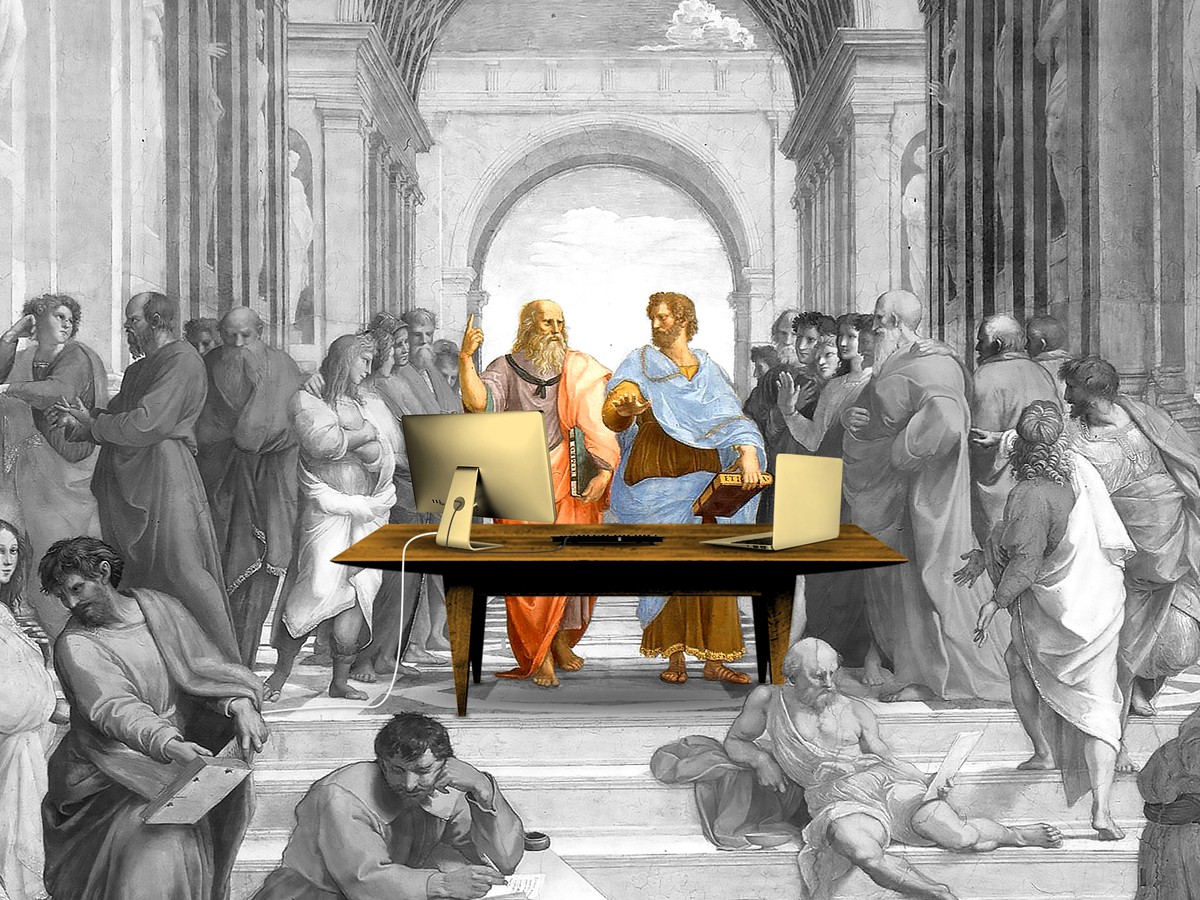

Across centuries, humanity has mistaken power for wisdom, mistaking the loud for the capable and the compliant for the virtuous. Aristotle’s timeless insights expose the cruel paradox that mediocrity, not brilliance, often governs the world—not because excellence is rare, but because systems are designed to resist it. From politics to corporations, societies reward compatibility, rhetoric, and obedience over depth, courage, and originality. The result is a world where visionaries are exiled and progress is slowed by comfort masquerading as stability. True leadership demands reimagining education, reforming institutions, and awakening citizens to their shared moral responsibility—to choose, nurture, and defend excellence wherever it dares to emerge.
ಶತಮಾನಗಳ ಕಾಲ ಮಾನವಕುಲವು ಶಕ್ತಿಯನ್ನು ಜ್ಞಾನವೆಂದು ತಪ್ಪಾಗಿ ಅರ್ಥಮಾಡಿಕೊಂಡಿದೆ — ಶಬ್ದಮಾಡುವವರನ್ನು ಸಾಮರ್ಥ್ಯವಂತರೆಂದು, ವಿಧೇಯರನ್ನೇ ಧರ್ಮಾತ್ಮರೆಂದು ಭಾವಿಸಿದೆ. ಅರಿಸ್ಟಾಟಲ್ ಅವರ ಶಾಶ್ವತ ಬುದ್ಧಿವಾದವು ಒಂದು ಕಟುವಾದ ಸತ್ಯವನ್ನು ಅನಾವರಣಗೊಳಿಸುತ್ತದೆ — ಅಸಾಧಾರಣತೆಗಿಂತ ಸಾಮಾನ್ಯತೆ (ಮಧ್ಯಮತ್ವ) ಯೇ ಪ್ರಪಂಚವನ್ನು ಆಡಿಸುತ್ತದೆ; ಅದೂ ಅಸಾಧಾರಣತೆ ವಿರಳವಾದುದರಿಂದಲ್ಲ, ಆದರೆ ವ್ಯವಸ್ಥೆಗಳು ಅದನ್ನು ತಿರಸ್ಕರಿಸಲು ನಿರ್ಮಿಸಲ್ಪಟ್ಟಿರುವುದರಿಂದ. ರಾಜಕೀಯದಿಂದ ಹಿಡಿದು ನಿಗಮಗಳವರೆಗೂ, ಸಮಾಜಗಳು ಆಳ, ಧೈರ್ಯ ಮತ್ತು ವೈಶಿಷ್ಟ್ಯಗಳಿಗಿಂತ ಅನುಗುಣತೆ, ವಾಕ್ಚಾತುರ್ಯ ಮತ್ತು ವಿಧೇಯತೆಯನ್ನು ಹೆಚ್ಚು ಗೌರವಿಸುತ್ತವೆ. ಪರಿಣಾಮವಾಗಿ, ದೃಷ್ಟಿವಂತರನ್ನು ಹೊರಗಡೆ ತಳ್ಳಿ, ಪ್ರಗತಿಯನ್ನು “ಸ್ಥಿರತೆ” ಎಂಬ ನೆಪದಲ್ಲಿ ನಿಧಾನಗೊಳಿಸಲಾಗುತ್ತದೆ. ನಿಜವಾದ ನಾಯಕತ್ವವೆಂದರೆ ಶಿಕ್ಷಣವನ್ನು ಪುನರ್ಕಲ್ಪನೆ ಮಾಡುವುದು, ಸಂಸ್ಥೆಗಳನ್ನು ಸುಧಾರಿಸುವುದು, ಮತ್ತು ನಾಗರಿಕರಲ್ಲಿ ನೈತಿಕ ಹೊಣೆಗಾರಿಕೆಯ ಬುದ್ಧಿಯನ್ನು ಎಬ್ಬಿಸುವುದು — ಅಸಾಧಾರಣತೆ ಎಲ್ಲೆಲ್ಲಿ ಕಾಣಿಸಿಕೊಂಡರೂ ಅದನ್ನು ಆರಿಸಿ, ಬೆಳೆಸಿ, ಮತ್ತು ರಕ್ಷಿಸುವ ಧೈರ್ಯವನ್ನು ಹೊಂದುವುದು.

Power and Leadership in Aristotle’s Philosophy: The Pursuit of Excellence vs. the Reality of Mediocrity
Intended Audience and Purpose
The paradox of leadership—why the reins of power so often rest in the hands of the mediocre while those of excellence remain sidelined—demands careful exploration. This article is written for thinkers, leaders, educators, policymakers, and students of philosophy who wish to grapple with one of the most persistent and unsettling truths of human governance: that brilliance and virtue rarely guarantee authority, while mediocrity, when well-positioned, flourishes within systems of power.
The audience of thinkers will find here an invitation to stretch Aristotle’s framework beyond abstraction and confront its uneasy relevance to the political, corporate, and social machinery of the present. Leaders are challenged to examine whether their ascent is rooted in excellence or in system-compatibility, and to reflect on the ethical responsibilities that accompany their position. Educators are encouraged to rethink how societies cultivate (or suppress) genuine excellence in future citizens. Policymakers are urged to consider how structures of governance themselves perpetuate mediocrity or can be reshaped to reward courage, wisdom, and virtue. And for students of philosophy, this essay aims to bridge the gap between the classical texts of Aristotle and the contemporary struggles of leadership, politics, and organizational life.
The purpose of this work is twofold:
- To dissect Aristotle’s timeless ideas on power, excellence, and politics—especially his insistence that leadership must serve the good life of the community rather than the private ambitions of the ruler.
- To expose the reality that mediocrity, not excellence, often dominates leadership because systems reward stability, compliance, and appearances over wisdom, courage, and innovation.
By weaving Aristotle’s insights with historical echoes and modern realities, this article intends to provoke readers into rethinking the structures that determine who rises to the top. It is not merely an academic exercise but a call to re-examine the machinery of power and to question whether our collective tolerance of mediocrity is a failure of leaders, followers, or the very frameworks that govern society.

Introduction: The Eternal Struggle Between Power and Excellence
- Opening Provocation
History brims with irony: the mediocre often sit on thrones while the brilliant wander in exile, poverty, or silence. Why is it that leaders who lack vision and courage rise so easily, while minds capable of transforming society remain on the margins? From emperors who crushed reformers, to corporate executives who suppress innovation in favor of quarterly profits, the pattern is too consistent to be dismissed as chance. The triumph of mediocrity over excellence is not an occasional tragedy—it is an enduring feature of human power. - Aristotle’s Relevance
More than two millennia ago, Aristotle wrestled with this paradox. In Politics, he defined the polis not as a mere arrangement of power but as the structure through which humanity strives toward the “good life.” In Nicomachean Ethics, he emphasized virtue, moderation, and wisdom as the compass of right leadership. Yet even as he sketched the ideal of the philosopher-statesman, Aristotle recognized the darker truth: power often gravitates not toward the excellent but toward those who can manipulate systems, secure loyalty, and maintain appearances. His framework, at once aspirational and sobering, continues to explain how power is won, held, and justified in every age. - Thesis
This article argues that power rewards compatibility with systems, not excellence of character or intellect. Leadership is rarely the triumph of virtue; it is the survival of the adaptable. Institutions, whether governments, corporations, or communities, often prize stability and conformity above wisdom and innovation. Mediocrity rises because it fits neatly into these structures, while excellence, being disruptive, threatens their equilibrium. To understand why our world repeatedly elevates the ordinary and sidelines the extraordinary, we must turn to Aristotle—not as a relic of ancient philosophy, but as a mirror reflecting the mechanisms of power in our own times.
![7] Theories of Power - Politics for India](https://politicsforindia.com/wp-content/uploads/2025/06/Concept-of-Power-in-Political-Science-PSIR.png)
Aristotle’s Conception of Power and Politics
- The Polis and Its Function: Politics as the “Master Science”
For Aristotle, politics was no ordinary craft; it was the “master science” upon which all others depended. The polis was not merely a collection of individuals living side by side but a purposeful community aimed at human flourishing (eudaimonia). Every other discipline—medicine, economics, rhetoric, even warfare—was subordinate to politics because only politics determined the framework in which human excellence could be realized. To Aristotle, the political realm was the ultimate arena where philosophy became action and where private virtue extended into public life. - Power as a Means, Not an End: Ordered Toward the Good Life
Unlike the sophists of his time, who often treated power as an end in itself, Aristotle insisted that power must be instrumental, never ultimate. Authority was justified only if it was directed toward the common good—the cultivation of justice, security, and virtue within the polis. Power, then, was not a prize to be seized but a responsibility to be exercised in service of the collective good life. In principle, rulers were custodians, not owners, of authority. - Virtue Ethics: Leadership Ideally Rooted in Wisdom, Moderation, and Justice
Aristotle’s ethical framework wove seamlessly into his political theory. A good leader was, by necessity, a virtuous person. Leadership demanded phronesis (practical wisdom), sophrosyne (moderation), and above all, dikaiosyne (justice). The ideal ruler embodied balance—avoiding both tyranny and weakness, acting not for personal gain but for the flourishing of all citizens. In this vision, politics was an extension of ethics, and leaders were judged less by their ability to consolidate power than by their capacity to cultivate virtue in the community. - The Shadow: Why Aristotle’s Ideals Rarely Materialize in Practice
Yet Aristotle himself was no idealist detached from reality. He knew that such virtue-rooted leadership was rare, if not nearly impossible. Power, in practice, attracts ambition, not selflessness; rhetoric often triumphs over reason; and the masses, swayed by appearances, elevate those who flatter rather than those who instruct. Even Aristotle’s own political experiences in Macedon and Athens revealed the fragility of virtue in the brutal marketplace of power. His philosophy, while providing a blueprint for excellence, tacitly acknowledged its shadow: systems bend more easily to mediocrity than to greatness, because mediocrity sustains the familiar order, while excellence unsettles it.

III. The Reality: Why Mediocrity Often Rises to Power
- Compatibility Over Brilliance: Systems Reward Obedience, Not Originality
Excellence, by its very nature, is disruptive. It questions the status quo, challenges entrenched practices, and often threatens the comfort of those in authority. Systems—whether political states, corporations, or social institutions—rarely reward disruption. Instead, they prefer leaders who can fit in, comply, and perpetuate existing norms. The obedient functionary who never challenges the framework becomes far more valuable to the system than the visionary who seeks to reform it. In this way, mediocrity thrives—not because it inspires, but because it conforms. - The Politics of Appearances: Charm, Rhetoric, and Alliances Outweigh Substance
From Aristotle’s Athens to today’s social-media-driven democracies, leadership is as much about perception as reality. Charisma, eloquence, and the ability to forge alliances often eclipse wisdom or moral strength. A mediocre leader who appears relatable, speaks persuasively, and gathers support through flattery will consistently outmaneuver the thinker whose depth is harder to digest. In the marketplace of attention, style dominates substance, and leadership becomes a performance, not a practice of virtue. - Institutional Inertia: Organizations and States Prefer Stability Over Disruption
Institutions are like massive ships: difficult to steer and resistant to sudden changes in course. Excellence, which often calls for bold reforms or uncomfortable truths, is perceived as a risk. Mediocrity, by contrast, promises continuity, predictability, and control. For bureaucracies, stability is survival. Thus, leaders who preserve order—even at the cost of progress—are elevated, while those who seek transformation are sidelined. The machine favors the operator who keeps it running, not the engineer who wants to redesign it. - The Tragedy of Excellence: Great Thinkers Become Outsiders, Critics, or Martyrs
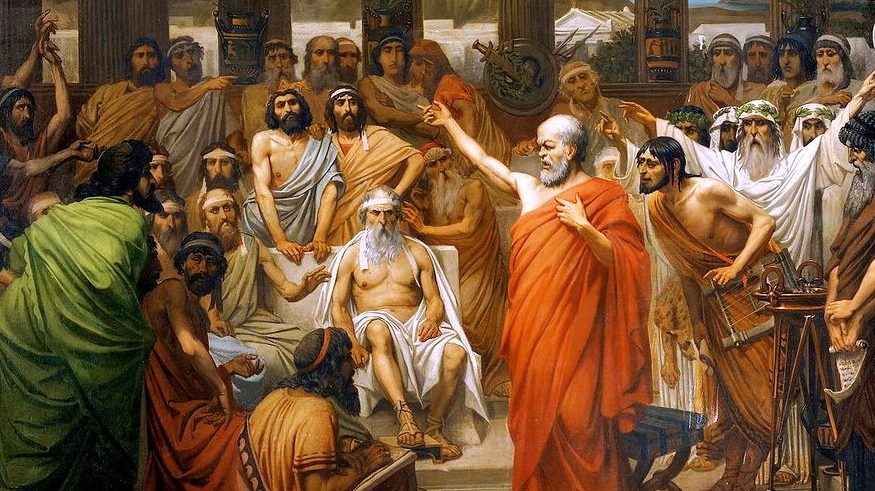
History’s gallery of neglected brilliance is vast: Socrates condemned for corrupting the youth, Galileo silenced by the Church, innovators dismissed until their ideas became obvious. The tragedy is not that excellence lacks value, but that it rarely aligns with the immediate interests of power. Great thinkers often become outsiders who critique from the margins, exiles who refuse to compromise, or martyrs who pay the price of vision. Their legacy may endure in philosophy, science, or culture, but seldom in the structures of power during their own lifetime.
The irony is sharp: societies proclaim their admiration for genius, but when forced to choose leaders, they consistently select the safe and the mediocre. Power, in its raw mechanics, gravitates toward those who preserve, not those who transcend.
Historical Echoes of Aristotle’s Paradox
- Classical Examples: Socrates, Plato’s Philosopher-King Dream, Alexander’s Paradoxical Legacy
The Greek world itself offers striking demonstrations of the tension between power and excellence. Socrates—one of history’s greatest truth-seekers—was condemned to death not because he lacked wisdom but because his relentless questioning unsettled Athenian comfort. Plato, disillusioned by such events, envisioned the philosopher-king, a ruler who embodied wisdom and virtue. Yet the dream remained precisely that—a dream—because real-world power rarely yielded to philosophical depth. Aristotle’s own pupil, Alexander the Great, exemplifies the paradox: a man of extraordinary ambition and ability who created an empire, yet whose methods leaned more toward conquest and dominance than toward Aristotle’s vision of cultivating virtue within a just polis. Excellence, when coupled with power, often mutated into excess. - Medieval and Modern Politics: The Survival of Compliant Rulers Over Reformers
The medieval period repeated the pattern with ruthless consistency. Reformers who dared to confront entrenched authority—be it religious or political—were silenced or destroyed, while compliant rulers who maintained the status quo thrived. In modern politics, the same story unfolds in subtler ways: leaders who challenge entrenched interests rarely survive long in office, while those who master the art of compromise, flattery, and institutional maintenance enjoy longevity. From monarchies to democracies, power tends to favor the survivor, not the visionary. - Corporate and Organizational Parallels: Why Bureaucracies Elevate “Safe” Leaders
The same paradox thrives outside politics. In corporations, bureaucracies reward leaders who preserve systems rather than transform them. The visionary employee who questions outdated strategies often becomes marginalized, while the “safe” manager, who produces consistent but uninspired results, climbs steadily upward. Organizations, like states, instinctively protect themselves from disruption. Excellence is often branded as “nonconformity,” while mediocrity cloaked in reliability is praised as “leadership potential.” The boardroom mirrors the polis: comfort with mediocrity ensures survival, while brilliance provokes unease. - Global Lens: Mediocrity as a Universal, Cross-Cultural Pattern
This paradox is not bound to one culture or era. Across Asia, Europe, Africa, and the Americas, societies have consistently chosen leaders who represent continuity rather than excellence. In tribal councils, monarchies, parliaments, and boardrooms alike, mediocrity adapts better than brilliance to the mechanics of power. The forms of leadership differ, but the pattern remains: systems elevate those who fit, not those who transcend. Aristotle’s insight—that politics should order life toward excellence but often settles for compromise—finds confirmation across civilizations.
History thus testifies to an uncomfortable truth: mediocrity is not an accident of leadership but a recurring structural outcome. The gap between Aristotle’s philosophical ideal and the historical reality is not occasional failure—it is the rule.

Power and Leadership in Today’s World
- Democracies: Popularity Trumps Competence
Modern democracies, celebrated for empowering citizens, often amplify Aristotle’s paradox instead of resolving it. In theory, elections should elevate leaders of wisdom and virtue; in practice, they frequently reward those who can master the theater of popularity. Campaign slogans, soundbites, and photo opportunities matter more than vision or competence. Voters, overwhelmed by complexity, gravitate toward candidates who appear relatable or entertaining, even if their ability to govern effectively is questionable. The ballot box, meant to empower the collective pursuit of the good life, too often functions as a stage for mediocrity disguised as charisma. - Corporations: Middle Management Thrives, Innovators Sidelined
The corporate world mirrors the polis in structure and failure. Bureaucratic ladders reward those who play safe, conform to reporting rituals, and avoid rocking the boat. Middle management thrives by maintaining order, enforcing compliance, and presenting predictable results to shareholders. Meanwhile, genuine innovators—those who question the model, challenge inefficiencies, or push radical ideas—are often perceived as threats rather than assets. They are sidelined, labeled “difficult,” or quietly forced out. As a result, organizations reward the custodians of mediocrity while undercutting the very excellence that could sustain their future. - Social Media: Influence Measured by Attention, Not Depth
The digital age has further tilted the scales. Platforms that promised democratized voices have instead commodified attention. Influence today is measured not by wisdom or truth but by metrics: likes, shares, followers, and views. In this ecosystem, the loud eclipse the wise, and the viral outrun the virtuous. A mediocre idea, packaged with flair and repeated endlessly, can achieve massive traction, while profound insights languish in obscurity. Social media thus becomes the most visible stage of Aristotle’s paradox: mediocrity thrives because it aligns perfectly with algorithms designed for engagement, not enlightenment. - Emerging Paradox: Technology Accelerates the Gap Between Thinkers and Doers
Technology, while enabling unprecedented innovation, has widened the chasm between thinkers and doers. Visionaries may foresee transformations—AI, climate change, ethical dilemmas of biotechnology—but decision-making power often lies with individuals or institutions unequipped to understand the complexities. The doers in power prioritize immediate outcomes, quarterly profits, or electoral victories, while thinkers in the margins wrestle with deeper implications. The result is a growing misalignment: those best equipped to guide humanity through technological upheaval often lack authority, while those with authority lack foresight. Aristotle’s warning that politics should serve the good life echoes louder than ever, even as power drifts further from excellence.

The Human Cost of Mediocrity in Power
- Missed Opportunities for Progress
The most immediate cost of mediocrity in leadership is opportunity lost. When those in power lack imagination or courage, breakthroughs that could transform societies are delayed—or never realized. Policies remain timid, organizations stagnate, and innovations die in committee rooms. History is littered with “what-ifs”: ideas dismissed too early, reforms buried under bureaucracy, and discoveries ignored until others claimed them decades later. Mediocrity’s grip ensures that societies move forward at the pace of the cautious, not the pace of the capable. - Systems of Stagnation and Groupthink
Mediocrity not only slows progress but actively entrenches stagnation. Leaders who prioritize conformity create environments where dissent is stifled, risk-taking punished, and groupthink elevated as consensus. Institutions then become self-replicating machines of safety: they produce more of the same kind of leaders who will preserve the same kind of structures. This circular logic suffocates creativity, turning the very systems designed to serve people into prisons of predictability. Aristotle’s vision of politics as the path to the good life collapses when the polis is run not by the virtuous but by the timid. - The Alienation of Excellence: Why Society Sidelines Visionaries
Excellence, in this climate, becomes not a gift but a burden. Visionaries—whether scientists, philosophers, or reformers—find themselves increasingly alienated. Their insights are treated as threats, their passion as arrogance, and their integrity as impracticality. Many retreat into isolation, resign themselves to irrelevance, or are pushed to the margins where their voices echo unheard. The result is a bitter paradox: societies that desperately need visionaries systematically alienate them, ensuring that progress, when it comes, arrives slowly and painfully. - Moral Erosion: Mediocrity Often Protects Itself at the Expense of Justice
Perhaps the gravest cost is moral. Mediocrity is not neutral; it is defensive. Leaders who lack depth and courage often seek to preserve their position by suppressing challenges, rewarding loyalty over competence, and protecting the system at the expense of justice. Corruption flourishes in such environments, not always in the form of grand scandals but in quiet compromises, overlooked inequities, and systemic neglect. In this way, mediocrity doesn’t just stall progress—it corrodes the moral fabric of institutions. What should serve the common good devolves into a machinery of self-preservation, a betrayal of the very ideals Aristotle believed politics was meant to uphold.
The human cost, then, is immense: wasted potential, suffocated creativity, alienated visionaries, and institutions hollowed out by fear and compromise. A society run by mediocrity survives, but it rarely thrives.

VII. Breaking the Cycle: Can Aristotle’s Vision Be Revived?
- Revaluing Excellence: Education Systems as Incubators of Virtue and Courage
If mediocrity thrives anywhere, it is in education systems that reward compliance over courage, memorization over wisdom, and safety over bold inquiry. To revive Aristotle’s vision, we must redesign education as an incubator of character—not just skills. Excellence is not born in comfort; it grows when students are trained to wrestle with difficult questions, confront ambiguity, and cultivate courage alongside knowledge. Schools and universities must teach not only “how to work” but “how to live”: to deliberate, to question, and to take responsibility for the common good. Without this, we will continue to produce technically competent professionals who lack the moral compass to lead. - Structural Reforms: Building Checks Against Mediocrity’s Dominance
Mediocrity endures not just because of weak leaders but because systems enable it. Structures of governance and organizations must include deliberate safeguards against stagnation. This could mean term limits to prevent entrenched mediocrity, transparent evaluation systems that reward results over rhetoric, or leadership pipelines that prioritize proven competence and integrity. In corporations, boards must challenge conformity; in politics, institutions must enforce accountability that transcends partisan convenience. Structural reforms will not guarantee greatness, but they can make it harder for mediocrity to entrench itself as the status quo. - Cultivating Philosopher-Leaders: From Ancient Ideals to Modern Training
Aristotle’s philosopher-king may sound unattainable, but the core idea—leaders who combine wisdom, virtue, and practical judgment—remains essential. Modern equivalents could be cultivated through intentional leadership programs that integrate philosophy, ethics, and real-world problem-solving. Imagine CEOs trained not only in finance but also in moral reasoning, or politicians required to study history, ethics, and logic as rigorously as campaign strategy. This blend of intellectual humility and practical competence is what Aristotle envisioned as phronesis—practical wisdom. Without it, power remains in the hands of the merely ambitious, not the truly capable. - The Role of Citizens: Accountability and Discernment in Choosing Leaders
Ultimately, no system survives without the vigilance of its citizens. Aristotle saw politics as a shared responsibility, and modern democracy confirms his intuition: citizens are both the beneficiaries and the gatekeepers of leadership. Yet mediocrity in power often reflects mediocrity in public expectations. If people choose leaders based on charisma, slogans, or tribal loyalty, they enable the very mediocrity they later lament. To break the cycle, citizens must cultivate discernment—questioning easy promises, demanding accountability, and rewarding integrity even when it comes without spectacle. Democracy, after all, is not only about rights but also about the responsibility to choose wisely.

VIII. Conclusion: Reconceptualizing Leadership and Responsibility
- The Unsettling Truth: Power Rewards Compatibility, Not Excellence
The pattern is consistent across centuries—those who adapt to the demands of systems, rather than those who challenge or elevate them, are often the ones who ascend to power. Aristotle’s framework reveals a sobering reality: excellence is admired but seldom rewarded by the structures that distribute authority. - History’s Endless Repetition: Mediocrity Dominates Because Systems Are Built That Way
From monarchies and empires to democracies and corporations, institutions are designed to favor predictability, stability, and compliance. That very design makes mediocrity not an accident but an outcome—a feature, not a flaw. The philosopher, reformer, or visionary is too often cast aside as disruptive, impractical, or dangerous. - The Real Question: Who Writes the Script—the Masses, the Elites, or the Philosophers?
If power is theater, then leadership is a performance. But who directs the play? The elites who guard privilege, the masses swayed by spectacle, or the philosophers who dare to ask whether the script itself needs rewriting? Aristotle challenges us to see leadership not as destiny but as design—an arena where responsibility lies not just with rulers but with citizens who enable, tolerate, or resist them. - Call to Reflection: If We Don’t Redesign the Structures of Power, We Are Doomed to Recycle Mediocrity
The paradox of leadership and mediocrity is not a historical curiosity but a living dilemma. Unless we consciously reshape our education, institutions, and expectations, mediocrity will continue its quiet reign. The future demands courage: to build structures that reward excellence, protect integrity, and demand wisdom—not just conformity.
Participate and Donate to MEDA Foundation
Support initiatives that nurture authentic leadership, critical thinking, and self-sustaining ecosystems. Help us create environments where excellence and compassion—not mediocrity—guide communities. Your participation can turn ideals into lived realities.
Book References
- Aristotle – Politics
- Aristotle – Nicomachean Ethics
- Hannah Arendt – The Human Condition
- James MacGregor Burns – Leadership
- Nassim Nicholas Taleb – The Bed of Procrustes
- Yuval Noah Harari – 21 Lessons for the 21st Century