

Beliefs are not just abstract ideas—they are the architects of identity, behavior, health, and reality itself. From childhood conditioning to daily thought patterns, what we believe about ourselves and the world sets in motion self-fulfilling prophecies, alters our biology, and shapes our relationships. By understanding the brain’s predictive nature, embracing a growth mindset, and deliberately designing new identities through aligned actions, it becomes possible to transform personality at its roots. Yet, true transformation also demands ethical awareness—acknowledging systemic realities and practicing compassion for self and others. Inner evolution becomes most powerful when it fuels outer change, rippling into families, communities, and collective healing.

How Thoughts, Beliefs, and Behaviors Actively Construct the World You Experience
🎯 Intended Audience and Purpose
Audience
This article is crafted for a wide yet discerning audience:
- Thoughtful adults navigating inner change or outer complexity
- Educators and mental health professionals interested in linking cognition, behavior, and belief systems
- Personal growth seekers and behavior change practitioners aiming to understand identity at its root
- Social entrepreneurs, neurodiverse allies, and change agents working to create inclusive systems rooted in empathy, resilience, and equity
Whether you are someone healing from inner conflict, leading systemic change, or mentoring others on their journey, this article offers a multidimensional lens to rethink the very architecture of who you are and how that shapes the world you live in.
Purpose
The core premise of this article is both empowering and humbling:
Your personality—your patterns of thought, belief, emotion, and behavior—not only determines how you feel and act, but literally constructs your lived reality.
At first glance, this may sound like a catchy motivational slogan. But when approached with intellectual depth and ethical nuance, this idea unlocks a transformative question:
If your current reality reflects who you’ve been, what new reality might emerge from who you are becoming?
Thus, this article seeks to:
✅ 1. Critically Explore the Idea
We will dissect and analyze the concept that our personality shapes our perceived reality—not through wishful thinking, but through predictive brain models, cognitive frameworks, interpersonal dynamics, and behavioral feedback loops.
This is not a fluffy reinterpretation of “The Secret”. Nor is it a denial of objective reality, suffering, or injustice. Instead, it is an exploration grounded in cognitive neuroscience, psychology, philosophy, and personal agency.
✅ 2. Bridge Self-Development With Brain Science and Social Ethics
Personal growth without scientific grounding becomes superstition.
Science without ethical depth becomes reductionism.
We aim to:
- Bring together neuroscientific insights (like predictive processing and neuroplasticity),
- Psychological frameworks (like self-fulfilling prophecy, mindset theory, and trauma-informed cognition),
- And ethical responsibility—acknowledging how personality interacts with social systems, trauma, and cultural context.
✅ 3. Empower Intentional and Compassionate Identity Transformation
Changing one’s personality isn’t about becoming someone else—it’s about becoming more aligned, more whole, and more choiceful in who you are being.
The goal is not perfection, but conscious authorship:
- To identify patterns that no longer serve you
- To interrupt narratives that were inherited but not chosen
- To act in ways that reflect your deeper values and longings
This transformation requires compassion, especially in honoring parts of the self formed as survival strategies in challenging environments. It also demands accountability, as beliefs don’t exist in a vacuum—they shape the lives of others, too.
✅ 4. Provide Practical, Research-Backed Tools for Change
Insight is not enough.
To truly reshape personal reality, we need:
- Clear mental models
- Daily practices and rituals
- And behavioral tools to embody new ways of thinking, feeling, and relating
You’ll find:
- Techniques grounded in cognitive behavioral therapy,
- Strategies drawn from neuroscience and habit formation,
- And simple, powerful questions that invite ongoing inquiry and personal mastery.
🌍 A Note on Balance:
This article is not here to preach “thoughts become things” in the abstract.
Instead, it will explore the complex dance between mind and world—where beliefs matter, but where compassion for trauma, respect for context, and commitment to reality are just as important as positivity or intention.

🧠 I. Introduction: You Don’t Just Perceive Reality—You Create It
“The world is not what it is. The world is what you perceive it to be—and how you respond to that perception.”
At first glance, reality seems like something solid and external, a set of facts we all more or less agree on. But dig deeper, and you’ll find a subtler truth: we do not passively witness reality—we actively construct it. Every moment is interpreted, colored, and responded to through the lens of our personality.
🌐 Reality as a Filtered Experience
The average person processes over 11 million bits of sensory information per second, but can consciously focus on only about 50 bits.
What gets through this bottleneck is determined by:
- What we expect
- What we value
- What we fear
- What we’ve experienced before
That filtering system is your personality in action.
You and someone else can stand in the same situation—facing the same challenge, hearing the same news, walking through the same street—and walk away with entirely different interpretations of what just happened. Why? Because your inner landscape—your beliefs, emotions, and assumptions—shaped your encounter with the outer world.
🧩 The Core Premise: “Your Personality Is Your Personal Reality”
Coined by Dr. Joe Dispenza, this statement is more than poetic—it is neurologically and behaviorally accurate.
- If you habitually think anxious thoughts,
- Feel like the world is unsafe,
- Act in avoidant or defensive ways…
…you will inevitably create and reinforce a reality that feels hostile, limited, and unsafe.
Conversely, if your personality is shaped by curiosity, compassion, and self-trust, you are more likely to create a reality rich in connection, opportunity, and meaning.
Thus, our inner configuration determines the outer experience—not in a magical or delusional way, but through patterns of attention, emotion, interaction, and action.
🧠 Key Definitions for Clarity
Let’s sharpen our vocabulary to avoid misinterpretation:
- Personality
The consistent set of thoughts, emotions, beliefs, behaviors, and automatic responses that shape how you interpret and interact with the world.
It’s not just your traits—it’s your internal default operating system.
- Personal Reality
The subjective experience of the world that results from how you perceive, think about, and behave within it.
It’s not “what is,” but “how it feels” to you—shaped by your filters and responses.
⚖️ Personal Reality ≠ Objective Reality
This is a crucial and ethical distinction.
- Objective reality: A shared world of facts, events, and physical phenomena that exist regardless of belief.
- Personal reality: The psychological interpretation of that world, which varies from person to person.
While your perception feels real, it may not be accurate, complete, or shared. And this can be dangerous when:
- We use beliefs to deny harm or injustice (“If you just think positively, everything will be fine.”)
- We judge others for their suffering (“You must’ve created this reality with your mindset.”)
- We detach from accountability (“It’s just how I see it” used as an excuse for ignorance or bias)
Confusing perception with truth distorts both personal growth and social responsibility.
🔥 Why It Matters Now More Than Ever
In today’s world, we are bombarded by:
- Unfiltered data
- Information overload
- Polarizing narratives
- Ongoing collective trauma
- Emotional disconnection
Without strong inner awareness, we get hijacked by noise. We default to fear, reactivity, and judgment—not because we are bad or weak, but because we are unconscious of the lens through which we’re seeing.
In this environment:
- Self-awareness becomes a survival skill
- Identity becomes a tool for agency
- Personality becomes a portal to possibility
If we want peace, we must take ownership of our perception.
If we want power, we must learn to rewire our personality.
If we want purpose, we must create a reality aligned with our highest values—not just our inherited beliefs.

II. The Personality–Perception Loop: Your Inner Architecture of Meaning
“We do not see things as they are; we see them as we are.” — Anaïs Nin
The way we interpret the world is not a passive act—it is an active, meaning-making process shaped by who we are at a personality level. This section explores how personality traits, emotional memory, and brain processing mechanisms combine to create a self-reinforcing loop between perception and behavior—a psychological echo chamber that forms the scaffolding of our personal reality.
🧠 Personality as the Interpreter
Imagine your personality as a psychological lens through which everything is seen and felt. The Big Five personality traits—openness, conscientiousness, extraversion, agreeableness, and neuroticism—function like filters on a camera lens. They help determine:
- What you notice (pattern sensitivity)
- What you ignore (selective attention)
- What you amplify (emotional salience)
- What you fear or seek (behavioral bias)
Let’s consider a few examples:
- High openness might lead someone to interpret a career failure as a growth opportunity.
- High neuroticism might interpret the same event as proof of personal inadequacy.
- High conscientiousness may fixate on a minor error in an otherwise successful presentation.
- Low agreeableness may view a disagreement as a threat rather than a dialogue.
In short, your personality doesn’t just respond to the world—it defines which world you even see.
🧠 The Biased Brain: Emotional Memory, Trauma, and Implicit Filters
The brain is not an objective data processor. It’s a predictive organ, constantly trying to make sense of the present using templates from the past. These templates are built on:
- Emotional memories: Strong emotions (especially fear or shame) are tagged by the amygdala and stored in vivid, retriggerable ways.
- Past trauma: Unresolved trauma keeps the nervous system hypervigilant, scanning for threats, even where none exist.
- Implicit bias: These are subconscious patterns formed through culture, upbringing, and social conditioning—often invisible to the thinker.
What results is a confirmation bias loop:
- You experience something.
- You interpret it through old emotional filters.
- That interpretation reinforces your current beliefs.
- You behave accordingly.
- Your behavior elicits feedback from the world that further validates your initial interpretation.
This is not pathology—it’s how the human brain works. But without awareness, it leads to self-fulfilling limitations.
🎭 Case Scenarios: Same World, Different Realities
💼 Fearful vs. Hopeful Personality in an Uncertain Economy
- Fearful mindset: “The system is rigged. I’ll never get ahead.”
- Behavior: Avoids risk, hoards resources, withdraws socially.
- Outcome: Misses opportunities, feels increasingly stuck.
- Hopeful mindset: “Disruption creates new openings. I can adapt.”
- Behavior: Upskills, explores networks, experiments with alternatives.
- Outcome: Finds unconventional paths, builds resilience.
❤️ Insecure vs. Secure Personality in Relationships
- Insecure mindset: “They’ll leave me if I’m not perfect.”
- Behavior: People-pleasing, emotional suppression, passive-aggressive tendencies.
- Outcome: Creates distance, reinforces fear of rejection.
- Secure mindset: “I am worthy of love, even with flaws.”
- Behavior: Communicates openly, respects boundaries, allows space.
- Outcome: Builds mutual trust and healthy conflict resolution.
These examples aren’t about “thinking positively”—they show how personality traits and self-concepts filter perception, which then drive behavior, which then shape life outcomes.
🔬 The Neurobiology of the Lens: Top-Down Processing in Action
The brain operates primarily through top-down processing, meaning it starts with existing beliefs, emotional associations, and expectations before it even engages with new input.
Here’s how it works:
- Prediction first: The brain anticipates what it expects to happen based on prior experience.
- Data second: It compares incoming sensory data with that expectation.
- Editing reality: If there’s a mismatch, the brain may distort or overwrite sensory information to fit the narrative.
This is why:
- Two eyewitnesses recall the same event differently.
- You “hear” what someone meant to say, not what they actually said.
- You might miss something obvious that doesn’t align with your expectations.
The implications are profound:
- You don’t just see reality.
- You see what you already believe to be real.
🧾 Conclusion: You Don’t See the World as It Is—You See It as You Are
This is not mystical poetry. It’s neuroscience and psychology working together to create meaning—whether that meaning empowers you or limits you depends on how conscious you are of your own internal lens.
So the question is no longer just “What is reality?”
The more transformative question is:
“What aspects of my personality are shaping the way I perceive, interpret, and respond to reality—and are they still serving me?”
Because if perception is the software…
…then personality is the codebase.
And code can be rewritten.
III. The Triad of Influence: How Beliefs Create Cascading Reality
“Whether you think you can, or you think you can’t—you’re right.” — Henry Ford
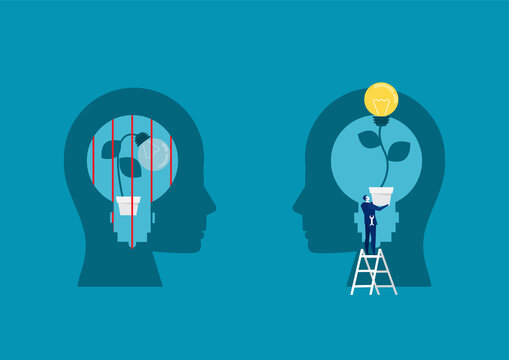
If personality shapes your perception, beliefs direct your narrative. Every moment of your life is filtered, driven, and colored by your deepest assumptions—about yourself, others, and the world. These beliefs may be inherited, conditioned, or consciously chosen. Regardless, they hold immense power.
This section explores a powerful triad:
- Beliefs shape your behavior
- Beliefs influence how others treat you
- Beliefs alter your body’s biology
Once understood, this triad becomes a code for transformation—a way to rewrite the cascading effects of unhelpful beliefs and reinforce those that serve your growth.
1. 🧠 Beliefs Shape Your Behavior
Beliefs are not just thoughts. They are behavioral scripts—pre-programmed expectations that steer your decisions, habits, risks, and reactions.
• Self-Fulfilling Actions
If you believe:
- “I’m not smart enough,” you may avoid learning opportunities.
- “I don’t belong here,” you will withdraw or self-sabotage.
- “People will abandon me,” you will push others away preemptively.
The result? The very reality you feared becomes real—not because it was true, but because it was believed.
This is the self-fulfilling prophecy: a belief generates behaviors that confirm the belief, which then strengthens it, creating a closed-loop system of stagnation or success.
• Overconfidence as an Asset
In high-stakes environments—like leadership, negotiations, or interviews—confidence often outweighs competence in early perception.
Why?
- People follow those who believe in themselves.
- Belief creates charisma. Charisma opens doors.
- Overconfidence motivates risk-taking and resilience, both of which build competence over time.
This doesn’t mean you should fake it—it means your internal belief in your ability to grow is an advantage, not arrogance.
• Guilt vs. Shame: A Belief Distinction with Lifelong Consequences
Psychologist Brené Brown distinguishes:
- Guilt: “I did something bad.”
→ Behavior-focused. Leads to remorse and change. - Shame: “I am bad.”
→ Identity-focused. Leads to paralysis, hiding, and self-loathing.
Children raised with guilt-based correction tend to become resilient and adaptive. Those raised in shame become chronically anxious, defensive, or avoidant.
What we believe about ourselves becomes what we believe is possible.
• The Subtle Power of Praise
How we praise children matters deeply:
- “That was kind of you” → praises behavior → teachable and repeatable.
- “You are so kind” → praises identity → creates pressure to conform or fear failure.
This principle extends to adults. When feedback targets actions rather than identity, people remain teachable, motivated, and open to growth.
2. 🤝 Beliefs Influence Others’ Behavior Toward You
Beliefs are social signals. They broadcast assumptions—about others and yourself—that directly alter how people relate to you.
• The Expectation Effect
In a famous study, teachers were (falsely) told that certain randomly selected students were “gifted.” By year’s end, those students showed significantly higher IQ gains.
Why? Because:
- Teachers subconsciously gave them more attention.
- They were more forgiving of mistakes.
- They communicated belief in potential.
This is called the Pygmalion Effect—where high expectations breed better performance. The inverse, the Golem Effect, is equally true: low expectations lower outcomes.
Whether in parenting, leadership, or friendships—your belief in others becomes a mirror they grow into.
• Common Relational Dynamics
- Teacher-Student: A teacher who believes a child is “lazy” will subtly stop challenging them.
- Manager-Employee: A manager expecting excellence will often get it—because the employee rises to meet that standard.
- Romantic Partnerships: If one partner believes the other is emotionally unavailable, they may withdraw, creating the very distance they feared.
Beliefs project behavior. That projection becomes feedback, and feedback loops into reality.
• Projection and Bias
If you believe others are:
- Untrustworthy → you become guarded → they become defensive.
- Superior → you become submissive → they dominate or dismiss.
- Inferior → you become controlling → they rebel or collapse.
Most interpersonal conflict isn’t about personality mismatch—it’s about belief mismatch. Until those underlying assumptions are examined, relationships remain predictably reactive rather than consciously creative.
3. 🧬 Beliefs Alter Your Physical Health
The mind-body connection is not metaphor—it is biological circuitry.
• The Placebo Effect
Patients who believe they’re receiving treatment—even if it’s a sugar pill—often experience:
- Reduced pain
- Improved mood
- Lower inflammation
- Even recovery from chronic symptoms
Their belief triggers real biological change—hormones, neurotransmitters, immune responses—all activated by expectation.
This isn’t a trick. It’s mind-body programming at work.
• The Nocebo Effect
The dark side of belief: when fear or negativity creates illness.
Examples:
- Believing you’re allergic can trigger hives—even if the substance is harmless.
- Fear of aging leads to faster physical decline.
- Constant stress beliefs can lead to cortisol dysregulation, gut issues, and immune dysfunction.
Belief becomes biology—positively or negatively.
• Longevity and Optimism
Multiple studies show that optimists live longer—not just because of positive thinking, but because:
- They take proactive steps in health.
- They recover better from setbacks.
- They are less prone to chronic inflammation and depression.
Believing that life is worth living… helps you live it longer.
🧾 Conclusion: Beliefs Are Not Reflections—They Are Generators
You don’t believe things because they are true.
You believe them—and then they become true for you.
Beliefs are not mirrors.
They are blueprints.
They shape:
- Your behavior
- Your relationships
- Your physical health
Most importantly, they shape your future possibilities.
If you want to change your life, don’t just upgrade your habits.
Upgrade your beliefs.

IV. Self-Fulfilling Prophecies: Turning Thought Into Fate
💡 Summary Conclusion First:
Self-fulfilling prophecies show how beliefs, especially subconscious ones, become self-validating loops—what we assume, we often enact into being. Whether these expectations are placed by ourselves or others, they subtly orchestrate our decisions, behaviors, and emotional responses. When left unexamined, they can limit potential; when consciously shaped, they can unlock extraordinary change.
What Is a Self-Fulfilling Prophecy?
At its core, a self-fulfilling prophecy occurs when a belief or expectation—held by the self or others—influences behavior in ways that make the belief come true. This phenomenon plays out in micro-moments (e.g., a nervous handshake before an interview) and life-defining patterns (e.g., generational cycles of poverty, achievement, or trauma).
As Robert Merton, the sociologist who coined the term, noted:
“A false definition of the situation evoking a new behavior which makes the originally false conception come true.”
This means our inner narratives are not just mental stories—they are creative forces. Thoughts morph into attitudes, which become behaviors, which shape outcomes, which then reinforce the original thought. Without intervention, this loop rarely breaks itself.
🧠 Types of Self-Fulfilling Prophecies
1. Self-Imposed Prophecies
These are beliefs we hold about ourselves, often without question. For example:
- “I’m bad at public speaking”
→ Avoidance of practice or preparation
→ Poor performance when forced to speak
→ Reinforced belief of incompetence - “I always mess up relationships”
→ Hypervigilance, self-sabotage, or clinginess
→ Strained connections
→ Reinforcement of relational insecurity
Such beliefs often originate in early experiences, failures, trauma, or cultural programming. Left unchecked, they crystallize into identity.
🔍 Insight: The most dangerous prophecies are the ones we no longer recognize as beliefs—they feel like “truth.”
2. Other-Imposed Prophecies
These arise when others’ beliefs about us shape their behavior, which in turn shapes our performance.
- A teacher believes a student is gifted
→ Provides more attention and challenge
→ Student rises to the occasion
→ Teacher’s belief validated (Pygmalion Effect) - A manager believes an employee is lazy
→ Assigns them less meaningful work
→ Employee disengages
→ Manager’s belief validated (Golem Effect)
💡 Real-World Example: The Rosenthal-Jacobson Study (1968) found that students randomly labeled as “intellectual bloomers” showed significantly greater academic gains—because teachers unknowingly treated them differently.
These dynamics are especially powerful in early childhood, educational systems, workplaces, and any context with power asymmetry.
🔁 Positive & Negative Cycles
✨ The Pygmalion Effect: Belief Uplifts Performance
When high expectations are communicated with support, people tend to improve in line with those expectations. This cycle involves:
- Conveying belief in someone’s capacity
- Offering opportunity and feedback
- Witnessing improved outcomes
- Reinforcing high expectations
This is the basis of transformational leadership, effective parenting, and empowering coaching.
⚠️ The Golem Effect: Low Expectations Suppress Growth
Conversely, when low expectations are conveyed (often subtly), people underperform—even if they’re capable. It creates a learned helplessness loop:
- Individual senses disbelief
- Effort decreases, confidence erodes
- Performance drops
- Negative expectation confirmed
These effects are particularly harmful to neurodiverse individuals, marginalized communities, and children growing up in environments where opportunity is unequally distributed.
🧩 Implications in Leadership, Parenting, and Education
- Leadership: A leader’s expectations become a silent mold. Do they assume their team members will rise—or fail?
- Parenting: Children internalize what parents expect of them—not just what is said, but what is felt.
- Education: Students often perform to the level of belief held in them, especially by their most influential teachers.
Creating an empowering environment begins with reframing assumptions, practicing positive regard, and offering challenge with trust.
🧠 Self-Fulfilling Prophecies in Mental Health
Mental health is particularly susceptible to belief-based loops. For example:
- Catastrophizing: Believing that the worst will happen leads to chronic stress, rumination, and avoidance—making the situation worse.
- Fortune-telling: Assuming “this won’t work” often ensures we don’t fully commit—creating half-hearted outcomes.
- Depression and learned helplessness: Repeated failure or rejection causes people to believe they are powerless—even when change is possible.
⚠️ These distorted thinking patterns are not just “bad habits”—they are neural grooves shaped by pain, survival, and reinforcement.
🔧 But with awareness, compassion, and practice, they can be rewired.
🛠️ Reversing Self-Fulfilling Prophecies: Practical Tools
- Awareness Audit:
Ask: What belief am I acting on right now? Is it absolutely true?
Challenge negative predictions like a lawyer cross-examining faulty evidence. - Identity Reframing:
Instead of “I’m bad at X,” reframe as:- “I haven’t practiced X much yet.”
- “I struggle with X, but I can learn.”
- Cultivate Psychological Safety:
In parenting, teams, or therapy—create space where people are not punished for failing. This encourages growth over protection. - Deliberate Expectation Setting:
Treat others not as they are, but as they could become. Make belief visible. Speak it. Coach it. Act on it.
“You become what you believe—not in a magical sense, but in a neurological, behavioral, and social sense.”
If your life keeps reflecting a story you didn’t consciously write, it’s time to investigate the narrator: your belief system.
V. Your Brain: The Prediction Engine That Pre-Filters Reality
“We don’t just see what’s there—we see what we expect to see.”
— Lisa Feldman Barrett, neuroscientist
The Brain as a Prediction Machine
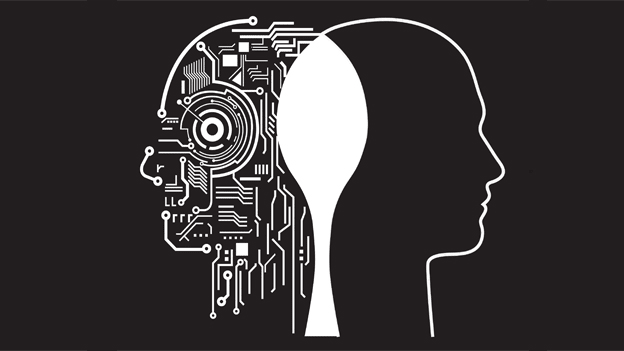
At every moment, your brain is not simply reacting to life—it is predicting it. This is not metaphorical; it is neurological. Emerging from cognitive neuroscience and computational biology, the concept of predictive coding suggests that the brain is fundamentally a prediction engine.
Rather than passively receiving information from the external world, your brain actively anticipates what’s about to happen, using internal models based on memory, belief, and prior experience. These predictions are then compared against real-time sensory input. If the guess is accurate, the brain conserves energy by processing less. If it’s wrong, a correction occurs—or sometimes, reality is ignored or distorted to fit the expectation.
Why This Matters: You Experience What You Expect
This means your perception of reality is not objective; it is a mix of incoming data and prior assumptions. What you expect primes your brain to filter out what doesn’t fit and emphasize what does. Think of it as autocompletion for life—your brain is always trying to finish the sentence before reality does.
Let’s break this down further.
🔄 Neural Shortcuts: Expectations Rewire Experience
Your beliefs—about people, pain, love, your worth—become neural shortcuts. For example:
- Threat Perception: If you believe people are unsafe or judgmental, your amygdala (fear center) is pre-activated in social situations. You scan for rejection, not connection.
- Reward and Joy: A hopeful, positive brain lights up its dopamine circuits more easily when anticipating success or joy.
- Pain: Studies show that expecting pain heightens its intensity, while expecting relief can diminish it—even if no medication is involved.
Your belief changes your body’s chemistry before the actual event occurs.
🧠 Belief in Biology: The Placebo and Nocebo Effects
The placebo effect is not “just psychological”—it is biological. When you believe a pill will reduce pain, your brain releases endogenous opioids. In people with Parkinson’s disease, the expectation of dopamine-boosting medication triggers actual dopamine release, even when the pill is inert.
Conversely, the nocebo effect—the evil twin of the placebo—demonstrates how fear and negative expectations cause measurable physical harm. Symptoms such as nausea, muscle fatigue, or heart palpitations can be triggered purely by belief, with no physical cause.
🎭 The Duck-Rabbit Illusion: Perception is a Lens
Look at the famous duck-rabbit optical illusion. What you see depends on what you’ve been primed to see. Likewise, your brain constantly fills in blanks using memory, culture, bias, trauma, and beliefs. When data is ambiguous (which it often is), your brain guesses—and the guess becomes reality.
This is not a flaw in the system. It’s a feature. It saves energy, promotes efficiency, and helps us navigate complexity.
But it has a dark side.
- When your brain is wired to predict betrayal, failure, or worthlessness, you see confirming signals everywhere.
- When it predicts safety, support, and success, you are more open, resilient, and adaptable.
🔍 The Truth: Beliefs Aren’t Just Thoughts—They Are Biological Inputs
Your beliefs are not passive ideas sitting quietly in your mind. They are active, biochemical inputs shaping everything from:
- How your brain filters attention.
- How your immune system responds to stress.
- How your hormonal and neurotransmitter systems prepare for action.
This is why changing your belief system is not “just thinking positive.” It is rewiring predictive mechanisms that run at the level of neurons and hormones.
🛠 Actionable Insight: Reprogram the Prediction Engine
Awareness precedes choice. Choice precedes change.
Here’s how to start engaging your brain’s predictive system consciously:
- Name Your Forecasts: Notice what your brain is predicting—failure, judgment, abandonment, success?
- Challenge Confirmation Bias: Seek out data that disconfirms your negative assumptions.
- Reframe Experiences: After events, ask, “What else could this have meant?”
- Visualize Intentionally: Mental rehearsal can prime your predictive machinery toward desired outcomes (used by elite athletes, musicians, and performers).
- Meditate and Slow Down: When your brain is calm, it becomes more plastic—open to new predictions and patterns.
If you do not choose your beliefs consciously, your brain will default to beliefs shaped by trauma, culture, or outdated survival instincts.
You are not just living life—you are predicting it into existence.

VI. Mindset: The Personality You Choose (and Can Change)
“Whether you think you can, or you think you can’t—you’re right.”
— Henry Ford
Beliefs shape perception. Perception shapes prediction. But where do these beliefs live? They’re not random or isolated—they are part of your mindset.
A mindset is more than a belief. It’s a habitual filter, a framework of meaning through which you interpret every experience. It is how you explain your successes, failures, stress, relationships, and even your sense of self.
Mindset is not just what you believe—it’s how you believe, how often, and how tightly you grip that belief.
🎭 Fixed vs. Growth: Your Identity, Upgraded
Psychologist Carol Dweck introduced the idea that our success is often not determined by talent or intelligence—but by whether we have a fixed or growth mindset:
- Fixed Mindset: “I am who I am.”
Failure = Proof I’m not good enough.
Effort = Threat to ego.
Result = Avoid challenges → stagnation. - Growth Mindset: “I can become who I choose to be.”
Failure = Information for improvement.
Effort = Investment in potential.
Result = Embrace challenge → transformation.
We often carry fixed mindsets in specific domains:
- “I’m not good at math.”
- “I can’t do public speaking.”
- “I’m too old to change.”
These aren’t facts. They’re decisions masquerading as truth.
🧠 Mindset Shifts That Heal: The Hidden Levers
Let’s zoom in on three powerful re-frames that can change your reality—even when circumstances remain the same.
Old Belief | Growth-Oriented Reframe | Impact |
Stress is dangerous. | Stress is energy for change. | Converts cortisol into motivation. |
Effort means I’m weak. | Effort is proof of my commitment. | Builds resilience and mastery. |
Struggle means failure. | Struggle is where growth lives. | Builds emotional and cognitive complexity. |
These are not affirmations. They are neurocognitive switches that change how your body mobilizes, how your brain processes data, and how your life unfolds.
🔬 Mind Over Matter: How Mindset Changes Biology
Mindset is not abstract. It shows up in your cells, your heart rate, your hormones, and your immune system.
🏋️♂️ Exercise Beliefs Matter
In one Harvard study, hotel staff who were told that their job met exercise guidelines (even though nothing else changed) lost more weight and showed improved health markers over time compared to a control group.
Why? Belief triggered a different internal narrative → brain-body alignment → real physiological change.
😰 Stress Reframed = Stress Transformed
In a pivotal study, people who were told that stress enhances performance and builds resilience showed improved cardiac efficiency, lower cortisol levels, and more proactive behavior—even under pressure.
Your perception of stress is more important than the stressor itself.
🔄 Neuroplasticity: Change is Literally Possible
Your brain is not a fixed structure—it’s a living, rewiring, adapting ecosystem. This is called neuroplasticity.
- New thoughts fire new circuits.
- Repeated actions reinforce those circuits.
- Emotionally intense experiences (positive or negative) carve deep grooves into your brain’s predictions.
Identity is not fixed—it’s trained.
Mindset is the operating system that trains your neural network. When you change your mindset, you change the code running your sense of self.
⚙️ Actionable Practices to Shift Mindset
You can’t just “decide” to have a growth mindset. You must practice it until it becomes your new baseline. Start here:
- Catch Fixed Language: “I can’t,” “I’m not,” “I always…”
- Reframe With Curiosity: Add “yet” → “I can’t do it… yet.”
- Celebrate Process, Not Outcome: Reward effort and strategy.
- Use Setbacks as Feedback: Every failure is rich data.
- Surround Yourself With Growth Voices: Community reinforces mindset.
Mindset is not a motivational cliché. It is the interface between who you were and who you are becoming.
The moment you shift how you interpret effort, failure, and stress, you shift the trajectory of your life.
And you can start right now—with one reframed thought.

VII. Designing a New Personality, Deliberately
“To become someone else, you must stop being who you are.”
Belief shapes perception.
Mindset directs behavior.
But what if you could step outside all of it and become someone else—on purpose?
Yes, personality feels stable. But it is not permanent.
Your personality is a dynamic bundle of habits, expectations, and identity scripts.
Which means it is designable—if you are willing to break the cycle, rewrite the code, and install a new way of being.
Here’s how.
🧱 Step-by-Step Transformation Framework
1. Awareness: Map Your Inner Operating System
You cannot change what you cannot see.
Begin by identifying your current beliefs, recurring emotional patterns, and default narratives.
Ask:
- What do I believe about myself in relationships?
- What story do I tell myself when I fail or succeed?
- Where do I feel “stuck,” and what identity keeps me there?
Tool: Journaling prompts like
- “I always…”
- “I never…”
- “I am the kind of person who…”
These complete-the-sentence exercises help expose subconscious beliefs.
2. Disruption: Break the Loop
Once beliefs are surfaced, they must be interrupted in real time.
Catch yourself mid-thought: “That’s a script, not truth.”
This disrupts automaticity and opens a window for choice.
Examples:
- Instead of “I’m not good with people,” say:
→ “That’s an old belief. I’m learning social confidence.” - Instead of “I always mess up,” try:
→ “That used to be true. I’m practicing presence and precision.”
Even a moment’s pause between stimulus and response is enough to begin transformation.
3. Re-authoring: Identity-Based Goal Setting
Behavioral goals often fail because they are detached from identity.
Instead, build from the inside out. Ask:
- “Who am I becoming?”
- “What does that person do every day?”
- “How would they respond in this situation?”
Shift from:
- “I want to run a marathon.” → to → “I am a disciplined athlete.”
- “I want to meditate.” → to → “I am someone who values inner stillness.”
When identity shifts, behavior follows.
4. Behavioral Alignment: Start Small, Stay Consistent
New identity requires evidence.
Choose 1–2 daily actions that align with your new self-concept.
Examples:
- “I am a calm leader.” → Practice one moment of pausing before reacting.
- “I am a fit, energetic person.” → Begin with a 10-minute walk post meals.
- “I am someone who learns every day.” → Read one page each morning.
It’s not about volume. It’s about congruence.
5. Repetition & Reinforcement: Build Neural Highways
Neurons that fire together wire together.
Change requires frequency, not force.
Every time you act in alignment with your chosen identity, your brain strengthens those pathways.
Every repetition makes it easier, faster, and more automatic.
Install reinforcement rituals:
- Celebrate the tiniest wins.
- Track progress visibly.
- Anchor new habits to existing routines (e.g., habit stacking).
This is how neuroplasticity becomes personality.
🛠️ Daily Tools to Accelerate Personality Change
Here’s your personal lab. Use it daily:
Tool | Purpose |
Visualization | Rehearse being your future self. Activate brain regions associated with action. |
Journaling | Track patterns, reframe failures, and document growth. |
Mindfulness / Breathwork | Gain control over emotional impulses and create inner spaciousness. |
Corrective Feedback | Invite challenge from mentors/coaches—identity grows at the edges of discomfort. |
Behavior Tracking | Use paper, apps, or tokens to mark consistency. Evidence builds belief. |
Each tool shifts the center of gravity from old habits to new personality traits.
🌌 Deep Work: For Deeper Roots
Some patterns live deep in trauma, shame, or long-standing identity wounds.
In such cases, transformation may require structured support:
- Therapy (for unprocessed past and emotional regulation)
- Coaching (for identity alignment and future pacing)
- Spiritual guidance (for existential clarity and soul-based integration)
Change is not linear. But with support, it becomes possible—and beautiful.
🧬 Summary Thought
Designing a new personality is not delusion.
It is deliberate evolution.
You are not faking it.
You are rehearsing the future version of you—until it becomes embodied, natural, and true.
Your biology adapts.
Your story updates.
Your world responds in kind.

VIII. Ethical Grounding: The Dangers of Over-Spiritualizing Reality
“You can hold people accountable and still have compassion. You can believe in healing and still acknowledge harm.”
As we dive deep into the extraordinary powers of mindset, identity, and neuroplasticity, there is a real and present danger that must be acknowledged:
Spiritual bypassing.
This happens when people:
- Use belief systems to deny harsh realities.
- Avoid emotional or social responsibility.
- Reduce suffering to a “mindset problem.”
Over-spiritualization is not healing.
It is avoidance, elitism, and harm, wrapped in the language of light.
Let’s explore how to stay ethically grounded while embracing the transformative truths of inner change.
⚖️ Belief ≠ Blame
Yes, belief can shape perception—and sometimes outcomes.
But this does not mean that:
- People choose trauma.
- Children attract illness.
- Poverty is a manifestation failure.
Such ideas are not just inaccurate—they are morally repugnant.
Spiritual growth becomes toxic when it blames people for circumstances they were born into, or had no control over.
Compassion must precede explanation.
Every human carries context. Every story has layers.
🌧️ Avoiding Toxic Positivity: The Shadow of Denial
Toxic positivity looks like:
- “Everything happens for a reason” (said too soon).
- “You just need to think differently.”
- “Don’t focus on the negative.”
This kind of bypassing silences pain and invalidates reality.
Healing doesn’t come from plastering light over darkness.
It comes from witnessing pain honestly—and then choosing the next empowering action with courage.
Truth first. Growth second.
🤝 Compassion + Responsibility: Ethical Use of Inner Power
The ideas we’ve explored in this article—mindset, neuroplasticity, identity-based change—are powerful, but they are not magic. They are tools.
Use them:
- With love for yourself and others.
- With boundaries around narratives that shame or suppress.
- With humility, knowing that no single path fits all.
A mature perspective holds paradox:
- We are shaped by conditions and we have agency.
- We carry wounds and we are not victims.
- We can change ourselves and still demand justice from the world.
Empowerment without compassion becomes cruelty.
Compassion without responsibility becomes indulgence.
We need both.
🌍 Societal Implications: Inner Work ≠ Structural Justice
Here’s the hard truth:
- Racism is not just a “fear-based mindset.”
- Ableism isn’t healed through “vibrational alignment.”
- Economic inequality is not a “manifestation issue.”
These are systemic structures—not individual belief failures.
If your personal growth journey makes you blind to injustice, it’s not growth.
It’s comfort cloaked in spirituality.
We must recognize:
- Privilege: Some people are born with more leverage for change.
- Policy: Some problems require laws and systems, not affirmations.
- Solidarity: Healing the world requires collective action, not just meditation.
As you work on yourself, ask:
- How does my growth ripple outward?
- Who gets excluded from “mindset-based” frameworks?
- How can I lift others as I evolve?
🌱 Anchoring Spiritual Transformation in Reality
If we want inner growth to matter, we must connect it to the world around us.
It’s not enough to raise your vibration—raise your voice.
It’s not enough to rewrite your story—rewrite systems.
It’s not enough to feel love—act in love.
The most powerful identity you can embody is that of a conscious citizen:
- Rooted in truth.
- Compassionate in action.
- Unafraid to bridge the personal and the political.
🧭 In Closing
Over-spiritualization is a detour from truth.
Real transformation does not float above suffering—it walks through it, hand in hand with those still in pain.
As you become the architect of your identity, be also a guardian of justice, a servant of love, and a mirror of truth.
Your change can be personal. But it must never be isolated.

IX. Conclusion: Personality Is a Power—Use It With Consciousness
“Between stimulus and response, there is a space. In that space is our power to choose our response. In our response lies our growth and our freedom.”
— Viktor Frankl
At every moment, your personality is not a fixed label—it is a living system.
It is reprogrammable. It is plastic, responsive, and choice-based.
This is both your liberation and your responsibility.
Let’s conclude with four grounding takeaways:
🔄 Reframe Identity: You Are Not Your Past
- You are not your traumas.
- You are not your conditioned reactions.
- You are not your fleeting thoughts.
You are what you rehearse, reinforce, and repeat—in small, invisible moments.
Personality is not a prison. It is a practice.
🧠 Use the Tools: Introspect, Design, Rewire, Repeat
Transformation doesn’t require a miracle—it requires a method.
- Observe your patterns without judgment.
- Design the identity you wish to grow into.
- Rewire habits, language, posture, emotions, and focus.
- Repeat until it becomes your new normal.
Small shifts, repeated daily, lead to quantum leaps over time.
💞 Anchor in Compassion: Grace Over Grit Alone
Not everyone begins on equal ground.
- Trauma changes timelines.
- Privilege alters access.
- Safety determines what’s possible.
Honor your journey without comparison.
Extend the same grace to others.
Powerful transformation comes when growth is rooted in gentleness, not just grit.
🌍 The Greater Mission: Heal Yourself to Help Heal the World
Your inner work must not end with personal peace.
It must ripple outward:
- Into your relationships.
- Into your parenting and leadership.
- Into activism, inclusion, and social innovation.
True transformation:
- Sees beyond the self.
- Builds inclusive futures.
- Uplifts the least heard and most marginalized.
We change the world not by escaping it, but by showing up in it more conscious, more compassionate, and more courageous.
📚 Book References
- Breaking the Habit of Being Yourself – Dr. Joe Dispenza
- The Expectation Effect – David Robson
- Mindset – Carol Dweck
- Feeling Great – Dr. David Burns
- The Biology of Belief – Bruce Lipton
- The Power of Now – Eckhart Tolle
- Grit – Angela Duckworth
- The Body Keeps the Score – Bessel van der Kolk
These works offer deeper insight into belief systems, mindset change, trauma recovery, and brain-based transformation.
🌱 Participate and Donate to MEDA Foundation
At MEDA Foundation, we walk the talk of inner and outer transformation.
We focus on:
- Empowering autistic individuals.
- Creating inclusive employment pathways.
- Building self-reliant ecosystems.
- Helping people help themselves—through action, not just intention.
We invite you to:
✅ Donate generously – Fuel grassroots, impact-driven projects
✅ Volunteer your time or expertise – Every act matters
✅ Partner with us – Let’s innovate for inclusion, dignity, and sustainability
📍 Visit: www.MEDA.Foundation
Let’s not just reshape our personal reality—let’s reimagine the collective future.
Let’s build a world where transformation is not a luxury, but a birthright.
