Category: Spiritual Not Religious

The Cost of Not Knowing: Navigating Modern Life With Spiritual Clarity
Modern life overwhelms not because it is complex, but because we navigate it without an internal compass, leading to distraction, indecision, and a quiet loss of self-authorship. This article reveals how the absence of spiritual clarity—defined as value-based decision intelligence—causes drift, emotional unrest, and misaligned living, while modern systems amplify noise and erode self-trust. By…

Blueprint for a minimal indian wedding : Choosing Meaning Over Show
Designed for couples who value clarity over spectacle, this blueprint speaks to those who want their wedding day to feel calm, intimate, and financially responsible. It is especially helpful for partners navigating family expectations, budget constraints, or emotional overwhelm around traditional celebrations. If you prefer meaningful rituals over elaborate staging, real conversations over guest lists,…

The Seth Revolution and the Science of Inner Authority
The Great Inversion: Reclaiming Consciousness as the Architect of Reality challenges the deepest assumption of modern science—that matter gives rise to mind—and instead asserts that consciousness is the source and substance of all creation. Drawing on the Seth Material channeled by Jane Roberts, the article reveals a living universe where atoms, cells, and bodies are…

Wishing Well Anonymously from Afar: Helping People Without Being Among Them
For those who love humanity deeply yet prefer quiet spaces, solitude, and independence, this piece offers comfort and clarity. It speaks to individuals who wish well for others but find daily social interaction overwhelming or distracting. They are idealists, thinkers, strategists, creators, and energy stabilizers who serve best from the background—designing, envisioning, and uplifting silently.…
The Living Map of Indian Philosophy
Ancient Indian philosophy unfolds as a vast, interwoven journey from ritual to realization — a quest to understand the nature of reality, consciousness, and liberation. Rooted in the Upanishadic insight that the Self and the Absolute are one, the Vedantic vision offers unity behind all existence, while systems like Samkhya and Yoga map the interplay…

Understanding Cosmic ‘Knots’ in our lifecycles and how to overcome them for true development
For anyone feeling caught in cycles of confusion, loss, or sudden change, understanding the concept of cosmic knots offers a new lens for growth. Rooted in Vedic astrology’s Gandanta and the Granthi of Kundalini yoga, these turning points reveal why certain life phases feel heavy, complex, or demanding. They mark moments when the universe asks…

Collective Consciousness: Rediscovering Learning Through the Parama-Atma
Learning through channeling into the Parama-Atma and the collective field of souls offers a transformative paradigm where knowledge transcends books, institutions, and conventional reasoning, becoming a lived experience of unity and awareness. By attuning the individual consciousness to universal intelligence, one accesses insight, creativity, and ethical clarity that flow naturally through intuition and resonance. Integrating…
I’m Not in the Right Place
Feeling out of place—whether in career, relationships, or life itself—is often a signal that your inner compass is calling for realignment. True clarity and purpose arise not from searching externally, but from cultivating self-awareness, reclaiming authentic identity, and taking courageous, value-driven actions. By understanding your strengths, exploring passions, experimenting with small steps, and engaging in…

No One Is Your Friend
Human connections are often illusions, built on fear, need, and convenience rather than unconditional care. Most friendships are transactional, fragile, and dependent on roles or usefulness, dissolving when circumstances shift or expectations go unmet. True loyalty is rare, and trusting blindly can lead to repeated disappointment. Freedom and resilience arise through embracing solitude, cultivating inner…

The Seven Levels of Human Consciousness
The human journey unfolds through seven interconnected levels of consciousness—Manas, Buddhi, Chitta, Ahamkara, Prana, Atman, and Paramatman—each offering a roadmap from the restless, sense-driven mind to the realization of universal unity. By understanding and cultivating these layers, individuals can enhance attention, ethical discernment, emotional resilience, ego refinement, vital energy, and self-awareness, ultimately awakening to the…
Politics, Perils, and Promise of Abundance
Abundance is not about endless consumption but about creating systems where everyone has enough to thrive—powered by clean energy, equitable housing, proactive healthcare, and universal access to knowledge. It calls for a shift from scarcity-driven competition to collaborative growth, where technology, governance, and culture align to multiply human well-being. Yet abundance also carries risks: ecological…

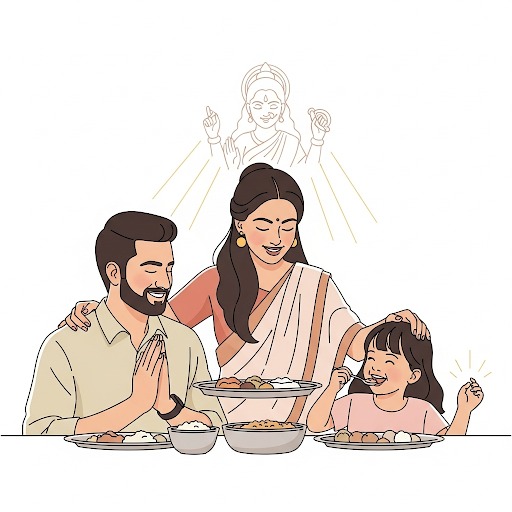
Embodying Annapoorna: The Value of Cooking and Feeding with Love in the Age of Convenience
For those who cherish the warmth of home-cooked meals or wish to rediscover their nurturing side, this piece offers a gentle reminder of the deeper value of cooking with love. Whether you are a homemaker, a young woman learning to care for loved ones, or someone seeking meaning in daily routines, you’ll find practical and…

How Presence Unlocks Enlightenment, Healing, and Human Potential
Awakening to the power of the present moment opens the doorway to freedom from compulsive thought, emotional pain, and the illusions of ego. By learning to observe the mind, heal the pain-body through awareness, and anchor into the living presence of the body, one discovers a deeper dimension of peace and clarity that transcends circumstance.…

How Ancient India Mapped the Mind’s Hidden Perceptions
Blending ancient Indian wisdom with modern neuroscience, the exploration reveals how the Rishis’ deep understanding of the senses—gross and subtle—anticipated many sensory modalities now recognized by science. From the Bhagavad Gita’s vision of the self mastering the senses, to Patanjali’s pratyahara and Ayurveda’s reliance on inner perception, the journey uncovers a unified view of human…

Holy Without a Temple: Building a Sacred Path of Your Own
In an age of spiritual fragmentation and institutional disillusionment, A Religion of One’s Own offers a path to reclaim the sacred through deeply personal, soul-centered practices. Drawing from diverse traditions, art, nature, and ritual, it encourages individuals to build a spiritual life rooted in authenticity, creativity, and ethical grounding. By integrating solitude with community, work…

Im in the wind, Im in the water : Digambara mindset to feel comfortable with yourself
For anyone seeking a softer relationship with their body, identity, or sense of self, this gentle reimagining of Digambara philosophy offers a deeply grounding perspective. Whether you’re healing from shame, craving elemental stillness, or simply yearning to feel at home in your own skin, you’ll find ideas here to help you unwind—physically, emotionally, and spiritually.…

Timeless Life Lessons from the Panchatantra
The timeless fables of the Panchatantra offer more than moral tales—they serve as a profound blueprint for ethical living, emotional intelligence, leadership, and strategic thinking in modern life. Rooted in ancient Indian wisdom yet universally relevant, these stories guide individuals, educators, and leaders in navigating complex decisions with clarity, humility, and courage. From building trustworthy…

You are Your Own Companion : Being Alone Is Natural, Fearing It Is Learned
If you’ve ever feared being alone at the end of your life, or felt incomplete without a partner, legacy, or constant companion, these words are for you. You may be navigating solitude for the first time or silently questioning the pressure to always be connected. This is for individuals—especially women taught to wait and men…

Shadow work: How Indian Epics Teach Us to Embrace Our Darkness
Indian mythology offers a profound map for inner transformation, where shadow work is not about battling evil but integrating disowned parts of the self. From the psychological warfare of the Mahabharata to the radical authenticity of Shiva, these ancient narratives mirror our inner conflicts—moral paralysis, wounded pride, sacred rage, and unchecked power. Through archetypes like…

Engineering the Self: Panchakosha as India’s Original Blueprint for Holistic Living
The Panchakosha framework from the Taittiriya Upanishad offers a profound roadmap for holistic human development, guiding individuals through five layers of being—from the physical body (Annamaya) to the blissful self (Anandamaya). Rooted in India’s ancient Gurukul system and echoed in modern education and wellness models, it addresses today’s pressing issues like burnout, emotional instability, and…