

For individuals who have grown up with stability, refinement, and strong family or cultural grounding, yet find themselves adopting lifestyle trends that feel oddly unfulfilling, confusing, or out of character. It is for those who sense a quiet inner discomfort when trying to match the survival-based norms popular among peers or media narratives, and who wonder why their natural softness, dignity, or groundedness feels harder to access over time. This is for anyone who suspects they may be performing a life rather than living one, and seeks language, clarity, and permission to return to what genuinely supports their well-being in a sustainable and personally meaningful way today.
Introduction
Many practices that originated as pragmatic responses to scarcity—short-term coping strategies, improvised domestic arrangements, and economy-driven habits—are now being reframed as signs of liberation, progress, or refined taste. What was once necessity for large segments of society has been repackaged by influencers, brands, and peer culture into a polished narrative of “choice” and “authenticity.” The result is a cultural loop in which survival-mode behaviors are marketed as empowerment, and a curated subset of people present a selective, often theoretical image of what those lives look like when performed as aspiration.
The purpose here is not to judge or dismiss those who adopt such practices. Nor is it to claim a single correct way of living. The aim is diagnostic and clarifying: to examine the forces that promote survival-based lifestyles as desirable, to identify when adoption is strategic or symbolic rather than functional, and to test whether those choices genuinely sustain long-term well-being, dignity, and community ties. The focus is on helping readers make informed decisions, not on prescribing a moral hierarchy.
This piece speaks most directly to readers who feel a low-grade disquiet when they follow popular “modern” norms. You may find certain trends tacky, coarse, or draining, yet struggle to articulate why. You may have tried to acclimate by adopting a tougher posture or by normalizing the trend in conversation, only to feel a gradual erosion of qualities you value—softness, refinement, rootedness. For you, the discomfort is meaningful. It signals a possible mismatch between inherited cultural resources and newly adopted forms. The following sections will unpack the mechanics of this rebranding, examine case studies, and offer reflective tools and practical steps so choices can be made from alignment rather than imitation.
How Survival Behaviors Become Marketed as Empowerment
Survival-mode behaviors often emerge from conditions where resources, time, safety, or emotional security are limited. Yet, as cultural narratives shift, these same behaviors can be reframed not as responses to pressure or lack, but as symbols of strength, independence, and aspirational identity. This reframing frequently occurs through several key channels.
1. Social media lifestyle aesthetics
Platforms such as Instagram, Pinterest, and TikTok play a central role in aestheticizing struggle. Minimalist living, “that girl” routines, extreme productivity regimens, solo independence narratives, and hyper-flexible remote lifestyles are presented through soft lighting, curated captions, and carefully edited scenes. What may originally stem from financial limitation, burnout, or lack of support gets reinterpreted as clean, modern, and high-value living. The visual presentation masks the emotional complexity and trade-offs required to sustain such choices.
2. Influencer-led identity messaging
Influencers rarely share the structural advantage, financial scaffolding, or unseen support systems that enable their lifestyles. They frame drastic downsizing as freedom, overwork as passion, boundaryless self-reliance as empowerment, and detachment from traditional forms of community as maturity. When survival strategies are positioned as personal evolution, audiences internalize the message that to be “strong” is to cope alone, optimize endlessly, and continuously reinvent oneself without pause.
3. Corporate marketing interests
Brands and industries benefit from individuals adopting self-sufficiency, constant reinvention, and non-stop productivity. The wellness market, gig economy platforms, convenience-based consumer goods, and self-improvement industries thrive when consumers believe they must personally manage every aspect of their emotional, social, and physical well-being. “Empowerment” becomes a sales angle: the more one believes they must do everything alone, the more products, tools, and systems they will buy in pursuit of sustainability.
4. Peer norms and cultural momentum
Once a lifestyle aesthetic becomes aspirational, it spreads through imitation rather than careful evaluation. People adopt patterns because they see them validated socially, not because these patterns meet their needs. The result is a subtle pressure to perform autonomy, even when one desires rest, community, shared responsibility, or more traditional forms of security.
The mismatch between image and lived reality
These portrayals depend heavily on idealized and selectively curated imagery—versions of life accessible to a small minority and unsustainable for most. The pressure to maintain these lifestyles can gradually erode emotional grounding, physical health, communal belonging, and one’s sense of inner dignity. Yet because the narrative frames these patterns as choice, individuals may feel uneasy questioning them, fearing they will appear outdated, weak, or “behind.”
The central issue is not the lifestyles themselves, but the subtle normalization of survival strategies as aspirational identity—without evaluating whether they genuinely support well-being, resilience, or humane living.
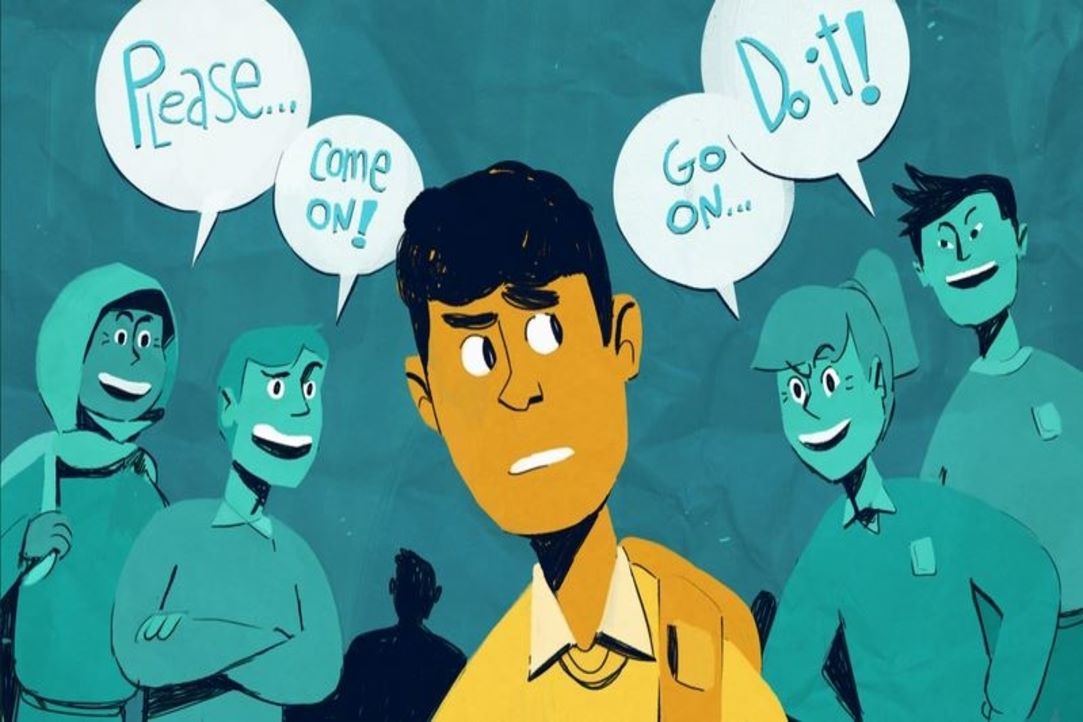
III. Understanding Survival-Based vs. Stability-Based Lifestyles
To understand the psychological and cultural shift taking place, it is helpful to distinguish between survival-based living and stability-based living. These are not moral categories, nor are they reflections of personal worth. They are adaptive responses to one’s environment—yet when misapplied, they can create long-term dissonance.
Survival-Based Culture
Most common in households or communities shaped by financial strain, social uncertainty, or unstable support systems. In these environments, life demands continuous responsiveness.
Characteristics include:
Short-term coping strategies: Decisions are often made based on what solves today’s problem, not what secures next year’s peace.
Constant adaptation: There is little room to pause, reflect, or refine; efficiency and immediate practicality become primary values.
Reduced emphasis on long-term planning: Stability requires predictability, and predictability is scarce. Emotional processing, creative development, and relationships may be shaped around endurance rather than growth.
These survival skills are intelligent and resourceful within their original context. They emerge from necessity, not choice.
Stability-Based Culture
More common in households where basic needs are reliably met and emotional safety is established. Stability allows people to build, preserve, and nurture rather than constantly adjust.
Characteristics include:
Conservation of time and energy: Instead of reacting to crisis, time is used to deepen relationships, cultivate home life, and refine interests.
Value placed on emotional depth and heritage: Traditions, family rituals, and shared memory help strengthen identity and belonging.
Intergenerational support: Responsibility is distributed rather than isolated. Community and family networks help regulate stress and preserve dignity.
In this environment, one does not have to prove resilience; resilience grows naturally from continuity.
Where the Drift Occurs
A notable cultural shift is now happening:
Individuals who grew up in stability-based contexts are adopting survival-mode aesthetics and behaviors because these appear:
Authentic
Independent
Relatable
Flexible
“Empowered”
Yet these behaviors are often copied without the original survival context, meaning the person is voluntarily embracing patterns designed for instability—while having access to stability they may not realize they are eroding.
Examples include:
Romanticizing constant hustle when rest is available
Embracing rootlessness and detachment when belonging is already present
Overvaluing self-reliance when interdependence would be healthier
Rejecting traditions or routine because they seem old-fashioned or limiting
This drift is subtle but significant. A lifestyle designed for survival cannot easily maintain emotional spaciousness, long-term well-being, or continuity of identity.
The core insight:
Survival behaviors are powerful adaptations when life leaves no alternative. But when embraced without necessity, they can quietly dismantle the foundations that make a stable, meaningful life possible.
IV. Why Drift Happens
Drift rarely begins with deliberate rejection of one’s roots. It often unfolds gradually, shaped by shifts in perception, belonging, and identity. Understanding these forces helps individuals recognize why certain lifestyles feel compelling—even when they do not ultimately feel nourishing.
1. Distance From the Hardship That Built Current Stability
Many people today inherit the benefits of generations who struggled intensely to create security—financial independence, social standing, educational access, and emotional safety.
When the memory of hardship fades, the stability achieved can be mistaken for something effortless or replaceable. The discipline, restraint, and values that sustained earlier generations may no longer appear necessary. Without the lived memory of why certain ways of living were chosen, individuals may experiment with lifestyles optimized for survival rather than continuity.
2. Global Lifestyle Aesthetics Replacing Cultural Belonging
Social media and global consumer culture create the illusion of one universal “modern lifestyle.”
Aesthetic identity—how one appears, behaves, or lives—gets prioritized over alignment with one’s cultural, familial, or personal reality.
For those shaped by nuanced heritage and refinement, this shift can lead to identities that feel externally impressive but internally unrooted.
3. Peer Validation Overpowering Family and Cultural Alignment
When belonging is sought through peer networks, especially those shaped by different socio-economic histories, individuals may adopt norms that do not reflect their home values.
The desire to avoid seeming sheltered, traditional, dependent, or outdated can drive people toward lifestyles shaped by survival dynamics—thinking this demonstrates maturity or independence.
4. Commercial Industries Benefit from Outsourcing Care, Home, and Community Roles
Modern economies are structured around monetizing tasks that were once part of natural community functioning—food preparation, childcare, household management, emotional support.
When these are marketed as burdensome, regressive, or unnecessary, outsourcing appears both progressive and practical.
However, what is lost is not merely labor—it is continuity, intimacy, identity, and skill.
5. The Glorification of the Emotionally Tough, Detached Individual
Cultural messaging increasingly equates emotional softness and familial interdependence with weakness.
Strength becomes defined as:
unbothered
self-contained
immune to emotional influence
always “busy” or “hustling”
This ideal often mirrors survival environments where emotional sensitivity is a liability—not a flaw, but a protective adaptation. When carried into contexts where safety exists, however, it can erode the capacity for depth, subtlety, and relational richness.
6. Loss of Intergenerational Skill and Wisdom Transmission
Many of the most stabilizing cultural practices—rituals, food traditions, gender cooperation systems, elder-guided problem solving—are no longer passed down.
Not because they became irrelevant, but because the environments that protected them fractured.
Without elders who actively mentor and model, younger generations may misinterpret tradition as limitation rather than inheritance.
In Essence
Drift occurs when external symbols of empowerment appear more appealing than the quieter, deeper forms of fulfillment rooted in cultural maturity, emotional grounding, and intergenerational continuity.
Recognizing these forces allows individuals to question:
Am I choosing this because it nourishes me, or because it is what appears admirable, modern, or socially rewarded?

Case Studies: Survival Reframed as Empowerment
The following examples illustrate how practices rooted in necessity become repackaged as aspirational, “modern,” or identity-defining choices. In each case, the behavior itself is not inherently negative. The key is understanding why one adopts it—and whether it aligns with long-term emotional, familial, and cultural well-being.
1. Leaving Home Early for Work or Study
Original Necessity:
In many families, young individuals moved away because local opportunities were scarce. Migration was a step toward economic uplift or escape from instability. It was a sacrifice made with awareness of difficulty, not glamour.
Rebranding Narrative:
Today, living away from family is often portrayed as a symbol of independence, personal strength, or self-creation. It is marketed as proof of maturity and individuality.
Potential Inner Conflict:
A pervasive sense of loneliness or emotional rootlessness
Difficulty maintaining cultural, linguistic, or intergenerational identity
A subtle loss of groundedness, belonging, and relational warmth
The shift can lead individuals to assume that being “unattached” or “self-contained” is inherently superior—when, in reality, such detachment was originally a response to necessity, not an ideal.
2. Women Working Outside the Home While Outsourcing Caregiving
Original Necessity:
Women entered labor-intensive external work in conditions where families needed dual income for survival.
Rebranding Narrative:
The same dynamic is now celebrated as liberation, empowerment, and “breaking tradition.” Caring for children or managing a home is framed as outdated or limiting.
Potential Inner Conflict:
Emotional exhaustion from balancing professional and domestic expectations
Weakened bonding between mother and child or within the household
A sense of fragmented identity—performing strength externally while feeling depleted internally
The intent is not to dismiss women’s professional agency—but to recognize that outsourcing core relational roles may come with invisible emotional costs that deserve careful consideration.
3. Replacing Home-Cooked Food with Eating Out or Quick Consumption Food Culture
Original Necessity:
In households with unpredictable working hours or economic instability, convenience foods were survival tools.
Rebranding Narrative:
Fast food, café culture, and constant dining out are now framed as modern lifestyle markers—signifying busyness, autonomy, and social presence.
Potential Inner Conflict:
Loss of grounding family rituals around shared meals
Gradual decline in nutritional health and digestive stability
A diminishing sense of home as a place of nourishment and togetherness
Food becomes less about connection and more about performance or convenience.
4. Minimalism and the Aestheticization of Frugality
Original Necessity:
Living small, owning few items, and reusing everything were often responses to limited resources.
Rebranding Narrative:
Minimalism is now portrayed as elite, spiritually refined, environmentally conscious, and intellectually advanced.
Potential Inner Conflict:
Difficulty discerning whether simplicity is truly chosen or socially performed
Confusion between genuine contentment and aesthetic identity management
Loss of heritage objects, memories, or anchors to one’s personal history
Minimalism can be meaningful—but only when chosen from inner clarity rather than trend.
5. Splurging as Coping: Gadgets, Vehicles, High-Fashion Consumption, Party Culture
Original Necessity:
In survival environments, quick pleasures like alcohol, nicotine, flashy purchases, and nightlife served as emotional escape from chronic stress.
Rebranding Narrative:
These behaviors are now packaged as:
“You only live once” (YOLO) empowerment
Personal luxury expression
Social status signaling
Rewarding oneself for hard work
Potential Inner Conflict:
Emotional numbing, burnout, or emptiness masked as excitement
Dependence on external validation to feel significant
Financial strain created by unnecessary lifestyle inflation
The pleasure is real—but often inconsistent with deeper emotional and cultural needs for meaning, belonging, and dignity.
6. Normalization of Short-Term, Transactional Relationships
Original Necessity:
In unstable environments, relationships were often based on utility, not emotional depth, because survival required adaptability.
Rebranding Narrative:
Casual connections are portrayed as confident, modern, and mature—avoiding “attachment,” “dependence,” or vulnerability.
Potential Inner Conflict:
Inability to form secure, lasting intimacy
Chronic loneliness masked by social busyness
View of relationships as replaceable rather than sacred
People may feel a quiet longing for depth—but suppress it to avoid appearing weak.
7. Bullying or Mocking Those Who Choose Stability
Original Necessity:
In environments where emotional softness could be exploited, toughness was protective.
Rebranding Narrative:
Today, sensitivity, tradition, modesty, or choosing home-based roles may be mocked as naive, sheltered, or regressive.
Potential Inner Conflict:
Feeling forced to adopt harshness to fit in
Losing access to tenderness, grace, and refinement
Internal conflict between one’s nature and one’s social role
This dynamic pushes people to override their authentic temperament and values.

The Reader’s Inner Discomfort: What It Truly Indicates
Many individuals who adopt these modern, rebranded survival-based lifestyles describe a quiet, persistent unease. It may not be dramatic. It may not be easy to articulate. But it is there—subtle, steady, and difficult to ignore.
Common experiences include:
A gradual decline in refinement, softness, emotional depth, or a sense of inner dignity.
One may feel less patient, less graceful, less able to appreciate beauty or stillness. Life begins to feel rushed, reactive, or coarse.A sense of “performing life” instead of living it.
Decisions start to feel shaped by how they will appear to others—peers, colleagues, social media—rather than by what actually feels meaningful.Internal conflict between inherited values and trending norms.
The self may feel divided: one part longing for groundedness, tradition, intimacy, and continuity; another striving to appear modern, independent, and unfazed.
This friction is not fragility.
It is intuitive intelligence.
It signals that something about the adopted lifestyle does not align with the person’s natural identity, cultural rhythm, emotional needs, or psychological constitution. It is the psyche’s way of saying:
“This path does not nourish me. This is not who I am. Something valuable is being quietly lost.”
Many people interpret this discomfort as a personal failing. They assume they must toughen up, grow thicker skin, adapt harder, or prove they can handle the lifestyle they’ve adopted.
But what is often happening is not a lack of strength—it is the presence of sensitivity, discernment, continuity, and inner alignment trying to communicate.
The discomfort is a compass.
It points toward what is truly meaningful.
It helps protect what is subtle, precious, and easily eroded.
Honoring that signal is not regression.
It is the beginning of returning to oneself.
Re-Evaluating the Self: Identity, Culture, and Personal Alignment
The point of reflection is not to reject modernity, ambition, or change. It is to understand who you are before deciding what you adopt. Culture, family tradition, emotional temperament, and inherited value systems are not accidental—they are part of a lineage that has shaped your psychological strengths, relational instincts, and vision of dignity.
1. Re-Explore Your Cultural Roots and Inherited Values
Return to the ways your family or community once lived—not as nostalgia, but as inquiry.
Ask:
What did they protect?
What did they prioritize?
What did they refuse to compromise?
Often, these choices were not arbitrary—they were the result of generations discovering what sustains inner balance and collective well-being.
2. Recognize the Richness You Came From
If you were raised in a stable, culturally rooted environment, you likely inherited:
Emotional attunement and capacity for deeper relationships
A sense of home as sanctuary
Respect for time, privacy, and dignity
An ability to savor subtlety, beauty, and meaning
These qualities are not limitations. They are wealth.
3. Compare This Foundation With Popular Drift Norms
Hold both lifestyles side by side and observe:
Which supports your energy rather than depletes it?
Which strengthens your relationships rather than fragments them?
Which nourishes your inner life rather than distracts from it?
Which leaves you feeling more yourself?
This is not about moral right or wrong.
It is about coherence.
4. Consider Returning to or Preserving Your Roots
Even if stability-based values are not currently fashionable, they may offer something today’s survival-coded trends cannot:
Fulfillment, rather than momentary excitement
Peace, rather than constant stimulation
Dignity, rather than performance
Wholeness, rather than scattered identity
A meaningful life does not require validation from the crowd.
It requires inner agreement.
The quiet truth:
If something inside you longs for softness, rootedness, continuity, or refinement, it is not weakness or fear—it is memory.
Memory of who you are.
Memory of where you come from.
Memory of what sustains your spirit.
Re-evaluation is not about going backward.
It is about going back to yourself, so that every choice you make moving forward is truly yours.
Reflection Prompts
Self-awareness is the most reliable safeguard against unconscious drift. These questions are not meant to judge or restrict—they are meant to clarify. Take time with each. Notice what arises in your body, not just your mind.
1. Am I choosing this lifestyle, or absorbing it because it is popular?
Is this a conscious alignment with my values, or a quiet attempt to belong, impress, or avoid feeling “out of step”?
If popularity disappeared tomorrow, would I still want this?
2. Does this behavior make me feel grounded, or does it make me feel scattered and hardened?
Groundedness feels like:
calm
steadiness
self-respect
emotional spaciousness
Scatteredness feels like:constant motion
emotional overload
numbness
the sense of being disconnected from oneself
Which experience does this choice cultivate in you?
3. What cultural or familial practices still feel wise, nourishing, or emotionally truthful to me?
Consider:
daily rhythms
manner of speech
hospitality
relationship to elders
food, rituals, and ways of resting
Not everything from the past must be preserved—but some things were gems of human continuity and emotional intelligence.
4. Would returning to (or maintaining) those practices support my mental, emotional, and relational well-being?
If yes, what prevents that return?
Fear of judgment?
Fear of seeming old-fashioned?
Fear of being seen as “less independent”?
Or simply the inertia of current habits?
5. Which version of me feels more at peace?
The one performing strength?
Or the one who is quietly, naturally strong?
6. What do I lose when I trade depth, gentleness, and presence for trend-based identity?
Every choice shapes character.
Every lifestyle shapes the heart.

Conclusion
Survival-based lifestyles are not inferior, flawed, or shameful. They are intelligent responses to environments where resources, safety, or stability were limited. They demonstrate creativity, endurance, and resilience. The concern arises only when these survival-mode behaviors are adopted without context—not because they are needed, but because they are marketed as symbols of empowerment, progress, or modern identity.
When survival strategies are repackaged as ideals, individuals may unintentionally distance themselves from the stability, continuity, and emotional richness that their own upbringing or heritage already provides. What is lost then is not convenience or trend alignment alone, but a deeper sense of belonging, dignity, softness, and wholeness.
Authentic empowerment is not about appearing strong, independent, or current.
It is about choosing what sustains your inner peace, your relationships, your cultural identity, and your emotional well-being over time.
The invitation is simple:
Pause.
Ask what truly nourishes you.
Honor the answer—even if it is not fashionable, easily understood, or widely celebrated.
Because empowerment is not about performing strength.
It is about living from a place where you do not need to.
Support Meda Foundation
This article, like all others, has been made possible through the support of patrons.
If you found it grounding, clarifying, or useful in any capacity, please consider contributing to sustain ongoing research and writing.
Additionally, you are invited to share your own insights, cultural experiences, and lived reflections using the feedback form.
Your participation helps expand collective understanding and ensures this work remains relevant, nuanced, and community-informed.
Resources for Further Research
The following links offer deeper exploration into cultural identity, consumer behavior, emotional well-being, and socio-economic lifestyle patterns. These are provided in plain text so you may access them directly:
Cultural Identity, Values, and Intergenerational Wisdom
https://plumvillage.org/
https://iawaketechnologies.com/
https://www.radiantmind.net/
Socio-Economic Lifestyles and Class Mobility
https://www.brookings.edu/
https://www.pewresearch.org/
https://journals.sagepub.com/home/soc
The Role of Marketing and Consumer Culture
https://www.guernica-mag.com/
https://www.adbusters.org/
Emotional Health, Grounding, and Authentic Living
https://www.themarginalian.org/
https://www.psychologytoday.com/
https://www.mindfulnesscds.com/
Slow Living, Home Culture, and Domestic Rhythms
https://www.thelazygeniuscollective.com/
https://www.anotherescape.com/
https://www.theslowhome.com/
Food Culture and Traditional Nourishment
https://www.culinaryhistory.org/
https://www.oldwayspt.org/
On Identity, Community, and Belonging (Talks & Podcasts)
https://open.spotify.com/show/2Z10COk9U0Z0G7CQG2YxKV (On Being)
https://open.spotify.com/show/4rOoJ6Egrf8K2IrywzwOMk (The Jordan B. Peterson Podcast, selected episodes on meaning & tradition)
https://www.youtube.com/@SchoolOfLifeChannel
Documentaries
https://www.youtube.com/watch?v=f79rVtYmLZk (The Century of the Self)
https://topdocumentaryfilms.com/minimalism/ (Minimalism)


