

Automation is not eliminating human relevance; it is accelerating human evolution. As machines absorb computation, pattern detection, and optimization, value migrates upward toward interpretation, ethical judgment, systems design, and adaptive learning. The defining advantage of the future lies in cognitive resilience—regulating physiology under pressure, integrating knowledge across domains, collaborating intelligently with AI, and anchoring identity in learning velocity rather than static expertise. Those who shift from task execution to system orchestration, from knowledge possession to knowledge integration, and from competing with machines to stewarding them will not merely adapt to disruption—they will architect the next layer of civilization with clarity, responsibility, and durable agency.
ಸ್ವಯಂಚಾಲಿತ ವ್ಯವಸ್ಥೆಗಳು ಮಾನವ ಪ್ರಾಸಂಗಿಕತೆಯನ್ನು ಅಳಿಸುತ್ತಿಲ್ಲ; ಅವು ಮಾನವ ಅಭಿವೃದ್ಧಿಯನ್ನು ವೇಗಗೊಳಿಸುತ್ತಿವೆ. ಯಂತ್ರಗಳು ಗಣನೆ, ಮಾದರಿ ಗುರುತಿಸುವಿಕೆ ಮತ್ತು ಉತ್ತಮೀಕರಣವನ್ನು ಸ್ವೀಕರಿಸುವಾಗ, ಮೌಲ್ಯವು ವ್ಯಾಖ್ಯಾನ, ನೈತಿಕ ನಿರ್ಣಯ, ವ್ಯವಸ್ಥಾ ವಿನ್ಯಾಸ ಮತ್ತು ಹೊಂದಿಕೊಳ್ಳುವ ಕಲಿಕೆಯ ಕಡೆಗೆ ಏರಿಕೊಳ್ಳುತ್ತದೆ. ಭವಿಷ್ಯದ ನಿರ್ಣಾಯಕ ಶಕ್ತಿ ಸಂಜ್ಞಾತ್ಮಕ ಸಹನಶೀಲತೆಯಲ್ಲಿದೆ—ಒತ್ತಡದ ಸಂದರ್ಭದಲ್ಲಿ ದೇಹ-ಮನಸ್ಸನ್ನು ನಿಯಂತ್ರಿಸುವುದು, ವಿವಿಧ ಕ್ಷೇತ್ರಗಳ ಜ್ಞಾನವನ್ನು ಏಕೀಕರಿಸುವುದು, AI ಜೊತೆಗೆ ಜಾಣ್ಮೆಯಿಂದ ಸಹಕರಿಸುವುದು, ಮತ್ತು ಸ್ಥಿರ ಪರಿಣತಿಗಿಂತ ಕಲಿಕೆಯ ವೇಗದಲ್ಲಿ ತನ್ನ ಗುರುತನ್ನು ನೆಲೆಯೂರಿಸುವುದು. ಕಾರ್ಯನಿರ್ವಹಣೆಯಿಂದ ವ್ಯವಸ್ಥಾ ಸಂಯೋಜನೆಗೆ, ಜ್ಞಾನ ಸಂಗ್ರಹಣೆಯಿಂದ ಜ್ಞಾನ ಏಕೀಕರಣಕ್ಕೆ, ಯಂತ್ರಗಳೊಂದಿಗೆ ಸ್ಪರ್ಧೆಯಿಂದ ಅವುಗಳ ಮೇಲಿನ ಪಾಲಕತ್ವಕ್ಕೆ ಮಾರ್ಪಡುವವರು ವ್ಯತ್ಯಯಕ್ಕೆ ಹೊಂದಿಕೊಳ್ಳುವುದಷ್ಟೇ ಅಲ್ಲ, ಸ್ಪಷ್ಟತೆ, ಜವಾಬ್ದಾರಿ ಮತ್ತು ದೀರ್ಘಕಾಲೀನ ಸ್ವಾಯತ್ತತೆಯೊಂದಿಗೆ ಮುಂದಿನ ನಾಗರಿಕತಾ ಹಂತವನ್ನು ರೂಪಿಸುವವರು ಆಗುತ್ತಾರೆ.
Cognitive Resilience: Upgrading Human Intelligence in the Age of Autonomous Systems
I. Introduction: The Automation Inflection Point
Automation will not diminish humanity—it will expose it. As algorithmic systems absorb routine cognition, what remains visible—and valuable—is the quality of our judgment, the flexibility of our thinking, and the steadiness of our nervous systems under pressure. The competitive advantage of the coming decade is not raw intelligence. It is cognitive elasticity.
The strategic imperative is clear: do not compete with machines on speed, storage, or statistical recall. Redesign the human mind to operate symbiotically with them.
The Automation Inflection: From Muscle to Mind
Human civilization has always progressed through externalization. We first extended our physical power—tools amplified muscle. The industrial revolution mechanized force. The digital revolution mechanized information. Today, we stand in the early decades of cognitive automation.
In The Second Machine Age, Erik Brynjolfsson and Andrew McAfee describe how digital technologies differ from previous industrial shifts. Software scales at near-zero marginal cost. Once built, it replicates infinitely. This property allows intelligence-like functions—recognition, optimization, prediction—to proliferate across industries almost instantly.
Historically, automation replaced muscle.
Today, it replaces:
- Pattern recognition
- Memory retrieval
- Predictive analytics
- Structured reasoning
- Procedural drafting
This transition marks a qualitative shift.
Mechanization vs. Cognitive Externalization
Mechanization replaces effort.
Cognitive externalization replaces thought routines.
When a calculator performs arithmetic, we do not mourn long division. When GPS optimizes routes, we do not romanticize paper maps. Yet AI’s encroachment into analytical and creative domains feels different because it touches identity.
We often confuse cognition with selfhood. When machines draft, diagnose, recommend, and strategize, the perceived threat is not functional—it is existential.
In Homo Deus, Harari warns of a potential “useless class”—humans displaced not only economically but functionally by superior algorithms. Whether or not that future materializes, the warning is instructive. If human value is defined solely by predictable output, then predictability becomes our vulnerability.
The automation inflection point therefore forces a reckoning:
Are we primarily processors—or interpreters? Executors—or architects?
The Core Thesis: AI Is Commoditizing Predictable Cognition
Artificial intelligence does not eliminate intelligence. It commoditizes the predictable layers of it.
Anything that can be:
- Structured
- Quantified
- Repeated
- Optimized
- Pattern-matched across large datasets
is increasingly automatable.
This does not imply human decline. It implies human repositioning.
When logic becomes infrastructure, differentiation shifts upward. The advantage migrates from calculation to calibration—from speed to synthesis.
The human edge now resides in five interlocking domains.
1. Non-Linear Integration
Machines excel at correlation. Humans excel at meaning.
AI systems can identify statistical relationships across billions of data points. What they cannot inherently possess is lived embodiment—social memory, moral tension, cultural nuance, existential awareness.
Non-linear integration is the ability to:
- Connect disparate domains
- Recognize subtle contextual shifts
- Weave narrative across conflicting signals
- Translate ambiguity into direction
This is not mere creativity. It is synthesis under uncertainty.
In environments where data is abundant but interpretation is contested, integrative thinkers become indispensable. They do not simply analyze; they contextualize.
2. Ethical Arbitration
AI optimizes defined objectives. It does not originate moral frameworks.
Every algorithm operates within constraints set by humans:
- What is success?
- What trade-offs are acceptable?
- Whose values dominate?
- Who absorbs risk?
Ethical arbitration becomes the highest form of strategic responsibility. As automated systems increasingly influence hiring, credit, policing, healthcare, education, and governance, the question shifts from “Can we build it?” to “Should we deploy it—and under what guardrails?”
Human agency persists at the level of intention and oversight.
Automation amplifies consequences.
Ethical clarity therefore becomes non-negotiable.
3. Emotional Intelligence Under Volatility
The nervous system is now a strategic asset.
Automation accelerates change. Acceleration increases uncertainty. Uncertainty activates threat responses.
Under chronic stress:
- Cortisol rises
- Prefrontal cortex efficiency declines
- Cognitive flexibility narrows
- Decision-making becomes reactive
In volatile environments, those who regulate their physiology maintain strategic clarity.
Emotional intelligence is not soft skill—it is cognitive infrastructure. It determines whether individuals and institutions respond to disruption with curiosity or contraction.
Leaders who stabilize teams under technological transition create adaptive cultures. Those who panic spread rigidity.
Automation will test emotional maturity more than intellectual capacity.
4. Strategic Foresight
When execution is automated, vision becomes paramount.
Strategic foresight includes:
- Scenario modeling beyond linear projections
- Anticipating second- and third-order effects
- Identifying ethical inflection points
- Designing adaptable systems rather than static plans
Machines can project trends. Humans must decide which trajectories are desirable.
The future will not reward those who merely operate systems. It will reward those who design them.
5. Meta-Learning: Learning How to Learn
Perhaps the most critical human advantage is meta-learning—the capacity to reconfigure one’s own cognitive architecture.
In a landscape where technical skills decay rapidly:
- Static expertise becomes fragile.
- Adaptive learning velocity becomes capital.
Meta-learning includes:
- Pattern recognition about one’s own biases
- Feedback integration without ego collapse
- Skill stacking across domains
- Updating beliefs in light of new evidence
The question is no longer: “What do you know?”
It is: “How quickly can you update what you know?”
Automation accelerates obsolescence. Meta-learning accelerates renewal.
The Psychological Pivot: From Competition to Collaboration
Many respond to AI with defensive comparison:
- Can I outperform it?
- Can I do this faster?
- Can I retain superiority?
This framing is misaligned.
Machines outperform humans in bounded optimization. Humans outperform machines in boundary redefinition.
The more productive question becomes:
- What cognitive layers should I externalize?
- What layers must I strengthen?
- How do I preserve executive function for direction rather than depletion?
Competition with silicon is unwinnable at scale. Symbiosis is strategic.
Practical Implications: Immediate Shifts in Personal Strategy
To align with this inflection point, individuals must begin recalibrating now.
1. Protect Deep Thinking
Schedule uninterrupted blocks for integrative reasoning. Automation increases distraction; depth becomes scarce.
2. Offload Intelligently
Use AI for:
- Draft generation
- Data aggregation
- Scenario simulation
Retain:
- Final judgment
- Ethical weighting
- Strategic framing
3. Train Emotional Regulation
Incorporate:
- Breathwork or contemplative practice
- Physical exercise
- Reflection cycles
A regulated nervous system sustains adaptive cognition.
4. Build Cross-Domain Literacy
Avoid intellectual monoculture. Study philosophy, systems theory, behavioral economics, and technology governance alongside technical skills.
Cross-disciplinary thinking enhances non-linear integration.
A Balanced View: Risks and Responsibilities
This is not technological utopianism.
Risks are real:
- Labor displacement
- Economic polarization
- Algorithmic bias
- Cognitive deskilling
- Overreliance on automation
However, decline is not inevitable. Outcomes depend on governance, education reform, and personal adaptation.
The era of automation magnifies both human strengths and human weaknesses. If we choose passivity, fragility increases. If we choose intentional redesign, capacity compounds.
The Deeper Question
Automation exposes what cannot be automated:
- Conscience
- Meaning-making
- Purpose
- Vision
- Adaptability
The decisive shift of this decade is internal.
The market will reward cognitive elasticity.
Institutions will reward ethical clarity.
Societies will depend on resilient nervous systems and integrative thinkers.
The automation inflection point is not asking whether humans are obsolete.
It is asking whether humans are willing to evolve.
In the sections that follow, we move from philosophical framing to neurobiological foundations and concrete strategies for training cognitive resilience in a world where algorithms never sleep—and adaptation is the new literacy.
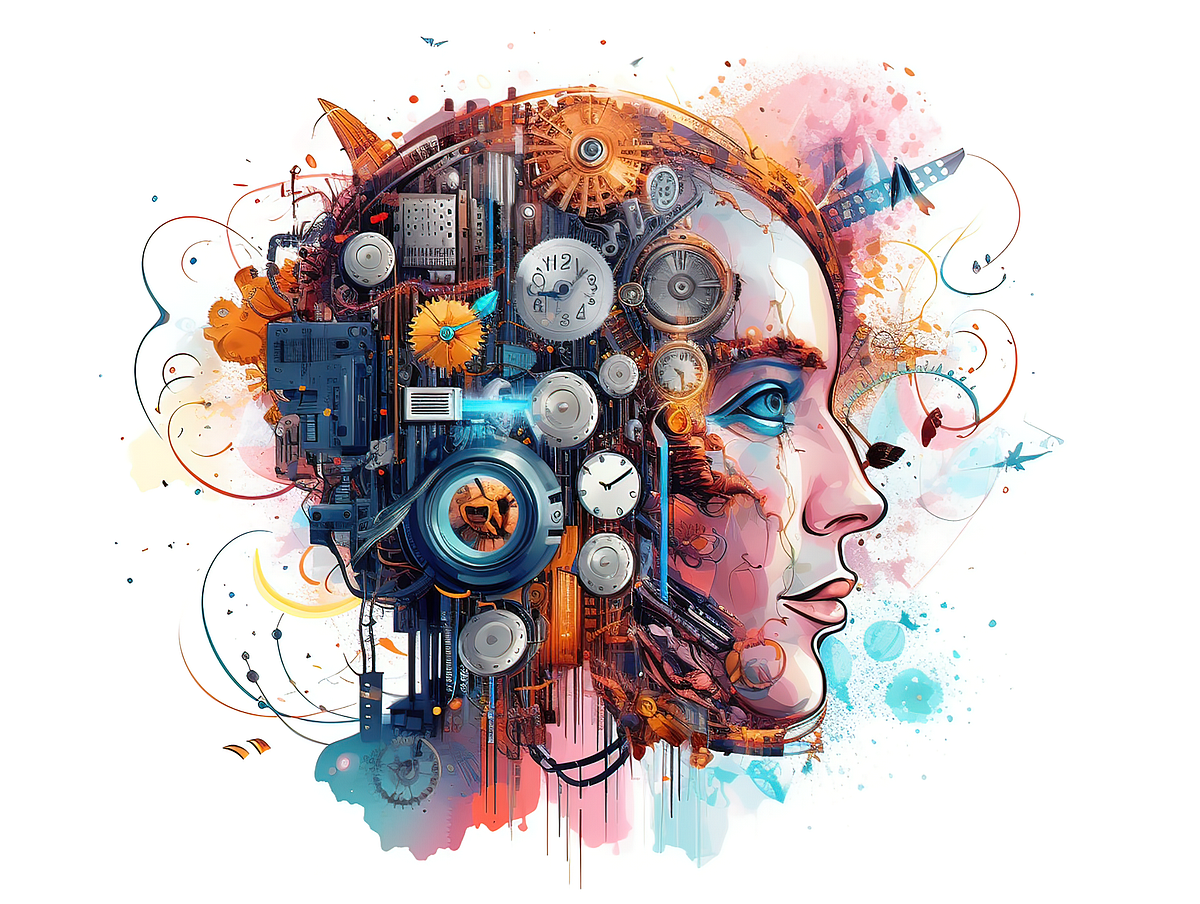
II. The Great Cognitive Decoupling
We are witnessing a structural separation between computation and judgment. Machines now dominate scalable logic, but humans retain authority over meaning. The decisive shift is this: linear reasoning can be industrialized; contextual wisdom cannot.
The task before us is not to defend logic as a personal asset, but to reposition it as infrastructure—then build our identity around discernment, integration, and resilience.
3. Logic as Infrastructure
Artificial intelligence systems now outperform humans in combinatorial logic, probabilistic inference, pattern detection across vast datasets, and structured reasoning tasks. What once required elite training is increasingly accessible through algorithmic systems operating at negligible marginal cost.
This is not a marginal improvement. It is a category shift.
Logical processing is becoming a utility layer—comparable to electricity or cloud computing. Once rare and valuable, it is now ambient and scalable.
The Utility Layer of Intelligence
Electricity did not eliminate human effort; it standardized power access.
Cloud storage did not eliminate memory; it externalized it.
AI does not eliminate reasoning; it externalizes predictable reasoning.
This creates a powerful decoupling:
- Logic becomes abundant.
- Interpretation becomes scarce.
In Thinking, Fast and Slow, Daniel Kahneman distinguishes between System 1 (fast, intuitive, heuristic-based) and System 2 (slow, analytical, effortful). For decades, education and professional advancement rewarded mastery of structured System 2 thinking—calculation, analysis, optimization.
Today, AI systems simulate large portions of System 2 at scale.
What remains distinctly human is not raw analysis but calibration:
- When to trust analysis
- When to question outputs
- How to contextualize statistical inference within ethical and social realities
Scarcity Shifts from Data to Discernment
We have moved from information scarcity to information saturation. The new bottleneck is discernment:
- Which signals matter?
- What assumptions underlie the model?
- What consequences flow from acting on this prediction?
Linear reasoning is scalable. Contextual wisdom is not.
Wisdom integrates:
- Lived experience
- Cultural nuance
- Ethical trade-offs
- Long-term consequences
- Emotional intelligence
AI can generate options. Humans must judge them.
The professionals who cling to logic as identity will feel threatened. Those who treat logic as infrastructure will feel liberated.
4. The Extended Mind Hypothesis
The fear that AI diminishes intelligence assumes cognition is strictly internal. Neuroscience and philosophy suggest otherwise.
The Extended Mind hypothesis, proposed by philosophers Andy Clark and David Chalmers, argues that cognition has always been distributed beyond the skull. Tools become functional parts of thought.
Consider the historical arc:
- Writing externalized memory.
- Mathematics externalized calculation.
- Maps externalized spatial reasoning.
- Libraries externalized collective knowledge.
We did not become less intelligent by inventing these tools. We became capable of higher-order synthesis.
AI is the next stage of cognitive distribution.
AI as an External Cognitive Cortex
When properly integrated, AI functions as:
- A probabilistic pattern engine
- A retrieval system
- A simulation platform
- A drafting assistant
- A hypothesis generator
It does not replace cognition; it amplifies bandwidth.
The risk is not skill erosion per se. The risk is uncritical dependence.
Proper integration requires three principles:
- Retain executive control. Humans define objectives and constraints.
- Interrogate outputs. AI-generated content is probabilistic, not authoritative.
- Preserve cognitive stretch. Do not outsource thinking that builds judgment.
When used strategically, AI reduces cognitive friction. It frees executive function for synthesis and direction.
When used passively, it induces cognitive atrophy.
The difference lies in agency.
5. Automation Anxiety as an Evolutionary Signal
The psychological turbulence surrounding AI adoption is not irrational—it is biological.
The human nervous system evolved to detect uncertainty as potential threat. Rapid technological acceleration destabilizes predictability, activating survival circuitry.
The Neurobiology of Threat
When the brain perceives instability:
- The amygdala signals danger.
- Cortisol levels rise.
- The sympathetic nervous system activates.
- Prefrontal cortex efficiency decreases.
Under chronic stress:
- Working memory capacity shrinks.
- Cognitive flexibility declines.
- Decision-making becomes rigid and defensive.
- Creativity diminishes.
This is adaptive in short-term physical danger. It is counterproductive in long-term technological transition.
Anxiety narrows cognition.
Resilience expands it.
Cortisol and Executive Suppression
Research consistently shows elevated cortisol impairs working memory and complex reasoning. The very systems needed to navigate automation are the first to degrade under prolonged stress.
Thus, automation anxiety can paradoxically accelerate obsolescence—if unmanaged.
Reframing the Signal
Automation anxiety does not primarily signal skill irrelevance. It signals identity instability.
For decades, professional identity was anchored in:
- Technical expertise
- Analytical competence
- Role-based predictability
When machines perform these functions, the ego destabilizes.
The deeper threat is not employment; it is self-concept.
The productive reframing is this:
Anxiety is an evolutionary alarm, indicating the need for cognitive adaptation.
It signals:
- Update required
- Skill repositioning necessary
- Identity expansion overdue
The individuals who interpret anxiety as evidence of extinction will contract.
Those who interpret it as evidence of transition will expand.
Integrative Insight: Decoupling Without Disintegration
The Great Cognitive Decoupling separates:
- Computation from judgment
- Pattern detection from meaning
- Analysis from ethics
This separation does not diminish humanity. It clarifies it.
Machines industrialize logic.
Humans must industrialize resilience.
The strategic question is no longer:
“How do I outperform AI at structured reasoning?”
It becomes:
“How do I strengthen discernment, contextual intelligence, and nervous system stability in a world where logic is abundant?”
The answer to that question defines cognitive resilience—and determines who architects the next phase of civilization rather than reacting to it.

III. The Neurobiology of Cognitive Resilience
Cognitive resilience is not motivational rhetoric—it is neurobiological architecture. In an automated era, the brain itself becomes strategic infrastructure. The individuals who deliberately cultivate neural plasticity, regulate stress physiology, and design antifragile mental systems will adapt fluidly to technological acceleration. Those who cling to static expertise will experience cognitive brittleness.
Resilience, at its core, is trained plasticity under pressure.
6. Plasticity as Strategic Capital
For most of the twentieth century, intelligence was viewed as relatively fixed. That assumption has been decisively overturned. In The Brain That Changes Itself, Norman Doidge synthesizes research demonstrating that the brain reorganizes structurally and functionally throughout life.
Neuroplasticity is not a motivational slogan—it is a biological reality.
Core Principles of Plasticity
- Novelty strengthens synaptic pathways.
When the brain encounters unfamiliar stimuli, it recruits new neural circuits. Repeated exposure consolidates these pathways through long-term potentiation. - Monotony degrades cognitive flexibility.
Repetitive task environments reduce neural diversity. Efficiency increases in narrow domains, but adaptability declines. - Cross-domain learning increases neural redundancy.
Learning across disciplines builds overlapping networks. Redundancy enhances resilience. If one cognitive pathway weakens, others compensate.
In an automation-dominated environment, plasticity becomes strategic capital. Why?
Because technical skills decay. Cognitive agility compounds.
Strategic Applications
Plasticity does not emerge passively. It requires deliberate stressors.
Intentional Discomfort Training
- Learn skills outside professional identity.
- Engage in unfamiliar social or intellectual environments.
- Expose yourself to opposing viewpoints.
Discomfort signals growth, not incompetence.
Rotational Cognitive Challenges
Alternate between:
- Analytical work
- Creative production
- Physical training
- Philosophical reflection
Cognitive cross-training prevents specialization rigidity.
Periodic Skill Destabilization
Intentionally disrupt mastery zones:
- Update tools before forced to.
- Replace routine workflows with experimental ones.
- Attempt projects with incomplete preparation.
Destabilization strengthens adaptability.
Plasticity is the biological foundation of long-term relevance.
7. The Survival Brain vs. The Creative Brain
Automation accelerates change. Change activates threat perception. Without regulation, adaptation stalls.
In Flow, Csikszentmihalyi describes optimal human performance as occurring in a state of deep immersion—flow—where challenge and skill are balanced. This state depends on neurological conditions incompatible with chronic stress.
The Neurophysiological Contrast
Sympathetic Activation (Fight-or-Flight)
- Triggered by uncertainty and perceived threat
- Elevates heart rate and cortisol
- Narrows attentional bandwidth
- Favors defensive cognition
Under sympathetic dominance:
- Risk-taking decreases
- Creativity contracts
- Decision-making becomes reactive
This state is adaptive in immediate danger—but maladaptive in prolonged technological transition.
Parasympathetic Regulation (Rest-and-Integrate)
- Slows heart rate
- Enhances prefrontal cortex function
- Expands attentional flexibility
- Enables integrative thinking
Generative cognition requires regulation.
The automation era places individuals in persistent low-grade uncertainty. Without physiological training, the survival brain overrides the creative brain.
Practical Implications
Cognitive resilience requires nervous system conditioning.
Breathing Protocols
Slow, controlled breathing shifts autonomic balance toward parasympathetic regulation.
Movement and Exercise
Physical training increases stress tolerance and improves executive function.
Deep Focus Cycles
Structured, distraction-free work periods train sustained attention and cognitive endurance.
Recovery Windows
Sleep and deliberate rest consolidate neural learning.
Automation resilience is therefore embodied.
You cannot think clearly in a chronically dysregulated body.
8. Antifragility in Mental Systems
Resilience is often defined as resistance to stress. A more powerful concept is antifragility.
In Antifragile, Nassim Taleb distinguishes:
- Fragile systems break under stress.
- Robust systems resist stress.
- Antifragile systems improve because of stress.
Cognition can follow any of these trajectories.
Applying Antifragility to the Mind
Seek Variability
Expose yourself to intellectual volatility—new technologies, interdisciplinary debates, ambiguous problems.
Embrace Feedback
Treat criticism as signal, not attack.
Rapid feedback loops accelerate adaptation.
Treat Errors as Adaptive Data
Mistakes reveal blind spots.
In antifragile systems, small failures prevent catastrophic ones.
Build Optionality
Develop multiple competencies.
Maintain parallel skill tracks.
Avoid single-point identity dependence.
Fragility vs. Antifragility in Identity
Cognitive fragility:
- Identity tied to static expertise
- Resistance to new tools
- Defensive posture toward change
- Fear of being outdated
Cognitive antifragility:
- Identity tied to learning velocity
- Curiosity toward disruption
- Willingness to experiment
- Comfort with provisional mastery
The automation era punishes rigidity.
It rewards adaptive reinvention.
Integrative Insight: Biology Is Destiny—Unless Trained
Plasticity enables adaptation.
Regulation sustains creativity.
Antifragility converts volatility into growth.
The future of work and leadership is therefore not merely technological. It is neurological.
Organizations that train cognitive resilience—through cross-training, feedback-rich cultures, physiological awareness, and experimentation—will outperform those that focus solely on tool acquisition.
Individually, the mandate is equally clear:
- Expand neural range.
- Stabilize your physiology.
- Seek controlled stress.
- Anchor identity in learning, not status.
Automation accelerates the environment.
Neurobiology determines whether acceleration becomes collapse—or evolution.

IV. Refining the Organic Edge
As automation absorbs predictable cognition, human value concentrates in domains that resist quantification: moral interpretation, relational depth, and intuitive synthesis under uncertainty. Machines optimize within defined parameters. Humans define the parameters—and occasionally redefine the game itself.
The organic edge is not sentimental nostalgia. It is a strategic differentiator. What cannot be standardized cannot be commoditized.
9. Human-Dominant Domains
Automation narrows the field of human comparative advantage—but it sharpens it. The domains that remain distinctly human are not tasks; they are capacities.
A. Moral Ambiguity: Defining the Objective Function
AI systems optimize toward objectives embedded in their training and constraints. They do not originate moral frameworks. They do not experience ethical tension. They cannot feel the weight of consequence.
Optimization presupposes a goal.
Humans decide the goal.
In complex environments, moral reasoning cannot be reduced to statistical consensus. Majority patterns in data reflect historical behaviors, not necessarily just outcomes.
Ethical decision-making requires:
- Weighing competing values
- Balancing short-term efficiency against long-term justice
- Accounting for unintended consequences
- Considering minority impact
- Exercising restraint in the face of capability
Machines can recommend.
Humans must justify.
As automated systems enter governance, healthcare, hiring, defense, and finance, the locus of responsibility intensifies. The more powerful the tool, the higher the ethical burden of the operator.
The organic edge lies in moral arbitration under ambiguity—where there is no dataset large enough to remove uncertainty.
B. High-Stakes Empathy: Trust as Biological Infrastructure
Technical efficiency does not replace trust. In fact, technological acceleration amplifies the need for it.
In Emotional Intelligence, Daniel Goleman argues that cognitive intelligence explains entry-level competence, but emotional intelligence predicts leadership effectiveness. High-stakes environments—negotiations, crisis response, coalition-building—depend on social perception and emotional regulation.
Trust is biologically anchored:
- Mirror neuron systems facilitate social attunement.
- Hormonal responses (e.g., oxytocin) influence bonding and cooperation.
- Facial micro-expressions transmit non-verbal signals.
No algorithm genuinely experiences shared risk. No neural network feels responsibility in the embodied sense.
High-stakes empathy includes:
- Reading unspoken resistance
- Sensing group morale shifts
- Calibrating tone in sensitive dialogue
- Repairing relational fractures
As AI handles analysis, human leadership becomes increasingly relational. The ability to build coalitions across diverse stakeholders becomes more valuable than solitary technical mastery.
In volatile systems, trust is stabilizing capital.
C. Chaotic Pattern Recognition: Intuition Under Sparse Data
Structured datasets favor machines. Chaotic environments favor humans.
In Sources of Power, Gary Klein documents how experienced professionals—firefighters, military commanders, emergency physicians—make rapid, high-stakes decisions under uncertainty. These decisions often rely on recognition-primed intuition rather than exhaustive analysis.
Humans excel at:
- Sparse data inference
- Rapid situational modeling
- Intuitive leaps in uncertainty
- Integrating sensory, emotional, and contextual signals
AI models rely on large training distributions. When scenarios fall outside familiar patterns, performance can degrade. Humans, by contrast, draw on embodied memory and narrative reasoning to fill gaps.
This is not mysticism. It is compressed experience.
Intuition is pattern recognition accumulated over time and integrated across modalities. It thrives in environments where data is incomplete and stakes are high.
10. The Intuitive Calibration Framework
The organic edge is most powerful when integrated—not isolated. The goal is not human-versus-machine superiority, but calibrated symbiosis.
The Intuitive Calibration Framework structures this integration.
Stage 1: Use AI for Baseline Analytics
Leverage machine capabilities for:
- Data synthesis
- Predictive modeling
- Scenario generation
- Draft construction
Treat outputs as informed baselines, not final verdicts.
Stage 2: Identify Anomalies
Examine:
- Outliers
- Edge cases
- Inconsistencies
- Assumptions embedded in the model
This stage restores critical oversight.
Stage 3: Apply Contextual Understanding
Layer in:
- Cultural nuance
- Institutional memory
- Political realities
- Human dynamics
Context often determines whether a statistically optimal solution is strategically viable.
Stage 4: Inject Ethical Scrutiny
Interrogate:
- Who benefits?
- Who bears risk?
- What long-term precedents are set?
- What values are implicitly encoded?
Ethical calibration transforms recommendation into responsible decision.
Stage 5: Produce Novel Synthesis
Move beyond optimization:
- Reframe the objective
- Combine insights across domains
- Generate alternatives not present in training data
- Design adaptive pathways
This framework mirrors the “centaur” model from hybrid chess, where human–machine teams outperform either alone. Machines calculate possibilities. Humans define intention and direction.
Symbiosis becomes multiplicative, not additive.
11. The Strategic Utility of Human Imperfection
Perfection is a machine goal. Transformation is a human capacity.
Biological unpredictability—often labeled as weakness—contains strategic advantages:
- Creative divergence
- Disruptive innovation
- Narrative reframing
- Rule-breaking breakthroughs
Digital systems optimize stability. They converge toward equilibrium. Humans, by contrast, introduce asymmetry.
History’s major inflection points rarely emerged from optimized continuity. They emerged from imaginative departures.
Imperfection fuels exploration:
- Emotional fluctuation generates artistic expression.
- Cognitive bias sometimes produces novel associations.
- Dissatisfaction catalyzes systemic redesign.
Standardized systems minimize variance. Innovation requires variance.
In stable environments, optimization dominates.
In transformational periods, divergence prevails.
The automation era is transformational.
Integrative Insight: From Optimization to Transformation
As logic becomes industrialized, the organic edge shifts to:
- Defining objectives
- Building trust
- Interpreting ambiguity
- Generating divergence
The question is not whether machines can simulate aspects of these capacities. The question is whether humans will refine them deliberately.
Automation removes routine.
It exposes essence.
To refine the organic edge is to consciously strengthen:
- Moral clarity
- Relational intelligence
- Intuitive judgment
- Creative divergence
These are not sentimental traits. They are strategic levers in an automated civilization.
In the next section, we turn from capacity to structure—how to architect workflows that preserve executive function while amplifying machine computation without surrendering human agency.

V. Architecting a Symbiotic Workflow
The future of performance is not human versus machine—it is structured collaboration. AI must be treated not as a gadget but as cognitive infrastructure. When properly layered, automation absorbs computational load while humans retain authorship over meaning, ethics, and direction.
The objective is not convenience. It is preservation of executive function.
When machines carry the weight of analysis, humans must carry the weight of consequence.
12. AI as Cognitive Infrastructure
Most organizations still deploy AI as a productivity tool—an assistant that accelerates discrete tasks. That framing is limited. AI is evolving into infrastructure: an ambient layer of probabilistic computation embedded in daily workflows.
Infrastructure changes behavior. It shapes decision velocity, attention allocation, and cognitive bandwidth.
To maintain agency, collaboration must be structured deliberately. A layered model clarifies responsibility.
Layer 1 – Machine Computation
AI performs:
- Large-scale data synthesis
- Predictive modeling
- Pattern detection
- Scenario simulation
- Draft generation
This layer handles volume and speed. It reduces cognitive friction and compresses time.
However, computation is probabilistic. It reflects training distributions, not lived reality. It is powerful but not sovereign.
Layer 2 – Human Interpretation
At this layer, humans:
- Evaluate relevance
- Detect contextual misalignment
- Adjust for cultural nuance
- Interpret edge cases
- Identify blind spots
Interpretation transforms output into situationally appropriate insight.
Without this layer, automation becomes brittle. With it, machine capability becomes adaptable.
Layer 3 – Ethical Arbitration
Every recommendation carries consequences.
Humans must evaluate:
- Who benefits?
- Who bears risk?
- What trade-offs are implicit?
- What long-term precedents are set?
Ethical arbitration cannot be outsourced. Responsibility remains human—even if recommendation generation does not.
This is where accountability resides.
Layer 4 – Vision Design
The highest layer is strategic direction:
- Defining objectives
- Reframing problems
- Setting long-term trajectories
- Designing systems rather than outputs
Machines optimize toward goals. Humans choose the goals.
When organizations invert this hierarchy—allowing machine outputs to implicitly define direction—agency erodes.
When the hierarchy is preserved, automation amplifies human intention.
Structural Principle
Humans retain responsibility for direction and consequence.
Machines amplify execution and analysis.
This distinction is not philosophical—it is operational. Clear boundaries prevent overreliance and cognitive drift.
13. The Cognitive Offloading Matrix
Cognitive offloading is not abdication. It is energy management.
Executive function—the prefrontal cortex capacity responsible for planning, inhibition, abstraction, and long-term reasoning—is metabolically expensive. Overloading it with routine processing depletes strategic clarity.
A structured offloading matrix prevents exhaustion.
Automate | Retain |
Data synthesis | Final judgment |
Draft generation | Narrative framing |
Pattern extraction | Ethical weighting |
Optimization | Strategic foresight |
Why This Division Matters
Data synthesis → Final judgment
Machines aggregate. Humans decide.
Draft generation → Narrative framing
AI can draft structure. Humans shape tone, intention, and audience sensitivity.
Pattern extraction → Ethical weighting
Algorithms detect correlations. Humans determine whether correlation justifies action.
Optimization → Strategic foresight
Machines optimize within constraints. Humans redefine constraints.
The goal is not productivity alone. It is protection of executive bandwidth.
When leaders spend cognitive energy on aggregation and formatting, they sacrifice vision.
When they offload properly, they preserve strategic depth.
14. The Centaur Mindset
The centaur model emerged from hybrid chess experiments, where human–machine teams consistently outperformed either humans or AI operating alone. The advantage did not arise from raw computational superiority. It arose from orchestration.
Hybrid intelligence succeeds when roles are distinct and complementary.
Machines generate options.
Humans define meaning and risk tolerance.
This mindset requires three shifts:
1. Ego Reduction
Do not measure worth by outperforming machines at structured tasks. That contest is structurally unwinnable at scale.
Measure value by:
- Problem reframing
- Ethical clarity
- Adaptive synthesis
2. Probabilistic Thinking
AI outputs probabilities, not certainties.
The centaur thinker evaluates confidence levels, error margins, and downstream impact.
Decision-making becomes calibrated rather than binary.
3. Risk Ownership
AI can simulate risk exposure. It cannot bear it.
Humans remain accountable for:
- Institutional consequences
- Social implications
- Long-term system effects
The centaur mindset embraces augmentation without surrendering agency.
Amplified Capability Without Diminished Agency
When structured correctly, symbiotic workflow produces:
- Faster analysis
- Broader scenario exploration
- Reduced cognitive fatigue
- Enhanced ethical oversight
- Expanded strategic imagination
When structured poorly, it produces:
- Blind dependence
- Deskilling
- Diffused accountability
- Overconfidence in probabilistic outputs
The difference lies in architecture.
Strategic Implementation Guidelines
To operationalize symbiosis:
- Define clear human decision checkpoints.
- Require human validation before high-impact deployment.
- Train teams in AI literacy—not just tool usage, but limitations.
- Schedule “no-AI” reasoning exercises to preserve cognitive stretch.
- Conduct post-decision reviews to detect automation bias.
Automation is not inherently empowering.
It becomes empowering when integrated within disciplined human governance.
Integrative Insight
The most dangerous misconception of this era is that capability equals control.
AI expands capability.
Control remains human.
Architecting a symbiotic workflow ensures that as machines scale computation, humans scale discernment.
The centaur is not half-human, half-machine.
It is fully human—augmented by disciplined computation.
In the final section, we turn to the broader evolution of agency itself: how resilience becomes the defining trait of professionals and institutions navigating exponential technological acceleration.

VI. Workforce Evolution and Strategic Agency
The workforce is not disappearing—it is reorganizing around orchestration rather than execution. As automation absorbs discrete tasks, value migrates upward toward coordination, integration, and governance. The defining professional of the coming decade is not the specialist who performs isolated functions, but the system architect who designs, aligns, and adapts interconnected processes.
Resilience in this context is not endurance. It is acceleration matching—the ability to recalibrate at the pace of technological change. Static competence erodes. Adaptive competence compounds.
15. The Rise of System Architects
Automation compresses execution time. When tasks become instantaneous, advantage shifts to those who determine how tasks connect.
Structural Shift in Work
We are moving from:
Task execution → Process orchestration
Execution becomes automated or semi-automated. Humans design workflows, define inputs, set parameters, and supervise integration.
Individual productivity → Network coordination
Value is increasingly created through interconnected systems—teams, platforms, AI agents, data pipelines. The ability to align multiple moving parts outweighs isolated efficiency.
Skill ownership → Learning agility
Static expertise has a shorter half-life. Professionals must continually reconfigure their knowledge base.
The rise of system architects is already visible in domains such as:
- AI workflow designers
- Platform integrators
- Product ecosystem managers
- Data governance leaders
- Cross-functional innovation strategists
These roles emphasize design and oversight rather than direct output.
What Future-Proof Roles Emphasize
Cross-Domain Fluency
Complex systems rarely fail at the component level; they fail at the intersection points. Leaders who understand technology, human behavior, economics, and ethics simultaneously can anticipate friction before it escalates.
Cross-domain fluency allows professionals to:
- Translate between technical and non-technical stakeholders
- Detect second-order effects
- Integrate insights from multiple disciplines
Specialization remains valuable. Isolation does not.
AI Collaboration Literacy
Knowing how to use AI tools is baseline. Knowing how to collaborate with AI systems is strategic.
AI collaboration literacy includes:
- Understanding probabilistic outputs
- Recognizing automation bias
- Designing prompt structures that improve clarity
- Validating model limitations
- Integrating AI into workflows without eroding accountability
The most effective professionals will not merely operate AI—they will choreograph it.
Ethical Governance
As systems scale, consequences amplify. Governance is no longer peripheral—it is central to strategy.
Ethical governance requires:
- Transparent decision frameworks
- Auditability of algorithmic systems
- Clear lines of responsibility
- Stakeholder inclusion in high-impact decisions
Organizations that neglect governance will face reputational, regulatory, and systemic risk.
The system architect is therefore both strategist and steward.
Systems Thinking
Systems thinking recognizes that:
- Actions create feedback loops.
- Optimization in one area may degrade another.
- Short-term gains can produce long-term instability.
Professionals trained in systems thinking anticipate interdependencies rather than reacting to symptoms.
This capacity becomes indispensable when automation accelerates cause-and-effect cycles.
16. Resilience as Acceleration Matching
Technological change is not linear—it compounds. The challenge for individuals and institutions is not resisting acceleration but matching it.
A simple conceptual model clarifies the stakes:
Resilience = Rate of recalibration ÷ Rate of disruption
If recalibration speed exceeds disruption speed, adaptation occurs.
If disruption outpaces recalibration, fragility emerges.
Static Competence Decays
Traditional career models assumed:
- Long skill relevance cycles
- Stable industry structures
- Predictable progression pathways
Automation shortens relevance cycles dramatically.
Static competence decays because:
- Tools evolve
- Platforms update
- Regulations shift
- Competitive landscapes reorganize
Clinging to past expertise creates cognitive inertia.
Adaptive Competence Compounds
Adaptive competence is built through:
- Continuous skill stacking
- Feedback-driven iteration
- Exposure to volatility
- Rapid experimentation
- Identity anchored in growth rather than mastery
Unlike static knowledge, adaptive capacity increases with practice. Each recalibration strengthens pattern recognition about change itself.
This creates compounding advantage:
- Faster onboarding to new technologies
- Reduced anxiety under uncertainty
- Improved strategic anticipation
- Higher tolerance for ambiguity
Acceleration becomes less threatening when recalibration is habitual.
Strategic Implications for Individuals
- Schedule periodic skill audits.
- Rotate learning priorities every 6–12 months.
- Build parallel competencies rather than singular depth.
- Engage in projects that stretch beyond current expertise.
- Develop reflective practices that accelerate meta-learning.
The goal is not constant reinvention. It is calibrated evolution.
Strategic Implications for Organizations
- Incentivize experimentation rather than penalizing controlled failure.
- Redesign performance metrics to reward adaptability.
- Build interdisciplinary teams by default.
- Embed AI literacy training at all levels.
- Create internal feedback loops to detect emerging disruption early.
Organizations that measure only output risk missing structural shifts. Those that measure adaptability prepare for them.
Integrative Insight
The automation era does not eliminate human agency—it redistributes it. Agency migrates from execution to orchestration, from production to design, from stability to adaptation.
The professionals who thrive will not be those who defend yesterday’s expertise. They will be those who expand learning velocity faster than disruption expands complexity.
Resilience is not standing still under pressure.
It is moving at the speed of change—without losing direction.
The ultimate advantage in an automated civilization is not intelligence alone.
It is disciplined, accelerating adaptability.

VII. The Cognitive Upgrade Protocol
Cognitive superiority in the age of AI will not be accidental. It will be trained.
The individuals who remain strategically relevant will treat cognition as a performance system—designed, stress-tested, and continuously upgraded.
The Cognitive Upgrade Protocol is not about productivity hacks. It is about strengthening neural architecture, expanding interpretive depth, and preserving agency under acceleration.
This is disciplined mental conditioning for an automated world.
Why a Protocol Is Necessary
Technological systems now amplify output.
They do not automatically amplify discernment.
Without intentional cognitive training:
- Attention fragments.
- Executive function fatigues.
- Identity anchors to outdated competence.
- Stress chemistry narrows perception.
A structured protocol counteracts these degradations and builds cognitive elasticity.
Daily Practices: Protect and Expand Executive Function
1. Deep Work Intervals
Inspired by the framework in Deep Work by Cal Newport.
Principle:
Focused cognitive strain strengthens high-order reasoning circuits.
Implementation:
- 60–90 minute distraction-free blocks
- One cognitively demanding task
- No multitasking
- No reactive communication
Neural Effect:
Strengthens prefrontal cortex efficiency and attentional control.
Strategic Benefit:
Maintains capacity for complex synthesis while automation handles routine throughput.
2. AI-Assisted Creative Iteration
Use AI as a divergence engine—not a replacement thinker.
Method:
- Generate multiple drafts or models
- Compare structural variations
- Extract unexpected associations
- Refine using contextual judgment
AI expands option space.
You retain evaluative authority.
Goal:
Increase creative output without diminishing critical reasoning.
3. Reflection Journaling for Pattern Detection
Unexamined cognition becomes repetitive cognition.
Daily Prompts:
- What surprised me today?
- Where did I default to assumption?
- What cognitive bias appeared?
- What decision pattern repeated?
Neural Mechanism:
Metacognition strengthens prefrontal oversight over automatic responses.
Over time, journaling builds pattern recognition about your own thinking—a decisive advantage.
4. Physical Regulation Practices
Cognition is biochemical before it is intellectual.
Daily minimums:
- Controlled breathing cycles
- Light-to-moderate movement
- Sunlight exposure
- Digital sunset before sleep
Stress hormones narrow attention.
Regulated physiology expands cognitive bandwidth.
Without nervous system training, strategic thinking collapses under pressure.
Weekly Practices: Expand Cognitive Range
1. Cross-Domain Exposure
Read or engage outside your primary expertise.
Examples:
- Engineer reads philosophy
- Entrepreneur studies ecology
- Designer studies economics
Cross-domain learning increases neural redundancy and associative flexibility.
Innovation often emerges at disciplinary borders.
2. Debate Opposing Models
Cognitive rigidity is subtle and self-reinforcing.
Once per week:
- Identify a strong opposing view
- Steelman it
- Argue against your own position
This prevents ideological capture and increases intellectual antifragility.
3. Build Micro-Experiments
Instead of abstract planning, test small hypotheses.
Examples:
- New workflow design
- Modified AI integration pattern
- Different meeting structure
- Alternate creative routine
Small experiments produce rapid feedback loops.
Feedback accelerates adaptation.
Long-Term Practices: Architect Durable Intelligence
1. Develop Philosophical Literacy
Technological capability without philosophical grounding produces chaos.
Study frameworks that explore:
- Meaning
- Epistemology
- Ethics
- Human flourishing
- Power dynamics
Philosophical literacy increases depth of interpretation and long-range decision capacity.
It anchors identity beyond professional function.
2. Cultivate Ethical Reasoning
AI optimizes objectives. Humans define them.
Long-term cognitive strength requires:
- Moral reasoning under ambiguity
- Awareness of unintended consequences
- Multi-stakeholder impact evaluation
Ethical reasoning protects against automation bias and short-term optimization traps.
It is the ultimate human differentiator.
3. Maintain Metabolic Health
Sleep, nutrition, and exercise are not lifestyle luxuries. They are cognitive infrastructure.
Sleep: Memory consolidation and emotional regulation.
Exercise: Neurogenesis and mood stabilization.
Nutrition: Stable glucose supports executive control.
Metabolic instability directly degrades working memory and strategic reasoning.
If you neglect biology, no mental model will compensate.
Integrated Model
The Cognitive Upgrade Protocol operates across three layers:
- Stability – Nervous system regulation and metabolic health
- Expansion – Cross-domain learning and AI-augmented iteration
- Acceleration – Continuous experimentation and recalibration
Most people focus on expansion without stability.
That produces burnout.
True cognitive advancement requires sequencing: regulate → expand → iterate.
Strategic Outcome
When practiced consistently, this protocol yields:
- Higher learning velocity
- Reduced automation anxiety
- Improved ethical discernment
- Stronger executive control
- Increased creative output
- Faster adaptation to technological shifts
The result is not just productivity.
It is durable strategic agency.
Final Insight
AI increases computational capacity.
The Cognitive Upgrade Protocol increases interpretive capacity.
The future will reward not those who compete with machines,
but those who systematically upgrade the architecture of their own mind.
Cognition, like any high-performance system, either evolves deliberately—
or degrades passively.
Choose deliberate evolution.
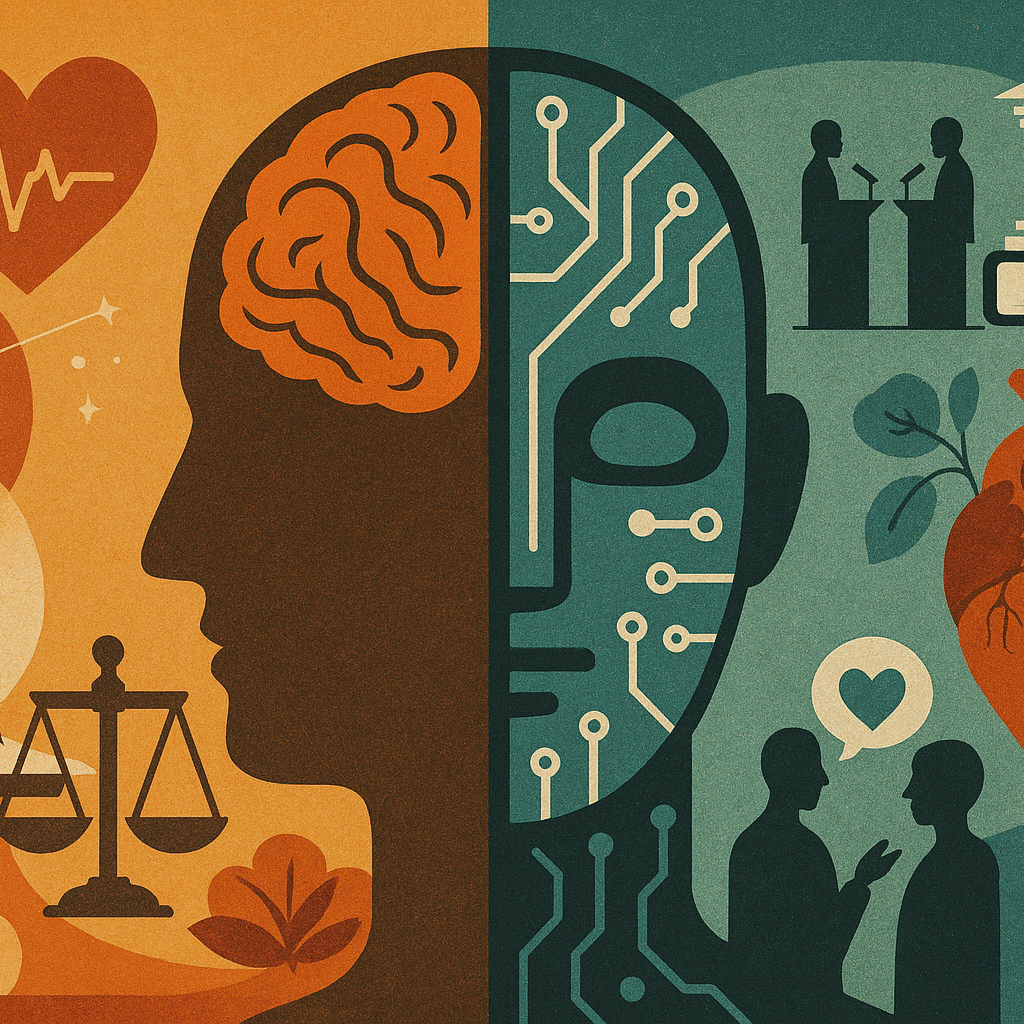
VIII. The Evolution of Human Identity
Automation is not erasing human identity—it is pressurizing it into a higher form.
The defining shift of this era is not technological displacement, but identity migration.
The question is no longer:
“What do I produce?”
It is:
“What systems do I design, guide, and take responsibility for?”
This transition marks the maturation of human agency in an intelligent-machine civilization.
From Production to Design
For centuries, identity was tethered to output:
- The artisan produced goods.
- The professional produced services.
- The knowledge worker produced analysis.
Automation compresses production cycles. Output becomes abundant.
When production scales infinitely, meaning migrates upward—toward architecture, oversight, and direction.
Identity evolves:
From operator → orchestrator
From executor → system designer
From contributor → integrator
This is not loss. It is elevation.
From Knowledge Possession to Knowledge Integration
Information scarcity once defined expertise.
Today, information abundance defines noise.
Knowledge possession is no longer rare.
Knowledge integration is.
Integration requires:
- Contextual reasoning
- Ethical discernment
- Cross-domain synthesis
- Temporal awareness (short-term vs long-term impact)
Machines retrieve.
Humans interpret.
The competitive advantage is not memory—it is meaning-making.
From Competition with Machines to Stewardship Over Them
Competing with machines on computation is futile.
Stewarding them is strategic.
Stewardship includes:
- Defining objectives
- Setting ethical constraints
- Interpreting outputs responsibly
- Anticipating unintended consequences
- Designing human-centered outcomes
Machines optimize.
Humans decide what is worth optimizing.
This is not subordination—it is governance.
The Identity Migration Equation
Old Identity Model:
Value = Skill × Output
Emerging Identity Model:
Value = Integration × Direction × Responsibility
This requires neurological maturity:
- Emotional regulation under uncertainty
- Cognitive flexibility
- Ethical reasoning
- Long-range systems thinking
Automation reveals a truth long obscured:
Human value has never been mechanical. It has always been interpretive.
Final Call
The automation era is not a survival contest.
It is an evolutionary accelerator.
Those who cultivate cognitive resilience will not merely endure change—they will design its trajectory.
The decisive question is no longer technological.
It is neurological.
The frontier is not artificial intelligence.
It is human adaptability.
Connect with MEDA Foundation
If these ideas resonate, this is not abstract philosophy—it is a call to action.
MEDA Foundation is committed to:
- Enabling autistic individuals through meaningful employment
- Building self-sustaining ecosystems
- Encouraging self-sufficiency over dependency
- Promoting universal dignity through practical empowerment
Automation can either widen inequality—or expand opportunity.
With intentional design, AI systems can:
- Create adaptive employment pathways
- Support cognitive diversity
- Enable distributed entrepreneurship
- Amplify underrepresented talent
We invite you to:
- Collaborate on ecosystem design initiatives
- Volunteer expertise in systems thinking and AI literacy
- Sponsor skill-building programs
- Contribute financially to expand sustainable employment models
Participation is not charity.
It is civilization design.
Visit: www.MEDA.Foundation
Engage. Contribute. Architect responsibly.
Suggested Reading: Strategic Books for the Automation Age
Below is a curated list of works that deepen the intellectual foundations of this article.
1. Deep Work – Cal Newport
Explores focused cognitive intensity as a competitive advantage in distracted environments. Essential for preserving executive function in an AI-saturated world.
2. Antifragile – Nassim Nicholas Taleb
Introduces systems that benefit from volatility. A powerful framework for developing cognitive resilience and learning velocity.
3. Flow – Mihaly Csikszentmihalyi
Examines optimal states of consciousness. Clarifies how deep engagement enhances creativity and meaning.
4. Emotional Intelligence – Daniel Goleman
Demonstrates why emotional regulation and social awareness remain critical differentiators in high-stakes environments.
5. Sources of Power – Gary Klein
Explores naturalistic decision-making in uncertain environments. Highlights human strengths in rapid situational modeling.
6. The Brain That Changes Itself – Norman Doidge
Documents neuroplasticity research, reinforcing the premise that cognitive capability can be deliberately expanded.
7. Thinking, Fast and Slow – Daniel Kahneman
A foundational analysis of cognitive bias and dual-process reasoning—critical for responsible AI collaboration.
Closing Perspective
Humanity is not being replaced.
It is being redefined.
The automation era rewards those who:
- Regulate physiology
- Expand cognition
- Govern technology ethically
- Design resilient systems
- Anchor identity in growth
The next civilization layer will not be coded accidentally.
It will be architected deliberately.
The decision is neurological.
And it begins now.
