

Human beings are not constrained by fixed brains but shaped by repeated choices that train neural pathways toward either drift or purpose. When decision-making shifts from impulse to intention—through pausing, effortful alignment, and small, consistent actions—the brain reorganizes itself to support meaning, resilience, and calm confidence. Purpose emerges not from motivation or insight, but from coherence between values, actions, and identity, reinforced through environment design, reflection, and contribution beyond the self. Education, leadership, and social systems either amplify fragmentation or cultivate agency depending on how they structure attention, effort, and reward. In understanding the neuroscience of choice, responsibility replaces excuse, and disciplined practice becomes the most reliable path to a life of sustained meaning and dignity.
ಮಾನವರು ಸ್ಥಿರವಾದ ಮೆದುಳಿನಿಂದ ನಿರ್ಬಂಧಿತರಾಗಿರುವುದಿಲ್ಲ; ಬದಲಾಗಿ ಅವರು ತಮ್ಮ ಪುನರಾವರ್ತಿತ ಆಯ್ಕೆಗಳ ಮೂಲಕ ನ್ಯೂರಲ್ ಮಾರ್ಗಗಳನ್ನು ತರಬೇತುಗೊಳಿಸಿ ದಿಕ್ಕಿಲ್ಲದ ಬದುಕಿನತ್ತ ಅಥವಾ ಉದ್ದೇಶಪೂರ್ಣ ಜೀವನದತ್ತ ರೂಪುಗೊಳ್ಳುತ್ತಾರೆ. ನಿರ್ಧಾರಮಾಡುವಿಕೆ ಆವೇಶದಿಂದ ಉದ್ದೇಶದತ್ತ ತಿರುಗಿದಾಗ—ವಿರಾಮ, ಮೌಲ್ಯಾಧಾರಿತ ಶ್ರಮ ಮತ್ತು ಸಣ್ಣ ಆದರೆ ನಿರಂತರ ಕ್ರಮಗಳ ಮೂಲಕ—ಮೆದುಳು ಅರ್ಥ, ಸ್ಥೈರ್ಯ ಮತ್ತು ಶಾಂತ ಆತ್ಮವಿಶ್ವಾಸವನ್ನು ಬೆಂಬಲಿಸುವಂತೆ ಪುನರ್ಸಂಘಟಿತವಾಗುತ್ತದೆ. ಪ್ರೇರಣೆ ಅಥವಾ ತಕ್ಷಣದ ಅರಿವಿನಿಂದಲ್ಲ, ಮೌಲ್ಯಗಳು, ಕ್ರಿಯೆಗಳು ಮತ್ತು ಗುರುತಿನ ನಡುವೆ ಉಂಟಾಗುವ ಸಮ್ಮಿಲನದಿಂದಲೇ ಉದ್ದೇಶ ಬೆಳೆದು ನಿಲ್ಲುತ್ತದೆ; ಇದಕ್ಕೆ ಸೂಕ್ತ ಪರಿಸರ ವಿನ್ಯಾಸ, ಆತ್ಮಪರಿಶೀಲನೆ ಮತ್ತು ಸ್ವಾರ್ಥಕ್ಕಿಂತ ಮೀರಿ ಸಮಾಜಕ್ಕೆ ಕೊಡುಗೆ ಅಗತ್ಯ. ಶಿಕ್ಷಣ, ನಾಯಕತ್ವ ಮತ್ತು ಸಾಮಾಜಿಕ ವ್ಯವಸ್ಥೆಗಳು ಗಮನ, ಶ್ರಮ ಮತ್ತು ಪ್ರತಿಫಲಗಳನ್ನು ಹೇಗೆ ರೂಪಿಸುತ್ತವೆ ಎಂಬುದರ ಮೇಲೆ ಅವು ಮಾನವ ಸಾಮರ್ಥ್ಯವನ್ನು ಚೂರುಚೂರಾಗಿಸುತ್ತವೆಯೋ ಅಥವಾ ಸ್ವಯಂಸಾಮರ್ಥ್ಯವನ್ನು ಬೆಳೆಸುತ್ತವೆಯೋ ನಿರ್ಧರಿಸಲಾಗುತ್ತದೆ. ಆಯ್ಕೆಯ ನ್ಯೂರೋಸೈನ್ಸ್ನ್ನು ಅರ್ಥಮಾಡಿಕೊಂಡಾಗ ನೆಪಗಳಿಗೆ ಜವಾಬ್ದಾರಿ ಬದಲಿ ಬರುತ್ತದೆ, ಮತ್ತು ಶಿಸ್ತುಬದ್ಧ ಅಭ್ಯಾಸವೇ ಅರ್ಥಪೂರ್ಣ ಹಾಗೂ ಗೌರವಯುತ ಜೀವನದ ಅತ್ಯಂತ ವಿಶ್ವಾಸಾರ್ಹ ಮಾರ್ಗವಾಗುತ್ತದೆ.
The Uncomfortable Truth—and the Real Hope
The Neuroscience of Choice: Rewiring Your Brain for Purpose
You are not broken, lazy, or lacking willpower. You are neurologically consistent. And consistency—once understood—can be deliberately redesigned.
You are not trapped by your brain. You are trained by it.
And anything that is trained can be retrained.
This distinction matters more than most people realize. Feeling “stuck” is not a moral failure, nor is it a mysterious personality flaw. It is the predictable outcome of a brain optimized for efficiency, repetition, and survival rather than meaning, wisdom, or long-term fulfillment. The modern tragedy is not that people lack purpose—but that they mistake neural habit for destiny.
Purpose is not discovered in a single moment of clarity, a retreat, or a burst of motivation. It is constructed—slowly, often unglamorously—through repeated, value-aligned choices that physically reshape neural circuits. Calm confidence is not something you are born with or fake until you make; it is a neurological consequence of internal coherence, when what you believe, what you choose, and what you do stop fighting each other.
Neuroscience has quietly overturned one of the most damaging myths of modern culture: that the adult brain is largely fixed. Research on neuroplasticity now shows, beyond reasonable doubt, that the brain remains malleable throughout life—structurally, chemically, and functionally. But this plasticity is not whimsical. The brain does not change because you want it to. It changes because you train it. Repeated attention, repeated decisions, repeated behaviors—especially under mild stress or effort—are what tell the brain what matters.
This is where responsibility becomes uncomfortable.
If your brain is shaped by what you repeatedly choose, then distraction is not harmless, avoidance is not neutral, and values that never translate into action are not values at all. Every conscious choice you make—what you tolerate, what you delay, what you pursue, what you numb—casts a vote for the brain you are reinforcing and the life that will follow from it. There is no pause button. The training is always happening.
This article exists because too many conversations about purpose remain abstract, sentimental, or motivational—while real change is biological, behavioral, and disciplined. Equally, too many discussions of neuroscience strip human agency out of the picture, reducing people to chemistry and conditioning. Both extremes are incomplete. Biology matters. Choice matters. And the real leverage point lies in understanding how they interact.
This article does not promise ease. Ease is what trained most people into dissatisfaction in the first place. What it promises is agency: a clear-eyed, science-grounded understanding of how intentional decision-making can rewire neural pathways toward meaning, sustained action, and a quiet, durable confidence that does not depend on constant validation.
Intended Audience
This article is written for thinkers, professionals, educators, caregivers, leaders, social entrepreneurs, and reflective individuals who sense that they are capable of more—but find themselves repeating patterns that contradict their values. It is for those tired of blaming circumstances or waiting for motivation, and ready to understand the deeper mechanics of change.
Purpose of the Article
The purpose is threefold:
- To dismantle the myth of a “fixed brain” without slipping into naïve optimism.
- To explain the real neuroscience of choice—how decisions are shaped, reinforced, and resisted at the neural level.
- To offer a grounded, actionable framework for rewiring the brain toward purpose, sustained effort, and calm confidence—without hype, mysticism, or motivational fluff.
What follows is not self-help in disguise. It is an invitation to take your brain seriously—and to accept the quiet power and responsibility that comes with that knowledge.

I. The Illusion of Fixed Pathways: Why Feeling Stuck Feels So Real
Feeling stuck is not evidence that change is impossible. It is evidence that your brain is doing exactly what it evolved to do: conserve energy, repeat what is familiar, and protect you from uncertainty—even when familiarity quietly erodes meaning. The illusion of fixed pathways persists not because it is scientifically accurate, but because it is psychologically convenient.
1. The Myth We Inherited
For decades, we have absorbed a subtle but powerful narrative: “This is just how I am.”
It appears harmless. In reality, it is one of the most paralyzing beliefs a human being can hold.
This myth was inherited from several sources, each partially true—and collectively misleading.
First, genetics. Popular discourse often treats genes as destiny, ignoring a foundational principle of modern biology: genes express themselves in response to environment, behavior, and repeated experience. You may inherit predispositions, not pre-written conclusions. Yet phrases like “it’s in my DNA” are routinely used to justify procrastination, emotional reactivity, poor boundaries, or lack of follow-through.
Second, personality tests. While useful for self-reflection, many assessments have been culturally weaponized into identity cages. Labels like “introvert,” “Type A,” “creative,” or “not disciplined” subtly shift from descriptions of tendencies to excuses for stagnation. When a model meant to inform becomes a verdict, growth quietly stops.
Third, early conditioning. Childhood experiences undeniably shape neural development—but too often, this truth is flattened into fatalism. The idea that “my past made me this way” becomes an unexamined endpoint instead of a starting point for conscious rewiring.
Compounding all of this is the casual misuse of the word “hardwired” in pop psychology. The brain is not a fixed circuit board. It is a living, adaptive network. Yet deterministic language—repeated often enough—normalizes passivity. If people believe change is biologically unrealistic, effort begins to feel foolish. Responsibility feels unfair. And stagnation gains moral cover.
This is the quiet danger of deterministic narratives: they don’t imprison you forcefully; they persuade you not to try.
Key Insight:
Your brain prefers efficiency, not truth, growth, or purpose. If a belief reduces cognitive effort—even if it limits your future—the brain is inclined to keep it.
2. Neuroplasticity: What Science Actually Shows
Modern neuroscience tells a far more demanding—and empowering—story.
Neuroplasticity refers to the brain’s ability to reorganize itself by forming new neural connections throughout life. This includes:
- Synaptogenesis: the creation of new synaptic connections
- Myelination: strengthening of frequently used neural pathways for faster transmission
- Pruning: weakening and elimination of unused circuits
These processes do not stop after childhood. They continue as long as the brain is alive. What does change with age is the cost of rewiring.
Research synthesized and popularized by Norman Doidge (The Brain That Changes Itself) shows that adult brains can recover lost functions after stroke, rewire sensory maps, acquire complex skills, and heal aspects of trauma. Musicians, athletes, meditators, and language learners all demonstrate measurable structural brain changes well into adulthood.
However, plasticity in adults is experience-dependent and effort-dependent. The brain does not remodel itself for casual intentions or occasional enthusiasm. It responds to:
- Repetition
- Attention
- Emotional salience
- Mild, sustained challenge
This is why adult plasticity is slower—but more durable. Changes earned through effort tend to stabilize identity rather than disrupt it. In children, the brain is plastic by default. In adults, plasticity must be invited—often through discomfort.
This is where many people misunderstand neuroscience. They hear “the brain can change” and assume “change should be easy.” When it isn’t, they conclude the science was exaggerated. In reality, difficulty is not evidence of impossibility; it is evidence of plasticity in action.
3. Habits as Silent Sculptors
If beliefs create the illusion of being stuck, habits are what make it feel permanent.
At the core of habit formation is a simple neurological principle known as Hebb’s Law:
“Neurons that fire together wire together.”
Every repeated thought, emotional response, and behavior strengthens the neural circuits associated with it. Over time, these circuits become faster, more efficient, and more automatic. This is how skills form—and how self-sabotage becomes effortless.
The critical—and often ignored—truth is this:
Your identity is being shaped daily by repetitions you did not consciously choose.
Unconscious habits quietly train the brain:
- Avoidance trains threat sensitivity
- Distraction trains restlessness
- Complaining trains helplessness
- Numbing trains emotional disconnection
None of this requires intention. The brain only cares about frequency.
This is the hidden cost of default living. When choices are outsourced to impulse, environment, or mood, the brain still learns—but it learns randomness, short-term relief, and reactive patterns. Over time, these patterns feel like “who I am,” when in fact they are simply what has been practiced the most.
The tragedy is not that people fail to transform themselves. It is that they underestimate how effectively they are already transforming themselves—just not in the direction they would consciously choose.
Feeling stuck, then, is not a mystery.
It is the sensation of living inside a brain that has been trained without supervision.
The next question is not whether the brain can change—but whether you are willing to interrupt efficiency in service of purpose.

II. The Architecture of Choice: Where Decisions Are Really Made
Most decisions are not made where we think they are. They are not born in logic, values, or long-term vision—but in neural systems competing for energy, speed, and reward. Purposeful choice is not about becoming more virtuous; it is about understanding which parts of the brain are in control, and under what conditions they quietly abdicate power.
1. The Prefrontal Cortex: The CEO of Meaning
The prefrontal cortex (PFC) is the brain’s executive center—the region most associated with what we call being human. It governs planning, impulse inhibition, abstraction, moral reasoning, and the ability to hold long-term consequences in mind while acting in the present. When people speak about “acting with intention” or “choosing purpose over impulse,” they are describing a brain state in which the prefrontal cortex is online and resourced.
However, the PFC is metabolically expensive. It consumes significant energy and is exquisitely sensitive to internal and external conditions. Stress, fatigue, hunger, emotional overload, and constant distraction all reduce its effectiveness. Under pressure, the brain defaults to older, faster systems designed for survival, not meaning.
This explains a painful contradiction many people experience: knowing what matters, yet repeatedly choosing against it. The issue is rarely ignorance. It is neurological depletion. When the PFC is compromised, decision-making collapses into short-term coping rather than long-term coherence.
The neurological price of constant reactivity is steep. Each time the brain responds reflexively—checking notifications, snapping in conversation, numbing discomfort—it reinforces circuits that bypass the PFC. Over time, reactivity becomes not just a habit, but a structural bias. Purpose requires pause, and pause requires a functioning executive system. A brain trained on urgency will struggle to choose meaning, no matter how noble the intention.
2. The Dopamine Trap
One of the most misunderstood chemicals in the brain is dopamine. Contrary to popular belief, dopamine is not the molecule of pleasure—it is the molecule of anticipation. As Daniel Z. Lieberman explains in The Molecule of More, dopamine drives wanting, seeking, and chasing. It pulls the brain toward what might reward us next, not what will satisfy us now.
This system evolved to help humans explore, innovate, and survive in uncertain environments. In the modern world, it has been relentlessly exploited.
Short-term rewards—likes, sugar, novelty, outrage, validation—create rapid dopamine spikes that train the brain to crave immediacy. Long-term purpose, by contrast, often offers delayed, subtle rewards: progress without applause, meaning without excitement, growth without spectacle. Dopamine-driven brains find such rewards underwhelming.
This is how short-term incentives hijack long-term purpose. Each time the brain chooses quick relief over enduring alignment, it strengthens the expectation that discomfort should be avoided and gratification should be immediate. Over time, patience erodes, depth feels dull, and sustained effort feels unnatural.
Social media, processed food, endless content, and performative outrage are not moral failures; they are dopamine delivery systems. The problem is not indulgence—it is saturation.
Hard Truth:
Most people do not lack discipline. They are overdosing on dopamine.
A brain overstimulated by anticipation becomes restless, fragmented, and incapable of sustained focus. Purpose requires delayed gratification. Dopamine addiction trains the opposite reflex.
3. Neural Pathways and “Choice Gravity”
Every repeated choice strengthens a neural pathway. Over time, these pathways create what can be described as choice gravity—the invisible pull toward certain behaviors, thoughts, and emotional responses.
The brain always seeks the path of least resistance. This is not laziness; it is energy conservation. Neural circuits that are well-myelinated fire faster and with less effort. New choices, by contrast, require more energy, more attention, and more uncertainty. As a result, the familiar—even when painful—often feels safer than the unknown.
This explains a paradox many people find difficult to admit: familiar misery can feel more comfortable than unfamiliar meaning. Not because suffering is desirable, but because it is neurologically predictable. The brain knows what to expect, how to respond, and how much energy it will cost.
Daniel Kahneman’s distinction between System 1 (fast, automatic, emotional) and System 2 (slow, deliberate, effortful) maps cleanly onto this dynamic. System 1 choices are cheap. System 2 choices are expensive. In a brain already taxed by stress and stimulation, expensive choices are the first to be abandoned.
Purposeful living, then, is not about making heroic decisions once in a while. It is about gradually altering choice gravity—making value-aligned actions easier and misaligned actions harder. When the neural cost of purpose decreases through repetition, meaning stops feeling like a constant battle.
Until then, the brain will continue to choose efficiency over depth, familiarity over growth, and immediacy over significance—unless deliberately trained otherwise.

III. Intentional Decision-Making: How New Neural Paths Are Forged
Lasting change does not begin with motivation or insight. It begins with interruption. New neural paths are forged not by dramatic declarations, but by repeated moments where automatic behavior is paused and a harder, more aligned choice is made. Purpose is trained into the brain the same way any skill is trained—through deliberate, often uncomfortable practice.
1. The Pause That Changes the Brain
Every automatic behavior—snapping in anger, scrolling mindlessly, avoiding a difficult task—unfolds along a well-worn neural route. To change the route, the brain must first be interrupted. This interruption is not philosophical; it is neurological.
The moment you pause between stimulus and response, the prefrontal cortex re-enters the conversation. That pause creates what neuroscientists call top-down regulation—the ability of higher cortical regions to modulate impulsive, emotional, or habitual responses generated by older brain systems.
Mindfulness, stripped of spiritual language, is simply neural braking. It slows down signal transmission long enough for choice to occur. Without this pause, intention is irrelevant. The brain cannot choose what it never has time to evaluate.
Viktor Frankl’s famous observation—“Between stimulus and response there is a space”—is not metaphorical. That space is measurable in milliseconds and visible in neural activation patterns. It is the difference between being run by conditioned circuitry and engaging executive control.
Importantly, this pause feels uncomfortable. Automaticity is efficient. Interruption costs energy. Many people misinterpret this discomfort as failure, when in fact it is evidence that a new circuit is attempting to come online. The pause is not the goal. It is the doorway.
2. Choosing the Harder Right Over the Easier Wrong
Neuroplasticity is effort-sensitive. The brain does not rewire itself for behaviors that require no attention or challenge. Effort is a biological signal that something new and important is happening.
When you choose the harder right over the easier wrong—speaking truth instead of avoiding conflict, focusing instead of multitasking, resting intentionally instead of numbing—the brain experiences controlled stress. This stress triggers the production of growth-related neurochemicals that support synaptic change.
Research on skill acquisition, synthesized by Anders Ericsson, shows that deliberate practice—practice that is focused, feedback-rich, and uncomfortable—is what drives myelin growth. Myelin insulates neural pathways, increasing speed and reliability. What you repeatedly struggle through with attention eventually becomes easier, not because of willpower, but because of biology.
This reveals the neurological difference between wishful thinking and training. Wishing involves imagining a different outcome without altering behavior. Training involves repeated exposure to difficulty with intention. The brain only responds to the latter.
Purpose, then, is not reinforced by inspiration but by chosen friction. Each time you tolerate short-term discomfort in service of long-term alignment, you cast a structural vote for the person you are becoming.
3. Micro-Choices: The Atomic Unit of Purpose
Most people attempt change at the wrong scale. They declare massive resolutions—new identities, radical transformations—while leaving daily neural systems untouched. The result is predictable: enthusiasm collapses, and old patterns reassert themselves.
The brain does not change in leaps. It changes in increments.
Micro-choices are the atomic units of purpose. Small enough to be repeatable, specific enough to be measurable, and meaningful enough to matter. When compounded, they quietly rearchitect neural pathways.
Examples include:
- Choosing one honest conversation instead of prolonged resentment
- Committing to one focused hour without distraction rather than an unrealistic day of productivity
- Saying one value-aligned “no” that protects time, energy, or integrity
These choices may appear insignificant. Neurologically, they are not. Each repetition strengthens circuits associated with agency, coherence, and self-trust. Over time, the brain begins to expect alignment rather than conflict.
James Clear captures this succinctly:
You do not rise to the level of your goals; you fall to the level of your systems.
From a neuroscience perspective, systems are simply trained neural pathways. Change the system, and behavior follows. Ignore the system, and goals remain fantasies.
Intentional decision-making is not about becoming someone new overnight. It is about training the brain, one deliberate interruption at a time, to make purpose the default rather than the exception.
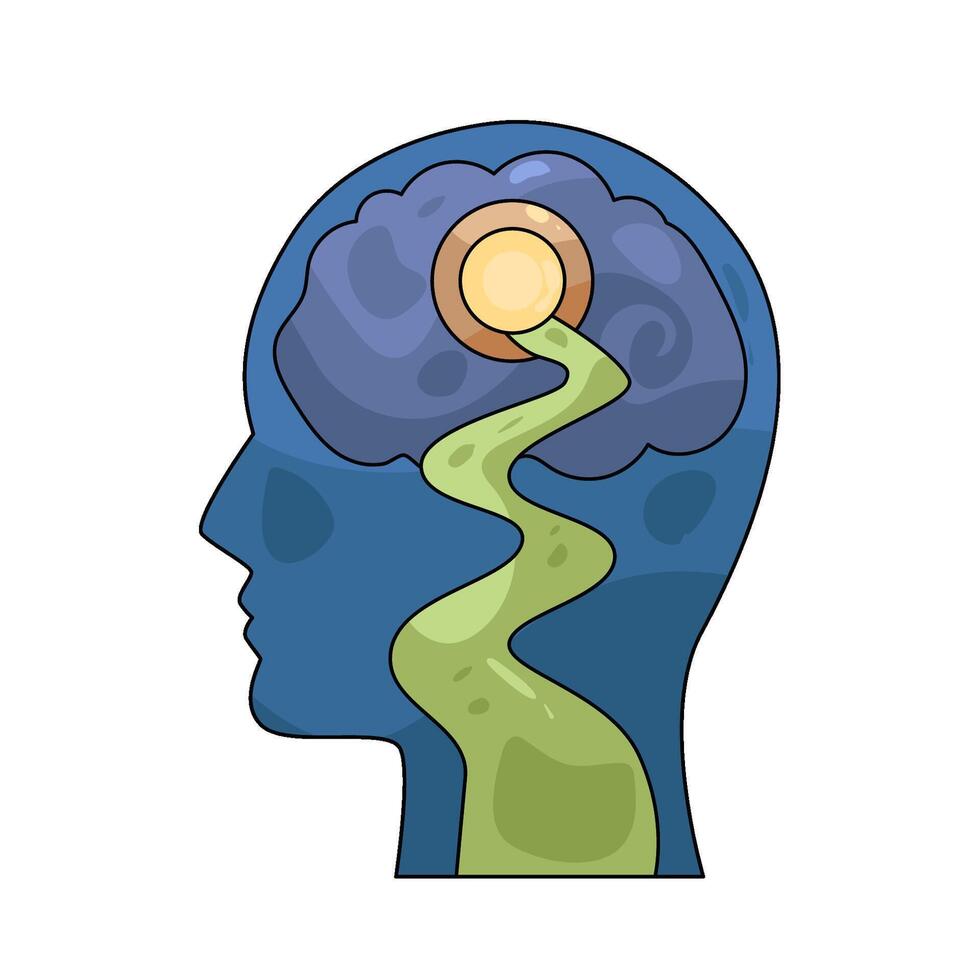
IV. From Repetition to Identity: When Purpose Becomes Automatic
Identity is not declared; it is installed. What begins as effortful, conscious choice gradually becomes automatic behavior as the brain rewires itself around what is repeatedly practiced. Purpose stops feeling like a struggle not because life gets easier, but because the brain becomes structurally aligned with what matters.
1. Strengthening New Circuits
Every time a value-aligned action is repeated, the neural circuits responsible for that behavior undergo long-term potentiation—a process by which synaptic connections become stronger and more efficient. This is the same mechanism through which memories consolidate and skills become fluent.
In the early stages of change, purposeful action feels forced. This is not hypocrisy or lack of authenticity; it is biology catching up to intention. Old circuits are fast and well-myelinated. New circuits are fragile, slow, and metabolically expensive. Without repetition, they dissolve.
Behavioral reinforcement accelerates this process. When a choice leads to internal coherence—less regret, more self-respect, clearer direction—the brain begins to associate meaning with reward. Not the sharp spike of dopamine, but the steadier signal of satisfaction and stability.
Over time, something subtle but profound occurs: the question shifts from “Should I do this?” to “Why wouldn’t I?” Purposeful action stops feeling like self-control and starts feeling like self-expression.
This is the biological basis of identity shift. Identity is not a narrative you tell yourself; it is a pattern the brain recognizes as who you are. When enough neural evidence accumulates, the brain updates its model of the self. At that point, acting against your values feels unnatural—not because of guilt, but because it violates internal coherence.
2. Motivation Without Drama
One of the most misunderstood aspects of purpose-driven living is motivation. Many assume that meaning should feel exhilarating. In reality, sustainable purpose often feels calm, grounded, and quietly persistent.
This shift is neurological.
As choices align with values, the brain’s dopamine system begins to rebalance. Instead of being hijacked by novelty and anticipation, dopamine becomes linked to progress, contribution, and mastery. The reward is no longer the chase, but the continuity.
Alex Korb’s work on depression and upward spirals shows that small, consistent actions—exercise, reflection, meaningful effort—gradually recalibrate mood-regulating systems. Rick Hanson’s research further demonstrates that when positive, value-aligned experiences are intentionally noticed and repeated, the brain learns to stabilize them.
This is why purpose-driven brains resist burnout better. Burnout is not caused by effort alone; it is caused by effort without meaning. When work aligns with values, stress is interpreted as investment rather than threat. The nervous system recovers faster. Resilience increases—not through toughness, but through relevance.
Motivation without drama does not mean absence of challenge. It means absence of inner warfare. Energy once spent on self-negotiation becomes available for execution.
3. Calm Confidence Explained Neurologically
Calm confidence is often mistaken for arrogance or emotional detachment. Neurologically, it is neither. It is the result of reduced conflict between the brain’s emotional and executive systems.
When values, actions, and self-concept are misaligned, the limbic system and prefrontal cortex compete for control. This competition generates anxiety, self-doubt, and overcompensation. The brain is busy managing contradiction.
As alignment increases, this conflict diminishes. The prefrontal cortex no longer needs to suppress impulses constantly because impulses themselves are reshaped. Emotional responses become proportionate. Decisions feel cleaner.
This coherence produces calm confidence. Not bravado. Not superiority. But a steady sense of direction that does not require constant validation.
Aligned brains experience less anxiety because fewer internal alarms are triggered. There is less second-guessing, less rumination, less need to perform. Confidence becomes a byproduct of trust—trust that actions reflect values, and values are being lived.
Importantly, this confidence does not make people rigid. It makes them adaptable. When identity is grounded in principles rather than outcomes, failure becomes feedback instead of threat.
At this stage, purpose is no longer something you pursue. It is something you operate from. The brain has learned the pattern—and once learned, it prefers coherence over chaos.

V. Your Brain, Your Blueprint: A Practical Framework
Purpose does not survive on insight alone. It survives through design. When values are clarified, choices are architected, reflection is practiced, and contribution extends beyond the self, the brain is no longer left to drift. It is given a blueprint—and blueprints turn intention into structure.
1. Step One: Values Clarification (Non-Negotiable)
If purpose feels vague, it is because values are vague. The brain cannot organize itself around abstractions. Words like success, balance, happiness, or freedom are neurologically useless unless translated into operational meaning.
Vague values produce vague brains because the prefrontal cortex requires specificity to guide inhibition, planning, and prioritization. When values are unclear, the brain defaults to convenience, emotion, and social imitation.
Values clarification is not philosophical indulgence; it is neural instruction.
Effective techniques include:
- Value ranking: Forcing trade-offs between values reveals what truly governs behavior. When everything matters, nothing directs.
- Regret minimization: Asking which choices you would regret not making over a decade activates long-term neural forecasting.
- The obituary exercise: Imagining what you want to be remembered for bypasses short-term dopamine and engages meaning-based cognition.
Clarity here is uncomfortable because it removes excuses. Once values are defined, inconsistency becomes visible—and the brain resists exposure. That resistance is the cost of honesty.
2. Step Two: Choice Architecture
Willpower is a poor long-term strategy. The brain performs best when the environment does the heavy lifting.
Choice architecture involves deliberately designing physical, digital, and social environments that support your future self rather than sabotage it. This includes:
- Placing friction in front of misaligned behaviors (uninstalling apps, reducing access, increasing effort)
- Reducing friction for aligned behaviors (pre-commitments, reminders, default options)
The brain follows gradients. What is easier gets repeated. Purposeful living requires reversing these gradients so that the meaningful choice is also the most accessible one.
This is not manipulation. It is self-respect expressed structurally.
3. Step Three: Reflective Reinforcement
Reflection is how the brain learns what to keep.
Journaling consolidates experience by activating memory, emotion, and narrative simultaneously. It strengthens learning by revisiting neural activity after the fact, reinforcing what mattered.
Weekly reviews are particularly powerful. Asking, “What did I train my brain to become this week?” reframes life as an ongoing experiment rather than a performance. It replaces judgment with data.
Without reflection, growth remains accidental. With it, the brain becomes a conscious collaborator.
4. Step Four: Community and Contribution
Brains are social organs. Identity stabilizes through mirroring, feedback, and shared meaning.
Isolation weakens purpose because it removes context. Community provides reference points, accountability, and belonging. Contribution extends purpose beyond self-optimization, which is neurologically fragile.
When effort serves others, meaning deepens. Purpose becomes resilient because it is no longer dependent on mood or outcome. It is anchored in service.
This is where individual rewiring becomes societal impact—and where intentional living matures into leadership.
At this stage, the brain is no longer reacting to life. It is shaping it. The final section will confront the implications of this knowledge—what it demands of individuals, institutions, and cultures unwilling to abandon convenience in favor of coherence.
VI. Implications for Education, Leadership, and Social Change
If brains are shaped by repeated choices, then institutions—schools, workplaces, governments, and nonprofits—are not neutral. They are neural training environments. When systems reward speed over depth, compliance over meaning, and stimulation over mastery, they manufacture fragmentation at scale. Purpose-driven societies require purpose-aware design.
1. Why Motivation Programs Fail
Most motivation programs fail for a simple reason: information does not rewire brains—practice does.
Schools and organizations often assume that awareness leads to change. Teach the concept, show the data, inspire the audience, and behavior will follow. Neuroscience contradicts this assumption. Without repeated, embodied practice, insight evaporates.
What is missing is not intelligence or intention, but neural rehearsal. Classrooms emphasize knowledge acquisition while neglecting attention training, emotional regulation, and value-based decision-making. Workplaces reward output without shaping the cognitive and behavioral systems that make sustained excellence possible.
Motivation spikes briefly because novelty triggers dopamine. Then it fades. The underlying neural architecture remains untouched.
The result is predictable: disengagement, burnout, and a revolving door of initiatives that never reach behavioral depth. Until education and work environments deliberately train executive function, reflective pause, and effortful focus, motivation will remain performative rather than transformative.
2. Neurodiversity and Purpose
Neurodiversity exposes the flaws in one-size-fits-all systems.
Autistic individuals, in particular, often thrive when values are explicit and environments are structured. Ambiguity, social guesswork, and inconsistent expectations drain cognitive resources. Clarity, predictability, and purpose restore them.
This is not a deficit—it is a diagnostic insight.
Structured choice is often misunderstood as limitation. Neurologically, it is empowerment. Clear options reduce cognitive overload, allowing the prefrontal cortex to engage meaningfully rather than defensively. When values are clear, autistic individuals can channel focus, integrity, and persistence with remarkable effectiveness.
This aligns directly with MEDA Foundation’s ecosystem approach—creating environments where individuals are not forced to adapt endlessly to broken systems, but are supported through structure, dignity, and opportunity. Purpose stabilizes when systems respect neurological reality rather than impose neurotypical expectations as default.
Neurodiversity is not a special case. It is a mirror showing what all brains need to function well.
3. Building Purpose-Driven Institutions
Institutions currently excel at shaping habits—often unintentionally. Metrics, incentives, schedules, and cultural norms train behavior daily.
The question is not whether systems shape brains, but what they are shaping them toward.
Purpose-driven institutions move beyond habit formation toward meaning formation. They:
- Reward depth over speed
- Encourage reflection over reaction
- Align incentives with values rather than optics
Leadership, in this context, becomes large-scale neural design. Leaders are not just decision-makers; they are architects of attention, effort, and identity. Every policy, meeting structure, and evaluation criterion sends a neurological signal about what matters.
When institutions embody coherence, individuals follow. When they don’t, even the most motivated people fracture.
Social change, therefore, is not driven by slogans. It is driven by environments that train better brains—capable of sustained attention, ethical reasoning, and purposeful action.
This is where neuroscience meets responsibility. And where participation matters.
If these ideas resonate, translate understanding into impact.
Participate and Donate to MEDA Foundation.
Help build ecosystems where purpose is not preached, but practiced—especially for those whose neurological differences demand better-designed systems, not louder motivation.
The brain is adaptable. Society must be too.
Final Word: No More Waiting for Clarity
Waiting for clarity is a neurological delay tactic. Clarity is not a prerequisite for action; it is the consequence of it. Those who act in alignment before they feel ready train their brains for coherence. Those who wait for certainty train their brains for hesitation.
Clarity follows commitment.
Confidence follows coherence.
Purpose follows practiced choice.
This is not motivational rhetoric. It is a biological sequence.
The brain does not listen to intentions, affirmations, or internal promises. It listens to repetitions. What you repeatedly choose—especially under mild discomfort—teaches the brain what matters. Over time, the brain reorganizes itself to support those choices with less friction, less noise, and less internal resistance.
This is why people who live with purpose often appear calm rather than intense. Their brains are no longer negotiating basic alignment. Their energy is not spent on self-contradiction. They are not braver or smarter; they are neurologically trained.
The uncomfortable truth is this: every day you delay a value-aligned action, you are still training your brain—just in the opposite direction. Indecision is not neutral. Drift is not harmless. The absence of conscious choice is itself a choice, and the brain records it faithfully.
The hopeful truth is equally stark: no moment is too small to begin retraining. One pause. One honest decision. One repeated act of integrity. Biology responds faster than belief.
If this article has done its job, it has not inspired you—it has removed your excuses. The science is clear. The responsibility is yours. The opportunity is ongoing.
Participate and Donate to MEDA Foundation
If these ideas resonate, convert insight into impact.
MEDA Foundation works at the intersection of neuroscience, dignity, and social design—supporting neurodiversity inclusion, creating employment pathways, and building self-sustaining ecosystems where individuals, especially those on the autism spectrum, can live purposeful lives grounded in capability, not charity.
Purpose stabilizes when it serves beyond the self.
Your participation—through time, skill, advocacy, or donation—helps translate these principles into lived reality.
Participate. Donate. Help build environments that train better brains and better futures.
Book References (selected, integrated throughout the article)
- The Brain That Changes Itself — Norman Doidge
- Atomic Habits — James Clear
- Behave — Robert Sapolsky
- The Molecule of More — Daniel Z. Lieberman & Michael E. Long
- Man’s Search for Meaning — Viktor Frankl
- Thinking, Fast and Slow — Daniel Kahneman
- Peak — Anders Ericsson & Robert Pool
- The Upward Spiral — Alex Korb
- Hardwiring Happiness — Rick Hanson
The work is not to become someone new.
The work is to train the brain you already have—on purpose.


