

H. Narasimhaiah’s life and pedagogy stand as a powerful reminder that true education is not about producing obedient achievers but courageous thinkers capable of questioning authority, tradition, and even their own assumptions. By teaching disciplined skepticism—doubting textbooks, experts, and inherited beliefs without descending into cynicism—he transformed classrooms into spaces of intellectual emancipation and students into rational citizens. His legacy reveals that confidence in uncertainty, comfort with being wrong, and the ability to revise beliefs are the invisible skills that shape ethical leaders, resilient professionals, and responsible democracies. In an age of artificial intelligence, misinformation, and credential worship, his approach is no longer radical but essential, positioning critical thinking as cognitive self-defense and questioning as a civic duty rather than an act of rebellion.
ಎಚ್. ನರಸಿಂಹಯ್ಯ ಅವರ ಜೀವನ ಮತ್ತು ಶಿಕ್ಷಣ ತತ್ವಗಳು ನಿಜವಾದ ಶಿಕ್ಷಣವು ವಿಧೇಯ ಸಾಧಕರನ್ನು ರೂಪಿಸುವುದಲ್ಲ, ಬದಲಾಗಿ ಅಧಿಕಾರ, ಸಂಪ್ರದಾಯಗಳು ಮತ್ತು ತಮ್ಮದೇ ಊಹೆಗಳನ್ನು ಸಹ ಪ್ರಶ್ನಿಸುವ ಧೈರ್ಯವಿರುವ ಚಿಂತಕರನ್ನು ಬೆಳೆಸುವುದೆಂಬುದನ್ನು ಶಕ್ತಿಯಾಗಿ ನೆನಪಿಸುತ್ತವೆ. ಪಠ್ಯಪುಸ್ತಕಗಳು, ತಜ್ಞರು ಮತ್ತು ಪರಂಪರೆಯಿಂದ ಬಂದ ನಂಬಿಕೆಗಳನ್ನು ಅಂಧವಾಗಿ ತಿರಸ್ಕರಿಸದೆ, ಆದರೆ ಕ್ರಮಬದ್ಧ ಸಂಶಯದ ಮೂಲಕ ಪರಿಶೀಲಿಸುವುದನ್ನು ಅವರು ಕಲಿಸಿದರು; ಇದರಿಂದ ತರಗತಿಗಳು ಬೌದ್ಧಿಕ ಮುಕ್ತಿಯ ಕೇಂದ್ರಗಳಾಗಿ ಮತ್ತು ವಿದ್ಯಾರ್ಥಿಗಳು ಯುಕ್ತಿಪೂರ್ಣ ನಾಗರಿಕರಾಗಿ ರೂಪುಗೊಂಡರು. ಅನಿಶ್ಚಿತತೆಯಲ್ಲಿಯೂ ಆತ್ಮವಿಶ್ವಾಸ, ತಪ್ಪಾಗಿರುವುದನ್ನು ಒಪ್ಪಿಕೊಳ್ಳುವ ಸಿದ್ಧತೆ ಮತ್ತು ನಂಬಿಕೆಗಳನ್ನು ಪುನರ್ಪರಿಶೀಲಿಸುವ ಸಾಮರ್ಥ್ಯವೇ ನೈತಿಕ ನಾಯಕರು, ಸ್ಥೈರ್ಯವಂತ ವೃತ್ತಿಪರರು ಮತ್ತು ಜವಾಬ್ದಾರಿಯುತ ಪ್ರಜಾಪ್ರಭುತ್ವವನ್ನು ರೂಪಿಸುವ ಅಡಗಿದ ಕೌಶಲ್ಯಗಳೆಂಬುದನ್ನು ಅವರ ಪರಂಪರೆ ತೋರಿಸುತ್ತದೆ. ಕೃತಕ ಬುದ್ಧಿಮತ್ತೆ, ತಪ್ಪುಮಾಹಿತಿ ಮತ್ತು ಪ್ರಮಾಣಪತ್ರಗಳ ಆರಾಧನೆಯ ಯುಗದಲ್ಲಿ, ಅವರ ದೃಷ್ಠಿಕೋನ ಕ್ರಾಂತಿಕಾರಿಯಲ್ಲ, ಅನಿವಾರ್ಯವಾದದ್ದು; ಇಲ್ಲಿ ವಿಮರ್ಶಾತ್ಮಕ ಚಿಂತನೆ ಬೌದ್ಧಿಕ ಸ್ವರಕ್ಷಣೆಯಾಗುತ್ತದೆ ಮತ್ತು ಪ್ರಶ್ನಿಸುವುದು ಬಂಡಾಯವಲ್ಲ, ನಾಗರಿಕ ಕರ್ತವ್ಯವಾಗುತ್ತದೆ.
Why H. Narasimhaiah Still Matters Today
Introduction: The Man Who Made Doubt Respectable
- Narasimhaiah matters because he trained minds to stand upright in the presence of authority, not bow before it. In an age of algorithmic thinking, blind credentialism, and outsourced reasoning, his legacy reminds us that education is not information transfer—it is courage training. If societies fail today, it is not due to lack of data, but due to a tragic shortage of disciplined doubt. Reviving his spirit is no longer optional; it is civilizationally urgent.
Narasimhaiah did something profoundly counter-cultural: he restored dignity to doubt. At a time when questioning elders, textbooks, institutions, or traditions was often mistaken for arrogance or rebellion, he reframed skepticism as a moral and intellectual duty. Doubt, in his worldview, was not disrespect—it was responsibility. It was the price one paid for honesty in thought and integrity in action.
He understood what many education systems still refuse to admit: authority is useful, but unquestioned authority is dangerous. When students are trained only to comply, memorize, and reproduce, they may pass examinations—but they fail life. They become efficient operators inside broken systems, not thoughtful reformers capable of repairing them. Narasimhaiah’s classrooms were not factories of conformity; they were laboratories of inquiry.
Today, as artificial intelligence answers questions faster than humans can ask them, his relevance deepens rather than fades. Algorithms reward certainty, speed, and pattern-matching. But societies survive on something far subtler: the human capacity to pause, doubt, reflect, and re-evaluate. Narasimhaiah anticipated this crisis decades ago. He knew that when thinking is outsourced, judgment atrophies—and with it, democracy, science, and ethics.
Why This Article Exists
Because obedience still masquerades as education.
Because silence is rewarded more than curiosity.
Because questioning is often punished more harshly than ignorance.
Across classrooms, boardrooms, and even social institutions, we see the same pathology: people trained to follow procedures without understanding principles; to quote authorities without examining assumptions; to respect tradition without interrogating relevance. This is not education—it is intellectual domestication.
India—and the world—does not suffer from a shortage of degrees. It suffers from a shortage of epistemic rebels: individuals who can challenge ideas without attacking people, who can disagree without dehumanizing, and who can dismantle falsehoods without destroying social cohesion. Narasimhaiah stood firmly in this tradition. He did not teach students what to think; he taught them how to think without fear.
This article, therefore, does not treat H. Narasimhaiah as a relic of the past or a nostalgic academic hero. It treats him as a living methodology—a blueprint for rebuilding education, leadership, and citizenship in an era drowning in information but starving for wisdom.
Intended Audience
This reflection is written for:
- Educators, professors, teachers, and academic administrators who sense that something is deeply broken in how learning is structured and assessed
- Parents disillusioned with rote-based schooling who want their children to become capable adults, not obedient performers
- Students hungry for intellectual freedom, tired of being rewarded for repetition rather than reasoning
- Social reformers, NGO leaders, and policy thinkers seeking sustainable, cognition-centered change
- Anyone exhausted by being told what to think instead of how to think
If you have ever felt that education should awaken something deeper than compliance—this conversation is for you.
Purpose of the Article
The purpose here is precise and uncompromising:
to demonstrate how radical skepticism—when disciplined, ethical, and evidence-based—becomes the highest form of patriotism, science, and education.
Using H. Narasimhaiah as both case study and catalyst, this article argues that questioning is not a threat to society; it is society’s immune system. When doubt is suppressed, superstition thrives. When inquiry is discouraged, power consolidates. When thinking is standardized, injustice becomes efficient.
Narasimhaiah showed us another path—one where courage replaces conformity, inquiry replaces indoctrination, and education becomes an act of liberation rather than control.
What follows is not admiration. It is application.

The Rebel Educator Who Dared to Question
1.1 Who Was H. Narasimhaiah?
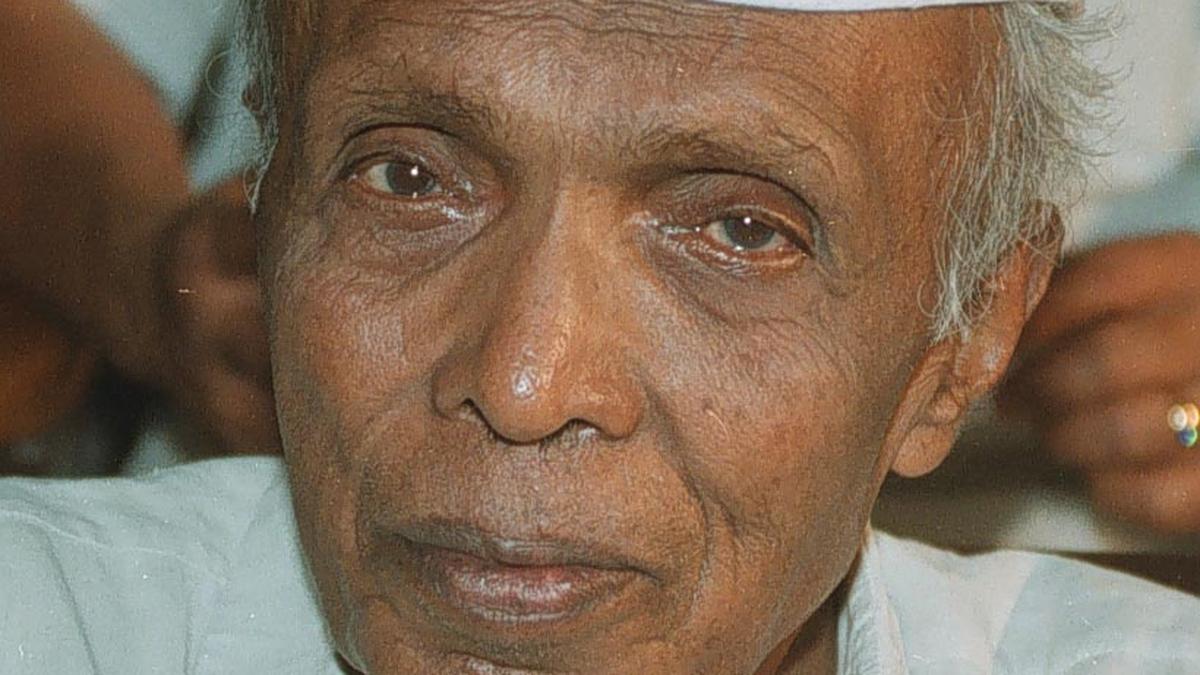
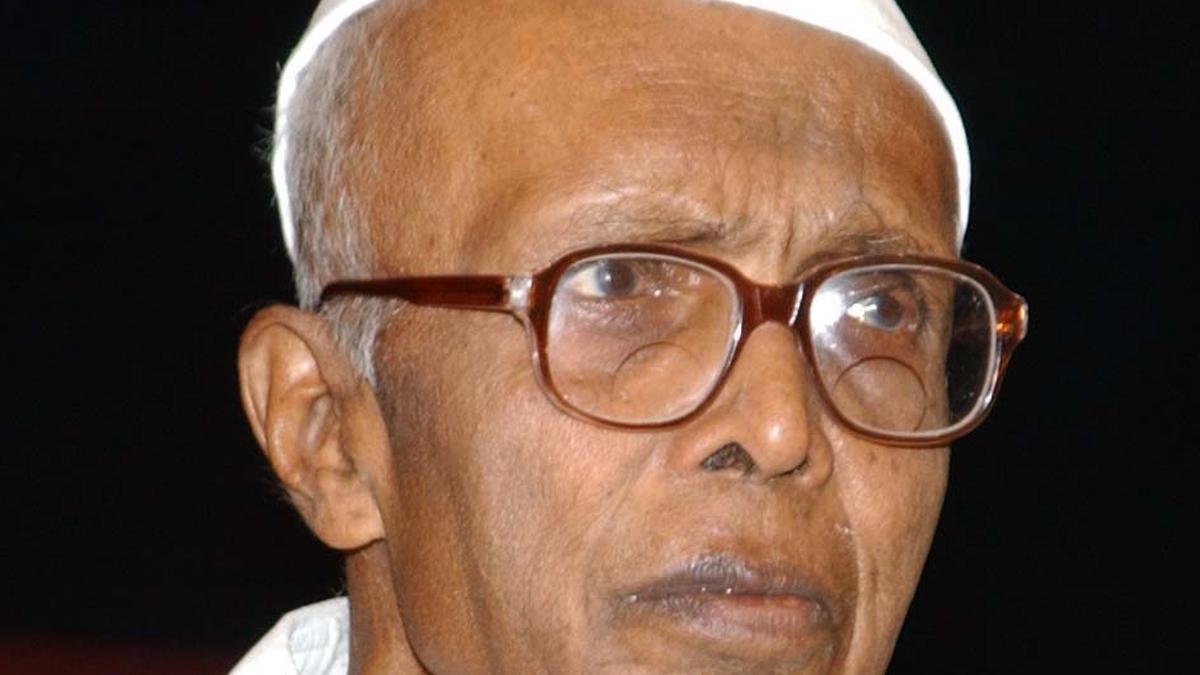
- Narasimhaiah was not merely a scientist, an educator, or the Vice-Chancellor of Bangalore University. Those titles describe his résumé, not his significance. His true identity lay elsewhere: he was a system disruptor in an ecosystem addicted to obedience.
Trained in science and steeped in rational inquiry, Narasimhaiah stood firmly against superstition, dogma, and what may be the most dangerous enemy of progress—intellectual laziness. He did not wage war against religion or tradition per se; he waged war against unexamined belief. To him, any idea—scientific, cultural, religious, or political—that could not withstand scrutiny had no rightful claim over the human mind.
This made him deeply unsettling to dogmatists. Institutions that thrive on reverence without reasoning found him inconvenient, even threatening. Predictably, he was criticized, resisted, and occasionally vilified. Yet, among thinkers—students, scientists, reformers—he was revered. Not because he gave answers, but because he returned ownership of thinking to the individual.
In a society where hierarchy often substitutes for evidence, Narasimhaiah represented an anomaly: a man in authority who actively undermined the authority of his own position.
1.2 His Foundational Belief
“If students do not question me, I have failed as a teacher.”
This was not rhetoric. It was his operating system.
Narasimhaiah rejected the idea of education as social conditioning—the quiet training of young minds to fit into pre-existing molds. Instead, he viewed education as intellectual emancipation: the deliberate freeing of the mind from fear, dependency, and borrowed certainty.
In his framework:
- Knowledge was provisional, not sacred. Every concept was a best-available explanation, not an eternal truth.
- Textbooks were tools, not scriptures.
- Teachers were facilitators of inquiry, not custodians of unquestionable wisdom.
Most radically, authority itself was something to be tested, not trusted blindly. He taught students that respect does not require submission, and disagreement does not equal disrespect. One could honor a teacher while dismantling their argument. In fact, doing so was the highest form of respect.
This belief strikes at the root of many educational failures. When students are discouraged from questioning teachers, they do not become humble—they become dependent. Narasimhaiah understood that a mind trained to question its teacher will one day be capable of questioning unjust laws, flawed policies, corrupt leaders, and even its own biases.
That is not dangerous education. That is responsible citizenship training.
1.3 Why He Was Dangerous (and Necessary)
Narasimhaiah was dangerous precisely because he worked where control is most effective: the classroom.
He disrupted hierarchical learning structures where the teacher speaks, students listen, and silence is mistaken for understanding. In his classrooms, hierarchy was replaced with dialogue, and certainty was replaced with inquiry. This unsettled both students conditioned to obedience and institutions dependent on predictability.
He openly undermined blind reverence for textbooks. Not because books lack value, but because books age faster than curiosity. He insisted that students examine assumptions, question conclusions, and trace ideas back to evidence and logic. For systems built on rote memorization and standardized testing, this was heresy.
Most dangerously of all, he replaced obedience with inquiry.
An obedient student is easy to manage.
A questioning student is hard to control—but impossible to enslave.
Such individuals do not accept slogans as substitutes for truth. They do not confuse tradition with correctness. They are resistant to propaganda, allergic to superstition, and uncomfortable with convenient lies. From the perspective of rigid systems, that is a threat. From the perspective of a healthy society, it is non-negotiable.
- Narasimhaiah was necessary because every civilization periodically forgets that progress is born not from compliance, but from courageous questioning. He reminded us—quietly, persistently, and unapologetically—that education’s highest duty is not to produce workers, believers, or followers, but thinking human beings.
And that, inevitably, makes one dangerous to the wrong kind of order.

The Great Skepticism Challenge
2.1 The Radical Instruction
“Doubt me. Doubt your books. Doubt Newton. Doubt Einstein.”
In one stroke, H. Narasimhaiah dismantled centuries of misplaced reverence. This instruction was not an act of provocation for its own sake, nor was it an invitation to intellectual anarchy. It was something far more disciplined and far more dangerous to complacency: methodological skepticism.
Narasimhaiah was not teaching students to reject knowledge; he was teaching them to interrogate it. Doubt, in his classrooms, was not cynicism. It was a structured process—question the assumptions, examine the evidence, test the logic, and only then arrive at provisional conclusions. He understood that when students treat great scientists as infallible prophets rather than rigorous thinkers, they betray the very spirit of science those figures embodied.
By asking students to doubt even Newton and Einstein, he was making a subtle but powerful point: science advances because its giants expect to be questioned. To accept their ideas blindly is not respect—it is intellectual laziness wearing the costume of reverence.
This radical instruction forced students to confront an uncomfortable truth: certainty is seductive, but curiosity is productive.
2.2 What Students Were Asked to Question
Narasimhaiah’s skepticism was not abstract philosophy; it was applied daily, often uncomfortably.
First, students were taught to see scientific “laws” for what they truly are: models of reality, not reality itself. Laws work within defined conditions. They explain, predict, and approximate—but they are always incomplete. When students grasped this, they stopped treating science as a belief system and started treating it as a living, evolving inquiry.
Second, he challenged the sanctity of examination systems. Marks, ranks, and degrees, he argued, are indicators of performance under constrained conditions—not measures of intelligence, creativity, or wisdom. By questioning exams, he freed students from confusing external validation with internal capability. Learning became intrinsic again, not transactional.
Third—and most controversially—he encouraged scrutiny of religious and cultural beliefs that lacked empirical grounding. This was not an attack on faith or tradition, but a defense of mental autonomy. Beliefs inherited without examination, he warned, often outlive their usefulness and quietly shape behavior, prejudice, and fear. If an idea influences how you live, it deserves the dignity of examination.
In every domain, the message was consistent: no idea is above inquiry if it claims authority over the human mind.
2.3 Pedagogical Impact
The impact of this approach was transformative.
Students no longer learned merely what was known; they learned how knowledge is constructed—through observation, hypothesis, experimentation, debate, revision, and sometimes, failure. They began to see knowledge as a process rather than a product.
This marked a decisive shift from passive consumption to active interrogation. Classrooms became arenas of dialogue rather than sites of delivery. Students learned to ask better questions, trace assumptions, and identify gaps in reasoning. They stopped waiting for “correct answers” and started building defensible positions.
Most importantly, this pedagogy cultivated intellectual courage. Questioning a textbook is one thing; questioning a teacher, a tradition, or a deeply held belief is another. Narasimhaiah trained students to tolerate discomfort, ambiguity, and uncertainty—conditions without which original thinking is impossible.
Such courage does not remain confined to academics. It spills into careers, relationships, civic life, and ethical decision-making. A mind that has learned to question ideas can eventually learn to question itself—and that is the highest form of intelligence.
2.4 The Unspoken Lesson
Beneath all his instruction lay a quiet, uncompromising truth:
True science progresses not by belief, but by organized disbelief.
Every major scientific breakthrough began as a refusal to accept existing explanations as final. Every paradigm shift was born when someone asked an inconvenient question and persisted despite resistance. Narasimhaiah ensured his students internalized this lesson not as a slogan, but as a habit of mind.
In doing so, he inoculated them against dogma—scientific, religious, political, or cultural. He reminded them that belief seeks comfort, but inquiry seeks truth. And societies that choose comfort over truth may survive for a while, but they do not evolve.
The Great Skepticism Challenge was not about tearing knowledge down.
It was about keeping knowledge honest.

Beyond the Classroom: Real-World Inquiry
3.1 Education as Social Responsibility
For H. Narasimhaiah, education did not end with examinations, degrees, or classrooms. Knowledge that remains confined to academic discourse, he believed, is ethically incomplete. True education carries a social responsibility: it must equip individuals to engage with the world critically, courageously, and compassionately.
The critical thinking he cultivated was deliberately portable. Students were encouraged to apply the same rigor they used in physics or science to everyday life—especially to domains where questioning was traditionally discouraged.
They learned to confront superstition, not with mockery, but with inquiry. Why is this belief held? What evidence supports it? Who benefits from its continuation? In doing so, they discovered that many fears survive not because they are true, but because they are unexamined.
They were trained to recognize pseudoscience—claims wrapped in scientific language but devoid of scientific method. In a society where jargon often substitutes for evidence, this skill proved invaluable. It allowed students to differentiate between genuine innovation and intellectual fraud, between healing and exploitation.
Narasimhaiah also pushed students to decode political propaganda. Slogans, symbols, emotional appeals, and selective data were examined with the same skepticism applied to scientific hypotheses. He wanted students to see how narratives are engineered, how fear and pride are manipulated, and how unquestioned loyalty can become a tool of control.
Even cultural taboos were not exempt. Practices justified solely by “this is how it has always been done” were subjected to rational evaluation. The question was never “Is this old?” but “Is this just, humane, and relevant today?”
In this way, education became an act of social hygiene—cleaning the collective mind of ideas that no longer served human dignity.
3.2 Students as Rational Citizens
The outcome of this approach was not rebellion, but rational citizenship.
Students learned to challenge rituals that lacked evidence or ethical grounding. They understood that rituals are meant to serve people, not enslave them. When rituals demand obedience without understanding, questioning becomes an act of self-respect.
They were taught to question authority without arrogance. Narasimhaiah emphasized tone as much as thought. Inquiry did not require hostility. One could ask difficult questions calmly, firmly, and respectfully. This distinction mattered deeply to him, because arrogance hardens opposition, while clarity invites dialogue.
Perhaps his most enduring lesson was the separation of respect from submission. Respect acknowledges experience and intent. Submission surrenders judgment. Narasimhaiah made it clear that a healthy society requires the former and must guard against the latter.
Students trained in this manner did not become contrarians for sport. They became individuals capable of saying, “I may be wrong, but let us examine this together.” That posture—open yet firm—is the foundation of democratic discourse and scientific progress alike.
3.3 Why This Was Revolutionary in India
To appreciate the depth of Narasimhaiah’s impact, one must understand the context in which he worked.
Indian society has long been conditioned to obey elders, often equating age with wisdom and authority with correctness. Tradition is frequently revered not because it is examined and chosen, but because it is inherited. Confrontation—especially intellectual confrontation—is commonly avoided in the name of harmony.
Within such a framework, questioning can appear disrespectful, even immoral. Narasimhaiah quietly but decisively challenged this conditioning. He demonstrated that unquestioned tradition stagnates, while examined tradition evolves. He showed that harmony achieved through silence is fragile, and that genuine respect can coexist with disagreement.
What he taught was not rebellion for rebellion’s sake. It was respectful dissent—the ability to stand one’s ground without burning bridges, to question without contempt, and to disagree without dehumanizing.
This was revolutionary because it redefined citizenship itself. Instead of passive conformity, he envisioned a society of thinking participants. Instead of inherited beliefs, consciously chosen values. Instead of fear-driven obedience, reasoned engagement.
In extending inquiry beyond the classroom, H. Narasimhaiah transformed education into a civic act. He reminded us that a nation’s strength does not lie in how well its people obey, but in how well they think, question, and care.
The Lasting Legacy of Questioning Minds
4.1 Career and Life Outcomes
The true measure of H. Narasimhaiah’s legacy is not found in syllabi or institutional reforms, but in the lives his students went on to build. His alumni did not emerge as replicas of a single ideology or profession. They became scientists, engineers, policy thinkers, administrators, educators, and ethical leaders across domains. What united them was not their career choice, but their mode of thinking.
As scientists and engineers, they were not mere implementers of known formulas. They were problem-framers—individuals who could identify flawed assumptions, challenge inherited models, and innovate under uncertainty. In policy and governance, they demonstrated an unusual resistance to populism and simplistic narratives. They understood that complex problems demand nuanced thinking, not slogans.
As leaders, many displayed a rare ethical backbone. Accustomed to questioning authority early in life, they were less likely to misuse it later. Having learned to defend ideas rather than positions, they could admit error without collapse and course-correct without losing credibility. In environments that reward compliance, they stood out—sometimes inconveniently—as voices of reason.
Narasimhaiah did not train students for specific jobs. He trained them for lifelong adaptability. In a world where professions change faster than curricula, this proved to be his most future-proof contribution.
4.2 The Invisible Curriculum
Beyond formal education, Narasimhaiah imparted what might be called an invisible curriculum—skills and dispositions rarely graded, yet essential for mature adulthood.
First was confidence in uncertainty. His students learned that not knowing is not a weakness, but the starting point of honest inquiry. They became comfortable saying, “I don’t know yet,” without anxiety or pretense. This alone set them apart in cultures obsessed with appearing certain.
Second was comfort with being wrong. Narasimhaiah normalized error as an inevitable companion of learning. Students who fear being wrong stop thinking. Students who can acknowledge error keep evolving. This capacity—to revise without humiliation—became a lifelong asset in both personal and professional domains.
Third was the ability to revise beliefs. Many people accumulate ideas the way others accumulate possessions—rarely discarding, even when obsolete. Narasimhaiah trained minds to travel light. When new evidence emerged, beliefs were adjusted, not defended. Identity was not tied to opinions, which made growth possible without existential threat.
These qualities rarely appear on transcripts, yet they define intellectual maturity. They are the difference between rigid expertise and living intelligence.
4.3 Relevance in the AI & Misinformation Age
In the age of artificial intelligence and ubiquitous misinformation, Narasimhaiah’s legacy becomes not just relevant, but urgent.
When machines can generate answers instantly—often confidently and persuasively—the human advantage shifts decisively. The critical skill is no longer recall, but question formulation. Knowing what to ask, how to probe assumptions, and when to doubt outputs becomes a survival skill.
Algorithms optimize for probability, not truth. They reflect patterns, not wisdom. Without trained skepticism, societies risk mistaking fluency for accuracy and confidence for correctness. Narasimhaiah anticipated this danger long before it had a technological face. He understood that tools grow powerful faster than judgment—and that untrained minds are easily overpowered by sophisticated outputs.
In such a world, critical thinking is no longer an academic luxury reserved for elite institutions. It is cognitive self-defense. The ability to detect bias, identify manipulation, and pause before believing becomes as essential as literacy once was.
- Narasimhaiah’s enduring gift is this: he taught people how to remain human in the presence of overwhelming information. His questioning minds are not relics of a pre-digital past; they are prototypes for a viable future.
A future where answers are abundant—but wisdom must be earned.
Your Turn to Question Everything
5.1 Adopt the Narasimhaiah Mindset
The most powerful tribute to H. Narasimhaiah is not admiration—it is imitation. His mindset was not reserved for scientists or academics; it was designed for everyday living. Adopting it begins with a subtle but transformative shift in how questions are framed.
Replace “Is this correct?” with “How do we know this?”
The first seeks approval. The second seeks understanding. One ends conversations; the other opens investigations.
Replace “Who said it?” with “What is the evidence?”
Authority can introduce an idea, but only evidence can sustain it. This shift dismantles the reflex to outsource judgment to experts, influencers, elders, or institutions—without descending into arrogance or denialism.
This mindset trains you to respect expertise without surrendering agency. It keeps curiosity alive even in the presence of credentials. Most importantly, it turns learning into a lifelong discipline rather than a phase that ends with formal education.
To think like Narasimhaiah is to accept one uncomfortable truth: clarity often begins where certainty ends.
5.2 Actionable Practices
Questioning is not an attitude; it is a practice. Like any discipline, it strengthens with use.
Begin by questioning one belief per week. Choose something you take for granted—about success, gender roles, health, money, education, religion, or happiness. Ask: Where did this belief come from? What evidence supports it? What contradicts it? What happens if it is partially wrong?
Make it a habit to read opposing viewpoints intentionally. Not to win arguments, but to understand frameworks different from your own. Growth does not come from agreement; it comes from friction handled with humility.
If you are a parent or educator, teach children how to think, not what to repeat. Reward good questions as much as correct answers. Normalize “I don’t know—let’s find out.” Children trained this way grow into adults who are curious, resilient, and difficult to mislead.
Critically, encourage neurodiverse questioning styles—a core focus of MEDA Foundation. Many autistic and neurodivergent individuals question patterns, inconsistencies, and assumptions others overlook. These are not disruptions; they are cognitive assets. Inclusive ecosystems that honor diverse ways of questioning are more innovative, humane, and future-ready.
Questioning, when practiced consistently, becomes a quiet form of empowerment. It sharpens judgment, reduces manipulation, and restores dignity to independent thought.
5.3 The Final Provocation
If you were wrong about something important… would you want to know?
This is not a rhetorical flourish. It is a diagnostic question.
Those who answer “yes” are students of life—open, evolving, and capable of growth.
Those who answer “no,” often unconsciously, may be well-informed but are no longer learning.
That single question marks the boundary between a student and a thinker, between intellectual safety and intellectual courage.
- Narasimhaiah showed us that questioning is not a threat to truth—it is the only path to it. The responsibility now rests with us. Not to repeat his words, but to embody his discipline. Not to rebel noisily, but to think honestly.
The future does not belong to those with the loudest answers.
It belongs to those brave enough to ask the right questions—and stay with them long enough to learn.
Closing Reflection H. Narasimhaiah did not produce rebels. He produced adults—intellectually, morally, and civically. The real tragedy is not that he was controversial. The tragedy is that his methods are still considered radical. ________________________________________ Participate. Question. Build Thinkers. MEDA Foundation works at the grassroots to cultivate exactly what Narasimhaiah stood for—independent thinking, neurodiverse inclusion, employability through cognition, and self-sustaining ecosystems. Your participation, mentorship, volunteering, and donations help build thinkers—not dependents. 👉 Support MEDA Foundation to help people help themselves. Book References: • The Demon-Haunted World – Carl Sagan • Pedagogy of the Oppressed – Paulo Freire • Surely You’re Joking, Mr. Feynman! – Richard Feynman • The Structure of Scientific Revolutions – Thomas Kuhn • Thinking, Fast and Slow – Daniel Kahneman
Closing Reflection
- Narasimhaiah did not produce rebels.
He produced adults—intellectually, morally, and civically.
Adults who could hold complexity without panic.
Adults who could disagree without dehumanizing.
Adults who could respect tradition without becoming imprisoned by it.
That distinction matters. Rebels react. Adults reason.
The real tragedy is not that Narasimhaiah was controversial. Every meaningful educator eventually is. The deeper tragedy is that his methods are still considered radical—in a world collapsing under misinformation, credential worship, and intellectual passivity. What should be foundational is treated as subversive. What should be normal is labeled dangerous.
A society that fears questioning does not remain stable; it merely postpones collapse. Narasimhaiah understood that civilizations are not undone by doubt—they are undone by unexamined certainty. His life stands as a quiet indictment of education systems that prioritize compliance over comprehension, harmony over honesty, and answers over understanding.
The question before us is not whether we admire him.
It is whether we are willing to continue his work.
Participate. Question. Build Thinkers.
MEDA Foundation works at the grassroots to cultivate exactly what H. Narasimhaiah stood for:
- Independent thinking over inherited obedience
- Neurodiverse inclusion, recognizing questioning as a strength, not a disruption
- Employability through cognition, not rote credentialism
- Self-sustaining ecosystems where people are empowered to think, adapt, and lead
Your participation matters.
Your mentorship matters.
Your volunteering matters.
Your donations matter.
Because what MEDA builds are not dependents—but capable, questioning, self-reliant human beings.
👉 Support MEDA Foundation to help people help themselves.
Not by giving answers—but by nurturing minds strong enough to ask better questions.
Book References
- The Demon-Haunted World — Carl Sagan
- Pedagogy of the Oppressed — Paulo Freire
- Surely You’re Joking, Mr. Feynman! — Richard Feynman
- The Structure of Scientific Revolutions — Thomas Kuhn
- Thinking, Fast and Slow — Daniel Kahneman
Final thought:
Education that does not teach people to question power eventually teaches them to obey it.
H. Narasimhaiah chose a harder path—and showed us why it is the only one worth walking.


