

 Introduction:
 Reduced Time, Energy, and Qualification Requirements: Mushroom cultivation requires minimal physical effort and qualifications, making it accessible to a wide range of individuals with disabilities. The tasks involved are simple and easy to understand, requiring little energy expenditure. This opens up opportunities for individuals who may face limitations in terms of time or physical abilities. David, who has a mobility impairment, found that mushroom farming allowed him to engage in productive work without overexerting himself. The low physical demands of the job enabled him to pursue his passion for agriculture.
 Opportunities for Self-Employment and Entrepreneurship: Mushroom cultivation provides opportunities for self-employment and entrepreneurship, empowering individuals to create their own businesses and thrive in environments suited to their unique capabilities. As entrepreneurs, individuals with disabilities can tailor their mushroom farming operations to accommodate their specific needs and preferences. Mark, who is visually impaired, started his own mushroom farm and implemented adaptive technologies to assist him in his work. His entrepreneurial spirit and determination enabled him to overcome challenges and build a successful business.
 Requires Manual Dexterity and Patience Suitable to Women: Mushroom cultivation requires manual dexterity and patience, qualities that are often associated with women. In rural areas where women may face limited employment options outside the home, mushroom farming provides an opportunity for them to utilize their skills and contribute to household income. The delicate nature of tasks such as harvesting and packaging makes mushroom cultivation particularly suitable for women. Anita, a homemaker in a rural village, found fulfillment in tending to her mushroom farm. The precision required in handling delicate mushroom caps allowed her to leverage her manual dexterity and attention to detail.
Indian Market Potential and ROI:
 Current and Projected Demand for Mushrooms:
The mushroom market in India is experiencing robust growth, driven by increasing consumer awareness of the health benefits of mushrooms and changing dietary preferences. According to recent statistics, the demand for mushrooms in India has been steadily rising, with a compound annual growth rate (CAGR) of around 8% over the past few years. This upward trend is expected to continue, with projections indicating further growth in the coming years.
Areas with the Most Demand:
While the demand for mushrooms is prevalent across India, certain regions stand out as key hubs for mushroom consumption and production. Urban centers such as Delhi, Mumbai, Bangalore, and Chennai have emerged as significant markets for mushrooms due to their large population bases and higher disposable incomes. Additionally, regions with a strong presence of hotels, restaurants, and catering services exhibit a higher demand for mushrooms as they are commonly used in culinary preparations.
 Varieties and Value-Added Products in Demand:
A wide variety of mushrooms are consumed in India, with popular varieties including button mushrooms, oyster mushrooms, shiitake mushrooms, and more. Button mushrooms, in particular, dominate the market due to their versatility and availability year-round. However, there is a growing demand for exotic and specialty mushroom varieties such as oyster mushrooms and shiitake mushrooms, driven by their unique flavors and nutritional profiles.
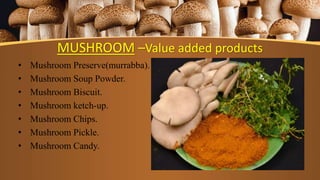
In addition to fresh mushrooms, value-added mushroom products are gaining traction in the Indian market. Value-added products such as mushroom powder, mushroom soup mixes, mushroom pickles, and mushroom-based snacks are becoming increasingly popular among health-conscious consumers seeking convenient and nutritious food options. These products offer a convenient way to incorporate the health benefits of mushrooms into everyday meals and snacks, driving demand for processed mushroom products.
Projected Returns on Investment:
Investing in mushroom cultivation in India presents promising opportunities for investors seeking attractive returns. With the demand for mushrooms expected to continue growing, particularly in urban areas and among health-conscious consumers, mushroom farming ventures can anticipate steady demand and favorable pricing dynamics.
Furthermore, the relatively low capital investment required for mushroom cultivation, coupled with the short growth cycle and high yield potential, positions mushroom farming as a lucrative venture with attractive returns on investment. By leveraging innovative cultivation techniques, market insights, and value-added product offerings, investors can capitalize on the burgeoning demand for mushrooms in India and achieve sustainable profitability in the long term.
 Low and Affordable Space Requirement:
Support from Indian Government and Other Non-Profit Organizations:
Assistance with Spawns:
Spawns, also known as mushroom seed or mycelium, are essential for initiating mushroom cultivation. The Indian government, through agricultural departments and research institutions, often facilitates the production and distribution of high-quality spawns to mushroom farmers at subsidized rates or free of cost. This support ensures that farmers have access to reliable spawns, which are critical for successful mushroom cultivation. Additionally, non-profit organizations may collaborate with government agencies to organize spawn distribution programs and workshops to educate farmers on the importance of using quality spawns and proper spawn management techniques.
 Training Programs:
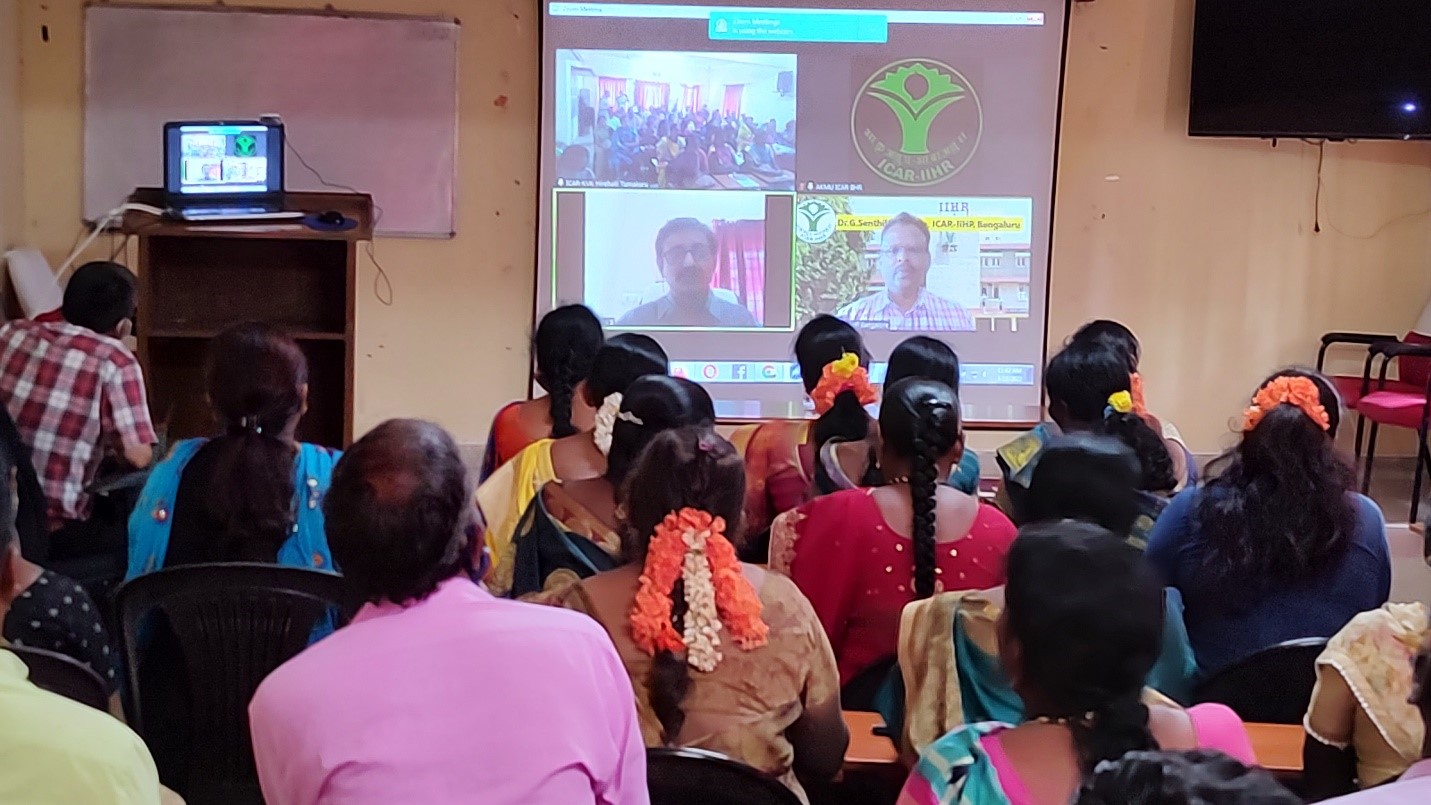
Training plays a vital role in building the capacity and skills of mushroom farmers and entrepreneurs. The Indian government, as well as non-profit organizations, regularly conduct training programs and workshops on various aspects of mushroom cultivation, including cultivation techniques, spawn production, disease management, post-harvest handling, and value-added product development. These training programs are typically conducted by experts and experienced practitioners in the field of mushroom cultivation, ensuring that participants receive comprehensive and practical knowledge that can be applied in their farming operations. Furthermore, training sessions may also cover topics such as business management, marketing strategies, and financial literacy to equip farmers with the necessary skills to run successful mushroom farming enterprises.
Certification Processes:
Certification is essential for ensuring the quality and safety of mushroom products and enhancing market competitiveness. The Indian government, in collaboration with regulatory authorities and certification bodies, establishes standards and guidelines for mushroom cultivation and processing. Non-profit organizations may assist farmers in navigating the certification processes, including obtaining organic certification, Good Agricultural Practices (GAP) certification, and Food Safety and Standards Authority of India (FSSAI) certification. By adhering to these standards and obtaining certifications, mushroom farmers can access premium markets, command higher prices for their products, and build trust and credibility with consumers.
 Basic Setup, Equipment, and Sourcing:
 Wholesale and Retail Buyers:
 Additional Adjacent Business Opportunities:
 Conclusion:
