Tag: #ValueBasedLiving

  • The Cost of Not Knowing: Navigating Modern Life With Spiritual Clarity

    The Cost of Not Knowing: Navigating Modern Life With Spiritual Clarity

    Modern life overwhelms not because it is complex, but because we navigate it without an internal compass, leading to distraction, indecision, and a quiet loss of self-authorship. This article reveals how the absence of spiritual clarity—defined as value-based decision intelligence—causes drift, emotional unrest, and misaligned living, while modern systems amplify noise and erode self-trust. By reclaiming clarity through intentional subtraction, defined core values, disciplined reflection, and practical frameworks like the alignment matrix and decision minimalism, individuals can move from reactive existence to deliberate living. The shift is sustained through daily practices of stillness, journaling, and conscious planning, ultimately transforming behavior, stabilizing emotions, sharpening thinking, and integrating identity. The message is clear: clarity is not found but built—and the choice to live by design rather than default determines whether life becomes a product of circumstance or a reflection of conscious intent.

    ಆಧುನಿಕ ಜೀವನ ಸಂಕೀರ್ಣವಾಗಿರುವುದರಿಂದ ನಾವು ತತ್ತರಿಸುತ್ತಿಲ್ಲ; ಅದರೊಳಗೆ ಸಾಗಲು ಅಗತ್ಯವಾದ ಆಂತರಿಕ ದಿಕ್ಕು (ಕಂಪಾಸ್) ಇಲ್ಲದಿರುವುದರಿಂದ ತತ್ತರಿಸುತ್ತೇವೆ. ಇದರಿಂದ ಗಮನ ಭಂಗ, ನಿರ್ಧಾರ ಅಸ್ಪಷ್ಟತೆ ಮತ್ತು ನಿಧಾನವಾಗಿ ಸ್ವಯಂ ನಿಯಂತ್ರಣ ಕಳೆದುಕೊಳ್ಳುವ ಪರಿಸ್ಥಿತಿ ಉಂಟಾಗುತ್ತದೆ. ಈ ಲೇಖನವು ಆಧ್ಯಾತ್ಮಿಕ ಸ್ಪಷ್ಟತೆ—ಅಂದರೆ ಮೌಲ್ಯಾಧಾರಿತ ನಿರ್ಧಾರ ಸಾಮರ್ಥ್ಯ—ಇಲ್ಲದಿರುವುದು ಹೇಗೆ ದಿಕ್ಕುತಪ್ಪುವಿಕೆ, ಭಾವನಾತ್ಮಕ ಅಶಾಂತಿ ಮತ್ತು ಅಸಮತೋಲನ ಜೀವನಕ್ಕೆ ಕಾರಣವಾಗುತ್ತದೆ ಎಂಬುದನ್ನು ತೋರಿಸುತ್ತದೆ, ಜೊತೆಗೆ ಆಧುನಿಕ ವ್ಯವಸ್ಥೆಗಳು ಹೇಗೆ ನಮ್ಮ ಗಮನವನ್ನು ಚದುರಿಸಿ ಸ್ವಯಂ ವಿಶ್ವಾಸವನ್ನು ದುರ್ಬಲಗೊಳಿಸುತ್ತವೆ ಎಂಬುದನ್ನೂ ವಿವರಿಸುತ್ತದೆ. ಉದ್ದೇಶಪೂರ್ವಕವಾಗಿ ಅಪ್ರಯೋಜಕವನ್ನು ತೆಗೆದುಹಾಕುವುದು, ಮೂಲ ಮೌಲ್ಯಗಳನ್ನು ನಿರ್ಧರಿಸುವುದು, ನಿಯಮಿತ ಆತ್ಮಪರಿಶೀಲನೆ ಮತ್ತು ‘ಅಲೈನ್‌ಮೆಂಟ್ ಮ್ಯಾಟ್ರಿಕ್ಸ್’ ಹಾಗೂ ‘ಡಿಸಿಷನ್ ಮಿನಿಮಲಿಸಂ’ಂತಹ ಕಾರ್ಯಾತ್ಮಕ ವಿಧಾನಗಳನ್ನು ಅನುಸರಿಸುವ ಮೂಲಕ ವ್ಯಕ್ತಿ ಪ್ರತಿಕ್ರಿಯಾತ್ಮಕ ಬದುಕಿನಿಂದ ಉದ್ದೇಶಪೂರ್ಣ ಬದುಕಿನತ್ತ ಸಾಗಬಹುದು. ದಿನನಿತ್ಯದ ಮೌನ, ಬರವಣಿಗೆ ಮತ್ತು ಜಾಗೃತ ಯೋಜನೆಯಂತಹ ಅಭ್ಯಾಸಗಳು ಈ ಬದಲಾವಣೆಯನ್ನು ಸ್ಥಿರಗೊಳಿಸಿ, ವರ್ತನೆಗೆ ಸ್ಪಷ್ಟತೆ, ಭಾವನೆಗೆ ಸಮತೋಲನ, ಚಿಂತನೆಗೆ ತೀಕ್ಷ್ಣತೆ ಮತ್ತು ವ್ಯಕ್ತಿತ್ವದಲ್ಲಿ ಏಕೀಕರಣವನ್ನು ತರುತ್ತವೆ. ಸಂದೇಶ ಸ್ಪಷ್ಟ: ಸ್ಪಷ್ಟತೆ ಕಂಡುಕೊಳ್ಳುವುದಲ್ಲ—ಅದನ್ನು ನಿರ್ಮಿಸಿಕೊಳ್ಳಬೇಕು; ಮತ್ತು ಸಂದರ್ಭಗಳಿಗೆ ಬಲಿಯಾಗುವ ಬದುಕಿನ ಬದಲು ಜಾಗೃತವಾಗಿ ರೂಪಿಸಿದ ಬದುಕನ್ನು ಆಯ್ಕೆ ಮಾಡುವುದು ನಿಮ್ಮ ಕೈಯಲ್ಲಿದೆ.

    The Cost of Not Knowing: Navigating Modern Life With Spiritual Clarity

    1. Introduction: The Silent Collapse of Inner Direction

    The cost of not knowing is not confusion—it is a life unconsciously designed by external forces. Without spiritual clarity, you don’t merely lose direction; you lose authorship of your own life. Every unchecked notification, every unexamined decision, every socially conditioned “yes” becomes a quiet vote against your deeper truth.

    The uncomfortable reality is this: most people are not living intentionally—they are responding habitually. They are not choosing; they are being chosen—for by systems, by expectations, by algorithms, and by inherited beliefs they have never questioned.

    The way forward is not more information. Information is abundant, cheap, and often misleading. The way forward is intentional subtraction, value alignment, and disciplined inner inquiry. Clarity does not emerge from accumulation; it emerges from elimination—of noise, of distraction, and of borrowed desires.

    This is not a philosophical exercise. It is a survival skill for modern life.

    Intended Audience and Purpose

    This reflection is for:

    • Thoughtful professionals navigating complexity without inner grounding
    • Leaders carrying responsibility but lacking stillness
    • Seekers sensing a deeper calling but unable to articulate it
    • Educators shaping minds in a distracted age
    • Young individuals overwhelmed by choices yet uncertain of direction

    The purpose is precise and uncompromising:

    • To diagnose the hidden psychological and spiritual cost of living without clarity
    • To expose how modern systems quietly erode independent thinking and self-trust
    • To offer a practical, repeatable framework for reclaiming inner direction

    This is not about motivation. It is about reconstruction—of how you think, choose, and live.

    Opening Narrative: A Life That Looks Full but Feels Empty

    The modern individual is paradoxical.

    You are more informed than any generation before you—yet more uncertain.
    You are more connected—yet more internally fragmented.
    You are more productive—yet less fulfilled.

    Your day is full:

    • Messages answered
    • Tasks completed
    • Deadlines met

    And yet, at the end of it, there is a quiet, persistent question:

    “Why does this not feel meaningful?”

    This is not laziness.
    This is not incompetence.
    This is misalignment.

    Life feels busy, yet strangely hollow, because activity has replaced intentionality. You are moving fast—but not necessarily in a direction you consciously chose.

    The real crisis is not the chaos outside.
    It is the disconnection inside.

    The Invisible Mechanism: How You Lose Direction Without Noticing

    Loss of direction does not happen dramatically. It happens incrementally and invisibly.

    • You start saying yes to things that don’t truly matter
    • You begin prioritizing urgency over importance
    • You consume more than you create
    • You compare more than you reflect

    Gradually, your internal compass weakens.

    You begin to rely on:

    • External validation instead of inner conviction
    • Trends instead of principles
    • Convenience instead of clarity

    And over time, something subtle but dangerous occurs:

    You stop asking the fundamental questions.

    • Why am I doing this?
    • Who am I becoming?
    • What truly matters?

    When these questions disappear, drift begins.

    Core Proposition: Spiritual Clarity as Decision Intelligence

    Spiritual clarity is often misunderstood as something abstract, mystical, or detached from real life. In truth, it is far more grounded and far more powerful.

    It is decision intelligence rooted in values.

    It is the ability to:

    • Distinguish what matters from what is merely urgent
    • Filter opportunities through meaning, not impulse
    • Act with alignment rather than reaction

    Without this clarity, life defaults to three patterns:

    1. Reaction

    You respond to whatever demands your attention first.
    Your priorities are dictated by external stimuli.

    2. Imitation

    You unconsciously copy what others are doing—career paths, lifestyles, even beliefs.
    You inherit lives instead of designing them.

    3. Drift

    You move forward, but without direction.
    Time passes, effort is spent, but fulfillment remains elusive.

    A Hard but Necessary Truth

    If you do not consciously define your values,
    you will unconsciously adopt someone else’s.

    If you do not choose your direction,
    you will be assigned one.

    And if you do not cultivate inner clarity,
    you will spend your life optimizing a path that was never truly yours.

    Actionable Reflection: Begin the Reclaiming Process

    Before moving forward, pause—not theoretically, but practically.

    Ask yourself, and answer without performance:

    1. What am I currently pursuing—and why?
    2. Which parts of my life feel externally driven rather than internally chosen?
    3. Where am I saying “yes” out of fear, habit, or expectation?

    Now take one small but decisive step:

    • Identify one commitment that does not align with your deeper priorities
    • Reduce, delegate, or eliminate it within the next 48 hours

    This is not about drastic change.
    It is about reclaiming authorship—one decision at a time.

    Closing Insight for This Section

    Clarity is not something you stumble upon.
    It is something you build, protect, and practice daily.

    The silent collapse of inner direction can be reversed—but only if you are willing to confront an uncomfortable reality:

    The life you are living today is a reflection of the clarity you have—or the clarity you have avoided.

    The next step is not to do more.
    It is to see more clearly.

    Not Knowing Stock Illustrations – 206 Not Knowing Stock Illustrations, Vectors & Clipart - Dreamstime

    2. The Modern Condition: Overstimulated, Overloaded, and Undirected

    Conclusion First

    You are not failing to manage your life—your environment is systematically designed to fragment your attention, dilute your decisions, and disconnect you from meaningful direction. The modern condition is not accidental; it is engineered. Unless you understand this, you will continue to mistake symptoms (distraction, fatigue, confusion) for personal shortcomings, instead of recognizing them as structural consequences of the world you inhabit.

    2.1 The Industrialization of Attention

    Attention, once a deeply personal and sacred cognitive resource, has now been transformed into a global commodity.

    Your attention is no longer yours alone—it is bought, sold, optimized, and weaponized.

    Modern digital platforms are not neutral tools. They are highly sophisticated behavioral systems designed with three precise objectives:

    • Capture attention
      Through notifications, alerts, and emotionally triggering content, your focus is repeatedly interrupted and redirected.
    • Prolong engagement
      Infinite scrolling, autoplay, and personalized feeds are engineered to eliminate stopping cues, keeping you engaged far beyond your intention.
    • Influence behavior subtly
      Algorithms learn your preferences, biases, and emotional triggers—then feed you content that nudges your decisions without your conscious awareness.

    The result is a quiet but profound shift:
    You are no longer fully choosing what you focus on—your focus is being chosen for you.

    This is not just distraction. It is attention hijacking at scale.

    2.2 The Paradox of Infinite Choice

    At first glance, modern life appears to offer unprecedented freedom. You can choose:

    • What to watch
    • What to buy
    • What to learn
    • Who to become

    But here lies the paradox:

    More options do not create more freedom—they create more friction.

    When faced with excessive choices, the human mind struggles to:

    • Evaluate effectively
    • Commit confidently
    • Feel satisfied afterward

    This leads to three predictable outcomes:

    Analysis Paralysis

    You delay decisions—not because you lack ability, but because the cost of choosing feels overwhelming.

    Regret Amplification

    Even after making a choice, you question it:

    • “Was there a better option?”
    • “Did I miss out?”

    Chronic Dissatisfaction

    Abundance breeds comparison, and comparison erodes contentment.

    Instead of feeling empowered by choice, you feel burdened by it.

    The uncomfortable truth:
    Freedom without clarity becomes confusion.

    2.3 Decision Fatigue as a Daily Tax

    Every decision you make—no matter how small—draws from a finite pool of mental energy.

    In today’s world, you are making hundreds of micro-decisions before noon:

    • What to check
    • What to respond to
    • What to prioritize
    • What to ignore

    This constant cognitive demand results in decision fatigue—a measurable decline in your ability to think clearly and act deliberately.

    What Gets Eroded:

    • Cognitive bandwidth
      Your ability to process complex information and think strategically diminishes.
    • Emotional resilience
      You become more reactive, less patient, and more susceptible to stress.

    What Emerges Instead:

    • Impulsive decisions
      You choose what is easy, not what is right.
    • Avoidance patterns
      You postpone important decisions because they feel mentally expensive.
    • Mental exhaustion disguised as laziness
      You label yourself unmotivated, when in reality, you are overloaded.

    This is critical to understand:

    You are not inherently undisciplined—you are cognitively depleted.

    2.4 The Illusion of Productivity

    In response to this chaos, modern culture offers a seductive solution: productivity.

    • More tools
    • Better systems
    • Faster execution

    But productivity, when disconnected from purpose, becomes a trap.

    The False Signals of Progress:

    • Completing tasks
    • Clearing inboxes
    • Checking boxes

    These create the illusion of movement, but not necessarily meaningful progress.

    The Deeper Problem:

    • Checklists replace reflection
    • Efficiency replaces direction
    • Output increases while purpose quietly declines

    You can become exceptionally good at doing things that do not matter.

    And that is one of the most dangerous forms of success.

    Key Insight

    Modern systems are not designed to give you clarity—they are designed to keep you engaged.

    They benefit when you:

    • Stay distracted
    • Keep consuming
    • Avoid deep reflection

    Clarity, on the other hand, requires:

    • Slowing down
    • Questioning deeply
    • Choosing deliberately

    And that is precisely what these systems make difficult.

    Actionable Reflection: Reclaiming Attention and Direction

    To counter this condition, you must act intentionally—not reactively.

    1. Conduct an Attention Audit

    • Track where your time and focus go for one day
    • Identify:
      • What is intentional
      • What is reactive

    2. Reduce Decision Load

    • Standardize low-value decisions:
      • Routines
      • Daily structures
    • Preserve energy for what truly matters

    3. Introduce Friction to Distraction

    • Turn off non-essential notifications
    • Create “no-scroll” time blocks
    • Make distraction slightly harder

    4. Redefine Productivity

    Before doing any task, ask:

    • “Does this move me toward what actually matters?”

    If not, reconsider.

    Closing Insight for This Section

    You cannot build a clear life on a fragmented mind.

    Until you reclaim your attention,
    you cannot reclaim your direction.

    And until you reclaim your direction,
    you will continue to move—but never truly arrive.

    Stunned Stock Illustrations – 2,096 Stunned Stock Illustrations, Vectors & Clipart - Dreamstime

    3. The Hidden Cost: What You Lose When You Lack an Internal Compass

    Conclusion First

    The absence of an internal compass does not simply create confusion—it creates a slow, compounding erosion of self. You do not collapse overnight; you drift, fragment, and dilute over time. The true cost is not visible in a single moment, but in the accumulated gap between the life you are living and the life you were meant to live.

    3.1 The Drift Phenomenon

    Drift is subtle. It does not announce itself. It feels like progress—but without direction.

    When you lack a clearly defined internal compass, life gradually shifts from intentional creation to opportunistic reaction.

    • You take opportunities because they appear, not because they align
    • You say “yes” because it is easier than reflection
    • You move forward without ever asking, “Toward what?”

    Two Critical Shifts Occur:

    1. Opportunistic Living

    • Decisions are driven by availability, convenience, or external pressure
    • You chase what comes your way rather than what truly matters

    2. External Shaping

    • Your path is influenced by:
      • Market trends
      • Social expectations
      • Peer comparison
    • You begin living a life that is assembled externally, not authored internally

    The danger is not stagnation—it is misdirected momentum.

    You are moving, but not necessarily in the right direction.

    3.2 Identity Diffusion

    Without a stable inner framework, your identity begins to fragment across contexts.

    You become:

    • One person at work
    • Another on social platforms
    • And someone entirely different in private moments

    The Three Layers of Fragmentation:

    1. The Professional Persona

    • Competent, structured, goal-oriented
    • Often shaped by expectations rather than authenticity

    2. The Social Persona

    • Curated, performative, approval-seeking
    • Designed to fit in or stand out—rarely to be real

    3. The Private Self

    • Uncertain, questioning, often disconnected
    • The place where unresolved tension accumulates

    The Consequence: No Unified Narrative

    When these versions of you do not align:

    • Decisions become inconsistent
    • Priorities shift unpredictably
    • Self-trust erodes

    You begin to ask:
    “Which version of me is actually real?”

    Without a coherent identity, you cannot make coherent decisions.

    3.3 Emotional Consequences

    The emotional cost of misalignment is profound—but often misunderstood.

    It does not always appear as dramatic breakdowns. Instead, it manifests as persistent, low-grade discomfort.

    Common Emotional States:

    • Anxiety
      Not from overload alone, but from lack of grounded direction
    • Restlessness
      A constant sense that something is “off,” even when things appear fine
    • Low-grade dissatisfaction
      A quiet but persistent feeling that life is not fully yours

    The Critical Misdiagnosis

    Most people interpret these feelings as:

    • Lack of success
    • Lack of discipline
    • Lack of achievement

    But the real cause is different:

    It is not failure—it is misalignment.

    You are not distressed because you are incapable.
    You are distressed because you are out of sync with your deeper values.

    3.4 Time Misallocation

    Time is not just spent—it is invested or wasted based on clarity.

    When you lack direction, your time allocation becomes distorted.

    Where Your Energy Goes:

    1. Urgent but Unimportant Tasks

    • Reacting to emails, messages, minor demands
    • Constant activity with minimal long-term value

    2. Social Expectations

    • Fulfilling roles and obligations that are not internally chosen
    • Living according to “should” instead of “must”

    3. Digital Consumption

    • Passive scrolling
    • Endless content intake
    • Temporary stimulation without lasting meaning

    The Hidden Pattern

    You become busy solving problems that do not matter,
    while avoiding decisions that do.

    This creates a dangerous illusion:
    You feel productive, but you are not progressing.

    3.5 Existential Debt

    Every misaligned decision may seem insignificant in isolation.
    But over time, they accumulate into what can only be called existential debt.

    What Compounds Over Time:

    • Regret
      “I should have chosen differently.”
    • Lost time
      Years spent on paths that were never truly yours
    • Unlived potential
      Abilities, ideas, and contributions that remain unrealized

    The Compounding Effect

    Unlike financial debt, existential debt cannot be repaid with effort alone.
    It requires:

    • Awareness
    • Realignment
    • Courage to change direction

    The longer the delay, the higher the cost.

    Hard Truth

    Indecision is not harmless—it is accumulated self-betrayal.

    Every time you:

    • Ignore your inner signal
    • Avoid a necessary decision
    • Choose comfort over clarity

    You reinforce a pattern of disconnecting from yourself.

    And over time, the greatest loss is not opportunity—
    it is self-trust.

    Actionable Reflection: Interrupting the Drift

    This is where awareness must turn into action.

    1. Identify One Area of Drift

    Ask:

    • Where am I moving without clear intention?

    Be specific:

    • Career
    • Relationships
    • Daily habits

    2. Reconnect With Your Internal Signal

    Pause and ask:

    • “If external expectations disappeared, what would I choose here?”

    Write the answer. Do not filter it.

    3. Reclaim One Decision

    • Choose one pending decision you have been avoiding
    • Make a clear, value-aligned choice within 24 hours

    4. Track Misalignment

    For the next 3 days, notice:

    • When you say “yes” but feel resistance
    • When you act out of obligation rather than alignment

    Awareness precedes correction.

    Closing Insight for This Section

    You do not lose your way all at once.
    You lose it one unexamined decision at a time.

    But the inverse is also true:

    You do not reclaim your life all at once.
    You reclaim it one aligned decision at a time.

    The question is no longer whether you are capable of change.

    The question is:
    How much longer are you willing to live disconnected from your own direction?

    Don't Know: Over 2,553 Royalty-Free Licensable Stock Illustrations & Drawings | Shutterstock

    4. Diagnosing the Root Cause: Absence of Inner Architecture

    Conclusion First

    The real problem is not overload—it is the absence of a structured inner system to process it. You are not lacking effort; you are lacking architecture. Without clearly defined values, disciplined thinking, and self-awareness, you become vulnerable to influence, distraction, and misdirection.

    Clarity is not a personality trait—it is a constructed capability. And like any structure, if it is not intentionally built, it will be accidentally replaced.

    4.1 Lack of Defined Values

    At the core of confusion lies a simple but uncomfortable truth:

    Most people have never consciously chosen their values.

    Instead, values are absorbed passively from:

    • Culture – What society rewards or normalizes
    • Family – Expectations, fears, and inherited beliefs
    • Social media – Trends disguised as truth

    The Hidden Risk of Inherited Values

    Inherited values are not inherently wrong—but they are often:

    • Unexamined
    • Outdated
    • Misaligned with your authentic nature

    This creates an internal contradiction:

    • You pursue goals that do not satisfy you
    • You achieve milestones that feel empty

    Why This Matters

    Values are not abstract ideals—they are decision filters.

    Without them:

    • Every decision feels equally important
    • Prioritization becomes impossible
    • You default to external cues

    Actionable Step: Define Your Non-Negotiables

    Identify 3–5 principles that you are unwilling to compromise on.

    Ask:

    • What do I stand for when no one is watching?
    • What kind of life would feel meaningful even if unnoticed?

    Write them. Refine them. Revisit them.
    This is the foundation of your inner architecture.

    4.2 Cognitive Outsourcing

    In the modern world, thinking has become optional—and that is dangerous.

    We increasingly rely on:

    • Algorithms to suggest what to watch, read, or buy
    • Reviews and opinions to validate decisions
    • Digital tools to remember, plan, and even think for us

    The Convenience Trap

    Outsourcing cognition feels efficient. It saves time. It reduces effort.

    But it comes at a cost:

    • Critical thinking weakens
    • Independent judgment declines
    • Self-trust erodes

    You begin to question your own instincts:

    • “Let me check what others think”
    • “What is the trending choice?”

    The Deeper Consequence

    Over time, you lose:

    • The ability to sit with uncertainty
    • The confidence to decide without validation

    And without decision ownership, clarity becomes impossible.

    Actionable Step: Reclaim Cognitive Ownership

    • Make one decision daily without external input
    • Limit reliance on reviews for low-stakes choices
    • Practice forming opinions before consuming others’ views

    Clarity grows when thinking is exercised—not outsourced.

    4.3 The Noise Addiction Loop

    Modern life is not just noisy—it is addictive by design.

    You are constantly stimulated by:

    • Notifications
    • Content streams
    • Conversations
    • Background distractions

    The Loop Works Like This:

    1. You feel a moment of discomfort or boredom
    2. You reach for stimulation (phone, content, noise)
    3. Temporary relief is achieved
    4. Your tolerance for stillness decreases
    5. Discomfort returns faster

    Over time, you become dependent on constant input.

    What This Prevents

    • Reflection – You never pause long enough to think deeply
    • Integration – Experiences are not processed into wisdom

    And most critically:
    Silence becomes uncomfortable.

    Not because silence is empty—but because it reveals what has been avoided.

    Actionable Step: Rebuild Your Tolerance for Stillness

    Start small:

    • 5 minutes of silence daily (no phone, no input)
    • Gradually increase to 15–20 minutes
    • Observe thoughts without reacting

    Stillness is not inactivity—it is internal recalibration.

    4.4 Misidentification: Ego vs Essence

    Perhaps the most subtle and dangerous root cause is this:

    You mistake what you want for who you are.

    Many decisions are not driven by truth, but by ego constructs.

    Ego-Driven Decision Drivers:

    • Status – “Will this make me look successful?”
    • Fear – “What if I miss out or fall behind?”
    • Comparison – “Others are doing this—should I?”

    These forces are powerful because they feel urgent and convincing.

    Essence-Driven Decision Drivers:

    • Truth – Does this feel deeply right?
    • Meaning – Does this contribute to something valuable?
    • Alignment – Does this reflect who I am becoming?

    The Conflict

    Ego seeks:

    • Approval
    • Speed
    • Visibility

    Essence seeks:

    • Integrity
    • Depth
    • Consistency

    When ego dominates:

    • You achieve externally but feel empty internally

    When essence leads:

    • You may progress slower, but with clarity and peace

    Actionable Step: The Alignment Question

    Before any significant decision, ask:

    “Am I choosing this to be seen, or because it is true?”

    Pause long enough to answer honestly.

    Closing Insight for This Section

    You cannot navigate complexity without an internal structure.
    And that structure is built—not found.

    • Values define your direction
    • Thinking preserves your independence
    • Stillness restores your clarity
    • Awareness separates ego from essence

    Without this architecture, life will continue to feel:

    • Reactive
    • Fragmented
    • Uncertain

    But once it is built, something powerful happens:

    You stop searching for direction—
    and start operating from it.

    Children's Book Illustration Cost Guide 2025: What You Need to Know

    5. Ancient Wisdom as a Modern Operating System

    Conclusion First

    Clarity is not a modern invention—it is an ancient discipline. The answers you seek are not hidden in more tools, more data, or more optimization frameworks. They are found in timeless principles that have always addressed the same human problem: how to live deliberately in a world of distraction.

    Ancient wisdom, when stripped of ritual and reframed for today, becomes a practical operating system—one that restores discernment, stabilizes attention, and aligns action with truth.

    5.1 Reframing Spirituality

    Spirituality is often misunderstood as abstract, religious, or disconnected from real-world demands. This misunderstanding has caused many to reject it prematurely.

    In reality, spirituality is not about belief—it is about perception and alignment.

    It is the disciplined ability to:

    • See clearly (awareness)
    • Choose wisely (discernment)
    • Act consistently (alignment)

    A Functional Definition

    Spirituality is the internal system that governs how you interpret reality and make decisions under uncertainty.

    Without it:

    • You react to appearances
    • You confuse urgency with importance
    • You pursue what is visible, not what is valuable

    With it:

    • You filter noise
    • You recognize patterns
    • You act with coherence

    Actionable Shift

    Stop asking:

    • “What should I achieve?”

    Start asking:

    • “What is true, and how should I respond to it?”

    This single shift moves you from performance to presence.

    5.2 The Principle of Subtraction

    Modern thinking assumes that improvement comes from addition:

    • More knowledge
    • More tools
    • More effort

    Ancient wisdom takes the opposite stance:

    Clarity is achieved through subtraction.

    What Must Be Removed:

    • Noise – unnecessary information and distractions
    • Excess – commitments that dilute focus
    • False priorities – goals driven by ego rather than meaning

    Why Subtraction Works

    Every unnecessary input:

    • Competes for attention
    • Increases decision load
    • Weakens clarity

    By removing the non-essential, you:

    • Reduce internal conflict
    • Increase decisiveness
    • Create space for insight

    Practical Application: The Elimination Filter

    Before adding anything new to your life, ask:

    • What must I remove to make space for this?

    If nothing is removed, clarity will not increase—it will fragment further.

    5.3 Cross-Traditional Insights

    Across civilizations and centuries, different traditions have converged on similar truths. When stripped of cultural packaging, they offer powerful cognitive tools.

    Vedantic Lens: Real vs Illusion (Permanent vs Temporary)

    • Distinguish between:
      • What is enduring (values, character, truth)
      • What is transient (status, possessions, opinions)

    Application:
    Before pursuing something, ask:

    • “Will this matter in 5 years—or is it momentary?”

    Stoic Lens: Control vs Uncontrollable

    • Separate:
      • What you can influence (actions, mindset)
      • What you cannot (outcomes, others’ opinions)

    Application:
    Redirect energy from:

    • Worry → Action
    • Complaint → Responsibility

    Buddhist Lens: Awareness vs Attachment

    • Observe thoughts and desires without being controlled by them

    Application:
    When a strong urge arises, pause and ask:

    • “Is this a conscious choice—or a conditioned reaction?”

    Integrated Insight

    These are not philosophies to admire—they are filters to apply.

    They simplify complexity by reducing every situation to:

    • What is real?
    • What is controllable?
    • What is aligned?

    5.4 The Practice of Stillness

    In a world that rewards constant activity, stillness appears unproductive. In reality, it is foundational.

    Stillness is not the absence of action—it is the precondition for intelligent action.

    What Stillness Enables:

    • Pattern Recognition
      You begin to see recurring behaviors, mistakes, and influences
    • Emotional Regulation
      You respond instead of reacting
    • Value Clarity
      You distinguish between what feels urgent and what truly matters

    Why It Feels Difficult

    When you stop external input, internal noise becomes visible:

    • Unresolved thoughts
    • Suppressed emotions
    • Unanswered questions

    Most people avoid stillness not because it is empty—but because it is revealing.

    Actionable Practice: Structured Stillness

    • Begin with 5–10 minutes daily
    • No phone, no input, no agenda
    • Sit, observe, and resist the urge to escape

    Over time:

    • Thoughts slow down
    • Clarity increases
    • Decisions become simpler

    5.5 The Inner Audit Framework

    Clarity requires regular internal evaluation. Without it, you drift back into unconscious patterns.

    The Inner Audit is a simple but powerful tool.

    Ask These Three Questions Regularly:

    1. What am I chasing?

    • Identify current pursuits:
      • Goals
      • Commitments
      • Desires

    2. Why am I chasing it?

    • Examine motivation:
      • Fear?
      • Validation?
      • Genuine meaning?

    3. Who benefits from this pursuit?

    • Is it:
      • You (growth, alignment)?
      • Others (expectations, approval)?
      • Systems (consumption, compliance)?

    The Outcome of Honest Auditing

    • Misaligned pursuits become visible
    • False priorities lose their grip
    • Authentic direction begins to emerge

    This is how you move from unconscious living to deliberate living.

    Key Insight

    Clarity is revealed when distraction is removed—not when information is added.

    You do not need more inputs.
    You need:

    • Better filters
    • Stronger awareness
    • Fewer distractions

    Closing Insight for This Section

    Ancient wisdom does not compete with modern life—it completes it.

    It provides what modern systems lack:

    • Depth in place of speed
    • Discernment in place of noise
    • Alignment in place of fragmentation

    When applied consistently, it transforms life from:

    • Reactive → Reflective
    • Scattered → Centered
    • Uncertain → Clear

    The question is no longer whether these principles work.

    The question is:
    Are you willing to slow down enough to apply them?

    The Hidden Cost of Not Knowing Yourself: Why Personal Growth is Essential for Leaders

    6. Constructing Your Internal Compass: A Practical Framework

    Conclusion First

    Clarity is not sustained by insight alone—it is sustained by systems. Without a structured framework, even the most profound realizations fade under the pressure of daily demands.

    Your internal compass must be designed deliberately, reinforced consistently, and applied practically. This section transforms clarity from an idea into a repeatable decision-making architecture—one that allows you to navigate complexity with confidence and consistency.

    6.1 Define Core Values (Non-Negotiables)

    At the center of your internal compass are your core values—not aspirational words, but operational principles that guide behavior under pressure.

    Why Values Matter

    Values are not decorative—they are filters.

    They determine:

    • What you say yes to
    • What you refuse
    • What you prioritize when trade-offs arise

    Without defined values:

    • Every option feels equally important
    • You default to external influence
    • Decisions become inconsistent

    How to Identify Your 3–5 Core Values

    Do not choose what sounds impressive. Choose what is true under stress.

    Ask:

    • When have I felt most aligned and fulfilled?
    • What behaviors do I respect deeply in others?
    • What would I stand by even if it cost me?

    Examples (illustrative, not prescriptive):

    • Integrity over approval
    • Growth over comfort
    • Depth over speed
    • Contribution over recognition

    Make Them Operational

    Each value must translate into action.

    For example:

    • Integrity → “I do not commit to what I cannot honor”
    • Focus → “I do one meaningful task at a time”

    This converts values into:

    • Decision filters
    • Behavioral anchors

    Actionable Step

    Write your top 3–5 values.
    For each, define one non-negotiable behavior.

    This becomes your baseline operating system.

    6.2 The Alignment Matrix

    Once values are defined, decisions must be evaluated consistently.
    The Alignment Matrix is a simple but powerful tool.

    Before committing to any significant action, evaluate it across three dimensions:

    1. Meaning — “Does this matter?”

    • Is this aligned with my values?
    • Does it contribute to something meaningful?

    If the answer is unclear, the decision is likely noise.

    2. Energy — “Does this sustain me?”

    • Does this energize or drain me?
    • Is the cost worth the outcome?

    Energy is a critical but often ignored metric.
    Consistent depletion leads to burnout—even in meaningful pursuits.

    3. Direction — “Does this move me forward?”

    • Does this align with my long-term intent?
    • Or is it a distraction disguised as opportunity?

    Decision Rule

    • If all three are aligned → Proceed
    • If one is weak → Re-evaluate
    • If two or more are misaligned → Decline

    Actionable Step

    Apply this matrix to:

    • One current commitment
    • One upcoming decision

    Clarity emerges through consistent evaluation, not occasional reflection.

    6.3 Decision Minimalism

    Not all decisions deserve equal attention.

    In fact, one of the most effective ways to improve clarity is to make fewer decisions overall.

    The Problem

    You are wasting cognitive energy on:

    • What to wear
    • What to eat
    • What to check next

    These trivial decisions accumulate and reduce your capacity for high-quality thinking.

    The Principle

    Automate the trivial.
    Preserve energy for the meaningful.

    Practical Implementation

    1. Create Routines

    • Fixed morning and evening structures
    • Standardized workflows

    2. Establish Defaults

    • Pre-decided options for recurring choices
    • Reduce unnecessary variation

    Outcome

    • Reduced cognitive load
    • Increased mental clarity
    • Better decision quality where it matters

    Actionable Step

    Identify 3 daily decisions you can eliminate through routine or default.

    6.4 Boundary Design

    Clarity cannot survive without protection.

    Boundaries are not restrictions—they are structures that preserve what matters.

    What You Must Protect

    Time

    • Your most finite resource

    Attention

    • Your most valuable cognitive asset

    Emotional Space

    • Your ability to think and feel clearly

    Two Critical Skills

    1. Strategic Refusal

    Saying no is not rejection—it is alignment in action.

    Before agreeing, ask:

    • Does this pass my value filter?
    • Does this align with my direction?

    If not, decline—clearly and respectfully.

    2. Selective Engagement

    Not everything deserves your attention.

    Choose deliberately:

    • What you consume
    • Who you engage with
    • Where you invest energy

    Actionable Step

    • Identify one recurring demand that drains you
    • Set a clear boundary around it this week

    6.5 Purpose Integration

    Clarity becomes powerful only when it is integrated into daily life.

    Purpose is not something you visit occasionally—it is something you operate from consistently.

    The Shift Required

    From:

    • Task orientation → “What needs to be done?”

    To:

    • Mission orientation → “Why does this matter?”

    Daily Alignment Practice

    Before starting your day, ask:

    • What are the 1–3 actions today that truly matter?
    • How do they connect to my larger direction?

    This transforms:

    • Activity into intention
    • Effort into progress

    Embedding Purpose in Action

    Every task, no matter how small, should answer:

    • What does this contribute to?

    If it contributes nothing meaningful:

    • Eliminate it
    • Delegate it
    • Or reconsider it

    Actionable Step

    At the start of tomorrow:

    • Define your top 3 value-aligned actions
    • Complete them before engaging in reactive work

    Closing Insight for This Section

    An internal compass is not built in moments of inspiration.
    It is built through consistent, disciplined application.

    • Values define your direction
    • The matrix guides your decisions
    • Minimalism preserves your energy
    • Boundaries protect your clarity
    • Purpose integrates your life

    When these elements work together, something shifts fundamentally:

    You stop asking,
    “What should I do next?”

    And start knowing,
    “This is the right thing to do.”

    3D white people. Doubts stock illustration. Illustration of human - 28748195

    7. Living the Shift: From Chaos to Clarity

    Conclusion First

    Clarity is proven not in what you understand, but in how you live. The real transformation begins when insight becomes behavior, when intention becomes habit, and when values become visible in action.

    This shift is not dramatic—it is disciplined, subtle, and cumulative. You will not suddenly become a different person; you will become a more aligned version of yourself. And over time, that alignment compounds into clarity, stability, and quiet confidence.

    7.1 Behavioral Transformation

    The first visible change is behavioral.

    You move from:

    • Reactive → Reflective
    • Scattered → Focused

    From Reactive to Reflective

    Previously:

    • You responded immediately
    • You acted on impulse
    • You allowed urgency to dictate action

    Now:

    • You pause before responding
    • You evaluate before committing
    • You choose based on alignment, not pressure

    This pause—though small—is powerful.

    It creates space between:

    • Stimulus and response
    • Emotion and action

    And in that space, clarity operates.

    From Scattered to Focused

    Previously:

    • Multiple tasks competed for attention
    • Priorities shifted constantly
    • Progress felt inconsistent

    Now:

    • You concentrate on fewer, meaningful actions
    • You complete what you start
    • Your effort becomes directional, not dispersed

    Actionable Practice

    Before responding to any demand, ask:

    • “Is this aligned, or am I reacting?”

    Delay immediate responses by even a few minutes when possible.
    This trains intentional behavior over automatic reaction.

    7.2 Emotional Stability

    As behavior aligns, emotional patterns begin to stabilize.

    Clarity reduces emotional turbulence—not by eliminating challenges, but by reducing internal conflict.

    Why Anxiety Decreases

    Most anxiety is not caused by workload—it is caused by:

    • Conflicting priorities
    • Unclear direction
    • Unresolved decisions

    When clarity is present:

    • Decisions are simpler
    • Priorities are defined
    • Internal debates reduce

    Two Key Emotional Shifts

    1. From Restlessness to Groundedness

    • You no longer feel the need to chase everything
    • You become comfortable with intentional exclusion

    2. From Doubt to Quiet Confidence

    • Not loud certainty, but steady assurance
    • You trust your process, even when outcomes are uncertain

    Actionable Practice

    At the end of each day, reflect:

    • Where did I feel tension today?
    • Was it due to misalignment or external pressure?

    Clarity grows when emotional signals are interpreted, not ignored.

    7.3 Cognitive Efficiency

    One of the most immediate benefits of clarity is improved thinking.

    You do not necessarily think more—you think better.

    Fewer Decisions, Better Decisions

    Because:

    • Values filter options
    • Boundaries reduce noise
    • Routines eliminate trivial choices

    You are left with:

    • Fewer decisions
    • Higher-quality thinking

    Cognitive Gains

    1. Increased Focus

    • Sustained attention on meaningful work
    • Reduced mental switching

    2. Increased Confidence

    • Less second-guessing
    • Faster, more decisive action

    The Compounding Effect

    Each aligned decision:

    • Reinforces clarity
    • Strengthens self-trust
    • Simplifies future decisions

    This creates a virtuous cycle:
    Clarity → Better decisions → Stronger clarity

    Actionable Practice

    Limit your daily priorities to:

    • 1–3 high-impact decisions or tasks

    Complete these before engaging with low-value activities.

    7.4 Identity Integration

    The deepest transformation is not behavioral or emotional—it is identity-level.

    You begin to experience alignment between who you think you are and how you actually live.

    The Problem Before

    • Thoughts said one thing
    • Actions reflected another
    • Values were aspirational, not operational

    This created:

    • Internal friction
    • Loss of self-trust
    • Fragmentation

    The Shift Toward Integration

    Now:

    • Your decisions reflect your values
    • Your actions reinforce your identity
    • Your internal and external selves align

    What This Feels Like

    • Less internal negotiation
    • Less need for validation
    • Greater sense of coherence

    You stop asking:

    • “What should I do to be this person?”

    And start experiencing:

    • “This is simply how I operate.”

    Actionable Practice: Identity Checkpoint

    Ask regularly:

    • “Does my current behavior reflect the person I intend to be?”

    If not:

    • Adjust behavior—not identity

    Identity strengthens through consistent action, not intention alone.

    Closing Insight for This Section

    Transformation is not measured by intensity—it is measured by consistency of alignment.

    • When behavior reflects intention
    • When emotions stabilize around clarity
    • When thinking becomes efficient
    • When identity becomes coherent

    You no longer feel like you are managing life.

    You feel like you are directing it.

    And that is the true shift:

    From chaos that controls you,
    to clarity that comes from you.

    Failure Vector Art, Icons, and Graphics for Free Download

    8. The Discipline of Daily Clarity

    Conclusion First

    Clarity is not a one-time realization—it is a daily discipline. Without consistent practice, even the strongest insights decay under the weight of routine, pressure, and distraction.

    The difference between those who occasionally feel clear and those who consistently live with clarity is simple:
    one reflects when convenient, the other reflects as a discipline.

    Daily clarity is not about adding more to your schedule. It is about creating structured pauses that protect your alignment.

    8.1 Daily Practices

    Clarity must be cultivated in small, repeatable rituals. These practices are not time-consuming—but they are non-negotiable.

    1. Silence (5–10 Minutes Daily)

    Silence is the foundation.

    In a world that constantly demands your attention, choosing silence is an act of reclaiming ownership of your mind.

    Purpose of Silence

    • Interrupt constant stimulation
    • Allow thoughts to surface naturally
    • Reconnect with internal signals

    How to Practice

    • Sit without devices or input
    • Do not try to “control” thoughts
    • Observe without reacting

    At first, it may feel uncomfortable. That is expected.
    You are not encountering silence—you are encountering your unprocessed mind.

    2. Journaling (Decision Reflection)

    Journaling transforms vague thoughts into structured clarity.

    It is not about writing extensively—it is about thinking deliberately.

    Focus Areas

    • Decisions made today
    • Decisions avoided
    • Moments of alignment or misalignment

    Guiding Questions

    • What did I choose today, and why?
    • Where did I act out of clarity?
    • Where did I react without reflection?

    Why It Matters

    What is not written remains:

    • Unexamined
    • Repeated
    • Unchanged

    Journaling creates:

    • Awareness
    • Accountability
    • Continuous refinement

    3. Intentional Planning (Value-Aligned)

    Most planning is task-driven.
    Clarity-driven planning is value-driven.

    Daily Planning Framework

    Before starting your day, define:

    • Top 1–3 priorities
      (Must align with your core values)
    • Primary intention
      (How you want to operate—not just what you want to complete)

    Example:

    • Task: Complete project report
    • Intention: Work with focus and integrity

    Key Shift

    From:

    • “What do I need to do today?”

    To:

    • “What matters today, and how will I approach it?”

    Actionable Step (Daily System)

    • 5 minutes silence
    • 5 minutes journaling
    • 5 minutes intentional planning

    15 minutes daily → exponential clarity over time

    8.2 Weekly Reset

    Daily awareness must be complemented by periodic evaluation.

    The weekly reset is your opportunity to step back and assess:

    • Direction
    • Alignment
    • Effectiveness

    Two Core Audits

    1. Actions vs Values

    • Did my actions reflect what I claim to value?
    • Where did I compromise—and why?

    2. Time vs Priorities

    • Where did my time actually go?
    • Does it reflect what truly matters?

    Why This Matters

    Without review:

    • Misalignment persists
    • Patterns go unnoticed
    • Drift resumes

    With review:

    • Corrections happen early
    • Awareness sharpens
    • Alignment strengthens

    Actionable Step

    Set aside 30–45 minutes weekly to:

    • Review your decisions
    • Identify one misalignment
    • Adjust one behavior for the coming week

    Consistency matters more than perfection.

    8.3 Periodic Detox

    Daily and weekly practices maintain clarity.
    Periodic detox restores it at a deeper level.

    1. Digital Fasting

    Temporarily disconnect from:

    • Social media
    • News cycles
    • Constant notifications

    Purpose

    • Reset attention patterns
    • Reduce dependency on stimulation
    • Rebuild focus capacity

    2. Solitude Retreats

    Intentional time alone—without distraction.

    What This Enables

    • Deep reflection
    • Emotional processing
    • Strategic thinking

    Even a few hours of uninterrupted solitude can:

    • Reveal insights weeks of activity cannot

    3. Deep Reflection Cycles

    Structured thinking sessions to evaluate:

    • Life direction
    • Major decisions
    • Long-term alignment

    Key Questions for Deep Reflection

    • Where am I going—and is it intentional?
    • What needs to change, even if uncomfortable?
    • What am I avoiding that requires clarity?

    Actionable Step

    Once a month:

    • Schedule half a day for:
      • No devices
      • No external input
      • Only reflection and writing

    This is not indulgence—it is strategic recalibration.

    Closing Insight for This Section

    Clarity is not lost because life becomes complex.
    It is lost because reflection becomes optional.

    • Daily practices maintain awareness
    • Weekly resets correct direction
    • Periodic detox restores depth

    When these disciplines are in place, something powerful happens:

    You no longer depend on moments of inspiration.
    You operate from a system of sustained clarity.

    And that is the difference between:

    • Occasionally feeling aligned
      and
    • Consistently living aligned.

    2026 Customer Service Statistics: Trends to Improve Experience

    9. The Final Challenge: Reclaiming Your Life

    Conclusion First

    At some point, reflection must end and decision must begin. Clarity without action is intellectual comfort—it changes nothing. The real transformation happens the moment you interrupt your current pattern and choose differently.

    Reclaiming your life is not a grand, dramatic overhaul. It is a single, decisive shift—repeated consistently. The challenge is not complexity. The challenge is honesty, courage, and immediate execution.

    The Moment of Truth

    You now understand:

    • How modern systems fragment your attention
    • How lack of clarity leads to drift and misalignment
    • How to build an internal compass
    • How to sustain clarity through disciplined practice

    But understanding creates a new responsibility:

    You can no longer claim ignorance.

    The question is no longer:

    • “What should I do?”

    The question is:

    • “What will I do—now?”

    Immediate Action Steps

    This is not a theoretical exercise.
    This is a practical intervention into your current life.

    You will do three things—today.

    1. Eliminate

    Clarity begins with removal.

    Remove One Unnecessary Commitment

    • Identify something you are doing out of:
      • Obligation
      • Habit
      • Fear of disappointing others

    Ask:

    • Does this align with my values or direction?

    If not:

    • Reduce it
    • Delegate it
    • Or eliminate it entirely

    Remove One Source of Noise

    • A distracting app
    • A non-essential notification
    • A recurring input that fragments your focus

    This is not about discipline—it is about environment design.

    Why This Matters

    Every unnecessary input:

    • Consumes attention
    • Weakens clarity
    • Reinforces reactivity

    Removal is not loss—it is recovery of control.

    2. Define

    Clarity requires a center.

    Define One Core Value

    Do not overcomplicate this. Choose one principle that feels undeniably true.

    Examples:

    • “I choose depth over distraction”
    • “I prioritize meaningful work over busy work”
    • “I act with integrity, even when inconvenient”

    Make It Operational

    Translate it into a simple rule:

    • “If an action does not align with this value, I pause or decline.”

    This becomes your decision filter starting today.

    3. Act

    This is the most critical step.

    Take One Aligned Action Immediately

    • A decision you have been postponing
    • A conversation you have been avoiding
    • A step toward something meaningful

    Execution Rule

    • Do it within the next 24 hours
    • Do not overthink
    • Do not wait for perfect clarity

    Clarity strengthens through action, not delay.

    Why These Three Steps Work

    • Elimination creates space
    • Definition creates direction
    • Action creates momentum

    Together, they break the cycle of:

    • Overthinking
    • Avoidance
    • Drift

    The Deeper Challenge

    This is not about one decision.
    It is about who you become through your decisions.

    Each aligned action:

    • Rebuilds self-trust
    • Strengthens identity
    • Reinforces clarity

    Each avoided action:

    • Weakens conviction
    • Increases doubt
    • Extends drift

    A Necessary Confrontation

    Be honest:

    • How long have you known what needs to change?
    • How often have you delayed it?
    • What has that delay cost you?

    Time is not neutral.
    Every day of inaction is a decision in disguise.

    Action Commitment (Write This Down)

    Before moving forward, commit:

    • One thing I will eliminate: ________
    • One value I will operate from: ________
    • One action I will take today: ________

    Do not leave this blank.
    This is where theory becomes ownership.

    Closing Insight for This Section

    You do not need a new life plan.
    You need a new standard for decision-making.

    Reclaiming your life is not about waiting for clarity.
    It is about acting in alignment before clarity feels complete.

    Because in the end:

    Clarity is not something you find.
    It is something you prove—through action.

    10. Conclusion: The Price You Pay—or the Power You Claim

    Conclusion First

    You stand at a quiet but defining crossroads. Not one marked by dramatic external change, but by an internal decision: to continue drifting—or to begin directing.

    Clarity is not something reserved for philosophers or monks. It is the practical foundation of a life well-lived. And the absence of it carries a cost far greater than confusion—it costs you ownership, integrity, and ultimately, your potential.

    Final Synthesis

    Without Clarity

    Life does not stop—it simply proceeds without your conscious authorship.

    • You drift
      Moving from one opportunity to another without a unifying direction
    • You react
      Responding to demands, pressures, and stimuli instead of choosing deliberately
    • You conform
      Adopting paths, goals, and definitions of success that were never truly yours

    This is not failure in the conventional sense.
    It is something more subtle—and more dangerous:

    A life that looks functional from the outside, but feels disconnected on the inside.

    With Clarity

    The external world may remain complex, but your relationship to it transforms completely.

    • You decide
      Choices are filtered through values, not impulse
    • You align
      Your actions reflect your beliefs, reducing internal conflict
    • You lead your life deliberately
      You are no longer managed by circumstances—you navigate them

    Clarity does not eliminate difficulty.
    It eliminates unnecessary confusion.

    Uncompromising Truth

    If you do not consciously choose your path, you will unconsciously inherit one.

    And inherited paths come with hidden costs:

    • Misaligned effort
    • Delayed realization
    • Quiet regret

    The longer you wait to choose deliberately,
    the more momentum builds in a direction you did not intend.

    A Final Reflection

    Pause and ask yourself, without distraction:

    • Am I living a life I have consciously chosen?
    • Or am I managing a life that has been assembled around me?

    There is no judgment in the answer—only responsibility.

    Because the moment you see clearly,
    you gain the power to choose differently.

    Participate and Donate to MEDA Foundation

    Clarity is not only a personal advantage—it is a social responsibility.

    In a world where many struggle not just with direction but with opportunity itself, clarity must extend beyond the individual and into collective upliftment.

    Support initiatives that:

    • Enable individuals to discover purpose and build self-sufficiency
    • Create inclusive ecosystems, especially for neurodivergent individuals
    • Transform confusion into meaningful contribution and dignified living

    Your participation—whether through time, resources, or advocacy—can help others move from:

    • Uncertainty → Direction
    • Dependency → Independence
    • Isolation → Inclusion

    Clarity shared becomes impact multiplied.

    Book References:

    • Man’s Search for Meaning – Viktor Frankl
    • The Paradox of Choice – Barry Schwartz
    • Essentialism – Greg McKeown
    • Digital Minimalism – Cal Newport
    • Meditations – Marcus Aurelius
    • The Bhagavad Gita

    Closing Thought

    You do not need to control everything.
    You need to understand what truly matters—and act accordingly.

    The price of not knowing is a life lived by default.
    The power of knowing is a life lived by design.

    Choose wisely.

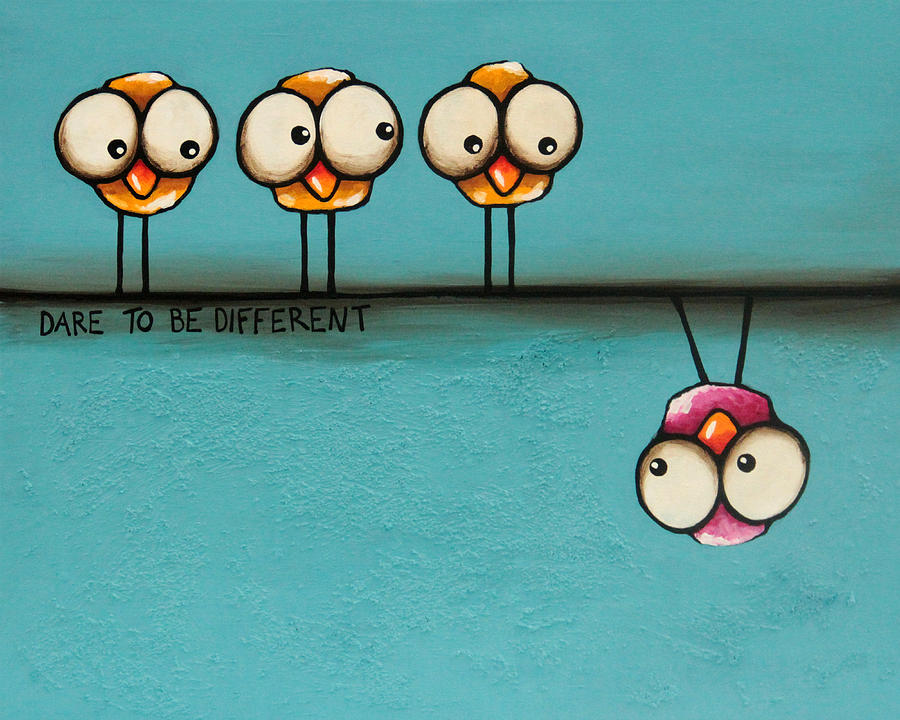
  • Why Daring to Be Different is the Ultimate Act of Spiritual Resilience

    Why Daring to Be Different is the Ultimate Act of Spiritual Resilience

    Authenticity is not an act of rebellion but a disciplined, structured way of living that replaces external approval with internal alignment. It begins by recognizing the psychological cost of conformity, moves through the discomfort of isolation and social consequences, and evolves into self-authorship where values, not validation, guide decisions. As internal stability strengthens, individuality transforms from a personal stance into a quiet force of influence—granting others permission to live truthfully while reshaping systems that reward compliance. The ultimate aim is not withdrawal from society, but conscious participation: contributing meaningfully, building inclusive ecosystems, and sustaining resilience in dynamic environments so that authenticity becomes not an exception, but a scalable foundation for collective growth and human dignity.

    ನಿಜವಾದ ಸ್ವರೂಪದಲ್ಲಿ ಬದುಕುವುದು ಬಂಡಾಯವಲ್ಲ; ಅದು ಬಾಹ್ಯ ಒಪ್ಪಿಗೆಯನ್ನು ಬಿಟ್ಟು ಒಳಗಿನ ಹೊಂದಾಣಿಕೆಯನ್ನು ಆಧಾರವಾಗಿಸಿಕೊಂಡು ನಡೆಯುವ ಶಿಸ್ತುಬದ್ಧ ಜೀವನ ಕ್ರಮ. ಇದು ಸಾಮಾಜಿಕ ಹೊಂದಾಣಿಕೆಯ ಮನೋವೈಜ್ಞಾನಿಕ ಬೆಲೆ ಅರಿತುಕೊಳ್ಳುವುದರಿಂದ ಆರಂಭವಾಗಿ, ಏಕಾಂತದ ಅಸೌಕರ್ಯ ಮತ್ತು ಸಾಮಾಜಿಕ ಪರಿಣಾಮಗಳನ್ನು ದಾಟಿ, ಮೌಲ್ಯಗಳ ಆಧಾರದ ಮೇಲೆ ನಿರ್ಧಾರಗಳನ್ನು ತೆಗೆದುಕೊಳ್ಳುವ ಸ್ವಯಂ-ಲೇಖಕತ್ವದ ಹಂತಕ್ಕೆ ತಲುಪುತ್ತದೆ. ಒಳಗಿನ ಸ್ಥಿರತೆ ಬಲವಾಗುತ್ತಿದ್ದಂತೆ, ವೈಯಕ್ತಿಕತೆ ಮೌನವಾದ ಪ್ರಭಾವವಾಗಿ ರೂಪಾಂತರಗೊಂಡು, ಇತರರಿಗೆ ತಮ್ಮ ಸತ್ಯವನ್ನು ಬದುಕುವ ಧೈರ್ಯವನ್ನು ನೀಡುತ್ತದೆ ಮತ್ತು ಅನುಸರಣೆಗಿಂತ ವೈವಿಧ್ಯತೆಯನ್ನು ಉತ್ತೇಜಿಸುವ ವ್ಯವಸ್ಥೆಗಳನ್ನು ರೂಪಿಸುತ್ತದೆ. ಅಂತಿಮ ಗುರಿ ಸಮಾಜದಿಂದ ದೂರವಾಗುವುದು ಅಲ್ಲ, ಆದರೆ ಜಾಗೃತ ಮತ್ತು ಧೈರ್ಯದಿಂದ ಭಾಗವಹಿಸುವುದು—ಅರ್ಥಪೂರ್ಣ ಕೊಡುಗೆ ನೀಡುವುದು, ಒಳಗೊಂಡ ಪರಿಸರಗಳನ್ನು ನಿರ್ಮಿಸುವುದು ಮತ್ತು ಬದಲಾಗುವ ಪರಿಸ್ಥಿತಿಗಳಲ್ಲಿಯೂ ಸ್ಥೈರ್ಯವನ್ನು ಕಾಪಾಡಿಕೊಳ್ಳುವುದು—ಇದರಿಂದ ನಿಜಸ್ವರೂಪವು ಅಪವಾದವಾಗದೇ, ಸಮೂಹ ಅಭಿವೃದ್ಧಿ ಮತ್ತು ಮಾನವ ಗೌರವದ ಆಧಾರವಾಗುತ್ತದೆ.

    Why Daring to Be Different is the Ultimate Act of Spiritual Resilience

    Introduction

    Daring to be different is not an act of rebellion—it is an act of disciplined inner alignment. Spiritual resilience emerges when an individual consciously withdraws from unconscious conformity, reconstructs their identity through direct experience, and re-engages with society as a grounded, self-authored being. This process is not comfortable—it demands psychological courage, social risk, and sustained introspection—but it is the only path that produces individuals capable of authentic leadership, meaningful contribution, and inner stability.

    At its core, this journey is not about standing apart for the sake of visibility; it is about standing within oneself with such clarity that external pressures lose their authority. In a world increasingly optimized for predictability, efficiency, and mass agreement, the individual who chooses authenticity over acceptance becomes both an anomaly and a necessity. They disrupt not through noise, but through presence. They do not reject society—they refine it by refusing to dilute themselves to fit into it.

    Modern systems—educational, corporate, digital—are subtly engineered to reward compliance. From early schooling that prioritizes standardized answers over original thought, to algorithm-driven platforms that amplify sameness, the individual is conditioned to equate belonging with correctness. Over time, this conditioning becomes internalized. We begin to self-censor before the world even demands it. We trade curiosity for certainty, depth for approval, and authenticity for acceptance. What appears externally as “adjustment” often becomes internally experienced as fragmentation.

    This is the silent crisis of our time: not oppression, but voluntary conformity. Not the absence of freedom, but the underutilization of it.

    Spiritual resilience, therefore, is not built by accumulating beliefs, but by interrogating them. It is not about adopting a new identity, but about dismantling the false ones. It requires the courage to face uncomfortable questions:

    • What parts of my life are genuinely chosen, and what parts are inherited without examination?
    • Where am I performing instead of living?
    • What am I avoiding by choosing acceptance over truth?

    These are not philosophical luxuries—they are existential necessities for anyone seeking a life of integrity.

    The individual who undertakes this inquiry will inevitably encounter friction. Relationships may shift. Social validation may decrease. Certainty may dissolve. But within this disruption lies the raw material for transformation. What is lost in external comfort is gained in internal coherence. And this coherence becomes the foundation of true resilience—not the ability to endure pressure, but the ability to remain aligned despite it.

    This is especially critical in contexts where conformity is not merely encouraged but institutionalized—education systems that standardize intelligence, workplaces that reward obedience over initiative, and social structures that marginalize neurodivergent ways of thinking. In such environments, daring to be different is not just a personal act—it is a systemic intervention. It challenges the very metrics by which worth, success, and normalcy are defined.

    For educators, this demands a shift from control to cultivation. For parents, from protection to preparation. For leaders, from authority to authenticity. And for individuals, from imitation to self-authorship.

    The cost of not undertaking this journey is subtle but profound. It manifests as a life that appears stable on the surface but feels misaligned at its core. A life where decisions are efficient but not meaningful. Where success is achieved but not felt. Where identity is maintained but not experienced.

    The alternative is not easier—but it is real.

    Intended Audience and Purpose of the Article

    Audience

    This article is written for those standing at the intersection of discomfort and awakening:

    • Individuals experiencing inner conflict between authenticity and societal expectations
      Those who sense that their current path, though socially acceptable, feels internally incomplete or misaligned.
    • Educators, parents, and leaders navigating conformity-driven systems
      Those responsible for shaping environments where individuality is often suppressed in favor of uniformity.
    • Change-makers and social architects
      Particularly those working with neurodivergent individuals, marginalized communities, and inclusive ecosystems—where the cost of enforced conformity is not just psychological, but structural.

    Purpose

    This article serves three deliberate functions:

    1. To expose the hidden costs of conformity
      Not as an abstract critique, but as a lived psychological reality—manifesting as burnout, identity fragmentation, and loss of meaning.
    2. To reframe non-conformity as disciplined alignment, not impulsive rebellion
      Moving beyond romanticized notions of “being different” to a grounded, rigorous understanding of self-authorship.
    3. To provide a structured pathway toward spiritual resilience
      Offering actionable frameworks that enable individuals to:
      • Deconstruct inherited beliefs
      • Build internal authority
      • Navigate social resistance
      • Reintegrate into society as conscious contributors

    Ultimately, this is not an argument against society—it is an invitation to engage with it more truthfully.

    That Heavenly Glow | The Layman's Bible

    1. The Illusion of Belonging: Why Conformity Feels Safe but Weakens the Self

    Belonging without authenticity is psychological dependency disguised as stability.

    The Deeper Reality Beneath “Fitting In”

    Human beings are wired to belong. This is not weakness—it is biology. For most of human history, exclusion from the group meant vulnerability, and often, death. As a result, the brain evolved to treat social acceptance as safety and rejection as threat. This evolutionary inheritance still governs much of our behavior today, even though the stakes have fundamentally changed.

    The problem is not the need for belonging. The problem is what we are willing to sacrifice to secure it.

    In modern life, belonging has subtly shifted from a shared experience of mutual recognition to a performance of expected behaviors. It is no longer enough to simply exist within a group—we must align, agree, adapt, and often dilute ourselves to maintain acceptance. Over time, this creates a dangerous illusion: that stability comes from fitting in.

    In reality, it often comes at the cost of losing oneself.

    Evolutionary Bias Toward Conformity: The Invisible Hand Guiding Behavior

    At a neurological level, social rejection activates the same pain centers in the brain as physical injury. This explains why even minor disapproval can feel disproportionately distressing. The mind interprets deviation as risk, and conformity as protection.

    This creates a powerful internal feedback loop:

    • You adjust your behavior to gain acceptance
    • Acceptance reduces anxiety
    • The brain reinforces conformity as “correct”

    Over time, this loop becomes automatic. You begin to anticipate expectations before they are expressed. You edit your thoughts before they are spoken. You align not because you agree, but because disagreement feels unsafe.

    This is where authenticity begins to erode—not through force, but through subtle, repeated compromise.

    The tragedy is not that people conform. The tragedy is that they often do so unconsciously, believing it to be a free choice.

    Modern Amplifiers of Sameness: Systems That Reward Predictability

    While evolutionary bias lays the foundation, modern systems industrialize conformity.

    1. Algorithm-Driven Identity Shaping

    Digital ecosystems are designed to optimize engagement, not authenticity. Algorithms observe behavior, identify patterns, and feed back content that reinforces existing preferences. Over time, this creates a closed loop of identity:

    • You see what aligns with your current beliefs
    • Your beliefs become more rigid
    • Your exposure to alternative perspectives decreases

    This is not just information filtering—it is identity conditioning.

    You begin to believe that what you see is what exists, and what you feel is what is true. The result is not individuality, but refined conformity within a curated bubble.

    More dangerously, the metrics of visibility—likes, shares, validation—become proxies for worth. Expression is no longer guided by truth, but by anticipated reception.

    2. Institutional Conditioning

    From early education to professional environments, conformity is systematically rewarded.

    • Schools often prioritize standardized answers over original thinking
    • Workplaces reward predictability, compliance, and low-risk behavior
    • Social structures encourage harmony over honest dissent

    This creates individuals who are highly functional within systems, but increasingly disconnected from their own internal compass.

    The message is subtle but consistent:
    Be acceptable first. Be yourself later—if at all.

    The Identity Fragmentation Problem: Living in Pieces

    When external alignment becomes a priority, internal coherence begins to fracture.

    You start living multiple versions of yourself:

    • One for family
    • One for work
    • One for social environments
    • One that remains unexpressed

    Each version is slightly edited to fit expectations. Over time, this constant adaptation creates identity fragmentation—a state where no single version feels fully authentic.

    The consequences are cumulative and often misdiagnosed:

    • Emotional exhaustion from continuous self-monitoring
    • Anxiety from fear of being “found out”
    • Resentment toward systems that require self-suppression
    • Loss of meaning, as actions feel disconnected from inner truth

    This is not merely discomfort—it is a slow erosion of self-trust.

    When you repeatedly override your authentic impulses to maintain acceptance, you teach yourself a dangerous lesson:
    My truth is less important than my belonging.

    Eventually, you stop hearing your own voice altogether.

    Critical Insight: The Cost of Outsourcing Identity

    Every time you look outward to define who you should be, you weaken your ability to know who you are.

    Outsourcing identity to society creates a dependency loop:

    • You rely on external validation to feel secure
    • External validation is inconsistent and conditional
    • Your sense of self becomes unstable

    This instability drives further conformity, in an attempt to regain security. The cycle reinforces itself.

    The result is a paradox:
    The more you try to secure belonging through conformity, the more fragile your identity becomes.

    True stability does not come from being accepted by many—it comes from being aligned within yourself.

    Actionable Interventions: Breaking the Illusion

    To move from unconscious conformity to conscious belonging, deliberate intervention is required.

    1. Awareness Audit

    • At the end of each day, ask:
      “Where did I act in alignment with myself, and where did I perform for acceptance?”

    2. Discomfort Training

    • Intentionally express mild disagreement in low-risk situations
    • Build tolerance for social friction without retreating

    3. Identity Consolidation

    • Write down your core values based on lived experience—not inherited ideals
    • Use them as decision filters

    4. Reduce External Noise

    • Limit exposure to environments that reward imitation (especially digital platforms)
    • Create space for independent thought

    5. Practice Micro-Authenticity

    • Speak one honest thought daily that you would normally suppress
    • Act on one decision based on internal alignment rather than external expectation

    Section Reflection

    Belonging is not the enemy. But belonging at the cost of authenticity is.

    The goal is not to reject connection—it is to transform it. To move from conditional acceptance to conscious alignment. To build relationships and systems where presence is not negotiated, but expressed.

    Until then, what feels like safety will continue to function as a subtle form of self-abandonment.

    Dare to be different by Lucia Stewart

    2. The Hidden Violence of Conditioning: Inherited Lives and Borrowed Beliefs

    Most people are not choosing their lives—they are inheriting scripts they never examined.

    The Quiet Force That Shapes Us Before We Can Choose

    Conditioning does not arrive as oppression. It arrives as guidance, protection, and love. It is embedded in language, rituals, expectations, and rewards. By the time an individual becomes capable of independent thought, much of their worldview has already been pre-installed.

    This is the hidden violence of conditioning—it shapes identity before awareness has the chance to intervene.

    What you believe about success, morality, relationships, and even yourself often feels deeply personal. In reality, much of it is inherited. Not through force, but through repetition. Not through coercion, but through normalization.

    The danger is not that these beliefs are entirely wrong. The danger is that they remain unquestioned.

    Cultural Programming: Living Inside Invisible Narratives

    Every society operates on shared narratives—ideas so deeply embedded that they appear self-evident.

    • Success is defined by measurable achievement
    • Respect is tied to conformity
    • Morality is framed within cultural boundaries
    • Identity is shaped by roles rather than essence

    These narratives are not inherently malicious. They create order, predictability, and shared meaning. But they also impose limits.

    When internalized without examination, they become invisible constraints. You begin to pursue goals you never consciously chose. You defend beliefs you never critically evaluated. You measure your worth using standards you did not define.

    This creates a life that appears coherent externally, but feels misaligned internally.

    The most dangerous aspect of cultural programming is not that it exists—it is that it feels like truth.

    Authority Without Inquiry: The Comfort of Borrowed Certainty

    From childhood, authority figures serve as interpreters of reality:

    • Parents define what is right and wrong
    • Teachers define what is correct and valuable
    • Institutions define what is possible and acceptable

    This reliance is necessary in early development. But when it persists unchallenged into adulthood, it creates intellectual dependency.

    You stop asking:

    • Is this true?
    • Is this mine?
    • Does this still serve me?

    Instead, you ask:

    • Is this acceptable?
    • Will this be approved?

    This shift—from inquiry to approval—is where autonomy begins to erode.

    The cost of borrowed certainty is hidden:
    You gain clarity, but lose authorship.

    Over time, individuals become highly informed but poorly examined. They can articulate beliefs, but cannot defend them through lived experience. They can follow systems, but cannot question them.

    This is not resilience—it is compliance with confidence.

    Cognitive Dissonance as Awakening: The Signal We Learn to Suppress

    At some point, reality begins to challenge inherited beliefs. This creates cognitive dissonance—the psychological discomfort that arises when internal beliefs conflict with external experience.

    Most people respond in one of two ways:

    1. Suppress the discomfort by doubling down on existing beliefs
    2. Avoid the trigger by staying within familiar environments

    Both responses preserve psychological comfort, but block growth.

    A smaller number take a third path:

    1. Investigate the discomfort

    This is where awakening begins.

    Cognitive dissonance is not a problem to be solved—it is a signal to be explored. It indicates that your current mental models are insufficient to explain your lived reality.

    But this exploration comes at a cost:

    • Loss of certainty
    • Temporary identity confusion
    • Social friction with those still aligned to the old belief system

    This is why many retreat. Not because they lack intelligence, but because they underestimate the emotional cost of transformation.

    Yet, without passing through this phase, self-authorship remains impossible.

    Practical Framework: Belief Deconstruction

    To move from inherited identity to constructed identity, a deliberate process is required. This is not about rejecting everything—it is about verifying everything.

    1. Identify Inherited Beliefs

    Start by mapping areas where your life feels “default” rather than chosen:

    • Career paths
    • Definitions of success
    • Views on relationships, money, and morality

    Ask:

    • What do I believe here?
    • Does this feel like a conclusion or a repetition?

    2. Trace Origin and Utility

    Every belief has a source and a function.

    • Where did this belief come from? (family, culture, education, media)
    • What purpose did it serve? (protection, stability, control, belonging)

    Understanding origin reduces blind attachment.
    Understanding utility reveals whether it is still relevant.

    3. Evaluate Alignment with Lived Experience

    A belief should not be preserved because it is familiar. It should be preserved because it is true in practice.

    Ask:

    • Does this belief hold under real-world conditions?
    • Does it expand or restrict my capacity to live meaningfully?
    • Would I choose this belief if I encountered it for the first time today?

    If the answer is no, the belief is no longer serving you—it is constraining you.

    The Emotional Cost of Deconstruction

    This process is often romanticized as “finding yourself.” In reality, it feels more like losing yourself—at least temporarily.

    • Familiar identities begin to dissolve
    • Relationships built on shared assumptions may weaken
    • Certainty is replaced by ambiguity

    This phase is not a sign of failure. It is structural dismantling.

    Just as a building must be deconstructed before it can be redesigned, identity must be questioned before it can be reconstructed.

    The key is to remain engaged with the process without rushing to premature conclusions. Many abandon this stage by adopting new beliefs too quickly—essentially replacing one inherited script with another.

    True resilience requires staying in the uncertainty long enough to develop independent clarity.

    Hard Truth

    Unquestioned beliefs create obedient individuals, not resilient ones.

    Obedience can produce efficiency, stability, and social acceptance.
    But it cannot produce depth, originality, or inner strength.

    Resilience is not the ability to follow what works.
    It is the ability to stand firm when what you were taught no longer does.

    Actionable Interventions: From Inheritance to Authorship

    1. Weekly Belief Audit

    • Choose one domain (career, relationships, success)
    • Identify one belief and examine it deeply

    2. Contradiction Exposure

    • Intentionally engage with perspectives that challenge your worldview
    • Not to adopt them, but to test your own

    3. Slow Thinking Practice

    • Delay conclusions
    • Sit with uncertainty instead of resolving it quickly

    4. Language Awareness

    • Notice phrases like “this is just how things are”
    • These often signal inherited, unexamined beliefs

    5. Rebuild Through Experience

    • Replace abstract beliefs with tested principles
    • Act, observe, refine

    Section Reflection

    You cannot become yourself by living someone else’s conclusions.

    Conditioning is not your enemy—it is your starting point. But if left unexamined, it becomes your boundary.

    The task is not to reject everything you were given, but to transform it from unconscious inheritance into conscious choice.

    Une Personne Qui Dort Par Teal Wave Sous Le Ciel Nocturne Illustration Stock - Illustration du abstrait, détente: 381213195

    3. The Breaking Point: When Conformity Becomes Psychological Suffocation

    There comes a moment when fitting in costs more than standing out.

    The Point Where Adjustment Becomes Self-Betrayal

    Conformity rarely collapses dramatically. It erodes gradually—through small compromises, repeated silences, and delayed truths. For a long time, it appears to work. You are accepted. You are progressing. You are functioning.

    Until one day, you are no longer living—you are maintaining.

    This is the breaking point. Not a visible crisis, but an internal recognition:
    “I can no longer continue like this without losing something essential.”

    At this stage, the individual is not confused—they are clear, but conflicted. They understand the misalignment, yet hesitate to act due to the cost of disruption. This tension creates a psychological pressure that cannot be sustained indefinitely.

    Eventually, something gives.

    Symptoms of Misalignment: When the Inner System Starts Failing

    The body and mind are remarkably adaptive, but they are not infinitely tolerant of contradiction. When lived experience consistently diverges from inner truth, signals begin to surface.

    These signals are often misinterpreted as personal weakness, when in reality, they are indicators of structural misalignment.

    1. Chronic Fatigue Without Clear Cause

    Not physical exhaustion, but existential fatigue.
    You are tired not because you are doing too much, but because you are doing too much that does not align.

    • Tasks feel heavier than they should
    • Rest does not fully restore energy
    • Motivation becomes inconsistent

    This is the cost of sustaining a life that requires constant internal negotiation.

    2. Lack of Meaning Despite External Progress

    You may be achieving milestones—career growth, financial stability, social recognition—but the emotional experience remains flat.

    • Success feels procedural, not fulfilling
    • Goals are met, but satisfaction is short-lived
    • There is a persistent sense of “Is this it?”

    This is not ingratitude. It is misalignment between external achievement and internal purpose.

    3. Emotional Numbness or Detachment

    When expression is repeatedly suppressed, sensitivity begins to dull.

    • Reduced emotional range
    • Difficulty feeling joy or enthusiasm
    • Increased reliance on distraction or stimulation

    Numbness is not absence—it is protection. The psyche reduces sensitivity to avoid the discomfort of contradiction.

    4. The “Successful but Empty” Paradox

    Perhaps the most dangerous symptom is when everything appears to be working—except the self.

    You have:

    • Stability
    • Recognition
    • Structure

    But internally:

    • There is no resonance
    • No sense of ownership
    • No authentic engagement

    This creates a life that is externally validated but internally hollow.

    The Cost of Suppression: When the Self Fights Back

    Suppression is not elimination. What is denied does not disappear—it reorganizes.

    When individuality is consistently repressed, it begins to manifest indirectly:

    1. Anxiety as Unexpressed Truth

    Anxiety often emerges when there is a gap between what is felt and what is allowed.

    • Persistent unease without clear cause
    • Overthinking simple decisions
    • Fear of disruption despite desire for change

    This is the mind attempting to reconcile incompatible realities.

    2. Burnout as Misaligned Effort

    Burnout is not always about overwork. It is often about misdirected effort.

    • High output with low emotional return
    • Increasing resistance to previously manageable tasks
    • Loss of engagement in areas that once felt meaningful

    You are not exhausted because you are weak.
    You are exhausted because you are investing energy in a life that does not reflect you.

    3. Irritability and Silent Resentment

    When expression is suppressed externally, it often leaks internally or through unintended channels.

    • Frustration with systems, roles, or expectations
    • Resentment toward those who appear more “free”
    • Subtle anger toward self for continued compliance

    This is not negativity—it is accumulated misalignment.

    The Threshold Moment: Comfort vs Truth

    At some point, the individual reaches a critical decision point.

    Not because they suddenly become brave, but because continuing the current path becomes more painful than changing it.

    This is the threshold moment.

    It is defined by a single, irreversible realization:

    “The cost of staying the same now exceeds the cost of change.”

    At this juncture, two paths become visible:

    Path 1: Continue Conforming

    • Maintain external stability
    • Preserve existing relationships and structures
    • Suppress emerging truth

    Outcome: Short-term comfort, long-term erosion of self

    Path 2: Move Toward Authenticity

    • Disrupt existing patterns
    • Risk misunderstanding or rejection
    • Enter a phase of uncertainty

    Outcome: Short-term instability, long-term alignment

    This decision is not theoretical—it is lived. And it must be made repeatedly, not just once.

    Most individuals delay this moment for years, sometimes decades, negotiating with themselves:

    • “Maybe this is enough”
    • “Maybe I’m expecting too much”
    • “Maybe I just need to adjust better”

    But truth does not dissolve with delay. It intensifies.

    Why Many Do Not Cross the Threshold

    Understanding the breaking point is easier than acting on it. Several forces prevent transition:

    • Fear of social loss: relationships tied to the current identity
    • Fear of uncertainty: no clear roadmap for what comes next
    • Fear of self-doubt: questioning whether the inner voice is trustworthy

    These fears are valid. But they must be understood correctly.

    You are not afraid of change.
    You are afraid of losing what you built around a version of yourself that is no longer true.

    Reflection Prompt

    “What part of myself am I abandoning to maintain acceptance?”

    Do not answer this quickly. Sit with it.

    • Is it your curiosity?
    • Your voice?
    • Your values?
    • Your ambition?
    • Your way of thinking?

    The answer to this question reveals the exact point of misalignment.

    And more importantly, it reveals the direction of your next step.

    Actionable Interventions: Navigating the Breaking Point

    1. Name the Misalignment Clearly

    • Write down where your life feels “off”
    • Avoid vague language—be specific

    2. Separate Fear from Fact

    • List what you think will happen if you change
    • Then identify what is actually certain

    3. Start with Partial Realignment

    • You do not need to dismantle everything at once
    • Begin with one area where alignment can be restored

    4. Build Tolerance for Instability

    • Expect discomfort
    • Treat uncertainty as part of the process, not a problem to eliminate

    5. Reduce Dependency on External Validation

    • Make one decision daily that is not optimized for approval

    Section Reflection

    The breaking point is not a failure—it is a form of intelligence.

    It is the psyche’s way of refusing to continue a life that no longer aligns.

    You can ignore it. You can delay it.
    But you cannot permanently suppress it without consequence.

    At some point, the question is no longer:
    “Is this the right time to change?”

    It becomes:
    “How much longer am I willing to abandon myself?”

    Dare to be different! The world is not the same….. adapt and disrupt!

    4. The Courage to Disrupt: Choosing Truth Over Approval

    Non-conformity begins not with bold action, but with honest recognition.

    The Misconception of Courage

    Courage is often misunderstood as a dramatic, visible act—quitting a job, rejecting a system, making a public stand. In reality, the most significant disruptions are quiet, internal, and often invisible to others.

    They begin the moment you stop lying to yourself.

    Before any external change occurs, there is a subtle but profound shift:

    • You acknowledge what you truly think
    • You admit what you genuinely feel
    • You recognize where you are out of alignment

    This recognition is not comfortable. It destabilizes the narratives that kept your life predictable. But without it, no meaningful change is possible.

    Non-conformity does not start with rebellion against the world.
    It starts with refusal to continue self-deception.

    Fear of Rejection and Social Death: Why Standing Alone Feels Dangerous

    The resistance to non-conformity is not intellectual—it is emotional and biological.

    At a primal level, rejection is interpreted as a threat to survival. While modern society no longer operates on tribal exclusion in the same literal sense, the psychological wiring remains intact.

    This manifests as:

    • Fear of being misunderstood
    • Fear of disappointing others
    • Fear of losing belonging, status, or identity
    • Fear of being perceived as difficult, wrong, or unstable

    This is often referred to as “social death”—the perceived loss of one’s place within a group.

    The intensity of this fear explains why many individuals remain in misaligned environments long after recognizing the cost. They are not choosing comfort—they are avoiding perceived danger.

    However, this fear must be reframed:

    • You are not risking survival
    • You are risking approval

    And approval, while emotionally powerful, is not a stable foundation for identity.

    The real danger is not standing alone.
    The real danger is becoming someone you do not recognize in order to avoid it.

    Micro-Acts of Defiance: Reclaiming Autonomy in Small Steps

    Transformation does not require immediate, large-scale disruption. In fact, sudden, dramatic change often leads to instability and regression.

    Instead, resilience is built through micro-acts of defiance—small, consistent choices that re-establish internal authority.

    These acts are not about proving a point. They are about restoring alignment.

    Examples include:

    • Expressing a viewpoint you would normally suppress
    • Declining a request without over-explaining
    • Choosing a path based on internal conviction rather than external expectation
    • Allowing silence instead of filling space to maintain approval

    These actions may appear insignificant, but they have cumulative impact:

    • They retrain the nervous system to tolerate disapproval
    • They rebuild trust in your own judgment
    • They weaken the automatic need for validation

    Over time, these small shifts create a structural change in identity—from reactive to self-directed.

    Reframing Courage: Alignment Over Performance

    Courage is not intensity. It is consistency.

    It is not about how loudly you declare your truth, but how reliably you live it.

    The dominant cultural narrative glorifies bold, visible acts of defiance. But this creates a distorted expectation—that change must be dramatic to be meaningful.

    In reality:

    • Quiet honesty is more transformative than loud rebellion
    • Consistent alignment is more powerful than occasional intensity
    • Integrity practiced daily outweighs isolated acts of bravery

    Courage, in its most functional form, is the willingness to remain aligned when it would be easier to conform.

    This requires:

    • Emotional regulation
    • Clarity of values
    • Tolerance for discomfort
    • Patience with gradual change

    It is less about “breaking free” and more about not returning to what you know is false.

    Practical Tools: Building the Muscle of Non-Conformity

    To operationalize courage, it must be translated into repeatable behaviors. The following practices are designed to build internal authority incrementally.

    1. Daily Truth Articulation

    At least once a day, express something that is true for you but would normally remain unspoken.

    This can be:

    • A perspective in a conversation
    • A boundary in a relationship
    • An honest response instead of a socially acceptable one

    Objective:
    Reduce the gap between internal experience and external expression.

    2. Saying “No” Without Justification

    Most people dilute their “no” with explanations to preserve approval.

    Practice:

    • Saying “no” clearly and respectfully
    • Avoiding over-explanation or apology

    Example:

    • Instead of: “I’m really sorry, I have a lot going on…”
    • Say: “I won’t be able to do that.”

    Objective:
    Reinforce the idea that your decisions do not require external validation.

    3. Reducing Approval-Seeking Behaviors

    Become aware of subtle patterns where you seek validation:

    • Over-explaining decisions
    • Checking for reactions before completing a thought
    • Modifying opinions to match the group
    • Avoiding disagreement to maintain harmony

    Intervention:

    • Pause before seeking reassurance
    • Complete your thought without adjustment
    • Allow disagreement without immediate correction

    Objective:
    Shift from externally referenced identity to internally anchored decision-making.

    4. Discomfort Conditioning

    Deliberately engage in low-stakes situations where approval is uncertain.

    • Share an unconventional idea
    • Choose differently from the group
    • Accept minor social friction without retreating

    Objective:
    Train the nervous system to recognize that discomfort is not danger.

    5. Post-Action Reflection

    After moments of alignment or misalignment, reflect:

    • What did I choose?
    • What drove that choice—truth or approval?
    • What was the outcome, both externally and internally?

    Objective:
    Strengthen awareness and reinforce aligned behavior.

    The Subtle Shift That Changes Everything

    At the beginning of this process, the focus is on behavior—what you say, what you do, what you choose.

    Over time, a deeper shift occurs:

    You stop asking:
    “Will this be accepted?”

    And start asking:
    “Is this true?”

    This shift redefines decision-making at its core. It removes negotiation with external expectations and replaces it with alignment to internal clarity.

    Section Reflection

    Courage is not the absence of fear.
    It is the decision that truth matters more than comfort.

    You do not need to disrupt everything at once.
    You need to stop betraying yourself in small ways, repeatedly.

    Because it is not the large compromises that define a life.
    It is the accumulation of small ones.

    Dare to be different lettering | Premium Vector

    5. The Alchemy of Isolation: Turning Loneliness into Inner Clarity

    Isolation, when embraced consciously, becomes the birthplace of identity.

    The Necessary Withdrawal: Why Separation Precedes Clarity

    Once an individual begins choosing truth over approval, a natural consequence follows—distance.

    Not always physical, but psychological.

    • Conversations feel less aligned
    • Environments feel restrictive
    • Relationships based on old identities begin to loosen

    This creates a phase that is often misinterpreted as loss, failure, or disconnection. In reality, it is a structural transition.

    You are no longer fully aligned with who you were, but not yet fully anchored in who you are becoming.

    This in-between state is isolation.

    It is not comfortable. It is not stable.
    But it is essential.

    Because identity cannot be reconstructed while constantly being reinforced by the very environments that shaped its previous form.

    Distinguishing Loneliness from Solitude: Resistance vs Acceptance

    The experience of isolation depends entirely on how it is interpreted.

    Loneliness: Isolation Resisted

    Loneliness emerges when isolation is perceived as absence.

    • Absence of connection
    • Absence of validation
    • Absence of familiarity

    This creates a sense of lack:

    • “Something is missing”
    • “I am disconnected”
    • “I need to return to what I had”

    In this state, the individual seeks to escape isolation, often by reverting to previous patterns of conformity.

    Solitude: Isolation Accepted

    Solitude emerges when isolation is understood as space.

    • Space for reflection
    • Space for recalibration
    • Space for self-encounter

    This creates a different orientation:

    • “Something is emerging”
    • “I am in transition”
    • “This is necessary”

    The external conditions may be identical.
    The internal framing determines whether isolation becomes suffering or transformation.

    The Identity Reconstruction Phase: Shedding and Encountering

    Isolation strips away reinforcement. Without constant feedback from others, previously held identities begin to destabilize.

    This is where reconstruction begins.

    1. Shedding False Identities

    You begin to notice:

    • Roles you were performing rather than embodying
    • Beliefs that were maintained through repetition, not conviction
    • Behaviors that existed primarily to secure acceptance

    This shedding is not always intentional. It often feels like loss:

    • “I don’t relate to this anymore”
    • “This no longer feels like me”

    The instinct is to replace these identities quickly—to regain stability.

    But premature replacement leads to superficial change.
    True reconstruction requires staying in the space where identity is temporarily undefined.

    2. Encountering the “Unconditioned Self”

    Beneath inherited beliefs and performed roles lies a quieter layer of identity—not imposed, not optimized, not curated.

    This is not something you “create.”
    It is something you recognize.

    It emerges gradually:

    • In moments of honest thought
    • In decisions made without external reference
    • In preferences that persist despite social pressure

    At first, this voice may feel unfamiliar or uncertain. That is because it has not been the primary guide.

    Over time, as it is acknowledged and acted upon, it becomes clearer.

    This is the foundation of self-authorship.

    Silence as a Teacher: What Only Stillness Reveals

    Modern life is structured to avoid silence.

    • Constant input through devices
    • Continuous engagement with information
    • Immediate distraction from discomfort

    Silence is often perceived as emptiness. In reality, it is diagnostic.

    When external noise is reduced, internal content surfaces:

    • Unresolved thoughts
    • Suppressed emotions
    • Unarticulated desires
    • Contradictions in belief and behavior

    This is why silence feels uncomfortable—it removes the buffer.

    But it is also why it is necessary.

    Only in silence can you observe:

    • What you think without influence
    • What you feel without suppression
    • What remains when distraction is removed

    Silence does not give you answers.
    It reveals the questions you have been avoiding.

    The Discomfort of Becoming Undefined

    One of the most destabilizing aspects of this phase is the temporary loss of identity clarity.

    You may experience:

    • Uncertainty about direction
    • Reduced confidence in decision-making
    • A sense of being “in between”

    This is often misinterpreted as regression.

    In reality, it is deconstruction without immediate reconstruction.

    Most people rush to fill this gap—adopting new beliefs, new roles, new affiliations—simply to regain a sense of definition.

    But resilience requires a different approach:

    • Tolerate ambiguity
    • Resist premature conclusions
    • Allow identity to emerge rather than be imposed

    This is not passive. It is disciplined patience.

    Reframe: Isolation is Not Abandonment—It is Preparation

    Isolation feels like being cut off from the world.
    In practice, it is being prepared to re-enter it differently.

    It serves three critical functions:

    1. Detachment from external conditioning
      Reducing the influence of environments that reinforce conformity
    2. Clarification of internal signals
      Allowing authentic preferences, values, and insights to surface
    3. Stabilization of emerging identity
      Strengthening alignment before re-engagement

    Without this phase, any attempt at authenticity remains fragile—easily overridden by social pressure.

    Isolation builds the internal structure required to sustain non-conformity.

    Actionable Interventions: Using Isolation Intentionally

    1. Schedule Structured Solitude

    • Allocate regular time without external input (no devices, no conversations)
    • Use it for reflection, not distraction

    2. Track Internal Signals

    • Note recurring thoughts, preferences, and resistances
    • Identify patterns without immediately acting on them

    3. Limit Reactive Reconnection

    • Avoid returning to familiar environments solely to reduce discomfort
    • Re-engage consciously, not impulsively

    4. Create a Reflection Practice

    • Journaling focused on:
      • What feels aligned
      • What feels forced
      • What is emerging

    5. Normalize the In-Between State

    • Recognize that uncertainty is not failure
    • It is a necessary stage of reconstruction

    Section Reflection

    Isolation is not evidence that something is wrong.
    It is evidence that something is changing.

    If you resist it, it becomes loneliness.
    If you engage with it, it becomes clarity.

    You are not losing connection.
    You are refining it—starting with the connection to yourself.

    93,000+ Dare To Be Different Stock Photos, Pictures & Royalty-Free Images - iStock | Stand out from the crowd, Dare to dream, Challenge

    6. Forging Internal Authority: Becoming Self-Referential

    Resilience is achieved when validation shifts from external approval to internal alignment.

    The Shift That Defines Maturity

    Up to this point, the journey has involved recognizing conformity, dismantling inherited beliefs, enduring isolation, and beginning to reconnect with an authentic inner voice. But none of this becomes sustainable until a critical transition occurs:

    You stop referencing the world to decide who you are.

    Instead, you begin referencing yourself.

    This is the movement from external validation to internal authority—from a life shaped by reaction to one guided by deliberate alignment.

    Without this shift, authenticity remains fragile. It appears in moments but collapses under pressure. With it, resilience becomes structural—less dependent on circumstance, more anchored in clarity.

    From Socialized Mind to Self-Authored Mind: The Architecture of Psychological Independence

    Most individuals operate within what can be described as a socialized mind:

    • Beliefs are shaped by external expectations
    • Identity is defined by roles and relationships
    • Decisions are filtered through anticipated approval

    This stage is functional. It enables integration into society. But it is not sufficient for resilience.

    A self-authored mind, in contrast, operates differently:

    • Beliefs are constructed through examination and experience
    • Identity is internally defined, not externally assigned
    • Decisions are guided by principles, not reactions

    This transition is not automatic with age or experience. It requires deliberate effort.

    The defining question shifts from:

    • “What should I do?”

    To:

    • “What aligns with what I know to be true?”

    This does not eliminate uncertainty. It changes how uncertainty is navigated—less through imitation, more through interpretation.

    Value System Construction: From Borrowed Ideals to Lived Principles

    Internal authority cannot exist without a clear value system. But values are often misunderstood.

    Many individuals claim values they have never tested:

    • Integrity
    • Freedom
    • Honesty
    • Growth

    These remain abstract until they are translated into behavior under pressure.

    A functional value system is not what you say you believe.
    It is what you consistently choose when choices are difficult.

    Constructing a Real Value System

    1. Derive from Experience, Not Aspiration
      • Identify moments where you felt aligned or misaligned
      • Extract principles from lived outcomes
    2. Define Operationally
      • Instead of “I value honesty,” define:
        “I will communicate truth even when it creates discomfort.”
    3. Test Under Pressure
      • Values are only real when they hold in inconvenient situations
    4. Refine Continuously
      • A value system is not static—it evolves with experience

    This process transforms values from identity labels into decision-making tools.

    Emotional Non-Reactivity: Decoupling Self-Worth from External Response

    One of the most critical components of internal authority is emotional regulation—specifically, the ability to experience external input without being governed by it.

    Non-reactivity does not mean indifference.
    It means response without loss of alignment.

    When self-worth is externally anchored:

    • Praise inflates identity
    • Criticism destabilizes it
    • Disagreement triggers defensiveness

    This creates volatility. Identity becomes dependent on feedback cycles.

    When self-worth is internally anchored:

    • Praise is acknowledged but not required
    • Criticism is evaluated but not internalized blindly
    • Disagreement is engaged without loss of clarity

    This creates stability.

    The Mechanism of Non-Reactivity

    1. Pause Before Interpretation
      • Separate the event from the meaning assigned to it
    2. Interrogate Emotional Response
      • Ask: “What is being triggered here?”
    3. Filter Through Values
      • Does this feedback align with my principles?
    4. Respond, Don’t React
      • Choose action deliberately, not impulsively

    This process transforms external input from a controlling force into a data point.

    The Discipline of Self-Reference

    Becoming self-referential is not a one-time shift. It is a repeated act of choosing internal alignment over external influence.

    This requires discipline in three areas:

    • Cognitive Discipline: Thinking independently, even when easier narratives are available
    • Emotional Discipline: Regulating reactions to maintain clarity
    • Behavioral Discipline: Acting consistently with defined values

    Without discipline, internal authority collapses under pressure. With it, identity becomes stable across contexts.

    Daily Practice: Operationalizing Internal Authority

    To sustain this shift, internal authority must be reinforced through structured practices.

    1. Alignment Audits

    At the end of each day, assess:

    • Where did I act in alignment with my values?
    • Where did I defer to external expectations?
    • What influenced those decisions?

    Objective:
    Increase awareness of decision patterns and reinforce alignment.

    2. Reflection Journaling

    Use structured prompts:

    • What did I learn about myself today?
    • Where did I feel most authentic?
    • Where did I feel compromised?
    • What would alignment have looked like in those moments?

    Objective:
    Strengthen self-observation and refine internal clarity.

    3. Emotional Regulation Techniques

    Develop the capacity to remain stable under external input:

    • Breath control: Slow, deliberate breathing to reduce reactivity
    • Cognitive distancing: Observing thoughts without immediate identification
    • Delayed response: Creating space before reacting in charged situations

    Objective:
    Prevent emotional impulses from overriding intentional action.

    4. Decision Ownership Practice

    For key decisions, explicitly state:

    • “This is my choice because it aligns with…”

    Avoid referencing:

    • “They expect…”
    • “This is how it’s done…”

    Objective:
    Reinforce authorship in decision-making.

    5. Validation Reduction

    Limit behaviors that seek unnecessary approval:

    • Avoid over-explaining decisions
    • Reduce reliance on feedback for confidence
    • Act without pre-emptive justification

    Objective:
    Break dependency on external reinforcement.

    The Stability That Emerges

    As internal authority strengthens, a noticeable shift occurs:

    • Decisions become clearer
    • Emotional fluctuations reduce
    • External pressure loses intensity
    • Self-trust increases

    You begin to experience a form of stability that is not dependent on circumstances.

    Not because the world becomes predictable—
    but because your response to it becomes consistent.

    Section Reflection

    You do not become resilient by controlling the world.
    You become resilient by stabilizing your relationship to it.

    Internal authority is not about rejecting input.
    It is about ensuring that input does not override alignment.

    At this stage, you are no longer searching for who to be.
    You are practicing being it.

    Dare to be Different. As kids we were taught to be different… | by Mitchelle Christopher | Medium

    7. The Social Consequences: Navigating Judgment, Misunderstanding, and Rejection

    Standing apart will cost you comfort, but it will earn you clarity.

    The Inevitable Tension Between Authenticity and Acceptance

    The moment you begin to live from internal authority rather than external approval, your relationship with the social world changes—often in ways that are subtle at first, and then unmistakable.

    You become less predictable.
    Less agreeable.
    Less easy to categorize.

    And in a world that depends on predictability for social cohesion, this creates friction.

    This friction is not a sign that you are wrong.
    It is evidence that you are no longer operating within the expected script.

    However, this transition comes with a cost—one that must be understood clearly to avoid misinterpretation and retreat.

    Projection and Misinterpretation: When Your Authenticity Becomes a Mirror

    Authentic individuals do not merely behave differently—they expose difference. And in doing so, they often trigger discomfort in others.

    This discomfort is rarely acknowledged directly. Instead, it manifests as projection.

    • Your clarity may be interpreted as arrogance
    • Your boundaries may be labeled as selfishness
    • Your independence may be perceived as detachment
    • Your non-conformity may be framed as rebellion or instability

    Why does this happen?

    Because your behavior disrupts the implicit agreements others are still operating under. When you step outside those agreements, it forces others—consciously or unconsciously—to confront their own choices.

    Not everyone is ready for that.

    Projection, therefore, becomes a defense mechanism. It allows others to maintain their internal consistency without examining the discomfort your presence introduces.

    The critical mistake many make at this stage is personalization:

    • “Maybe I am wrong”
    • “Maybe I am being too much”
    • “Maybe I should adjust”

    But what you are encountering is not always feedback—it is often reflection.

    Your task is not to absorb every reaction.
    It is to discern what is signal and what is projection.

    Loss of Superficial Relationships: The Shift from Breadth to Depth

    As alignment increases, compatibility changes.

    Relationships that were sustained by shared habits, roles, or expectations begin to feel strained. Conversations lose depth. Interactions feel performative. The energy required to maintain them increases.

    This leads to a natural pruning process:

    • Some relationships weaken gradually
    • Some disconnect abruptly
    • Some remain, but require renegotiation

    This phase can feel like loss. And in a sense, it is.

    But it is important to understand what is being lost:

    • Not genuine connection
    • But conditional alignment based on a previous version of you

    Superficial relationships are often built on:

    • Mutual conformity
    • Avoidance of discomfort
    • Maintenance of roles

    When you change, these foundations no longer hold.

    The transition is from:

    • Quantity (many connections, low depth)
      To:
    • Quality (fewer connections, high alignment)

    This is not social decline.
    It is relational refinement.

    Building Aligned Communities: From Approval to Resonance

    While some relationships fall away, others begin to form—often more slowly, but with greater depth and stability.

    These connections are not based on performance.
    They are based on resonance.

    Resonance is characterized by:

    • Mutual respect for individuality
    • Space for disagreement without disconnection
    • Alignment in values, not just behavior
    • Reduced need for impression management

    These relationships require more patience to build, because they are not driven by immediate familiarity or convenience.

    But they offer something fundamentally different:

    • Psychological safety without conformity
    • Connection without compromise of identity

    The shift here is critical:

    You are no longer seeking to be accepted by many.
    You are seeking to be understood by a few.

    And this changes the entire strategy of social engagement.

    Navigating Judgment Without Collapse

    Judgment is unavoidable when you deviate from norms. The question is not how to eliminate it, but how to engage with it without losing alignment.

    This requires three competencies:

    1. Discernment

    Not all feedback is equal.

    • Some is constructive and grounded
    • Some is reactive and projected
    • Some is irrelevant

    Develop the ability to evaluate feedback against your values and lived experience, rather than accepting or rejecting it reflexively.

    2. Emotional Stability

    Judgment will trigger responses—defensiveness, doubt, frustration.

    The goal is not to suppress these reactions, but to avoid being governed by them.

    • Pause before responding
    • Identify what is being triggered
    • Re-anchor in your principles

    3. Boundary Clarity

    Not all opinions require engagement.

    • You are not obligated to explain every decision
    • You are not responsible for managing others’ discomfort
    • You are not required to maintain relationships that demand self-suppression

    Clear boundaries are not rejection of others.
    They are protection of alignment.

    The Cost-Benefit Reality of Authenticity

    At this stage, it is important to evaluate the trade-offs honestly.

    What you lose:

    • Broad approval
    • Predictability in relationships
    • Ease of social navigation

    What you gain:

    • Internal clarity
    • Consistent self-trust
    • Depth of connection
    • Freedom from performance

    This is not a moral argument. It is a strategic one.

    You are exchanging external comfort for internal coherence.

    Hard Truth

    You cannot be deeply authentic and widely accepted at the same time.

    Widespread acceptance requires adaptability to diverse expectations.
    Deep authenticity requires consistency with internal truth.

    These two forces often conflict.

    The attempt to maximize both leads to fragmentation:

    • Being partially authentic everywhere
    • Fully authentic nowhere

    The resolution is not isolation, but prioritization.

    You choose where to align, where to adapt, and where to disengage.

    But you do so consciously—not as a reaction to pressure, but as a function of clarity.

    Actionable Interventions: Social Navigation Without Self-Loss

    1. Relationship Audit

    • Identify which relationships feel aligned vs performative
    • Adjust investment accordingly

    2. Feedback Filtering System

    Before accepting criticism, ask:

    • Is this aligned with my values?
    • Is this based on understanding or projection?
    • Does acting on this improve or dilute my alignment?

    3. Intentional Community Building

    • Seek environments that value individuality
    • Prioritize depth over frequency of interaction
    • Invest in fewer, more meaningful connections

    4. Boundary Reinforcement

    • Practice limiting explanations
    • Disengage from conversations that require self-compromise
    • Communicate limits clearly and calmly

    5. Normalize Being Misunderstood

    • Accept that not everyone will “get” you
    • Recognize misunderstanding as a byproduct of non-conformity, not a failure

    Section Reflection

    The desire to be understood is natural.
    The need to be accepted by everyone is unsustainable.

    As you become more aligned, your world may become smaller—but it also becomes more real.

    You trade noise for signal.
    Approval for resonance.
    Comfort for clarity.

    And in that clarity, something stabilizes that no external validation can provide.

    Page 3 | Dare To Be Different Vector Art, Icons, and Graphics for Free Download

    8. Authenticity as Influence: Becoming a Catalyst for Others

    True individuality does not isolate—it liberates others silently.

    The Paradox of Authentic Influence

    At the beginning of this journey, authenticity appeared isolating. It separated you from conformity, reduced social approval, and forced you into uncomfortable clarity.

    But something subtle begins to happen once internal authority stabilizes:

    Your presence starts to change the environment—without effort, without persuasion, without performance.

    This is the paradox:

    You stopped trying to influence others…
    and that is precisely when influence began.

    Authenticity, when embodied consistently, becomes social permission for others to confront their own suppression.

    Psychological Permission: How One Person Reduces Collective Fear

    Most individuals are not lacking authenticity because they are incapable.
    They are constrained because they believe authenticity is unsafe.

    • Unsafe to express
    • Unsafe to live
    • Unsafe to sustain

    When someone in their environment begins to operate differently—calmly, consistently, without collapse—it disrupts this belief.

    It introduces a new possibility:

    • “Maybe I don’t have to perform all the time.”
    • “Maybe I can say what I actually think.”
    • “Maybe I can choose differently.”

    This is psychological permission.

    It does not come from instruction.
    It comes from observation.

    Mechanism of Permission Transfer

    1. Visibility of Authentic Behavior
      • Others witness non-conformity without chaos
    2. Absence of Immediate Negative Consequences
      • The anticipated “social punishment” does not fully materialize
    3. Gradual Reduction of Fear
      • Internal resistance begins to weaken
    4. Micro-Replication
      • Others experiment with small acts of authenticity

    This is how individual transformation begins to ripple outward—quietly, incrementally, but powerfully.

    Leadership Through Being: Influence Without Force

    Traditional models of leadership rely on:

    • Authority
    • Persuasion
    • Incentives
    • Control

    Authentic leadership operates differently.

    It is not based on what you say.
    It is based on how consistently you are.

    This form of leadership is subtle but highly effective because it bypasses resistance.

    People resist being told what to do.
    They rarely resist what feels real.

    Characteristics of Authentic Influence

    • Consistency: Alignment across contexts builds trust
    • Non-reactivity: Stability under pressure signals strength
    • Clarity: Decisions are understandable, even when not agreed with
    • Non-coercion: Others are free to engage or disengage

    This creates a different kind of authority:

    Not imposed authority—
    but earned credibility.

    And credibility, once established, amplifies influence without requiring effort.

    Cultural Evolution: How Individuals Reshape Systems Over Time

    Culture is often perceived as something large and immovable.
    In reality, it is an accumulation of repeated behaviors.

    Norms persist because they are continuously reinforced.

    When individuals begin to act outside these norms—and sustain those actions—they introduce variation into the system.

    If that variation proves stable and beneficial, it begins to spread.

    This is how culture evolves:

    • Not through sudden revolution
    • But through distributed, consistent deviation

    Authentic individuals become nodes of change.

    They:

    • Challenge implicit assumptions
    • Redefine acceptable behavior
    • Expand the range of what is considered “normal”

    Over time, what was once unconventional becomes integrated.

    This is not theoretical. It is observable across domains:

    • Work cultures shifting toward flexibility
    • Conversations around mental health becoming normalized
    • Acceptance of neurodiversity increasing

    All of these began with individuals choosing alignment over conformity.

    From Personal Alignment to Social Impact

    Authenticity reaches its highest expression when it moves beyond personal benefit and begins to shape environments.

    The question shifts from:

    • “How do I live authentically?”

    To:

    • “How do I create conditions where others can do the same?”

    This is where individuality becomes infrastructure for collective transformation.

    Application to Social Impact: Designing for Authenticity at Scale

    1. Designing Systems That Reward Individuality

    Most institutional systems—education, workplaces, governance—are structured around:

    • Standardization
    • Predictability
    • Compliance

    These systems optimize efficiency, but often suppress uniqueness.

    To create environments that enable authenticity:

    • Reward original thinking, not just correct answers
    • Encourage questioning, not just obedience
    • Evaluate process and creativity, not just outcomes

    This requires a shift from control-based design to capacity-based design.

    2. Creating Inclusive Environments for Neurodivergent Strengths

    Many individuals—particularly those with neurodivergent profiles—are forced to conform to systems that do not match their cognitive architecture.

    This results in:

    • Underutilized potential
    • Chronic stress
    • Mislabeling of strengths as deficits

    Authenticity-driven environments recognize:

    • Different processing styles
    • Non-linear thinking patterns
    • Sensory and social variations

    Instead of forcing adaptation, they enable fit.

    This is not accommodation.
    It is optimization of human diversity.

    Organizations like MEDA Foundation are already working toward creating such ecosystems—where individuals are not trained to fit systems, but systems are designed to harness individual strengths.

    3. Encouraging Self-Sufficiency Over Compliance

    Compliance-based systems produce dependency:

    • Individuals wait for instructions
    • Decision-making is outsourced
    • Initiative declines

    Authenticity-based systems cultivate:

    • Ownership
    • Critical thinking
    • Self-direction

    Practical interventions include:

    • Giving individuals decision authority within clear boundaries
    • Encouraging problem-solving over rule-following
    • Teaching self-reflection and value-based decision-making

    The goal is not just participation, but agency.

    The Responsibility of Authentic Influence

    Influence is not neutral. Once your authenticity begins to affect others, it carries responsibility.

    • Inconsistency creates confusion
    • Misalignment creates distrust
    • Unexamined behavior can replicate the very patterns you moved away from

    Therefore, influence must be grounded in:

    • Continuous self-reflection
    • Ethical clarity
    • Awareness of impact

    Authenticity is not just freedom.
    It is accountability to what you embody.

    Section Reflection

    You began this journey trying to understand yourself.
    You now stand in a position where your way of being affects others.

    Not because you intended to lead—
    but because alignment is inherently visible.

    True influence does not demand attention.
    It earns observation.

    And in that observation, others begin to see possibilities they could not previously access.

    Closing Insight

    Authenticity is not the end of isolation.
    It is the beginning of contribution.

    You do not change the world by convincing it.
    You change it by becoming a stable example of what is possible.

    Transition Forward:
    The final section integrates the journey—moving from awareness to action—by outlining how individuals and institutions can systematically cultivate environments where authenticity, resilience, and collective well-being are not exceptions, but the norm.

    Dare to be different. Sandra Boynton

    9. The Discipline of Being Different: A Practical Operating System

    Being different is not spontaneous—it is a structured, daily practice.

    From Insight to Infrastructure

    Understanding authenticity is intellectually stimulating.
    Living it is operationally demanding.

    Most individuals fail not because they lack clarity—but because they lack systems.

    Without structure:

    • Awareness fades under pressure
    • Old patterns resurface under stress
    • External influence regains control

    Authenticity, therefore, must be treated not as a personality trait—but as a repeatable operating system.

    A system that:

    • Reduces friction for aligned behavior
    • Anticipates resistance
    • Reinforces internal authority daily

    This section translates philosophy into execution.

    Core Practices: The Architecture of Daily Non-Conformity

    1. Digital Deconditioning: Reclaiming Cognitive Sovereignty

    Modern identity is continuously shaped by algorithmic exposure.

    Every scroll subtly answers:

    • What is desirable
    • What is normal
    • What is acceptable

    Left unchecked, this creates passive conformity.

    Operational Strategy

    • Information Diet Control
      • Curate inputs intentionally
      • Unfollow content that triggers comparison or conformity
    • Scheduled Consumption
      • Allocate fixed time blocks for digital exposure
      • Avoid unconscious scrolling
    • Signal vs Noise Filtering
      • Ask: “Is this expanding my thinking or narrowing it?”
    • Periodic Digital Fasts
      • 24–72 hour breaks to reset cognitive patterns

    Outcome

    You shift from being programmed by content
    to selectively engaging with it.

    2. Truth Expression: Daily Alignment in Action

    Authenticity collapses when truth is selectively expressed.

    Most individuals:

    • Think honestly
    • Feel honestly
    • But communicate strategically

    This creates internal fragmentation.

    Operational Strategy

    • Daily Truth Articulation
      • Express at least one honest thought or position daily
    • Micro-Alignment Actions
      • Act in accordance with values in small decisions
      • (e.g., declining unnecessary commitments)
    • Eliminate Performative Agreement
      • Avoid agreeing simply to maintain comfort
    • Reduce Over-Explanation
      • State decisions without excessive justification

    Outcome

    Identity becomes coherent across thought, speech, and action.

    3. Solitude Scheduling: Structured Space for Self-Reference

    Without intentional solitude, external noise dominates internal clarity.

    Solitude is not absence of people.
    It is presence with self—without distraction.

    Operational Strategy

    • Daily Isolation Window (20–60 minutes)
      • No devices, no external input
    • Weekly Deep Reflection Block (1–3 hours)
      • Review decisions, emotions, patterns
    • Quarterly Personal Retreats
      • Extended solitude for identity recalibration
    • Silence Exposure
      • Sit without stimulation; allow thoughts to surface

    Outcome

    You strengthen your ability to generate clarity internally, not reactively.

    4. Rejection Training: Systematic Desensitization to Discomfort

    Fear of rejection is the primary force sustaining conformity.

    Avoidance reinforces sensitivity.
    Exposure builds resilience.

    Operational Strategy

    • Deliberate Discomfort Exercises
      • Express opinions that may not be widely accepted
      • Say “no” without justification
    • Low-Stakes Social Risk
      • Initiate conversations
      • Ask for things without certainty of acceptance
    • Normalize Negative Feedback
      • Track instances of rejection and your response
    • Post-Rejection Reflection
      • Ask: “Did this affect my alignment or just my comfort?”

    Outcome

    Rejection loses its emotional charge.
    It becomes data, not danger.

    5. Value-Based Decision Making: Alignment as Default Filter

    Most decisions are made based on:

    • Convenience
    • Social expectation
    • Immediate reward

    This creates drift.

    A value-based system ensures consistency.

    Operational Strategy

    • Pre-Decision Pause
      • Ask: “Which option aligns with my values?”
    • Define Non-Negotiables
      • Identify 3–5 principles that override convenience
    • Decision Journaling
      • Record key decisions and rationale
    • Post-Decision Review
      • Evaluate alignment vs outcome

    Outcome

    Decision-making becomes predictable, stable, and self-authored.

    System Integration: Making the Practices Work Together

    Individually, these practices are useful.
    Collectively, they form a reinforcing loop:

    • Digital Deconditioning → reduces external noise
    • Solitude → increases internal clarity
    • Truth Expression → reinforces alignment
    • Rejection Training → reduces fear of consequence
    • Value-Based Decisions → stabilize identity

    This creates a closed system where:

    • Input is controlled
    • Processing is internal
    • Output is aligned

    Common Failure Points (And How to Avoid Them)

    1. Over-Intensity

    Attempting all practices at maximum intensity leads to burnout.

    Solution:
    Start with minimal viable consistency.

    2. Social Backlash Misinterpretation

    Resistance from others is mistaken as failure.

    Solution:
    Recognize backlash as a predictable system response.

    3. Inconsistent Application

    Practices applied only in low-pressure situations.

    Solution:
    Prioritize alignment especially under stress.

    4. Intellectualization Without Execution

    Understanding replaces doing.

    Solution:
    Measure behavior, not insight.

    Implementation Blueprint: 30-Day Operating System Reset

    Week 1: Awareness and Input Control

    • Begin digital deconditioning
    • Start daily solitude (10–20 minutes)

    Week 2: Expression and Boundaries

    • Introduce truth articulation
    • Practice saying “no”

    Week 3: Discomfort Conditioning

    • Engage in rejection training
    • Track emotional responses

    Week 4: Decision Alignment

    • Apply value-based decision filters
    • Begin journaling decisions

    The Compounding Effect of Discipline

    At first, these practices feel mechanical.

    Over time, they become:

    • Automatic
    • Integrated
    • Identity-defining

    You no longer “try” to be authentic.
    You operate from a system that makes inauthenticity difficult.

    Section Reflection

    Freedom is often misunderstood as the absence of structure.

    In reality, sustained authenticity requires more structure than conformity.

    Because when you remove external control,
    you must replace it with internal discipline.

    Being different is not an act of rebellion.
    It is a practice of precision.

    Closing Insight

    Anyone can think differently in isolation.
    Very few can live differently in systems designed for sameness.

    Those who can do so consistently do not rely on motivation.
    They rely on designed behavior.

    Dare To Be Different Stock Illustrations – 189 Dare To Be Different Stock Illustrations, Vectors & Clipart - Dreamstime

    10. Integration: Returning to the World Without Losing Yourself

    The goal is not to escape society, but to engage with it consciously and courageously.

    From Separation to Skillful Re-Engagement

    The journey began with recognition, moved through disruption, endured isolation, and built internal authority. Now comes the most complex phase:

    Re-entering the world—without surrendering yourself to it.

    Many who awaken to authenticity make a critical error:

    • They withdraw permanently
    • They disengage from systems
    • They equate distance with integrity

    This is incomplete.

    True maturity is not found in isolation,
    but in participation without dilution.

    You are not here to escape systems.
    You are here to engage them without being consumed by them.

    Key Dimensions of Integration

    1. Balanced Participation: Engaging Without Conforming

    Engagement does not require agreement.
    Participation does not require identity compromise.

    This is the discipline of selective alignment.

    Operational Reality

    • You will operate within imperfect systems
    • You will encounter conflicting values
    • You will need to collaborate with misaligned individuals

    The objective is not purity.
    It is precision.

    Practical Approach

    • Define Zones of Flexibility vs Non-Negotiables
      • Adapt in low-impact areas
      • Hold firm in identity-defining principles
    • Contextual Intelligence
      • Understand when to speak, when to observe, when to disengage
    • Strategic Conformity (Without Identity Loss)
      • Follow norms where they do not compromise values
      • Refuse where they do

    Balanced participation is not hypocrisy.
    It is intentional navigation.

    2. Contribution Over Validation: Shifting the Center of Gravity

    Earlier, the focus was:

    • “How am I being perceived?”
    • “Am I accepted?”

    Now the focus shifts to:

    • “What am I contributing?”
    • “Am I aligned in what I give?”

    This is a fundamental reorientation.

    Validation seeks:

    • Approval
    • Recognition
    • Acceptance

    Contribution seeks:

    • Impact
    • Value creation
    • Meaningful change

    Practical Approach

    • Lead with Output, Not Image
      • Focus on what you build, solve, or improve
    • Detach from Immediate Feedback
      • Impact is often delayed
      • Misunderstanding is common in early stages
    • Service Through Strength
      • Apply your authentic traits where they create value

    Contribution stabilizes identity because it shifts attention outward—
    not toward approval, but toward utility.

    3. Sustainable Resilience: Maintaining Alignment in Dynamic Environments

    The real test of authenticity is not clarity in isolation.
    It is consistency under complexity.

    The world you re-enter will:

    • Challenge your values
    • Test your boundaries
    • Attempt to recondition your behavior

    Without reinforcement, regression is inevitable.

    Mechanisms of Sustainability

    1. Continuous Self-Calibration
    • Regularly reassess:
      • Are my actions aligned?
      • Where am I drifting?
    1. Environmental Design
    • Surround yourself with:
      • Aligned individuals
      • Supportive ecosystems
      • Low-toxicity environments
    1. Recovery Cycles
    • Alternate between:
      • Engagement (output)
      • Withdrawal (recalibration)
    1. Identity Anchoring
    • Revisit core principles frequently
    • Reinforce through journaling, reflection, dialogue

    Resilience is not toughness.
    It is the ability to return to alignment repeatedly.

    The Integration Paradox

    At this stage, a paradox becomes visible:

    • You are more independent than ever
    • Yet more capable of meaningful connection
    • You require less validation
    • Yet contribute more value
    • You conform less
    • Yet collaborate more effectively

    Why?

    Because you are no longer negotiating your identity in every interaction.

    This reduces internal noise and frees cognitive and emotional resources for impactful engagement.

    Operating Model for Integrated Living

    To sustain this phase, adopt a simple internal model:

    1. Before Action → Alignment Check

    • Does this reflect my values?

    2. During Action → Awareness Maintenance

    • Am I reacting or choosing?

    3. After Action → Reflection Loop

    • Was I aligned? What needs adjustment?

    This creates a continuous feedback system:

    • Not perfection
    • But progressive refinement

    Common Integration Pitfalls

    1. Over-Rigidity

    Refusing all adaptation in the name of authenticity.

    Correction:
    Differentiate between compromise of values and flexibility of behavior.

    2. Subtle Regression

    Gradual return to approval-seeking patterns.

    Correction:
    Maintain daily practices from previous section.

    3. Isolation Drift

    Avoiding engagement to preserve alignment.

    Correction:
    Remember: alignment must function in interaction, not avoidance.

    4. Over-Identification with Authenticity

    Turning authenticity into a new ego identity.

    Correction:
    Stay grounded in function, not self-image.

    From Individual Mastery to Systemic Contribution

    Integration is not the endpoint.
    It is the bridge to impact.

    Once you can:

    • Maintain alignment
    • Navigate systems
    • Contribute meaningfully

    You are positioned to influence not just individuals—but structures.

    This is where personal transformation becomes social architecture.

    Application to Real-World Ecosystems

    The ultimate expression of integration is the ability to design environments where others do not have to struggle as much as you did.

    This includes:

    • Educational systems that encourage thinking over memorization
    • Work environments that reward originality over compliance
    • Social ecosystems that respect neurodiversity and individuality

    Organizations like MEDA Foundation are actively building such models—creating self-sustaining ecosystems where individuals, especially neurodivergent populations, can engage with society without losing themselves in it.

    Section Reflection

    You do not need to choose between:

    • Being yourself
    • And being part of the world

    That is a false dichotomy created by systems that reward conformity.

    The real challenge—and opportunity—is to:

    Participate without submission
    Contribute without distortion
    Engage without losing alignment

    Final Insight

    The journey was never about becoming different for its own sake.

    It was about becoming real enough that:

    • You can stand alone when necessary
    • Connect deeply when possible
    • And contribute meaningfully regardless

    Closing Call to Action

    If this framework resonates, the next step is not more reflection—it is application at scale.

    Support and participate in initiatives like MEDA Foundation that are working to translate these principles into real-world systems—especially for individuals who have been historically forced to conform at the cost of their dignity and potential.

    Because the highest form of authenticity is not self-expression.

    It is creating a world where others can safely do the same.

    Final Reflection

    You are not here to become acceptable.
    You are here to become undeniable.

    The world does not need more people who fit in.
    It needs individuals who are stable enough within themselves that they no longer need to.

    The Strategic Insight

    At its core, this journey was never about rebellion.

    It was about stability.

    • Stability in thought, when narratives compete
    • Stability in emotion, when pressure escalates
    • Stability in action, when conformity is rewarded

    Most systems do not fear difference.
    They fear unpredictable instability.

    When your individuality becomes:

    • grounded
    • disciplined
    • consistent

    …it stops being disruptive noise and starts becoming signal.

    That is what makes you undeniable.

    What This Really Means (Without Illusion)

    Let’s be precise.

    • You will still be misunderstood
    • You will still face resistance
    • You will still encounter systems that reward conformity

    This does not disappear.

    What changes is:

    • Your dependence on approval
    • Your reaction to rejection
    • Your clarity in decision-making

    You stop negotiating your identity in every room you enter.

    And that is rare.

    The Real Contribution

    The highest value of this transformation is not personal freedom alone.

    It is collective permission.

    When one individual becomes:

    • internally anchored
    • externally consistent
    • socially engaged without distortion

    …it alters the psychological landscape for others.

    Not loudly.
    Not dramatically.
    But measurably.

    You become:

    • proof that alignment is possible
    • evidence that authenticity can be sustained
    • a reference point for those still negotiating themselves

    This is how individual work becomes social impact.

    Participate and Contribute to Systemic Change

    If this perspective resonates, the next step is not passive agreement—it is active participation.

    Support the creation of ecosystems where:

    • individuality is not suppressed
    • neurodivergent strengths are recognized
    • self-sufficiency replaces dependency

    Organizations like MEDA Foundation are actively building such frameworks—creating employment pathways and sustainable models for individuals who do not naturally “fit” conventional systems.

    You Can Contribute By:

    • Supporting initiatives that prioritize dignity through work
    • Enabling inclusive employment ecosystems
    • Participating in or funding programs that build self-reliant communities

    Your involvement helps shift resilience from an individual burden
    to a collective infrastructure.

    Book References: Expanding the Intellectual Foundation

    These works deepen the philosophical and practical grounding of this journey:

    • Man’s Search for Meaning
      On meaning as the foundation of psychological resilience under extreme conditions
    • The Courage to Be Disliked
      On detaching from external validation and embracing self-determined living
    • Digital Minimalism
      On reclaiming cognitive autonomy in an attention-driven world
    • Sapiens: A Brief History of Humankind
      On how collective beliefs shape human behavior and systems
    • Atomic Habits
      On building systems that make identity-based change sustainable
    • Meditations
      On internal authority, discipline, and Stoic resilience
    • Untamed
      On reclaiming personal truth in the face of societal conditioning

    Closing Reality

    You do not need to prove yourself to everyone.
    You need to become someone who no longer requires that proof.

    That is the shift.

    And once it happens, you stop asking:

    • “Do I belong here?”

    You start deciding:

    • “Does this align with who I am becoming?”

    That is not arrogance.
    That is authorship.

    And authorship—when practiced consistently—
    is what transforms a life from reactive existence
    into deliberate impact.Dare to be different. Sandra Boynton