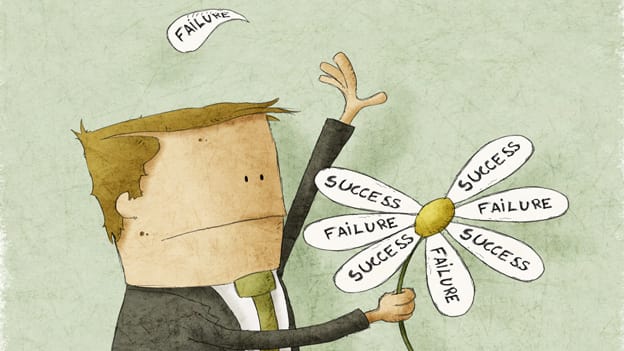
Tag: #TransformativeLearning

  • Collective Consciousness: Rediscovering Learning Through the Parama-Atma

    Collective Consciousness: Rediscovering Learning Through the Parama-Atma

    Learning through channeling into the Parama-Atma and the collective field of souls offers a transformative paradigm where knowledge transcends books, institutions, and conventional reasoning, becoming a lived experience of unity and awareness. By attuning the individual consciousness to universal intelligence, one accesses insight, creativity, and ethical clarity that flow naturally through intuition and resonance. Integrating ancient practices, meditative disciplines, and collective alignment with modern scientific understanding—from quantum consciousness to flow states and noetic research—creates a holistic framework for personal, educational, and societal evolution. When inner stillness, heart-centered intention, and ethical action guide learning, the boundaries between learner, learning, and the learned dissolve, awakening a conscious, compassionate humanity capable of co-creating a harmonious and sustainable world.

    ಪರಮಾತ್ಮ ಮತ್ತು ಆತ್ಮರಾಶಿಯ ಸಂಗ್ರಹ ಕ್ಷೇತ್ರದ ಮೂಲಕ ಚಾನಲ್ ಮಾಡುವ ಮೂಲಕ ಕಲಿಕೆ ಎಂಬುದು ಬೂಕುಗಳು, ಸಂಸ್ಥೆಗಳು ಮತ್ತು ಸಾಂಪ್ರದಾಯಿಕ ಯುಕ್ತಿಕೆಯನ್ನು ಮೀರಿದ ಪರಿವರ್ತನಾತ್ಮಕ ಪರಿಪಾಠವನ್ನು ನೀಡುತ್ತದೆ, ಇದು ಏಕತೆ ಮತ್ತು ಜ್ಞಾನದ ಜೀವಿತ ಅನುಭವವಾಗುತ್ತದೆ. ವೈಯಕ್ತಿಕ ಚೇತನೆಯನ್ನು ಬ್ರಹ್ಮಜ್ಞಾನಕ್ಕೆ ಹೊಂದಿಸುವ ಮೂಲಕ, ವ್ಯಕ್ತಿ ಸಹಜವಾಗಿ ಬುದ್ದಿವಂತಿಕೆ, ಸೃಜನಾತ್ಮಕತೆ ಮತ್ತು ನೈತಿಕ ಸ್ಪಷ್ಟತೆಯನ್ನು ಅನುಭವಿಸುತ್ತಾರೆ. ಪ್ರಾಚೀನ ಅಭ್ಯಾಸಗಳು, ಧ್ಯಾನಾತ್ಮಕ ಶಿಸ್ತಿನ ಪದ್ಧತಿಗಳು ಮತ್ತು ಸಮೂಹ ಸಮನ್ವಯವನ್ನು ಕ್ವಾಂಟಮ್ ಚೇತನೆಯಿಂದ ಹರಿವು ಸ್ಥಿತಿಗಳವರೆಗೆ, ನೋಟಿಕ್ ಸಂಶೋಧನೆಯವರೆಗೆ ಹಾದುಹೋಗುವ ಮೂಲಕ ವೈಯಕ್ತಿಕ, ಶೈಕ್ಷಣಿಕ ಮತ್ತು ಸಾಮಾಜಿಕ ಬೆಳವಣಿಗೆಯ ಸಮಗ್ರ ಚಟುವಟಿಕೆ ರೂಪುಗೊಳ್ಳುತ್ತದೆ. ಆಂತರಿಕ ಶಾಂತಿ, ಹೃದಯಕೇಂದ್ರಿತ ಉದ್ದೇಶ ಮತ್ತು ನೈತಿಕ ಕ್ರಿಯೆ ಕಲಿಕೆಯನ್ನು ಮಾರ್ಗದರ್ಶನ ಮಾಡಿದಾಗ, ಕಲಿಯುವವನು, ಕಲಿಕೆ ಮತ್ತು ಕಲಿತವು ನಡುವಿನ ಸೀಮೆಗಳು ಅಳಿಯುತ್ತವೆ, ಜಾಗೃತ, ಸಹಾನುಭೂತಿಪೂರ್ಣ ಮಾನವೀಯತೆಯನ್ನು ಎಚ್ಚರಿಸುತ್ತವೆ ಮತ್ತು ಸೌಹಾರ್ದಯುತ ಹಾಗೂ ಸ್ಥಿರತೆಯುತ ಜಗತ್ತನ್ನು ಸಹಸೃಷ್ಟಿ ಮಾಡಲು ಸಾಮರ್ಥ್ಯವನ್ನು ನೀಡುತ್ತವೆ.

    232 Collective Consciousness Stock Photos - Free & Royalty-Free Stock  Photos from Dreamstime

    Learning by Channeling into the Collective of Souls or Parama-Atma

    From Individual Knowing to Universal Intelligence

    I. Introduction: Rediscovering the Original Source of Learning

    A. Intended Audience and Purpose

    This article is written for those who seek learning not merely as the accumulation of information but as the awakening of insight. It speaks to educators reimagining the purpose of schooling, philosophers contemplating the nature of knowledge, psychologists exploring the mind’s deeper dimensions, scientists of consciousness bridging the spiritual and the empirical, and young seekers yearning for meaning beyond the monotony of material success.

    The purpose is both visionary and practical: to illuminate a higher mode of learning — “channeling” — where knowledge arises from direct attunement with the Parama-Atma, the supreme consciousness that pervades and unites all beings. This is not mere mysticism wrapped in poetic words; it is an exploration of how the human mind, when purified and quieted, becomes a receiver of wisdom that transcends its own limited conditioning.

    The intention here is not to dismiss science or logic but to complete them — to show that the next frontier of learning lies not in expanding our data servers but in expanding our consciousness.

    B. The Human Learning Paradox

    We stand at a strange crossroads in human evolution.
    Never before has information been so abundant, and yet, true understanding so rare. Our devices overflow with knowledge, but our hearts run dry of wisdom. We can access the collective knowledge of humanity in seconds, but we struggle to access our own peace, purpose, and discernment.

    This is the paradox of our age: we have become intellectually obese and spiritually malnourished.

    Modern education, with all its achievements, still operates on an outdated premise — that learning is a process of filling the mind, not awakening it. Students are trained to store data, recall facts, and pass tests, but seldom are they taught to still their minds, listen inwardly, or access their intuitive knowing. The result is brilliance without balance, progress without purpose, and intelligence without integration.

    Spiritual learning — the kind known to sages, mystics, and true innovators — follows the opposite path. It is not about adding knowledge, but about removing noise. It is about aligning one’s consciousness with a greater field of intelligence, a universal mind that exists beyond the boundaries of the personal ego. In this mode, learning becomes less about thinking and more about remembering.

    The new paradigm we are being called toward is one where consciousness becomes the classroom, and silence becomes the ultimate teacher.

    We must move — courageously and consciously — from data accumulation to consciousness attunement. This shift does not reject technology or rational thought; it simply reorders them. Thought and technology become tools, not masters. They serve consciousness rather than define it.

    In this vision, a scientist can meditate before conducting an experiment to align with truth. A teacher can open a class with silence instead of announcements. A student can learn to sense the deeper harmony in what they study, rather than memorizing mechanically. This is not regression into superstition — it is progression into wholeness.

    C. Core Thesis

    Learning by channeling is not mystical escapism — it is remembering what the soul already knows.

    Every human being carries within them a spark of the Parama-Atma — the supreme consciousness that animates and sustains the cosmos. The Jiva-Atma, or individual consciousness, is not separate from this universal intelligence; it is a localized expression of it, much like a wave that momentarily rises from the ocean yet remains the ocean itself.

    True learning, therefore, is not an act of acquisition but of reconnection. It is not “finding something new,” but remembering what has always been true. The word education itself comes from the Latin educere, meaning “to draw out.” The ancients understood that learning draws out the innate wisdom already present within — a wisdom obscured by noise, ego, and distraction.

    To “channel” in this context does not mean surrendering to some external spirit or supernatural influence. It means tuning one’s inner frequency to the vibration of truth, compassion, and universal intelligence — aligning the Jiva-Atma with the Parama-Atma.

    When this alignment occurs, knowledge flows naturally. The student becomes receptive to insights that seem to come from beyond — yet, paradoxically, they come from within. Artists, scientists, and sages across time have described this experience: the moment when effort dissolves and inspiration takes over. Einstein called it “a sense of the mysterious that lies at the root of true art and science.” The Bhagavad Gita expresses it timelessly: “I am seated in the heart of all beings; from Me come memory, knowledge, and understanding.”

    In rediscovering this truth, humanity may finally resolve its crisis of learning. The way forward is not more data, but deeper awareness; not faster thinking, but purer being.

    This article explores how this process — the alignment of the individual consciousness with the universal — can restore our original capacity for divine learning, unify science and spirituality, and give birth to an education of the soul fit for the challenges of the future.

    232 Collective Consciousness Stock Photos - Free & Royalty-Free Stock  Photos from Dreamstime

    The Metaphysical Foundation: Consciousness as the Source of Knowledge
    (A deep exploration of the universal laws governing inner learning and the dissolution of illusion)

    A. The Eternal Triad: Jiva-Atma, Parama-Atma, and Maya

    Human existence is a dance between three eternal principles — Jiva-Atma (the individual soul), Parama-Atma (the Supreme Consciousness), and Maya (the illusion of separation).

    The Jiva-Atma, or individual consciousness, is not a separate entity but a localized expression of the Parama-Atma, the infinite ocean of divine intelligence that pervades all creation. Just as a single wave does not exist apart from the ocean, the individual cannot exist apart from the universal. Yet, under the influence of Maya, the wave imagines itself isolated — thus arises ignorance, fear, and the insatiable thirst for external knowledge.

    In this illusion, learning becomes accumulation — collecting facts, imitating patterns, and chasing external validation. But when the illusion thins, one realizes that true learning is recollection — an awakening of the innate wisdom encoded within the soul. Every act of genuine learning, then, is an act of remembering.

    The goal of learning, therefore, is not to conquer the external world but to dissolve separation — to rediscover the unity between the seeker and the sought, between the question and the answer, between Jiva and Parama.

    In this light, knowledge ceases to be a possession; it becomes participation in divine flow. When one learns by channeling, one does not acquire — one aligns.

    B. The Vedic Principle of “Ekam Sat” — One Truth, Many Paths

    The Rig Veda declares, “Ekam Sat Vipra Bahudha Vadanti”Truth is One, the wise call it by many names. This ancient insight forms the metaphysical bedrock of channelled learning.

    All authentic spiritual and philosophical traditions — whether Vedic, Gnostic, Taoist, or Hermetic — converge on one foundational premise: Consciousness is the source of all creation.

    • The Vedas see consciousness as Brahman — the silent, self-aware field from which the cosmos unfolds.
    • Gnosticism describes it as the divine Pleroma — a realm of pure light and knowing.
    • Taoism speaks of the Tao — the ineffable Way that gives birth to all things but remains ever beyond them.
    • Even in Quantum Holism, modern physics echoes this truth: that the observer and the observed are entangled; consciousness is woven into the fabric of reality.

    Thus, learning by channeling is not an exotic or cultic practice — it is the rediscovery of an ancient human faculty: the ability to receive wisdom directly from the universal mind through inner stillness, humility, and resonance.

    When we attune our consciousness to that cosmic frequency — through meditation, contemplation, or selfless service — we access the same truth that sages, mystics, and scientists have all touched from different directions.
    All paths, when walked sincerely, lead back to the Source.

    C. The Inversion of Modern Epistemology

    Modern education and neuroscience start from a flawed inversion:
    Matter → Brain → Mind → Consciousness.
    In this model, consciousness is an afterthought — a byproduct of neural chemistry. Knowledge is “produced” by the brain, as if neurons somehow generate wisdom through electrochemical sparks.

    This worldview has yielded technology, but not wisdom; complexity, but not clarity. It reduces the knower to a machine, the soul to circuitry.

    The spiritual correction is the reverse:
    Consciousness → Mind → Brain → Behavior.

    Here, consciousness is primary — the uncaused cause, the silent witness that precedes all cognition. The mind is its instrument; the brain, its biological receiver; behavior, its outward echo.

    From this orientation, learning becomes tuning in, not building up. We don’t “create” understanding — we receive it. The brain, like a radio, does not produce music; it merely tunes to the right frequency. Likewise, the mind receives divine insight when cleared of static — fear, ego, and distraction.

    This inversion restores reverence to the act of learning. It transforms education from information processing to inner awakening. It reminds us that true knowledge is not invented; it is unveiled.

    Collective consciousness Images - Free Download on Freepik

    III. The Collective of Souls: Humanity’s Shared Field of Awareness
    (Understanding how individual consciousness participates in and draws from the collective intelligence of existence)

    A. The Ocean of Consciousness

    At the deepest level of reality, souls are not separate travelers but waves rising and falling upon the same vast ocean of consciousness. What appears as individuality is simply differentiation — not division. Each soul, or Jiva-Atma, is a unique expression of the Parama-Atma, just as every ripple reflects the entire sea within its curvature.

    This ocean of awareness is not metaphorical but vibrational — a living continuum of intelligence that remembers, records, and reorganizes the evolution of all beings. The ancient seers called it Akasha, the subtle ether that holds the imprints of every thought, emotion, and deed — a cosmic archive where time and space are fluid.

    When a soul “learns by channeling,” it is essentially accessing this oceanic memory field, drawing insights not from textbooks or tutors but from the deeper strata of existence. This is why great discoveries often occur simultaneously in different parts of the world — not because of coincidence, but because the field of collective knowing has reached a point of resonance.

    The individual, in this sense, is not an isolated thinker but a transmitter and receiver within a divine ecosystem of intelligence. To channel is to remember our true position — not as containers of knowledge, but as conduits for it.

    B. The Scientific Correlates

    Modern science, though still tethered to materialist frameworks, is gradually approaching these ancient insights through new paradigms that validate the interconnectivity of consciousness.

    1. Rupert Sheldrake’s Morphic Resonance
      Sheldrake proposed that every species and form of organization has a “morphic field” — a nonlocal memory field through which information is transmitted and shared across time and space. When one member of a species learns a behavior, the rest become subtly predisposed to it. This theory, though controversial, offers a scientific bridge to the Vedic understanding of collective memory (Samskara) — the idea that consciousness stores and transmits experiential blueprints.
    2. Teilhard de Chardin’s Noosphere
      The visionary paleontologist and mystic Teilhard de Chardin foresaw the emergence of a “Noosphere” — a planetary layer of thought enveloping the Earth, akin to a spiritual atmosphere generated by the sum of human consciousness. Just as life formed the biosphere, thought and awareness now shape the noosphere. The more humanity integrates its inner awareness, the more luminous and coherent this field becomes.
    3. Neuroscience and Group Coherence Studies
      Research into heart-brain synchronization reveals that when groups meditate, pray, or act in unified intention, their physiological rhythms — heartbeats, brainwaves, and even electromagnetic signatures — begin to entrain, creating measurable coherence in the collective field. Studies by the HeartMath Institute and others suggest that conscious alignment produces real energetic harmony capable of influencing both emotional states and external systems.

    These findings do not yet capture the full metaphysical truth, but they point unmistakably toward a post-materialist science — one that recognizes consciousness as the organizing principle, not the epiphenomenon.

    C. The Social and Evolutionary Implication

    If we accept that consciousness is shared, then human evolution must be redefined. The Darwinian model — survival through competition and genetic mutation — explains physical adaptation but not spiritual progress. True evolution is cooperative, not competitive; it unfolds through the synchronization of consciousness, not the dominance of genes.

    Each act of compassion, creativity, and insight contributes to the collective field. Every soul that awakens adds luminosity to the whole. When enough individuals reach coherence, humanity undergoes a collective phase shift — a quantum leap from fragmented egocentric awareness to planetary consciousness.

    In this new paradigm:

    • Learning becomes a shared awakening, where wisdom flows horizontally through resonance, not vertically through authority.
    • Society evolves from information networks to consciousness networks — the spiritual equivalent of the Internet, but powered by empathy, intuition, and unity.
    • The “Planetary Mind” arises — an integrated awareness that transcends nations, religions, and species, recognizing all life as one continuum of intelligence.

    This is not a utopian dream but an evolutionary inevitability. Humanity is standing at the threshold of a new epoch where the individual mind will consciously commune with the collective soul — a rediscovery of the ancient truth: Tat Tvam Asi — Thou art That.

    Collective Consciousness Stock Illustrations – 688 Collective Consciousness  Stock Illustrations, Vectors & Clipart - Dreamstime

    The Mechanism of Channeling: Learning through Resonance

    (Unveiling the disciplined process through which the individual consciousness attunes to the higher intelligence of the Parama-Atma)

    A. Understanding Channeling

    Channeling is one of the most misunderstood spiritual phenomena. It is not a trance, possession, or mystical escapade—it is conscious alignment with a higher frequency of intelligence. The process does not involve abandoning reason or surrendering control to an external entity, but rather, refining one’s awareness so that it vibrates in harmony with the universal field of truth.

    When the ego is dominant, thoughts arise from personal memory, emotion, and desire—bound by time and conditioning. When the soul is dominant, insights flow from the universal memory, beyond time and culture. This is the distinction between egoic imagination and intuitive reception. The first invents; the second remembers.

    At the heart of this process lies the Law of Resonance:

    “That which vibrates in harmony, communicates.”

    Every level of consciousness transmits on its own frequency. The divine cannot be heard on the frequency of fear or ambition; it reveals itself through stillness, humility, and love. To channel, therefore, is to retune the instrument of one’s being—to make the heart and mind coherent enough to perceive truth directly.

    B. Conditions for True Channeling

    Channeling is not a talent—it is a state of purity. The capacity to receive divine wisdom depends less on knowledge and more on alignment of being. Four primary conditions enable authentic transmission:

    1. Purity of Intention — Desire for Truth, Not Power
      The moment one seeks knowledge for domination, recognition, or personal gain, the connection breaks. Divine intelligence flows through those who desire truth for the sake of truth. The sacred cannot be accessed by manipulation; it responds only to sincerity.
    2. Silence of Mind — Space for the Inner Voice to Emerge
      The mind, crowded with constant chatter, blocks subtle signals. Silence is not the absence of sound—it is the absence of internal noise. Meditation, breath awareness, or contemplative stillness prepares the mind as a clear sky, receptive to the light of insight.
    3. Emotional Equilibrium — The Calm Heart as Antenna
      Emotions are waves that modulate perception. A turbulent heart distorts guidance; a calm, compassionate heart amplifies it. Gratitude, forgiveness, and emotional stability are not moral niceties—they are frequencies of receptivity.
    4. Moral Integrity — Truth Flows Only Through Clean Channels
      Energy follows ethics. When one lives dishonestly, the inner current splinters. When one embodies truthfulness, humility, and service, the inner circuit becomes conductive. Integrity is not moral restraint—it is energetic clarity.

    Together, these conditions transform the human being into a living receiver—an instrument through which higher wisdom can sing its song.

    C. The Five Stages of Attunement

    Channeling, or divine learning, unfolds through a structured yet fluid progression. Each stage deepens the soul’s resonance with the universal mind:

    1. Invocation (Sankalpa) — The Clear Call for Guidance
      Every act of communion begins with intention. The seeker makes a sacred resolve: to know truth, to serve light, to dissolve separation. This invocation is not a plea but a declaration of readiness—a tuning fork struck in the silence of the heart.
    2. Stillness (Shanti) — Withdrawal from Sensory Noise
      Having declared intent, one retreats into stillness. The senses, usually dispersed in outward seeking, are gathered inward. Stillness is the chamber where the sacred whispers. Without it, the divine signal is lost amid static.
    3. Reception (Pratyabhijna) — Sudden Illumination or Inner Download
      In this state of inner quiet, revelation occurs—not as thought but as a direct knowing. Sometimes it arrives as a phrase, symbol, or wave of understanding. This is the moment of contact, when the Jiva-Atma resonates with the Parama-Atma.
    4. Integration (Vichara) — Rational Reflection to Anchor Insight
      True wisdom must pass through discernment. The insight received is examined through reason, tested against dharma, and harmonized with one’s life. This integration ensures that inspiration matures into understanding rather than delusion.
    5. Action (Seva) — Applying Received Wisdom for Collective Good
      The final stage completes the circuit. Knowledge must become service; wisdom must manifest as compassion. The flow of channeling is circular—what is received from the collective must be returned to it through action, upliftment, and love.

    Thus, learning by resonance transforms the individual from a seeker of truth into a servant of truth—a vessel through which divine intelligence blesses the world.

    D. Indicators of Authentic Transmission

    Because the human mind can easily confuse intuition with fantasy, discernment is essential. Authentic channeling bears unmistakable signatures:

    • It feels peaceful, inclusive, and elevating.
      True guidance never instills fear, superiority, or separation. Its energy is serene and compassionate.
    • Insight emerges spontaneously, without strain.
      There is no intellectual forcing, only the effortless unfolding of understanding—like a flower opening in sunlight.
    • It aligns with eternal values—compassion, unity, and truth.
      Any message that contradicts love, humility, or universal oneness originates not from higher intelligence but from egoic distortion.

    Where these signs are present, one can trust the transmission as an authentic resonance of the higher mind.

    The Collective Consciousness | The Sinsemillian

    The Ancient Lineage of Channeling: From Rishis to Modern Mystics

    (Tracing humanity’s timeless communion with the Divine Intelligence across civilizations and cultures)

    A. The Vedic Seers

    The earliest record of divine channeling comes from the Rishis of ancient India — sages who did not compose the Vedas but heard them. The word Veda itself means “knowledge,” and the mode of its revelation was called Śruti, meaning “that which is heard.”

    The Rishis were not authors in the modern sense; they were receivers of cosmic frequency. Through deep meditation and purity of consciousness, they attuned their minds to the subtlest vibrations of the Parama-Atma — the Supreme Intelligence that pervades all realms. In that state of resonance, they did not think the hymns; they heard them, echoing from the silent field of Akasha.

    This hearing was not auditory but metaphysical audition — an inner perception where knowledge unveiled itself as sound, rhythm, and light. Thus, the Vedas were born not through invention but through revelation, transmitted across consciousness rather than composed through cognition.

    Each mantra was a vibration of truth, carrying energetic potency rather than intellectual abstraction. The Rishis acted as translators of cosmic resonance into human language, turning universal frequencies into sacred syllables.

    In this sense, the Rishis were the first “scientists of consciousness,” discovering through inner experimentation the same principles that quantum physics and cosmology are only now beginning to glimpse: that information, energy, and consciousness are inseparable.

    The lineage of Shruti affirms an eternal truth — that wisdom does not belong to an individual but flows through those who are quiet enough to listen.

    B. Prophets, Mystics, and Philosophers Across Cultures

    The phenomenon of channeling is not confined to the Vedic tradition; it is a universal human capacity found in every spiritual lineage and epoch of civilization.

    • Socrates spoke of his Daemon — an inner voice of wisdom that guided him beyond rational thought. Far from superstition, this “voice” was his direct link to a higher order of knowing. He described it as that which warns, never commands — a perfect reflection of the subtle nature of divine intuition.
    • The Buddha attained enlightenment not through external teaching but through direct insight into universal consciousness — the “Inner Light” (Pratyekabodhi) that arises when the delusions of the mind dissolve. His realization was the awakening of the Parama-Atma within the Jiva-Atma — a perfect inner channel of compassion and clarity.
    • Yogananda and the lineage of Kriya Yoga Masters emphasized communion with the Infinite Spirit, where meditation becomes a two-way dialogue between the individual and the Divine. In this communion, the yogi does not merely pray but listens — the same sacred listening practiced by the Rishis.

    Even in the creative realms, this mode of channeling manifests as divine inspiration:

    • Nikola Tesla claimed that his inventions were not thought out but revealed to him in complete form, as if projected by an unseen intelligence.
    • Wolfgang Amadeus Mozart said he heard entire symphonies within his mind, fully orchestrated, before writing a single note.
    • Srinivasa Ramanujan, the Indian mathematical genius, attributed his formulas to direct transmission from the goddess Namagiri, describing dreams and visions where equations flowed effortlessly.

    Across time and culture, these testimonies share a single pattern — knowledge arriving through resonance, not reasoning. What the mystics, prophets, and geniuses all accessed was the same ocean of consciousness — the collective field of divine intelligence.

    When the channel is pure, the expression may take many forms — philosophy, music, mathematics, art — but the source remains one: Ekam Sat, Vipra Bahudha Vadanti — “Truth is One, though the wise express it in many ways.”

    C. The Guru Within (Antaryami)

    While traditions across the world have revered external teachers, scriptures, and lineages, the ultimate teacher has always been within. The Upanishads describe the Antaryami — the Inner Controller, or the divine presence within the heart of every being.

    External gurus, however enlightened, serve only one sacred function: to awaken the student’s connection with the inner Guru, the indwelling spark of the Parama-Atma. As long as a seeker depends entirely on external authority, learning remains secondhand. But when the inner light is kindled, knowledge becomes direct, immediate, and self-validating.

    This is the highest form of channeling — self-realization as divine dialogue. Here, the student and the teacher are one, the receiver and transmitter dissolve, and learning becomes living communion.

    The Antaryami does not speak in words or visions but through intuition, synchronicity, and the quiet certainty that accompanies truth. When the mind is silent and the heart is clean, its guidance becomes unmistakable — always compassionate, always aligned with unity and righteousness (Dharma).

    In this realization, every human being becomes a potential Rishi, a vessel through which the cosmic intelligence can manifest anew in this age. The lineage of channeling thus continues — not as a chain of external teachers, but as a continuum of awakened souls listening to the same eternal Source.

    Communicating through the "Collective Unconscious" | Essentia Foundation

    The Integration of Science and Mysticism

    (Bridging the language of the laboratory with the language of the soul)

    A. The Quantum Consciousness Perspective

    In the frontier of modern physics, science is reluctantly rediscovering what the mystics of all ages have declared: Consciousness is the foundation of reality, not its epiphenomenon.

    Quantum mechanics, when stripped of mathematical abstraction, points toward a startling conclusion — that the observer is not separate from the observed. Reality does not exist as a fixed structure “out there”; it manifests in response to observation, intention, and relational awareness.

    This perspective reverses the classical model of causality. Instead of matter producing mind, we find mind shaping matter, and at the deepest level, consciousness shaping both.

    • The quantum vacuum, long thought to be empty space, is now understood as a sea of infinite potential — a dynamic, self-organizing field brimming with latent energy and information.
    • The principle of nonlocality, where particles remain instantaneously connected across vast distances, offers a scientific metaphor for the unity of consciousness — the spiritual truth that separation is illusion.
    • Quantum entanglement, in particular, reflects the same ontological fabric described in the Upanishads: Sarvam Khalvidam Brahma — “All this is indeed Brahman.”

    What the seers intuited through silence, physicists now approach through equations. When interpreted through consciousness-centric epistemology, quantum physics becomes not a challenge to spirituality, but its modern dialect. It suggests that learning by channeling may be the natural cognitive consequence of a universe built from awareness itself.

    If consciousness pervades all, then tuning into higher intelligence is not paranormal — it is the logical extension of being alive in a conscious cosmos.

    B. Cognitive Science and Flow States

    While physics explores the nature of external reality, cognitive science investigates the internal mechanics of perception and awareness. Here too, we find evidence that supports the mystical model of learning through resonance.

    Psychologist Mihály Csíkszentmihályi’s research on flow states describes moments of total absorption, where self-conscious thought dissolves and action feels effortless, meaningful, and precise. In such states:

    • The brain exhibits alpha-theta coherence — a balanced rhythm between alert focus and meditative calm.
    • The prefrontal cortex, responsible for egoic self-monitoring, temporarily deactivates (a phenomenon known as transient hypofrontality).
    • Creativity, intuition, and problem-solving accelerate, as if one is “being thought through” rather than thinking deliberately.

    Flow, in essence, is channeling in psychological language. It is the state where the individual mind aligns perfectly with the universal current of intelligence — where doing becomes being.

    Neuroscience corroborates this:

    • Studies in neurocardiology show that the heart generates an electromagnetic field 60 times stronger than the brain’s, and when heart and brain rhythms synchronize, intuition heightens measurably.
    • EEG studies of meditators, mystics, and creative geniuses reveal similar coherence patterns — supporting the principle that inner harmony precedes higher cognition.

    The takeaway is profound: The physiology of flow mirrors the metaphysics of channeling. Both depend on stillness, surrender, and resonance — a harmony between mind, body, and the infinite field of awareness.

    C. Noetic Research and the Collective Mind

    The scientific study of consciousness beyond the individual — often termed noetic research — offers growing empirical support for the existence of a collective mind.

    Institutions such as the Institute of Noetic Sciences (IONS), HeartMath Institute, and the Global Consciousness Project at Princeton have conducted experiments that document the measurable impact of human intention and group coherence on physical systems:

    • Group Meditation Experiments:
      Repeated studies show that when groups meditate with shared intent (for peace, healing, or compassion), measurable decreases occur in local crime rates, conflict incidents, and physiological stress markers in surrounding populations.
    • Global Coherence Monitoring:
      HeartMath’s Global Coherence Initiative has observed correlations between spikes in geomagnetic activity and shifts in global emotional states, suggesting that human consciousness interacts with planetary fields.
    • Random Number Generator (RNG) Anomalies:
      The Global Consciousness Project found that during moments of collective emotional focus — such as global tragedies or celebrations — random systems deviate significantly from chance, implying nonlocal synchronization of consciousness.

    Though still controversial in mainstream academia, these findings point toward a radical hypothesis: human minds are nodes in a planetary neural network, capable of synchronizing to affect global systems of order and harmony.

    The implications are staggering:

    • Collective healing is not metaphorical — it is measurable.
    • Education and creativity can be enhanced through synchronized intention.
    • Social innovation can arise from group coherence, replacing competition with collaboration at the level of consciousness itself.

    As science catches up with mysticism, the bridge becomes clear — we are participants in, not observers of, a living universe. Every thought, every act of compassion, adds coherence to the great symphony of existence.

    FF Insights #581: Thich Nhat Hanh on collective consciousness | Founding  Fuel

    VII. Practical Pathways: Learning Through the Parama-Atma in Daily Life

    (Transforming the metaphysical understanding of channeling into actionable, daily practices that integrate personal, social, and creative intelligence)

    A. Inner Disciplines for Channeling

    The bridge between knowledge and wisdom is practice. To channel the Parama-Atma effectively, the seeker cultivates internal disciplines that refine perception, align intention, and open the heart. These are not rituals; they are tools for attunement.

    1. Meditative Stillness: Silence as the Classroom of the Soul
      Silence is not merely the absence of sound; it is the presence of awareness. Daily meditative practice trains the mind to stop projecting incessantly, creating a receptive field for intuition. Even a few minutes of deliberate stillness recalibrates mental noise, allowing subtle insights from the Parama-Atma to surface spontaneously.
    2. Self-Inquiry (Atma-Vichara): Questioning “Who is the Knower?”
      Self-inquiry is the most direct route to understanding consciousness. By asking “Who is aware of this thought?” or “Who experiences this feeling?” the mind gradually turns inward, recognizing that the individual ego is only a lens through which universal intelligence is perceived. This inner questioning clears identification with transient mental phenomena, opening access to deeper knowing.
    3. Heart Alignment: Love as the Ultimate Frequency Stabilizer
      The heart is the primary antenna for subtle intelligence. Practices that cultivate love, compassion, and forgiveness harmonize the emotional field, increasing receptivity. Love is not sentimental; it is vibrational coherence that aligns the personal with the universal. A heart-centered mind is an amplifier for divine insight.
    4. Contemplative Reading: Inviting the Text to Speak Through You
      Instead of reading to accumulate facts, engage with texts as living guides. Allow a passage, idea, or equation to resonate within, noticing spontaneous thoughts, images, or emotional responses. The process is dialogical: the text illuminates consciousness, and consciousness illuminates the text.
    5. Service and Gratitude: Grounding Revelation in Compassion
      Knowledge that is not applied becomes stagnant; wisdom that is not expressed becomes sterile. Acts of service, gratitude, and generosity anchor channeling in the real world. They transform individual insight into collective benefit, completing the circuit of divine intelligence from source to manifestation.

    B. Group Practices for Collective Learning

    Learning through the Parama-Atma is amplified when practiced in community, as consciousness itself is nonlocal and responsive.

    • Satsang and Collective Meditation: Gathering with intention creates resonance fields that synchronize group awareness. Shared focus magnifies insight, accelerates understanding, and nurtures ethical cohesion.
    • Educational Spaces as “Energy Ecosystems”: Schools, universities, and workplaces can be designed to support attunement. Factors include ambient light, acoustic quality, spatial harmony, and intentional pauses for reflection. When energy is curated, learning becomes a holistic, co-creative process rather than rote acquisition.
    • Transforming Classrooms into Co-Creative Learning Sanctuaries: Encourage participatory learning, dialogue, and experiential exercises. Students are guided not just to memorize but to resonate with principles, fostering intuition, empathy, and collective problem-solving. These spaces cultivate the next generation of conscious innovators.

    C. Applying Channeling to Creative and Scientific Work

    The power of channeling is fully realized when it intersects with action in the world — creativity, innovation, and problem-solving:

    • Using Inner Stillness to Access Insight, Invention, and Empathy: A calm, centered mind allows for sudden flashes of intuition — solutions, original ideas, and new perspectives — to emerge naturally, often appearing as if from beyond the individual self.
    • Practical Exercises for Conscious Ideation and Decision-Making: Techniques include:
      • Journaling impressions immediately after meditation to capture spontaneous insights.
      • Mind-mapping intuitive associations rather than relying solely on linear logic.
      • Pausing before major decisions to attune to inner guidance and ethical alignment.
    • The Union of Intellect and Intuition as the Mark of Mature Learning: Mature knowledge integrates rational analysis with intuitive reception. The intellect validates, structures, and implements, while intuition informs, illuminates, and expands. Together, they form a synergistic pathway where innovation and ethical insight coexist.

    By incorporating these practices, individuals and groups can transform learning from a passive accumulation of data into an active dialogue with the universal mind, cultivating wisdom that is creative, compassionate, and conscious.

    Merging Human and AI Collective Consciousness | Stable Diffusion Online

    VIII. The New Paradigm of Education: The Soul as the University

    (Reimagining education as a holistic cultivation of consciousness rather than mere transmission of information)

    A. From Curriculum to Consciousness

    The conventional model of education — rote memorization, standardized testing, and transactional learning — is increasingly inadequate for the challenges of the 21st century. Humanity requires minds capable of ethical discernment, creativity, and empathy, not just information recall.

    • Awakening Awareness over Transferring Data: True learning is the cultivation of consciousness. Students should not merely absorb facts but develop the capacity to perceive, resonate with, and act upon truth. The curriculum becomes less about accumulation and more about inner attunement.
    • Teachers as Facilitators of Remembrance: In this paradigm, teachers are no longer mere conveyors of knowledge. They are guides who awaken latent intelligence within each student, nurturing the capacity to access intuition, insight, and ethical judgment. A teacher’s role is to illuminate, not dictate, to create conditions for the soul to remember its innate wisdom.
    • Learning as Transformation, Not Transaction: Every educational encounter becomes a transformational process. The student is invited to internalize lessons, integrate them into daily life, and evolve as a conscious human being. Education is no longer a transactional transfer of information but a dynamic dialogue with the universal mind.

    B. Building Conscious Learning Ecosystems

    To operationalize this vision, educational structures must intentionally integrate multiple layers of intelligence:

    • Integrating Spiritual Intelligence (SQ) with Cognitive and Emotional Intelligence: Beyond IQ and EQ, SQ nurtures self-awareness, ethical discernment, and connection with universal consciousness. Curriculum design should blend intellectual rigor with practices that cultivate reflection, empathy, and intuitive understanding.
    • Incorporating Silence, Reflection, and Service: Educational environments must embed periods of meditation, contemplative reading, and community service. These practices develop the student’s ability to listen, observe, and respond with aligned action, preparing them to navigate the complexity of the world consciously.
    • NGOs as Catalysts for Inclusive, Soulful Education: Organizations like the MEDA Foundation exemplify how learning ecosystems can be inclusive, transformative, and socially impactful. By designing programs that integrate skill development, emotional intelligence, and spiritual attunement, NGOs can create living laboratories for conscious education, serving diverse populations and empowering self-sufficient communities.

    C. The Ethical and Planetary Impact

    When education prioritizes consciousness over curriculum, the implications extend far beyond the classroom:

    • Collective Wisdom as Antidote to Crises: Societal issues — environmental degradation, political polarization, and ethical collapse — stem from fragmented awareness. By cultivating aligned, conscious individuals, education becomes a force multiplier for global coherence, sustainability, and justice.
    • Channeling Compassion as Global Social Technology: Just as technology networks information, conscious learning networks wisdom and empathy. Students and communities trained to channel insight and compassion can co-create solutions, mediate conflict, and foster cooperation on scales previously unimaginable. Education, therefore, is not preparation for life; it is the act of co-creating a conscious, compassionate world.

    In this vision, the soul becomes the university, the classroom expands into the inner landscape, and the purpose of learning is nothing less than awakening humanity to its shared, divine potential.

    Collective Conscious" Images – Browse 1,315 Stock Photos, Vectors, and  Video | Adobe Stock

    The Ultimate Realization: Learning Becomes Being

    (Culminating the journey from information to intuition, from study to sacred communion)

    A. The Dissolution of Duality

    The highest form of learning is not accumulation but fusion. In true channeling, the boundaries between the learner, the learning, and the learned dissolve. Knowledge is no longer a separate object to grasp; it is lived experience, flowing seamlessly through perception, action, and insight.

    This is the realization expressed in the ancient Sanskrit phrase: “Tat Tvam Asi” — Thou art That. It is the awareness that the individual self (Jiva-Atma) and the universal consciousness (Parama-Atma) are not separate entities but different expressions of the same underlying reality. In this state:

    • The mind no longer dominates, yet clarity is heightened.
    • The heart leads, guided by intuition, wisdom, and compassion.
    • Learning is no longer a process—it simply is, embodied in every thought, feeling, and action.

    The dualities that frame ordinary life—teacher/student, self/other, knowing/unknown—cease to exist. In their place arises a continuum of awareness, a living participation in the cosmic intelligence.

    B. The Return to Silence

    Paradoxically, the journey of ultimate learning begins and ends in silence.

    • Silence is the medium through which the soul attunes to the Parama-Atma.
    • As channeling matures, intellectual effort fades; the seeker rests in the direct knowing of being itself.
    • Knowledge as discrete content ceases; awareness as living presence

    In this final stage, the seeker discovers that learning was never about mastery over concepts or systems. It was always about alignment, attunement, and recognition of the eternal self in all that exists.

    Silence is not emptiness—it is the fertile ground from which wisdom, love, and action arise naturally. Every thought, every insight, every choice flows from a place of profound coherence with the universal field.

    C. The Call to Action

    While this realization is deeply personal, its ultimate expression is action in the world. The Parama-Atma does not remain abstract; it expresses through each attuned soul, inspiring creativity, service, and transformation.

    • Rediscover Your Tuning: Every individual is invited to consciously reconnect with the universal mind through meditation, reflection, and aligned action.
    • Practice Sacred Remembrance: Education, work, and relationships become sacred arenas to apply awareness and compassion.
    • Extend Love to the Collective: True learning ripples outward; channeling wisdom is not for personal gain but for uplifting humanity and fostering planetary coherence.

    The call is clear: learning is not the accumulation of information; it is a return to universal love, a restoration of the soul’s natural resonance with the infinite.

    This synthesizes the entire article: from metaphysical foundations, collective intelligence, and channeling mechanics to practical daily practices, educational innovation, and societal impact. It emphasizes that true learning is the journey of the soul returning to unity, stillness, and universal love, and invites readers to participate in this living movement through action, service, and support for initiatives like the MEDA Foundation.

    The Illusion of Collective Spiritual Awakening – The Spiritual Seek

    Conclusion: Participate in the Collective Awakening

    (Inviting readers to integrate, embody, and contribute to the living continuum of universal consciousness)

    A. Summary Reflection

    Learning through channeling into the Collective of Souls or Parama-Atma is more than an intellectual exercise; it is a return to the original source of knowing. It transcends traditional education, libraries, and institutions. It is the resurrection of the ancient way of knowing — direct communion with the Source, where knowledge flows effortlessly through attuned consciousness.

    Through disciplined inner practice, collective alignment, and applied service, the individual and the collective merge, creating a living, evolving field of wisdom and compassion. This is not theory; it is the practical manifestation of consciousness in daily life, creativity, and societal transformation.

    B. Participate and Donate to MEDA Foundation

    At the MEDA Foundation, we strive to create ecosystems where learning is soulful, inclusive, and sustainable. Our programs empower individuals, particularly those with Autism and neurodiverse conditions, while fostering ethical, creative, and conscious communities.

    Your participation, donation, or collaboration nurtures this vision. Every contribution helps:

    • Build educational spaces that awaken consciousness.
    • Support self-sustaining employment programs.
    • Cultivate environments where every human being becomes a conscious co-creator in the universal classroom.

    Engage with this movement of awakening and transformation:
    👉 www.MEDA.Foundation

    C. Book References

    1. The Bhagavad Gita — On divine memory and the inner teacher.
    2. The Upanishads — On Atman-Brahman unity.
    3. The Field by Lynne McTaggart — On the scientific basis of the universal field.
    4. The Seth Material by Jane Roberts — On multidimensional knowledge.
    5. The Life Divine by Sri Aurobindo — On evolutionary consciousness.
    6. Autobiography of a Yogi by Paramahansa Yogananda — On direct learning from Spirit.
    7. Noosphere by Pierre Teilhard de Chardin — On the collective evolution of mind.
  • Building a Life That Learns, Fails, and Rises

    Building a Life That Learns, Fails, and Rises

    Beliefs about ability, intelligence, and success quietly shape every aspect of our lives—from how we handle failure to how we lead, parent, learn, and grow. A growth mindset isn’t a slogan but a lived commitment to continuous self-evolution, where challenges are embraced, effort is strategic, and failure becomes fuel. True transformation happens when individuals and systems move beyond performative language and create cultures that blend high standards with deep compassion. Whether in classrooms, boardrooms, or homes, the power to grow lies not in talent, but in the daily decision to engage, reflect, adapt, and rise—with dignity, resilience, and purpose.

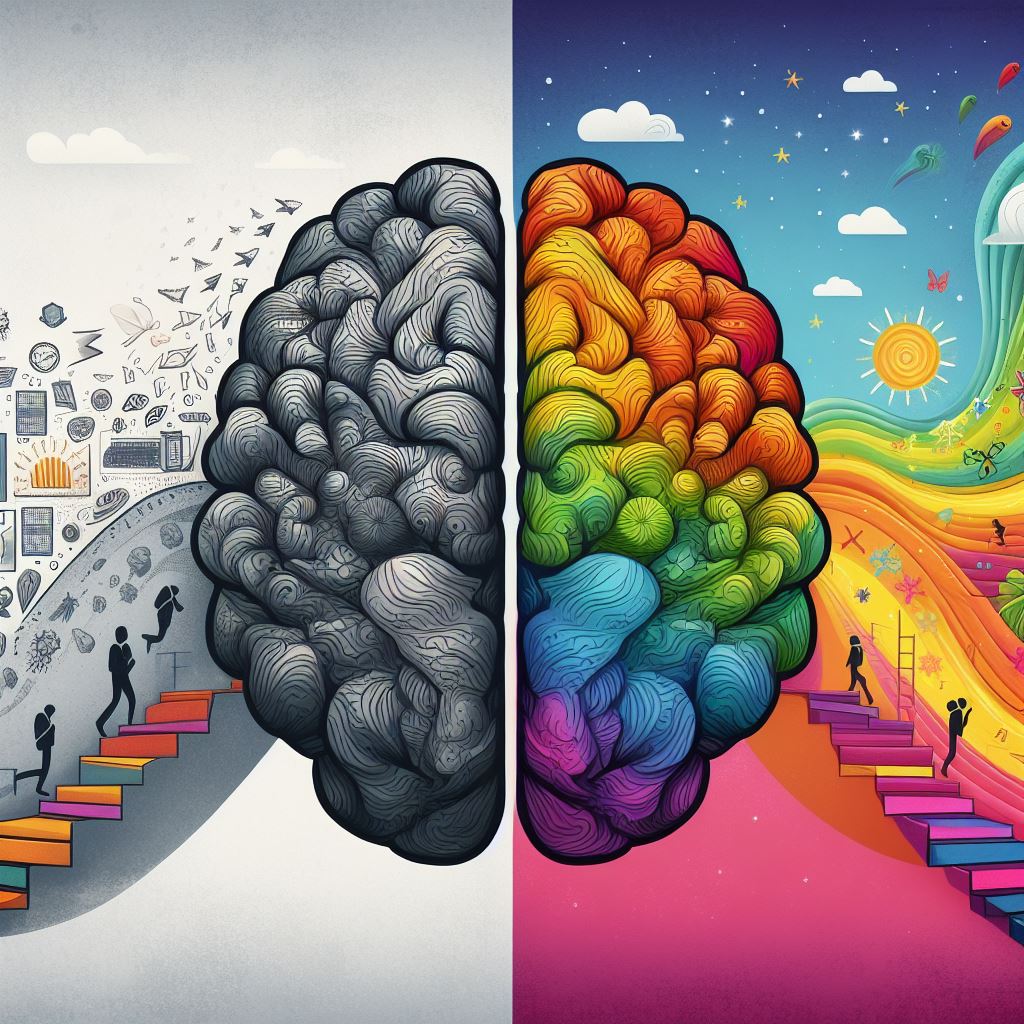
    Unlock Your Potential: Fixed Mindset to a growth mindset

    The Mindset Revolution: Rewiring Beliefs for Lifelong Growth and Fulfillment

    Intended Audience and Purpose of the Article

    This article is intended for educators, parents, leaders, students, entrepreneurs, therapists, and lifelong learners—anyone who is invested in the development of human potential, both in themselves and others.

    In today’s increasingly complex, performance-driven world, we are surrounded by narratives that exalt innate talent, instant results, and external validation. Children are told they’re either “gifted” or “not cut out for it.” Employees are labeled as “high potential” or “average performers.” Entrepreneurs are celebrated as “born geniuses” or dismissed as “not visionary enough.” In all these cases, we absorb a quiet but powerful message: your ability is fixed; your future is already written.

    This article exists to challenge that assumption at its root.

    What if intelligence is not a ceiling but a starting point?
    What if talent is not something to be discovered, but something to be developed?
    What if success is not a reflection of who we are, but of how we think about growth?

    Our deeply held beliefs about ourselves—our capacity, our limits, our worth—form the mental architecture through which we interpret life. These beliefs determine whether we respond to failure with helplessness or curiosity, whether we seek validation or mastery, and whether we define ourselves by achievement or by evolution.

    By exploring the science and psychology of mindset, this article aims to provide a clear, actionable pathway for those who wish to escape the trap of self-imposed limitations. It will help you:

    • Recognize and shift fixed patterns of thinking that sabotage growth
    • Cultivate a mindset of learning, experimentation, and resilience
    • Create environments—at home, in classrooms, or within organizations—that reward effort, progress, and adaptability
    • Reframe failure, feedback, and struggle as essential allies in self-development
    • Foster lifelong learning and mental agility in a world that demands constant reinvention

    This is not about “positive thinking” or motivational slogans. This is about radical responsibility: the willingness to hold a mirror to one’s beliefs and ask, “Does this serve my growth—or my ego?” It is also about radical possibility: the understanding that with the right mindset, no setback is final, and no limit is fixed.

    Ultimately, the article invites you into a personal revolution—not by becoming someone else, but by becoming more fully who you were always capable of becoming.

    If you are an educator trying to unlock the hidden strengths of your students, a parent striving to raise resilient children, a professional navigating transitions, or a seeker committed to lifelong self-mastery—this article is written with you in mind.

    Let’s begin with the belief that transformation is not a rare miracle—it is a mindset.

    Unlocking Destiny: The Power of a Growth Mindset

    I. Introduction: Your Beliefs Are Your Blueprint

    There is a quiet force shaping the course of your life—not your upbringing, not your environment, not even your circumstances. It’s your belief system. Specifically, what you believe about your own ability.

    Whether you see intelligence as static or expandable, whether you perceive failure as fatal or formative, whether you treat effort as a sign of weakness or of will—these invisible assumptions shape your everyday decisions, long-term behaviors, and ultimately, your destiny.

    The Hidden Power of How We Think About Ability

    Most people never pause to examine what they believe about ability. Do we think our talents are carved in stone, or do we believe they can be cultivated with time and effort? This distinction, while subtle, is profoundly consequential.

    Beliefs about ability are not neutral opinions—they are operating systems. If you believe you’re “not a math person,” your brain will unconsciously screen out opportunities to grow in that area. If you believe you’re “bad at public speaking,” you’ll avoid the very situations that could strengthen that skill. These beliefs don’t just describe reality; they shape it.

    Over time, we begin to construct identities around these assumptions. We say, “I’m just not creative,” “I’m not athletic,” or “I’m not leadership material,” as if these are immutable facts rather than self-fulfilling prophecies. Left unchallenged, such beliefs become prisons—beautifully decorated but internally limiting.

    Why Some Thrive Under Pressure While Others Collapse

    Consider two individuals confronted with the same challenge—a failed exam, a rejected proposal, or a public setback. One person doubles down, reflects, recalibrates, and comes back stronger. The other internalizes the failure as a reflection of their inadequacy and withdraws.

    What makes the difference?
    It’s not talent. It’s not intelligence.
    It’s how they interpret failure—and that interpretation comes directly from mindset.

    When we see ability as fixed, every challenge becomes a referendum on our worth. But when we see it as fluid, every challenge becomes a laboratory for growth. This is why, in high-pressure environments, those with adaptive mindsets often outperform their more “naturally gifted” counterparts. It’s not that they fear failure less—it’s that they understand it better.

    Reclaiming Our Agency: Growth Is Not a Trait—It Is a Choice

    The most empowering truth we can teach ourselves and others is this: Growth is not reserved for the gifted. It is available to the willing.

    This truth, however, demands courage. Because if growth is a choice, then passivity is a decision. If development is possible, then staying stagnant becomes a form of self-betrayal. Recognizing this puts the responsibility squarely in our hands—an intimidating, but also deeply liberating, reality.

    Agency does not mean that everyone starts from the same place. It means that everyone has the capacity to move from where they are. This perspective not only inspires personal change, but also drives social change—because it reframes education, equity, and opportunity through the lens of potential rather than predetermination.

    A New Lens on Failure, Effort, and Human Potential

    When we shift our belief system, we don’t just change how we feel—we change what we see. Failure becomes feedback. Effort becomes investment. Talent becomes process. And potential becomes a horizon, not a limit.

    Seen through this new lens:

    • Failure is no longer shameful, but essential.
    • Effort is no longer a last resort, but the only sustainable path.
    • Success is not the validation of innate superiority, but the reward for relentless curiosity.

    This is the blueprint we will build upon through the rest of the article. By questioning assumptions, reframing identity, and adopting practical techniques to nurture a mindset of growth, we can individually and collectively unleash capacities we never thought possible.

    The blueprint has always been within. It’s time to redraw it.

    The Growth Mindset & The Fire Service

    II. Understanding the Two Dominant Mindsets

    Behind every behavior, choice, and reaction lies a belief system. At the core of human motivation, two fundamental mindsets govern how we view our abilities, interpret our experiences, and construct our identity: the Fixed Mindset and the Growth Mindset. These aren’t personality types—they are mental frameworks that can be learned, reinforced, challenged, and changed.

    Understanding these two mindsets is foundational to unlocking potential—not just in ourselves, but in our children, teams, organizations, and societies.

    Fixed Mindset: A Worldview Rooted in Limitation and Fear

    The Fixed Mindset is the belief that intelligence, talent, and ability are static traits—things we either have or we don’t. People with a fixed mindset tend to view effort as a sign of inadequacy (“If I were good at this, I wouldn’t have to try so hard”), avoid challenges that might expose their flaws, and interpret failure as personal deficiency rather than situational learning.

    This mindset is fear-based. It ties worth to performance, making setbacks feel like identity threats. As a result, those operating from a fixed mindset are often caught in a defensive loop—seeking approval, avoiding feedback, and resisting growth because it risks revealing their supposed inadequacy.

    Core belief: “My ability defines me. If I fail, I am a failure.”

    Growth Mindset: A Worldview Anchored in Development and Potential

    The Growth Mindset, by contrast, is grounded in the belief that abilities can be developed through effort, strategy, feedback, and persistence. People with this mindset see challenges as opportunities, failure as feedback, and effort as the price of mastery.

    This mindset reflects self-trust, curiosity, and humility. It enables individuals to embrace their current limitations without shame, knowing those limitations are not permanent. They are simply the edge of the current learning zone.

    Core belief: “My ability is a starting point. With effort and learning, I can grow.”

    Comparative Table: Fixed vs. Growth Mindset

    Domain

    Fixed Mindset

    Growth Mindset

    Challenges

    Avoided to prevent failure or exposure

    Embraced as learning opportunities

    Effort

    Seen as a sign of low ability

    Viewed as essential for development

    Feedback

    Taken personally or ignored

    Used constructively for improvement

    Failure

    Interpreted as a personal flaw

    Interpreted as data and a guide for growth

    Success of Others

    Threatening or diminishing

    Inspiring and informative

    Goals

    Focused on proving competence

    Focused on improving competence

    Identity

    Tied to performance and image

    Tied to learning, values, and progress

    Relationships

    Defensive and status-driven

    Collaborative and mutually growth-oriented

    Leadership Style

    Command-and-control; authority-based

    Coaching; empowerment and delegation

    This side-by-side comparison offers a clear diagnostic tool—not just to evaluate your own tendencies, but also to assess the dominant culture in your home, classroom, team, or organization.

    Real-World Implications in Relationships, Work, and Learning

    In relationships, a fixed mindset can lead to blame, defensiveness, and unrealistic expectations. Partners or parents may interpret conflict as evidence of character flaws rather than opportunities for communication and repair. A growth-oriented relationship, however, sees emotional missteps as chances for deeper understanding and co-evolution.

    In the workplace, the fixed mindset breeds a culture of perfectionism, fear of failure, and internal competition. Employees may hide mistakes, avoid collaboration, or burn out trying to protect their image. In contrast, growth-mindset cultures encourage risk-taking, innovation, psychological safety, and ongoing feedback—keys to resilience and adaptability in fast-changing industries.

    In education, the difference is dramatic. Fixed-mindset classrooms discourage questioning, experimentation, and productive struggle. Students who fear being seen as “not smart” avoid challenging tasks. Growth-mindset environments, on the other hand, normalize mistakes, celebrate progress, and emphasize strategies over scores—equipping learners with the skills and confidence to persist far beyond exams.

    The takeaway is clear: The mindset we adopt doesn’t just change how we think—it changes how we live. In every sphere of life, our operating belief about ability will either shrink or expand the space in which we can grow.

    And the good news? Mindset is not a label. It is a choice—and it can be changed.

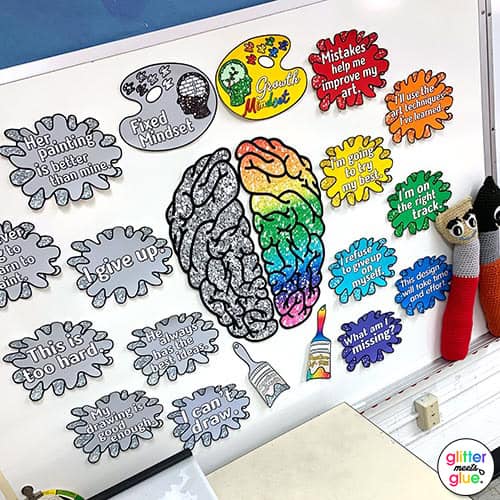
    Growth Mindset in Art Education

    III. Identity and Self-Definition: The Root of Change

    Beneath every mindset is an identity. Not the superficial kind that resides in resumes or social profiles, but the deep-rooted narrative we hold about who we are. These self-definitions are not merely descriptive—they are instructive. They shape what we believe we are capable of, what we dare to try, and what we unconsciously avoid.

    If mindset is the lens through which we view the world, identity is the lens through which we view ourselves. And unless we update that lens, transformation will remain cosmetic at best, self-sabotaging at worst.

    The Peril of Static Self-Labels (“I’m smart”, “I’m not creative”)

    We live in a world that loves to label. From early childhood, people are categorized: the “gifted” one, the “difficult” one, the “athlete,” the “artist,” the “quiet kid,” the “troublemaker.” These labels are often meant to help—but they quickly harden into identities.

    Ironically, even positive labels can be dangerous.

    Telling a child they are “so smart” may seem like praise, but it can lead to fragility. If being “smart” becomes central to one’s identity, then any failure is no longer a data point—it’s a threat. The child avoids challenge for fear of disproving the label. They may learn to protect their image rather than expand their capacity.

    Similarly, negative labels—“I’m not good at math,” “I’m just lazy,” “I’m not a people person”—become self-fulfilling prophecies. We internalize them not as patterns that can be changed but as definitions of who we are.

    When identity becomes static, growth becomes dangerous. When identity becomes performative, authenticity dies.

    How Identity Becomes a Prison or a Portal

    At its worst, identity becomes a prison: a tightly walled space where our past dictates our future. We mistake habitual patterns for fixed traits and confuse current reality with destiny.

    But identity can also be a portal—a gateway to conscious evolution. It becomes liberating when we realize it is not fixed, but constructed, and therefore, reconstructable.

    This shift—from a rigid to a dynamic identity—enables a person to:

    • See themselves as a work in progress, not a finished product
    • Detach their worth from performance
    • Take strategic risks without fear of self-collapse
    • Redefine failure not as proof of who they aren’t, but as a guide to who they could become

    To unlock this portal, we must first recognize that most of our identity has been absorbed, not chosen. Social norms, parental feedback, peer comparisons, educational systems, and media narratives all silently sculpt the “I am” statements we carry.

    Changing your mindset begins not with new habits, but with the radical act of reclaiming authorship of your self-definition.

    The Brain’s Neuroplasticity and the Truth of Human Adaptability

    Science now confirms what ancient wisdom has long suggested: we are far more adaptable than we once believed. The brain is not a fixed machine but a dynamic, self-rewiring organ—a phenomenon known as neuroplasticity.

    Neuroplasticity means:

    • Skills can be learned well into adulthood
    • Intelligence is not capped—it expands with use
    • Personality traits are flexible over time
    • Habits reshape not only behavior but the brain’s structure itself

    This isn’t just encouraging—it’s empowering. If our biology is wired for change, then any static sense of identity is a psychological illusion, not a biological fact. You are not “wired this way.” You are being rewired every day—through every thought, every decision, every challenge embraced or avoided.

    Reconstructing Self-Definition Through Self-Awareness and Intention

    To shift identity, we must engage in the slow, courageous process of conscious self-definition. This means:

    1. Identifying limiting self-statements
      Notice the phrases you habitually use:
      • “I’m not a leader.”
      • “I don’t do well with change.”
      • “I’m bad at handling criticism.”
        These are not facts—they are patterns.
    2. Tracing their origin
      Ask: Where did I learn this? From whom? Under what circumstances? Is it still true, or just familiar?
    3. Replacing with process-based identity scripts
      • Instead of “I’m not creative,” try: “I’m learning to think differently.”
      • Instead of “I hate public speaking,” try: “I’m practicing being more comfortable with visibility.”
        These subtle shifts unlock the freedom to grow.
    4. Acting in alignment with your evolving self
      Identity doesn’t shift through declarations—it shifts through evidence. Every small act of courage, learning, or persistence becomes a brick in the new structure of your self-concept.

    Ultimately, identity is both a mirror and a map. It reflects where we are and directs where we’re going. If you want to change your life, don’t just change your behavior—change the story you believe about who you are.

    That story is yours to rewrite.

    Carol Dweck Revisits the 'Growth Mindset' (Opinion)

    IV. The Psychology of Challenge and Failure

    Failure is not just a moment—it’s a message. And how we interpret that message can determine whether we stagnate or evolve. Challenges and setbacks are universal, but our response to them is not. That response is dictated, in large part, by our mindset.

    Understanding the psychology behind how we process failure and challenge is essential for anyone seeking transformation—not just of performance, but of character.

    How Mindset Shapes Response to Setbacks

    Two people encounter the same obstacle—a public rejection, a financial setback, or a personal betrayal. One spirals into despair and paralysis. The other reflects, learns, and reengages with renewed strategy. What makes the difference?

    It’s not intelligence, nor talent, nor experience. It’s interpretation.

    A fixed mindset sees failure as confirmation of inadequacy:

    • “I guess I’m not good enough.”
    • “This proves I should have never tried.”
    • “Why even bother anymore?”

    A growth mindset views failure as data, not identity:

    • “What can I learn from this?”
    • “Where did my strategy fall short?”
    • “This is hard—but growth usually is.”

    The emotional weight of failure doesn’t change—but the meaning does. And meaning makes all the difference. One mindset collapses under failure. The other builds upon it.

    Learned Helplessness vs Learned Resilience

    Psychologist Martin Seligman’s groundbreaking research on learned helplessness showed that when individuals repeatedly experience uncontrollable failure, they begin to believe their actions no longer matter. They stop trying—even when success is possible. It’s not a lack of ability. It’s a loss of agency.

    Children who are overly protected from challenge or are shamed for mistakes are particularly vulnerable to this. So are employees micromanaged into dependency or criticized without constructive feedback. They stop experimenting. They shrink.

    But the inverse is also true. People can learn resilience.

    Resilience isn’t genetic—it’s trained. It’s built through repeated exposure to discomfort with support, and through reframing failure as a stepping stone rather than a wall.

    To foster learned resilience:

    • Normalize mistakes and setbacks
    • Highlight effort and adaptation over outcome
    • Share stories of growth through adversity
    • Encourage a focus on controllables: attitude, effort, strategy

    Over time, people begin to internalize the belief: “I can recover, improve, and grow.” That belief becomes an emotional anchor through every future storm.

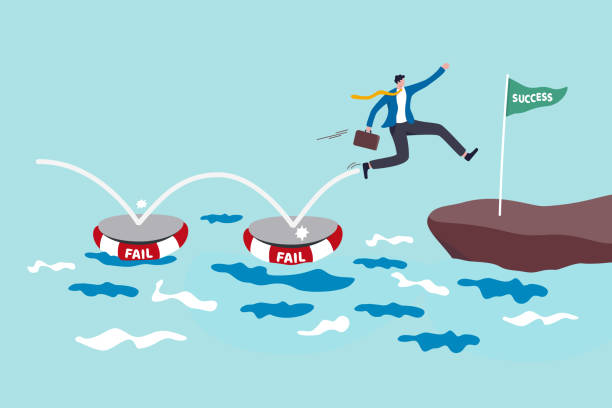
    Redefining Failure: From Flaw to Fuel

    We’ve been conditioned to view failure as a flaw—a sign of weakness, deficiency, or disgrace. This is especially true in hyper-competitive cultures that idolize perfection and stigmatize vulnerability.

    But failure is not the opposite of success—it is the raw material of it.

    Every athlete, artist, scientist, innovator, or reformer who has achieved greatness has done so not in spite of failure, but because they used failure as fuel.

    Redefining failure means:

    • Separating event from identity
    • Reframing error as feedback
    • Valuing progress over perfection
    • Practicing post-mortems, not blame games

    Instead of asking, “Why did this happen to me?”, the growth-oriented individual asks, “What is this here to teach me?”

    This mental shift turns failure into a growth accelerant.

    Strategic Discomfort: How Embracing the Hard Zone Leads to Growth

    Growth lives outside the comfort zone—but not in the panic zone. It resides in what psychologists call the “stretch zone”: the space where tasks are just beyond our current skill level but still within reach through effort and learning.

    This is what we call strategic discomfort: the deliberate practice of placing oneself in challenging situations that force adaptation, learning, and expansion.

    Examples of strategic discomfort:

    • A student choosing a more advanced subject instead of the one they’ve already mastered
    • An entrepreneur pitching to a skeptical investor
    • A parent choosing to have a hard conversation with their teenager rather than avoiding conflict
    • An introvert volunteering to lead a team presentation

    The goal is not to avoid discomfort, but to engineer it wisely—where the cost of failure is manageable, but the potential for learning is immense.

    To build a culture of strategic discomfort:

    • Reward intelligent risk-taking, not just safe results
    • Celebrate progress made in hard zones
    • Model vulnerability as a pathway to strength
    • Create environments where mistakes are mined, not masked

    In summary: Challenge and failure are not detours on the path to growth. They are the path. But how we walk that path depends entirely on the beliefs we bring with us.

    Failing doesn’t make you a failure. Avoiding the lesson inside the failure does.

    30+ Growth Mindset Stock Videos and Royalty-Free Footage - iStock |  Mindset, Fixed mindset, Growth

    V. The Effort Paradox: Unpacking the Role of Hard Work

    Effort has an image problem.

    In a world obsessed with genius, ease, and instant success, effort is often misunderstood—perceived as a consolation prize for the untalented. If you have to work hard, the logic goes, you must not be naturally good at it. This view is not just false—it is dangerous. It discourages persistence, punishes vulnerability, and undermines the very engine of human growth.

    The truth is this: Effort is not the opposite of talent. It is the amplifier of it. Without effort, talent is potential unrealized. With effort, even modest abilities can transform into excellence.

    Why Effort Is Not the Opposite of Talent—It’s the Amplifier

    Imagine two musicians. One is praised as a prodigy who “barely practices but plays beautifully.” The other is described as a hard worker who “practices for hours to get it right.” Who gets more admiration?

    In many cultures, it’s the prodigy. Why? Because we have romanticized the notion that ease equals excellence. But behind every “natural” talent lies effort we do not see—hours of disciplined struggle hidden behind the myth of giftedness.

    Effort is not a backup plan for the untalented. It is the essential force that brings any potential to life. Talent may set the starting line, but effort determines how far—and how deeply—we go.

    Effort multiplies what’s there. It builds consistency, resilience, and mastery. And unlike talent, effort is democratic—available to all, regardless of where they start.

    The Myth of “Natural Ability” in Success Stories

    Most success stories are incomplete. They highlight the moment of triumph but skip the years of obscurity. They celebrate the breakthrough but not the breakdowns that preceded it. The result? We assume the people we admire were “born that way.”

    In reality:

    • The world-class athlete trained in isolation for a decade before you saw them on TV.
    • The bestselling author rewrote their manuscript fourteen times before a single reader applauded.
    • The public speaker once stuttered in front of a classroom before they ever took a stage.

    This illusion of natural ability discourages people from trying. “If I struggle, I must not have what it takes.” That belief, more than any lack of skill, kills growth.

    We must deconstruct the myth of natural talent and reconstruct a narrative that honors the invisible labor behind excellence.

    Deep Practice, Struggle, and Cognitive Growth

    What separates mediocre effort from transformative effort is not duration—it’s quality. This is where the concept of deep practice comes in.

    Deep practice involves:

    • Working at the edge of your current ability
    • Isolating weak points and repeating them with focused attention
    • Seeking feedback and adjusting in real time
    • Embracing discomfort as a sign of neural rewiring in progress

    This kind of effort literally changes the brain. Neuroscience shows that struggling during learning increases myelination, a process that strengthens neural pathways. In short: the harder your brain works to learn something, the more durable that learning becomes.

    The struggle isn’t a sign you’re failing. It’s a sign your brain is growing.

    This also reframes difficulty as desirable—not as a red flag, but as a green light that says: “You’re in the zone where growth lives.”

    Celebrating the Process, Not Just the Product

    A culture that worships outcomes—grades, medals, salaries, titles—will inevitably undervalue effort. But the real transformation happens in the process, not the product.

    When we celebrate only outcomes:

    • We teach people to avoid challenges they might not win
    • We discourage risk-taking and creativity
    • We foster fear of failure and impostor syndrome

    But when we celebrate the process:

    • We reinforce learning behaviors
    • We build identity around curiosity and perseverance
    • We encourage intrinsic motivation—the drive to improve for its own sake

    This shift begins in language. Instead of saying, “You’re so talented,” say, “I noticed how much effort you put into refining that.” Instead of asking, “What did you score?” ask, “What did you learn?”

    Leaders, parents, and educators can shift entire cultures simply by valuing progress over perfection, and process over performance.

    In conclusion: Effort is not a consolation prize—it is the gateway to mastery. To reframe effort is to reclaim the most human of powers: the ability to transform through intention and action. Talent opens the door. Effort walks through it. Growth builds the house.

    Different Types Of Mindsets - New Trader U

    VI. Feedback, Criticism, and the Language of Growth

    Feedback is one of the most potent tools for personal development—and one of the most feared. It has the power to build or break, to liberate or shut down, to ignite growth or cement self-doubt. The difference lies not just in what is said, but in how it’s received—and why it’s given.

    Understanding how mindset shapes our relationship with feedback is essential for anyone leading, parenting, teaching, or striving to grow. At its best, feedback is not a verdict. It is a mirror and a map—reflecting where we are and revealing where we could go.

    Fixed Mindset Triggers: Defensiveness, Blame, Shame

    For individuals operating from a fixed mindset, feedback is often experienced not as guidance, but as threat.

    Why? Because if ability is fixed, then criticism isn’t about your actions—it’s about you. A suggestion to improve is perceived as a declaration of inadequacy. This creates common defense mechanisms:

    • Defensiveness: “That’s just your opinion.”
    • Blame-shifting: “It wasn’t my fault—it was the situation.”
    • Shame withdrawal: “I’m terrible. I’ll never get it right.”

    This emotional armor may feel protective, but it blocks the very input that could lead to growth. Over time, people with fixed mindsets may become feedback avoidant, insulating themselves from discomfort at the cost of development.

    Growth Mindset Responses: Curiosity, Recalibration, Re-engagement

    A growth mindset interprets feedback differently. Because ability is seen as malleable, feedback becomes useful information, not personal attack. Individuals with this mindset respond with:

    • Curiosity: “What can I learn from this?”
    • Recalibration: “How can I adjust my approach?”
    • Re-engagement: “I’ll apply this and try again.”

    This openness transforms feedback from a confrontation into a collaboration. Instead of guarding their ego, growth-minded individuals protect their trajectory—they prioritize getting better over looking good.

    Such people build a learning identity. They are not the ones who always get it right; they are the ones who always get better.

    How to Give Feedback That Fosters Development

    Giving effective feedback is a skill—and a moral responsibility. It’s not about correcting behavior; it’s about developing potential.

    Here are principles for constructive, growth-oriented feedback:

    1. Start with shared purpose
      Anchor the conversation in mutual growth. Example:
      “I want to help you reach your next level, and here’s what I noticed…”
    2. Be specific and behavior-focused
      Vague feedback feels like a judgment. Specific feedback feels actionable.
      • Instead of: “You’re not assertive enough.”
      • Try: “In meetings, I noticed you hesitated to speak up, even when your idea was strong. What held you back?”
    3. Balance challenge with belief
      Convey that the person is capable of growth. Hold the standard and the support.
      • “You’re not there yet—but you’re absolutely capable of getting there.”
    4. Invite reflection and agency
      Turn the feedback into a dialogue, not a monologue.
      • “What part of this resonates with you? What do you think you could try differently?”
    5. Follow up with encouragement and resources
      Feedback is not a one-time event—it’s a growth partnership.

    Done right, feedback doesn’t just correct behavior. It builds resilience, insight, and trust.

    Words Matter: The Language of Praise, Criticism, and Reinforcement

    Language doesn’t just describe reality—it shapes it. The words we choose can either reinforce a fixed mindset or cultivate a growth one.

    Praise:

    • Fixed mindset praise: “You’re so smart/talented.”
      → Ties identity to outcome; creates fear of failure.
    • Growth mindset praise: “You worked hard on that strategy—it really paid off.”
      → Ties outcome to process; reinforces effort and learning.

    Criticism:

    • Fixed mindset criticism: “You’re not cut out for this.”
      → Closes the door on possibility.
    • Growth-oriented feedback: “This part didn’t work—but here’s a way forward.”
      → Keeps the door to improvement open.

    Reinforcement:

    • Use phrases that signal learning is ongoing:
      • “You’re getting better at…”
      • “That was a clever adjustment.”
      • “I can see how you’re applying what you learned.”

    The goal is not to inflate egos or soften the truth. It is to use language that invites development rather than defends identity.

    In summary: The way we give and receive feedback can either reinforce limitation or unlock potential. Criticism can sting, but when framed as growth fuel—and received through a flexible identity—it becomes the very thing that propels us forward.

    Growth begins not when we’re told we’re good, but when we’re told how to get better—and choose to listen.

    Unleashing the Power of Growth Mindset and Neuroplasticity: A Recipe for  Success

    VII. Systems That Shape Mindset: Family, Schools, and Culture

    While mindset is deeply personal, it is never formed in isolation. It is seeded, shaped, and sustained within systems—especially those closest to us: families, classrooms, and cultural narratives. These systems carry powerful implicit messages about what it means to succeed, to fail, to matter. Over time, these messages shape how we see ourselves—and how we believe the world works.

    If we want to nurture a growth mindset in individuals, we must also interrogate the ecosystems that either fertilize or poison the soil in which that mindset tries to grow.

    The Hidden Curriculum in Classrooms and Homes

    Every environment—especially those involving children—teaches two curriculums:

    1. The explicit curriculum: subjects, skills, content
    2. The hidden curriculum: beliefs, norms, emotional tone

    In many homes and schools, the hidden curriculum teaches:

    • “Mistakes are shameful.”
    • “Getting the right answer is more important than asking the right question.”
    • “Fast learners are better learners.”
    • “Struggling means you’re not good at it.”

    These unspoken rules often carry more psychological weight than the formal syllabus. A child praised only for high marks learns to associate worth with performance. A student mocked for a wrong answer learns to equate curiosity with risk. A family that avoids failure talks may unintentionally signal that failure is something to be feared, not examined.

    In contrast, growth-oriented homes and classrooms normalize struggle, celebrate effort, and model vulnerability:

    • “It’s okay not to get it yet—let’s figure it out together.”
    • “What did you learn from that mistake?”
    • “Tell me how you improved—not just what you achieved.”

    These micro-messages shape lifelong beliefs about learning and identity.

    Performance Culture vs Learning Culture

    Modern education and corporate life often operate under performance culture—an environment that prioritizes outcomes, rankings, and reputational image above all else. In such cultures:

    • Speed is valued over depth
    • Answers are prized over questions
    • Image management trumps real improvement

    This creates anxiety, conformity, and fear of experimentation. People become risk-averse achievers—focused on looking competent rather than becoming competent.

    In contrast, a learning culture focuses on growth, reflection, and continuous development. It values:

    • Mistakes as part of the journey
    • Effort as a signal of engagement
    • Dialogue over monologue
    • Feedback loops over final judgments

    Learning cultures are not soft. They maintain high standards with high support, pushing individuals to stretch with safety. In these spaces, people feel psychologically safe enough to try, fail, adapt, and excel.

    Transforming performance culture into learning culture requires systemic changes:

    • Redefining metrics of success
    • Training educators and leaders in coaching models
    • Integrating process-oriented language in evaluation
    • Allowing space and time for iteration, not just execution

    The Dangers of Comparison, Grading, and Praise Addiction

    Comparison is one of the fastest ways to destroy a growth mindset. When children and adults are constantly ranked against each other, learning becomes a race rather than a journey. This breeds:

    • Insecurity in the lower-ranked
    • Pressure and perfectionism in the top-ranked
    • Disengagement from genuine learning in all

    Grading systems, when overemphasized, reduce complex learning into simplistic metrics. A student who takes intellectual risks and gets a “C” may be far more engaged than one who plays it safe and gets an “A”. Yet we reward the grade, not the growth.

    Equally problematic is praise addiction—when children (or adults) perform for approval rather than for mastery. Praise that focuses on identity (“You’re so smart”) creates external validation loops that collapse when the praise disappears.

    To counter this:

    • Use process-based praise: “I noticed how you revised your work based on feedback.”
    • Limit peer comparisons; focus on personal progress: “You’ve come so far from last month.”
    • Encourage self-assessment and reflection
    • Reframe grades as snapshots, not verdicts

    These shifts move individuals from performing to please others to learning to empower themselves.

    Cultural Narratives About Success, Genius, and Destiny

    Across societies, certain cultural myths persist:

    • “Success is proof of inherent superiority.”
    • “Geniuses are born, not made.”
    • “If you have to work hard at something, you’re not good at it.”

    These narratives are deeply damaging. They suggest that excellence is the domain of the gifted few rather than the result of consistent, deliberate effort.

    Hollywood films, media profiles, and even motivational speeches often glorify the moment of success while glossing over the years of invisible effort. The consequence? We raise generations to idolize outcome and undervalue the process.

    Changing cultural narratives involves telling better stories—real stories:

    • Highlighting grit, setbacks, and reinvention in public figures
    • Sharing fail-forward stories in communities and classrooms
    • Teaching history and science not just as facts, but as chronicles of trial, error, and perseverance

    We must replace the mythology of genius with the truth of growth. Genius, after all, is not a lightning bolt. It is a fire built slowly—with friction, with patience, with effort.

    In summary: Mindset is not just a personal choice. It is a cultural inheritance—and it can be reshaped. Homes, schools, and societies that reward learning over image will raise individuals who see challenge not as threat, but as invitation.

    Systemic change begins with subtle shifts—in language, in structure, in story.

    Unleash Your Potential: A Deep Dive into the Power of a Growth Mindset

    VIII. Rewiring Your Mindset: A Daily Practice

    Mindset is not a one-time choice—it’s a daily discipline. While it begins with insight, it only takes root through consistent application. The brain is plastic, but rewiring it requires repetition. Each day presents micro-opportunities to observe, interrupt, and reprogram limiting thought patterns.

    True transformation does not come from reading a book or hearing an inspiring talk. It comes from how we think when no one’s watching, how we speak to ourselves after we fail, and how we show up in the face of discomfort—day after day, choice after choice.

    Here’s how to make that work real and repeatable.

    Identify Your Fixed Mindset Triggers

    Rewiring begins with awareness. We all have moments when our mindset slips into rigidity. These “fixed mindset triggers” are often tied to fear, ego, or past wounds.

    Common triggers include:

    • Receiving negative feedback
    • Watching someone else succeed in an area we’re struggling
    • Entering unfamiliar or high-stakes environments
    • Experiencing public embarrassment or private failure

    To identify yours:

    • Reflect on your most emotionally charged reactions. What stories do you tell yourself in those moments?
    • Notice your language. Are you using phrases like “I’ll never get this,” “I’m just not that type of person,” or “This always happens to me”?
    • Look for patterns. Do certain people or environments consistently bring out defensiveness or self-doubt?

    Name your triggers. Don’t judge them—study them. You cannot change what you do not recognize.

    Techniques: Journaling, Visualization, Self-Dialogue Reframing

    Once aware of your mindset patterns, the next step is to reshape them intentionally. Here are three powerful tools:

    1. Journaling

    Write down:

    • Moments where you felt resistance to feedback, effort, or challenge
    • What thoughts came up? What did you believe about yourself?
    • Then reframe those beliefs through a growth lens

    Example
    Fixed thought: “I bombed the presentation. I’m just not good at public speaking.”
    Growth reframe: “I didn’t meet my standard this time, but I learned what not to do. I can practice and get better.”

    Over time, journaling helps externalize the inner critic and replace it with a wise coach.

    2. Visualization

    Visualize yourself:

    • Facing a trigger (e.g., failure, criticism, a tough challenge)
    • Responding with curiosity and persistence
    • Reframing the situation as part of your growth narrative

    This “mental rehearsal” conditions the brain to respond adaptively, especially in high-pressure moments.

    3. Self-Dialogue Reframing

    Use intentional language to challenge your fixed-mindset thoughts.
    Turn:

    • “I can’t do this” → “I can’t do this yet
    • “I’m not creative” → “I’m still developing my creative voice”
    • “This is too hard” → “This is hard because I’m learning something valuable”

    Treat your self-talk as a training ground, not a courtroom.

    Using Micro-Failures as Growth Rituals

    Most of us experience tiny setbacks daily—a failed conversation, a dropped ball at work, a missed opportunity. These micro-failures often go unexamined. Yet, they are fertile ground for mindset training.

    Turn them into growth rituals:

    • Notice the failure without judgment
    • Name what you felt and believed in the moment
    • Neutralize the shame with curiosity: “What’s the lesson here?”
    • Nudge yourself to try again with one small adjustment

    Over time, this transforms your relationship with failure—from avoidance to ritualized reflection and recalibration.

    Start by celebrating one “productive failure” each day in a notebook. This trains your brain to associate failure with growth, not shame.

    Building Habits That Reinforce Learning Over Proving

    To make the growth mindset stick, build daily structures that reward learning itself:

    • Set process goals, not just outcome goals
      → Instead of “I must finish the chapter,” try “I will write for 45 focused minutes.”
    • Track effort, not just results
      → Reflect: What did I try today that stretched me?
    • Create feedback loops
      → Ask for input regularly—not when you feel strong, but when you feel uncertain
    • Surround yourself with growth-minded people
      → Culture is contagious. Spend time with those who value progress over image.

    You can also create environmental cues:

    • A sticky note that says “Yet” on your laptop
    • A daily calendar reminder: “What did I learn today that made me uncomfortable?”
    • A shared family or team ritual: “Let’s each share one mistake we learned from this week.”

    These habits don’t just reinforce mindset—they embed it in your identity.

    In summary: A growth mindset is not built in theory but in daily practice—by catching our inner critic, rewriting our self-talk, learning from tiny failures, and showing up again tomorrow with renewed intention.

    This is not about being relentlessly positive. It is about being relentlessly honest—and deeply committed—to your own evolution.

    Aligning with the Energy of Success: A Mindset for Growth

    IX. Mindset at Work: Leadership, Innovation, and Teams

    In the modern workplace, success is no longer defined solely by strategy, speed, or scale. The defining edge—especially in uncertain, fast-changing environments—is mindset. How a team thinks, learns, adapts, and collaborates has become more important than what it already knows. And it starts at the top.

    Whether you’re a CEO or a team lead, an educator or a social entrepreneur, the mindset you model becomes the mindset your people mirror.

    Let’s explore how growth mindset principles radically transform leadership, innovation, and team dynamics.

    Growth-Oriented Leadership: Vulnerability, Curiosity, Vision

    A leader’s mindset sets the emotional tone for the entire organization. Traditional leadership emphasized control, confidence, and authority. Growth-oriented leadership, by contrast, is grounded in:

    • Vulnerability: Willingness to say, “I don’t know,” “I was wrong,” or “Let’s figure this out together.”
    • Curiosity: Constant questioning, exploring, and listening—especially to those who see things differently.
    • Vision: Focusing not just on results, but on what the team is capable of becoming through learning and iteration.

    Such leaders don’t pretend to have all the answers. Instead, they build cultures where finding better answers is a shared pursuit.

    They shift from being knowers to learners, and from controllers of outcomes to cultivators of potential.

    Creating Psychologically Safe Workplaces

    A growth mindset cannot survive in a fear-based environment. Psychological safety—the belief that one can speak up, take risks, and make mistakes without fear of humiliation or retaliation—is the foundation of innovation and engagement.

    Workplaces that lack psychological safety often display:

    • Idea hoarding and knowledge silos
    • Withholding of feedback and upward truth
    • Avoidance of conflict and real-time correction
    • A culture of blame and invisibility

    In contrast, growth-mindset organizations:

    • Celebrate intellectual humility
    • Encourage “productive failure” as part of iteration
    • Reward risk-taking, experimentation, and peer learning
    • Create feedback-rich environments where people feel respected and challenged

    Leaders build psychological safety not by being soft—but by being consistently clear, caring, and courageous.

    Examples:

    • Starting meetings by acknowledging lessons from failure
    • Recognizing not just top performers, but bold learners
    • Making it safe to say “I need help” or “I don’t understand”

    In such environments, people don’t waste energy guarding their image. They invest it in learning, building, and solving.

    How Mindset Influences Hiring, Performance Reviews, and Innovation

    Mindset quietly shapes the structural DNA of an organization—how people are selected, evaluated, developed, and rewarded.

    Hiring:

    • Fixed-mindset organizations look for “perfect fit” candidates who already check every box.
    • Growth-mindset organizations look for coachability, learning agility, and mission alignment—even if the candidate lacks one or two hard skills.

    Ask in interviews:

    • “Tell us about a time you failed and what you learned.”
    • “What skill have you worked hardest to improve—and how did you approach it?”

    Performance Reviews:

    • Fixed-mindset reviews focus on judgment: ratings, rankings, and isolated metrics.
    • Growth-oriented reviews emphasize development: strengths, growth edges, learning behaviors, and next steps.

    Shift the question from:
    🛑 “Did you hit the target?” to
    ✅ “What did you learn in trying, and how will you grow from here?”

    Innovation:

    • Fixed-mindset teams fear being wrong. So they stick with the known, the safe, the proven.
    • Growth-mindset teams tinker, test, and talk openly about what’s not working. They treat innovation not as genius inspiration, but as disciplined exploration.

    Growth culture invites everyone—not just the R&D team—to become an innovator.

    Embracing Uncertainty, Iteration, and Shared Learning

    In a world of accelerating change, the greatest competitive advantage is not what your organization knows—but how quickly it can learn.

    This means:

    • Embracing uncertainty as a creative state, not a threat
    • Building teams that iterate fast, fail smart, and adjust continuously
    • Designing systems where knowledge flows freely—not hoarded by a few
    • Treating work as a learning lab, not a performance theater

    Growth-minded organizations make learning visible and shared:

    • Debriefs and post-mortems after both success and failure
    • Peer-led learning sessions and idea exchanges
    • Reflective practices embedded into workflow (e.g., weekly “what we’re learning” check-ins)

    These habits create a flywheel: the more the organization learns together, the more adaptable, innovative, and resilient it becomes.

    In summary: Growth mindset is not a soft skill—it is a strategic imperative. In leadership, it fosters trust and transformation. In teams, it enables collaboration, creativity, and care. And in culture, it creates a workplace where people don’t just survive pressure—they rise through it.

    If you want an extraordinary organization, don’t just hire for talent. Build for mindset.

    Embracing Growth Mindset: Key to Success in Every Aspect of Life

    X. Teaching and Parenting for Growth

    Parents and teachers are the original mindset architects. Long before children understand what intelligence is, before they experience grades or competition, they begin to internalize messages—spoken and unspoken—about what it means to succeed, to fail, and to be “enough.” These messages become the scaffolding of their self-concept.

    If we want to raise children who thrive—not just in school, but in life—we must equip them with something more powerful than skills or grades. We must help them develop a growth mindset: a belief in their capacity to improve through effort, curiosity, feedback, and resilience.

    This is not a motivational slogan. It’s a method of raising human beings who are emotionally sturdy, intellectually agile, and intrinsically motivated to stretch beyond what’s comfortable.

    Praise the Process, Not the Person

    One of the most powerful tools adults wield is praise. But praise, when misapplied, can stunt growth instead of fueling it.

    The Problem with Person-Based Praise:

    • “You’re so smart.”
    • “You’re a natural.”
    • “You’re the best in the class.”

    Though well-meaning, these statements tie self-worth to static traits. Children begin to believe that their value lies in performance—and that mistakes threaten their identity. They avoid risks and seek easy wins to protect the label.

    Process-Based Praise Shifts the Focus:

    • “You really focused on solving that problem.”
    • “I noticed how you tried three strategies before it clicked.”
    • “You stayed calm and kept working, even when it was hard.”

    This kind of praise cultivates:

    • A learning identity
    • A sense of control over growth
    • Emotional resilience in the face of failure

    In short: praise what they did, not who they are.

    Encouraging Curiosity, Grit, and Experimentation

    Rigid classrooms and anxious homes often suppress the very qualities that lead to lifelong success: curiosity, grit, and willingness to experiment.

    To nurture these qualities:

    1. Fuel Curiosity

    • Answer questions with questions. “What do you think?”
    • Give space for exploration, even if it’s inefficient.
    • Reward wondering, not just knowing.

    2. Build Grit Through Supportive Struggle

    • Let children face age-appropriate challenges without rescuing too quickly.
    • Talk about your own setbacks and how you kept going.
    • Normalize frustration as part of learning.

    3. Encourage Experimentation Over Perfection

    • Celebrate mistakes as data. “Now we know what doesn’t work—great!”
    • Ask: “What would you do differently next time?”
    • Use projects and open-ended tasks that allow for trial and error.

    Let children be inventors of their understanding, not just consumers of information.

    Modeling Emotional Regulation and Learning from Setbacks

    Children don’t just listen to what we say—they absorb who we are. If we want to raise growth-minded young people, we must first model what growth looks like in adulthood.

    That means:

    • Owning our mistakes without shame: “I was impatient today. I’ll try to slow down tomorrow.”
    • Showing what emotional regulation looks like: deep breathing, pausing before reacting, naming emotions
    • Narrating our learning process aloud: “I don’t know how to fix this yet, but I’m going to break it down step by step.”

    This turns daily life into a living curriculum—where children learn by watching how we handle adversity, feedback, and uncertainty.

    When adults model self-compassion, flexibility, and a passion for learning, children internalize these behaviors not as lessons—but as norms.

    How to Raise Children (and Students) Who Love the Challenge

    We often say we want children to “love learning,” but we inadvertently condition them to fear challenge—because challenge is messy, slow, and emotionally risky.

    To reverse this:

    • Reframe challenge as opportunity, not obstacle
      → “This means your brain is growing.”
    • Reward the attempt, not just the achievement
      → “That was a brave try. What did you learn?”
    • De-link failure from identity
      → “Getting it wrong doesn’t mean you’re not good. It means you’re stretching.”
    • Build rituals that celebrate effort
      → Weekly “courage stories” around the dinner table or classroom circle
      → Progress charts that track persistence, not just results

    Above all, let them struggle safely. This doesn’t mean abandoning them in difficulty—it means being present, encouraging, but not intervening at the first sign of frustration.

    Love the learner more than the outcome.

    In summary: Teaching and parenting for growth is not about protecting children from failure—it’s about preparing them to learn from it. It’s about building a mindset that says, “I can learn anything, grow from anything, and become more than I once believed.”

    When we do this, we don’t just prepare children for exams. We prepare them for life—with courage, curiosity, and conviction.

    Q&A fra oplæg om Carol Dwecks mindset-teori

    XI. Recognizing and Avoiding the False Growth Mindset Trap

    As the term “growth mindset” gains traction in education, workplaces, parenting, and leadership, a new challenge has emerged: the rise of the “false growth mindset.”

    This occurs when the language of growth is adopted, but the underlying beliefs, behaviors, and systems remain unchanged. It’s mindset in name, not in practice. It sounds good, feels affirming, and avoids hard truths—but ultimately undermines the very transformation it claims to promote.

    To truly cultivate a growth mindset in ourselves and others, we must be willing to go beyond slogans and engage in the deeper, messier work of personal responsibility, disciplined feedback, and courageous growth.

    Saying vs Doing: Performative Growth Language

    False growth mindset often reveals itself through performance over substance—when individuals or institutions say the right things without aligning their actions or systems.

    Examples:

    • A teacher tells students, “Mistakes are part of learning,” but penalizes them harshly for wrong answers.
    • A manager praises “learning from failure,” but rewards only the highest performers.
    • A parent says, “I believe in effort,” but only celebrates top grades.

    Growth language without growth behavior is cosmetic. It creates confusion, breeds cynicism, and reinforces a fixed mindset under the surface.

    To spot performative growth culture:

    • Look for inconsistency between values and policies
    • Listen for buzzwords without follow-up
    • Watch how mistakes, feedback, and effort are actually treated

    Authentic growth mindset is not about what’s posted on the wall—it’s about what happens in the moments that matter.

    Treating Effort as a Band-Aid Instead of a Tool

    Another common trap is equating growth mindset with a blind celebration of effort. This is a misinterpretation of the concept.

    It sounds like:

    • “Well, at least you tried.”
    • “Keep working hard—that’s all that matters.”
    • “Effort counts, even if there’s no improvement.”

    While intention and persistence are critical, effort alone is not the goal. Effective effort—guided by strategy, feedback, and reflection—is what leads to learning. Effort without progress may signal a need for:

    • A different approach
    • Better coaching or scaffolding
    • More time, rest, or context-specific support

    Effort is not a moral shield—it’s a growth tool. To use it well:

    • Celebrate strategic persistence, not just grind
    • Ask: “What are you learning from this effort?”
    • Adapt methods when effort plateaus

    Growth mindset is not about glorifying struggle—it’s about learning to struggle smart.

    Accountability and Standards Matter in Growth Cultures

    One of the most damaging misuses of growth mindset is the idea that emphasizing growth means lowering standards or avoiding accountability.

    On the contrary:

    • True growth cultures combine high expectations with high support
    • They foster psychological safety, not permissiveness
    • They reward learning progress while still holding the line on excellence

    In such cultures:

    • Mistakes are not excused—they are explored
    • Underperformance is not judged—but it is addressed
    • Feedback is kind—but also clear, direct, and actionable

    If everyone is praised indiscriminately in the name of “growth,” we risk promoting complacency instead of competence.

    A true growth environment says:
    “You are capable of improving, and I will hold you to that belief with compassion and rigor.”

    Merging Compassion with High Expectations

    False growth mindset often separates kindness from standards, assuming that to be supportive we must dilute challenge. This is both unhelpful and untrue.

    Real growth flourishes when:

    • Individuals feel safe to fail but are expected to learn
    • Effort is honored, but outcomes still matter
    • People are met where they are, but not left there

    This is the dance of growth-minded leadership, parenting, and teaching:

    • Compassion without expectation leads to coddling
    • Expectation without compassion leads to fear
    • Together, they lead to transformation

    This balance is nuanced. It requires emotional intelligence, attunement, and a long view of development over time.

    Ask yourself:

    • Are you more focused on being liked or on being useful?
    • Are you enabling avoidance under the guise of encouragement?
    • Are you willing to say hard things with love?

    Authentic growth mindset is not easy. But it is deeply human—rooted in respect for potential and the courage to call it forth.

    In summary: False growth mindset is tempting because it’s easy. But real growth mindset requires integrity. It demands that we align our language with our actions, our praise with our standards, and our compassion with our expectations.

    Growth is not something we declare. It’s something we demonstrate—especially when it’s inconvenient, uncomfortable, or unpopular.

    The importance of mindset in healing the body. - Natural Body Intelligence

    XII. Conclusion: Living a Growth-First Life

    Growth mindset is not a slogan. It is not a magic trick, a branding tool, or a “nice-to-have” attitude. It is a fundamental life orientation—a choice to meet challenges with openness, to see effort as sacred, and to treat every moment as an invitation to evolve.

    It is not something you “achieve.” It is something you practice—repeatedly, relentlessly, especially when it’s hard.

    You will forget. You will fall back into old patterns. That’s not failure—that’s the curriculum of growth. What matters is that you remember to begin again.

    Growth Mindset Is Not a Destination—It’s a Decision Made Repeatedly

    Life is dynamic. The self you were yesterday may not be enough for today’s challenge—and that’s okay. Every new context, relationship, or obstacle gives you the chance to choose again:

    • Will I hide behind perfection or lean into progress?
    • Will I fear judgment or seek feedback?
    • Will I armor up or open up?

    You don’t need to wait to be perfect to begin. You simply need to begin where you are, with what you have, and commit to building forward.

    Start Where You Are: Awareness Precedes Change

    True transformation starts with radical honesty. What are your fixed-mindset triggers? Where do you shut down, avoid, or rationalize? What patterns in your home, classroom, team, or culture are quietly teaching people to fear failure?

    Awareness is not always comfortable, but it is liberating. Once you see it, you can shift it. You can rewrite the script. You can plant different seeds.

    Commit to Self-Evolution, Not Self-Validation

    The path of growth is not about proving your worth—it’s about expanding your capacity.

    Validation says, “I’m good enough.”
    Evolution says, “I can become more.”

    Growth-mindset living means we stop performing for approval and start practicing for impact. It means we drop the chase for superiority and embrace the lifelong apprenticeship of becoming.

    This mindset isn’t soft. It is rigorous, humble, and courageous. It requires that we fail with dignity, rise with resolve, and keep moving—not because we lack value, but because we value our own unfolding.

    Participate and Donate to MEDA Foundation

    At the MEDA Foundation, we believe that growth is a human right—not a privilege for the few. Our work empowers neurodiverse individuals, underserved communities, and those often excluded from the mainstream economy to develop skills, access employment, and build self-sustaining lives.

    We don’t just teach growth mindset—we create the conditions for it:

    • Environments that celebrate effort over pedigree
    • Jobs that honor dignity over credentials
    • Training that fosters autonomy, resilience, and contribution

    We invite you to support our mission:
    👉 Participate in our initiatives as mentors, trainers, collaborators.
    👉 Donate to help us build ecosystems where every human being—regardless of label or background—has the opportunity to grow into their full potential.

    Visit www.MEDA.Foundation to learn more and take part in this movement for meaningful, inclusive growth.

    Let’s stop asking, “How smart is this person?”
    And start asking, “What environment would help this person flourish?”

    Book References & Further Reading:

    For those interested in deepening their understanding of growth mindset, neuroplasticity, motivation, and human potential, we recommend:

    • The Art of Possibility – Rosamund & Benjamin Zander
    • Drive – Daniel H. Pink
    • The Power of Yet – Mary Cay Ricci
    • Neuroplasticity – Moheb Costandi
    • Switch – Chip & Dan Heath

    To live a growth-first life is to reject stagnation in all its forms. It is to choose courage over comfort, learning over image, evolution over ego.

    And in doing so, we not only transform ourselves—we create the kind of world where others can grow, too.

    Begin today. Grow tomorrow. Invite others to rise with you.

  • Power of Failure: Turning Setbacks into Stepping Stones

    Power of Failure: Turning Setbacks into Stepping Stones

    Failure is often seen as a setback, but when embraced as a tool for learning and growth, it becomes a powerful force for personal and collective development. By redefining failure as feedback rather than defeat, individuals and communities can transform setbacks into stepping stones toward success. Emphasizing the importance of celebrating failure, particularly in children, helps build resilience, emotional strength, and curiosity. Encouraging a failure-positive mindset within families, schools, and workplaces fosters environments where mistakes are viewed as opportunities for improvement, rather than sources of shame. Ultimately, when failure is accepted, reflected upon, and integrated into daily life, it empowers individuals to navigate challenges with greater wisdom and innovation.

    25,200+ Failure Success Stock Illustrations, Royalty-Free Vector Graphics &  Clip Art - iStock | Failure success concept

    The Wisdom of Falling: Why Failure Is the Cornerstone of Growth

    Intended Audience and Purpose of the Article

    Audience:

    This article is intended for parents, teachers, child development professionals, caregivers, mentors, NGO workers, and any thoughtful individuals concerned with nurturing human potential and societal well-being. It is equally valuable for life coaches, youth empowerment advocates, and policymakers in the field of education who influence frameworks for learning, resilience, and personal growth.

    Whether you’re guiding a child through their first stumble, mentoring a young adult who fears rejection, or designing a curriculum that encourages critical thinking, the principles shared here are meant to offer clarity, courage, and a call to conscious action.

    Purpose:

    The purpose of this article is to dismantle the stigma surrounding failure and elevate it as a crucial, transformative, and even sacred tool for learning.

    We aim to:

    • Reframe failure as a natural, necessary experience in every developmental journey.
    • Encourage homes, schools, and workplaces to proactively celebrate failure as a learning event, rather than suppress it as a source of shame.
    • Provide practical tools and emotional insight to parents, educators, and leaders to build nurturing environments where failure is recognized not as a flaw, but as a fertile ground for responsibility, maturity, and innovation.

    Ultimately, this article is a call to create cultures of courage and curiosity, where individuals are equipped to fall, reflect, and rise — not just once, but repeatedly, with increasing wisdom.

    I. Introduction: Learning Begins with Falling Down

    “There is no growth without pain, and no transformation without failure.”

    Let us begin with the truth most adults only learn too late:
    Failure is not a setback — it is the most potent teacher we will ever encounter.

    Every child stumbles before they walk. Every artist produces failures before masterpieces. Every entrepreneur faces rejection before success. And every wise person, without exception, has a private collection of failures from which their deepest insights are born. To treat failure as shameful is not only unwise — it is unnatural.

    Imagine for a moment that failure is the root system beneath the tree of wisdom. You can’t see it at first glance. It’s messy. It’s hidden underground. But it’s exactly what nourishes the tree — providing stability in storms and nutrients for the soul. The greater the roots, the stronger the tree.
    So too with human growth: failure is not the opposite of success, it is its foundation.

    Thesis: A Reimagined Relationship with Failure

    This article proposes a critical thesis:

    When failure is embraced consciously, it becomes the seedbed of emotional strength, cognitive agility, and spiritual depth.

    • Emotionally, failure teaches humility, perseverance, and compassion — both for oneself and others.
    • Cognitively, it sharpens analysis, problem-solving, and the capacity for innovation.
    • Spiritually, it awakens detachment from ego, deepens introspection, and aligns us with a more resilient version of self.

    But for failure to perform its sacred role, we must unlearn the social programming that paints it as a source of embarrassment. We must redesign our environments — from kitchen tables to classrooms — to honor failure as a developmental milestone, not a moral defeat.

    The chapters ahead will explore how to do just that. We will journey through the lens of psychology, education, parenting, ancient wisdom, and practical action — all to re-anchor failure as a meaningful, empowering, and even beautiful part of life.

    Let us begin. Let us fall together — and rise wiser.

    Blog: Fear of failure - get over it! — People Matters

    II. Redefining Failure: From Stigma to Strategy

    For generations, failure has been misunderstood — seen as something to be avoided, concealed, or, at best, tolerated. It has worn the heavy robes of shame, judgment, and inadequacy, especially in cultures where social validation is often tied to visible success. But this old worldview is both psychologically harmful and strategically limiting.

    If we are to raise wiser children, foster resilient societies, and evolve as conscious individuals, we must rewrite the narrative around failure — from stigma to strategy, from silence to insight, from fear to fuel.

    1. Traditional View vs. Growth View

    Cultural Conditioning: The Tyranny of Perfection

    In many parts of the world — India included — academic grades, job titles, marital status, and material possessions have become accepted proxies for human worth. Under such systems, failure is seen as a deviation from the ideal life trajectory. The result? Perfectionism becomes normalized, mistakes become taboo, and experimentation becomes risky.

    • A student who fails an exam is branded as “poor” rather than “under-prepared.”
    • A business venture that doesn’t succeed is called “a loss” rather than “a lesson.”
    • A parent who struggles is seen as “incompetent” rather than “still learning.”

    This mindset cripples curiosity, stifles creativity, and delays maturity. We begin to fear trying anything new — not because the task is hard, but because the consequences of failure are unforgiving.

    The Growth-Oriented Mindset

    Modern psychology — especially the work of Dr. Carol Dweck on Growth Mindset — provides a healthier and more powerful alternative. It posits that intelligence, ability, and emotional resilience are not fixed traits but develop over time through effort, strategy, and reflection.

    From a spiritual perspective, particularly in Indian thought, life itself is viewed as a continuous journey of learning (vidya) through karma and dharma. One is not punished for falling short — one is invited to learn and grow from the experience.

    Thus, failure becomes not a “verdict” on our worth, but a signal to course-correct, evolve, and try again with deeper understanding.

    2. Failure as Feedback

    You Are Not Your Failure

    There’s a world of difference between “I failed” and “I am a failure.”
    One refers to a moment in time. The other becomes a toxic identity.

    This subtle distinction is at the heart of emotional healing and resilience-building. Failure events are not definitions of the self — they are information-rich moments that tell us what didn’t work, where to focus, and how to reorient.

    In science, every failed experiment narrows the path to truth. In life, every mistake illuminates the road to wisdom.

    Failure Events as Data Points

    Start treating each failure as a data point, not a disaster. Ask:

    • What did I set out to do?
    • What actually happened?
    • What were my assumptions?
    • What do I now know that I didn’t before?
    • What will I do differently next time?

    When we shift our relationship with failure from emotional rejection to strategic reflection, we become both safer to ourselves and more useful to others.

    3. Failure and Ego

    Ego Resists, Humility Learns

    The ego — that fragile part of us that craves approval and control — is naturally allergic to failure. It sees mistakes as threats, criticism as personal attacks, and imperfection as unworthiness.

    When ego drives our response to failure:

    • We deny or hide it.
    • We blame others.
    • We become defensive, withdrawn, or overly aggressive.
    • We loop in regret, self-pity, or guilt.

    In contrast, humility liberates us from the tyranny of ego. It allows us to:

    • Say “I was wrong” without losing dignity.
    • Ask for help without feeling weak.
    • Be teachable and open to feedback.
    • Embrace “not knowing” as a starting point for mastery.

    The humble person does not fear falling — because they are already rooted in something deeper than pride.

    From parenting to leadership, the shift from ego-driven reactions to humility-based responses changes everything. Children raised in such environments not only cope with failure better — they innovate, lead, and empathize better too.

    Failure is not your enemy. It is your instructor, your mirror, and your sharpening stone. But only when we redefine it — not as a judgment of who we are, but as a guide for who we can become.

    Let us teach ourselves and our children to say, with open hearts:
    “I failed. So what? I learned. What’s next?”

    From the Depths of Failure to the Heights of Success: The Power of the Fall  and Rise” | by Naveera siddiqui | Medium

    III. Every Failure is a Mirror of Planning and Execution

    “Failure doesn’t just say you did something wrong — it shows where and how to improve. If you’re brave enough to look.”

    Failure, when properly examined, reveals patterns — not just in outcome, but in thought, intention, and behavior. It is a diagnostic tool, like a mirror that reflects the truth of our preparation and effort. Avoiding this mirror leads to repeated mistakes. Facing it creates mastery.

    This section aims to show how reflective, structured thinking after failure can transform confusion into clarity — and in time, into competence.

    1. From Chaos to Clarity

    The Emotional Fog

    Immediately after a failure, emotions often cloud perception: disappointment, anger, embarrassment, or self-doubt. These feelings are real — and valid — but they can prevent us from seeing the root causes of the failure unless consciously managed.

    Without structured reflection, most people either:

    • Blame external factors (e.g., “The system is rigged”),
    • Internalize shame (e.g., “I’m not good enough”), or
    • Quickly move on to avoid discomfort — missing the opportunity to grow.

    What’s needed is a pause, a process, and a plan.

    Structured Self-Audit: Where Did It Go Wrong?

    A wise learner asks:

    “Was it my plan? My timing? My mental state? Or my execution?”

    Here’s how to dissect a failure event into manageable components:

    Aspect

    What to Reflect On

    Planning

    Did I set clear goals? Did I anticipate risks? Was the strategy realistic?

    Timing

    Was the timing appropriate for this effort? Did I rush or delay unnecessarily?

    Mindset

    Was I confident, focused, and emotionally prepared? Or driven by fear, ego, or doubt?

    Execution

    Did I follow through with discipline? Was the quality of my effort sufficient?

    This audit turns vague regret into actionable insight. It transforms failure into a feedback-rich learning loop — a practice that can be repeated in every domain: academics, relationships, careers, parenting, and entrepreneurship.

    2. The Power of Post-Mortems

    “Smart people learn from mistakes. Brilliant people document them.”

    In high-performance fields like aviation, medicine, and the military, post-mortems (or After-Action Reviews) are standard protocol after any failure, mishap, or even routine operation. The goal is not to assign blame, but to improve systems, habits, and foresight.

    You don’t need to be in the military to adopt this practice. Anyone — even a child — can use a simple personal version of the After-Action Review (AAR) model:

    The 3-Question Post-Failure Review:

    1. What was expected to happen?
      Describe your original goal or plan.
    2. What actually happened?
      Be honest and detailed without blame or self-pity.
    3. What can be improved or done differently next time?
      This is the heart of growth: specific actions, not vague intentions.

    Personal Example: A Failed Student Presentation

    Let’s say a student gave a classroom presentation that didn’t go well. Here’s how they could use the AAR process:

    • Expected: I planned to speak for 5 minutes and answer 3 questions confidently.
    • Actual: I froze midway, forgot key points, and struggled with Q&A.
    • Improvement:
      • Rehearse multiple times with a friend.
      • Create cue cards with keywords.
      • Practice deep breathing to manage nerves.

    Notice the tone: not punitive, but purposeful. This kind of reflection builds self-accountability and learning agility — essential traits for lifelong success.

    3. Building Failure Intelligence in Homes and Classrooms

    Imagine a household or school where every failure — a lost game, a bad grade, a rejected proposal — becomes a safe moment to sit down and reflect with curiosity, not criticism. Such environments breed:

    • Emotionally secure children who don’t hide mistakes.
    • Analytical thinkers who know how to course-correct.
    • Humble innovators who stay calm when plans fail.

    You don’t need perfect parents or teachers to create this culture — just brave ones who model reflective honesty.

    “When adults reflect openly on their own failures, they teach children the most important lesson of all: it’s safe to be human.

    Every failure is a feedback mechanism waiting to be decoded. It is a mirror — not of who you are, but of what you did — and how you might do it better next time.

    With courage, reflection, and humility, every fall becomes a rehearsal for rising stronger.

    6,300+ Cartoon Of The Failure Success Stock Illustrations, Royalty-Free  Vector Graphics & Clip Art - iStock

    IV. The Case for Celebrating Failure in Children

    “Children are not vessels to be filled with success, but flames to be sparked with curiosity — even if that means getting burned once in a while.”

    Childhood is where the emotional blueprint for life is quietly etched. The way children experience failure in their early years profoundly shapes their self-worth, motivation, and ability to navigate life’s inevitable setbacks. When failure is feared, children shrink. But when failure is celebrated, children explore boldly, speak freely, and grow resiliently.

    This section builds a compelling argument: if we want to raise creators, thinkers, and problem-solvers — not just rule-followers — then celebrating failure must become part of the educational and parenting ethos.

    1. Early Conditioning Matters

    The Emotional Imprint of Failure

    Children are sponges. They soak up not only what we say, but how we respond — especially in emotionally charged moments. When a child breaks a toy, answers wrong in class, or spills milk, what happens next becomes part of their internal voice.

    • Scolding breeds shame.
    • Ignoring breeds confusion.
    • Curious questioning breeds learning.

    Over time, if failure is consistently met with anxiety, anger, or disappointment, children begin to associate mistakes with danger — leading to:

    • Fear of trying new things
    • Hiding errors or lying
    • Perfectionism and low self-worth

    However, when mistakes are welcomed as normal, even humorous parts of life, children learn:

    • Risk is safe.
    • Failure is a signal, not a sentence.
    • Self-worth is not performance-dependent.

    The Role of Schools and Homes

    Both school and home environments are co-authors in a child’s psychological script. In academic spaces where only “correct answers” are rewarded, children quickly learn that failure is social suicide. At home, parents often (unintentionally) make children feel they need to succeed to be loved.

    This conditioning needs re-writing.

    What if classrooms gave marks for curious questions, not just correct answers?
    What if parents said, “What did you learn from that mistake?” instead of “Why did you do that?”

    These small shifts can raise emotionally intelligent children who:

    • Don’t fear judgment
    • Know how to think independently
    • Build inner confidence, not external dependence

    2. Learning Through Play and Mistakes

    The Playground is the First Laboratory

    Play is not just fun — it’s neurological work. In unstructured play, children experiment with rules, relationships, and consequences. Every fall while running, every broken LEGO tower, every failed drawing is a real-world feedback loop.

    “Trial and error” is not a weakness — it’s the engine of discovery.

    Encouraging children to learn through doing — and failing — makes the lessons stick deeper.

    • Art: Let children paint with no “right” color combinations. Creativity blooms.
    • Music: Wrong notes teach tempo better than theory.
    • Science: Failed experiments reveal more than successful ones (Why didn’t it explode?).
    • Coding games or puzzles: Trial-error-retry cycles teach logic, patience, and joy.

    Every mistake is a message: “Try again differently.” When adults don’t rush to fix every problem, children learn to reflect, persist, and adapt — the very heart of critical thinking.

    3. Rituals of Celebration

    To truly normalize failure, we must go beyond tolerating it — we must celebrate it. Celebration doesn’t mean pretending the failure was good — it means acknowledging its role as a stepping stone to growth.

    Here are a few practical and joyful rituals for homes, classrooms, and communities:

    🧱 “Failure Wall” in Schools

    A wall where students can anonymously or proudly post their failures and what they learned. Examples:

    • “Forgot my lines during school play — learned to breathe slower before stage.”
    • “Got 3/10 in maths — found out I need to sleep better before tests.”

    This builds a culture of honesty, humor, and humility.

    📖 Family Storytelling Nights

    Once a week, each family member shares a mistake they made that week and what it taught them. This:

    • Makes failure human and humorous.
    • Builds emotional safety.
    • Models lifelong learning.

    🎨 “What I Learned Today” Comic Strip

    Encourage kids to draw a comic panel showing a mistake they made that day and what they learned. This fosters self-reflection, storytelling, and visual expression.

    Children raised in environments that celebrate failure grow into adults who innovate, empathize, and lead. Failure becomes their forge — not their prison.

    When we shift from “Don’t fail!” to “Fail forward!”, we aren’t lowering standards — we’re raising resilience.

    “If we want fearless thinkers tomorrow, we must normalize brave mistakes today.”

    Success And Failure Stock Illustration - Download Image Now - Rudeness,  Negative Emotion, Obedience - iStock

    V. Parenting and Caregiving with a Failure-Positive Lens

    “The goal of parenting is not to protect children from failure, but to prepare them to dance with it.”

    Modern parenting often comes from a place of love — but also fear. Fear of children being hurt, left behind, judged, or disappointed. This fear, though well-meaning, leads many parents to micromanage, overprotect, or even shame their children into performance. The cost? A generation of kids who are afraid to fail — and thus afraid to truly live, experiment, and grow.

    To reverse this, caregivers must evolve from supervisors of perfection to companions in growth. This section explores how adults can parent and mentor with compassion, courage, and a failure-positive mindset — not only for the child’s development but also for their own emotional healing.

    1. The Parent as a Co-Learner, Not a Judge

    Rethink the Question: “Why did you fail?”

    When a child returns from school upset about a poor grade or a social mistake, the most common parental response is interrogative:

    “Why didn’t you study more?”
    “Why didn’t you listen?”
    “What were you thinking?”

    Such responses stem from anxiety — but they often feel like blame. The child begins to equate failure with loss of parental approval. Instead, consider these powerful, growth-oriented alternatives:

    • “What did this experience teach you?”
    • “What will you do differently next time?”
    • “How can I support your next attempt?”

    When parents shift from judgment to inquiry and companionship, the child’s inner dialogue changes from self-criticism to self-reflection — a far more empowering voice to carry into adulthood.

    Modeling Vulnerability

    Children learn more from who we are than what we say. When adults openly admit mistakes — “I yelled earlier, and I realize it wasn’t helpful. I’m sorry. Let’s talk.” — it does more to normalize failure than a thousand lectures.

    A parent who says, “I tried something and it didn’t work out — but I learned a lot,” gives their child permission to live authentically.

    2. Breaking the Perfection Trap

    The Perils of Overpraise and Overprotection

    Modern parenting has swung between two extremes:

    • Authoritarian: High control, low warmth.
    • Helicopter: High warmth, low challenge.

    Both produce anxious children. The authoritarian approach creates fear of punishment. The helicopter model instills fear of independence.

    Overpraising (“You’re so smart!”) can backfire — children begin to fear failure because it contradicts the identity they’ve been praised for. Overprotecting them from difficulty denies them the muscle-building of resilience, risk-taking, and repair.

    Instead, emphasize effort, process, and persistence:

    • “I saw how hard you worked — that’s powerful.”
    • “It’s okay it didn’t work out. Trying something bold is brave.”
    • “Let’s explore what this mistake is trying to teach us.”

    Curiosity Over Compliance

    Rather than pushing children to “get it right,” nurture a home culture that prizes curiosity over correctness.

    Instead of asking:

    “Did you follow instructions exactly?” Ask: “What questions came up as you explored this?”

    This cultivates innovators, not imitators. Compliance builds safety; curiosity builds creativity and courage.

    3. Healing the Inner Child

    The Unseen Wounds in Adults

    Many caregivers unconsciously project their own unhealed wounds onto their children. If they were harshly judged for failure as children, they may now:

    • Panic when their child underperforms.
    • Push the child toward “safe” choices.
    • Criticize mistakes with excessive emotion.

    This isn’t poor parenting — it’s wounded parenting.

    To parent wisely, one must parent oneself — to revisit the internalized shame around failure and rewrite the story.

    Ask yourself:

    • What was I taught about failure as a child?
    • Do I feel triggered when my child messes up? Why?
    • What do I need to forgive or release in myself?

    Healing begins when a parent says, “I want to give my child the freedom I never had — and I’m willing to grow with them.”

    This doesn’t make you weak. It makes you a cycle-breaker. And that is the highest form of parenthood.

    A failure-positive parenting lens is not about encouraging mediocrity. It’s about raising courageous, curious, and emotionally resilient children — by becoming such adults ourselves.

    • Replace fear with inquiry.
    • Replace shame with self-reflection.
    • Replace protection with preparation.

    Because in the long run, what matters is not how many gold stars a child collects, but how confidently they can walk through failure and rise — again and again.

    “Your child doesn’t need a perfect parent. They need a present, evolving one — who’s brave enough to grow alongside them.”

    25,200+ Failure Success Stock Illustrations, Royalty-Free Vector Graphics &  Clip Art - iStock | Failure success concept

    VI. Failures Are All Around — Observe and Absorb

    “A fool learns from his own mistakes. A wise one learns from the mistakes of others. The master? They learn from both.”

    Failure is not rare. It is woven into the fabric of daily life — in every news story, historical biography, classroom project, or broken promise. Yet most people overlook its gold. This section is a call to develop a failure-sensitive lens — one that observes not to judge, but to learn; not to criticize, but to grow.

    If we can teach ourselves — and our children — to become curious observers of human error, we will unlock the ability to build wisdom without direct wounds. We will nurture humility, empathy, and pattern recognition — the true marks of emotional and intellectual maturity.

    1. The Wisdom of Vicarious Learning

    A Time-Tested Truth

    The proverb, “A fool learns from his own mistakes. A wise person learns from others,” captures an uncomfortable truth: personal failure teaches best, but it also hurts the most. Why not develop the ability to absorb lessons from the collective classroom of humanity?

    Mythology: Failures That Echo Across Ages

    • Karna (Mahabharata): A tragic hero who failed to question his loyalty despite knowing he was on the wrong side. Lesson? Blind loyalty to flawed leadership can destroy even the most noble intentions.
    • Ravana (Ramayana): A scholar, but consumed by ego and desire. His failure to heed counsel brought his downfall. Lesson? Arrogance blinds judgment.

    Politics: The Cost of Hubris and Shortsightedness

    • The Fall of the Roman Empire: Corruption, economic instability, and leadership failure. Lesson? Empires don’t fall from outside, but rot from within.
    • Watergate Scandal (Nixon): Lesson? Dishonesty, even in high office, leads to long-term institutional distrust.

    Sports: Resilience Forged Through Setbacks

    • Sachin Tendulkar: Dropped early in his career. Later failed as a captain. Yet his failures matured him into a legendary player. Lesson? Talent must be partnered with humility and resilience.
    • Serena Williams: Lost major titles but returned stronger each time. Lesson? Champions bleed — but never blame.

    Entrepreneurship: Pivot or Perish

    • Steve Jobs: Fired from Apple. Returned years later with deeper vision and humility. Lesson? Being ousted can be the best teacher — if you keep creating.
    • Thomas Edison: 1,000+ failed prototypes before the light bulb. His reflection? “I have not failed. I’ve just found 10,000 ways that won’t work.”

    These examples teach risk-taking, ethics, emotional regulation, and adaptability — all without needing the reader or listener to endure personal loss.

    2. Building Empathy Through Observation

    Beyond Judgment: Towards Understanding

    Children, especially, are quick to laugh at others’ blunders. But this impulse must be consciously redirected:

    • From mockery to empathy
    • From “What a fool!” to “What can we learn?”

    This doesn’t mean excusing poor choices — it means developing the emotional maturity to extract meaning rather than smugness.

    Practical Tools for Parents and Teachers

    • Discuss Stories of Mistakes: When reading or watching something with your child, pause to ask:

    “What went wrong here? Why do you think they made that choice?”
    “What could they have done differently?”

    • Failure Review Rituals: Once a week, have a “Failure Reflection Circle” — where each person shares a story (personal or observed) of a mistake and what was learned.
    • Teach Emotional Literacy: When someone fails in public, teach your child how to respond with compassion. Say:

    “We don’t laugh — we help them feel safe to try again.”

    This not only cultivates empathy, but also gives your child permission to fail themselves without fear of ridicule.

    Observation Sharpens Foresight

    Learning from others’ failures isn’t just about avoiding pain. It builds:

    • Decision-making clarity
    • Foresight and strategic thinking
    • Balanced risk-taking

    It is the quiet superpower of mature people — they have observed much, internalized well, and proceed with grounded wisdom.

    Failure is all around us — but only some are wise enough to study it.

    A failure-sensitive lens does not make us pessimistic. It makes us prepared, empathetic, and strategically aware.

    By nurturing this mindset in children, we equip them with an invisible mentor — life itself.
    And by learning from others’ missteps, we multiply our understanding without multiplying our wounds.

    “The world is a silent teacher. Every fall, every flaw, every fallen hero — all whisper lessons. Are you listening?”

    25,200+ Failure Success Stock Illustrations, Royalty-Free Vector Graphics &  Clip Art - iStock | Failure success concept

    VII. How to Create a Failure-Friendly Culture in Families and Institutions

    “If we want creativity, resilience, and responsibility—we must first build the emotional infrastructure to tolerate and learn from failure.”

    Creating a culture that not only accepts but welcomes failure is perhaps one of the most transformative acts an individual, family, school, or organization can undertake. But such a culture doesn’t emerge accidentally. It must be designed, modeled, and consistently reinforced through values, language, and structures that prioritize learning over perfection, and improvement over punishment.

    In this section, we explore the psychological, systemic, and practical frameworks needed to build environments—both in homes and institutions—where failure is not feared but mined for insight.

    1. Psychological Safety: The Soil of Growth

    What Is Psychological Safety?

    Coined by Harvard professor Amy Edmondson, psychological safety is “a shared belief that the team is safe for interpersonal risk-taking.” In simple terms, it means:

    • You won’t be humiliated for asking a question.
    • You can admit a mistake without being blamed.
    • You can challenge ideas without being shamed.

    This concept is just as vital in families and classrooms as it is in corporate teams. When children or employees fear ridicule, they stop taking risks, stop speaking up, and start masking reality—the perfect breeding ground for mediocrity.

    Building It in Practice

    • Replace sarcasm with sincere curiosity.
    • Acknowledge your own past failures openly and reflectively.
    • Reward honesty, even when it comes with difficult news.
    • Make it clear: “You are never in trouble for telling the truth.”

    If fear of failure shuts down expression, psychological safety turns every failure into a shared lesson.

    2. From Blame to Systems Thinking

    Blame Is a Reflex. Systems Thinking Is a Discipline.

    When something goes wrong, the default question in most environments is:

    “Who is at fault?”

    But this is short-sighted and emotionally charged. It fixes attention on individuals rather than processes, systems, and contexts.

    Systems Thinking encourages us to ask:

    • “What conditions enabled this outcome?”
    • “Where did the system fail the person?”
    • “How can we design better safeguards?”

    Example in a School Setting:

    • Blame Thinking: “Ravi failed the test because he’s lazy.”
    • Systems Thinking: “Why are so many students struggling with this topic? Is the curriculum too rushed? Are we assessing understanding or just memory?”

    Family Example:

    • Blame Thinking: “You broke the vase because you’re careless.”
    • Systems Thinking: “Was the vase placed in a risky spot? How can we reduce such accidents in the future?”

    Systems thinking depersonalizes failure and channels it into design improvement—a far more sustainable and empowering outcome for all.

    3. Practical Tools and Models for a Failure-Positive Ecosystem

    To truly operationalize a failure-friendly culture, we need structured frameworks that provide language and rituals for processing mistakes. Here are three high-impact approaches:

    1. Growth Mindset (Carol Dweck)

    • Core idea: Intelligence and ability are not fixed traits—they can be developed with effort and learning.
    • Implementation:
      • Praise effort, not just outcomes. (“You worked hard on that.”)
      • Normalize the learning curve. (“Struggling means you’re growing.”)
      • Reframe language:
        • “I can’t do this” → “I can’t do this yet.”

    The Growth Mindset cultivates resilience, openness to feedback, and intrinsic motivation.

    2. Design Thinking: Ideate, Prototype, Iterate

    Originally a product development framework, Design Thinking can be beautifully adapted for education and parenting:

    • Empathize – Understand needs (your child’s learning style, your team’s pain points).
    • Define – Clarify the challenge.
    • Ideate – Brainstorm potential solutions.
    • Prototype – Try a solution quickly.
    • Test – See what works and iterate.

    Failure is built into the process. It’s expected, welcomed, and harnessed for improvement.

    In Practice (Classroom): Students prototype multiple science fair ideas before settling on one.

    In Family: Plan chores, allow trials, tweak routines with feedback. Turn everyday life into low-risk experiments.

    3. Agile Reflection Models (Retrospectives, AARs)

    Inspired by Agile methodologies in tech and the military’s “After Action Review” (AAR), these are short, structured reflections after any project, event, or mistake:

    • What was the goal?
    • What actually happened?
    • What went well?
    • What can be improved next time?

    These models remove the emotion and blame, allowing families and teams to reflect, adapt, and grow.

    Failure-friendly cultures are not soft or chaotic. They are structured, intentional, and emotionally intelligent. They:

    • Build psychological safety so people can speak and stumble.
    • Shift from blame to systemic reflection.
    • Equip everyone with tools to learn fast and grow strong.

    “In a truly safe space, failure doesn’t close a door — it opens a deeper conversation.”

    When institutions and families adopt this mindset, they don’t just produce smarter students or better employees — they produce wiser humans who are prepared to lead with empathy, resilience, and innovation.

    25,200+ Failure Success Stock Illustrations, Royalty-Free Vector Graphics &  Clip Art - iStock | Failure success concept

    VIII. Philosophical and Spiritual Reflections on Failure

    “That which we call failure is not the falling down, but the staying down.” – Mary Pickford

    To fully grasp failure, we must transcend our narrow, utilitarian view of success. For centuries, spiritual and philosophical traditions have spoken of failure not as deviation, but as initiation. A crucible. A rite of passage. A call for internal transformation. These deeper lenses offer clarity and comfort in the face of setbacks, helping us reframe failure as part of a soulful evolution, not just a behavioral correction.

    1. Sanatana Dharma and the Cyclical View of Learning

    Samsara as a Learning Cycle

    In Sanatana Dharma—the eternal way—the idea of Samsara, or the cycle of birth, death, and rebirth, offers a metaphor not just for lifetimes but for every endeavor. Each effort carries within it:

    • Creation (birth) of intention and action,
    • Destruction (death) through failure or limitation,
    • And transcendence (rebirth) through learning, realization, and renewed effort.

    This endless cycle teaches us that failure is not final—it is fundamental. It’s not a wall but a doorway to the next karmic iteration of our thought, character, and behavior.

    Karma Yoga: Effort over Outcome

    The Bhagavad Gita instructs:

    “You have a right to perform your prescribed duties, but you are not entitled to the fruits of your actions.” – Gita 2.47

    This is the essence of Karma Yoga—the yoga of action without attachment to results. It trains us to:

    • Commit to diligent effort, not dictated by results.
    • View failure as part of divine play (Lila), not personal punishment.
    • Develop detachment, which frees us from the tyranny of external validation.

    Through this lens, failure becomes a cleansing fire—it purifies our intent, humbles the ego, and aligns our will with Dharma (right action).

    2. Stoicism and Failure as Indifference

    The ancient Stoic philosophers offer a complementary, pragmatic approach to failure—one rooted in discipline of thought and clarity of perception.

    “What stands in the way becomes the way.” – Marcus Aurelius

    Stoicism teaches that obstacles are not obstacles; they are the path itself. Failure is not an unfortunate accident—it is:

    • A mirror for our internal weaknesses,
    • A forge for developing virtue,
    • And a test of what we truly value.

    Stoics encourage us to embrace fate (Amor Fati), to meet each failure not with bitterness but acceptance and resolve.

    Failure as Neutral, Natural, Necessary

    From a Stoic perspective, events are not good or bad—they simply are. It is our interpretation that defines them. When we see failure as:

    • Natural — because we are fallible and learning beings,
    • Neutral — because it doesn’t define our worth,
    • Necessary — because it strengthens character,

    …we become mentally invincible.

    Integrating Both Paths: The Inner Warrior and the Inner Sage

    Both Sanatana Dharma and Stoicism reject victimhood. They ask us to:

    • Accept life’s swings with grace (Samatvam in Gita, Equanimity in Stoicism),
    • Act without entitlement, and
    • Embrace the journey over the outcome.

    Failure, from this higher altitude, is not just instructive—it is transformational. It reveals to us not just what needs to be fixed, but what needs to be freed.

    When viewed through a spiritual and philosophical lens, failure is no longer something to escape—it becomes something to experience fully, reflect upon, and transcend.

    It invites us to:

    • Step beyond ego (Stoicism),
    • Surrender to the process (Karma Yoga),
    • See ourselves not as broken, but in evolution.

    “Fire tests gold. Adversity tests the soul. Failure shapes the wise.”

    Let us not merely survive our failures—let us alchemize them.

    Leverage your fear of failure for success - SmartBrief

    IX. Call to Parents, Teachers, and Change-Makers

    “The real tragedy is not that we fail, but that we don’t learn from it.” – Maya Angelou

    As we conclude this exploration on failure, we are left with a powerful call to action. Parents, teachers, mentors, caregivers, and community leaders hold the keys to shaping a culture where failure is not feared, but embraced as a tool for growth. To foster this shift, we must first acknowledge one essential truth: we are the examples our children, students, and communities follow.

    The responsibility lies in our hands—not just to teach about failure, but to embody its wisdom and lead with courage and clarity.

    1. Be a Lighthouse, Not a Lifeboat

    Guide, Don’t Rescue

    The impulse to protect those we care about from failure is natural and deeply ingrained. We want to shield our children, students, and loved ones from pain. But true guidance is not about rescuing others from failure—it’s about illuminating the path and showing how to navigate failure with resilience and wisdom.

    As a lighthouse, you stand firm in your own growth, providing light through your example. The lighthouse doesn’t prevent the storm, but it provides direction in the darkness. In the same way, as a mentor or parent:

    • Don’t rush to solve every problem for them.
    • Encourage critical thinking and independent learning.
    • Offer emotional support, but allow them the space to learn from their mistakes.

    By being a lighthouse, you ensure they can weather any storm and find their way forward, on their own terms.

    2. Start with Yourself: Modeling Vulnerability and Growth

    Be the Example You Want to See

    Children, students, and even colleagues watch us closely—not just when we succeed, but more importantly, when we fail. What message do we send when we:

    • Hide our failures, pretending to be flawless?
    • Deflect blame or make excuses when things go wrong?
    • Avoid risk to maintain an image of control and perfection?

    The most powerful learning comes from modeling. Show the people in your life how to handle failure with grace and humility. Share your own mistakes and reflections:

    • Be vulnerable: Admit your failures, discuss what you learned, and outline the steps you took to move forward.
    • Reflect publicly: When a project doesn’t go as planned, engage in a transparent process of self-assessment, and involve your community or family in it.
    • Normalize mistakes: In conversations, mention how failure is part of your own growth. Share stories of setbacks that became springboards for success.

    When you model this, you teach those around you that failure is not shameful—it’s simply part of the journey.

    3. Make Failure a Family Value

    Let It Be Part of Your Ethical and Emotional Vocabulary

    To truly embed failure as a tool for growth, it must be integrated into the values of your home, school, or organization. Make it part of the emotional vocabulary. When children or students hear failure discussed positively and frequently, it removes the taboo surrounding it.

    • Reframe failure as a lesson in your daily conversations.
    • Celebrate learning from mistakes with rituals or reflections.
    • Develop practices such as “failure reflection circles” where everyone can share mistakes and their learnings from them.
    • Encourage safe experimentation by allowing room for risk-taking in all areas—academically, emotionally, and socially.

    Creating an environment where failure is expected as part of the growth process, rather than a shock or surprise, allows individuals to approach life’s challenges with a sense of security, knowing that their worth is not contingent upon success, but on their willingness to learn, grow, and persevere.

    Fail Forward, Learn Forever

    Failure is not the end, but the beginning of new insights, new behaviors, and new potentials. Whether in families, schools, or workplaces, we have the power to redefine the role of failure—to transform it from a source of shame into a cornerstone of personal and communal evolution.

    We can make this shift by modeling vulnerability, guiding with intention, and celebrating the wisdom inherent in mistakes. Together, let us embrace failure as a companion on the journey toward maturity, responsibility, and innovation.

    Failure Is An Option -- If We Learn From It

    X. Conclusion: Let Failure Lead You Forward

    “The difference between a successful person and others is not a lack of strength, not a lack of knowledge, but rather a lack in will.” – Vince Lombardi

    Failure is not merely an inevitable part of life—it is its sacred forge. It is where character is shaped, where resilience is cultivated, and where wisdom is born. Without failure, there is no growth; without struggle, there is no evolution.

    Failure, when met with open arms, teaches us more than success ever could. To deny failure—to fear it, to hide from it, or to view it as a flaw—is to deny the essence of true learning. We cannot grow without facing the lessons embedded in setbacks, mistakes, and missteps. And it is in these moments of vulnerability that we learn how to rise stronger, more aware, and more determined.

    As parents, teachers, mentors, and community leaders, we have the profound responsibility to raise, teach, and become individuals who fall bravely—who, even when knocked down, rise wiser, more compassionate, and better equipped for the challenges ahead. Let us show the next generation that failure is not a stain, but a badge of honor in the journey toward mastery.

    A society that celebrates thoughtful failure, one that creates safe spaces for growth and encourages reflection, is a society ripe for creative evolution. It is a society that nurtures innovation, fosters emotional strength, and supports self-sufficiency—a society that welcomes progress with open arms, knowing that each misstep is simply another step toward improvement.

    Let failure lead us forward.

    Participate and Donate to MEDA Foundation

    At MEDA Foundation, we are committed to helping individuals, especially those with neurodiverse abilities, embrace failure as a tool for growth and empowerment. By creating safe, supportive environments, we enable people to learn from their mistakes and turn setbacks into powerful stepping stones toward success.

    How can you help?

    • Participate in our training, mentoring, or storytelling initiatives to help spread the message of resilience and self-sufficiency.
    • Donate to support our employment, inclusion, and community-building efforts, ensuring that every individual has the opportunity to learn, grow, and thrive.

    🙏 Participate in our programs and become a part of this transformative journey.

    💖 Donate to MEDA Foundation to create a future where everyone can embrace failure as part of their growth story.

    🌐 Visit us at www.meda.foundation to learn more about our work and contribute to the movement.

    Book References

    1. The Gift of Failure – Jessica Lahey
    2. Grit: The Power of Passion and Perseverance – Angela Duckworth
    3. Mindset: The New Psychology of Success – Carol Dweck
    4. The Obstacle is the Way – Ryan Holiday
    5. Emotional Agility – Susan David
    6. Bhagavad Gita – Translation and commentary by Eknath Easwaran
    7. Letters from a Stoic – Seneca

    In the journey of life, failure is not the end—it is the beginning of every new lesson, growth, and opportunity. May we all embrace it fully, knowing that through each failure, we are not falling behind, but moving forward with greater wisdom.