Tag: #StrategicCommunication

  • Chanakya’s Legacy for the Digital Century

    Chanakya’s Legacy for the Digital Century

    Chanakya’s timeless wisdom from the Arthashastra provides a surprisingly practical framework for navigating the complex, hyper-connected world of digital diplomacy, where narratives, AI-driven intelligence, and cyber influence define power. By reinterpreting principles like Danda (strategic force), Netra (intelligence networks), and Mandala (relational geopolitics), modern states and leaders can counter disinformation, build resilient alliances, and exercise credible deterrence without escalating to open conflict. The challenges of surveillance, ethical boundaries, and the balance between security and civil liberties highlight the importance of trust, transparency, and moral foresight. Ultimately, success in the algorithmic era depends not on tools alone, but on disciplined strategy, human judgment, and the empowerment of people at the margins to create secure, inclusive, and self-sustaining digital ecosystems.

    ಚಾಣಕ್ಯನ ಅರ್ಥಶಾಸ್ತ್ರದಿಂದ ಪಡೆದ ಶಾಶ್ವತ ಜ್ಞಾನವು ಡಿಜಿಟಲ್ ರಾಜಕೀಯದ ಸಂಕೀರ್ಣ, ಹೈಪರ್-ಕನೆಕ್ಟೆಡ್ ಜಗತ್ತಿನಲ್ಲಿ ನಾವಿಗೇಟ್ ಮಾಡುವ ದೃಷ್ಟಿಕೋನವನ್ನು ಅಚ್ಚರಿಯಂತೆ ಪ್ರಾಯೋಗಿಕವಾಗಿ ಒದಗಿಸುತ್ತದೆ, ಅಲ್ಲಿ ಕಥಾನಕಗಳು, AI-ಚಾಲಿತ ಬುದ್ಧಿವಂತಿಕೆ ಮತ್ತು ಸೈಬರ್ ಪ್ರಭಾವವೇ ಶಕ್ತಿಯನ್ನು ನಿರ್ಧರಿಸುತ್ತವೆ. ದಂಡ (ತಂತ್ರಾತ್ಮಕ ಶಕ್ತಿ), ನೆತ್ರ (ಬುದ್ಧಿವಂತಿಕೆ ಜಾಲಗಳು), ಮತ್ತು ಮಂಡಲ (ಸಂಬಂಧಾತ್ಮಕ ಜಾಗತಿಕ ರಾಜಕೀಯ) ಎಂಬ ತತ್ವಗಳನ್ನು ಹೊಸ ರೀತಿಯಲ್ಲಿ ಅರ್ಥಮಾಡಿಕೊಳ್ಳುವುದರಿಂದ, ಆಧುನಿಕ ರಾಜ್ಯಗಳು ಮತ್ತು ನಾಯಕರು ತಪ್ಪು ಮಾಹಿತಿ ವಿರುದ್ಧ ಲೆಕ್ಕಹಾಕಿ, ಪ್ರತಿರೋಧ ಸಾಮರ್ಥ್ಯವಿರುವ ಮೈತ್ರಿಗಳನ್ನು ನಿರ್ಮಿಸಿ, ತೆರೆದ ಸಂಘರ್ಷಕ್ಕೆ ಹೋಗದೇ ನಂಬಬಹುದಾದ ತಡೆವನ್ನು ಅನ್ವಯಿಸಬಹುದು. ನಿಗಾವಳಿಕೆ, ನೀತಿಶಾಸ್ತ್ರದ ಗಡುವುಗಳು, ಭದ್ರತೆ ಮತ್ತು ನಾಗರಿಕ ಹಕ್ಕುಗಳ ಸಮತೋಲನದ ಸವಾಲುಗಳು ನಂಬಿಕೆ, ಪಾರದರ್ಶಕತೆ ಮತ್ತು ನೈತಿಕ ದೃಷ್ಟಿಕೋನದ ಮಹತ್ವವನ್ನು ತೋರಿಸುತ್ತವೆ. ಕೊನೆಗೆ, ಅಲ್ಗಾರಿತಮಿಕ್ ಯುಗದಲ್ಲಿ ಯಶಸ್ಸು ಸಾಧಿಸಲು ಕೇವಲ ಉಪಕರಣಗಳಲ್ಲ, ಆದರೆ ಶಿಸ್ತಿನ ತಂತ್ರ, ಮಾನವ ತೀರ್ಮಾನ ಶಕ್ತಿ, ಮತ್ತು ಸೀಮೆಮಟ್ಟದ ಜನರನ್ನು ಶಕ್ತಿವಂತರಾಗಿಸುವ ಮೂಲಕ ಭದ್ರ, ಸಮಾವೇಶಿ ಮತ್ತು ಸ್ವಾವಲಂಬಿ ಡಿಜಿಟಲ್ ಪರಿಸರಗಳನ್ನು ನಿರ್ಮಿಸುವಲ್ಲಿ ನಿಭಾಯಿಸುತ್ತದೆ.

    Chanakya’s Legacy for the Digital Century

    Introduction: Unearthing Ancient Digital Foresight

    Summary Insight

    Digital diplomacy is no longer a soft, optional extension of foreign policy—it is the battlefield itself. Power today is exercised less through troop movements and more through narrative dominance, data access, perception management, and digital coercion. In this context, Chanakya’s Arthashastra, when stripped of ritual, chronology, and romanticism, emerges as something startlingly modern: a systems-level strategy manual for power in complex, volatile, information-saturated environments.

    Chanakya did not write about cyberspace, social media, or artificial intelligence—but he wrote extensively about information asymmetry, psychological influence, alliance fluidity, internal subversion, and calibrated force. These are precisely the fault lines of today’s digital geopolitics. His relevance, therefore, is not poetic nostalgia or cultural pride; it is cold, operational, and deeply practical.

    The uncomfortable realization is this: while technology has evolved at breakneck speed, human ambition, fear, opportunism, and susceptibility to influence have not. Chanakya understood this better than most modern strategists.

    Why This Matters Now

    We are living through a structural shift in how power is accumulated, projected, and resisted. Four transformations make Chanakya’s insights particularly urgent:

    • Power has shifted from borders to bandwidth
      Territorial sovereignty is increasingly porous. Cyber intrusions, data leaks, economic coercion via platforms, and narrative warfare routinely bypass physical borders. A small, technologically adept actor can now punch far above its traditional weight.
    • Influence flows through narratives, not treaties
      Treaties assume rational actors and slow negotiations. Narratives operate emotionally, instantaneously, and virally. They shape public opinion, destabilize governments, and legitimize or delegitimize power in real time.
    • Intelligence is algorithmic, but strategy remains human
      AI can collect, process, and predict at unprecedented scale. But deciding why, when, and to what end power should be exercised remains a human judgment call. Tools optimize means; they do not define ends.
    • Ethics lag behind technology, creating dangerous vacuums
      Digital tools have outpaced legal frameworks, diplomatic norms, and moral consensus. In this vacuum, actors willing to exploit ambiguity gain disproportionate advantage—exactly the condition Chanakya warned rulers to anticipate and prepare for.

    Chanakya reminds us of an enduring, often inconvenient truth: tools evolve; human behavior does not. Any strategy that ignores this does so at its own peril.

    Intended Audience and Purpose of the Article

    Audience
    This article is written for:

    • Policymakers and diplomats grappling with cyber and information warfare
    • Defense and security strategists navigating non-kinetic conflict
    • Cyber-security and intelligence professionals
    • AI governance leaders and digital policy architects
    • Think tanks, scholars, and serious students of geopolitics seeking non-Western strategic frameworks

    Purpose
    The purpose is not to mythologize Chanakya, nor to retrofit ancient aphorisms onto modern buzzwords. Instead, this article aims to reinterpret the Arthashastra as a living strategic framework—one that can inform digital diplomacy, cyber conflict management, narrative warfare, and alliance strategy in a hyper-connected world.

    The goal is synthesis: bridging ancient statecraft with modern technological realities, without diluting either.

    Provocative Hook

    What if the most advanced playbook for digital geopolitics was written before electricity existed?

    This question is not rhetorical flourish. It challenges a deeply held modern assumption—that technological novelty automatically invalidates historical wisdom. Chanakya’s work suggests the opposite: when environments become more complex and uncertain, first-principles thinking becomes more valuable, not less.

    Context Setting: Reframing the Digital World Through Chanakya’s Lens

    To understand digital diplomacy through Chanakya, we must re-map familiar concepts:

    • The internet is the new rajya (state)
      It is a contested space where power is exercised, legitimacy is negotiated, and sovereignty is constantly tested.
    • Platforms are the new courts
      Decisions made by private companies—on moderation, amplification, or access—have geopolitical consequences rivaling those of state institutions.
    • Algorithms are the new ministers
      They shape visibility, influence behavior, prioritize information, and quietly govern attention—often without transparency or accountability.
    • Narratives are the new weapons
      They do not destroy infrastructure, but they erode trust, fracture societies, and prepare the ground for political, economic, or military action.

    Chanakya would have recognized this immediately. He consistently emphasized that control over perception is as decisive as control over territory.

    Why Traditional Diplomacy Is Failing

    Classical diplomacy was designed for a slower, more predictable world. It is struggling today for structural reasons:

    • Speed outpaces bureaucracy
      Diplomatic processes measured in weeks or months cannot respond to crises that unfold in minutes on digital platforms.
    • AI-generated influence overwhelms verification
      Deepfakes, synthetic personas, and automated propaganda have inverted the burden of proof. Truth now has to compete.
    • Ambiguity replaces attribution
      Cyber operations thrive in deniability. Without clear attribution, deterrence weakens and escalation becomes harder to manage.
    • Power is decentralized yet asymmetrical
      Non-state actors, small states, and even individuals can wield disproportionate influence, while large states struggle with internal coordination.

    Chanakya anticipated such conditions. He warned rulers that internal weakness, confusion, and delayed response invite exploitation more reliably than external aggression.

    Chanakya’s Core Tenets: A Foundational Lens for the Digital Age

    Rather than treating the Arthashastra as a historical artifact, this article uses four of Chanakya’s core principles as analytical anchors:

    • Viveka – Discrimination and discernment
      The capacity to distinguish signal from noise, allies from opportunists, restraint from weakness. In a data-saturated world, discernment is power.
    • Gupta Char – Intelligence networks
      Intelligence as a continuous, multi-layered process embedded across society—not a siloed function. Today, this maps directly onto OSINT, cyber intelligence, and behavioral analytics.
    • Danda – Force, persuasion, punishment, restraint
      Power is not binary. It is graduated, contextual, and strategic. Excessive force breeds resistance; insufficient force invites subversion.
    • Mandala – Relational geopolitics, not moral absolutism
      Friends and enemies are situational, not permanent. Interests shift. Alliances are tools, not virtues. Moral clarity must coexist with strategic realism.

    These tenets will serve as the conceptual backbone for exploring digital diplomacy in the sections that follow.

    Acharya Chanakya Artwork Poster | Stable Diffusion Online

    I. The Digital Danda Niti: Strategic Communication 2.0

    Conceptual Bridge

    Chanakya never separated communication from power. In the Arthashastra, information was not merely transmitted—it was engineered, timed, withheld, distorted, or amplified depending on strategic need. Speech, silence, rumor, and revelation were all instruments of danda—the calibrated application of influence to protect state interests.

    In the digital age, danda no longer operates primarily through armies or edicts. It operates through attention, amplification, and ambiguity. Whoever controls what people see, believe, repeat, or doubt holds disproportionate power. Digital diplomacy, therefore, is not about polite engagement; it is about strategic communication under adversarial conditions.

    1. Countering Disinformation, Deepfakes, and Cognitive Warfare

    Modern conflict increasingly targets perception rather than infrastructure. Disinformation campaigns aim to erode trust, polarize societies, and paralyze decision-making—often without crossing the threshold of conventional war.

    Danda as a Graduated Response

    Chanakya explicitly warned against overreaction. Not every provocation deserves force; indiscriminate response weakens authority. Applied digitally, danda functions as a graduated response framework:

    1. Ignore – Some falsehoods die when deprived of oxygen. Strategic neglect prevents unnecessary amplification.
    2. Counter-narrate – Introduce a stronger, clearer narrative rather than directly rebutting every claim.
    3. Expose – Reveal sources, networks, funding, or automation behind campaigns to undermine credibility.
    4. Retaliate – Use proportional countermeasures when vital interests are threatened.

    This mirrors modern cognitive warfare doctrines: escalation must be deliberate, asymmetric, and reputationally defensible.

    AI vs AI: Synthetic Threats Require Synthetic Defense

    Deepfakes, bot armies, and generative propaganda have shifted the scale of influence operations. Manual fact-checking is no longer sufficient. Chanakya would recognize this immediately: when adversaries industrialize deception, defense must scale faster than offense.

    Actionable implications:

    • Deploy AI systems for anomaly detection, narrative pattern analysis, and early warning
    • Preemptively watermark authentic state communications
    • Build rapid-response narrative units, not just cyber-security teams

    Technology does not replace strategy; it amplifies strategic clarity—or exposes its absence.

    Lessons from the Arthashastra on Rumor and Morale

    Chanakya devoted extensive attention to rumor control, understanding that public morale is a strategic asset. He advised rulers to:

    • Neutralize false rumors quietly
    • Seed corrective narratives through trusted intermediaries
    • Never appear defensive or uncertain

    Modern states often fail here, responding emotionally or inconsistently—thereby validating adversarial narratives. Cognitive warfare succeeds less by convincing people of lies and more by making truth appear unreliable.

    2. Narrative Sovereignty in the Platform Age

    If territory defined power in the past, narrative sovereignty defines it today—the ability of a nation to tell its story, defend its legitimacy, and shape how it is perceived globally.

    Nations as Brands: Consistency Over Virality

    Virality is seductive and dangerous. Chanakya would caution against chasing attention at the cost of coherence. Credibility accrues through consistency, not momentary reach.

    Strategic principles:

    • Maintain a clear, repeatable national narrative
    • Avoid reactive messaging driven by outrage cycles
    • Align domestic and international messaging to prevent cognitive dissonance

    A nation that contradicts itself publicly invites exploitation.

    Strategic Storytelling vs Reactive PR

    Public relations reacts; strategy anticipates. Chanakya emphasized preparation over improvisation. In digital diplomacy, this means:

    • Defining long-term narrative arcs
    • Identifying red lines in reputation and legitimacy
    • Training diplomats and institutions as storytellers, not just spokespeople

    Joseph Nye’s concept of soft power becomes fragile when narratives are outsourced to platforms whose incentives favor outrage and engagement over truth.

    Platform-Specific Diplomacy

    Different platforms reward different behaviors:

    • X (formerly Twitter): speed, confrontation, framing
    • Immersive/Metaverse spaces: symbolism, presence, experiential legitimacy
    • Decentralized networks: trust, community validation, resilience

    Chanakya’s insight applies cleanly here: the same message must be adapted to different audiences without diluting intent. Uniform messaging across heterogeneous platforms is strategic laziness.

    Shoshana Zuboff’s warning is relevant: narratives are increasingly extracted, monetized, and manipulated by platform architectures themselves. Strategic communication must therefore account for algorithmic incentives, not just audience psychology.

    3. Strategic Silence and Controlled Disclosure

    One of Chanakya’s most counterintuitive teachings is the power of restraint. Silence, when deliberate, is not weakness—it is signal control.

    When Not Speaking Is Power

    In a world addicted to constant updates, silence can:

    • Starve adversarial narratives
    • Prevent escalation
    • Preserve strategic ambiguity

    Chanakya warned rulers against explaining themselves unnecessarily. Over-communication reveals priorities, insecurities, and internal divisions. In digital diplomacy, every statement becomes permanent, searchable, and weaponizable.

    Leaks as Calibrated Instruments, Not Accidents

    The Arthashastra discusses selective revelation—information released indirectly to test reactions, intimidate rivals, or reassure allies. Modern “leaks” often appear chaotic, but strategically managed disclosures can:

    • Shape international perception
    • Signal capability without formal escalation
    • Influence negotiations without public commitments

    The danger lies in losing control of intent. Unplanned leaks erode trust; calibrated disclosures reinforce credibility.

    Overexposure and Credibility Erosion

    Chanakya cautioned that rulers who speak too often are taken less seriously. The digital equivalent is narrative fatigue—audiences stop listening, allies doubt resolve, adversaries probe weaknesses.

    Actionable discipline:

    • Fewer voices, clearer authority
    • Defined thresholds for public communication
    • Separation between domestic reassurance and external signaling

    Closing Reflection for This Section

    Digital danda is not about shouting louder—it is about choosing when, where, and how to apply influence. Strategic communication today demands the same virtues Chanakya demanded of rulers: discipline, foresight, restraint, and clarity of purpose.

    Those who confuse visibility with power will be manipulated by those who understand silence, timing, and narrative gravity.

    Chanakya

    II. Cyber Espionage and the Netra: Intelligence in the Algorithmic Era

    Reinterpreting “Spies”

    In the Arthashastra, Chanakya’s Netra—literally “eyes”—were never limited to cloak-and-dagger agents. They were distributed systems of perception, embedded across society, economy, religion, trade, and even rumor networks. Their purpose was not merely to collect secrets but to sense intent, detect instability, and anticipate disruption before it became visible.

    Translated into the digital age, this insight is profound: intelligence is no longer an isolated function or a specialized agency. It is an ecosystem. Whoever designs, integrates, and interprets this ecosystem gains strategic foresight. Whoever merely hoards data drowns in it.

    1. From Gupta Char to OSINT + AI

    Open-Source Intelligence as Modern Espionage

    Chanakya emphasized that the most valuable intelligence often lies in plain sight—in markets, conversations, grievances, and behavior. Today, this principle manifests as open-source intelligence (OSINT): social media, public databases, satellite imagery, academic publications, financial disclosures, and digital exhaust.

    The uncomfortable truth is that many state secrets are inferred, not stolen.

    Actionable implications:

    • Treat publicly available data as a strategic asset, not background noise
    • Integrate OSINT into national security workflows, not as an afterthought
    • Assume adversaries are already mapping intent from open sources

    Social Graphs, Metadata, and Behavioral Exhaust

    Chanakya advised studying not just what people say, but who they associate with, how they act under stress, and what patterns repeat. Modern equivalents include:

    • Social graphs revealing influence networks
    • Metadata exposing routines, priorities, and vulnerabilities
    • Behavioral exhaust from clicks, movements, and consumption patterns

    These signals often reveal more than encrypted messages. In fact, encryption protects content—but behavior leaks intent.

    This is where modern intelligence practices converge uncomfortably with surveillance capitalism, raising questions of governance and restraint.

    AI-Assisted Pattern Recognition vs Human Judgment

    AI excels at detecting correlations, anomalies, and scale. Chanakya would have embraced this capability—but with caution. The Arthashastra consistently warns against outsourcing judgment.

    Key balance points:

    • AI identifies patterns; humans interpret meaning
    • Algorithms optimize probabilities; strategists assess consequences
    • Automation accelerates insight—but also amplifies bias

    Comparable modern frameworks such as the Intelligence Cycle or Palantir-style analytics illustrate both the promise and the peril: insight without wisdom becomes miscalculation.

    2. Mapping the Modern Threat Landscape

    Chanakya categorized adversaries not as abstract enemies but as actors with incentives, constraints, and relationships. The digital threat landscape demands the same clarity.

    State-Sponsored Cyber Units

    Nation-states now maintain permanent cyber forces conducting:

    • Espionage and intellectual property theft
    • Infrastructure probing and pre-positioning
    • Influence and psychological operations

    These units rarely seek immediate destruction. Their goal is persistent access and strategic optionality—the ability to act when conditions are favorable.

    Hacktivists, Mercenaries, and Proxy Actors

    Unlike traditional warfare, digital conflict is crowded:

    • Ideologically motivated hacktivists
    • Profit-driven cyber mercenaries
    • Proxy groups offering plausible deniability to states

    Chanakya warned rulers about using intermediaries: they provide flexibility but dilute control. Modern states face the same trade-off—outsourcing disruption increases reach but reduces accountability.

    Attribution and Plausible Deniability

    Attribution is the central dilemma of cyber espionage. Technical indicators can be spoofed, identities masked, and operations layered through proxies. This ambiguity:

    • Weakens deterrence
    • Encourages experimentation
    • Raises escalation risks through misinterpretation

    Chanakya anticipated this environment. He advised rulers to act on probability, not certainty, while maintaining public ambiguity and private clarity.

    3. Protecting the Digital Kingdom

    Chanakya was unequivocal: a kingdom collapses from internal failure long before external conquest. Digital security follows the same rule.

    Critical Infrastructure as Modern Forts

    Power grids, financial systems, healthcare networks, communication backbones, and data centers are today’s forts and granaries. Their compromise:

    • Undermines public trust
    • Paralyzes governance
    • Creates cascading economic damage

    Actionable priorities:

    • Shift from perimeter defense to resilience and redundancy
    • Conduct regular stress tests and simulations
    • Treat cyber incidents as governance crises, not IT problems

    Quantum Threats to Encryption

    Quantum computing threatens to render much of today’s encryption obsolete. Chanakya would recognize this as a paradigm shift, not a technical upgrade.

    Strategic implications:

    • Begin transitioning to quantum-resistant cryptography
    • Protect long-term secrets now from future decryption
    • Avoid technological complacency masked as cost-saving

    Preparation, not reaction, was Chanakya’s hallmark.

    Internal Security Over External Conquest

    The Arthashastra repeatedly emphasizes rooting out internal corruption, incompetence, and disloyalty. In the digital realm, this translates to:

    • Insider threats and negligent behavior
    • Poor cyber hygiene at leadership levels
    • Fragmented institutional accountability

    No external adversary is as dangerous as internal decay amplified by digital tools.

    Closing Reflection for This Section

    Chanakya’s concept of Netra teaches us that intelligence is not about omniscience—it is about situational awareness aligned with strategic intent. In the algorithmic era, data is abundant, but insight is scarce. States that mistake accumulation for understanding will be blindsided by actors who see patterns early and act quietly.

    Intelligence, then and now, is not about knowing everything.
    It is about knowing what matters, before others realize it does.

    Chanakya Niti: जिंदगी में बड़ा बनने के लिए ये 2 काम करना बंद करो

    III. Digital Mandala: Alliance Building and Deterrence Without War

    Mandala Theory Reimagined

    Chanakya rejected moral absolutism in statecraft. In the Arthashastra, there are no permanent friends or enemies—only permanent interests. Power is relational, dynamic, and context-sensitive. The Mandala is not a map of good versus evil; it is a living network of incentives, fears, dependencies, and opportunities.

    In the digital domain, this worldview becomes indispensable. Cyberspace collapses distance, blurs attribution, and entangles economies. States now compete, cooperate, and collide simultaneously. The digital mandala is not circular—it is multi-layered, overlapping, and constantly reconfiguring.

    1. Cyber Mandalas and Issue-Based Coalitions

    Friends Today, Competitors Tomorrow

    Digital alliances are inherently unstable. A nation may:

    • Share intelligence on cybercrime with one partner
    • Compete economically with the same partner on AI standards
    • Oppose that partner’s influence operations in a third region

    Chanakya anticipated this fluidity. He advised rulers to avoid emotional attachment to alliances and instead evaluate relationships continuously based on shifting interests.

    Actionable mindset:

    • Design alliances with exit clauses, modular commitments, and flexibility
    • Avoid ideological overinvestment that constrains strategic options
    • Monitor allies as carefully as adversaries

    Trust, in Chanakya’s view, was never blind—it was conditional.

    Modern Examples of Cyber Mandalas

    • Digital NATO frameworks emphasize collective cyber defense without automatic escalation
    • QUAD cyber cooperation focuses on capacity building, infrastructure security, and supply chain resilience
    • EU cyber norms prioritize regulatory influence and standard-setting rather than coercive power

    These are not traditional alliances; they are issue-specific coalitions formed around shared vulnerabilities rather than shared values.

    Trust Through Interoperability, Not Ideology

    Chanakya valued reliability over rhetoric. In digital diplomacy, trust emerges when systems can:

    • Share threat intelligence seamlessly
    • Operate together during crises
    • Recover collectively from disruption

    Interoperability creates practical trust—the only kind that survives pressure. This aligns with realist perspectives such as John Mearsheimer’s: cooperation endures only when it serves tangible interests.

    2. Collective Defense and Intelligence Sharing

    Shared Threat Intelligence Platforms

    In the Arthashastra, intelligence was pooled selectively, not universally. Chanakya understood that sharing too much weakens advantage, while sharing too little isolates the state.

    Modern application requires:

    • Tiered intelligence sharing models
    • Common data standards and protocols
    • Legal frameworks that balance sovereignty with speed

    Collective defense begins with shared situational awareness, not shared declarations.

    Red Lines in Cyberspace

    One of the greatest risks in cyber conflict is miscalculation. Without clear thresholds, adversaries test limits incrementally.

    Chanakya advised rulers to signal boundaries without revealing full capability. Applied digitally, this means:

    • Defining protected sectors (healthcare, elections, financial systems)
    • Communicating consequences privately, not theatrically
    • Enforcing consistency when red lines are crossed

    Red lines that are declared but unenforced invite escalation.

    Deterrence by Resilience, Not Retaliation

    Traditional deterrence relies on punishment. Cyber deterrence increasingly relies on denial—making attacks ineffective or unsustainable.

    Resilience strategies include:

    • Redundant systems and rapid recovery
    • Public continuity assurances to maintain morale
    • Exercises that normalize response rather than panic

    Chanakya emphasized that a stable, well-prepared state discourages aggression more effectively than threats alone.

    3. Credible Cyber Deterrence

    Ambiguity as a Strategic Asset

    Unlike conventional warfare, cyber power thrives on uncertainty. Revealing too much about capabilities allows adversaries to adapt.

    Chanakya frequently advised rulers to:

    • Conceal strength
    • Exaggerate uncertainty
    • Let rivals overestimate consequences

    In cyberspace, strategic ambiguity:

    • Preserves deterrent value
    • Complicates adversarial planning
    • Reduces pressure for public escalation

    Silence, again, becomes a tool.

    Escalation Control in Non-Kinetic Conflict

    Cyber conflict rarely follows linear escalation ladders. Actions can cascade unpredictably across civilian systems, allies, and markets.

    Chanakya’s doctrine emphasizes measured force:

    • Act proportionally
    • Preserve room for de-escalation
    • Avoid irreversible steps unless survival is at stake

    Digital retaliation that spirals out of control undermines legitimacy and alliance cohesion.

    Measured Force as Strategic Discipline

    The Arthashastra consistently warns against emotional decision-making. Rage, pride, and public pressure are liabilities.

    Applied today:

    • Separate signaling from retaliation
    • Maintain civilian harm thresholds
    • Ensure political oversight of cyber operations

    Power that cannot be restrained eventually self-sabotages.

    Closing Reflection for This Section

    The Digital Mandala teaches a hard but liberating lesson: stability in cyberspace will not emerge from moral consensus, but from managed interdependence, credible restraint, and strategic clarity.

    Chanakya would caution modern states against craving certainty where none exists. In a fragmented digital order, survival belongs not to the loudest or the most virtuous—but to those who understand relationships as dynamic systems, not fixed loyalties.

    Chanakya with thunder light cinematic image on dark background | Premium AI-generated  image

    IV. Ethics, Dharma, and the Digital Grey Zone

    The Hard Truth

    Chanakya’s Arthashastra is a manual of effectiveness, not morality. It lays bare the mechanics of power, influence, and control—but it does not prescribe righteousness. Modern digital states face the same dilemma: just because you can manipulate data, narratives, or networks does not mean you should.

    Ethical judgment becomes the invisible infrastructure of digital diplomacy. Power without ethics is brittle: it may achieve short-term objectives, but it invites long-term instability. In cyberspace, missteps are amplified, irreversible, and globally visible.

    Key Ethical Tensions

    Digital strategy presents paradoxes that have no easy resolution. Chanakya’s pragmatic realism can guide us, but it cannot replace ethical deliberation:

    1. Surveillance vs Sovereignty
      States must collect intelligence to protect citizens, infrastructure, and national interest. Yet pervasive surveillance can erode autonomy, privacy, and societal trust. The challenge is proportionality: monitoring enough to secure, but not so much that it undermines legitimacy.
    2. Security vs Civil Liberties
      Cybersecurity measures—encryption control, content moderation, algorithmic filtering—may safeguard populations. But overly aggressive interventions risk creating digital authoritarianism, where freedom is sacrificed for an illusion of safety.
    3. Manipulation vs Persuasion
      Digital diplomacy often involves narrative shaping. Chanakya distinguished influence from coercion. Today, this means:
      • Persuasion via transparency, evidence, and credibility
      • Avoiding exploitation of cognitive biases for coercive ends
      • Recognizing that reputation, once lost, cannot be fully restored

    Chanakya’s Often-Ignored Warning

    Perhaps the most enduring lesson is internal collapse. Chanakya repeatedly notes that empires do not fall to invaders; they fall to disunity, corruption, and the loss of public trust. In digital governance:

    • Mismanaged surveillance scandals can delegitimize a state
    • Poor crisis communication can inflame social unrest
    • Manipulative campaigns can erode loyalty faster than any external attack

    In essence, the people are the ultimate firewall. Without their confidence, even the most sophisticated cyber capabilities are impotent.

    Actionable Ethical Imperatives

    1. Embed Ethics in Strategy
      • Establish review boards for cyber operations and narrative campaigns
      • Include diverse perspectives to anticipate societal impact
    2. Prioritize Trust as a Strategic Asset
      • Transparency about data use, cyber policies, and incident management
      • Consistency in messaging to maintain credibility
    3. Balance Pragmatism with Principle
      • Recognize that restraint is not weakness; it is strategic foresight
      • Use force or influence only when aligned with long-term legitimacy
    4. Train Leaders in Ethical Decision-Making
      • Simulate digital crises with moral and operational consequences
      • Encourage reflection on the difference between capability and right action

    Closing Reflection for This Section

    The digital grey zone is not simply a battlefield; it is a moral crucible. Chanakya teaches that effectiveness without trust is self-defeating, and that strategy divorced from dharma—or ethical responsibility—ultimately undermines the very state it seeks to protect.

    In the end, the greatest victories in the algorithmic era are not those of dominance, but of resilience, legitimacy, and enduring influence.

    Image of Chanakya | Stable Diffusion Online

    V. Actionable Takeaways for Modern Strategists

    Chanakya’s enduring wisdom is not abstract theory—it is a call to disciplined, practical action. In the modern digital landscape, where speed, complexity, and ambiguity dominate, strategists must translate insight into concrete measures. These takeaways are organized for three key audiences: policymakers, institutions, and leaders.

    For Policymakers

    1. Build Narrative Capacity, Not Just Cyber Capacity
      • Invest in teams skilled in strategic storytelling, misinformation countermeasures, and public diplomacy.
      • Develop long-term narrative frameworks rather than reactive messaging.
      • Treat narrative sovereignty as a national security asset, equally important as encryption or network defense.
    2. Integrate AI Governance with Foreign Policy
      • Embed AI ethics, oversight, and risk assessment into diplomatic strategy.
      • Anticipate how AI-driven influence operations could impact negotiations, alliances, and sanctions.
      • Collaborate internationally on AI norms, protocols, and crisis simulations to maintain credibility and collective resilience.

    For Institutions

    1. Invest in Digital Literacy as National Security
      • Educate employees, civil servants, and the public on recognizing disinformation, phishing, and cyber threats.
      • Cultivate an informed citizenry capable of discerning credible narratives from manipulative campaigns.
      • Strengthen societal immunity to cognitive attacks, echoing Chanakya’s emphasis on internal stability before external conquest.
    2. Develop Ethical Red Teams
      • Simulate adversarial digital campaigns to test institutional resilience.
      • Red teams should focus not only on technical vulnerabilities but also on narrative, reputation, and ethical exposure.
      • Align testing with strategic objectives, ensuring that exercises reinforce, rather than undermine, public trust.

    For Leaders

    1. Study History to Avoid Technological Arrogance
      • Recognize that tools change, but human behavior—greed, fear, ambition, and deception—remains remarkably constant.
      • Learn from Chanakya and other strategic thinkers to anticipate adversarial psychology and societal response.
      • Avoid over-reliance on technology as a substitute for judgment and foresight.
    2. Strategy is Timeless; Tools Are Temporary
      • Develop flexible strategies that can adapt to new platforms, protocols, or innovations.
      • Do not conflate temporary technological advantage with sustainable strategic strength.
      • Emphasize principles—discernment, intelligence, calibrated force, and relational awareness—over any single tool or platform.

    Closing Reflection for This Section

    The digital age amplifies both opportunity and risk. Chanakya reminds modern strategists that effectiveness lies in preparation, adaptability, and ethical clarity. The most advanced tools, if wielded without foresight or trust, are liabilities.

    Strategic success requires integrating timeless principles with evolving technologies: understanding the human and societal dimension of influence, building resilient institutions, and cultivating leadership capable of seeing beyond the ephemeral noise of the digital battlefield.

    Final Reflection: Strategy, Ethics, and Empowerment in the Digital Age

    Chanakya was never an advocate of cruelty—he was an advocate of clarity. His lessons transcend centuries because they address enduring truths about human behavior, influence, and decision-making. In today’s digitally accelerated world:

    • In an age obsessed with speed, he teaches patience.
      Decisions made too quickly, without foresight, risk catastrophic amplification in digital networks.
    • In an age of noise, he teaches silence.
      Strategic restraint preserves credibility, prevents escalation, and maintains leverage.
    • In an age of AI, he reminds us: strategy is still human.
      Algorithms may process information at scale, but judgment, ethics, and foresight remain irreducibly human competencies.

    Yet Chanakya’s vision extends beyond elites or technocrats. If we wish to build a future that is secure, ethical, and inclusive, we must empower people at the margins, not just the centralized corridors of power. Digital literacy, ethical awareness, and capacity-building are as much a matter of social investment as technological advancement.

    Participate and Donate to MEDA Foundation

    At MEDA Foundation, we operationalize these principles by investing in human capital, digital awareness, and leadership capacity, especially for those often overlooked in the rush toward centralized influence.

    • Contribute expertise to grassroots projects.
    • Support initiatives that build self-sustaining ecosystems.
    • Donate to help scale programs that enhance ethical digital literacy and strategic empowerment.

    Your participation ensures that strategy is not only effective but equitable, that influence serves inclusion, and that our collective digital future is resilient.

    👉 Participate, contribute, or donate at: www.MEDA.Foundation

    Book References

    • Arthashastra – Chanakya (Kautilya)
    • The Tragedy of Great Power Politics – John J. Mearsheimer
    • The New Rules of War – Sean McFate
    • The Age of Surveillance Capitalism – Shoshana Zuboff
    • The Power of Narrative – Peter Guber
    • LikeWar – P.W. Singer & Emerson T. Brooking
    • AI Superpowers – Kai-Fu Lee

    That is where MEDA Foundation stands.
    Join us. Support us. Build wisely.

    This final reflection ties Chanakya’s timeless principles to a modern, ethical, and participatory vision of digital diplomacy and national resilience, showing that true power lies not only in strategy but in the empowerment of people, the guardianship of trust, and the cultivation of human foresight.

  • Mastering Negotiation

    Mastering Negotiation

    Negotiation becomes transformative when understood as an inner discipline first—calming the mind, regulating emotion, and approaching conflict with focused empathy. From the FBI’s Behavioral Change Stairway Model to Voss’s tactical tools, Ury’s self-negotiation framework, Cialdini’s influence triggers, Kahneman’s decision-making psychology, and Cohen’s pragmatic wisdom, the path is clear: clarity creates control, empathy builds rapport, and rapport unlocks cooperation. Leaders who master tone, tempo, and emotional presence shape cultures where tension dissolves into partnership and dialogue replaces pressure. When practiced with integrity and purpose, negotiation becomes a force for empowerment—strengthening families, teams, communities, and social enterprises such as MEDA Foundation, where communication becomes a catalyst for self-sufficiency, dignity, and lasting change.

    ಸಂವಾದವನ್ನು ಒಳಗಿನ ಶಿಸ್ತು ಎಂದು ಗ್ರಹಿಸಿದ ಕ್ಷಣದಿಂದಲೇ ಅದು ಪರಿವರ್ತಕವಾಗುತ್ತದೆ—ಮನಸ್ಸನ್ನು ಶಾಂತಗೊಳಿಸುವುದು, ಭಾವನೆಗಳನ್ನು ನಿಯಂತ್ರಿಸುವುದು ಮತ್ತು ಸಂಘರ್ಷವನ್ನು ಕೇಂದ್ರೀಕೃತ ಸಹಾನುಭೂತಿಯಿಂದ ನೋಡುವುದು. FBI-ಯ ವರ್ತನಾ ಬದಲಾವಣೆಯ ಹಂತ ಮಾದರಿ, ವಾಸ್ ಅವರ ತಂತ್ರಾತ್ಮಕ ವಿಧಾನಗಳು, ಉರಿ ಅವರ ಆತ್ಮ-ಸಂವಹನ ತತ್ವ, ಸಿಯಾಲ್ಡಿನಿ ಅವರ ಪ್ರಭಾವ ತತ್ವಗಳು, ಕಹ್ನೆಮನ್ ಅವರ ನಿರ್ಣಯ-ಮನಶಾಸ್ತ್ರ ಮತ್ತು ಕೋಹೆನ್ ಅವರ ಪ್ರಾಯೋಗಿಕ ಜ್ಞಾನದವರೆಗೆ—ಒಂದು ದಾರಿ ಸ್ಪಷ್ಟವಾಗುತ್ತದೆ: ಸ್ಪಷ್ಟತೆ ನಿಯಂತ್ರಣವನ್ನು ತರುತ್ತದೆ, ಸಹಾನುಭೂತಿ ನಂಟನ್ನು ನಿರ್ಮಿಸುತ್ತದೆ ಮತ್ತು ಆ ನಂಟು ಸಹಕರಿಸುವ ಬಾಗಿಲುಗಳನ್ನು ತೆರೆದು ಕೊಡುತ್ತದೆ. ಸ್ವರ, ರೀತಿ ಮತ್ತು ಭಾವನಾತ್ಮಕ ಹಾಜರಾತಿಯನ್ನು ನಿಭಾಯಿಸುವ ನಾಯಕರು ಉದ್ವಿಗ್ನತೆ ಕರಗುವಂತೆ ಮಾಡುವ ಮತ್ತು ಒತ್ತಡದ ಜಾಗದಲ್ಲಿ ಸಂವಾದ ಉದಯಿಸುವ ಸಂಸ್ಕೃತಿಗಳನ್ನು ನಿರ್ಮಿಸುತ್ತಾರೆ. ನೈತಿಕತೆ ಮತ್ತು ಉದ್ದೇಶಗಳೊಂದಿಗೆ ಅಭ್ಯಾಸಿಸಿದಾಗ ಸಂವಾದವು ಶಕ್ತಿಕರಣದ ಸಾಧನವಾಗುತ್ತದೆ—ಕುಟುಂಬಗಳು, ತಂಡಗಳು, ಸಮುದಾಯಗಳು ಮತ್ತು MEDA Foundation ಹಾದಿಯಂತಹ ಸಾಮಾಜಿಕ ಉಪಕ್ರಮಗಳನ್ನು ಬಲಪಡಿಸುವ ಶಕ್ತ, ಪರಿಣಮಿಸುತ್ತದೆ, ಅಲ್ಲಿ ಸಂವಹನವೇ ಸ್ವಾವಲಂಬನೆ, ಗೌರವ ಮತ್ತು ದೀರ್ಘಕಾಲಿಕ ಬದಲಾವಣೆಯ ಬೀಜವಾಗುತ್ತದೆ.

    Successful negotiations businesmen shaking hands productive partnership  cartoon vector illustration | Premium Vector

    From Hostage Crises to the Boardroom: Leveraging FBI Negotiation Tactics for Success

    (Enhanced with insights from leading behavioral negotiation and persuasion classics)

    Intended Audience and Purpose

    Audience

    This article is crafted for executives, entrepreneurs, HR leaders, educators, diplomats, negotiators, social entrepreneurs, and community leaders—anyone who must influence without coercion, build trust under pressure, and navigate complex human emotions with grace.

    It is equally valuable for parents, partners, friends, and caregivers who deal daily with negotiation’s quieter forms: resolving misunderstandings, setting boundaries, guiding children, supporting loved ones, and seeking harmony in relationships.

    In truth, if you interact with human beings, you are always negotiating.
    This article is for those who want to do it wisely, compassionately, and effectively.

    Purpose

    The purpose of this piece is simple but ambitious:
    To bring the wisdom of hostage negotiation into everyday life, minus the drama but with all the psychological precision.

    Drawing from Chris Voss’s Never Split the Difference, and deepening it with insights from:

    • Robert Cialdini’s Influence – principles of persuasion and human behavior
    • Daniel Kahneman’s Thinking, Fast and Slow – how our intuitive and logical minds shape every decision
    • Fisher & Ury’s Getting to Yes – interest-based negotiation and principled problem-solving
    • Herb Cohen’s You Can Negotiate Anything – practical negotiation as a life skill
    • Stone & Heen’s Difficult Conversations – navigating emotion-heavy interactions with clarity and compassion

    this article reframes negotiation away from “winning” or manipulating.

    Instead, it positions negotiation as a human-centered, psychology-informed art of understanding, built on empathy, curiosity, and influence.

    In simpler words:

    Negotiation is the practice of honoring emotions while guiding outcomes.

    Why this matters now

    Modern professionals operate in environments full of:

    • competing priorities
    • anxious teams
    • cross-cultural dynamics
    • hybrid workplaces
    • information overload
    • power imbalances
    • emotional burnout

    In such environments, negotiation is no longer a special skill—it is the currency of effective leadership.

    Similarly, everyday life—marriages, friendships, parenting, caregiving—runs on agreements, expectations, and emotional alignment.
    Whether you’re trying to:

    • convince a client to trust you
    • settle a conflict between team members
    • help your teenager open up
    • handle a difficult conversation with your spouse
    • build a community program at MEDA Foundation
    • align a diverse project team
    • negotiate a salary, a deadline, or a boundary

    you are negotiating the same way an FBI agent does—only with fewer bullets and more relationships to preserve.

    What this article will help you do

    By the end, you will be able to:

    • listen in a way that makes people feel seen
    • influence decisions without raising your voice
    • identify hidden motivations and unspoken fears
    • unlock “Black Swan” insights that change everything
    • turn “No” into trust
    • guide others to say “That’s right”—the moment true alignment begins
    • use calibrated questions to give people control while steering outcomes
    • handle emotional firestorms with calm clarity
    • create win-results without forcing win-win clichés
    • build rapport quickly and without manipulation
    • navigate difficult conversations with confidence
    • embed these skills into your personal, professional, and social ecosystems

    Most importantly:

    This article helps you shift from transactional negotiation to transformational communication—the type that strengthens relationships, builds dignity, and creates mutual progress.

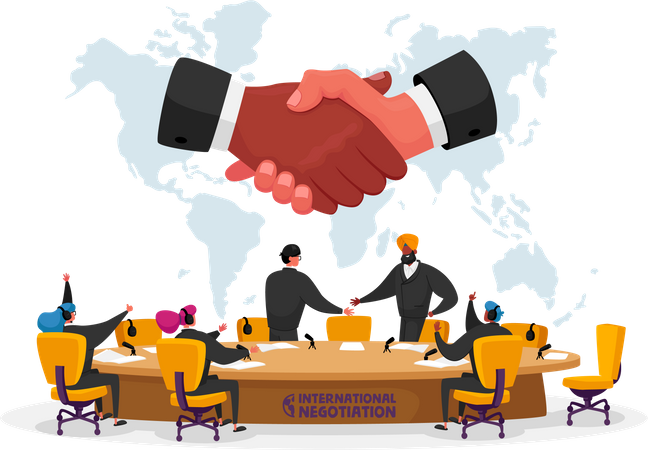
    International Negotiations Illustration - Free Download People Illustrations  | IconScout

    I. Introduction – When Every Word Counts

    A. From Hostage Negotiation to Corporate Communication

    The most powerful negotiation lessons today don’t come from business schools— they come from dimly lit rooms where someone’s life is on the line. The communication tools that calm armed criminals are the same tools that defuse a furious customer, win a boardroom debate, or soothe an overwhelmed teenager at home.

    FBI hostage negotiators like Chris Voss had one job: talk people back from emotional cliffs. They learned to regulate their own fear, read micro-moments of human distress, and use tactical empathy to shift the emotional temperature of the room. When the stakes are that high, language becomes medicine.

    Today’s leaders face a different kind of hostage crisis:

    • Teams held hostage by stress and uncertainty
    • Customers held hostage by confusion or fear
    • Family dynamics hijacked by emotion, ego, or misunderstanding

    The gap between a terrorist standoff and a high-stakes board meeting is smaller than we think: both require emotional mastery, precision language, and trust-based persuasion.

    The Black Swan Method® emerged from this world—founded on one radical idea:

    Emotion, not logic, determines the outcome of every important negotiation. Logic just comes later to justify the choice.

    This method insists on slowing down conversations, uncovering hidden truths (“black swans”) and earning influence through deep listening, not dominance.

    Examples in daily life:

    • Salary negotiation: Instead of pushing numbers first, you acknowledge the hiring manager’s constraints, fears, and pressures—opening the door for a better offer.
    • Client escalation: You label the emotion (“It sounds like this delay has put you in a difficult position”) before offering solutions—instantly reducing hostility.
    • Family disagreement: Your teenager refuses to study; instead of lecturing, you use calibrated questions (“What’s the biggest challenge for you right now?”), shifting from confrontation to collaboration.

    When used well, these tools are not manipulation—they are humanity engineered into speech.

    B. Negotiation as Behavioral Science

    To influence people effectively, you must speak to their emotional brain first and their rational brain second. This is the architecture of human decision-making, whether in a Fortune 500 meeting or a tense dinner-table conversation.

    Daniel Kahneman’s groundbreaking work on System 1 and System 2 thinking is essential here:

    • System 1: Fast, intuitive, emotional, automatic
    • System 2: Slow, analytical, rational, deliberate

    Here’s the twist:

    System 1 makes the decision. System 2 writes the press release.

    Most negotiations fail because they target the wrong system. We bombard people with data, logic, and long PowerPoint decks, when their emotional brain has already made up its mind.

    Influence (Cialdini) teaches that persuasion succeeds when it aligns with innate human triggers: reciprocity, authority, social proof, liking, scarcity, and consistency.
    Meanwhile, behavioral economics shows how humans use shortcuts:

    • Anchoring: The first number sets the psychological frame
    • Loss aversion: People fear losing twice as much as they enjoy gaining
    • Confirmation bias: People search for evidence to protect their existing beliefs

    Master negotiators don’t overpower biases—they architect conversations around them.

    Examples in daily life:

    • Pitching an idea at work: You start with a small commitment (“Can we explore this possibility together?”), activating Cialdini’s consistency principle.
    • Negotiating deadlines with a client: You anchor high (“Typically, this would take three weeks”) to make your actual offer appear reasonable.
    • Personal relationships: A spouse may resist a suggestion because of loss aversion (“What if this change makes things worse?”). Acknowledging that fear dissolves resistance.

    When you understand behavioral science, persuasion becomes predictable—not mystical.

    C. The New Negotiator’s Mindset

    Modern negotiation is not about winning—it’s about revealing the truth beneath the conversation, aligning interests, and moving people toward better outcomes with dignity and clarity.

    Old-school negotiation glorified toughness, brinkmanship, and demanding your way through fear or authority. But in a world that’s volatile, contradictory, emotionally charged, and interconnected, that approach breaks trust, destroys partnerships, and creates silent enemies.

    The new era embraces three pillars:

    1. Empathy as Strategy

    Not sympathy—strategic empathy.
    Understanding what the other person feels and why they feel it, without agreeing, endorsing, or surrendering.

    2. Interests over Positions

    As Fisher & Ury (Getting to Yes) emphasize:

    • Positions are the surface demands (“I want a 20% discount”).
    • Interests are the deeper motivations (“I’m scared of budget overruns”).

    Great negotiators operate at the depth, not the surface.

    3. Ethical Influence

    You can be assertive without being aggressive. You can be empathetic without being weak. You can be influential without manipulation.
    Ethics isn’t a constraint—it’s a competitive advantage.

    Examples in daily life:

    • Team leadership: Instead of shutting down dissent, you explore interests:
      “Help me understand what risk you see here.”
      Suddenly, resistance becomes insight.
    • Boardroom strategy: You negotiate from a place of clarity: “What outcome are we both trying to avoid?” This surfaces hidden fears and aligns agendas.
    • Personal conflict: Instead of arguing about who’s “right,” you explore why the issue matters to each person—transforming confrontation into connection.

    A leader who negotiates this way becomes not just persuasive, but magnetic.

    Negotiation Systems and Strategies

    II. The Neuroscience of Connection: Listening, Empathy, and Emotional Safety

    A. Active Listening as Discovery (Voss + Stone & Heen)

    Real negotiation begins not when you talk, but when the other person feels safe enough to reveal the truth. Listening is your intelligence-gathering system—it tells you what is really driving the other person’s behavior, fear, or demand.

    Most people “listen” only to reload. They lie in wait, crafting rebuttals, rehearsing arguments, or defending their ego. But active listening—true listening—turns the conversation into a map of emotional signals.

    Chris Voss teaches that negotiation is essentially data collection with empathy.
    Stone & Heen emphasize navigating Difficult Conversations by finding the third story: the neutral description of events that both sides can accept.

    To uncover this third story, negotiators use:

    Mirroring:

    Repeating the last 1–3 words the other person said, inviting them to go deeper.

    Paraphrasing:

    Summarizing their words and meanings to signal: I am with you; I understand you; keep talking.

    These techniques open emotional floodgates because they make people feel seen without interruption, correction, or ego-driven replies.

    Examples in daily life:

    • Workplace:
      A manager facing a frustrated employee mirrors:
      Overwhelmed by the workload?
      The employee expands, revealing the real issue: lack of clarity, not the workload itself.
    • Marriage or parenting:
      Instead of “You shouldn’t feel that way,” a parent paraphrases:
      “So it feels like no one is listening to you.”
      Suddenly, the child melts from anger to relief.
    • Client meetings:
      Mirroring phrases like “tight deadlines?” encourages clients to disclose their pressures—giving you negotiation leverage.

    Active listening transforms conflict into cooperation because people stop guarding themselves and start collaborating.

    B. Tactical Empathy (Voss) Meets Compassionate Communication (Ury)

    Influence is earned the moment the other person feels understood—not the moment you present your logic. Empathy is not softness; it is a strategic advantage grounded in neuroscience.

    Tactical empathy—Chris Voss’s signature concept—means understanding what they feel, why they feel it, and where it takes their behavior without agreeing or conceding.

    Neuroscience offers the mechanism behind its power:

    • Mirror neurons fire when we sense that someone recognizes our emotions.
    • This recognition regulates the amygdala, the brain’s fear center.
    • When fear decreases, openness increases.

    William Ury extends this idea in Getting to Yes with Yourself:

    “You cannot negotiate with anyone effectively until you negotiate with your own emotions first.”

    Self-regulation is the gateway to outward empathy.
    If your internal temperature is high, your influence is low.

    Examples in daily life:

    • In the office:
      Before responding to a confrontational email, you regulate yourself (Ury), label their frustration (Voss), and reply neutrally. Result: conflict de-escalates.
    • With a customer:
      “It sounds like you were expecting a different level of support.”
      Instantly, their nervous system relaxes.
    • In personal relationships:
      Tactical empathy turns arguments into understanding:
      “It seems like you’re feeling ignored.”
      This shifts the conversation from attack to truth.

    When empathy enters the conversation, resistance exits.

    C. Voice, Tone, and Timing (Voss + Cohen)

    Words matter, but how you deliver them determines whether they land with force or fall flat. In negotiation, your voice is a tool—sometimes a scalpel, sometimes a warm blanket.

    Chris Voss identifies three crucial vocal tones:

    1. The Late-Night FM DJ Voice

    Slow, calm, downward inflection.
    This signals safety, control, and confidence—it quiets the emotional brain.

    2. The Positive Playful Voice

    Light, encouraging, slightly amused tone.
    This tone disarms defensiveness and invites cooperation.

    3. The Assertive Voice (used sparingly)

    Controlled firmness without aggression.
    Useful in emergencies, but damaging if overused.

    Herb Cohen puts it beautifully:

    “People don’t respond to reason; they respond to how you make them feel.”

    Tone shapes feelings more than content does.

    Timing, meanwhile, determines impact. Silence—well-used—is a negotiation superpower.

    Examples in daily life:

    • Performance review:
      Using the FM DJ voice to deliver difficult feedback helps the employee absorb, not resist.
    • Client negotiations:
      Using a positive playful tone (“Let’s see how we can make this painless for both of us”) builds rapport instantly.
    • Family disagreement:
      A slow voice, deliberate words, and long pauses reduce emotional heat faster than logic ever will.

    Tone is the invisible architecture of trust.

    D. Labeling and the Accusation Audit

    When you articulate someone’s fear, frustration, or suspicion before they do, you disarm the emotional landmines that derail negotiations. Labeling emotions is not guessing—it’s strategic emotional acknowledgment.

    Labeling works because it externalizes emotions.
    You’re not telling someone what they feel; you’re naming what you’re observing.

    Phrases that work:

    • “It seems like you’re concerned about…”
    • “It sounds like this situation has been frustrating.”
    • “It looks like you’ve been under a lot of pressure.”

    This is not manipulation. It is emotional first aid.

    Accusation Audits

    This is preemptive empathy.
    You list every negative thought the other person might have about you before they throw it at you.

    “Before we start, you might think I’m here to blame you… or push an agenda… or disregard your concerns.”

    This neutralizes tension because the mind becomes unable to hold onto an unspoken accusation once it’s voiced.

    Cialdini’s research shows that acknowledgment increases reciprocation—when people feel seen, they soften.

    Examples in daily life:

    • Boardroom:
      “You may think we’re trying to force this new policy on you…”
      Result: they stop preparing for battle.
    • Client escalation:
      “It seems like you feel we’ve let you down.”
      Tension dissolves.
    • Marriage:
      “You probably think I haven’t been listening lately.”
      Instead of fighting, the partner breathes.
    • Parenting:
      “It looks like you’re really upset I wasn’t there earlier.”
      The child’s anger becomes sadness, and sadness becomes connection.

    Labeling is the antidote to defensiveness. The accusation audit is the antidote to fear.

    People Characters Having Negotiation Sitting at Negotiating | Colourbox

    III. Mastering Emotional Triggers: “No,” “That’s Right,” and the Illusion of Control

    A. The Psychology of “No” (Voss + Cialdini)

     “No” is not rejection—it is relief. When someone says “No,” they are reclaiming safety, autonomy, and psychological breathing room. A person who feels safe becomes honest, and a person who becomes honest becomes negotiable.

    Most people fear the word “No,” treating it as the end of a conversation. Chris Voss flipped the paradigm:

    “People say ‘Yes’ to escape. They say ‘No’ to feel safe.”

    When someone says “No,” they stop acting defensively. They stop protecting their ego. They stop feeling cornered. This aligns perfectly with Cialdini’s principle of Commitment and Consistency—people will fight anyone who threatens their sense of control.

    The secret?
    Give them control on purpose.

    And then use “No”-based questions to guide the conversation:

    • “Would it be ridiculous to explore another approach?”
    • “Is it a bad idea to revisit this plan?”
    • “Have you given up on this project?”

    The last one is powerful because it leverages loss aversion.
    Humans fear losing progress more than they desire new gains.
    Suddenly, they rush to re-engage—not because you pushed, but because you triggered ownership.

    Examples in daily and professional life:

    • Client management:
      “Is it a terrible idea to extend the timeline by a week?”
      Clients relax into discussing options.
    • Team supervision:
      “Have you given up on the hiring plan?”
      The team member quickly explains what they have been doing.
    • Personal relationships:
      “Is this a bad time to talk?”
      People open up because they aren’t forced.

    “No” is not a barrier. It’s the doorway to truth.

    B. The “That’s Right” Breakthrough (Voss + Stone)

    Conclusion first:
    The moment you hear “That’s right,” you’ve crossed from opposition to alignment. The negotiation shifts from contention to collaboration.

    Why:
    “That’s right” is the holy grail of negotiation feedback.
    It signals that the other person feels:

    • entirely heard,
    • emotionally validated,
    • and intellectually understood.

    This is where Voss and Stone converge:

    • Voss: Tactical empathy + labeling opens emotional clarity.
    • Stone (Difficult Conversations): Paraphrasing reveals the “third story,” the shared factual ground.

    “You’re right,” on the other hand, means:

    “I want to exit this conversation politely.”

    It’s compliance, not agreement.
    It’s escape, not alignment.

    “That’s right” means they have internalized your understanding of their perspective.
    Once someone feels fully understood, they naturally become more flexible.

    Examples:

    • Project disagreements:
      After summarizing the stakeholder’s frustrations accurately, they say, “That’s right.” The negotiation finally moves forward.
    • Parenting:
      A child says “That’s right” when you describe their emotions accurately—they stop fighting and start cooperating.
    • Couples:
      When one partner says “That’s right,” the emotional storm ends; collaboration begins.

    “That’s right” is not a compliment—it’s a green light.

    C. Calibrated Questions (Voss + Ury)

    Calibrated questions—“How?” and “What?”—let the other person feel in charge while guiding them exactly where you want them to go. They uncover interests, bypass ego, and create co-ownership of solutions.

    Humans do not like being told what to do.
    But they love explaining their reasoning.
    That’s the psychological jujitsu behind calibrated questions.

    These questions:

    • reduce defensiveness
    • shift thinking from emotion to problem-solving
    • reveal hidden motivations
    • create shared responsibility

    This aligns perfectly with Ury’s principle:
    Negotiation succeeds when we uncover interests behind positions.

    Examples of calibrated questions:

    • “How can we make this work for both of us?”
    • “What’s the biggest challenge you’re facing right now?”
    • “What would happen if we didn’t resolve this today?”
    • “How am I supposed to do that?” (Voss’s legendary friction-breaker)

    These questions create the illusion of control, but in reality, they gently direct the counterpart toward your preferred outcome.

    Examples:

    • Workplace:
      “What’s stopping us from completing this by Friday?” reveals obstacles and commitments.
    • Sales:
      “How does this align with your long-term goals?” prevents stalls.
    • Family:
      “What do you think would make this weekend peaceful for everyone?” encourages co-designed solutions.

    People defend their own ideas.
    Calibrated questions help them make your idea their own.

    D. The Rule of Three and Reinforcement (Cohen + Cialdini)

    True commitment is not what people say once—it’s what they confirm three times in three ways. Whether in negotiation or life, consistency creates reliability, and reliability builds trust.

    Herb Cohen taught that repetition reveals sincerity.
    A single “yes” is rehearsal.
    A second “yes” is polite cooperation.
    A third “yes,” in a different form, is commitment.

    Combine this with Cialdini’s principles:

    • Consistency: People stick to what they publicly commit to.
    • Social proof: When people articulate their stance, they strengthen it internally.
    • Reciprocity: Small acknowledgments and empathic statements multiply commitment.

    To apply the Rule of Three, test agreement using:

    1. Initial verbal confirmation
    2. Calibrated question
    3. Behavioral action

    If all three align, the deal is real.

    Examples:

    • Hiring negotiations:
      • Yes #1: “I’m comfortable with the offer.”
      • Yes #2: “How would you like to handle onboarding?”
      • Yes #3: They send required documents.
    • Personal life:
      When someone agrees to a plan verbally, repeats it while discussing logistics, and later brings it up on their own—you know it’s genuine.
    • Corporate commitments:
      Team members who mirror the agreement later in writing demonstrate true buy-in.

    The Rule of Three transforms intentions into reliable outcomes.

    Five Secrets for Successful Negotiation - SmartDraw Blog | Management

    IV. Bending Reality: Behavioral Economics in Negotiation

    A. Anchoring and Fairness (Kahneman + Voss)

    The first number shapes the entire negotiation. And the word “fair” is the emotional grenade that can derail or redirect the conversation depending on how you defuse it.

    Kahneman’s research on anchoring bias is clear:

    The first number doesn’t just influence the final outcome—it defines the psychological playing field.

    Even irrelevant anchors distort perception.
    When you control the first anchor, you control the reference point for everything that follows.

    Chris Voss refines this with his recommendation to use non-round numbers:

    • ₹37,263 feels calculated.
    • ₹40,000 feels arbitrary.

    Non-round numbers signal:

    • “I’ve done my homework.”
    • “This is the product of reasoning, not guesswork.”
    • “Moving this number will be difficult.”

    And then there’s the F-word: fair.
    When someone says, “This isn’t fair,” they are not complaining about math—they’re complaining about emotion.
    Voss advises immediate curiosity, not defensiveness:

    “I’m sorry.
    Help me understand—what feels unfair?”

    This shifts the counterpart from accusation to explanation.
    You reclaim the conversational frame.

    Practical examples:

    • Salary negotiation:
      Candidate: “That salary seems unfair.”
      HR leader: “Help me understand what part feels unfair.”
      → Shifts the conversation into specifics, away from emotional generalization.
    • Vendor discussions:
      Start with a precise anchor like ₹13,487 instead of ₹15,000.
    • Personal life:
      When a spouse says, “This isn’t fair,” reply:
      “It sounds like something feels imbalanced—what part exactly?”

    Anchoring sets the stage; fairness resets emotions.

    B. Leverage and Loss Aversion (Cialdini + Kahneman)

    The most powerful negotiation tool is not the promise of gain—it is the fear of loss.
    Ethical negotiators frame decisions around what’s at stake, not what’s offered.

    Kahneman’s seminal insight:

    People fear losses 2x more than they value gains.

    Cialdini’s work echoes this through the principle of scarcity, where perceived loss increases perceived value.

    Voss expands this into three types of leverage, each rooted in human psychology:

    1. Positive leverage
      → You can give something they want.
    2. Negative leverage
      → You can prevent or cause something they fear.
    3. Normative leverage
      → You hold them accountable to their own rules and values.

    Loss-framed proposals force clarity:

    • “If we delay this project, we risk losing market share.”
    • “If we don’t adopt this policy, we lose compliance credits.”
    • “If we don’t resolve this now, we risk damaging trust.”

    Done ethically, this is not manipulation.
    It is reality framing.

    Practical examples:

    • Corporate:
      “If we postpone hiring, we risk losing our top candidate to competitors.”
    • Sales:
      “If we don’t finalize by Friday, your price lock expires.”
    • Personal life:
      “If we keep avoiding this conversation, we lose the chance to fix it.”

    Loss aversion is the quiet architect of human decision-making.

    C. Negotiation Archetypes (Voss + Cohen)

    People negotiate according to personality. Once you understand their type, you can adapt with precision and dramatically reduce friction.

    Voss and Cohen identify three dominant archetypes: Analysts, Accommodators, Assertives. Each requires a different emotional strategy.

    1. Analysts

    Mindset:

    • Slow, systematic, data-driven.
    • Hate surprises.
      How to negotiate with them:
    • Give advance notice.
    • Provide structured information.
    • Avoid emotional pressure.
      Warning sign:
      Silence—because they’re calculating, not disengaged.

    Example:
    An Analyst CFO says, “Let me run the numbers again.”
    You respond:
    “Of course. What assumptions would help you evaluate this more accurately?”

    2. Accommodators

    Mindset:

    • Relationship-first.
    • Want everyone to feel good.
      How to negotiate with them:
    • Ask nurturing, open questions.
    • Don’t mistake friendliness for agreement.
    • Confirm details in writing.

    Example:
    Accommodator VP says, “I think this should work.”
    You respond:
    “Great. What’s the next step from your side to move this forward?”

    3. Assertives

    Mindset:

    • Win-first.
    • Direct, fast-paced, competitive.
      How to negotiate with them:
    • Give respect upfront.
    • Use concise language.
    • Never interrupt—they interpret it as disrespect.

    Example:
    Assertive CTO says, “This won’t work for me.”
    You respond:
    “What would you need this to look like for it to work?”

    Strategic takeaway:

    Flexible negotiators outperform rigid ones.
    This is situational empathy—the ability to switch styles to match the emotional tempo of your counterpart.

    D. The Ackerman Model: Rational Haggling Meets Psychological Framing

    The Ackerman Model is negotiation engineering—structured, precise, and psychologically intelligent. It prevents emotional over-offering and keeps you firmly in control of the negotiation arc.

    Voss’s Ackerman framework blends mathematics with emotional pacing:

    The four-step structure:

    1. Start at 65% of your target. (Low anchor)
    2. Increase to 85%.
    3. Then 95%.
    4. Finally 100% of your target price.

    Each concession grows smaller—signaling resistance, not weakness.

    Combine this with two psychological enhancers:

    Non-round numbers

    They feel precise and unmovable.
    ₹37,263 is harder to argue with than ₹37,000.

    Non-monetary items

    Cialdini’s reciprocity and commitment principles shine here.

    Add terms like:

    • extended warranty
    • priority service
    • onboarding support
    • training packages
    • early delivery

    They make your final offer appear maximally generous—without increasing cost.

    Practical examples:

    • HR:
      Salary: ₹17,865 → ₹19,970 → ₹20,480 → ₹20,937 + training budget.
    • Business deals:
      Add free maintenance months in your final offer.
    • Personal life:
      “We can’t extend the vacation, but I’ll handle logistics and booking upgrades.”

    The model protects you from impulsive concessions and positions you as calm, calculated, and fair.

    Negotiating Stock Illustrations – 3,619 Negotiating Stock Illustrations,  Vectors & Clipart - Dreamstime

    V. The Black Swan Principle: Finding Hidden Truths

    (Where breakthroughs happen and negotiations transform from tactical chess into psychological archaeology.)

    A. Defining the Black Swan (Voss) – When the Unknown Reshapes the Negotiation

    1. The “Unknown Unknowns” Theory
      • Black Swans are not surprises by accident; they are surprises by ignorance.
      • They remain invisible until curiosity replaces assumption.
      • Why most negotiators miss them: rushing to solutions, overconfidence, “illusion of transparency.”
    2. Behavioral Signals of Hidden Information
      • Irrational demands, emotional spikes, sudden silence → indicators of unseen internal constraints.
      • Kahneman’s cognitive blind spots—how System 1 noise shows the presence of missing data.
      • When people say “It’s just policy,” or “That’s how it is,” a Black Swan is almost guaranteed.
    3. Why Black Swans Matter
      • One tiny insight can flip leverage, reshape pricing, or save a collapsing relationship.
      • In high-stakes moments, the smallest unknown often becomes the biggest advantage.

    B. Discovering the Hidden Variable – Behavioral Science Meets Tactical Empathy

    1. Calibrated Empathy as Excavation Tool
      • Tactical empathy uncovers not facts, but motives.
      • Stone & Heen: People reveal truths when they feel “heard, not fixed.”
      • Ury: Remove your internal noise first—clarity inside creates space for clarity outside.
    2. Disclosure Psychology (Cialdini)
      • Reciprocity: People open up when you demonstrate vulnerability or goodwill.
      • Social proof: Sharing similar cases helps others admit fears or constraints.
      • Authority: Calm, confident tone increases the likelihood of truthful disclosure.
    3. Timing, Context, and Emotional Windows
      • Black Swans appear during unguarded moments—not during formal presentations.
      • Coffee-break disclosures, late-night calls, and frustration-triggered rants often reveal the real drivers.
      • Strategic patience: forcing the timing kills the insight.
    4. Behavioral Questions That Surface Black Swans
      • “What else is making this difficult?”
      • “What’s the biggest challenge I’m not seeing yet?”
      • “Who else is impacted by this decision?” (Black Swan goldmine)

    C. Applying the Black Swan Principle in Business, Leadership, and Daily Life

    1. Business Deals—Where Hidden Truths Shift the Power Equation
      • M&A: Cultural misalignment, founder psychology, or hidden liabilities often matter more than valuation.
      • Sales: Customers often reject due to fears they won’t articulate (“I’ll look foolish choosing the wrong vendor”).
      • Partnerships: Unspoken political dynamics reveal who really makes decisions.
    2. HR, Teams, and Internal Negotiations
      • Performance issues often hide exhaustion, insecurity, family dynamics, or unfair past experiences.
      • Psychological safety (Edmondson) as a Black Swan multiplier—safe cultures reveal more truths.
      • Managers who ask the right calibrated questions solve conflicts without escalation.
    3. Leadership Through Curiosity
      • Building institutional curiosity—rewarding discovery, not compliance.
      • How leaders can normalize “Tell me what I’m not seeing yet.”
      • Decision-making improves when teams are expected to hunt for Black Swans proactively.
    4. Case Application: Turning “Difficult People” into Strategic Allies
      • “Difficult” behavior is often miscommunication, fear, or misaligned incentives.
      • Using mirroring + labeling + calibrated questions turns resistance into revelation.
      • Once the hidden variable appears, cooperation becomes almost effortless.
    5. Red Flags That Indicate You Missed a Black Swan
      • Deadlock despite logical solutions
      • Surprising last-minute resistance
      • Emotional overreaction to minor issues
      • A sudden shift in tone or pace

    D. Tools and Techniques for Uncovering Black Swans

    1. The 3F Rule: Feel, Felt, Found (Cohen + Cialdini)
      • Reduces defensiveness while prompting transparency.
      • Opens emotional doors when rational arguments fail.
    2. The “Truth Serum” Combination (Voss)
      • Labeling + silence + downward FM-DJ voice → unlocks guarded truths.
      • Psychological pressure through calm presence.
    3. The “Who Benefits?” Diagnostic (Kahneman + Behavioral Economics)
      • Hidden incentives explain irrationality.
      • Mapping stakeholder motivations reduces ambiguity.
    4. The Leverage Map
      • Positive leverage (mutual gain)
      • Negative leverage (fear of loss)
      • Normative leverage (fairness, ethics, precedents)
      • Black Swans often unlock one of these leverage pillars unexpectedly.

    E. Encouraging a Black Swan Culture in Organizations

    1. Replace blame with curiosity
      • Leaders model “I might be missing something—help me see it.”
      • Teams reward those who reveal hard truths early.
    2. Practice epistemic humility
      • Assume incomplete information.
      • Treat every conversation as a possibility space.
    3. Use rituals of reflection
      • After-action reviews focused on “unknown unknowns” missed.
      • Pre-mortems: “What would make this fail?”
      • Red teams: contrarian thinking to surface hidden risks.
    4. Outcome: More resilient negotiations, fewer surprises, stronger trust.

    Business Negotiations, Businesmen Handshaking Making Business Deal,  Productive Partnership Cartoon Vector Illustration Royalty Free SVG,  Cliparts, Vectors, and Stock Illustration. Image 148420959.

    VI. The Behavioral Change Stairway Model (BCSM): From Crisis to Cooperation

    (How the FBI’s crisis blueprint became one of the most universal frameworks for human influence.)

    A. Overview and Origin (FBI CNU + Ury)

    1. The FBI’s Most Reliable Human-Influence Blueprint
      • Born from decades of hostage negotiations, standoffs, and life-or-death persuasion.
      • Developed by the Crisis Negotiation Unit (CNU) as a universal model for de-escalation.
    2. The 5-Step Pathway Toward Cooperation
      • Active Listening → Empathy → Rapport → Influence → Behavioral Change
      • Each step earns the right to progress to the next; leaders often skip steps at their own peril.
    3. Ury’s Parallel Insight: Self-Negotiation Precedes External Negotiation
      • You cannot climb the stairway with someone else if you’re tripping over your own emotions.
      • Emotional clarity reduces projection, bias, and defensiveness—making each step smoother.
    4. Why This Model Still Works Today
      • BCSM leverages predictability of human neurobiology:
        • Safety opens the cortex.
        • Empathy reduces cortisol.
        • Rapport increases oxytocin.
        • Influence requires trust.
        • Behavioral change follows alignment, not pressure.

    B. Sequential Flow of Trust – The Only Staircase Where You Can’t Skip Steps

    (Most leaders and negotiators fail because they try to jump directly to Step 4 or 5.)

    1. Active Listening: Establishes Presence

    • Listening as an act of respect, not strategy.
    • Mirroring, paraphrasing, and labeling invite disclosure.
    • Without presence, there is no emotional oxygen for the next steps.

    2. Empathy: Humanizes Conflict

    • Tactical empathy = understanding feelings without absorbing them.
    • Signals: “I get you, and I respect the world you live in.”
    • Stone & Heen: empathy lowers the heat so logic can rise.

    3. Rapport: Builds Predictability and Safety

    • Rapport is not charm; it is emotional reliability.
    • The nervous system needs predictable patterns before committing to collaboration.
    • Cohen’s idea: “People do business with people they like—but they trust people they understand.”

    4. Influence: Suggests Direction

    • Only after rapport do your words carry weight.
    • Influence = guidance, not control.
    • Voss: calibrated questions create the illusion of autonomy while shaping trajectory.

    5. Behavioral Change: Enables Cooperation

    • True behavioral change is voluntary alignment—not coerced compliance.
    • Happens naturally when emotional safety + clarity + agency are present.
    • The holy grail of negotiation: making change feel like the other person’s idea.

    C. Organizational and Educational Applications

    (BCSM is not just for crises—it’s a blueprint for social harmony.)

    1. Managing Internal Conflict

    • Use Active Listening to uncover hidden concerns.
    • Apply Empathy to reduce defensiveness.
    • Build Rapport to stabilize relationships.
    • Guide Influence through calibrated questions (“How can we solve this together?”).
    • Observe Behavioral Change as voluntary cooperation emerges.

    2. Team Alignment and Leadership Communication

    • Leaders who climb the BCSM create high-trust environments.
    • Eliminates micromanagement; increases ownership.
    • Teams become solution-generating ecosystems instead of instruction-taking units.

    3. Customer and Stakeholder Experience

    • Dissatisfied customers follow the same emotional trajectory as crisis subjects.
    • Listening + Empathy often reduces 80% of complaints before solutions are even offered.

    4. Education, Schools, and Foundations (Including NGOs)

    • BCSM is ideal for:
      • Community mediation
      • Parent-teacher conflict resolution
      • Student discipline and peer issues
      • Inclusive environments for neurodivergent individuals
    • Emotional validation often resolves conflicts that logic never will.

    5. Integrating Difficult Conversations Methodology

    • “Mutual purpose” and “clarity of contribution” fit perfectly into the Rapport → Influence steps.
    • Helps avoid identity-triggered defensiveness.
    • Encourages curiosity over blame.

    D. Training and Role Simulation (Cohen + Voss)

    (Because real skill emerges from practice, not theory.)

    1. Simulation-Based Negotiation Labs

    • Run “stress tests” using crisis-inspired scenarios.
    • Build the emotional endurance needed for high-stakes discussions.
    • Include:
      • Time pressure
      • Ambiguous information
      • Unexpected emotional outbursts
      • Ethical dilemmas

    2. Evaluating Emotional Endurance, Curiosity, and Adaptability

    • Use reflection tools, peer feedback, and video playback to assess:
      • Ability to regulate tone and pace
      • Skill in labeling and paraphrasing
      • Detection of emotional cues
      • Flexibility in switching between listening and influencing

    3. Embedding BCSM Into Leadership Culture

    • Daily rituals: 5-minute check-in using the Stairway.
    • Team huddles: recognizing “where we are on the staircase” in real conversations.
    • Reward systems: appreciate employees who demonstrate empathy and rapport-building.

    4. The Secret Benefit

    • When your organization masters BCSM, crisis situations rarely escalate to crisis in the first place.

    Negotiation Cartoon Stock Illustrations – 7,775 Negotiation Cartoon Stock  Illustrations, Vectors & Clipart - Dreamstime

    VII. Integration: Negotiation as a Core Leadership Competency

    (Why modern leadership is impossible without negotiation mastery.)

    A. Negotiation and Emotional Intelligence (Cialdini + Kahneman)

    Emotional intelligence is no longer a “nice-to-have”—it is one of the strongest predictors of leadership effectiveness. Negotiation, when practiced consciously, becomes the living laboratory where emotional intelligence reveals itself.

    1. Empathy as a Measurable Leadership Trait

    • Cialdini’s reciprocity and liking principles thrive in empathetic environments.
    • Empathy predicts collaboration quality, conflict recovery speed, and trust-building capacity.
    • High-empathy leaders detect subtle shifts in tone, posture, and emotional temperature—capturing information others miss.
    • In professional life:
      • A CEO who detects early burnout signs in a manager prevents turnover.
      • An HR leader mediates conflict by naming the emotions no one else dares to acknowledge.
    • In personal life:
      • A parent recognizing their child’s fear behind anger de-escalates meltdowns effortlessly.
      • A spouse names the unspoken concern during a disagreement, deepening intimacy.

    2. Decision Fatigue, Ego Depletion, and Emotional Contagion

    • Kahneman’s research: when System 2 is overwhelmed, people default to reactive, protective, and impulsive behaviors.
    • Leaders who understand decision fatigue design workplaces with:
      • stable routines
      • predictable communication rhythms
      • decision buffers
      • clear prioritization
    • Ego depletion weakens self-regulation—leading to poor negotiation outcomes.
    • Emotional contagion spreads through teams instantly; the leader’s mood becomes the team’s mood.
    • Example:
      • A frantic leader makes the team frantic.
      • A steady, slow-paced leader stabilizes an entire room without saying a word.

    3. Leaders Who Manage Tone and Tempo Create Cultures of Calm Focus

    • Behavioral leadership: managing your nervous system before managing others.
    • Leaders who speak slowly, breathe fully, and pause thoughtfully create psychological spaciousness.
    • Voss’s key insight: in negotiation, pace controls space.
    • In practice:
      • A supervisor resolving a workplace issue notices that slowing the pace reduces defensiveness.
      • A teacher managing a noisy class lowers their voice—students automatically follow.

    B. Creating Negotiation Cultures (Voss + Ury)

    A negotiation-savvy organization does not rely on heroic individuals. It creates systems, habits, and skills that allow everyone—from interns to CXOs—to navigate conflict with emotional intelligence.

    1. Building Teams Fluent in Calibrated Questions and Active Empathy

    • Calibrated questions (“What about this is important to you?”) become the default communication style.
    • Teams develop the instinct to listen longer, assume less, explore more.
    • Emotional labeling becomes a cultural norm:
      • “It sounds like we may have missed something important.”
      • “It seems like this deadline is feeling overwhelming.”

    2. Internal Workshops on Influence and Fairness Framing

    • Conduct recurring training sessions that cover:
      • The Black Swan Method®
      • fairness language (“Help me understand what feels unfair”)
      • loss-aversion framing
      • conflict de-escalation via tone
    • These workshops remove stigma from conflict.
    • Negotiation becomes a shared professional language—like finance or project management.

    3. Linking Negotiation Training with Corporate Well-Being and Psychological Safety

    • Psychological safety increases innovation by 30–40% according to multiple studies.
    • Negotiation training—when integrated with wellness programs—helps teams:
      • reduce workplace anxiety
      • recover from failure more quickly
      • express dissent without fear
      • collaborate more meaningfully
    • A well-trained team handles disagreements without escalation, turning friction into innovation.
    • In schools and NGOs, this reduces bullying, improves teacher-parent interactions, and supports neurodiverse learners.

    C. Ethics and the Social Contract (Cohen + MEDA Foundation)

    Influence is power. And power must be exercised with moral clarity.

    1. Using Influence for Good—Shaping Just, Inclusive, and Sustainable Ecosystems

    • Herb Cohen emphasized that negotiation is always happening—and its impact depends entirely on intent.
    • Ethical negotiation empowers rather than manipulates.
    • Leaders must ask:
      • “Does this conversation preserve dignity?”
      • “Does this decision strengthen trust?”
      • “Does my influence help the least powerful person in the room?”

    2. MEDA Foundation’s Model: Negotiation for Empowerment and Community-Building

    MEDA’s core philosophy—helping people help themselves—perfectly aligns with negotiation as a tool for dignity and self-sufficiency.

    MEDA’s approach includes:

    • teaching autistic individuals expressive negotiation techniques
    • using calibrated communication for job readiness training
    • empowering families with conflict-resolution skills
    • training volunteers in tactical empathy to support diverse communities
    • creating shared-purpose dialogues across socioeconomic barriers

    In NGOs, negotiation is not just operational—it’s spiritual. It’s the practice of helping people be heard, valued, and independent.

    3. Applying FBI and Behavioral Principles to Social Entrepreneurship and Development Dialogue

    Social entrepreneurs negotiate every moment:

    • with stakeholders
    • with communities
    • with donors
    • with governments
    • with uncertainty itself

    FBI-derived frameworks bring a sense of clarity and emotional intelligence to community work:

    • Active listening builds trust with marginalized groups.
    • Empathy + rapport encourage honest disclosure of needs.
    • Influence helps align community expectations with sustainable models.
    • Behavioral change becomes measurable empowerment, not dependency.

    For MEDA Foundation specifically:

    • These principles strengthen training programs, community relationships, and leadership development—allowing the organization to scale impact with compassion and structure.

    Negotiation In Sales - 10 Skills That Top Salespeople In India Use

    VIII. Conclusion – From Pressure to Partnership

    A. Summary of Key Insights

    Negotiation mastery is emotional mastery.
    High-stakes FBI negotiations taught us that logic rarely shifts people—safety, recognition, and emotional validation do. Leaders who master their emotional state (pace, tone, presence) can reshape outcomes without raising their voice.

    The calm mind influences the chaotic one.
    A regulated nervous system is the ultimate leadership advantage. Calmness is contagious; when you slow down your breathing, the room follows.

    Understanding others begins with understanding yourself.
    Every difficult conversation reflects an internal conversation. When leaders regulate their own fears, biases, and ego triggers, they naturally influence others with empathy, strength, and clarity.

    Together, these principles shift negotiation from confrontation to collaboration—transforming pressure-filled moments into partnerships of trust.

    B. Practical Action Steps for Readers

    These micro-practices require no special training—only intention and consistency. They work at home, in classrooms, in boardrooms, and in community work.

    1. Practice mirroring, labeling, and “That’s Right” moments daily.

    • When someone speaks, repeat their last important words (mirroring).
    • Acknowledge their emotion without judgment (“It sounds like this has been frustrating”).
    • Summarize their worldview until they say, “That’s right.”

    In personal life:

    • A teenager opens up when they finally feel understood, not corrected.

    In professional life:

    • A tense client softens the moment they hear a summary that reflects their concerns.

    2. Replace “win-win” with “understand to win.”

    • “Win-win” often masks passive compromise.
    • Real negotiation uncovers deeper interests, not surface demands.
    • Aim to understand the emotional logic behind the other side’s stance—you create better outcomes and stronger relationships.

    In teams:

    • Replacing “What do you want?” with “What’s important about this for you?” transforms deadlocked discussions.

    3. Create space for silence—where truth surfaces.

    • Silence is not empty; it is information-rich.
    • Most breakthroughs occur when you stop filling the space and start observing.
    • Silence invites honesty, reflection, and de-escalation.

    At home:

    • Silence helps a partner speak their truth at their own pace.

    At work:

    • A thoughtful pause prevents impulsive decisions driven by emotion rather than insight.

    These practices build emotional muscle memory—turning everyday conversations into opportunities for clarity, alignment, and mutual respect.

    C. Participate and Donate to MEDA Foundation

    If the principles in this article resonate with you, imagine their impact on those who have never been taught the language of empathy, emotional regulation, or self-advocacy.

    At MEDA Foundation, we bring negotiation skills, communication mastery, and emotional intelligence training to:

    • underprivileged communities
    • autistic individuals
    • job-seekers and youth
    • families striving for stability
    • social entrepreneurs building sustainable futures

    Your support strengthens programs that help people:

    • express themselves with dignity
    • resolve conflict peacefully
    • build meaningful careers
    • form self-sustaining ecosystems of compassion and collaboration

    Join us in creating a world where every voice can be heard and every individual can negotiate for their own future.
    Your participation—whether as a volunteer, donor, or advocate—changes lives.

    D. Book References and Inspirations

    These works form the backbone of modern negotiation and behavioral understanding, offering timeless lessons for leaders, educators, and communities:

    1. Chris VossNever Split the Difference: Negotiating As If Your Life Depended On It
    2. Robert CialdiniInfluence: The Psychology of Persuasion
    3. Daniel KahnemanThinking, Fast and Slow
    4. William Ury & Roger FisherGetting to Yes and Getting to Yes with Yourself
    5. Herb CohenYou Can Negotiate Anything
    6. Douglas Stone & Sheila HeenDifficult Conversations: How to Discuss What Matters Most