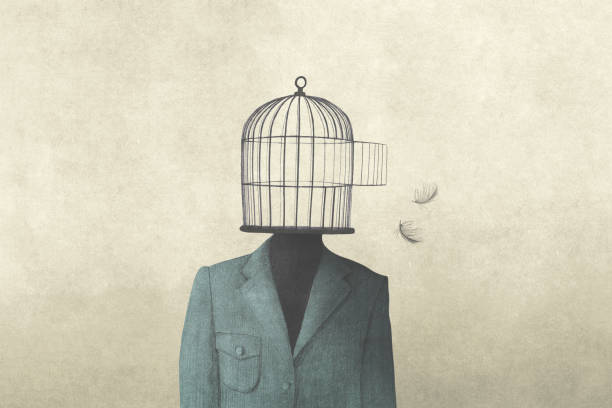
Tag: #MentalFreedom

  • 97% Are Wrong: How to Think, Live, and Win Like the 3%

    97% Are Wrong: How to Think, Live, and Win Like the 3%

    Most people unknowingly live in mental and cultural autopilot, confined by outdated norms, inherited routines, and the false safety of conformity — leading to mediocrity, burnout, and invisibility. In every field where excellence matters, those who achieve extraordinary results think and act against the grain. By studying outliers, breaking unspoken rules, and embracing strategic contrarianism, anyone can escape the gravitational pull of the 97% and build a life of purpose, innovation, and freedom. Greatness begins the moment you stop asking for permission and start questioning everything.

    170+ Majority Rule Stock Illustrations, Royalty-Free Vector Graphics & Clip  Art - iStock

    Why the Majority is Always Wrong (And How to Achieve Extraordinary Results)

    Intended Audience and Purpose

    In an age dominated by noise, speed, and sameness, clarity, courage, and conscious deviation have become rare and radical acts. This article, “Why the Majority is Always Wrong (And How to Achieve Extraordinary Results),” is designed as a strategic wake-up call for those who feel something is off — in themselves, their systems, their institutions, or their lives — but may not yet have found the language or the leverage to articulate and act on it.

    Audience

    1. Entrepreneurs, Innovators, and Professionals Seeking High Performance
      For the business leaders and innovators pushing against invisible ceilings, this article offers not another growth hack or checklist, but a cognitive shift. You may be doing everything “right” by the book — and still find yourself outpaced, burned out, or commoditized. Why? Because what the majority calls “best practice” is often yesterday’s news. This is for those who want to rewrite the rules rather than play within them.
    2. Educators and Social Change Agents
      If you are a teacher, social worker, reformer, or community leader, you are already aware of the subtle tyranny of norms — in pedagogy, policy, or perception. You know that real transformation rarely comes from within the system — it comes from the edge. This article gives language, examples, and frameworks to support your efforts to think differently and model it for others.
    3. Students and Youth Questioning Societal Norms
      To the curious young mind — often mislabeled as rebellious, lazy, or lost — this article says: your doubt is valid. When you feel alienated by systems that value compliance over creativity, grades over growth, or popularity over purpose, know this: the problem is not you — it’s the norm. Here you will find an empowering reframe: to question is not to fail; it is to begin.
    4. Anyone Feeling Trapped in Mediocrity or Disillusioned by Convention
      If you’ve been climbing ladders only to realize they’re leaning against the wrong walls, if success tastes hollow, if you’re playing a part but not living a life — you are not alone. This piece is for the misfits in disguise, the quiet rebels, the people with potential muted by politeness or pressure. It’s a manifesto for anyone ready to reclaim agency and aim higher than conformity allows.

    Purpose

    1. To Awaken Readers to the Invisible Traps of Conformity
      Most of us unknowingly operate within narrow mental, cultural, and professional “boxes.” These are not cages made of steel, but of assumptions, expectations, and inherited beliefs. They feel natural because they are familiar — but they limit us more than we realize. This article aims to name, expose, and dissolve these mental prisons.
    2. To Encourage Bold, Independent Thinking and Strategic Rebellion
      Not all rebellion is noisy, and not all nonconformity is effective. This is not a call to chaos or cynicism. It’s a call to conscious divergence — a deliberate stepping away from majority thinking, not for ego, but for efficacy. It’s about refusing to optimize for fitting in, and starting to optimize for breakthroughs, meaning, and impact.
    3. To Provide a Roadmap to Extraordinary Performance by Questioning Norms and Realigning Thinking Patterns
      This is a guide for transformation: not by working harder inside broken systems, but by stepping outside them with clarity and courage. Through stories, models, and examples, the article will show how extraordinary individuals and organizations achieve 10x results by rejecting “normal,” redefining value, and reprogramming their default mental models.

    In Summary

    This article is a strategic, soulful rebellion against mediocrity, rooted in historical wisdom and contemporary insight. It is for those tired of tiptoeing through a culture of sameness — those ready to think independently, act courageously, and build lives and legacies of true consequence.

    510+ Cartoon Of A Man Standing Top Mountain Stock Illustrations,  Royalty-Free Vector Graphics & Clip Art - iStock

    I. Introduction: The Great Lie of Consensus

    There’s a well-loved story about Albert Einstein that opens the door to a powerful insight. One day, while walking through Princeton, a colleague noticed Einstein handing out a set of final exam questions to his physics students. Perplexed, the colleague asked, “Aren’t these the same questions you gave last year?” Einstein nodded and replied, “Yes — but the answers have changed.”

    This anecdote captures a quiet but explosive truth: the world we live in is constantly shifting — economically, technologically, morally, and intellectually. The questions we face — about how to live, how to work, how to succeed — may sound familiar, but the old answers no longer apply. And yet, what do most people do? They keep following the same patterns, holding the same beliefs, trusting the same systems, as if time stood still.

    We are, all of us, standing on shifting ground. Markets evolve, technologies disrupt, values morph, and information multiplies beyond comprehension. What was “safe” yesterday is obsolete today. What was “normal” five years ago is now irrelevant, and in some cases, dangerous. And still, the gravitational pull of the majority remains strong. Why? Because consensus feels comfortable. Consensus gives cover. Consensus tells us we’re not alone.

    But here’s the provocation — the central tension this article wrestles with:

    What if the greatest risk today is doing what’s considered normal?

    What if “average” has become a trap? What if the standards most people live by — the career choices, the business models, the beliefs about success, money, education, relationships — are not only outdated, but actively holding us back? What if the majority is wrong not just occasionally, but systematically, especially in areas where excellence, innovation, or breakthrough performance are needed?

    This is not hyperbole. History is littered with evidence:

    • The medical community once believed bleeding patients cured them.
    • Scientists once insisted heavier-than-air flight was impossible.
    • Financial experts mocked cryptocurrency and decentralized finance.
    • Blockbuster turned down buying Netflix — twice.
    • Kodak invented the digital camera, then buried it.

    In every case, the majority was confident. And wrong.

    So here is the core thesis of this article:

    In every domain where excellence matters — performance, creativity, leadership, innovation — the majority is always wrong.

    Why? Because the majority optimizes for safety, comfort, and predictability, while breakthroughs require discomfort, uncertainty, and deviation from the herd. Excellence is a minority game — always has been, always will be. By the time the majority catches on, the game has changed.

    Let us be clear: this article is not a critique of people who follow norms — it’s easy to do, and even natural. We are all products of environments that reward conformity. But this article is a roadmap. It’s a roadmap for those who are ready to escape that gravitational pull. For those who are no longer willing to settle for safety at the cost of significance. For those willing to take the harder path — the one that leads to extraordinary results.

    The following pages will show you how to recognize the mental traps of majority thinking, how to realign your decision-making processes, and how to cultivate the rare capacity for breakthrough performance. Not by working harder inside the system — but by questioning the system itself.

    If you’ve ever felt that doing what everyone else does isn’t working, you’re right. And what comes next is your invitation to think differently, act courageously, and live extraordinarily.

    170+ Majority Rule Stock Illustrations, Royalty-Free Vector Graphics & Clip  Art - iStock

    II. The Trap of the Majority: Why Most People Get Mediocre Results

    The myth of the majority is not built on stupidity — it’s built on efficiency. The human brain, sophisticated as it may be, runs on a principle closer to energy conservation than innovation. This is not a bug; it’s evolution. But in a fast-moving world where creativity, adaptability, and insight are survival tools, our default mental programming becomes a liability. Let’s break down why most people, even smart, hardworking ones, default to mediocrity.

    A. Cognitive Laziness: Thinking to Stop Thinking

    The Brain as an Efficiency Machine
    At any given moment, your brain is burning fuel. To optimize survival, it has evolved to think just enough to make a decision — and then automate the rest. Neurobiologists estimate that more than 95% of our decisions are made subconsciously, automatically, without deliberate thought. This includes what we wear, eat, believe, and how we respond to people, opportunities, and challenges.

    It’s not because people are lazy. It’s because the brain is designed to conserve energy — and thinking deeply is metabolically expensive. So, instead of reasoning through every situation, the brain relies on heuristics, biases, and mental scripts. We call this autopilot mode.

    Autopilot in the Real World

    • You drive to a familiar place and don’t remember how you got there.
    • You respond to feedback at work with defensiveness — not reflection.
    • You choose a college, job, or life partner based on what’s “normal,” not what’s deeply aligned.
    • You pursue promotions because others around you are doing it — not because it brings joy or meaning.

    These are not catastrophic failures — but when multiplied across years and choices, they create a life that feels busy, productive, and strangely unfulfilling.

    Result: Mediocrity by Default, Not Malice
    Most people aren’t failing because they’re bad or unmotivated. They’re following invisible scripts written by someone else, long ago. Mediocrity is not the result of bad intentions. It’s the result of never questioning the operating system.

    B. The Comfort of Norms and the Myth of Safety

    The Illusion of Freedom Inside Cultural Boxes
    We like to believe we are independent thinkers. But most people operate inside culturally inherited “boxes” — moral, professional, emotional, and technological. These boxes are rarely chosen; they’re absorbed. What you consider normal or possible is largely a product of your upbringing, your geography, your peer group, and your profession.

    Consider:

    • Would you ever consider eating roadkill? Some tribal communities do, and with pride. To you, it’s disgusting.
    • Would you let your child drop out of school to pursue carpentry at 13? That’s normal in parts of Europe. Unthinkable elsewhere.

    The box you’re in feels universal, but it’s not. It’s just invisible until challenged.

    Industry “Standards” as Fossilized Decisions
    What we call “industry best practices” are not neutral truths — they’re artifacts. They were once innovative choices made by a bold few, eventually calcified into “normal.”

    • In restaurants, it became “standard” that you eat first and pay later. Why not the reverse?
    • In banks, the logic is: you give them money, and they loan it to someone else. But what if banking could be decentralized and community-owned?
    • In education, you memorize, repeat, and get rewarded. But is that learning, or just conditioning?

    These are just past choices masquerading as eternal truths. And most people follow them not because they work — but because they’re what everyone else is doing.

    The Consequence: Predictable, Bounded Success
    Following norms feels safe. It offers the illusion of progress. But in reality, it sets an upper limit: the ceiling of what’s acceptable, familiar, or proven.
    You might succeed, but never extraordinarily. You’ll survive, not thrive. Why? Because innovation lives beyond the edges of norms — not inside them.

    C. Mental Myopia: Confusing Movement with Progress

    Tunnel Vision in High Performers
    Even among the ambitious and the high-achieving, there is a subtle trap: measuring success by comparison to peers, not by potential. Just because you’re the smartest person in the room doesn’t mean you’re growing. In fact, it often means you’re stagnating.

    People stop learning once they’ve outrun the competition — not once they’ve outdone themselves. This is called rear-view living: looking at where you came from and congratulating yourself, rather than asking what’s still ahead.

    The Rear-View Metrics Trap

    • A business that’s “growing” 10% a year, but has stopped innovating.
    • An executive who makes more money than their college friends and assumes that’s the pinnacle.
    • A social activist who gets media attention but has stopped questioning deeper structures of injustice.

    Rear-view metrics reward motion, not direction. They confuse speed with trajectory.

    Emotional Fallout of Majority Thinking
    This gap — between motion and meaning, between norms and nature — eventually creates internal dissonance:

    • Burnout: from chasing external goals that aren’t internally aligned
    • Frustration: from realizing success doesn’t feel like fulfillment
    • Midlife Crisis: when the ladder you climbed leads to a wall you didn’t choose
    • Chronic Dissatisfaction: a gnawing sense that “there has to be more”

    This isn’t failure. It’s awakening. And it begins when we stop trusting the crowd — and start listening inward.

    Convincing Stock Illustrations – 1,277 Convincing Stock Illustrations,  Vectors & Clipart - Dreamstime

    III. The 3% Principle: How the Minority Achieve Extraordinary Results

    If the trap of the majority is comfort, then the path of the 3% is creative discomfort. These are the individuals and organizations that refuse to accept the rules of the game — and instead choose to reinvent it. They don’t tweak the system; they transcend it. They don’t settle for being better than others; they obsess about being radically different. They are not driven by conformity, but by curiosity. They don’t worship normal — they disrupt the default.

    Here, we explore the habits, mindsets, and philosophies of this rare but revolutionary class: the 3% who achieve extraordinary results.

    A. The First Principle: Disrupt the Default

    Break, Don’t Tweak

    The difference between incremental improvement and breakthrough performance is the difference between oiling the machine and throwing it out to build a jet engine. The majority optimize for efficiency within the current paradigm; the 3% challenge the paradigm itself.

    Improvement is not rebellion. Innovation is.

    Case: The IKEA Shift

    In the traditional furniture industry, stores were full-service. You bought a sofa, and someone delivered it and assembled it for you. That was the norm.

    IKEA flipped it.
    They said: You come to our warehouse, pick up your own flat-packed furniture, take it home, and build it yourself. On paper, this made no sense. More friction, more work, more responsibility for the customer.

    But in practice? It worked brilliantly.
    Why? Because it reduced costs, appealed to DIY pride, and created a feeling of ownership and participation.
    What looked insane through the lens of industry “best practices” became a revolution in global retail.

    Case: Dell’s Radical Directness

    Before Dell, computers were sold through retail stores, often pre-built and stocked in inventory.

    Dell said: No retail. No pre-built machines.
    Customers would configure and order online (unthinkable in the early internet days), and Dell would assemble and ship directly.

    The industry mocked them.
    But Dell revolutionized the PC business by eliminating inventory costs and providing customized machines at scale.

    Lesson: The first step to extraordinary results is to stop solving yesterday’s problems inside yesterday’s frameworks.

    B. Creative Deviance: Case Studies in Rebellion

    London’s Taxi Problem → The Direction-Reversal Innovation

    In London, becoming a licensed taxi driver required mastering “The Knowledge” — memorizing the city’s 25,000 streets, a years-long process.

    Enter a bold experiment: What if you reversed the knowledge hierarchy? Instead of insisting the driver knows everything, let passengers guide. A different category of taxis emerged where drivers didn’t need “The Knowledge” but were willing to take directions — a win-win for locals who knew the city and preferred control.

    Counterintuitive. But it worked. It opened up the profession and challenged a century-old gatekeeping norm.

    Netflix vs. Blockbuster

    Blockbuster built an empire on late fees, brick-and-mortar rentals, and weekend queues.

    Netflix asked a dangerous question: What if we eliminated late fees and shipped DVDs to your home? Later, What if there were no DVDs at all? Just streaming, on demand?

    Everyone laughed — until they weren’t laughing anymore.
    Blockbuster died of faith in the norm. Netflix thrived by rejecting it.

    Elon Musk & First Principles Thinking

    While other automakers asked, “How do we improve fuel efficiency?” Musk asked: Why gasoline at all?
    While others said space travel was only for NASA, Musk asked: What if rockets were reusable, like airplanes?

    Musk doesn’t ask “What’s normal?” He asks: “What’s possible?”
    This is called first principles thinking — reducing problems to physics, not tradition.

    C. Mental Rewiring: Developing an Anti-Majority Mindset

    The 3% aren’t born with superpowers — they train themselves to think differently. Here’s how.

    1. Strategic Contrarianism

    In high-stakes domains (business, investing, innovation), majority opinion is often a contrarian indicator.

    • If “everyone is doing it,” it’s likely too late.
    • If “nobody is doing it,” that’s where opportunity lies.

    Use consensus not as validation — but as a warning flag.

    “Whenever you find yourself on the side of the majority, it’s time to pause and reflect.” — Mark Twain

    2. Routine Audits

    Ask yourself regularly:

    • Is this belief mine, or inherited?
    • Is this habit making me sharper, or just more predictable?
    • Is this relationship energizing me, or just familiar?

    Don’t let default behaviors become permanent ceilings.

    3. Deliberate Exposure to the Unfamiliar

    Creativity thrives at intersections:

    • Travel outside your cultural comfort zone.
    • Read disciplines far from your own (biology for a marketer, philosophy for a programmer).
    • Seek out iconoclastic mentors — those who’ve built lives that defy convention.

    You can’t think outside the box if you’ve never seen outside your own box.

    D. The Philosophical Foundation

    Beyond strategies, the 3% live by deeper principles that transcend metrics and norms.

    Marcus Aurelius (Stoicism)

    “The object of life is not to side with the majority, but to escape joining the ranks of the insane.”

    For the Stoics, popularity was never proof of virtue. Wisdom was measured by inner coherence — not social approval.

    Socrates and the Unexamined Life

    Most people live by unexamined beliefs. Socrates paid with his life for asking inconvenient questions, but those questions changed the world.

    To question the crowd is not arrogance. It’s the beginning of philosophy.

    Thoreau and Civil Disobedience

    When the law or the norm contradicts moral conscience, we must resist.

    “Any man more right than his neighbors constitutes a majority of one.”

    Moral clarity rarely travels with the herd. The higher path is often the lonelier one.

    The 3% principle is not about rebellion for its own sake. It’s about conscious, strategic divergence from norms that no longer serve.

    The next time you find yourself doing something “because that’s how it’s always done,” pause and ask:

    What if that’s the problem, not the solution?

    Asymmetry and the power of the 3% - Climate Etc.

    IV. Practical Tools: How to Escape the Gravity of the 97%

    The insight that “the majority is always wrong” is not just philosophical — it’s a blueprint for action. If the 97% are trapped by habit, fear, and social approval, then the 3% become free not by magic, but through deliberate practice and daily disciplines.

    This section offers concrete, actionable methods to help you identify where you’re conforming, break from the gravitational pull of mediocrity, and engineer a life of radical impact and originality.

    A. The “Box Audit” Exercise

    Most people live inside invisible boxes. These boxes aren’t physical — they’re mental, emotional, cultural, professional. The first step to freedom is seeing your box.

    The Exercise:

    1. List Your Personal “Defaults”
      Write down key beliefs and habits in domains like:
      • Career: What counts as success? What jobs are “respectable”?
      • Money: What’s “enough”? What’s risky?
      • Relationships: What does a “good partner” or “parent” look like?
      • Time: How should a day be structured? What’s considered productive?
      • Education: What’s “smart”? What’s “a good degree”?
      • Morality: What do I consider “right,” and why?
    2. Interrogate Each Belief
      For each, ask:
      • Who taught me this?
      • Do I believe this because it’s true — or because it’s popular?
      • Does this belief expand or limit my potential?
      • What would a rebel, innovator, or misfit do differently here?
    3. Identify One Box to Break
      Choose one limiting belief or pattern. Take a small, symbolic action that contradicts it.
      Examples:
      • If you believe “success means being busy,” schedule a full day of doing nothing.
      • If you think “money comes from jobs only,” start a tiny side hustle or barter service.
      • If you were taught “don’t talk to strangers,” spend a day meeting three new people.

    Insight: You don’t need to destroy all boxes. Just refuse to live in ones that aren’t yours.

    B. Reverse Engineering Success

    Mainstream education teaches by averages — the habits, skills, and traits of the median person. But if you want extraordinary results, you must study outliers.

    Here’s how:

    1. Study the 3%
      Look at top performers in your field — not just for what they do, but what they avoid.
      • What habits did they reject?
      • What beliefs did they replace?
      • What boundaries did they cross that others wouldn’t?

    Examples:

    • Steve Jobs dropped out of college and audited calligraphy.
    • Oprah Winfrey refused to stay in the entertainment lane and created her own media empire.
    • Muhammad Yunus defied banking norms to invent microfinance.
    1. The Subtraction Method
      Ask: What did they stop doing that others kept doing?
      Sometimes success isn’t about doing more — it’s about doing less of the wrong things.
    2. Map Their Unconventional Path
      Don’t copy their tactics — decode their thought process.
      Most outliers didn’t have better resources; they had different reasoning.

    C. The 3% Discipline Checklist

    It’s not enough to think differently once. To stay in the 3%, you must train your mindset like an athlete trains their body. Here’s a checklist to keep you grounded in excellence and rebellion.

    Reject Popularity as a Metric of Value

    • Just because an idea, book, business model, or life choice is popular doesn’t mean it’s good.
    • Ask: Would I still do this if no one liked or validated it?

    Embrace Being Misunderstood as a Sign of Growth

    • If everyone understands you, you’re probably not innovating.
    • Many breakthroughs sound foolish at first.
    • Measure feedback by insight, not applause.

    Set “Unrealistic” Goals — Then Reverse-Engineer Them

    • Don’t ask: What can I do this year?
      Ask: What would blow my own mind — and how could I make that real in 3 years?
    • Work backward from the vision. Shrink the gap with bold assumptions.

    Create in Silence, Launch in Public

    • Keep big goals private until ready. Early judgment can kill courage.
    • Do the work quietly. Let results speak the loudest.

    Audit Your Circle

    • Surround yourself with challengers, not comforters.
    • Seek mentors who’ve built something you respect — not what society rewards.

    Final Thought for This Section:
    You do not become the 3% by accident. You become it by design.
    You design it by questioning everything you’ve been taught — and acting in defiance of what holds others back.

    The 3% live by a simple credo:

    If the crowd is going one way, I at least stop and ask why — before I follow.

    Share your unpopular opinion about Bhubaneswar /Odisha! : r/Bhubaneswar

    V. Conclusion: Join the 3% or Serve Them

    In every life — perhaps even in every week — there comes a fork in the road. One path is wide, well-lit, and full of fellow travelers. It’s paved with approval, tradition, and familiar ideas. The other path is narrow, unclear, and frighteningly original. Few choose it — but those who do, change the world, or at least their corner of it.

    The Fork in the Road

    You can continue to conform. It’s comfortable. It’s acceptable. It’s how 97% of people live and work. But comfort has a cost: predictability, invisibility, and regret.

    The alternative? You can rebel — not recklessly, but intentionally. You can break your box, challenge your norms, and pursue a life of purpose-driven performance. You can join the 3% who don’t just follow trends — they create them.

    The Real Risk: Invisibility

    Too many people fear failure. But the deeper, more dangerous fear is being forgettable. Not because you weren’t talented — but because you played too small, asked too few questions, and waited for permission that never came.

    The New Identity: Self-Chosen Greatness

    Here’s the beautiful truth: You don’t need permission to be great.
    You don’t need credentials to be bold.
    You don’t need consensus to be right.

    What you do need is conviction. A kind of sacred stubbornness — the willingness to go against the grain, again and again, not for ego, but for impact.

    Your Next Step: Defy the 97%

    Don’t let this be just another inspiring idea. Let it be a pivot point.

    Today, make one bold decision — however small — that the majority would call “unwise,” “risky,” or “unrealistic.”
    Then commit to it fully. Live into it. Prove the majority wrong.

    You won’t be alone. The 3% are out there — building, questioning, failing forward, and finding each other.

    Participate and Donate to MEDA Foundation

    If you believe in breaking free from mediocrity — not just for yourself, but for others — then join us at the MEDA Foundation.

    We help:

    • Autistic individuals unlock their unique genius.
    • Underserved communities create self-sustaining ecosystems.
    • Educators, parents, and leaders rethink their assumptions and spark real change.

    Your donation isn’t charity. It’s an investment in transformation — in building a world where being different is not just accepted, but celebrated.

    👉 Donate or Participate Now
    Together, let’s reject the ordinary — and build a future worth living.

    Book References: Fuel for the 3% Mindset

    Here’s your reading arsenal — tools for cultivating a resilient, original, and anti-majority life.

    1. Linchpin by Seth Godin
      Becoming indispensable means refusing to be a cog.
    2. Think Again by Adam Grant
      Success now depends not on how much you know, but how quickly you can unlearn.
    3. The War of Art by Steven Pressfield
      Resistance is real — but so is your capacity to push through it.
    4. Antifragile by Nassim Nicholas Taleb
      Don’t just survive volatility — grow because of it.
    5. Principles by Ray Dalio
      A masterclass in decision-making from a true outlier.
    6. Letters from a Stoic by Seneca
      Virtue means standing tall when the crowd bends.
    7. Discipline Equals Freedom by Jocko Willink
      The most dangerous man in the room is the one who controls himself.

    Final Whisper

    You are not average. You are not meant to live on autopilot.
    And the world doesn’t need more of the same — it needs you, fully activated.

    So go ahead. Question everything. Break something.
    And make the 97% wonder where you went.

  • Alone by Nature: The Inner World of the Deeply Intelligent

    Alone by Nature: The Inner World of the Deeply Intelligent

    Intelligent minds often gravitate toward solitude not out of social ineptitude, but as a means to preserve mental energy, foster deep thinking, and cultivate creative clarity. Philosophers like Schopenhauer and Nietzsche critiqued societal norms, highlighting how the superficiality of social interactions can stifle intellectual growth. Solitude becomes a sanctuary where these individuals can escape the noise, engage in meaningful self-reflection, and experience true freedom of thought. However, while solitude is essential for creativity and focus, prolonged isolation can lead to feelings of alienation, cynicism, and mental health struggles. The key lies in balancing solitude with authentic social engagement, forging meaningful connections that nurture intellectual growth while safeguarding against the dangers of loneliness and despair.

    Alone Stock Illustrations – 187,403 Alone Stock Illustrations, Vectors &  Clipart - Dreamstime

    The Solitary Genius: Why Intelligent Minds Often Prefer Solitude

    I. Introduction: Solitude and the Intelligent Mind

    In a world that glorifies connection, applause, and social validation, solitude often bears a suspicious reputation. We are encouraged to be seen, to be liked, to be networked—as if constant interaction is a proxy for value. And yet, the pages of history whisper a different truth: many of the greatest minds to have shaped our civilization preferred the quiet company of their own thoughts over the bustle of society.

    From Nikola Tesla, who dined alone and wandered city streets in meditative reflection, to Isaac Newton, whose most groundbreaking work was done during a plague-induced retreat from university life—brilliance seems to walk hand-in-hand with solitude. Emily Dickinson, who famously wrote her hauntingly precise poetry from within the confines of her home; Friedrich Nietzsche, whose thunderous insights were forged in the silence of Alpine walks; Arthur Schopenhauer, who regarded social life as a distraction for lesser minds; Blaise Pascal, whose philosophical clarity emerged from deliberate seclusion; and even Albert Einstein, who once remarked, “I live in that solitude which is painful in youth, but delicious in the years of maturity.”

    These individuals were not misanthropes. They were not social failures. They were seekers—people for whom conventional interaction could not offer the richness their minds demanded. And therein lies the paradox that forms the heart of this inquiry:

    Society celebrates genius, but misunderstands the solitude that often enables it.

    Purpose & Intended Audience

    This article is written for students, educators, psychologists, creatives, philosophers, and anyone who has felt out of place in crowds. It addresses those who wonder why they tire after small talk, why they crave meaning while surrounded by chatter, and why they feel more energized after a day of thinking than a night of socializing. If you’ve ever felt alone in a room full of people—not for lack of company, but for lack of resonance—this article is for you.

    You are not broken. You are not antisocial. You are perhaps simply wired for deeper wavelengths.

    Key Messages – Conclusion First

    Let’s begin where many articles end:

    1. Solitude is not a flaw but a feature in the lives of many intelligent people.
      It is often a chosen environment that enables clarity, creativity, reflection, and growth.
    2. This solitude is not about avoidance but about alignment.
      It arises not from disdain for others, but from an inability to thrive in environments that lack depth, authenticity, or challenge.
    3. However, unchecked solitude can tip into unhealthy isolation.
      The same reflective distance that sharpens insight can, if unbalanced, breed loneliness, depression, and nihilism.

    The journey of the solitary genius is not a call to retreat from the world, but a recalibration of how to engage with it meaningfully—on one’s own terms.

    Solitude vs. Loneliness: A Crucial Distinction

    Before we go further, let us clarify a vital difference that society often blurs:

    • Solitude is chosen. It is generative. It is the quiet that allows thought to bloom and the self to speak. It is the realm of meditation, creation, and clarity.
    • Loneliness is imposed. It is a deficit, an ache, a form of emotional starvation. It isolates not just from people but from connection, meaning, and hope.

    Solitude is a sanctuary. Loneliness is an exile.
    And though they may look similar on the outside—quiet rooms, long walks, closed doors—their internal experiences couldn’t be more different.

    The intelligent person often seeks the former, yet must guard carefully against slipping into the latter.

    What and Why: Setting the Inquiry

    So why do brilliant minds so often find society draining and solitude enriching?

    We will explore this question through five lenses:

    1. Philosophical Orientation: How thinkers like Schopenhauer and Nietzsche justify withdrawal from the crowd.
    2. Social Dissonance: How intelligent individuals feel “out of tune” with mainstream conversations and expectations.
    3. Mental Energy Conservation: How overstimulation and shallow engagement deplete cognitive resources.
    4. Craving for Depth: How the hunger for meaningful exchange is rarely satisfied in casual company.
    5. Creative and Intellectual Pursuits: Why solitude provides the stillness necessary for complex, original thought.

    By unpacking these dynamics, we aim not just to understand a pattern, but to affirm a way of being that has long been misunderstood.

    This is not merely an intellectual exploration. It is a gentle invitation:

    To stop apologizing for your silence.
    To stop pathologizing your preference for alone time.
    To reclaim solitude as sacred, not suspect.

    In the sections that follow, we will navigate the tension between brilliance and belonging, detachment and engagement, stillness and stimulation. And perhaps, in doing so, offer a clearer lens through which to view your own inner landscape.

    Alone Nature Woman Stock Illustrations – 7,679 Alone Nature Woman Stock  Illustrations, Vectors & Clipart - Dreamstime

    II. The Philosophical Foundations: Why Thinkers Distrust the Crowd

    At the root of many intelligent individuals’ preference for solitude lies not merely introversion or social fatigue, but a deep philosophical orientation—a worldview that sees society not as nourishing, but as a veiled theatre of illusions, where depth is diluted, and truth is often silenced. From the brooding pessimism of Schopenhauer to the rebellious ideals of Nietzsche, and the contemplative paths of the East, a common thread runs through centuries of thought:

    To truly see the world, one must step away from its performance.

    1. Arthur Schopenhauer: Solitude as the Shelter of the Elevated Mind

    Few thinkers have described the solitary condition of the intellectual with such unflinching clarity as Arthur Schopenhauer, the 19th-century philosopher of pessimism. For Schopenhauer, solitude was not just a preference—it was the inevitable consequence of perceiving the world as it truly is.

    “The more unintelligent a man is, the less mysterious existence seems to him.”
    —Schopenhauer

    In his view, society is an elaborate illusion—a stage play performed by people desperate to avoid boredom, truth, and self-awareness. Most human interactions, he believed, are shallow ego-games, structured not around truth but around status, distraction, and vanity.

    • Ordinary conversation, to him, was mere “mental noise”—a dull exchange of clichés and posturing, devoid of intellectual stimulation.
    • The truly intelligent individual, he posited, is burdened with an acute perception of this hollowness. He sees behind the mask—and can no longer enjoy the party.
    • Thus, solitude becomes both a curse and a sanctuary:
      a curse, because one must bear the burden of seeing too much;
      a sanctuary, because it’s the only place one can think freely.

    Schopenhauer didn’t romanticize solitude. He acknowledged its weight. But he saw it as the necessary habitat for greatness—“a mark of inner wealth, not of misanthropy.”

    2. Nietzsche’s Herd Morality and the Burden of Conformity

    Where Schopenhauer was a pessimist, Friedrich Nietzsche was a firebrand—less melancholic, more defiant. Yet he, too, distrusted the crowd.

    For Nietzsche, society was governed by “herd morality”—a value system that promotes safety, mediocrity, and conformity at the expense of truth, danger, and greatness.

    “The individual has always had to struggle to keep from being overwhelmed by the tribe.”
    —Nietzsche

    He contrasts two archetypes:

    • The “last man”, who chooses comfort, approval, and sameness—soulless, riskless, unimaginative.
    • The “Übermensch” (Overman), who creates his own values, who dares to live authentically, even if that means standing alone.

    For Nietzsche, to be free in mind and spirit requires a deliberate withdrawal from the crowd. Not out of arrogance, but out of a refusal to be colonized by banality.

    Detachment is not an act of disdain, but an act of devotion—to truth, to creation, to inner coherence.

    Nietzsche’s solitary thinker is not merely antisocial—he is on a quest, a self-overcoming. He must walk alone, because the herd will not follow where he is going.

    3. Eastern Parallels: Silence as Spiritual Practice

    The East offers a more gentle, yet equally profound articulation of the value of solitude.

    • Siddhartha Gautama, the Buddha, left behind palace life to sit in silence under the Bodhi tree—not because he hated the world, but because he saw through its illusions. His solitude was not a retreat, but a recalibration of the soul.
    • Taoist sages often lived in mountains or wandered alone through nature. They viewed the social world as artificial and corrupting.

    “When the great Tao is forgotten, kindness and morality arise.”
    —Tao Te Ching

    These traditions emphasize non-conformity, stillness, and the shedding of ego. They offer a refreshing reminder: solitude is not just philosophical—it is spiritual. It is a path to clarity, humility, and alignment with the deeper order of existence.

    In these worldviews, solitude is not a void, but a fullness—the place where one finally meets what is real.

    4. Modern Echoes: Psychology and Solitude

    Modern thinkers, too, have echoed this ancient wisdom.

    • Aldous Huxley remarked,

    “The more powerful and original a mind, the more it will incline towards the religion of solitude.”
    For him, solitude was not withdrawal, but elevation—a discipline that fosters insight and moral clarity.

    • Erich Fromm, the humanistic psychoanalyst, wrote about “being vs. having”—arguing that modern society pushes us to consume rather than to reflect. Solitude, he believed, was necessary for reclaiming our authentic self.
    • Carl Jung introduced the concept of individuation—the lifelong journey of becoming whole. This journey, he insisted, requires periods of retreat, silence, and self-confrontation.

    “Who looks outside, dreams. Who looks inside, awakens.”
    —Jung

    In their own way, these thinkers continue the legacy of Schopenhauer and Nietzsche: they see society as a seduction, and solitude as a sacred counterweight—a way to reclaim what matters in a world that often forgets.

    The Solitary Mind Is Not a Broken One

    Throughout history and across cultures, great minds have turned away from the crowd—not because they couldn’t belong, but because they chose not to betray themselves in the pursuit of belonging.

    Solitude is not a glitch in the system of intelligence. It is a signal—a natural response to a world that often operates on a different wavelength. The intelligent person does not flee society out of spite, but because their inner compass demands truth over comfort, depth over popularity, and authenticity over performance.

    To walk alone is not to be lost.
    It may simply mean you’re headed where few dare to go.

    Alone With Nature Vectors - Download Free High-Quality Vectors from Freepik  | Freepik

    III. The Psychological Landscape: Why Smart Minds Withdraw

    Conclusion First:
    Intelligent individuals often retreat into solitude not due to dysfunction or elitism, but because typical social environments fail to provide the cognitive and emotional conditions they need to thrive. Superficiality, overstimulation, and inauthenticity make ordinary interactions feel like psychological burdens rather than meaningful connections. Withdrawal, in this context, becomes an act of self-preservation, not alienation.

    Why this matters:
    To better support intelligent individuals—be they students, creatives, thinkers, or introverts—we must understand the psychological cost of social performance and the inner necessity for depth and solitude. In doing so, society can move from pathologizing solitude to recognizing it as a valid, even vital, mode of being.

    1. Superficiality Fatigue: The Toll of Shallow Engagements

    One of the most immediate psychological reasons highly intelligent people withdraw is their low tolerance for triviality.

    • Small talk, to many, feels not just boring but intellectually suffocating. Questions like “What do you do?” or “How’s the weather?” often feel hollow, scripted, and uninviting to those seeking real conversation.
    • The intelligent mind tends to seek meaning, patterns, and insight—not just exchange pleasantries.
    • Consequently, social gatherings become emotionally and cognitively draining, especially when interactions remain surface-level or groupthink dominates.

    This phenomenon is known informally as “superficiality fatigue”—a kind of existential weariness with the shallow rituals of social interaction. Over time, it fosters avoidance. Not because others are unworthy, but because the intelligent mind yearns for depth like the body yearns for oxygen.

    2. Cognitive Overstimulation: When the Mind Doesn’t Switch Off

    Another key driver of withdrawal is the overactive, constantly-processing mind.

    Highly intelligent people often display:

    • Heightened sensitivity to nuance—they notice contradictions, tone shifts, and inconsistencies others miss.
    • A relentless internal dialogue—they’re constantly analyzing, interpreting, and making connections.
    • In chaotic or noisy environments, this leads to overstimulation—they’re not just hearing what’s said; they’re processing it while predicting subtext, assessing meaning, and reflecting on implications.

    This cognitive multitasking may result in what psychologists call “analysis paralysis” or social hangovers—aftereffects of mental exhaustion following intense or prolonged social interaction.

    Thus, solitude becomes necessary for mental decompression. Just as muscles need rest after exertion, the intelligent mind needs silence to recalibrate.

    3. Craving Depth & Intellectual Stimulation: A Hunger Few Understand

    The smart mind is often defined by its deep curiosity—an insatiable appetite for exploration, synthesis, and meaning.

    • Complexity, ambiguity, and nuanced thought are not threats—they’re home turf.
    • But the social sphere tends to reward simplicity, certainty, and brevity.
    • Conversations are often shallow not by malice, but by design—they cater to the average, the shared, the accessible.

    This mismatch creates what we might call a “cognitive malnutrition”—intelligent individuals can spend hours in social settings and come away mentally starved, having not once engaged in the kind of thought or dialogue that nourishes them.

    As a result, books, ideas, introspection, and writing often replace socializing—not as an escape, but as a return to intellectual authenticity.

    4. Authenticity vs. Social Performance: The Cost of Wearing Masks

    Lastly, many intelligent individuals struggle with the psychological cost of “playing normal”.

    • Social life, particularly in group settings, demands performance—cheerful tones, polite agreement, enthusiastic engagement.
    • But high-intelligence individuals are often highly self-aware. They recognize when they’re being inauthentic—and that awareness eats away at them.
    • Over time, social settings begin to feel like theater, and they, unwilling actors.

    This is not arrogance. It is often a moral discomfort—a refusal to wear the mask simply to fit in.

    “I’d rather be disliked for who I am than liked for who I’m not.”

    The result? Withdrawal, yes—but also peace. In solitude, they can be authentically themselves, with no audience, no script, and no pressure to dilute.

    Withdrawal as Wisdom

    When intelligent individuals withdraw from social settings, it’s not always a red flag—it may be a healthy adaptation to a world that often misunderstands them.

    • They seek silence, not because they hate noise, but because they hear too much in it.
    • They crave solitude, not because they dislike people, but because they value truth, meaning, and clarity more than approval.

    In recognizing this, we open the door to more inclusive environments—places where deep thinkers can connect without compromise, and where solitude is honored as strength, not punished as strangeness.

    600+ Man Sitting Alone In A Field Lonely Stock Photos, Pictures &  Royalty-Free Images - iStock

    IV. Society’s Uncomfortable Relationship with Intelligence

    Conclusion First:
    Society has always maintained an uneasy, often adversarial, relationship with intelligence—especially when it comes in nonconforming, uncompromising, or eccentric forms. The intelligent individual faces a deep paradox: to be truly oneself is to risk social rejection, yet to conform is to betray one’s essence. Thus, many gifted minds find themselves stuck between authenticity and alienation.

    Why this matters:
    Understanding society’s bias against intellectual difference is not just about compassion—it’s about survival. A society that misunderstands, marginalizes, or suppresses its most thoughtful members risks intellectual stagnation, moral regression, and cultural mediocrity. It is imperative we learn to live with intelligence—not just tolerate it, but celebrate and engage with it.

    1. Social Rejection and Misunderstanding: The Cost of Standing Out

    Highly intelligent individuals are often misread—not because they are unclear, but because society lacks the lens to see them properly.

    • Their insights are seen as criticism, their clarity mistaken for arrogance.
    • Emotional detachment or contemplative nature is interpreted as coldness, not depth.
    • In group settings, their intensity, focus, or unconventional thinking may disrupt social harmony, triggering unease or even hostility.

    This isn’t just anecdotal—it’s psychological. Studies in social cognition show that people tend to distrust what they don’t understand. Intelligence that doesn’t conform to social scripts—that questions, challenges, or remains indifferent—becomes a social threat.

    Thus, the intelligent individual is often punished for authenticity, while superficial charisma is rewarded.

    2. The Pressure to Conform: Dimming the Light to Fit the Room

    To be accepted, many brilliant minds learn to mask—to dilute their language, censor their thoughts, and hide their intensity.

    • The world prizes relatability over truth, pleasantry over precision.
    • Many gifted individuals, especially in their formative years, internalize this pressure and downplay their gifts to fit in.
    • Schools and workplaces often celebrate conformity disguised as “teamwork” and penalize intellectual independence.

    This tension causes what psychologists call “existential dissonance”: the persistent sense that one must suppress one’s nature to be socially viable.

    To be intelligent is often to be invisible or in trouble—unless one learns the art of translation: how to turn profound thoughts into palatable soundbites.

    3. The Historical Marginalization of Genius: Brilliance in Exile

    History is a graveyard of misunderstood minds.

    • Socrates was executed for corrupting the youth—with questions.
    • Galileo was exiled for observing facts that contradicted power.
    • Van Gogh died uncelebrated, having sold one painting.
    • Tesla died alone in a hotel room, while others profited from his vision.

    In every era, the pattern repeats: visionaries are rejected in real-time and romanticized only posthumously. Why? Because genius often threatens comfort zones. It disrupts norms, challenges power, and exposes illusions.

    Society, slow-moving and consensus-driven, often embraces innovation only after the innovator is gone. The genius becomes a legend only when it’s safe to do so.

    4. The Hedgehog’s Dilemma: The Lonely Togetherness of Brilliant Minds

    Borrowing from Schopenhauer’s parable, the hedgehog’s dilemma describes a tragic irony:

    Hedgehogs huddle for warmth, but their sharp spines hurt each other. So, they must choose between pain and isolation.

    Intelligent individuals often face a similar bind:

    • They seek connection—especially with equals.
    • But the more intellectually gifted the gathering, the more ideological clashes, ego tension, and emotional reactivity arise.
    • The result is a peculiar loneliness among the brilliant—not for lack of company, but lack of resonance.

    This produces what could be called existential solitude—the painful awareness that while others may surround you, very few will meet you at depth.

    True kinship for the intelligent often comes not in numbers, but in rare alignments of soul and mind.

    Brilliance as Burden and Beacon

    To be highly intelligent in a society allergic to difference is to walk a tightrope:

    • Shine too brightly, and you may be blinded or burned.
    • Dim your light, and you betray your own nature.

    Yet within this pain lies possibility. If society can learn to tolerate discomfort, prize thoughtfulness, and protect the nonconforming mind, it can access transformative potential that resides at the margins.

    And for the intelligent individual:
    Understanding this social dynamic can bring comfort. You’re not broken—you’re just ahead of your time. And time, eventually, catches up.

    What Trees Will You Plant? (Thinks Out Loud Episode 380)

    V. Solitude as a Fertile Ground for Creation

    Conclusion First:
    Solitude is not a void—it is a vessel. For the intelligent and the creative, solitude offers what society rarely does: uninterrupted time, psychic quiet, and cognitive space to think deeply, feel authentically, and create meaningfully. Throughout history, periods of solitude have seeded revolutions in science, literature, philosophy, and art. To neglect solitude is to risk creative sterility; to embrace it is to unlock one’s fullest potential.

    1. Space for Deep Work: Cultivating the Flow State

    In solitude, the mind is finally free to engage in “deep work”—a concept popularized by Cal Newport that refers to focused, meaningful work requiring intense concentration.

    • Social environments are plagued by interruptions, expectations, and noise—physical and mental.
    • Solitude acts as a cognitive sanctuary, allowing the individual to enter flow states—those moments where time dissolves and one is fully immersed in thought or creation.

    Historical examples abound:

    • Isaac Newton, forced into solitude by the Great Plague of 1665, produced many of his foundational theories in math and physics during this “miraculous year.”
    • Nikola Tesla credited many of his inventions to visions that came to him during periods of self-imposed isolation.
    • Henry David Thoreau, in retreat to Walden Pond, wrote not just a book, but a blueprint for philosophical independence.

    In each case, it was not merely loneliness—it was solitude directed inward, toward creative transformation.

    2. Creative Silence: Listening Beyond Noise

    Silence is not an absence—it is a medium. Like the blank canvas that makes painting possible, silence makes creativity audible.

    • The intelligent mind often operates in layers—processing not just surface facts, but also patterns, metaphors, contradictions, and emotional nuances.
    • Social chatter drowns this subtle signal. In solitude, that quiet inner voice becomes discernible.
    • Neuroscience shows that the default mode network (DMN)—the brain’s introspective system—is most active during silence and idleness. It’s responsible for daydreaming, reflection, and creative problem solving.

    In the silence of solitude, what was formerly noise becomes insight.

    Creative silence is not laziness; it’s the gestation period of great thought. In solitude, the mind is allowed to marinate in its own questions, free from the pressure of social immediacy.

    3. Time for Inner Dialogue: The Forge of Original Thought

    The mind needs solitude not just to create, but to think originally and integrate authentically.

    • Society often enforces consensus thinking—safe ideas, recycled beliefs.
    • Solitude gives space to ask uncomfortable questions, consider contradictory viewpoints, and synthesize personal truths.
    • This is the site of “inner dialogue”—a term used by Carl Jung and Rainer Maria Rilke to describe the mind’s conversation with itself.

    Insight is not delivered; it is earned—through rumination, pattern recognition, and philosophical interrogation.

    Inner dialogue is what separates knowledge from wisdom. Many intelligent individuals may know much from books, media, and education—but it is only in solitude that this knowledge becomes fully theirs.

    Solitude Is the Workshop of Genius

    To be creative is to step outside the noise of culture, to walk into one’s own forest, and to return bearing fruit.

    Solitude:

    • Provides the focus for breakthroughs.
    • Offers the silence necessary for intuition.
    • Allows the dialogue that refines thought into originality.

    In a world obsessed with connection, perhaps the most radical act is disconnection—not as escapism, but as reconnection with the self.

    As Blaise Pascal once wrote,

    “All of humanity’s problems stem from man’s inability to sit quietly in a room alone.”

    And yet, that room—properly embraced—is a cathedral.

    590,500+ Solitude Nature Stock Photos, Pictures & Royalty-Free Images -  iStock | Explore, Nepal, Rejuvenate nature

    VI. The Dangers of Isolation: When Solitude Turns Toxic

    Conclusion First:
    Solitude is a double-edged sword. While it can be the cradle of genius and creativity, if untethered from human connection, it may decay into loneliness, cynicism, and psychological unraveling. The same introspective mind that crafts brilliant insights is also susceptible to rumination, despair, and detachment. To walk the path of solitude wisely, one must vigilantly guard against isolation, not glorify it blindly.

    1. Loneliness vs. Chosen Solitude: The Vital Distinction

    At first glance, solitude and loneliness may seem like twins. In truth, they are philosophical opposites.

    • Solitude is chosen, empowering, and enriching—a conscious retreat into one’s inner world.
    • Loneliness is uninvited, depleting, and disorienting—a gnawing sense of disconnection from others, even when surrounded by people.

    For highly intelligent individuals who often crave depth and meaning, this line can blur.
    When meaningful connection is scarce or unavailable, solitude—no matter how willfully chosen—can slip into emotional starvation.

    “It is not lack of love, but lack of friendship that makes unhappy marriages—and lives.”
    Nietzsche

    Intelligence does not immunize one from emotional pain. In fact, it may amplify it, as perceptive minds are often painfully aware of their own disconnection.

    2. Psychological Risks: When Depth Becomes a Pit

    Solitude, when left unchecked, can devolve into self-destructive mental loops. Common patterns include:

    • Cynicism – A defensive posture adopted when connection feels impossible. The individual begins to despise the crowd not out of superiority, but out of bitterness.
    • Nihilism – When one stares too long into the void of existence, meaning itself can seem arbitrary or false. Nietzsche warned of this abyss, but himself was consumed by it.
    • Mental Health Challenges – Depression, anxiety, and dissociation can quietly creep into isolated lives. The internal world becomes an echo chamber, lacking friction, feedback, or grounding.

    Research in neuroscience confirms that prolonged social deprivation can lead to changes in brain chemistry. Oxytocin and serotonin levels drop, while cortisol spikes, increasing stress and cognitive decline.

    Even introverts and deep thinkers require periodic emotional nourishment—a friend, a mentor, a shared moment of understanding.

    3. Historical Examples of the Downward Spiral

    Even the most brilliant minds have fallen prey to the darker side of isolation.

    • Friedrich Nietzsche, a towering philosophical genius, ended his life in insanity, likely brought on by a combination of physical illness and profound emotional detachment. His later writings veered toward paranoia and cosmic despair.
    • Franz Kafka, author of The Metamorphosis, lived a life of almost constant alienation. His letters are filled with longing, self-loathing, and existential dread. He died young, with much of his work unpublished and unread.
    • Emily Dickinson, one of the greatest American poets, withdrew increasingly into solitude. While her creativity bloomed, her mental and physical health declined. She rarely left her room in her later years, and her correspondence reveals growing anxiety and despair.

    Each of these minds illuminated the world—but at great personal cost. Their solitude may have given us genius, but it also took from them peace.

    Solitude Must Be Anchored in Connection

    Solitude is essential, but never sufficient. Like oxygen, it sustains—but in isolation, even oxygen can become a suffocating prison.

    To thrive in solitude:

    • Regularly touch base with humanity—through friendships, community, service, or even correspondence.
    • Use solitude as a bridge to creativity, not a wall from the world.
    • Don’t romanticize withdrawal—recovery, not avoidance, should be the aim.

    “We are each of us angels with only one wing, and we can only fly by embracing one another.”
    — Luciano De Crescenzo

    Natural Intelligence" Images – Browse 170 Stock Photos, Vectors, and Video  | Adobe Stock

    VII. Finding Balance: The Art of Socializing Without Losing Oneself

    Conclusion First:
    True fulfillment lies not in total withdrawal nor in blind immersion, but in curated connection—the art of navigating society on your own terms. Intelligent individuals can preserve their inner sanctity while still engaging with the world. It’s not about fitting in; it’s about creating or finding spaces where you don’t have to pretend. Balance is not compromise—it is mastery of boundaries, purpose, and authenticity.

    1. Strategic Social Engagement: Connection Without Conformity

    Not all relationships are equal, and for the thoughtful or intellectually intense, quality trumps quantity.
    Rather than resisting all social interaction, the intelligent individual can curate connection in ways that are nourishing, rather than depleting.

    • Value-aligned communities: Join or form spaces where depth is welcome—think tanks, philosophy cafés, writing residencies, research forums, spiritual retreats.
    • Choose friends who challenge your mind and open your heart: Growth comes not just from solitude, but from encountering other minds wrestling with truth.
    • Drop the need for “relatability”: Intelligent people often feel isolated because they’re trying to “dumb down” or adjust their natural inclinations. Instead, look for the already rare, already kindred.

    “If you are lonely when you’re alone, you are in bad company.” — Jean-Paul Sartre

    But the right company? It doesn’t dilute you. It clarifies you.

    2. Mastering Philosophical Detachment: Don’t Take Society Personally

    Even when operating within society, one need not become of it.

    • Practice observational detachment: Learn to witness the dance of superficiality without being pulled into it emotionally.
    • Accept that not every conversation must be profound. Mundane exchanges need not be seen as threats—they are just social rituals, not soul betrayals.
    • Maintain your depth internally, even when external settings seem shallow.

    This is not apathy—it is inner sovereignty.

    The intelligent mind can remain clear-eyed, kind, and connected without surrendering its values. This is what Eastern traditions call being in the world, but not of it.

    3. Authenticity and Selective Vulnerability: Be Real, Not Raw

    One of the tragedies intelligent people face is the feeling that they must “perform normality” to be accepted. The opposite is true: authenticity magnetizes aligned people, even if it first repels the masses.

    • Drop the act: Speak how you speak. Think how you think. Those meant for you will lean in.
    • Be selectively vulnerable: Share inner thoughts and ideas with those who earn access, not with those who demand it.
    • You do not need to be understood by all—only by the few who matter.

    Authenticity is not oversharing. It is alignment without apology.

    4. Create Safe Spaces for Expression: Don’t Just Find—Build

    If you can’t find a room where you belong, build it.

    • Start a reading circle around philosophy, psychology, or poetry.
    • Host a discussion group where ideas—not identities—are debated with curiosity.
    • Create “no-small-talk” dinner salons where participants explore topics of meaning.
    • Design safe zones—physical or virtual—where introspective minds can be themselves without camouflage.

    Community, for the intelligent, must be intentional. The world rarely offers it. It must be crafted like an artwork, with care, boundaries, and courage.

    A Middle Way Between Isolation and Assimilation

    Finding balance doesn’t mean giving up solitude. It means giving it context—knowing when to retreat and when to return. When solitude is laced with community, it becomes wisdom. When intelligence meets humility and authenticity, it creates not just insight—but resonance.

    “What is to give light must endure burning.” — Viktor Frankl
    Let your mind burn bright—but find hands to warm near it, not just walls to protect it.

    How to Make Friends as an Introvert - The New York Times

    VIII. Conclusion: Solitude Is Not Absence — It Is Presence of Self

    Conclusion First:
    Solitude, far from being a void, is a sanctuary—a dynamic presence of thought, creativity, and self-awareness. For the intelligent mind, solitude is not a retreat from the world but a return to what is real, original, and meaningful. It is not misanthropy—it is a conscious resistance to noise, to performance, and to mediocrity. And in this quiet resistance, the seeds of beauty, truth, and innovation are sown.

    Key Takeaways

    • Intelligent minds aren’t anti-social—they’re often anti-superficial.
      Their withdrawal is not rejection, but discernment. They seek depth, not distance for its own sake.
    • Solitude allows for focus, originality, and clarity.
      The most transformative ideas often arrive in stillness. Without solitude, we risk becoming echoes of louder voices.
    • Socialization must be deliberate, not default.
      Connection, when chosen wisely, enriches solitude rather than disrupting it. It becomes a symphony, not noise.
    • Self-understanding is the first step to social resilience.
      Those who know themselves can choose their battles, their companions, and their silences with grace.

    Action Steps for Readers

    This isn’t just a philosophy—it’s a practice. If you resonate with this article, try the following:

    Reframe solitude as a creative necessity, not a social defect
    Just as sleep restores the body, solitude restores the mind.

    🖊️ Journal your thoughts regularly
    Explore your inner landscape. Write not just to remember, but to discover.

    🧭 Find or create authentic spaces
    Start a philosophy circle. Create a silent book club. Attend deep-dialogue events. Your tribe may be quiet—but it exists.

    🌌 Practice being alone without being lonely
    Try a weekend digital detox. Visit a museum solo. Sit in a park with just your thoughts. Watch what shows up.

    Participate and Donate to MEDA Foundation

    At MEDA Foundation, we don’t just advocate for inclusion—we create it. Whether you’re neurodivergent, quietly gifted, or simply someone who thinks differently, we believe there’s a place for your mind, your vision, and your silence.

    We work to:

    • Support neurodiverse individuals with training and employment.
    • Build communities of authenticity, not conformity.
    • Empower solitary minds with tools for sustainable livelihoods.

    💡 Your contribution can light up someone’s inner world—and help them carry it into society with confidence.

    Participate. Volunteer. Mentor. Contribute. Donate.
    👉 www.MEDA.Foundation

    Book References & Suggested Readings

    To go deeper, we recommend these seminal works:

    • Arthur SchopenhauerEssays and Aphorisms
    • Friedrich NietzscheThus Spoke Zarathustra, Beyond Good and Evil
    • Carl JungModern Man in Search of a Soul
    • Susan CainQuiet: The Power of Introverts in a World That Can’t Stop Talking
    • Aldous HuxleyThe Perennial Philosophy
    • Viktor FranklMan’s Search for Meaning
    • Cal NewportDeep Work

    These thinkers—each in their own solitude—have given generations the tools to understand themselves, and by extension, the world.

  • Think for Yourself: Cultivating the Courage to Question, Challenge, and Evolve

    Think for Yourself: Cultivating the Courage to Question, Challenge, and Evolve

    Free thinking is the practice of questioning societal norms, challenging assumptions, and embracing intellectual independence. It empowers individuals to live authentically, make informed decisions, and foster creativity and innovation. By recognizing the barriers to free thought—such as social conditioning, fear of rejection, and binary thinking—people can take actionable steps to cultivate a mindset of curiosity, open-mindedness, and resilience. The benefits of free thinking extend beyond personal growth, inspiring others and contributing to a culture of progress. Through consistent practice, engagement with contrasting ideas, and intellectual humility, individuals can overcome challenges and unlock their potential to think critically and live purposefully.
    1,700+ Independent Thinking Stock Illustrations, Royalty-Free Vector  Graphics & Clip Art - iStock | Unique, Innovation, Different
    The Art of Free Thinking: Breaking the Chains of Conformity

    Introduction

    1. Hook

    When was the last time you questioned a belief you’ve always held true? Was it an idea about your career, relationships, or perhaps your understanding of the world? For most, the answer might be “rarely” or even “never.” Yet, this hesitation to question our beliefs forms the core of a universal struggle—one between conformity, where we adhere to societal expectations, and individuality, where we explore and express our unique perspectives.

    Conformity provides comfort. It reassures us that we belong, that our choices align with those of the majority. But in its shadow lies a cost: the suppression of independent thought. Individuality, on the other hand, is a daring act—a deliberate choice to challenge the status quo, to stand out, and to redefine what is possible. This tension between fitting in and standing out is not merely philosophical; it defines how we navigate our daily lives.

    1. The Relevance of Free Thinking

    In an era saturated with information, where algorithms dictate our feeds and societal norms subtly shape our actions, free thinking is no longer optional—it’s essential. Every day, we are bombarded with opinions, trends, and ideologies that vie for our attention. While this influx of information offers unprecedented opportunities for learning, it also poses a risk: the erosion of our ability to think independently.

    Free thinking empowers us to sift through the noise and find clarity. It allows us to question the narratives presented to us and decide what aligns with our values. More importantly, it fosters creativity, innovation, and the courage to lead rather than follow. Whether it’s in professional settings, where originality is prized, or personal relationships, where authenticity strengthens bonds, the capacity to think freely sets us apart.

    However, free thinking is not just about rejecting popular opinions or being contrarian for its own sake. It’s about the pursuit of truth, the willingness to question without the fear of finding uncomfortable answers. In a world increasingly defined by polarization and echo chambers, free thinking bridges divides, cultivates empathy, and restores balance to our collective discourse.

    1. Purpose of the Article

    This article delves into the essence of free thinking, not as an abstract ideal but as a practical and actionable way of life. It aims to:

    • Illuminate the barriers that prevent us from thinking freely, such as societal conditioning, fear of rejection, and binary thinking.
    • Offer clear, actionable steps to cultivate a mindset of independent thought.
    • Highlight the transformative impact free thinking can have on personal growth, relationships, and broader societal progress.

    240+ Dove Release Stock Illustrations, Royalty-Free Vector Graphics & Clip  Art - iStock | Dove release sunset

    What is Free Thinking?

    1. Definition and Characteristics

    Free thinking is the ability to think independently, untethered by societal expectations, inherited beliefs, or external pressures. At its core, it involves questioning norms, challenging assumptions, and forming personal beliefs based on reason, experience, and a deep sense of authenticity.

    Unlike passive acceptance of popular opinions, free thinking thrives on intellectual courage—the willingness to explore uncharted territories of thought—and curiosity, which fuels the desire to seek new perspectives and knowledge. A free thinker resists the comfort of conformity and instead embraces the uncertainty and complexity of discovering their truth.

    Key Characteristics of Free Thinking:

    • Independence: Evaluating ideas based on merit rather than tradition or majority opinion.
    • Curiosity: A relentless desire to learn, ask questions, and seek diverse viewpoints.
    • Skepticism: A healthy doubt toward unquestioned norms or authority figures.
    • Authenticity: A commitment to align beliefs and actions with personal values, not societal expectations.

    Free thinking does not imply rebellion for its own sake. Instead, it’s a deliberate and reasoned approach to understanding the world on one’s terms.

    1. Why Free Thinking Matters

    Free thinking is not merely a personal virtue; it is a catalyst for growth, innovation, and progress. In every aspect of life—whether personal, professional, or societal—the ability to think independently can be transformative.

    1. Personal Growth
      Free thinking enables individuals to discover their unique identities. By questioning inherited beliefs, people can shed limiting narratives and embrace more empowering worldviews. This process leads to greater self-awareness, confidence, and a sense of purpose.
    2. Creativity and Innovation
      Many of history’s most groundbreaking ideas were born from the minds of free thinkers who dared to challenge convention. Creativity flourishes when individuals step outside established frameworks and explore novel possibilities. From artistic masterpieces to technological advancements, free thinking fuels progress.
    3. Societal Progress
      Society evolves when individuals question the status quo and advocate for change. Civil rights movements, scientific breakthroughs, and shifts in cultural norms all stem from free thinkers who envisioned a better future and took action to bring it to life. Without the courage to think freely, societies stagnate under the weight of tradition and complacency.

    In a rapidly changing world, free thinking is more critical than ever. It empowers individuals to navigate complexity, embrace diversity, and contribute meaningfully to a shared future.

    1. Examples of Free Thinking in Action
    2. Scientific Revolution
      The Scientific Revolution of the 16th and 17th centuries exemplifies free thinking at its finest. Figures like Galileo Galilei and Nicolaus Copernicus challenged the geocentric worldview upheld by religious authorities, revolutionizing humanity’s understanding of the cosmos. Their willingness to defy dogma paved the way for modern science.
    3. Social Justice Movements
      Leaders like Mahatma Gandhi, Martin Luther King Jr., and Malala Yousafzai exemplify the power of free thinking in the fight for equality and justice. They questioned systemic oppression, envisioned inclusive societies, and inspired millions to challenge injustice.
    4. Technological Innovations
      Visionaries like Steve Jobs and Elon Musk embody free thinking in the realm of technology. By questioning what was deemed possible, they reimagined industries and created products that transformed everyday life.

    These examples highlight a common thread: free thinkers reshape the world by daring to see it differently. Whether in science, social change, or innovation, their courage to question norms serves as an enduring testament to the power of independent thought.

    Free thinking is not a luxury reserved for the exceptional; it is a skill that anyone can cultivate. By embracing its principles, we unlock the potential for profound personal transformation and meaningful contributions to the world around us.

    Thinking Illustration Images - Free Download on Freepik

    Barriers to Free Thinking

    While free thinking is a powerful and transformative skill, it is not easily achieved. Numerous barriers can hinder our ability to think independently, many of which are deeply ingrained in our social fabric and psychological tendencies. Understanding these barriers is the first step toward overcoming them and cultivating intellectual freedom.

    1. The Power of Social Conditioning

    From the moment we are born, societal norms, traditions, and institutions begin to shape our beliefs. Families, schools, religious organizations, and cultural narratives subtly and overtly teach us what to think, how to behave, and what is considered acceptable.

    How Social Conditioning Shapes Beliefs:

    • Early Programming: As children, we absorb values and expectations from authority figures without questioning their validity. These foundational beliefs often remain unchallenged into adulthood.
    • Cultural Narratives: Societies perpetuate collective stories about success, morality, and identity that define what is “normal” or desirable.
    • Institutional Influence: Education systems and workplaces reinforce conformity by rewarding compliance and discouraging dissent.

    The Subconscious Comfort of Fitting In:

    • Conformity provides a sense of belonging, which is a fundamental human need.
    • Challenging the norms risks social exclusion, which many instinctively avoid.
    • Over time, the subconscious desire to fit in can suppress curiosity and critical thought, leading to a life dictated by external expectations rather than personal convictions.
    1. Fear of Rejection and Conflict

    One of the most significant psychological barriers to free thinking is fear. Humans are inherently social beings, and standing out from the group can feel threatening to our need for connection and acceptance.

    The Human Tendency to Avoid Standing Out:

    • Many people hesitate to express unconventional ideas or challenge popular opinions because of the potential backlash.
    • Fear of criticism or ridicule often silences innovative thoughts before they are fully formed.

    How Fear Inhibits Intellectual Independence:

    • Self-Censorship: Individuals may suppress their true beliefs to avoid conflict or judgment, creating an internal divide between who they are and who they appear to be.
    • Echo Chambers: To minimize discomfort, people often seek out environments that reinforce their existing beliefs, reducing exposure to diverse perspectives.
    • Groupthink: In collective settings, the fear of dissenting can lead to a dangerous alignment of opinions, where critical analysis is abandoned in favor of consensus.

    This fear perpetuates intellectual stagnation, as individuals prioritize safety over authenticity and creativity.

    1. Binary Thinking

    Binary thinking is the tendency to simplify complex issues into dichotomies: good vs. evil, right vs. wrong, us vs. them. While this mindset provides a sense of clarity and certainty, it often distorts reality and limits intellectual depth.

    Oversimplifying Complex Issues:

    • Binary thinking reduces nuanced problems into oversimplified categories, ignoring the shades of gray that exist in most situations.
    • It creates a false sense of understanding, where people cling to absolutes instead of grappling with uncertainty.

    The Dangers of Rigid, Black-and-White Perspectives:

    • Polarization: Binary thinking fosters division by forcing people to choose sides rather than collaborate on solutions.
    • Resistance to Growth: A rigid mindset discourages openness to new information or perspectives, as it threatens pre-existing beliefs.
    • Moral Absolutism: It can lead to judgmental attitudes, where individuals view others as inherently “wrong” rather than engaging with their viewpoints.

    Binary thinking not only restricts personal growth but also stifles societal progress by creating barriers to empathy, understanding, and innovation.

    Recognizing these barriers—social conditioning, fear of rejection, and binary thinking—empowers us to confront and transcend them. By addressing these challenges head-on, we pave the way for a more open, reflective, and independent mindset that is essential for true free thinking.

    Thinking Illustration Images - Free Download on Freepik

    The Mindset of a Free Thinker

    Cultivating the mindset of a free thinker requires intentional practice and a willingness to step outside mental and social comfort zones. It involves questioning assumptions, embracing uncertainty, and adopting a nuanced perspective. These habits collectively empower individuals to navigate the complexities of modern life with clarity, creativity, and authenticity.

    1. Questioning Assumptions

    At the heart of free thinking lies the courage to question one’s own beliefs and the world around them. This involves identifying inherited or unexamined ideas that shape our worldview, often unconsciously.

    Encouraging Curiosity:

    • Begin with a simple yet profound question: “Why do I believe what I believe?”
    • Examine long-held assumptions about success, morality, relationships, and identity.
    • Foster an inquisitive mindset by asking deeper “what if” and “why not” questions to explore alternative perspectives.

    Challenging Inherited or Unexamined Beliefs:

    • Many beliefs are passed down through family, culture, or institutions without scrutiny. A free thinker actively investigates their origins and validity.
    • Example: Instead of accepting societal definitions of happiness or success, ask whether they align with personal values and experiences.

    By questioning assumptions, individuals break free from mental autopilot and open themselves to fresh possibilities and deeper understanding.

    1. Embracing Uncertainty

    Free thinking requires the humility to admit the limits of one’s knowledge and the openness to learn from ambiguity.

    The Value of Admitting What You Don’t Know:

    • Acknowledging gaps in understanding fosters intellectual honesty and resilience.
    • It allows individuals to approach challenges with curiosity rather than defensiveness, creating space for growth.

    Viewing Uncertainty as an Opportunity:

    • Uncertainty often feels uncomfortable, but it is a gateway to exploration and discovery.
    • Rather than seeking immediate answers, embrace the process of inquiry and experimentation.
    • Example: Instead of fearing contradictory evidence, see it as a chance to refine beliefs and gain deeper insights.

    Free thinkers understand that admitting “I don’t know” is not a weakness but a strength that invites growth and collaboration.

    1. Adopting Nuance and Perspective

    The mindset of a free thinker rejects oversimplified dichotomies and embraces the complexity of human experience.

    Understanding the Multifaceted Nature of Truth:

    • Truth is rarely absolute; it often depends on context, perspective, and experience.
    • Example: Ethical dilemmas, such as balancing individual freedom with societal welfare, require careful consideration of competing values rather than binary conclusions.

    Actively Seeking Diverse Viewpoints:

    • Exposure to different cultures, disciplines, and ideologies broadens understanding and fosters empathy.
    • Engage with ideas that challenge personal beliefs, whether through books, conversations, or media.
    • Avoid echo chambers by deliberately exploring perspectives outside one’s comfort zone.

    Adopting nuance and perspective allows free thinkers to build more balanced, informed, and compassionate views of the world, enabling them to approach conflicts and challenges with wisdom and creativity.

    By questioning assumptions, embracing uncertainty, and adopting nuance, free thinkers cultivate a mindset that thrives on exploration and growth. This approach not only enriches their personal lives but also equips them to contribute meaningfully to a complex and ever-changing world.

    308,600+ Free Thinker Stock Photos, Pictures & Royalty-Free Images - iStock  | Independent, Trend setter, Maverick

    Practical Steps to Cultivate Free Thinking

    While the mindset of a free thinker provides the foundation, cultivating free thinking requires consistent effort and actionable practices. By integrating intentional habits and fostering intellectual resilience, anyone can develop the ability to think independently and critically in their daily lives.

    1. Daily Practices

    Building free thinking into everyday life begins with small, deliberate actions that encourage reflection and analysis.

    1. Journaling
    • Dedicate time each day to write about your beliefs, values, and the reasons behind them.
    • Ask reflective questions like:
      • “What assumptions am I making?”
      • “What evidence supports or contradicts my beliefs?”
    • Journaling not only clarifies your thoughts but also reveals patterns and areas that may require deeper examination.
    1. Critical Reading
    • Approach all content—whether books, articles, or social media posts—with a critical eye.
    • Identify the biases, assumptions, and intentions behind what you consume.
    • Ask yourself:
      • “Who benefits from this perspective?”
      • “What might this source be leaving out?”

    By incorporating these daily practices, you can train your mind to question, reflect, and approach information more thoughtfully.

    1. Engage with Contrasting Ideas

    Free thinking flourishes when exposed to diverse perspectives and challenging viewpoints.

    1. Follow Thinkers or Sources That Challenge Your Worldview
    • Seek out writers, speakers, or communities that present ideas you might initially disagree with.
    • Instead of dismissing opposing views, strive to understand the reasoning behind them.
    1. Participate in Discussions or Debates
    • Engage in respectful conversations with people who hold different opinions.
    • Focus on active listening rather than winning the argument, and use these interactions to test and refine your beliefs.

    By interacting with contrasting ideas, you expand your intellectual horizons and develop the ability to evaluate multiple perspectives.

    1. Build Intellectual Resilience

    Free thinking often requires going against the grain, which can be uncomfortable. Developing resilience helps navigate this challenge effectively.

    1. Practice Expressing Dissenting Opinions in Low-Stakes Environments
    • Start by sharing your thoughts in safe, supportive settings where disagreement is encouraged.
    • Use these opportunities to build confidence in articulating your ideas and handling pushback.
    1. Learn to Handle Criticism Constructively
    • Accept that criticism is part of the process of growth and refinement.
    • Separate the feedback from the person delivering it, and focus on its merit rather than taking it personally.

    Resilience enables you to remain steadfast in your pursuit of truth, even when faced with opposition or discomfort.

    1. Develop Your Personal Philosophy

    Free thinking is most effective when rooted in a clear understanding of your own values and principles.

    1. Reflect on Your Core Values and Principles
    • Identify the beliefs and ideals that resonate most deeply with you.
    • Consider how these values influence your decisions and actions.
    1. Revisit and Refine Your Beliefs Regularly
    • Schedule time for periodic self-reflection to evaluate whether your beliefs still align with your values and experiences.
    • Be open to adjusting your philosophy as you grow and gain new insights.

    A well-defined personal philosophy acts as a compass, guiding your exploration of new ideas while keeping you grounded in authenticity.

    By incorporating these practical steps into your life, you can cultivate the habits and resilience needed to think freely. The journey may require effort and courage, but the rewards—greater clarity, creativity, and independence—make it an invaluable pursuit.

    3,118 Thinker Idea Stock Photos - Free & Royalty-Free Stock Photos from  Dreamstime

    Benefits of Free Thinking

    Embracing free thinking yields profound personal, social, and intellectual rewards. By aligning with your authentic self, fostering creativity, and inspiring others, you not only enrich your own life but also contribute to a more thoughtful and progressive society.

    1. Empowerment and Authenticity

    Free thinking empowers individuals to live lives that reflect their genuine values and beliefs rather than conforming to external pressures.

    Living Aligned with Your True Values:

    • When you think freely, your decisions and actions are guided by what matters most to you, not by societal expectations or inherited assumptions.
    • This alignment fosters a sense of purpose and clarity, reducing internal conflict and enabling you to navigate life with confidence.

    Increased Confidence in Decisions and Perspectives:

    • Free thinkers are less swayed by trends, peer pressure, or fear of judgment.
    • Making informed, independent choices strengthens self-trust, enhancing your ability to stand by your convictions even in challenging situations.
    1. Enhanced Creativity and Problem-Solving

    Free thinking unlocks the potential for innovative ideas and unconventional approaches to challenges.

    Thinking Outside the Box:

    • By questioning norms and exploring alternative perspectives, you gain the ability to approach problems in novel ways.
    • This mindset is invaluable in both personal growth and professional environments, where creativity often leads to breakthroughs.

    Fresh Perspectives on Challenges:

    • Free thinkers can see opportunities where others see obstacles.
    • Example: Innovators like scientists, artists, and entrepreneurs often succeed because they challenge established paradigms and reimagine what’s possible.
    1. Positive Social Influence

    The ripple effects of free thinking extend beyond the individual, inspiring others and contributing to broader cultural shifts.

    Inspiring Others to Question Norms:

    • Your willingness to think independently can encourage those around you to do the same.
    • By modeling intellectual courage and authenticity, you create a ripple effect that fosters critical thought and open dialogue in your community.

    Contributing to a Culture of Innovation and Progress:

    • Societal advancements often begin with individuals who dare to think differently.
    • Free thinkers challenge outdated systems, advocate for change, and drive progress in fields ranging from technology to human rights.

    Free thinking is not merely an intellectual exercise; it is a transformative way of engaging with the world. By empowering individuals, fostering creativity, and inspiring others, it lays the foundation for a more authentic, innovative, and connected human experience.

    How does one become a "free thinker"?

    Overcoming Challenges Along the Way

    The path of free thinking is not without its obstacles. As you navigate the journey toward intellectual independence, you will encounter resistance, temptations to embrace extremes, and the challenge of maintaining an open mind. Understanding how to address these challenges ensures that free thinking remains a constructive, ongoing practice rather than a fleeting phase.

    1. Dealing with Resistance

    Challenging norms and thinking independently often leads to resistance, whether from society, friends, family, or colleagues. Handling this resistance effectively is key to maintaining your intellectual integrity and growth.

    Strategies for Handling Criticism or Rejection:

    • Anticipate Pushback: Understand that challenging established ideas will naturally provoke discomfort in others. Recognize that this is a reflection of their own attachment to tradition, not necessarily a rejection of your ideas.
    • Stay Grounded in Your Values: When facing criticism, remind yourself of your core values and the reasons you are pursuing independent thought. This inner conviction will strengthen your resolve.
    • Engage Constructively: Approach criticism as an opportunity for constructive dialogue rather than a personal attack. Ask for clarification and present your ideas respectfully, inviting thoughtful exchange rather than defensiveness.
    • Find Supportive Communities: Surround yourself with like-minded individuals who value independent thinking. These communities can provide encouragement and feedback when you’re faced with rejection.
    1. Avoiding Extremes

    Free thinking involves questioning the status quo, but it also requires wisdom in balancing innovation with respect for established knowledge and practices.

    Balancing Free Thinking with Respect for Collective Wisdom:

    • Evaluate Traditions with Care: Just because something is traditional does not mean it is inherently outdated or wrong. Free thinking should not be synonymous with dismissing all that has been proven effective or valuable over time.
    • Discernment in Disruption: Challenge norms thoughtfully, not for the sake of rebellion, but to identify areas for improvement or transformation. Understand when to adopt new ideas and when to acknowledge the wisdom of collective experience.
    • Consider the Practicality: Independent thinking should be paired with practical application. The value of an idea is not only in its originality but in its relevance and impact.

    By avoiding extremes, you maintain the balance between innovation and wisdom, ensuring your free thinking remains grounded and pragmatic.

    1. Staying Open-Minded

    One of the greatest risks for free thinkers is the temptation to become dogmatic about their own beliefs once they have embraced a particular ideology or worldview. True intellectual freedom requires ongoing openness and adaptability.

    Avoiding the Trap of Becoming Dogmatic:

    • Recognize the Limits of Your Knowledge: Acknowledge that no matter how much you learn, there will always be gaps. The more you explore, the more you realize how much more there is to understand.
    • Embrace Intellectual Humility: True open-mindedness involves the willingness to change your views when presented with new evidence or compelling arguments.
    • Challenge Your Own Beliefs: Regularly question your beliefs, even those that you hold dearly. The act of self-examination ensures that your thinking evolves rather than stagnates.
    • Engage with Diverse Perspectives: Make a habit of listening to people whose opinions differ from yours. Whether through books, podcasts, debates, or direct conversations, actively seek out those who can challenge your assumptions in a respectful manner.

    Staying open-minded ensures that free thinking remains dynamic and evolving, rather than rigid and unchanging. It encourages continual growth and prevents intellectual stagnation.

    By addressing these challenges—resistance, extremes, and dogmatism—you can cultivate a more resilient and thoughtful approach to free thinking. Navigating these obstacles with grace and discernment allows you to maintain the integrity of your beliefs while remaining open to new ideas and constructive dialogue.

    6 actionable tips to become a freethinker | Thought Academy

    Conclusion

    As we conclude, it’s important to reflect on the profound impact that free thinking can have on both individuals and society. The journey to thinking independently is ongoing and dynamic, but its rewards—empowerment, creativity, and personal authenticity—are invaluable.

    1. Recap

    Free thinking is more than just a mindset; it is an active practice of questioning, exploring, and evolving. By cultivating the habits of curiosity, embracing uncertainty, and seeking diverse perspectives, we can develop a more meaningful, authentic, and informed approach to life. The benefits of free thinking—empowerment, enhanced creativity, and positive social influence—are transformative, both personally and collectively.

    We also explored practical steps to nurture this practice: journaling, critical reading, engaging with contrasting ideas, building intellectual resilience, and regularly revisiting and refining your beliefs. These actions help break through the barriers of social conditioning, fear, and binary thinking, allowing us to think freely and independently.

    1. Call to Action

    Now that you understand the importance of free thinking, it’s time to take action. Start small:

    • Question one belief: Think about something you’ve always accepted as true—why do you believe it?
    • Explore one opposing idea: Seek out a perspective that challenges your current worldview.
    • Engage in a thought-provoking conversation: Have a respectful dialogue with someone who holds a different view.

    Additionally, consider supporting initiatives that foster intellectual freedom and social progress:

    • Support, participate in, and donate to the MEDA Foundation: The MEDA Foundation is dedicated to promoting critical thinking, education, and empowerment in communities around the world. Your involvement can help drive these efforts forward.
    1. Vision for the Future

    Imagine a world where every individual embraces free thinking—where we challenge the status quo, think critically, and live authentically. In such a world, creativity would flourish, collaboration would thrive, and societies would progress in ways that reflect diverse perspectives and collective wisdom.

    By committing to free thinking, we can contribute to a future where people live with purpose, make informed decisions, and inspire others to do the same. Together, we can create a culture of intellectual curiosity, empathy, and innovation that shapes a brighter tomorrow for all.

    Books to Refer to for Further Reading:

    • Thinking, Fast and Slow by Daniel Kahneman
    • The Demon-Haunted World: Science as a Candle in the Dark by Carl Sagan
    • The Art of Thinking Clearly by Rolf Dobelli
    • Outliers: The Story of Success by Malcolm Gladwell
    • The Righteous Mind: Why Good People Are Divided by Politics and Religion by Jonathan Haidt