

Pressure is not the enemy but a transformative force when approached with awareness, purpose, and strategy. By reframing stress through psychological tools like cognitive reframing, Stoic practices, and emotional reinterpretation, anxiety can be converted into excitement, and challenges become opportunities for growth. Neurobiological principles reveal how pain, pleasure, and reward circuits overlap, allowing physical and emotional strain to catalyze resilience, motivation, and joy. Gamification techniques turn work and obligations into engaging, purposeful play, while mindful engagement with voluntary discomfort and intense focus unlocks altered states of consciousness and flow. When pressure is aligned with meaning, dharma, and service to others, it becomes a sacred tool for personal mastery, compassionate power, and the co-creation of a purposeful life.
ಒತ್ತಡವು ಶತ್ರು ಅಲ್ಲ, ಆದರೆ ಜಾಗೃತಿ, ಉದ್ದೇಶ ಮತ್ತು ತಂತ್ರಜ್ಞಾನದೊಂದಿಗೆ ಎದುರಿಸಿದಾಗ ಪರಿವರ್ತನಾಶೀಲ ಶಕ್ತಿ ಆಗುತ್ತದೆ. ಮಾನಸಿಕ ಪರಿಕರಗಳು, ಉದಾಹರಣೆಗೆ, ಜ್ಞಾನಾತ್ಮಕ ಪುನರ್ವಿಚಾರಣೆ, ಸ್ಟೋಯಿಕ್ ಅಭ್ಯಾಸಗಳು ಮತ್ತು ಭಾವನಾತ್ಮಕ ಮರುವ್ಯಾಖ್ಯಾನಗಳ ಮೂಲಕ ಒತ್ತಡವನ್ನು ಪುನಃಪ್ರತ್ಯಯಿಸುವುದರಿಂದ ಆತಂಕವನ್ನು ಉತ್ಸಾಹಕ್ಕೆ, ಸವಾಲುಗಳನ್ನು ಬೆಳವಣಿಗೆಯ ಅವಕಾಶಗಳಾಗಿ ಪರಿವರ್ತಿಸಬಹುದು. ನರಜೀವಶಾಸ್ತ್ರದ ತತ್ತ್ವಗಳು ನೋವು, ಆನಂದ ಮತ್ತು ಬಹುಮಾನ ಲೋಪಗಳನ್ನು ಒಟ್ಟಿಗೆ ಹೇಗೆ ಕಾರ್ಯಗತಗೊಳ್ಳುತ್ತವೆ ಎಂಬುದನ್ನು ಬಿಂಬಿಸುತ್ತವೆ, ಇದರಿಂದ ಶಾರೀರಿಕ ಮತ್ತು ಭಾವನಾತ್ಮಕ ಒತ್ತಡವು ಸ್ಥೈರ್ಯ, ಪ್ರೇರಣೆ ಮತ್ತು ಸಂತೋಷಕ್ಕೆ ಕಾರಣವಾಗುತ್ತದೆ. ಆಟೀಯತೆಯನ್ನು (Gamification) ಬಳಸುವ ತಂತ್ರಗಳು ಕೆಲಸ ಮತ್ತು ಕರ್ತವ್ಯಗಳನ್ನು ಆಕರ್ಷಕ, ಉದ್ದೇಶಪೂರ್ಣ ಆಟಗಳಾಗಿ ಪರಿವರ್ತಿಸುತ್ತವೆ, ಹಾಗೆಯೇ ಸ್ವೀಕೃತಿಯನ್ನು ಹೊಂದಿರುವ ದುಃಖ ಮತ್ತು ತೀವ್ರ ಕೇಂದ್ರೀಕೃತ ಮನಸ್ಸಿನೊಂದಿಗೆ ವ್ಯವಹರಿಸುವುದು altered states of consciousness ಮತ್ತು flow ಅನ್ನು ಅನ್ಲಾಕ್ ಮಾಡುತ್ತದೆ. ಒತ್ತಡವು ಅರ್ಥ, ಧರ್ಮ ಮತ್ತು ಇತರರಿಗೆ ಸೇವೆಗೂ ಹೊಂದಿಕೊಳ್ಳುವುದಾದರೆ, ಅದು ವೈಯಕ್ತಿಕ ನಿಪುಣತೆ, ಸಹಾನುಭೂತಿ ಶಕ್ತಿ ಮತ್ತು ಉದ್ದೇಶಪೂರ್ಣ ಜೀವನದ ಸೃಷ್ಟಿಗೆ ಪವಿತ್ರ ಸಾಧನವಾಗುತ್ತದೆ.
Converting Pressure to Pleasure, Power, and Purpose: The Alchemy of Stress, Growth, and Fulfillment
Intended Audience and Purpose of the Article
Audience:
This article is crafted for thinkers, educators, leaders, and self-evolving individuals who strive to navigate life with both intellectual clarity and emotional depth. It speaks to those who feel the relentless pulse of modern life — the deadlines, expectations, and invisible emotional toll — yet refuse to accept burnout as normal. These readers seek to understand life not as a sequence of survival tests but as a field for conscious mastery.
Educators will find frameworks here for nurturing resilience in students rather than mere performance. Leaders will discover how to transmute workplace pressure into shared momentum instead of fear-driven compliance. Philosophical thinkers and spiritual seekers will find a bridge between scientific rigor and ancient wisdom — a synthesis where neuroscience meets Stoic endurance, and spiritual equanimity meets modern complexity.
This audience values insight over inspiration, understanding over motivation, and transformation over temporary relief. They are not looking for stress-management tricks but for a new worldview — one that dignifies struggle and sanctifies endurance as creative forces in human evolution.
Purpose:
The purpose of this article is to reframe the modern narrative around stress, struggle, and pressure — to move from a culture of avoidance and anxiety toward one of alchemy and awareness. We live in an era that treats discomfort as dysfunction and stress as something to eliminate. Yet, the latest insights from neuroscience, psychology, and ancient philosophy suggest the opposite: that pressure, when understood and harnessed, is the raw material of growth, meaning, and vitality.
The article aims to help readers reinterpret their relationship with stress — not as an external enemy to be avoided but as internal energy to be channeled consciously. Through practical reflection, mental reprogramming techniques, and Stoic reframing tools, readers will learn how to:
- Transform stress into strength, using biological stress responses as engines for focus and resilience.
- Convert pleasure into purpose, understanding how transient gratification can be elevated into enduring fulfillment.
- Integrate scientific insights (neuroplasticity, stress adaptation, flow states) with spiritual disciplines (acceptance, mindfulness, detachment).
- Develop emotional stamina and inner equilibrium, turning daily challenges into micro-opportunities for transcendence.
Ultimately, this piece invites a shift from reaction to creation — from resisting life’s pressure to co-authoring it with intelligence and grace. It is not a guide to surviving stress but to thriving through it, transforming pain into power, effort into elegance, and pressure into purpose.

I. Introduction: The Pressure Paradox
A. The Universal Reality of Pressure
Pressure is not a modern affliction — it is the engine of evolution. Every act of creation, growth, and transformation in the universe arises from tension. Atoms bond under electromagnetic pull; stars are born from the compression of cosmic gases; muscles strengthen by enduring resistance. In every dimension of existence, stress is the crucible through which strength emerges.
Human life is no different. From infancy to adulthood, from ignorance to wisdom, growth always demands a form of pressure — physical, emotional, intellectual, or moral. When we lift weights, our muscles tear slightly, only to rebuild stronger. When we face emotional discomfort, our psyche expands its capacity to process complexity. And when our beliefs are challenged, our consciousness evolves. In essence, pressure is life’s way of sculpting potential into power.
This evolutionary truth is not merely biological but deeply psychological and spiritual. Our ancestors adapted to environmental stress, social uncertainty, and existential struggle — forging resilience, ingenuity, and meaning. Without resistance, humanity would never have discovered fire, written poetry, or sought enlightenment. Pressure, not comfort, has always been our teacher.
B. The Cultural Trap: The Pursuit of a Pressureless Life
Yet, modern culture has turned this ancient truth upside down. We live in an era obsessed with ease — a society that mistakes comfort for happiness and calm for peace. The popular wellness industry sells a fantasy of “stress-free living,” implying that the absence of tension equals a fulfilled life. But this ideal is not only unrealistic; it is spiritually and psychologically corrosive.
When we pursue comfort above all else, we rob ourselves of the very forces that make us alive. Comfort addiction — the compulsion to avoid difficulty, friction, or uncertainty — dulls our instincts, weakens our will, and empties our purpose. We begin to seek short-term relief instead of long-term fulfillment. Emotional resilience gives way to fragility; curiosity gives way to complacency.
Ironically, the quest for a pressureless existence breeds the very anxiety we try to avoid. Without meaningful struggle, life loses its narrative tension — and therefore, its sense of significance. We may achieve convenience, but we forfeit connection; we may gain comfort, but we lose character. As the Stoics warned, a calm sea never made a skilled sailor.
C. The Thesis: Pressure as a Transformative Energy
This article proposes a reversal of perspective: pressure is not the enemy of peace but its precondition. Properly understood, pressure is energy in disguise — a blend of emotional charge, psychological momentum, and spiritual direction. When reframed through awareness, it transforms from burden into fuel for evolution.
- Pressure as Pleasure (Emotional Energy): When we engage with challenges meaningfully, the very hormones of stress — adrenaline, dopamine, cortisol — can transform into vitality and alertness. The same biological forces that create anxiety can also produce focus, creativity, and joy, if channeled consciously.
- Pressure as Power (Motivational Energy): Every difficulty carries potential energy. Friction awakens force. The sense of urgency or discomfort that pressure brings is nature’s way of propelling us toward growth.
- Pressure as Purpose (Spiritual Energy): At its highest level, pressure calls us to alignment — between who we are and who we can become. It is not random suffering but a sacred invitation to transcend limitation.
The goal, therefore, is not to escape stress but to transmute it — to turn chaos into clarity, pain into progress, and effort into excellence. As Viktor Frankl wrote, “What man actually needs is not a tensionless state, but the striving and struggling for a worthwhile goal.” The art of living lies not in avoiding tension, but in giving it a direction worthy of the soul.
II. The Psychology of Perception: Reframing Stress and Mastering Mindset
A. The Mental Lens Shapes Reality
“Men are disturbed not by things, but by the view they take of them.” – Epictetus
The human mind does not perceive reality as it is — it interprets it. Every event passes through the filters of expectation, belief, and memory before it reaches consciousness. What we call stress is rarely the event itself but the meaning we attach to it. A looming deadline, for instance, is merely a neutral fact — yet one person interprets it as a crushing burden, while another sees it as an invigorating challenge. The difference lies not in circumstance, but in perception.
Pressure becomes suffering only when it is interpreted as a threat rather than a challenge. Neuroscience confirms this ancient Stoic insight: the brain’s stress response changes depending on our mindset. When we view stress as harmful, the body releases excessive cortisol, constricts blood vessels, and narrows attention — preparing for survival. But when we view the same stress as meaningful effort — a call to rise — adrenaline sharpens focus, endorphins elevate mood, and the heart pumps efficiently. Perception literally rewires physiology.
Thus, the first act of mastery is mental: to reframe pressure as a message from life, not a punishment by it. In doing so, we reclaim authorship over our emotional state.
B. Cognitive Reframing: Turning Thoughts into Tools
Cognitive reframing is the science of inner alchemy — the conscious art of transforming thought patterns that generate suffering into those that generate strength. Rooted in cognitive-behavioral psychology and validated by neuroscience, it trains the mind to question its own narratives and rewrite them with awareness.
Definition:
Cognitive reframing is the process of reappraising beliefs and interpretations in order to reduce stress, increase emotional regulation, and restore perspective. It does not deny difficulty; it simply chooses a more empowering interpretation.
Steps to Practice Cognitive Reframing:
- Recognize the Trigger: Notice the moment when discomfort or anxiety arises. Awareness begins the shift.
- Question the Story: Ask — “What am I telling myself about this event? Is it absolutely true?”
- Replace the Lens: Choose a more constructive meaning. Example: Replace “This is too much for me” with “This is my training ground.”
- Reinforce the New Belief: Repetition crystallizes perception. Through journaling, reflection, and visualization, strengthen the new narrative until it becomes automatic.
This is not positive thinking — it is accurate thinking. The point is not to pretend everything is fine, but to perceive events in a way that enhances your capacity to respond effectively. Over time, reframing rewires the brain’s neural pathways, turning what once triggered anxiety into a cue for engagement and growth.
C. Stoic Wisdom for Modern Minds
The Stoics — humanity’s first cognitive scientists — understood long before psychology that freedom lies in perception. Their wisdom provides timeless tools for modern minds drowning in overstimulation and uncertainty.
- Amor Fati (Love of Fate):
To love one’s fate is not resignation; it is creative acceptance. Every event, pleasant or painful, becomes raw material for wisdom. Instead of resisting what happens, we use it as fuel for growth. Stress, seen this way, is not an interruption but initiation — life testing our readiness for the next level of evolution. - The Obstacle Becomes the Way:
Marcus Aurelius observed that “what stands in the way becomes the way.” Every obstacle carries within it the blueprint for strength. The very pressure that seems to confine us often reveals hidden capabilities we never knew we possessed. The challenge is not to remove the obstacle, but to extract its lesson. - The Dichotomy of Control:
One of the most practical Stoic insights: separate what is within your control (your thoughts, choices, actions) from what is not (others’ opinions, outcomes, or fate). Energy wasted on the uncontrollable multiplies stress; energy focused on what you can influence restores clarity and calm. This principle remains one of the most powerful antidotes to modern anxiety. - Stoic Journaling:
Reflection completes the cycle of mastery. Each evening, review the day’s events: Where did I react unconsciously? What meaning did I attach to pressure? How could I interpret it differently tomorrow? Over time, this daily practice reshapes perception, creating a calm mind anchored in purpose.
The synthesis of cognitive psychology and Stoic philosophy reveals a profound truth: we cannot control life’s pressures, but we can control their meaning. Once perception changes, emotion follows, and physiology aligns. What once felt heavy becomes empowering. Stress, reframed, is no longer the enemy of peace but the pathway to it.

III. The Emotional Alchemy: Shifting Anxiety into Excitement
A. The Science of Emotional Reinterpretation
Modern neuroscience has uncovered what ancient wisdom intuited: emotion is energy shaped by perception. Anxiety and excitement — though experienced as opposites — are physiologically identical. Both activate the sympathetic nervous system, accelerating heart rate, increasing oxygen flow, sharpening focus, and flooding the body with adrenaline and cortisol. The only real difference is the label the mind assigns to the sensation.
When the brain interprets this physiological surge as a threat, we experience anxiety: muscles tense, thoughts narrow, and the instinct is to avoid. But when the same surge is interpreted as an opportunity, the body channels that energy toward readiness, curiosity, and enthusiasm. In other words, the chemistry of fear and the chemistry of excitement are the same — only the story differs.
This realization is profoundly liberating. It means we are not at the mercy of our emotions; we are the interpreters of them. Through conscious reinterpretation, we can alchemize anxiety into excitement — transforming tension into creative power, hesitation into momentum, and dread into drive.
B. Simple but Powerful Techniques
Emotional alchemy does not demand mystical rituals or years of training. It begins with small cognitive pivots and embodied practices that rewire the brain’s emotional associations. Here are three practical techniques to apply immediately:
- Verbal Reappraisal – The Power of Words:
Research from Harvard Business School shows that simply saying “I’m excited” instead of “I’m nervous” before a stressful event primes the brain for high performance. This verbal shift reframes arousal as readiness. The act of labeling transforms the neural meaning of the emotion, redirecting the body’s energy from fear suppression to opportunity engagement.- Example: Before a presentation or exam, take a breath and affirm: “I’m excited to share, to learn, to grow.” The physiology remains the same — but the outcome transforms.
- Micro-Rituals – Embody the Emotion You Want:
The body and mind are in constant dialogue. A simple smile, upright posture, or slow, deep breath sends a powerful safety signal to the brain, activating the parasympathetic system that balances arousal.- Practice: Before facing a high-pressure moment, smile deliberately, expand your chest, and take three rhythmic breaths. The act itself doesn’t eliminate pressure — it anchors it in confidence.
- Power postures, studied by Amy Cuddy, increase testosterone (confidence) and lower cortisol (stress), producing measurable emotional recalibration.
- Energy Redirection – Transform Nervousness into Fuel:
Instead of resisting the surge of adrenaline, lean into it. Treat it as a reservoir of focus and vitality. Imagine nervous energy as a current — direct it into preparation, enthusiasm, or expression.- Example: A performer channels pre-show jitters into stage presence; an athlete converts pre-game anxiety into intensity. In daily life, the same principle applies: your “butterflies” are not weakness but readiness disguised as movement.
These micro-shifts, practiced consistently, retrain your nervous system. Over time, the brain begins to interpret pressure not as danger but as a signal of importance — something worth engaging with fully.
C. The Opportunity Mindset
The true transformation begins when we adopt what can be called the Opportunity Mindset — a worldview that interprets life’s pressures not as threats to peace but as invitations to potential.
- Replace Fear-Based Narratives with Curiosity-Based Exploration:
Instead of asking, “What if I fail?”, ask, “What might I learn?” Curiosity converts fear into focus and reopens the flow of intelligence that anxiety shuts down. - Anxiety = Readiness in Disguise:
Every anxious moment carries energy that the body prepares for action. Recognize it as your system’s way of saying, “You are alive, alert, and ready.” This awareness turns panic into presence. - Applications Across Life:
- Public Speaking: Instead of calming down, get excited — your energy engages the audience.
- Entrepreneurship: Treat uncertainty as the creative field where innovation thrives.
- Exams and Performance: Reinterpret nervousness as proof that your mind is mobilizing resources for success.
- Creative Pursuits: Use restlessness as a compass pointing toward growth and originality.
The Opportunity Mindset transforms life from a battlefield of fear into a laboratory of self-mastery. Where the anxious see crisis, the awakened see capacity. Every surge of emotion becomes usable energy — the raw material for progress, passion, and purpose.
IV. The Neurobiology of Transformation: The Chemistry of Challenge and Reward
A. Pleasure and Pain: Two Poles of One Circuit
At the most fundamental level, the human brain does not separate pain and pleasure — it regulates them on the same neural circuit. They are not opposites, but oscillations within one adaptive system designed to keep us growing, learning, and balanced. Neuroscientists now recognize that the same brain regions — particularly the ventral tegmental area (VTA), nucleus accumbens, and prefrontal cortex — light up both when we experience pain and when we experience reward.
This overlap serves an evolutionary purpose: to teach us that meaningful reward is born from challenge. The neurochemical of motivation — dopamine — is not released when we get what we want, but when we strive toward it. The climb, not the summit, produces the sense of vitality. Paradoxically, when life becomes too easy — when we indulge in constant comfort and instant gratification — dopamine activity flatlines, leading to apathy, distraction, and low mood.
Thus, pressure, effort, and difficulty aren’t merely to be endured; they are the very ingredients that make pleasure sustainable. Each act of overcoming rebalances the brain’s motivational systems. When we meet resistance and persist through it, the nervous system interprets it as progress, and the brain rewards us accordingly. As psychiatrist Anna Lembke notes in Dopamine Nation, “The pain-pleasure balance is like a seesaw: to experience true pleasure, we must first experience and endure pain.”
In other words, the brain rewards us for overcoming, not avoiding.
B. The Hormesis Principle: Growth Through Stress Exposure
The biology of transformation is built on the principle of hormesis — the paradox that what doesn’t kill you strengthens you, provided the dose is right. Hormesis describes the adaptive response of living systems to controlled stress. When the body or mind faces manageable challenge, it activates repair and strengthening processes that enhance long-term resilience.
- Physical Hormesis: Exercise is a perfect example. Lifting weights damages muscle fibers; recovery rebuilds them stronger.
- Psychological Hormesis: Learning a difficult skill, facing fear, or managing emotional conflict triggers neural plasticity — the brain’s ability to reorganize and grow new connections.
- Environmental Hormesis: Short-term fasting, heat exposure (sauna), or cold plunges activate cellular defense mechanisms, reduce inflammation, and increase mood-regulating neurochemicals.
In neuroscience, this principle extends to what’s called stress inoculation — small, repeated doses of challenge that train the brain to respond with confidence instead of panic. Just as vaccines expose the body to a weakened pathogen to build immunity, controlled stress exposures — from public speaking practice to mental endurance training — build psychological antibodies against overwhelm.
The lesson is profound: resilience cannot be learned in theory; it must be experienced through calibrated discomfort. Like a muscle, the mind grows stronger only by being used, tested, and occasionally strained.
C. The Endogenous Pharmacy of the Brain
The human body contains an extraordinary internal pharmacy — a biochemical symphony that, when properly tuned through challenge and recovery, can induce states of deep pleasure, calm, focus, and even transcendence. Unlike external substances, these chemicals are generated through meaningful engagement and effort.
- Endorphins – The Natural Painkillers:
Released during sustained physical exertion, endorphins bind to the same receptors as opiates, reducing pain perception while inducing mild euphoria. This is the origin of the runner’s high — a blissful, meditative state that merges pain with pleasure. - Endocannabinoids – The Molecules of Relaxed Alertness:
Produced through exercise, laughter, and even deep breathing, endocannabinoids regulate mood and relaxation. They quiet fear circuits and foster a sense of balance — a calm, grounded pleasure that arises not from avoidance but from engagement. - Dopamine – The Motivation Molecule:
Contrary to popular belief, dopamine is not the chemical of happiness but of anticipation and progress. It drives us to act, explore, and pursue. Dopamine peaks when we are in pursuit of a goal, not when we achieve it — making sustained effort the real source of fulfillment. - Cortisol – The Double-Edged Sword:
Often demonized as the “stress hormone,” cortisol in moderate doses is a performance enhancer. It mobilizes energy, sharpens focus, and triggers the immune system’s readiness. It only becomes harmful when chronic or unmanaged — when the challenge-response cycle is never completed by recovery and rest.
When these systems are balanced through cycles of challenge and renewal, we experience flow, the optimal state of consciousness where pressure and pleasure merge. The body hums with energy; the mind is alert yet calm; time dissolves into engagement. This is neurobiology’s masterpiece — the alchemy of stress into strength, chemistry into consciousness.

V. Turning Work Pressure into Play: The Power of Gamification
A. Why We Love Games but Resist Work
The paradox of modern productivity is that people will spend hours solving puzzles, playing strategy games, or mastering virtual challenges — yet often feel drained by real-world work. Why? Because games are structured to satisfy deep psychological needs that traditional work environments often neglect.
In a well-designed game, the player always knows three things: what the goal is, how they’re progressing, and that their actions matter. Every move receives feedback; every milestone brings a reward; every failure offers a lesson without lasting shame. The brain responds to this structure with dopamine-fueled engagement — curiosity, persistence, and joy.
Work, by contrast, often feels vague or punitive. Tasks can seem endless, feedback delayed, and meaning abstract. The result is disengagement, procrastination, or burnout. Yet, when work is reframed through the lens of game mechanics, something remarkable happens: the same neurochemistry that fuels play — focus, energy, and flow — begins to animate work.
Psychologically, this shift is profound. It demonstrates that our aversion to work isn’t about effort itself; it’s about invisible meaning and lack of feedback. When we make progress visible and purpose tangible, work becomes play — and pressure transforms into participation.
B. The Six Pillars of Gamified Productivity
Gamification is not about turning life into a cartoon but about making meaning measurable. When we infuse purpose, structure, and feedback into our daily routines, the brain releases the same neurochemicals that games naturally evoke — dopamine for progress, serotonin for mastery, oxytocin for connection, and endorphins for joyful effort.
Here are the six foundational pillars for transforming work pressure into playful engagement:
- Purpose (Mission): Frame Each Task as Part of a Greater Quest.
Every game has a story — a why that gives context to every move. Similarly, every task, however small, gains meaning when connected to a larger mission.- Example: Instead of “writing a report,” think: “I’m crafting a narrative that influences our organization’s future.”
Framing tasks as quests activates the motivational circuits of adventure and mastery.
- Example: Instead of “writing a report,” think: “I’m crafting a narrative that influences our organization’s future.”
- Progress (Metrics): Track Visible Milestones — “Progress Bars for Life.”
The brain craves tangible progress. When you visualize advancement — a checklist, streak tracker, or progress bar — dopamine reinforces the feeling of achievement.- Tip: Break big goals into micro-wins. Every step completed should trigger a sense of movement forward.
- Ownership (Autonomy): Transform Obligations into Creative Control.
People are most engaged when they feel agency — the sense that their choices matter. Reframe “I have to do this” into “I get to create this.”- Practice: Design your own process, set your own rewards, and bring creative flair to routine work. Ownership converts duty into play.
- Feedback (Loop): Frequent Check-Ins Sustain Momentum.
In games, feedback is immediate — success or failure is instantly known. In life, we can simulate this by shortening review cycles.- Example: Replace monthly reviews with short daily reflections. Ask: “What went well? What will I tweak tomorrow?”
Feedback closes the stress loop, preventing emotional stagnation.
- Example: Replace monthly reviews with short daily reflections. Ask: “What went well? What will I tweak tomorrow?”
- Connection (Tribe): Collaborate and Celebrate Wins Collectively.
Multiplayer games thrive on cooperation and shared celebration. The same applies to teams and communities.- Practice: Hold “progress circles” or “impact hours” where people share small victories.
Shared progress amplifies motivation through oxytocin, the bonding hormone.
- Practice: Hold “progress circles” or “impact hours” where people share small victories.
- Reward (Joylines): Redefine Deadlines as Joylines — Opportunities to Celebrate Creation.
The word “deadline” evokes fear; “joyline” evokes fulfillment. This linguistic reframing changes how the brain perceives urgency.- Practice: Mark project completions with moments of joy — reflection, gratitude, or collective celebration.
Turning time pressure into creative anticipation nurtures sustainable enthusiasm rather than burnout.
- Practice: Mark project completions with moments of joy — reflection, gratitude, or collective celebration.
Together, these six pillars form a psychological framework that makes effort intrinsically rewarding. They align with self-determination theory in psychology, which posits that autonomy, competence, and relatedness are the three pillars of lasting motivation. Gamification, done consciously, activates all three.
C. Example Applications
Gamified productivity is not abstract — it can be woven into daily routines, organizational systems, and even personal goals. Here are a few simple yet transformative applications:
- Convert Daily Tasks into Point Systems or Challenges:
Assign points to tasks based on difficulty or impact. Set level-up milestones — “Complete 10 tasks = Level 2.” The sense of progress triggers motivation loops naturally. - Hold “Progress Parties” to Review Milestones:
Instead of formal status meetings, create light-hearted reflection sessions. Share lessons learned, wins achieved, and insights gained. Celebration turns evaluation into engagement. - Treat Projects as “Adventures in Impact”:
Rename projects to reflect their purpose — “Operation Clean Desk,” “Project Phoenix,” “Mission Clarity.” Naming injects narrative, which humanizes effort and ignites imagination.
These approaches do more than make work fun — they restore agency, purpose, and joy to the process of creation. They remind us that pressure need not be grim; it can be a game of mastery, where every challenge unlocks a higher level of self-efficacy and meaning.
When we gamify pressure, we no longer merely endure our days — we play them well.

VI. The Edge of Experience: Pain, Pleasure, and Transcendence
A. Voluntary Discomfort as Growth Catalyst
At the frontier of human experience lies a paradox: the deliberate embrace of discomfort can lead to liberation. From marathoners running beyond exhaustion to monks sitting in silent meditation through aching joints, from polar explorers enduring frozen solitude to entrepreneurs facing relentless uncertainty — across contexts, those who willingly meet pain discover transformation beyond endurance.
- Endurance athletes, monks, and explorers use controlled discomfort to access higher states.
These individuals use pain not as punishment, but as a portal. Athletes call it “the wall” — the point where the body begs to stop but the mind steps forward. Monks call it “tapas” — the heat of self-discipline that purifies awareness. Explorers know it as “the edge” — the threshold between control and surrender. Each represents a universal principle: transcendence through tension. - Pain becomes pleasure when contextualized by purpose, trust, or transcendence.
Neuroscience confirms what spiritual traditions have long taught — meaning changes pain. When pain is chosen in service of growth, creation, or love, it activates the brain’s reward centers rather than its fear circuits. The same neural pathways that signal agony can, under different context, signal achievement or euphoria. Purpose turns pain into progress. - Neurologically, consent and meaning alter the brain’s perception of pain.
When pain is voluntary, the prefrontal cortex modulates its interpretation, dampening threat response in the amygdala. The body still feels the sensation, but the story changes — from “I’m being harmed” to “I’m expanding.” The difference between suffering and transcendence lies not in the stimulus but in the significance we assign it.
B. The Mechanisms of Mindful Pain
Pain is not merely a sensory event; it is an interpretive dialogue between body and mind. By training our awareness to observe rather than resist, we can transform the same signal that once evoked fear into a teacher of resilience and presence.
- Volition and Trust: Choice Reduces Suffering; Control Converts Pain into Play.
Pain without consent breeds trauma. Pain with volition births growth. When we willingly engage in difficult experiences — fasting, cold immersion, intense exercise, or emotional confrontation — we rewire our nervous system to associate discomfort with empowerment. Control converts what was once unbearable into a dance of limits and liberation. - Affective Analgesia: Positive Emotions Release Endogenous Opioids that Reduce Pain.
Love, laughter, and trust release the body’s natural painkillers — endorphins and endocannabinoids. This “affective analgesia” explains why soldiers injured in battle often feel little pain until safety returns, or why people in deep spiritual ecstasy feel joy despite physical strain. Pain processed through love is not suffering; it becomes sacred sensation. - Presence through Pain: Mindful Awareness Dissolves the Emotional Charge of Discomfort.
Mindfulness shifts our relationship with pain. Instead of resisting, we witness. Neuroscientific studies show that mindfulness meditation decouples the physical sensation of pain from the emotional reaction to it. The result is paradoxical — pain remains, but suffering fades. What’s left is raw aliveness — an intimate encounter with the present moment.
C. Flow and Subspace States
At the pinnacle of effort and surrender lies the flow state — that exquisite zone where challenge meets skill, where the self dissolves and time bends. What athletes, artists, and mystics describe differently may, in fact, be the same neurobiological symphony of transcendence.
- Intense Focus and Surrender Can Lead to Altered States of Consciousness — “Flow.”
In flow, the brain downregulates the prefrontal cortex (the seat of self-conscious thought) while amplifying the reward and attention networks. The result is a merging of action and awareness — effortless action with heightened clarity. Pain and effort are no longer enemies; they become instruments of transcendence. - In Flow, Time Dilates, the Self Dissolves, and Performance Peaks.
The subjective experience of time slows down; seconds stretch into eternity. The sense of “I” disappears, replaced by pure doing. This temporary suspension of ego boundaries mirrors mystical experiences reported by meditators and saints. Performance becomes art; endurance becomes revelation. - Both Physical Exertion and Emotional Challenge Can Become Spiritual Gateways.
Whether through physical strain, creative intensity, or emotional vulnerability, humans can enter a state where effort transforms into ecstasy. This is the domain of the sacred athlete, the artist-monk, and the conscious warrior — individuals who use life’s inherent friction as fuel for awakening.
In essence, pain is not the opposite of pleasure but its hidden twin — a teacher in disguise. When approached mindfully, it awakens strength, awareness, and awe. The goal is not to seek suffering but to choose challenge consciously, transforming life’s inevitable discomforts into deliberate acts of transcendence.
VII. The Spiritual and Ethical Dimension: Meaning as the Ultimate Transmuter
A. The Sacred Role of Pressure
In both matter and mind, pressure is the womb of creation. It is the invisible force that shapes form, character, and consciousness. Just as the cosmos itself was born from unimaginable compression, every act of transformation — personal or planetary — emerges from the friction of opposing energies seeking harmony.
- Stars are born from collapsing pressure; so are souls.
A star forms when gravitational tension crushes gas and dust into nuclear fire — a perfect metaphor for the human spirit. When life compresses us with grief, fear, or failure, we face the same choice as the collapsing nebula: to implode into despair or ignite into radiance. The universe whispers through this symmetry — pressure is the midwife of light. - Tension is the universe’s creative principle — the dance between opposites births harmony.
Every polarity — chaos and order, pain and pleasure, masculine and feminine — is not conflict but composition. Just as strings must be stretched to make music, consciousness must be stretched by paradox to expand. The art of living lies not in escaping tension, but in orchestrating it into meaning. - Without challenge, consciousness stagnates.
Comfort may feel safe, but it is a slow death of awareness. The soul thrives on evolution — it demands contrast to awaken creativity, empathy, and wisdom. Without challenge, we atrophy into complacency. With it, we evolve into coherence — beings capable of transforming existence through conscious participation.
B. The Purpose Principle
The philosopher Viktor Frankl, survivor of the Holocaust, crystallized a universal truth: meaning is the ultimate transmuter of suffering. When life’s pain is framed within a higher purpose, it becomes a crucible for awakening rather than a pit of despair.
- Meaning transforms pain into power — the key to Viktor Frankl’s logotherapy.
Frankl observed that those who survived the camps were not necessarily the strongest but those who could locate meaning — a reason to live, to love, to endure. Neuroscience now echoes his insight: purpose modulates pain circuits, shifting the brain’s interpretation from “harm” to “growth.” Meaning literally changes our biology. - Every stressor contains a spiritual curriculum — an invitation to evolve.
Each hardship carries a hidden syllabus: resilience, humility, patience, or surrender. The wise do not ask, “Why me?” but “What is this teaching me?” By treating stress as spiritual instruction, we transform external chaos into inner clarity. Life becomes less a battlefield, more a classroom of becoming. - When aligned with dharma (true calling), pressure purifies rather than destroys.
In the language of the Bhagavad Gita, dharma is one’s rightful duty — the unique rhythm of one’s soul in service to the whole. When our actions align with dharma, pressure becomes sacred heat (tapas), refining ego into essence. Misaligned, the same pressure corrodes. Alignment determines whether fire burns or illumines.
C. Living the Pressure–Purpose Equation
Philosophy and neuroscience converge on a single truth: the mind resists meaningless pain but willingly endures purposeful struggle. The alchemy of life, therefore, is not in reducing pressure but in redefining its purpose.
- Align daily work with higher meaning.
Infuse every role — teacher, leader, parent, creator — with service and intention. When we see our efforts as contributions to something larger than ourselves, fatigue turns to fulfillment. The mundane becomes meditative. - Serve others — turning self-focused struggle into collective empowerment.
Service redirects energy from anxiety to empathy. Helping others under pressure expands perspective, activates reward circuits, and grounds purpose in compassion. Pressure shared becomes power multiplied. - Pressure then becomes participation in the unfolding of universal intelligence.
When we accept life’s demands as sacred collaboration with the cosmos, resistance dissolves. Each challenge becomes a note in the symphony of evolution — not random, but resonant. To live this way is to join the creative intelligence of existence itself.
In essence, meaning is the philosopher’s stone of the psyche — the force that transmutes pain into growth, stress into strength, and chaos into coherence. When pressure is seen not as punishment but as partnership with the universe’s unfolding intelligence, we no longer merely survive life — we co-create it.

VIII. Conclusion: The Mastery Loop — From Pressure to Purposeful Power
A. The Growth Cycle
Transformation is a cycle, not a destination. Pressure is the spark, but it only becomes meaningful when it flows through a deliberate loop of perception, action, and reflection:
- Pressure → Adaptation → Pleasure → Confidence → Greater Pressure → Growth.
- Initial stress challenges the mind and body.
- Adaptive responses—physical, cognitive, and emotional—build competence.
- Success and mastery produce pleasure and satisfaction, reinforcing effort.
- Confidence primes the individual to face larger challenges, continuing the cycle.
- Each iteration expands the comfort zone and strengthens character.
- What once caused fear becomes manageable.
- Emotional and cognitive resilience compound over time, creating a virtuous spiral of growth.
- Reflective practices close the loop of learning.
- Journaling captures insights, gratitude focuses attention on progress, and meditation cultivates awareness of internal states.
- These practices ensure that adaptation is conscious, not automatic, solidifying growth into enduring skill and self-knowledge.
B. The Final Integration
The ultimate lesson of pressure mastery is deceptively simple yet profound:
- Pressure is not the enemy — disconnection from purpose is.
- Stress alone does not harm; meaningless stress does.
- Purpose aligns challenge with significance, converting effort into empowerment.
- The art of life lies in transmutation:
- Stress into strength.
- Struggle into joy.
- Pain into purpose.
- Conscious engagement with pressure breeds compassionate power.
- Mastery is not dominance over others but mastery of oneself.
- Individuals who embrace life’s friction consciously radiate courage, empathy, and skill — transforming personal growth into collective benefit.
Participate and Donate to MEDA Foundation
Your support empowers MEDA Foundation to help individuals, especially those on the autism spectrum, transform life’s pressures into skill-building, meaningful participation, and self-sustaining growth. By contributing, you enable others to turn challenge into opportunity, stress into mastery, and potential into purpose. Together, we can convert collective pressure into shared joy, purpose, and resilience.
Book References
- Viktor E. Frankl – Man’s Search for Meaning
- Kelly McGonigal – The Upside of Stress
- Ryan Holiday – The Obstacle Is the Way
- Mihaly Csikszentmihalyi – Flow: The Psychology of Optimal Experience
- Robert Sapolsky – Why Zebras Don’t Get Ulcers
- Epictetus – The Enchiridion
- Daniel Kahneman – Thinking, Fast and Slow
- Andrew Huberman – The Science of Stress and Adaptation (Huberman Lab)
- Carol Dweck – Mindset: The New Psychology of Success
- Naval Ravikant – The Almanack of Naval Ravikant


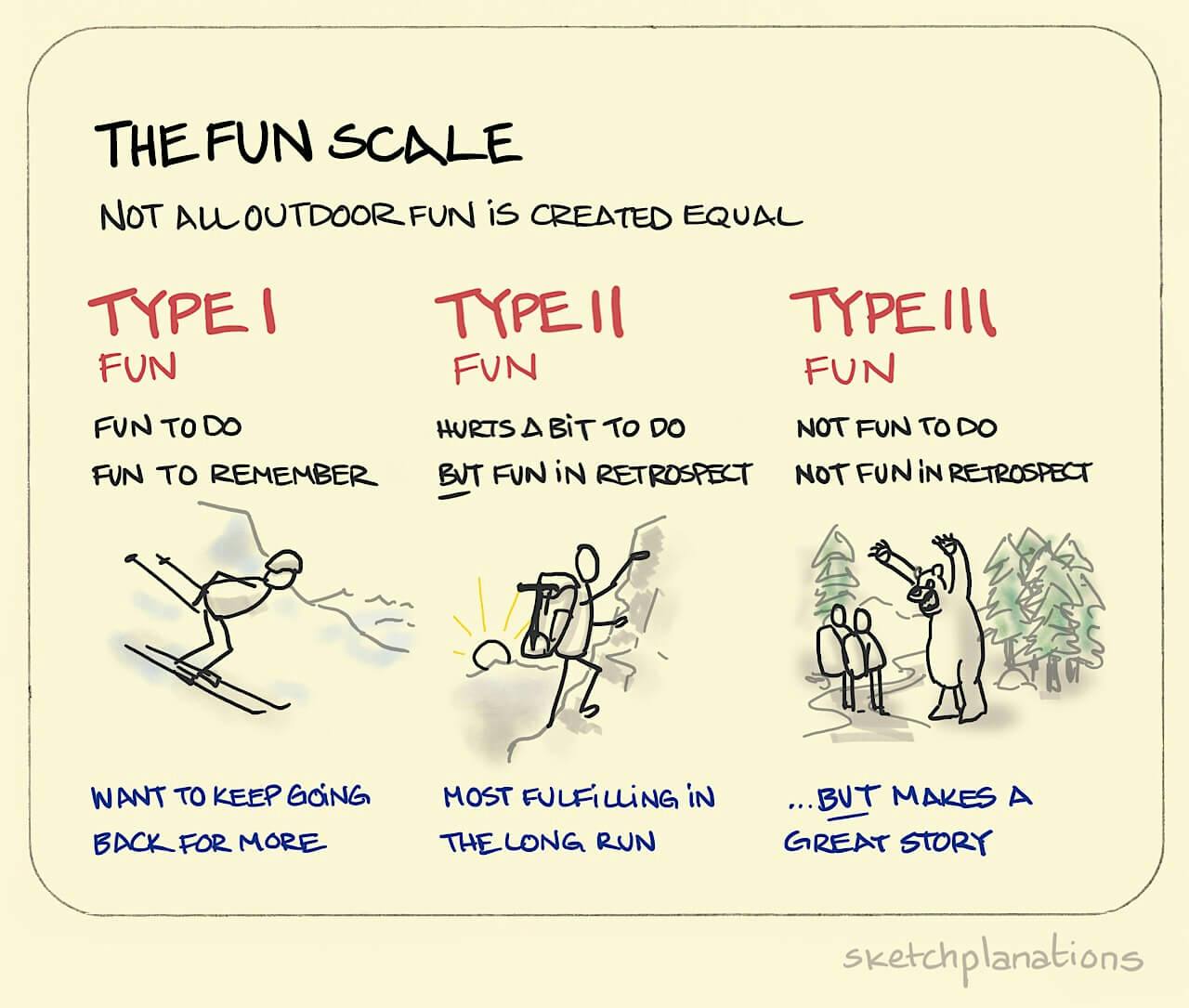 This article is for anyone seeking to enhance their personal development and well-being by integrating challenging and rewarding activities into their lives. Whether you’re looking to break free from the cycle of immediate, short-term pleasures or wanting to build resilience and self-esteem, this guide offers practical strategies for incorporating Type 2 fun into your routine.
 Type 1 Fun is characterized by immediate pleasure and enjoyment. This form of fun provides a quick dopamine kick, which is associated with feelings of pleasure and reward. Activities that fall into this category include binge-watching TV shows, eating your favorite junk food, or spending time on social media. These activities can be highly gratifying in the moment, offering instant gratification and a burst of happiness. However, the dopamine-driven pleasure often leads to a crash, leaving you feeling less satisfied and potentially more impulsive. Over time, the pursuit of Type 1 fun can become addictive, as the brain craves the quick hits of pleasure and the associated short-term rewards.
 Long-Term Satisfaction
 Neuroplasticity and Cognitive Growth
 Type 1 fun provides quick gratification and immediate pleasure, often resulting in a dopamine spike that offers a brief but intense sense of happiness. Activities such as indulging in favorite foods, watching entertaining TV shows, or scrolling through social media deliver instant rewards, but this pleasure can be fleeting. The dopamine-driven highs can lead to crashes, leaving you feeling less satisfied and potentially craving more of the same quick fixes. In contrast, Type 2 fun involves engaging in challenging and intense activities that might not be enjoyable at the moment but lead to long-term fulfillment. This type of fun is associated with a deeper, more lasting sense of satisfaction and personal growth, driven by the release of endorphins and serotonin.
 Outdoor Adventures and Physical Challenges
 Mental Puzzles and Games
 Setting Goals and Challenges
 Creating a Support System
 Embracing Type 2 fun as part of your life is a powerful way to foster personal growth, resilience, and long-term satisfaction. The challenges and discomforts you face in these activities may be daunting at first, but they pave the way for profound accomplishments and deeply rewarding experiences. As you embark on this journey, remember that every small step towards these challenges brings you closer to a more fulfilling life.