
Genius is not a matter of intelligence, memory, or speed, but the disciplined ability to compress reality into clear, reusable abstractions without distorting truth. Those who master simplification gain disproportionate leverage across learning, leadership, science, technology, and social impact because intelligence scales with the quality of abstraction, not the quantity of information. From Feynman’s ruthless clarity and Leonardo da Vinci’s cross-domain patterning to scientific parsimony and the limits of rote learning, the decisive advantage lies in seeing structures beneath noise and transferring insight across contexts. In an age where machines excel at pattern recognition but struggle with genuine abstraction, human relevance depends on cultivating explainability, autonomy, and synthesis. Societies that reward clarity over credentials and pattern-based learning over memorization will adapt; those that hoard complexity will stagnate. True genius is therefore not a private achievement but a moral responsibility—to think clearly, explain simply, and build systems that help others do the same.
ಜೀನಿಯಸ್ ಎಂದರೆ ಬುದ್ಧಿಮತ್ತೆ, ನೆನಪಿನ ಸಾಮರ್ಥ್ಯ ಅಥವಾ ವೇಗವಲ್ಲ, ಬದಲಾಗಿ ವಾಸ್ತವವನ್ನು ಸುಳಿಯದಂತೆ ಸ್ಪಷ್ಟ, ಪುನರುಪಯೋಗಕ್ಕೆ ಬಂದಂತೆ ಕಂಪ್ರೆಸ್ಸ್ ಮಾಡುವ ಶಿಸ್ತಿನ ಸಾಮರ್ಥ್ಯ. ಸರಳೀಕರಣದಲ್ಲಿ ನಿಪುಣರಾಗಿರುವವರು ಕಲಿಕೆ, ನಾಯಕತ್ವ, ವಿಜ್ಞಾನ, ತಂತ್ರಜ್ಞಾನ ಮತ್ತು ಸಾಮಾಜಿಕ ಪ್ರಭಾವದಲ್ಲಿ ಅತಿಯಾದ ಪ್ರಭಾವ ಹೊಂದುತ್ತಾರೆ, ಏಕೆಂದರೆ ಬುದ್ಧಿಮತ್ತೆ ಮಾಹಿತಿ ಪ್ರಮಾಣದಿಂದ ಅಲ್ಲ, ಅವುಗಳ ಮೂಲಕ ಅಳೆಯಲ್ಪಡುವುದು. ಫೈನ್ಮ್ಯಾನ್ ಅವರ ಖಚಿತತೆ, ಲಿಯೋನಾರ್ಡೋ ದಾ ವಿನ್ಚಿಯ ಡೊಮೇನ್ ಪ್ಯಾಟರ್ನಿಂಗ್, ವೈಜ್ಞಾನಿಕ ಸರಳತೆ ಮತ್ತು ನೆನಪಿನ ಮೆಮೋರೈಜೇಷನ್ ಹಗ್ಗದ ಮಿತಿಗಳನ್ನು ಗಮನಿಸಿದಾಗ, ನಿಜವಾದ ಲಾಭವು ಶಬ್ದದ ಮೇಲೆ ಇರುವ ರಚನೆಗಳನ್ನು ಗುರುತಿಸುವಲ್ಲಿ ಮತ್ತು ವಿವಿಧ ಸಂದರ್ಭಗಳಲ್ಲಿ ದೃಷ್ಟಿಕೋನಗಳನ್ನು ವರ್ಗಾಯಿಸುವಲ್ಲಿ ಇದೆ. ಯಂತ್ರಗಳು ಪ್ಯಾಟರ್ನ್ ಗುರುತಿಸುವುದರಲ್ಲಿ ತಾಂತ್ರಿಕವಾಗಿ ಪ್ರೌಢವಾಗಿದ್ದರೂ ನಿಜವಾದ ಸುತ್ತುಗಟ್ಟಿ ಹಿಂಜರಿಯುತ್ತವೆ, ಹೀಗಾಗಿ ಮಾನವ ಸಂಬಂಧವು ಸ್ಪಷ್ಟತೆಗೆ, ಸ್ವಾಯತ್ತತೆಗೆ ಮತ್ತು ಸಂಶ್ಲೇಷಣೆಗೆ ಬೆಳೆಸುವುದರ ಮೇಲೆ ಅವಲಂಬಿತವಾಗಿದೆ. ಜ್ಞಾನವನ್ನು ಪ್ರಮಾಣಪತ್ರಕ್ಕಿಂತ ಮೇಲಾಗಿ, ನೆನಪಿನ ಮೆಮೋರೈಜೇಷನ್ಗಿಂತ ಮೇಲಾಗಿ ಪ್ಯಾಟರ್ನ್ ಆಧಾರಿತ ಕಲಿಕೆಯನ್ನು ಪ್ರೋತ್ಸಾಹಿಸುವ ಸಮಾಜಗಳು ಹೊಂದಾಣಿಕೆ ಹೊಂದುತ್ತವೆ; ಜಟಿಲತೆಯನ್ನು ಸಂಗ್ರಹಿಸುವವರು ಸ್ಥಗಿತಗೊಳ್ಳುತ್ತಾರೆ. ಆದ್ದರಿಂದ ನಿಜವಾದ ಜೀನಿಯಸ್ ಖಾಸಗಿ ಸಾಧನೆ ಅಲ್ಲ, ಬುದ್ಧಿವಂತಿಕೆಯಿಂದ ಯೋಚಿಸುವುದು, ಸ್ಪಷ್ಟವಾಗಿ ವಿವರಿಸುವುದು ಮತ್ತು ಇತರರು ಕೂಡ ಅದೇ ಮಾಡುವಂತೆ ವ್ಯವಸ್ಥೆಗಳನ್ನು ನಿರ್ಮಿಸುವುದು ಎಂಬ ನೈತಿಕ ಜವಾಬ್ದಾರಿ.
The Secret of Genius – How Simplification, Patterning, and Abstraction Create Extraordinary Intelligence
Introduction: The Great Explainers Rule the World
Those who shape the world are not necessarily the smartest in the room; they are the clearest. Power accrues to the individuals and institutions that can compress complexity into usable meaning—without losing truth. This is the quiet advantage behind exceptional teaching, breakthrough science, resilient leadership, and scalable technology. Genius, in practice, is not brilliance on display; it is clarity that travels.
Genius as Disciplined Compression
Genius is not raw intelligence, memory capacity, or processing speed. It is the disciplined ability to compress reality without distorting it. Compression here does not mean oversimplification or dilution; it means identifying what matters, removing what does not, and preserving the causal structure that allows knowledge to travel across contexts.
Those who consistently simplify complexity into transferable abstractions gain disproportionate leverage over learning, creativity, leadership, science, and technology. They learn faster because they store principles rather than trivia. They create more because they recombine abstractions instead of starting from scratch. They lead better because they communicate in models people can act on. In both humans and machines, intelligence scales with the quality of abstraction, not the quantity of information. The future belongs to those who can see patterns early, name them clearly, and reuse them wisely.
Intended Audience and Purpose
Audience
This inquiry is for educators tired of teaching to the test; parents who want their children to understand, not merely perform; leaders navigating uncertainty; technologists building systems that must generalize beyond edge cases; social entrepreneurs designing scalable impact; students and lifelong learners seeking depth over trivia.
Purpose
The purpose is both diagnostic and constructive:
- To reveal why simplification and abstraction—not information accumulation—define real intelligence and enduring genius.
- To challenge the cultural obsession with volume (more data, more content, more credentials) at the expense of coherence.
- To demonstrate that abstraction is not a gift bestowed at birth, but a capability that can be deliberately cultivated in individuals and institutions.
Why Simplicity Signals Mastery
Einstein’s Maxim as a Cognitive Litmus Test
“If you can’t explain it simply, you don’t understand it well enough.” This statement is often quoted and rarely honored. Simplicity here does not mean childishness; it means structural understanding. A simple explanation exposes whether someone grasps first principles or is merely reciting inherited language. When explanations collapse under questioning, the issue is not articulation—it is comprehension.
Simplicity functions as a cognitive stress test. It reveals whether knowledge has been internalized as a flexible model or retained as brittle fragments. Experts who truly understand a domain can scale their explanations up or down without losing integrity. Those who cannot often hide behind jargon, equations, or verbosity—not out of malice, but because their own mental models are incomplete.
From Priesthood Knowledge to Open-Source Intelligence
Historically, complexity has been used to hoard power. Priesthoods, guilds, and bureaucracies maintained authority by controlling language and ritual. In modern times, this has shifted. Open-source software, public science communication, and decentralized learning platforms reward those who explain well, not those who obscure.
In an open knowledge economy, obscurity is no longer a marker of status; it is a liability. Influence now flows toward the “great explainers”—individuals and organizations that translate complexity into frameworks others can use. This is why educators with clear metaphors outperform credentialed lecturers, why founders who articulate first principles attract talent, and why movements succeed when their ideas are simple enough to replicate without central control.
Why Obscurity Often Hides Confusion, Not Depth
There is a dangerous myth that depth must sound complex. In reality, unnecessary complexity is frequently camouflage for shallow understanding. Obscure language can delay scrutiny, but it cannot withstand it. When pressed to explain assumptions, causal links, or edge cases, confusion surfaces quickly.
This is not an argument against complexity where it is necessary. Some domains are inherently technical. It is an argument against unearned complexity—language that adds cognitive load without adding explanatory power. True mastery reduces mental friction for others. It lowers the cost of entry without lowering the bar of truth.
Actionable Implications from the Start
- For educators: Teach fewer concepts, but insist on deeper explanations and student teach-back.
- For leaders: Measure understanding by clarity of decision-making, not fluency of buzzwords.
- For learners: Treat your inability to explain simply as a signal to revisit fundamentals, not as a failure.
- For institutions: Reward those who build shared mental models, not those who accumulate opaque expertise.
As Lee LeFever argues in The Art of Explanation, explanation is not a soft skill—it is a strategic capability. And as Duncan Watts shows in Everything Is Obvious, hindsight bias makes outcomes look simple only after someone has done the hard work of abstraction. The work of genius, then, is not to make things look clever, but to make them clear enough to move.
This is where the journey begins: with the courage to simplify, the humility to admit confusion, and the discipline to compress reality without breaking it.

Intelligence Defined: Compression Power Over Reality
Intelligence is not the possession of information; it is the capacity to compress experience into models that remain useful when conditions change. The more efficiently a mind can encode reality without losing causal truth, the more intelligently it can act under uncertainty. In this sense, intelligence is best measured not by recall, but by reuse.
A Modern Definition of Intelligence
Intelligence as the Ability to Reuse Experience Across Novel Contexts
At its core, intelligence is the ability to take lessons from the past and apply them meaningfully to situations never encountered before. A system—human or artificial—that performs well only when conditions are familiar is not intelligent; it is trained. Intelligence reveals itself precisely at the boundary of novelty.
This framing shifts emphasis away from test scores, encyclopedic memory, or rapid calculation, and toward transfer. Can the individual extract a principle from one domain and apply it in another? Can a lesson learned in failure guide action in ambiguity? Can a child who understands ratios apply them in cooking, finance, and engineering alike? Reusability, not volume, is the hallmark.
Compression vs. Memorization
Memorization stores facts as isolated units. Compression stores relationships. Memorized knowledge scales linearly—more facts require more storage and more effort to retrieve. Compressed knowledge scales exponentially—one abstraction can explain a thousand cases.
Consider the difference between memorizing multiplication tables and understanding multiplication as repeated addition and scaling. The former is brittle; the latter is generative. Compression reduces cognitive load while increasing expressive power. It allows fewer mental elements to explain more of the world.
This is why experts often appear to “know less” on the surface: they carry fewer explicit facts, but those facts are deeply structured. Their knowledge is lighter, not heavier.
Why Intelligence Is Fundamentally Predictive
Intelligence exists to anticipate. A system that cannot predict cannot plan; one that cannot plan cannot survive complexity. Whether in biology, psychology, or machine learning, intelligence emerges as a predictive engine—constantly generating expectations about what comes next and updating them when reality disagrees.
Prediction requires models, and models require compression. Raw data does not predict; patterns do. The better the compression, the more accurate and flexible the prediction. This is why intelligence correlates with foresight, adaptability, and strategic restraint. The intelligent agent does not react blindly—it anticipates based on abstracted experience.
Kolmogorov Complexity (Without the Math)
The Shortest Description That Preserves Meaning
Kolmogorov Complexity, stripped of formalism, asks a simple question: What is the shortest possible description of something that still captures what it is? A random string has high complexity because it cannot be compressed without loss. A patterned structure has low complexity because it can be described succinctly.
Applied to intelligence, this concept becomes powerful. The most intelligent explanation is the one that explains the most with the least—without cheating. It does not discard essential detail; it removes redundancy. It preserves meaning while reducing bulk.
In human terms, this is why a well-chosen metaphor can outperform a textbook, and why a single governing equation can replace pages of special cases. Compression is not reductionism; it is elegance earned through understanding.
Why Genius Solutions Feel “Obvious in Hindsight”
When a solution is optimally compressed, it appears inevitable—after it is revealed. This creates the illusion that the solution was simple all along. In reality, what feels obvious is the result of someone having done the invisible labor of abstraction: discarding false paths, identifying invariants, and finding the minimal structure that holds.
Douglas Hofstadter’s Gödel, Escher, Bach demonstrates this repeatedly: deep truths often hide behind layers of apparent complexity until the right abstraction collapses them into clarity. Once seen, they cannot be unseen. This is why genius is frequently misunderstood as luck or intuition—it is the endpoint of disciplined compression, not a starting point.
Critical Implications
- For education: Teaching should optimize for compressibility, not coverage. If students cannot summarize a concept in their own models, learning has not occurred.
- For leadership: Strategic clarity emerges from compressed understanding of systems, not dashboards overloaded with metrics.
- For AI and technology: Systems that merely recognize patterns without forming abstractions will remain brittle; intelligence advances when models generalize with fewer assumptions.
- For individuals: Feeling overwhelmed is often a signal of uncompressed knowledge. The solution is not more information, but better structure.
Max Bennett’s A Brief History of Intelligence reinforces this view by tracing intelligence through evolution as an increasing ability to model, compress, and predict reality efficiently. Intelligence grows not by adding more sensors or memory, but by improving the quality of internal representations.
In short, intelligence is compression with foresight. It is the art of carrying less, understanding more, and acting earlier—because reality has already been distilled into something the mind can move with.

III. Abstraction: The True Engine of Mind
Abstraction is not a luxury of intelligence; it is its engine. Without abstraction, thinking collapses under detail. With it, the mind transcends immediacy, navigates uncertainty, and creates what did not exist before. The quality of one’s abstractions determines the ceiling of one’s intelligence, creativity, and autonomy.
What Abstraction Really Is
Not Vagueness—but Structured Omission
Abstraction is often misunderstood as being “high-level” or vague. In truth, it is the opposite. Abstraction is a precise act of structured omission: deliberately ignoring irrelevant details while preserving the relationships that generate meaning. It is an act of discipline, not laziness.
A map is not the territory, yet a good map omits almost everything—and becomes more useful because of it. The danger lies not in omission, but in omitting the wrong things. Poor abstraction removes causality; good abstraction removes noise. This is why abstraction is hard: it requires judgment about what truly matters.
Losing Detail While Gaining Reach
Every abstraction trades local fidelity for global applicability. When done well, this trade is profoundly advantageous. A principle that holds across contexts is more powerful than a fact that holds only once. This is how mathematics governs physics, how grammar structures language, and how values guide behavior in unfamiliar situations.
Gaining reach means that one mental model can now explain, predict, or guide action across many domains. The mind becomes lighter yet stronger. This is also why abstraction feels liberating: it reduces cognitive load while increasing agency.
Two Complementary Abstraction Modes
Abstraction is not monolithic. Human cognition employs at least two complementary modes, each essential and incomplete without the other:
Mode | Cognitive Domain | Examples | Primary Strength |
Value-Centric | Continuous | Visual intuition, music, geometry, spatial reasoning | Speed, insight, holistic grasp |
Program-Centric | Discrete | Logic, algorithms, language, symbolic reasoning | Precision, planning, reproducibility |
Value-Centric Abstraction
This mode operates on gradients rather than rules. It excels at perception, intuition, and pattern sensing. Artists, designers, physicists, and surgeons rely heavily on it. It allows rapid insight and gestalt understanding but can be difficult to verbalize or formalize.
Program-Centric Abstraction
This mode structures thought into steps, symbols, and rules. It powers mathematics, software, legal systems, and formal planning. It is slower but more explicit, allowing replication, debugging, and scaling.
High-level intelligence emerges not from choosing one mode over the other, but from fluidly translating between them. Genius often lies in bridging intuition into structure, and structure back into intuition.
Autonomous Abstraction vs Rule Following
Why Geniuses Invent Frameworks Instead of Obeying Them
Rule-following is efficient within known boundaries. Abstraction-creation is necessary when boundaries break. Experts excel at applying existing frameworks; geniuses excel at creating new ones when reality no longer fits the old models.
Autonomous abstraction is the ability to generate one’s own categories, metrics, and representations in response to novel situations. It is the difference between solving problems and redefining them. This capacity marks the transition from competence to originality.
The Difference Between Expertise and Originality
Expertise is mastery within a frame. Originality is mastery over frames. Experts optimize; originals reframe. Both are valuable, but they operate at different cognitive levels.
John Dewey, in How We Think, emphasizes reflective thought as the ability to suspend habitual responses and reorganize experience. Andy Clark’s Surfing Uncertainty extends this by showing that the brain itself is a prediction machine, constantly revising abstractions to minimize surprise. Together, they point to a critical insight: intelligence is not static knowledge, but dynamic model-building.
Actionable Implications
- For learners: Practice creating your own summaries, diagrams, and analogies instead of copying definitions.
- For educators: Reward model-building over correct answers; assess how students structure understanding.
- For leaders: When facing confusion, ask not “Which rule applies?” but “Which abstraction is missing?”
- For institutions: Encourage safe experimentation in redefining frameworks rather than rigid compliance with legacy models.
Abstraction, when autonomous, is freedom. It allows the mind to move ahead of experience rather than be trapped by it. This is why abstraction is the true engine of mind—and why cultivating it is not optional for those who wish to remain relevant in a rapidly changing world.

The Feynman Technique: Weaponized Understanding
The Feynman Technique is not a study trick; it is an epistemic weapon. It exposes false understanding, dismantles intellectual vanity, and forces ideas to earn their keep. Those who practice it relentlessly become dangerous—not because they know more, but because they cannot be fooled by complexity, including their own.
Why Feynman Was Dangerous to Complexity
Curiosity Over Credentials
Richard Feynman was disruptive not because he rejected expertise, but because he refused to outsource understanding to authority. Titles, reputations, and institutional approval meant little to him if he could not reconstruct an idea from first principles. This made him intellectually unpredictable and unusually free.
Curiosity, for Feynman, was not passive interest—it was active interrogation. He poked holes in explanations that were “accepted,” not out of contrarianism, but because unexamined knowledge decays into ritual. In systems that reward conformity, such curiosity is subversive. In systems that reward truth, it is indispensable.
Why He Mistrusted Equations He Couldn’t Explain
Feynman valued equations deeply—but only after he could explain what they meant. An equation that cannot be translated into intuition is a black box. It may work, but it cannot teach, adapt, or generalize easily. This stance placed him at odds with environments where mathematical fluency is mistaken for understanding.
His standard was simple and brutal: if you cannot explain it in plain language, you do not yet understand it. This did not make him anti-intellectual; it made him anti-pretense.
The Four-Step Loop (Expanded)
- Exhaustive Recall: Exposing the Illusion of Knowledge
Write down everything you think you know about a topic—without notes. This step reveals how much of your “knowledge” is actually borrowed language or recognition rather than understanding. Gaps surface quickly when recall is forced.
This is cognitively uncomfortable by design. It breaks the illusion created by passive consumption—reading, watching, or listening without reconstruction.
- Child-Level Explanation: The Compression Test
Explain the concept as if to a child, using simple words and short sentences. This is not about dumbing down; it is about compressing. Any idea that survives this step has structural integrity. Any idea that collapses was never fully understood.
This step enforces ruthless prioritization: what is essential, what is decoration, and what is confusion disguised as sophistication.
- Gap Identification: Epistemic Humility
Where you stumble, circle the gap. Do not gloss over it. Return to source material and rebuild only that missing piece. This prevents overstudying and targets effort where it matters most.
Epistemic humility is not weakness—it is efficiency. Those who refuse to acknowledge gaps waste years reinforcing misconceptions.
- Analogy Creation: Transferability
Create an analogy that maps the concept to a different domain. If the analogy holds, understanding is portable. If it breaks, refinement is required. Analogy is the final proof that compression has preserved meaning.
This step turns knowledge into a reusable tool rather than a static possession.
From Pedagogy to Heutagogy
Self-Directed Learners Outperform Trained Specialists
Pedagogy assumes dependence; heutagogy assumes agency. The Feynman Technique shifts learners from recipients to constructors of knowledge. Research summarized in Make It Stick shows that effortful retrieval, explanation, and self-testing dramatically outperform passive review.
Those who direct their own learning develop not just competence, but adaptability. They are harder to obsolete because they can rebuild understanding as contexts change.
Autonomy as a Multiplier of Intelligence
Autonomy multiplies intelligence by removing bottlenecks. When learners can diagnose their own gaps, choose learning strategies, and test understanding independently, progress accelerates. This is why self-taught individuals often outpace formally trained peers in fast-changing fields.
The implication is uncomfortable but clear: systems that over-structure learning may produce compliance, not comprehension.
Actionable Implications
- For students: Replace highlighting with explain-back. If you cannot teach it, you do not own it.
- For educators: Grade explanations and analogies, not just answers.
- For leaders: Demand simple explanations before approving complex initiatives.
- For institutions: Build cultures where “I don’t know yet” is rewarded as a step toward clarity.
As revealed through Surely You’re Joking, Mr. Feynman! and reinforced by cognitive science in Make It Stick, understanding is not passive absorption—it is active reconstruction. The Feynman Technique operationalizes this truth.
In a world drowning in information, weaponized understanding is a competitive advantage. Those who wield it do not just learn faster—they see through noise, resist manipulation, and build ideas that last.
![🔥 [30+] Einstein Graffiti Wallpapers | WallpaperSafari](https://cdn.wallpapersafari.com/34/31/nm1xX4.jpg)
Leonardo da Vinci: Patterning Across Realities
Leonardo da Vinci’s enduring genius did not arise from mastery of any single discipline, but from his extraordinary ability to see the same patterns wearing different costumes. Patterning—detecting, selecting, and forming meaningful regularities across domains—is the meta-skill that allows intelligence to scale beyond specialization. In times of stability, specialists dominate. In times of transition, polymaths lead.
Patterning as a Meta-Skill
Seeing Sameness Across Domains
Patterning is the capacity to recognize structural similarity beneath surface difference. Where others see unrelated phenomena, the patterner sees echoes. This ability collapses distance between disciplines and allows insight to migrate.
Leonardo did not compartmentalize art, anatomy, hydraulics, and mechanics. He treated them as variations of a deeper grammar. Muscles became levers. Blood vessels became rivers. Light became geometry. By translating observations across domains, he accelerated understanding in each.
This is not eclecticism for its own sake. Patterning is efficient. It reduces the need to relearn from scratch and enables rapid hypothesis generation in unfamiliar territory.
Why Polymaths Outperform Specialists During Paradigm Shifts
Specialists excel when rules are stable and optimization is the goal. Polymaths excel when rules change and redefinition is required. During paradigm shifts—technological, scientific, or social—existing frameworks fracture. The advantage shifts to those who can recombine insights from multiple domains and invent new abstractions.
David Epstein’s Range documents this repeatedly: individuals with broad exposure and cross-domain thinking adapt faster and solve novel problems more creatively than narrowly trained experts. Leonardo was not an exception; he was an early prototype of this cognitive advantage.
Analogy as Cognitive Bridge-Building
Trees and Arteries
Leonardo observed that the branching patterns of trees mirrored those of human arteries. This was not poetic flourish; it was structural insight. Both systems distribute resources efficiently under constraints of flow and resistance. Recognizing this allowed understanding to travel from botany to anatomy.
Rivers and Hair
He compared flowing water to strands of hair, noting shared dynamics of turbulence, curl, and motion. By studying one, he gained intuition about the other. The analogy allowed him to model fluid dynamics visually centuries before formal equations existed.
Mechanics and Anatomy
Leonardo treated the human body as an engineered system. Bones were beams, joints were pivots, muscles were tensioning devices. This mechanical abstraction enabled him to dissect movement, posture, and force with unprecedented clarity.
Analogy, in Leonardo’s hands, was not metaphor—it was a reasoning tool. It preserved causal structure while shifting context.
The Three Acts of Pattern Mastery
- Recognition – Detecting Repetition
The first act is noticing that something repeats. This requires attention and curiosity. Many see phenomena; few notice recurrence. Recognition is the seed of patterning. - Selection – Ignoring Noise
Not all repetition matters. The second act is discernment: filtering signal from noise. This is where judgment enters. Leonardo filled notebooks, but he did not treat all observations equally. He selected patterns that hinted at underlying laws. - Formation – Creating New Order
The final act is creative. It involves assembling recognized and selected patterns into a new framework that did not exist before. Formation is where originality emerges. It is the leap from seeing patterns to using them.
Actionable Implications
- For learners: Actively seek analogies between what you are studying and what you already know.
- For educators: Design curricula that reward cross-domain connections, not siloed mastery.
- For leaders: Build teams with cognitive diversity; pattern formation thrives at intersections.
- For institutions: Prepare for disruption by cultivating generalists alongside specialists.
Walter Isaacson’s Leonardo da Vinci reveals a mind perpetually in translation—constantly moving insights across boundaries. Epstein’s Range shows that such minds are not relics of the Renaissance, but necessities of the modern world.
Patterning is not artistic flair; it is strategic intelligence. Those who master it do not merely respond to change—they anticipate it by recognizing the same old patterns emerging in new forms.
Simplicity in Science: Objective, Not Aesthetic
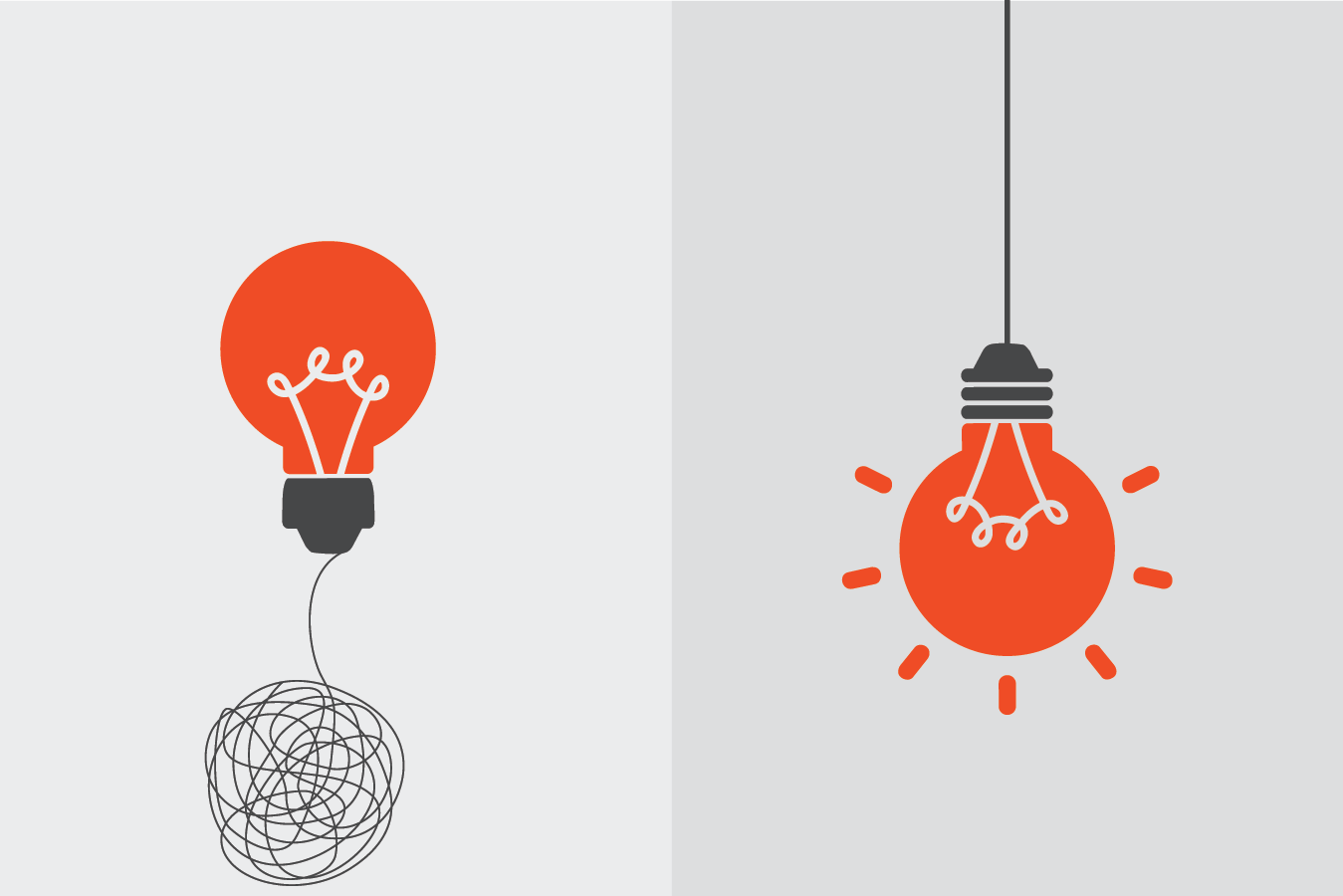
In science, simplicity is not about elegance or taste—it is about survival. Simple models endure because they generalize, predict, and fail gracefully. Complexity may impress, but only parsimony scales. The history of science is not a march toward greater detail, but toward fewer assumptions with broader explanatory reach.
Parsimony Is a Survival Strategy
Why Simpler Models Generalize Better
A scientific model exists to explain known data and to make reliable predictions about unknown cases. Models overloaded with parameters may fit past observations perfectly, yet collapse when conditions change. Simpler models, by contrast, capture underlying structure rather than surface detail, making them more resilient to novelty.
This is why parsimony is not aesthetic minimalism; it is functional efficiency. A model that explains more with less is easier to test, easier to falsify, and easier to extend. It survives because it travels.
Occam’s Razor as Error Minimization
Occam’s Razor is often misunderstood as a preference for “simple explanations.” In practice, it is a strategy for minimizing error. Each additional assumption introduces another potential point of failure. By reducing assumptions, we reduce the surface area for being wrong.
This principle is deeply pragmatic. It acknowledges human and institutional limits: limited data, limited time, limited cognitive bandwidth. Parsimony keeps inquiry grounded when certainty is impossible.
The Trivialization Trap
When Simplicity Becomes Distortion
Not all simplicity is honest. Oversimplification strips away causality in pursuit of clarity, producing explanations that are easy to repeat but wrong to apply. This is the trivialization trap: mistaking reduction for understanding.
A model that cannot be tested, measured, or used to generate predictions is not simple—it is empty. True simplicity preserves explanatory power; false simplicity sacrifices it for comfort.
Why Slogans Are Not Theories
Slogans compress language, not reality. “Everything happens for a reason” or “follow your passion” may feel insightful, but they do not constrain outcomes or guide action. Scientific theories, by contrast, are accountable to evidence. They risk being wrong.
The danger arises when slogans masquerade as science or policy. They shut down inquiry by sounding complete. Genuine simplicity invites testing; fake simplicity resists it.
Reduction and Unification as Progress
Newton, Maxwell, Darwin
Scientific revolutions occur when diverse phenomena collapse into a single explanatory framework. Newton unified terrestrial and celestial motion. Maxwell unified electricity and magnetism. Darwin unified biological diversity under natural selection.
In each case, progress did not come from adding complexity, but from discovering a deeper simplicity that made complexity intelligible.
Fewer Assumptions, Broader Reach
Reduction and unification reduce the number of independent assumptions needed to explain the world. This does not deny complexity at the surface; it explains it from fewer roots. Such theories are powerful precisely because they compress reality without distorting it.
Thomas Kuhn’s The Structure of Scientific Revolutions shows that these shifts are not gradual—they require abandoning entrenched frameworks. Sean Carroll’s The Big Picture argues that the deepest explanations are those that reconcile scale, from particles to people, under coherent principles.
Actionable Implications
- For researchers: Favor models that fail informatively over those that succeed vacuously.
- For educators: Teach students how theories earn their simplicity through evidence.
- For policymakers: Beware of elegant narratives unsupported by measurable mechanisms.
- For communicators: Aim for clarity that invites scrutiny, not slogans that silence it.
Simplicity in science is not about making things look easy. It is about making them work—across time, scale, and uncertainty. That is why parsimony is not a stylistic preference, but an epistemic necessity.
VII. Why Rote Learning Kills Genius
Rote learning produces compliance, not competence. It creates individuals who can repeat answers but cannot reframe questions. Under pressure, memorized knowledge collapses; only structured understanding adapts. When education rewards recall over reasoning, it systematically suppresses the very conditions under which genius emerges.
Knowing Labels vs Knowing Structures
Memorized Facts Collapse Under Pressure
Rote learning stores information as labels—names, formulas, definitions detached from the reasoning that produced them. Such knowledge performs adequately in controlled environments: exams, interviews, predictable tasks. But when variables change, stress rises, or novelty appears, labels offer no guidance.
This is why high performers in academic settings often falter in real-world problem-solving. Their knowledge has no internal scaffolding. Remove the familiar cues, and the system fails.
Conceptual Understanding Adapts
Conceptual understanding, by contrast, encodes structure. It preserves relationships, constraints, and causal pathways. When surface details change, the underlying model still holds. This allows adaptation rather than panic.
Knowing why a method works matters more than knowing that it works. Structure-based knowledge is slower to acquire but exponentially more useful. It enables improvisation, diagnosis, and innovation.
Human vs Machine Intelligence
Why Deep Learning Excels Yet Remains Brittle
Modern machine learning systems excel at pattern recognition through massive data exposure. They interpolate impressively within learned distributions. However, without explicit abstraction formation, they remain brittle when confronted with out-of-distribution scenarios or small rule changes.
This mirrors rote learning in humans: high performance without understanding. The system “knows” correlations, not principles.
Pattern Recognition Without Abstraction Formation
Human genius differs not in data volume, but in the ability to form abstractions deliberately. We can invent new categories, redefine variables, and question premises. Machines recognize patterns; humans can question whether the pattern matters.
This distinction is critical. Overtraining humans to behave like machines—optimized for recall and repetition—squanders our comparative advantage.
Education as the Bottleneck
Schools Reward Recall, Not Synthesis
Most educational systems are designed for scalability and assessment ease, not cognitive depth. Recall is easy to test; synthesis is not. As a result, curricula prioritize memorization, speed, and conformity over model-building and reasoning.
This design choice has consequences. It selects for short-term performance and penalizes long-term adaptability.
Why Exam Toppers Often Stall Later
Exam success correlates weakly with real-world problem-solving in dynamic environments. Many top scorers struggle when faced with ambiguity because they were trained to find the “right answer,” not to construct one.
Todd Rose’s The End of Average exposes how standardized systems mismeasure human potential by optimizing for conformity rather than individuality. Seymour Papert’s Mindstorms argues that learning should be about constructing ideas, not absorbing them.
Actionable Implications
- For students: Replace memorization with model-building; ask “why” until the structure reveals itself.
- For educators: Design assessments that reward explanation, synthesis, and transfer across contexts.
- For parents: Value understanding over marks; marks expire, models endure.
- For institutions: Shift from ranking individuals to cultivating thinkers who can navigate uncertainty.
Rote learning does not merely fail to produce genius—it actively suppresses it. In a world where machines already outperform humans at recall, educating people to behave like machines is not just inefficient; it is irresponsible.
VIII. Cultivating Genius: Practical, Unromantic Truths
Genius is not mystical, glamorous, or comfortable. It is built through sustained, often tedious practices that strengthen abstraction, reflection, and self-correction. What makes genius rare is not talent scarcity, but the unwillingness—personal and institutional—to tolerate the effort, humility, and discomfort required to train it.
Daily Practices That Build Abstraction Power
Teach-Back Journaling
At the end of each learning session, write an explanation of what you learned as if teaching someone else. Do not summarize the source; reconstruct the idea. This practice forces compression, exposes gaps, and converts passive exposure into active understanding.
The value lies not in eloquence but in fidelity to structure. If the explanation collapses, the model is weak.
Analogy Notebooks
Maintain a dedicated space for analogies. For every major concept, attempt to map it onto a different domain—biology to economics, physics to leadership, code to culture. Analogies reveal whether abstraction has preserved causality or merely surface resemblance.
Over time, this builds a personal library of transferable models—a hallmark of high-level thinking.
First-Principles Decomposition
Regularly break problems down to their irreducible components. Ask: What must be true for this to work? What assumptions am I inheriting without scrutiny? This strips away convention and forces engagement with fundamentals.
First-principles thinking is cognitively expensive, which is precisely why it is effective. It prevents drift into rote application.
Environmental Conditions for Genius
Psychological Safety
Abstraction formation requires admitting confusion. Environments that punish questions or mistakes suppress learning at its root. Psychological safety is not indulgence; it is a prerequisite for intellectual honesty.
Time to Think
Deep understanding does not emerge in constant urgency. It requires unbroken time for reflection, synthesis, and incubation. Cal Newport’s Deep Work demonstrates that distraction fragments cognition and prevents model-building.
Permission to Be Wrong
Being wrong is not a failure mode; it is a feedback signal. Anders Ericsson’s Peak shows that deliberate practice depends on rapid error detection and correction. Systems that stigmatize error incentivize superficial performance over genuine growth.
Why Genius Is Trainable—but Rarely Trained
It Demands Effort, Humility, and Discomfort
Training abstraction is harder than training recall. It slows visible progress, challenges identity, and exposes ignorance. Most systems optimize for speed and certainty, not depth.
Shortcuts Produce Credentials, Not Clarity
Certificates, grades, and titles can be acquired without understanding. Clarity cannot. This mismatch explains why societies produce increasingly credentialed populations with declining problem-solving capacity.
Actionable Implications
- For individuals: Schedule thinking time with the same seriousness as execution time.
- For educators: Build curricula around iterative explanation, not content coverage.
- For leaders: Protect deep work and reward thoughtful dissent.
- For institutions: Redesign incentives to value learning trajectories over short-term performance.
Genius grows where rigor meets patience. It is cultivated not through inspiration, but through environments and habits that make abstraction unavoidable and honesty safe.

Implications for Society, AI, and the Future of Work
The defining divide of the coming decades will not be between humans and machines, but between those who can abstract and those who cannot. As automation absorbs routine, abstraction becomes the new literacy—the capacity that determines employability, leadership, and civic relevance. AI is not replacing human intelligence; it is exposing what kind of intelligence was never deep to begin with.
Why Abstraction Is the New Literacy
Automation Eats Routine
Every task that can be reduced to stable rules, repeated patterns, or predictable workflows is being automated—rapidly and irreversibly. This is not a failure of human labor; it is a consequence of clarity. Once a process is well understood, it becomes codifiable.
The implication is stark: value migrates away from execution and toward framing. Those who merely follow procedures will be outpaced by those who design, adapt, and reinterpret them.
Humans Must Handle Novelty
What remains distinctly human is the ability to operate when rules are incomplete, data is sparse, and goals are contested. Novelty is not an edge case; it is the new normal. Abstraction allows humans to act under these conditions by transferring insight across contexts.
This is why abstraction functions as literacy: without it, individuals cannot read the world as it changes.
AI as a Mirror, Not a Threat
What Machines Reveal About Human Thinking
AI systems excel at pattern recognition, optimization, and scale. They fail at meaning-making, value judgment, and autonomous abstraction formation. This contrast is instructive. Machines show us what intelligence looks like when divorced from understanding.
Rather than fearing replacement, humans should study this mirror. Where machines succeed, we should automate. Where they fail, we should educate.
Why Abstraction Remains Our Edge
Humans can redefine problems, invent new representations, and question objectives themselves. Abstraction allows us to step outside the frame—to decide not just how to act, but what matters.
Max Tegmark’s Life 3.0 warns that the risk is not malicious AI, but poorly aligned objectives. Alignment requires abstraction—clear models of values, trade-offs, and long-term consequences. This is a human responsibility.
Rebuilding Education and Employment Ecosystems
Skill Stacks, Not Degrees
Static credentials age poorly in dynamic environments. What endures are skill stacks: layered capabilities built on core abstractions—communication, reasoning, systems thinking, learning how to learn.
Employment systems must shift from credential screening to capability demonstration.
Pattern-Based Vocational Models
Vocational training should teach patterns, not procedures. Instead of training for specific tools, teach underlying models—flows, constraints, feedback loops—that apply across industries.
Kevin Kelly’s The Inevitable emphasizes that adaptability, not stability, is the future. Pattern-based education prepares individuals to migrate skills as contexts evolve.
Actionable Implications
- For policymakers: Invest in abstraction-centered education, not narrow job training.
- For employers: Hire for learning velocity and model-building ability.
- For educators: Integrate AI as a tool for exploring, not outsourcing, thinking.
- For individuals: Treat abstraction as a core career skill, not an academic luxury.
The future of work will not reward those who know more, but those who understand better. Abstraction is the currency of that future—and it must be deliberately cultivated at every level of society.

Simplicity in Science: Objective, Not Aesthetic
Simplicity in science is not about elegance or beauty—it is about survival. Simple models endure because they fail less often, adapt more readily, and explain more with less. Complexity is easy to create; restraint is hard-earned.
Why Parsimony Is a Survival Strategy
Simpler models generalize better because they make fewer commitments to noise. Every extra assumption is a liability—a potential point of failure when conditions change. Occam’s Razor is not philosophical minimalism; it is statistical humility. It minimizes error by refusing to hallucinate structure where none exists.
In evolutionary terms, parsimonious explanations survive hostile data. Overfit theories collapse the moment reality deviates from training conditions. Science advances not by piling details, but by discarding what does not scale.
The Trivialization Trap
However, simplicity can rot into distortion. A slogan is not a theory. A soundbite is not an explanation. When nuance is amputated for popularity, simplicity becomes intellectual malpractice.
True simplicity compresses complexity without lying. Trivial simplicity deletes complexity altogether. The former requires mastery; the latter requires only confidence.
Reduction and Unification as Real Progress
Scientific revolutions succeed by reducing assumptions while expanding explanatory reach. Newton unified celestial and terrestrial motion. Maxwell fused electricity and magnetism. Darwin explained biological diversity with a single non-teleological mechanism.
Progress is measured not by how much we say, but by how much we no longer need to say.
Key Insight:
Simplicity is not the starting point of understanding—it is the end product of deep struggle.
VII. Why Rote Learning Kills Genius
Rote learning produces compliance, not competence. It trains memory without training mind. Under pressure, memorized facts evaporate; only structural understanding survives.
Knowing Labels vs Knowing Structures
Labels are fragile. Structures are resilient. When students memorize answers without understanding relationships, their knowledge collapses the moment the problem is reframed.
Conceptual understanding adapts. It transfers. It recombines. Genius does not recall—it reconstructs.
Human vs Machine Intelligence
Modern AI exposes this divide mercilessly. Deep learning systems excel at pattern recognition, yet remain brittle outside familiar distributions. They interpolate; they do not truly abstract.
Humans, at their best, form generative models—mental frameworks that can reason across domains. When education trains humans like machines—rewarding recall and speed—it strips them of their only advantage.
Education as the Bottleneck
Schools optimize for examinability, not insight. They reward correctness over curiosity, compliance over synthesis. This is why many exam toppers plateau later in life: the environment changes, but their cognitive strategy does not.
The tragedy is not lack of intelligence—it is misdirected training.
VIII. Cultivating Genius: Practical, Unromantic Truths
Genius is not rare because it is mystical. It is rare because it is uncomfortable. It demands sustained effort, frequent error, and the humility to rebuild one’s thinking repeatedly.
Daily Practices That Build Abstraction Power
Abstraction is trainable through unglamorous habits:
- Teach-back journaling: Explain what you learned as if teaching a beginner. Gaps reveal themselves immediately.
- Analogy notebooks: Force cross-domain mappings. Insight lives in unexpected similarities.
- First-principles decomposition: Strip problems to irreducible constraints before rebuilding solutions.
None of these look impressive. All of them work.
Environmental Conditions for Genius
Genius requires:
- Psychological safety to ask “stupid” questions
- Time to think without interruption
- Explicit permission to be wrong publicly
Most institutions provide the opposite—and then wonder why originality dies.
Why Genius Is Trainable—but Rarely Trained
Shortcuts produce credentials, not clarity. Hustle culture glorifies output while starving insight. But there is no bypass around deep thinking. The bill always comes due.
Implications for Society, AI, and the Future of Work
Abstraction is the new literacy. Those who cannot model, generalize, and reason across domains will be managed by those who can—human or machine.
Why Abstraction Beats Automation
Automation devours routine. What remains is novelty, ambiguity, and judgment. Humans who rely on procedural competence alone are already obsolete.
The future belongs to those who can see patterns before they harden into processes.
AI as a Mirror, Not a Threat
AI does not replace human thinking—it exposes its absence. Where humans abdicate understanding, machines dominate. Where humans cultivate abstraction, machines amplify.
AI reveals a simple truth: intelligence without understanding is fast but shallow.
Rebuilding Education and Employment Ecosystems
Degrees are decaying signals. Skill stacks matter more. Pattern-based vocational models—where learners master transferable mental frameworks—will outperform rigid credentialism.
Education must shift from content delivery to cognition cultivation.
Simplicity Is Moral Responsibility
Clarity is kindness. Hoarding complexity is intellectual selfishness.
Those who understand deeply owe the world usable abstractions. Not to impress. Not to dominate. But to enable others to think, act, and decide better.
Genius is not a personal trophy.
It is a social obligation.
If these ideas resonate, they must not remain theory. They must translate into practice, institutions, and opportunity—especially for those systematically excluded from deep learning environments.
Participate and Donate to MEDA Foundation
This philosophy is not theoretical—it is operational at MEDA Foundation.
MEDA Foundation works at the root of the problem: not employability, but thinkability. By empowering individuals—especially neurodiverse populations—to build pattern recognition, abstraction skills, and autonomous problem-solving capacity, MEDA moves people from dependency to self-sufficiency.
Rather than training people to follow instructions, MEDA builds ecosystems where individuals learn how to think, adapt, and create value across changing environments. Pattern-based learning replaces rote instruction. Skill abstraction replaces brittle credentials. Dignity replaces charity.
Supporting MEDA Foundation means investing in education that scales human capability, not just compliance.
If you believe clarity is kindness, and understanding is a social responsibility, then participation is not optional—it is alignment.
Donate. Mentor. Collaborate. Help build ecosystems that last.
Book References (Consolidated)
- Gödel, Escher, Bach — Douglas Hofstadter
- Range — David Epstein
- Deep Work — Cal Newport
- Surely You’re Joking, Mr. Feynman! — Richard Feynman
- The Structure of Scientific Revolutions — Thomas Kuhn
- Life 3.0 — Max Tegmark