

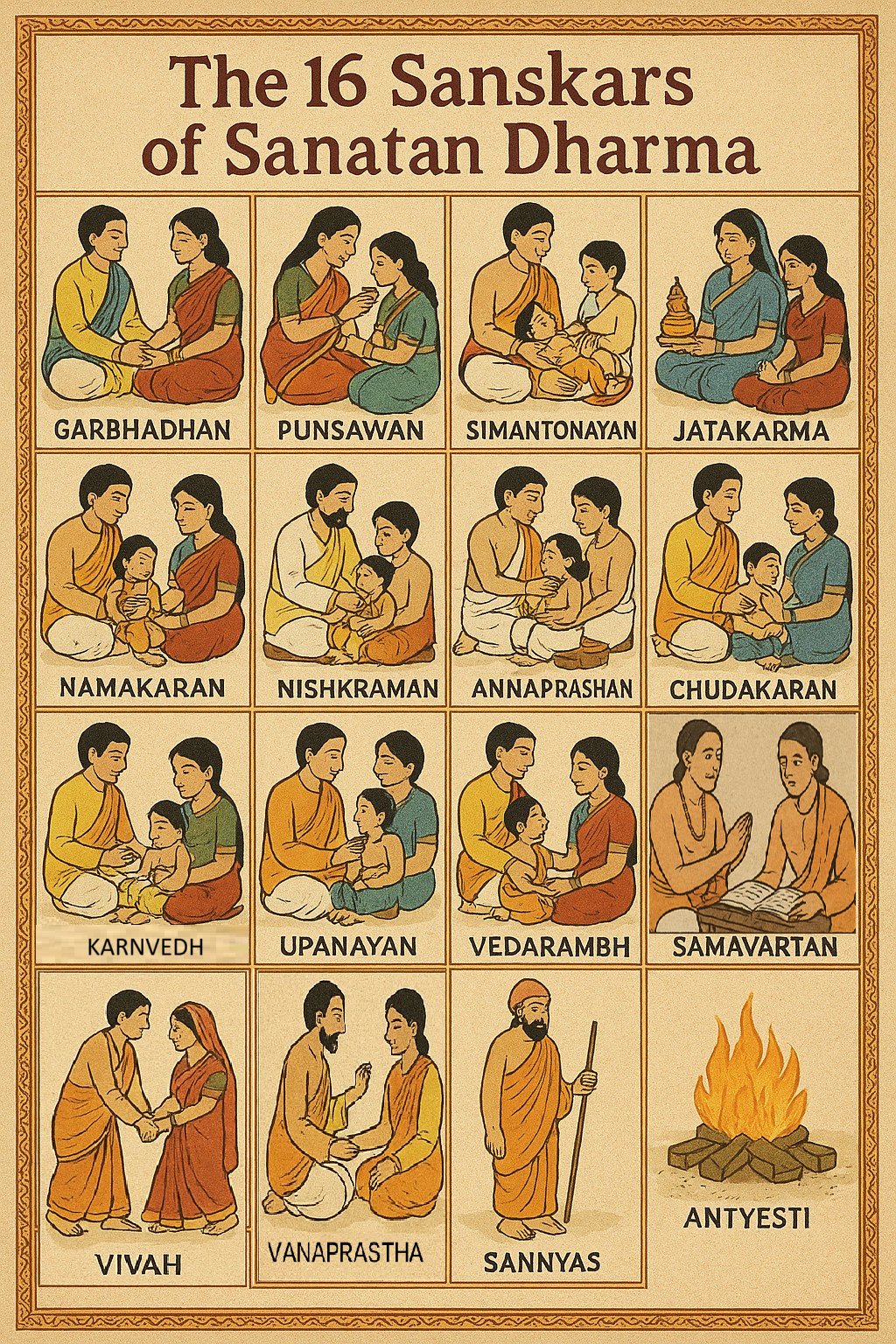
The 16 Samskaras, integral to Sanatana Dharma, are profound rituals designed to guide individuals through life’s key transitions, shaping their spiritual, emotional, and social development. These rites, spanning from conception to death, offer psychological support, cultivate inner virtues, and strengthen community bonds. In today’s fast-paced world, these timeless practices hold the power to provide deeper meaning, foster intentional living, and help individuals navigate modern challenges with wisdom and purpose. By reimagining and simplifying these rites, we can preserve their essence while making them relevant for contemporary generations. Through awareness, education, and participation, the revival of Samskaras can reconnect individuals to their cultural roots and spiritual well-being.
Sanatana Dharma and the 16 Samskaras: Ancient Blueprints for a Conscious, Purposeful Life
✨ Intended Audience and Purpose of the Article
🧭 Intended Audience
- Spiritually curious individuals seeking meaning beyond materialism, yearning for depth, balance, and clarity in an increasingly transactional world.
- Parents and guardians wishing to raise children who are rooted in inner values, cultural identity, and mindful decision-making.
- Educators, cultural historians, and community leaders tasked with preserving, interpreting, and adapting Indian traditions for a globalized era.
- Dharmic practitioners and spiritual seekers navigating the interface of ancient wisdom and contemporary challenges.
- Modern youth and young adults, often disconnected from ancestral practices but searching for identity, purpose, and belonging.
🎯 Purpose
- To demystify the 16 Samskaras—not as outdated rituals, but as timeless rites of passage offering spiritual, psychological, and emotional clarity.
- To explore how these rites strengthen personal development while fostering social cohesion and cultural continuity.
- To revive the conversation around Samskaras within families, communities, and institutions, especially among the younger generation.
- To provide practical, inclusive, and accessible ways to adopt and adapt Samskaras meaningfully in modern life.
- To demonstrate how the MEDA Foundation is a living example of inclusive Dharma in action—bridging ancient wisdom with contemporary relevance through education, support, and service.
I. 🕉️ Introduction: The Relevance of Dharma in an Age of Distraction
In an era defined by hyper-connectivity, emotional numbness, and transactional relationships, the concept of Dharma—our deeper purpose and cosmic responsibility—seems distant, if not irrelevant. Many feel adrift, cycling between anxiety and ambition, achievement and emptiness. Yet, beneath the noise of modernity lies a quiet question: Is there a more harmonious, meaningful way to live?
Sanatana Dharma, often translated as “The Eternal Way,” is not merely a religion or a philosophical framework—it is a living consciousness. It embraces cyclical time, respects diversity of thought, honors nature, and sees every being as divine in essence. Unlike belief systems that demand conformity, Sanatana Dharma invites exploration and alignment: alignment of the self with the cosmos, the personal with the universal, the moment with the eternal.
One of the profound yet underappreciated aspects of this tradition is the system of Samskaras—16 key rites of passage designed to elevate human life from biological accident to conscious evolution. These are not mere rituals to be performed for social approval or religious obligation. At their core, Samskaras are psychological thresholds, moments of symbolic transformation that mark our journey from potential to purpose.
Think of them as spiritual bookmarks—pausing at key life transitions to reflect, reset, and realign with Dharma.
Every civilization that has endured the test of time has emphasized ritual structure and symbolic depth. Whether it is birth, education, marriage, or death, cultures that pause to mark transitions with sacred meaning produce more resilient individuals and healthier societies. Why? Because ritual, when performed with awareness, anchors the soul, gives clarity to the mind, and offers community to the heart.
In this context, the 16 Samskaras of Sanatana Dharma serve as a roadmap for the human soul—from conception to cremation, from ignorance to illumination. They offer a framework to celebrate life’s joys, navigate its uncertainties, and prepare gracefully for its ultimate conclusion.
And yet, in the rush of modern life, we are forgetting them. Or worse, reducing them to empty formalities. If the next generation is to inherit more than just wealth and confusion, we must ask:
🔍 What does it mean to live a sacred life in a secular world?
🧩 Can we rediscover meaning without losing modernity?
🔗 Are we ready to see these rituals as tools for conscious living, rather than cultural burdens?
This article seeks to answer those questions—honestly, insightfully, and with love.
Let us journey through the 16 Samskaras not as historians or priests, but as fellow travelers on the path of self-realization. Let us see how these ancient ceremonies can still speak to our modern hearts, if we are willing to listen with reverence and curiosity.
In the next section, we will explore what a Samskara truly is—its linguistic, psychological, and spiritual dimensions—and why they hold the key to navigating life’s complex transitions with grace and dignity.
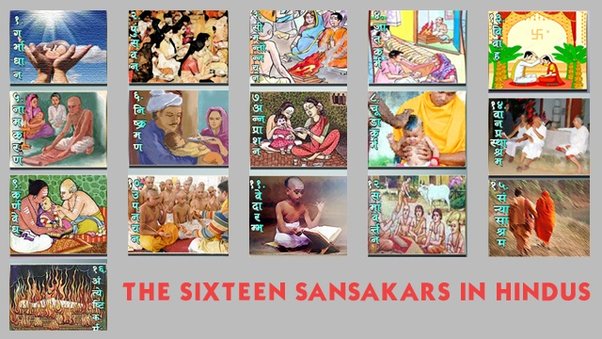
II. 🔍 Understanding Samskaras: Rituals as Psychological Reprogramming
In a world obsessed with speed, productivity, and external validation, the idea of pausing to perform a ritual may seem antiquated—perhaps even irrational. Yet, neuroscience, psychology, and anthropology increasingly affirm what Sanatana Dharma has known for millennia: rituals shape consciousness.
The ancient sages who codified the Samskaras were not concerned merely with social order or ceremonial pomp. They were mapping a subtle science of human transformation—a system of internal evolution encoded in external acts. To appreciate their depth, we must first understand what a Samskara truly is.
🧬 Etymology: “Sam” + “Kara” = Well-performed Acts or Refined Impressions
The Sanskrit word Samskara (संस्कार) is a fusion of two roots:
- “Sam” – meaning “well,” “together,” or “completely”
- “Kara” – meaning “action,” “doing,” or “impression”
Thus, Samskara implies a well-executed action that leaves a lasting, positive impression—not just on the mind, but on the soul. These impressions are understood to mold the chitta (consciousness), shaping one’s attitudes, tendencies, and spiritual trajectory.
In yogic psychology, every action, thought, or emotion leaves behind a samskara—an imprint or memory trace. These can be either liberating or binding. The 16 Samskaras are thus conscious efforts to create positive, dharmic imprints that purify the soul across lifetimes.
🌱 Samskaras as Multi-Dimensional Tools of Transformation
Rather than seeing them as purely religious obligations, we can approach Samskaras as fourfold instruments that address the spiritual, emotional, social, and developmental needs of a person.
🧘 1. Spiritual Alchemy: Transforming the Soul from Birth to Liberation
Samskaras offer sacred checkpoints for the soul’s journey. Each ritual—from Garbhadana (conception) to Antyeshti (funeral rites)—is designed to:
- Awaken spiritual awareness appropriate to the life stage
- Invoke cosmic principles into human transitions
- Infuse ordinary experiences with divine consciousness
They serve not as mechanical ceremonies but as acts of spiritual alchemy—consciously transforming the individual at key junctures. Whether it’s awakening intellect in Vidyarambha, or inviting maturity in Vivaha, each rite reorients the soul toward its higher purpose.
“The Samskara system is not about becoming religious; it is about becoming aware—of time, of life, of self, and of one’s role in the cosmic dance.”
❤️ 2. Emotional Processing: Marking Transitions with Reflection and Support
Human beings are not machines. We move through thresholds of uncertainty—birth, puberty, education, marriage, aging, death—with immense emotional weight. When these transitions are not ritualized, they often result in confusion, stress, and unresolved trauma.
Samskaras allow for:
- Emotional catharsis (e.g., collective mourning in Antyeshti)
- Closure and clarity (e.g., graduation via Samavartana)
- Celebration of becoming (e.g., Vidyarambha or Vivaha)
- Community witnessing—offering validation, support, and belonging
These rituals were ancient India’s equivalent of life coaching, therapy, and community affirmation, rolled into one sacred act.
🤝 3. Social Ceremony: Binding Community through Shared Experience
In a society drifting toward hyper-individualism, Samskaras remind us that no transformation is entirely personal. By embedding individual rites in collective celebration, they:
- Reinforce social values like gratitude, duty, respect, and interdependence
- Create intergenerational dialogue and role modeling
- Encourage reciprocity—each person is both the doer and the witness of sacred acts
This shared sacredness strengthens social capital, ensuring that wisdom and responsibility are passed along, not just information or inheritance.
🧭 4. Personal Development: Guiding Choices at Every Life Stage
Modern society often lacks clear initiations into adulthood, responsibility, or spiritual inquiry. As a result, many float through life confused, underprepared, and emotionally undernourished.
Each Samskara offers a soul-stage marker, encouraging conscious growth:
- Upanayana: Introduction to disciplined learning and ethical living
- Vivaha: Acceptance of duty, compromise, and sacred companionship
- Vanaprastha: Embracing detachment and reflective elderhood
Seen this way, Samskaras are life coaching rituals, aligning individual growth with cosmic dharma. They teach:
- Who you are
- Where you are in life’s journey
- What your responsibilities are at that stage
- How to navigate change with grace and meaning
📌 A Modern Analogy
Imagine Samskaras as firmware updates for the soul.
Each one recalibrates your internal operating system—upgrading emotional intelligence, spiritual awareness, social connection, and moral compass.
While the outer ritual may vary across region or custom, the inner function remains universal: to awaken the human being to their divine potential.
🔄 A Time to Reconsider, Reframe, and Revive
In summary, Samskaras are far more than symbolic ceremonies. They are sacred tools of inner engineering. To forget them is to discard a powerful methodology for human flourishing. To revive them—thoughtfully and accessibly—is to honor the ancient while equipping ourselves for the future.

III. 📜 The 16 Samskaras – Life’s Sacred Milestones
The 16 Samskaras are a spiritual blueprint for a well-lived human life. They are not arbitrary ceremonies but conscious interventions at life’s most critical junctures, designed to elevate ordinary events—like birth, marriage, and death—into sacred milestones. These Samskaras are divided across three life phases:
- Pre-Birth to Early Childhood (0–5 years)
- Education and Personal Formation (5–25 years)
- Adulthood and Legacy (25–death)
Each rite will be presented with:
- Meaning – Core purpose and spiritual intent
- Traditional Practices – Ritual components and historical context
- Symbolism – Psychological and metaphysical layers
- Modern Interpretation – How it relates to today’s values
- How to Celebrate Today – Practical and inclusive ways to observe
🍼 Pre-Birth to Childhood (0–5 years)
1. Garbhadana – Conscious Conception
- Meaning: The sacred invocation of life through intentional union.
- Traditional Practices: Performed soon after marriage, with prayer and purification.
- Symbolism: Parenthood as a sacred responsibility, not accidental biology.
- Modern Interpretation: Conscious parenting begins with conscious conception. Emotional, physical, and spiritual readiness matter.
- Celebrate Today: Couples may engage in meditation, holistic health, and journaling before conceiving—honoring the soul they wish to invite.
2. Pumsavana – Invoking Health and Virtue for the Fetus
- Meaning: Performed in the 2nd or 3rd month of pregnancy for the well-being of the unborn child.
- Traditional Practices: Mantras and offerings to deities like Vishnu or Shiva.
- Symbolism: Infusing the fetus with sattvic (pure) vibrations.
- Modern Interpretation: Parallels with prenatal bonding, nutrition, music therapy.
- Celebrate Today: Expectant parents can chant, listen to calming music, and engage in storytelling, creating a nurturing emotional environment.
3. Simantonnayana – Mental Nourishment of the Mother
- Meaning: Ritual to soothe and support the mother’s mind.
- Traditional Practices: Similar to a “baby shower,” but spiritual—includes blessings, songs, and prayers.
- Symbolism: Protecting the mind, which shapes the child’s psychology.
- Modern Interpretation: Emphasizes maternal mental health, now supported by science.
- Celebrate Today: Blend spiritual blessings with emotional support and affirmations. Elders can share wisdom and stories.
4. Jatakarma – Welcoming the Soul into the Body
- Meaning: Rituals at birth affirming that a soul has entered this world.
- Traditional Practices: Whispering mantras into the newborn’s ears, placing honey on the tongue.
- Symbolism: Bridging the spiritual realm and earthly realm.
- Modern Interpretation: Parallels with attachment theory, newborn bonding.
- Celebrate Today: Mindful birth, skin-to-skin contact, and family blessings—integrating spiritual awareness at the moment of birth.
5. Namakarana – Naming with Intention and Vibration
- Meaning: Naming the child with spiritual and phonetic awareness.
- Traditional Practices: Naming on the 10th–12th day after birth, based on nakshatra (birth star).
- Symbolism: Names as mantras—vibrational signatures influencing destiny.
- Modern Interpretation: Choosing names with conscious meaning.
- Celebrate Today: Include family stories, ancestor names, and explanations behind the name—rooting identity in meaning.
6. Nishkramana – First Exposure to the World
- Meaning: Baby’s first outing, typically to a temple or nature.
- Traditional Practices: Taken out around the 3rd or 4th month, often shown the sun or moon.
- Symbolism: Introduction to society, elements, and cosmic forces.
- Modern Interpretation: Encouraging early exposure to nature, divinity, and rhythm of life.
- Celebrate Today: Visit a sacred space or natural environment as a family ritual. Offer prayers for harmony and resilience.
7. Annaprashana – Introduction to Food and Gratitude to Nature
- Meaning: First feeding of solid food—an act of shared joy and thanksgiving.
- Traditional Practices: Usually involves rice or payasam, blessed and fed by elders.
- Symbolism: Recognizing food as divine sustenance.
- Modern Interpretation: Mindful eating begins with the first bite.
- Celebrate Today: Create a gratitude ritual—honoring farmers, nature, and food’s role in spiritual health.
8. Chudakarana – Hair-cutting: Symbolic Ego Shedding
- Meaning: First haircut around age 1–3, symbolizing rebirth and purity.
- Traditional Practices: Shaving the head, typically at a temple.
- Symbolism: Letting go of prenatal ego and karmic baggage.
- Modern Interpretation: A fresh start, symbolic of growth and new identity.
- Celebrate Today: Combine the ritual with storytelling—teach the child about simplicity, change, and letting go.
🧒 Education and Personal Formation (5–25 years)
As the child grows, Samskaras shape their intellect, identity, and values. This phase is crucial in preparing them for independent life—grounded in ethics, discipline, and purpose. These rites reflect India’s ancient educational philosophy, where learning was not just to earn a living but to discover one’s dharma.
9. Karnavedha – Opening Spiritual Receptivity (Ear Piercing)
- Meaning: Piercing the ears to enhance subtle perception.
- Traditional Practices: Done at an auspicious time, often accompanied by Vedic chants.
- Symbolism: Awakens the inner ear—receptivity to divine sound and spiritual truth.
- Modern Interpretation: Represents a commitment to listen deeply and tune in to one’s conscience.
- Celebrate Today: Include prayers, music, or storytelling during the ceremony. Use it as a moment to teach children about attentive listening and the sacredness of sound.
10. Vidyarambha – Beginning Formal Learning with Reverence
- Meaning: A child’s first lesson—often writing “ॐ” or “Sri” on a slate.
- Traditional Practices: Guided by a teacher or elder, with prayers to Saraswati (goddess of wisdom).
- Symbolism: Marks the gateway to structured learning and intellectual awakening.
- Modern Interpretation: Instills the sacredness of learning—education is not a race but a rite.
- Celebrate Today: Combine traditional alphabets with modern tools—blend tablets with temples. Invite teachers and elders to share blessings and inspiration.
11. Upanayana – Initiation into Brahmacharya and Personal Responsibility
- Meaning: A life-changing initiation into the student phase (Brahmacharya Ashrama).
- Traditional Practices: Sacred thread (yajnopavita) ceremony, receiving the Gayatri Mantra, and beginning disciplined study.
- Symbolism: The “second birth”—awakening of inner sight and duty. Marks the acceptance of dharma as life’s guiding force.
- Modern Interpretation: Teaches youth about responsibility, self-control, and spiritual identity. Can be seen as a rite of conscious adolescence.
- Celebrate Today: Reform this ritual to include girls and all communities. Create inclusive Upanayana ceremonies that honor ethical maturity, not caste or gender.
12. Vedarambha – Beginning Scriptural or Moral Study
- Meaning: Commencing formal study of scriptures (Vedas, Itihasas, Upanishads, or Dharma texts).
- Traditional Practices: Recitation, memorization, and interpretation guided by a guru.
- Symbolism: Access to timeless knowledge and ethical grounding.
- Modern Interpretation: Could include study of any wisdom literature—Indian or global—that shapes moral insight.
- Celebrate Today: Encourage young people to read, reflect, and debate ethical ideas. Combine storytelling, critical thinking, and values education.
13. Samavartana – Completion of Education and Readiness for Worldly Life
- Meaning: Graduation from formal learning; readiness for worldly responsibilities.
- Traditional Practices: Ceremony includes bathing, honoring the guru, and taking vows.
- Symbolism: Transition from knowledge to action—from Brahmacharya to Grihastha (householder life).
- Modern Interpretation: Equivalent of convocation, but deeply spiritual—asks: What will I do with what I know?
- Celebrate Today: Write a “Dharma Oath” or life purpose letter. Involve community elders and spiritual mentors in blessing the transition.
💍 Adulthood and Legacy (25–Death)
This final phase reflects maturity, service, detachment, and ultimately, transcendence. The Samskaras here are not just about personal growth, but about legacy, societal contribution, and preparing for liberation.
14. Vivaha – Marriage as Sacred Duty, Not Contract
- Meaning: Union of two souls aligned in dharma, not just desire.
- Traditional Practices: Vedic rituals like Saptapadi (seven steps), vows before fire and elders.
- Symbolism: Marriage as a spiritual partnership for dharmic living and continuity of culture.
- Modern Interpretation: Challenges consumerist, individualist notions of marriage. Invites us to see marriage as shared purpose and responsibility.
- Celebrate Today: Focus on meaningful vows, cultural grounding, and simplicity. MEDA can help design dharmic wedding templates for modern couples.
15. Vanaprastha – Withdrawal from Material Duty to Inner Contemplation
- Meaning: Transition from householder to forest-dweller—literally or metaphorically.
- Traditional Practices: Renunciation of active roles, living in seclusion or in service to society.
- Symbolism: Letting go of attachments, passing the torch, deepening wisdom.
- Modern Interpretation: Retirement not for rest, but reflection and mentoring.
- Celebrate Today: Create “Inner Sabbaticals.” Encourage seniors to mentor youth, volunteer, write memoirs, or pursue spiritual deepening. MEDA Foundation can host retreats for Vanaprasthis.
16. Antyeshti – Final Rites to Liberate the Soul and Teach Impermanence
- Meaning: Last sacrament—cremation and rituals guiding the soul to liberation.
- Traditional Practices: Agni (fire), recitations, ash immersion in sacred rivers.
- Symbolism: Life is temporary; legacy is eternal.
- Modern Interpretation: Death as a sacred transition, not tragedy. Encourages dignified mourning and spiritual closure.
- Celebrate Today: Include eulogies, spiritual chanting, life celebrations, and eco-friendly cremations. Educate families about the importance of legacy and soul release.

IV. 💡 Why We Need Samskaras Today More Than Ever
Conclusion First:
In today’s rapidly changing, hyper-distracted world, Samskaras are more relevant than ever. They offer not only continuity with the past, but essential guidance for navigating life’s complex emotional and psychological transitions. Far from being outdated rituals, they are timeless tools for intentional living, resilience, and rooted identity.
🌪️ Life Without Rituals = Disorientation and Psychological Fragility
- The Modern Condition:
In a world where people can change jobs, cities, identities, and relationships within a year, there is a growing sense of rootlessness. Depression, anxiety, loneliness, and identity confusion are rising, especially among youth. - What’s Missing?
Transitions today happen without emotional closure or conscious initiation. There is no inner rite to mark the end of one phase and the beginning of another. - Rituals as Anchors:
Samskaras provide clear markers for inner change—much like bookmarks in the story of life, helping us locate who we are, where we are, and what comes next.
🧠 Samskaras as Psychological Scaffolding
- Samskaras function like developmental rituals, reinforcing values, identity, and purpose.
- Psychologists recognize the importance of “liminal rituals”—events that help the mind process change. Samskaras are the original liminal rituals.
- Each rite addresses emotional turbulence that arises during transition—be it birth, adolescence, marriage, or death.
Example: A teen who undergoes Upanayana is being told: “You’re no longer just a child. You now carry dharma. You are seen. You are trusted.”
⚖️ Preserving Intentional Living vs. Reactive Existence
- Modern life is reactive: Events happen to us—we scroll, we chase, we consume. There’s little time for reflection.
- Samskaras force us to pause. To sanctify the moment. To make choices mindfully.
Instead of passively growing old, Vanaprastha says: “Now reflect. Teach. Let go.”
- They ritualize mindfulness, in a world addicted to speed.
💍 A Closer Look: Vivaha as a Case Study
- Without Vivaha: A wedding is a party, a photo opportunity, a transaction.
- With Vivaha: Marriage is a sacred responsibility, a social promise, and a spiritual yagna.
- The Saptapadi (seven vows) ground the couple in values, not just emotions.
Without this anchoring, divorce, confusion, or cohabitation without clarity becomes common—not because of lack of love, but lack of preparation.
🔧 Samskaras as Tools for Inner Order in Outer Chaos
- Outer chaos is inevitable—political instability, job uncertainty, health crises.
- Samskaras cannot stop these. But they build inner clarity.
- They create a life rhythm, a spiritual calendar, aligning us with nature, dharma, and self-discipline.
In Stoic terms, Samskaras are our inner citadel—fortifying the soul against storms of life.
🧭 From Mindless Modernity to Mindful Continuity
- We don’t need to abandon modern life to practice Samskaras.
- We need to reinterpret them, modernize their form while retaining their function.
- Whether done at temples, homes, or online, what matters is intention.
📌 Key Takeaways:
Modern Issue | Samskara Solution |
Identity crisis | Upanayana, Vidyarambha |
Consumerist marriage | Vivaha |
Elder neglect | Vanaprastha |
Fear of death | Antyeshti |
Lack of learning purpose | Vedarambha, Samavartana |
🔗 Let Us Reclaim Our Spiritual Software
Just as apps need updates, our inner software—the mind, the soul—needs calibration. Samskaras are those calibrations. They were designed over millennia to evolve not just the individual, but families and civilizations.
Without them, we live on default. With them, we live with design.

V. 🌍 Reimagining Samskaras for the Modern Age
Conclusion First:
To survive in today’s world, traditions must adapt without diluting. The 16 Samskaras were never meant to be fossilized rituals—they are living, evolving expressions of inner transformation. Reinterpreting them for modern contexts allows us to revive their spirit while honoring individual freedom and contemporary realities.
🔄 Modern Expressions of Ancient Wisdom
- 🧘 Upanayana Reimagined: Brahmacharya in the Age of Distraction
- Then: Receiving the sacred thread, vow of self-restraint, initiation into learning.
- Now: A “Digital Upanayana” could initiate children into mindfulness, tech etiquette, and life-long learning.
- Sacred thread = symbolic wearable or digital badge.
- Guru = parent, teacher, or even a curated e-learning platform.
- Vows = “I commit to using knowledge for good,” “I respect elders and nature,” “I will not be owned by my devices.”
- ✍️ Vidyarambha as a Festival of Curiosity
- Then: Child writes first letters, invokes Saraswati.
- Now: Combine first learning with values like curiosity, humility, and gratitude.
- Schools and homes can hold annual “Learning Day” ceremonies with community participation.
- Children write their Sankalpa: “Why do I want to learn?”
- 🕊️ Antyeshti and the Green Soul Journey
- Then: Funeral pyre, Vedic mantras, river immersion.
- Now: Eco-cremation, biodegradable urns, and post-death community healing circles.
- Families create digital memorials with blessings, not just obituaries.
- Include grief rituals to process emotions and celebrate the soul’s onward journey.
- 💍 Vivaha: From Pomp to Purpose
- Then: Sacred fire, vows, community witness.
- Now: Keep the Vedic core, but add pre-marriage Dharma counseling.
- Couples co-create a Sankalpa and design rituals that reflect shared values.
- Add sustainability pledges, financial transparency, service to society as part of vows.
- 👨👩👧 Parenting Manuals Based on Samskaras
- Now: Instead of apps focused on milestones (“your baby is now crawling!”), create manuals that are Samskara-based.
- Teach how to introduce values at each stage—from food to speech to digital exposure.
- Parenting becomes a conscious spiritual practice, not just a management task.
🎯 How to Reintroduce Samskaras
- ✨ Retain the Sankalpa, Simplify the Form
- Rituals can be adapted—but the intention must remain sacred.
- Example: Simantonnayana (baby shower) can include blessing circles, mother’s self-care journaling, and affirmations from family.
- Focus on emotional depth, not expensive logistics.
- 🌐 Digital Platforms as Dharma Tools
- Create online video guides, mobile apps, e-books with simple instructions for each Samskara.
- Use Zoom or hybrid gatherings to bring families together across geographies with certified pundits.
- Example: “Global Namakarana Day” where babies across continents are named with Vedic blessings via livestream.
- 🧑🏫 Train Dharma Acharyas for the 21st Century
- We need new-age teachers: rooted in Shastras but fluent in modern psychology, social media, and science.
- Empower youth and community leaders to become Samskara Ambassadors.
- MEDA Foundation can create certification programs to revive this lost Guruship—not of control, but of compassion and continuity.
- 🧭 Blend Samskaras with Civic Rituals
- Imagine celebrating Samavartana (graduation) in schools with blessings from parents and teachers.
- Or Vanaprastha celebrations for retirees transitioning into wisdom roles—sharing life lessons instead of being forgotten.
🔗 Rethinking What “Progress” Means
Progress without rootedness is erosion. The most advanced societies are not those who forget their past, but those who reinterpret it with relevance. When the rites of passage are neglected, we create a society that grows old, but not wise.
Reimagining Samskaras isn’t regression. It is cultural innovation—soulful modernization.
📌 Action Points for You and the Community:
Who | What You Can Do |
Parents | Celebrate simplified Samskaras at home with intention and storytelling. |
Educators | Incorporate Samskara-based reflections in school assemblies. |
Youth | Share modern meanings of these rites on social media; reclaim identity. |
Temples/NGOs | Host community workshops and training on ritual relevance. |
Techies | Build apps and immersive VR/AR experiences of Samskaras. |
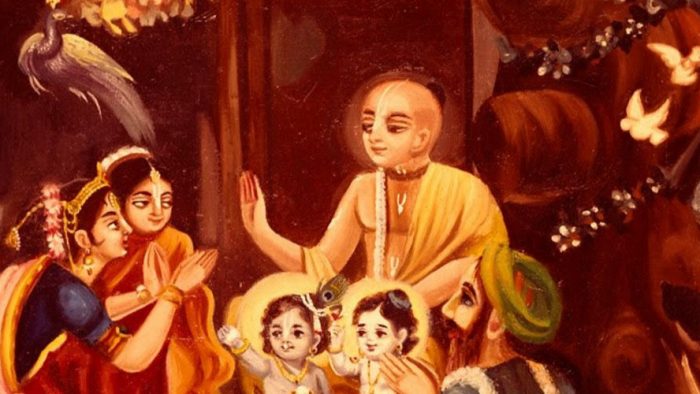
VI. 👨👩👧👦 Engaging the Next Generation: From Ritual to Relevance
Conclusion First:
You don’t transmit Dharma by imposition. You inspire it through experience, storytelling, and relevance. The 16 Samskaras are not antiques to be preserved in museums—they are living inheritances that must be understood, felt, and chosen freely by the next generation.
🎥 Education Through Storytelling: Making Meaning Memorable
- Why: The brain is wired for stories, not sermons. Children and teens absorb values through narrative immersion.
- How:
- Create animated shorts, comics, and visual novels explaining each Samskara through relatable characters.
- Highlight moral dilemmas and cultural wisdom (e.g., “Why does Vidyarambha matter in a digital world?”).
- Use humor, music, and drama to demystify and humanize ancient rituals.
📚 Example: A comic book where a young girl questions “Why should I pierce my ears?” and learns about spiritual receptivity, community, and identity.
🏕️ Youth Camps & Initiatives: Experiencing Dharma, Not Just Reading It
- Why: Direct experience builds emotional memory and identity.
- How:
- Host Youth Dharma Retreats where Samskaras like Upanayana, Vidyarambha, or even Samavartana are performed with reflection and mentorship.
- Conduct Vivaha simulations to teach values like mutual respect, spiritual bonding, and shared dharmic goals.
- Integrate yoga, service (seva), art, and nature walks into the curriculum.
🌱 Pro Tip: Include parents as co-learners—this builds intergenerational bonding, not hierarchy.
🎮 Gamified Ritual Kits: Learning Through Play
- Why: Engagement leads to internalization. Play reduces resistance.
- How:
- Design “Samskara Boxes” with physical kits (incense, story scrolls, Sankalpa cards) + app integration.
- Include QR codes that link to interactive storytelling, audio chants, and reflection prompts.
- Track “Dharma Progression Levels” like you would in a game—encouraging curiosity, not compliance.
📦 Example: A “Chudakarana Box” with scissors, symbolic hair, a crown, and a game about ego vs soul.
🏫 Incorporate in School Events: Building Cultural Literacy
- Why: Culture isn’t just taught at home—it must live in public life.
- How:
- Schools can celebrate:
- Vidyarambha Day – where new students write their first Sankalpa.
- Teacher Gratitude Day – blending Guru Purnima and modern gratitude rituals.
- Vivaha Ethics Workshop – discussing commitment and sacred relationships.
- Integrate Samskara storytelling into school curriculums, especially in value education or life skills classes.
- Schools can celebrate:
🏅 Bonus: Align these with NEP (National Education Policy) mandates around values and life competencies.
🕊️ Hybrid Celebrations: Rooted Yet Radiant
- Why: Today’s youth won’t attend rituals they don’t connect with. But they’ll show up if it feels like theirs.
- How:
- Celebrate Samskaras with contemporary aesthetics—art, music, décor they relate to.
- Allow children to co-design the ceremony: choose their mantras, write their own vows, invite their mentors.
- Use digital storytelling, live-streaming, and post-event reflections to extend the experience beyond the ritual.
📸 Example: A “Modern Upanayana” where the child wears a traditional dhoti, but also reads a pledge to be mindful in digital life and learns how to meditate with their grandparents.
🧠 The Golden Rule: Don’t Force. Inspire.
- Mandates create rebellion. Meaning creates belonging.
- Let the young ask questions. Let them critique. Let them laugh. But keep the rituals alive by offering depth, not dogma.
- In a world where everything is disposable, offering something eternal is the most rebellious and beautiful gift.
VII. 🧠 Samskaras as Inner Engineering Tools
Conclusion First:
The 16 Samskaras aren’t just cultural ceremonies—they’re software updates for the soul. Each one is a moment of inner programming, helping individuals align with truth, responsibility, awareness, and self-mastery. When reframed, they become powerful tools for emotional intelligence, spiritual depth, and intentional living—even today.
📊 Comparative Table – Samskaras as Inner Recalibration Points
Samskara | Inner Value Cultivated | Modern Equivalent / Application |
Garbhadana | Conscious creation, intention-setting | Mindful conception, pre-pregnancy counseling |
Pumsavana | Nurturing virtues and strength in the womb | Prenatal affirmations, fetal bonding meditations |
Simantonnayana | Emotional care, maternal well-being | Baby showers with mental health focus, guided journaling |
Jatakarma | Sacred welcome, soul acknowledgment | Birth rituals with affirmations, naming blessings |
Namakarana | Identity, vibration consciousness | Naming with meaning; soul stories behind names |
Nishkramana | Gratitude to nature, first social exposure | Nature rituals, family walk with blessings |
Annaprashana | Connection to Earth, nourishment, gratitude | First food ceremony + awareness of food source, sustainability |
Chudakarana | Letting go of ego, symbolic rebirth | Minimalism, digital detox, “first haircut” as a coming-of-age moment |
Karnavedha | Spiritual receptivity, awakening senses | Ear-piercing with Sankalpa, sensory mindfulness practices |
Vidyarambha | Reverence for learning, humility | Growth mindset sessions, gratitude to teachers |
Upanayana | Self-control, personal dharma, initiation | Mentorship, meditation, vow to purpose and learning |
Vedarambha | Scriptural grounding, moral compass | Ethics education, philosophy for teens, Bhagavad Gita clubs |
Samavartana | Responsibility, stepping into the world | Graduation with values reflection, purpose letters |
Vivaha | Mutual respect, unity, dharmic partnership | Marriage counseling, relationship Sankalpa, spiritual contracts |
Vanaprastha | Renunciation, wisdom-sharing, detachment | Midlife retreats, inner reorientation, mentorship roles |
Antyeshti | Mortality awareness, legacy, spiritual release | Eco-cremation, death cafés, legacy writing, ancestral gratitude |
💎 Key Insights
1. Each Samskara maps to a psychological need
The Vedic seers knew that major life transitions create emotional turbulence. Samskaras provide ritual containers to process identity shifts with awareness and grace. This is emotional architecture, thousands of years old.
2. They awaken archetypal wisdom at every stage
- Childhood → Innocence, curiosity
- Youth → Purpose, responsibility
- Adulthood → Service, love, restraint
- Elderhood → Legacy, surrender, detachment
Samskaras are not events. They are identity upgrades, spaced out across time to rewire consciousness.
3. Ritual without Rasa becomes routine
We must reclaim the feeling, not just the form. Let’s bring back the emotion, reflection, community, and Sankalpa (intent). This is how rituals turn into inner engineering practices for the modern seeker.
4. Inner alignment = Outer harmony
Most modern anxiety stems from disconnected transitions—graduating without purpose, marrying without clarity, aging without reverence, dying without dignity. Samskaras restore rhythm to these changes.
🧘 How to Practice Inner Samskara Today
- Morning affirmations = Jatakarma
“Today I honor life as sacred and full of possibility.” - Weekly Sankalpa Journaling = Upanayana Practice
Write your intention and personal vow for the week ahead. - Monthly Gratitude Ritual = Annaprashana Extension
Cook a meal with full awareness, chant before eating, and feed someone in need. - Annual Retreat = Vanaprastha Reminder
Take a silent weekend each year to reflect on your inner state and detach from roles.

VIII. 🌾 Barriers to Revival and Overcoming Them
Conclusion First:
The path to reviving the 16 Samskaras is not without obstacles. However, by strategically reframing and adapting these ancient rites for contemporary life, we can overcome resistance and restore their power as tools for personal transformation, cultural continuity, and societal healing.
🚫 Obstacle 1: Perception of Superstition
Many see traditional rituals as outdated or superstitious, dismissing them as irrelevant in today’s rational, scientific age.
- Solution: Highlight the psychological, symbolic, and cultural wisdom embedded in the Samskaras.
- Psychological grounding: Each Samskara addresses a fundamental emotional need—like creating a sense of belonging during Jatakarma or reinforcing a sense of responsibility at Samavartana.
- Symbolism: Rituals are archetypal psychological tools that help individuals process life’s transitions. For example, the Vivaha (marriage) is not just an event—it is a commitment to shared values and the sacred partnership between two individuals.
- Cultural wisdom: Rituals provide a collective memory and cultural anchor for community and family, helping to maintain continuity in an ever-changing world.
📘 Example: A documentary or series of short films that narrate the psychological and spiritual significance behind each Samskara, showing their real-world applications in modern life.
🚫 Obstacle 2: Lack of Practitioners or Teachers
There is a shortage of qualified practitioners or mentors who can guide individuals through these rituals, especially in urban settings where traditional practices are often diluted or lost.
- Solution: Train Dharma educators and launch community programs through organizations like MEDA Foundation.
- Create certification programs for teachers and mentors of Samskara rituals.
- Partner with local temples, community centers, and schools to train educators on how to facilitate rituals in modern contexts.
- Use digital platforms to spread online tutorials, virtual gatherings, and e-courses, helping families learn and perform rituals at home with guidance from experts.
📱 Example: MEDA Foundation could develop an online platform to train mentors, offering video series and interactive classes on conducting Upanayana, Vivaha, and other Samskaras, making these teachings accessible to all.
🚫 Obstacle 3: Time, Cost, Complexity
Many may perceive the Samskaras as too time-consuming, expensive, or complex to implement in daily life. Traditional practices can seem demanding for busy, modern families.
- Solution: Create scalable, DIY Samskara kits and online resources that can simplify the rituals and make them affordable and accessible.
- Develop Samskara toolkits with all necessary items (e.g., mantras, scriptures, ceremonial tools, simple instructions) that families can purchase or access for free.
- Provide online guides and apps for a more flexible, step-by-step approach to performing rituals at home.
- Create community sharing models where families can share resources, expertise, and even ritual leadership, reducing the burden on any one person or family.
🎁 Example: A DIY “Vivaha Kit” that includes basic tools for a simplified ceremony, a guide for preparing vows, and access to a Zoom call for expert guidance.
🚫 Obstacle 4: Youth Disconnection
The younger generation often feels disconnected from traditional rituals, seeing them as either irrelevant or burdensome.
- Solution: Frame Samskaras as self-mastery rituals and encourage youth involvement in co-creating their celebrations.
- Rather than imposing rituals, offer them as opportunities for self-discovery and empowerment.
- Encourage youth leadership in conducting rituals like Upanayana, allowing them to take ownership and understand the meaning behind each step.
- Use interactive media, social media campaigns, and youth-centered discussions to make the value of Samskaras clear—showing how they can be rituals for growing into the best version of oneself.
🎮 Example: “Samskara Challenge” on Instagram or YouTube, where young people share their modern interpretations of traditional rituals, blending ancient wisdom with their unique personalities and values.

IX. 🌺 Conclusion: Reclaiming the Sacred, One Samskara at a Time
Samskaras: Maps for Human Evolution
The 16 Samskaras are not just rituals—they are maps for human evolution. They guide us through the stages of life, helping us transcend the ordinary and embrace the sacred. These rites are not constraints but tools—designed to shape our inner world, align our energies, and bring deeper meaning to our transitions. They offer us a way to move from mundane existence to spiritual excellence, from reaction to mindful intention.
We Are Not Just Biological Beings—We Are Ritual Beings
In the hustle and bustle of modern life, it’s easy to forget that human beings are ritual creatures. Rituals are not archaic remnants of a bygone era; they are an intrinsic part of our psyche. Every ritual, every ceremony, reflects our deep-seated need for order, meaning, and connection. They remind us that we are part of something much larger than ourselves—our family, our culture, and the timeless flow of life.
Reviving Samskaras = Reviving Grounded, Conscious, Intergenerational Living
When we revive the practice of Samskaras, we are not merely performing a set of actions. We are reviving grounded living, where our choices, actions, and transitions are done with mindfulness, intention, and respect for the sacred. These rites connect us across generations, preserving the knowledge and wisdom passed down to us, while also offering us a way to share this wisdom with the younger generation. They are a link between the ancient and the future, and in them lies the key to evolving a harmonious, conscious society.
Even Small, Sincere Observance Can Plant the Seed of Spiritual Awakening
The beauty of Samskaras lies in their simplicity. Even the smallest and most sincere observance—be it lighting a candle during Namakarana (naming ceremony) or saying a prayer of gratitude during Annaprashana (first solid food)—can plant the seed of spiritual awakening. It does not require grand ceremonies or elaborate setups; what matters is the intention, the mindfulness, and the genuine desire to connect with the divine in everyday life.
Let Us Not Abandon the Bridge Between Ancient Wisdom and Future Humanity
As we navigate a world of technological advancement, environmental challenges, and shifting societal structures, let us not abandon the bridge that connects us to our ancient wisdom. The 16 Samskaras are a bridge between our past and future, between what has come before us and what we will leave behind. To abandon them is to sever this connection and risk losing the tools that have been carefully cultivated over millennia for human flourishing. Embrace them—not as outdated traditions, but as timeless guides for navigating our lives with awareness, compassion, and purpose.
🙏 Participate and Donate to MEDA Foundation
The MEDA Foundation is committed to preserving and reintroducing the practice of Samskaras in a way that is meaningful, accessible, and transformative for individuals and families across the world. Your support helps us:
- Conduct Samskara awareness camps and simplified ceremonies to bring ancient wisdom to the present day.
- Train young facilitators who can carry the torch of dharmic wisdom into the future, ensuring the continuity of these practices.
- Publish books, videos, and toolkits to support families and educators in performing these sacred rites with understanding and reverence.
- Offer value-based learning to autistic and neurodiverse individuals, creating opportunities for them to experience personal growth and spiritual connection through these ancient rituals.
👉 Be part of this inner revolution. Sponsor a child’s Vidyarambha. Support a family in performing their Samskaras. Help us preserve Dharma in the modern world.
🌐 Visit www.meda.foundation to donate and get involved in the revival of these transformative practices.
📚 Book References and Further Reading
- The Cultural Heritage of India – Ramakrishna Mission
- Hindu Rites and Rituals – Swami Harshananda
- Essentials of Hinduism – Swami Bhaskarananda
- Rites of the Twice-Born – Jan Gonda
- Being Different – Rajiv Malhotra
- Living with the Himalayan Masters – Swami Rama
- Vedanta: Voice of Freedom – Swami Vivekananda
- Man’s Eternal Quest – Paramahansa Yogananda
Final Thought: Reclaiming the Sacred for a Future of Conscious Living
As we venture deeper into the complexities of modern life, we must hold close the ancient wisdom that has always guided humanity through the challenges of existence. The 16 Samskaras are more than rituals—they are life’s essential milestones, and reviving them means reviving the sacred in our lives, our communities, and our children. Let us reclaim the sacred, one Samskara at a time.








 Teachers can use this article to develop patience and effective teaching strategies, recognizing that students may need time to grasp complex concepts. Managers and leaders can apply the principles discussed to foster a more inclusive and understanding work environment, enhancing team dynamics and communication. Students and lifelong learners will benefit from the encouragement to explore new areas of knowledge and expand their horizons.
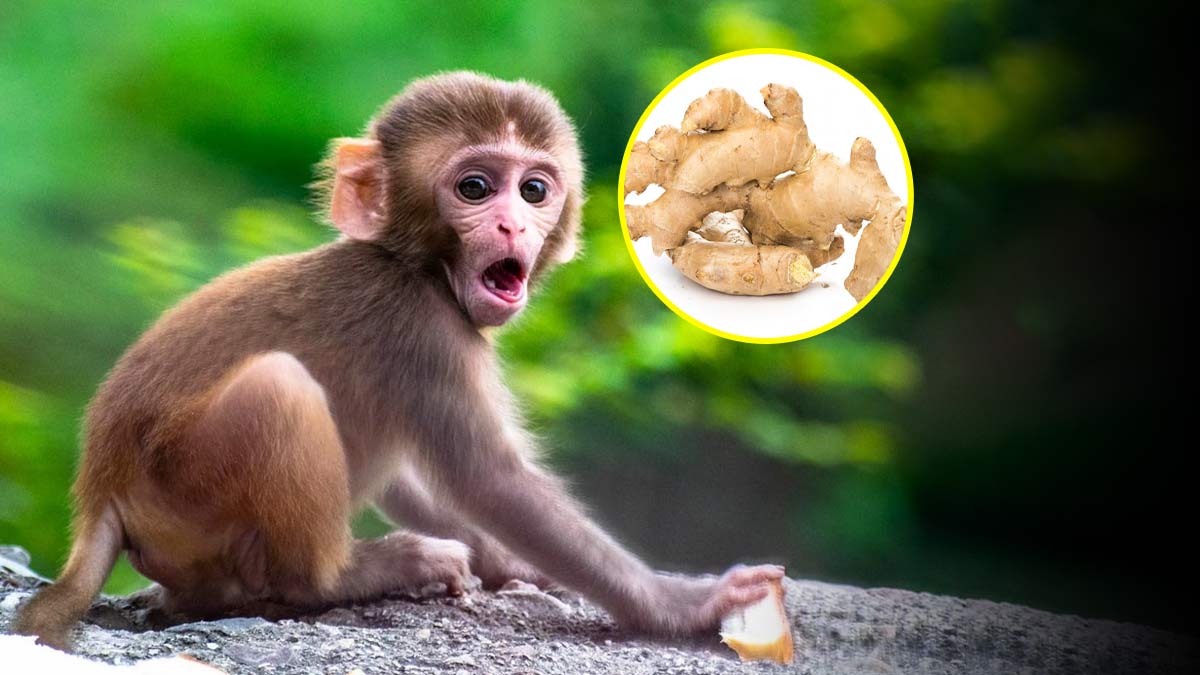 The metaphor of a monkey and ginger is particularly telling. Monkeys are often seen as playful and curious animals but are not known for their discerning taste or appreciation for complex flavors. Ginger, on the other hand, is a spice with a strong, distinct taste that requires a developed palate to appreciate fully. By juxtaposing these two elements, the proverb vividly illustrates the idea that certain levels of understanding or sophistication are necessary to recognize the true value of some things. This choice of metaphor resonates because it uses familiar elements to convey a deeper truth about human nature and perception.
 In personal relationships, the proverb underscores the importance of empathy and patience. When sharing interests or passions with friends and family, it’s crucial to recognize that not everyone will share the same level of enthusiasm or insight. This understanding can prevent feelings of frustration and help maintain harmonious relationships. By accepting that appreciation often comes with familiarity and exposure, individuals can create more supportive and understanding environments.
 In English, the proverb “Pearls before swine” is a well-known expression. It implies offering something valuable to someone who does not recognize its worth, much like presenting pearls to pigs who cannot appreciate their beauty or value. This phrase highlights the futility of giving valuable items or insights to those who are incapable of understanding or appreciating them.
 From a psychological perspective, several factors contribute to why people might fail to appreciate certain things. Cognitive biases, such as the Dunning-Kruger effect, suggest that individuals with limited knowledge in a particular area may overestimate their understanding and undervalue more nuanced insights. Additionally, people are often influenced by their own interests, experiences, and cultural backgrounds, which shape their perceptions and what they find valuable. When something falls outside their realm of familiarity, they may struggle to see its worth.
 Encouraging curiosity and an open-minded attitude is another important strategy. By promoting a culture of continuous learning and exploration, individuals become more inclined to venture beyond their comfort zones. This can be achieved through creating environments where questions are welcomed and diverse perspectives are valued.
 Managing Expectations: Understand that not everyone will appreciate or understand the things you value. For example, if you’re passionate about a particular art form or hobby, accept that others might not share the same enthusiasm or insight. This acknowledgment helps in setting realistic expectations and prevents disappointment when your interests are not met with the same level of excitement.
 Patience in Teaching: When explaining something complex or nuanced to someone inexperienced, remember that they might not grasp its importance right away. Be patient and willing to educate them. Approach the teaching process with empathy, breaking down complex ideas into simpler, digestible parts and providing ample opportunities for questions and discussions.
 Personal Growth: Reflect on areas where you might be the “monkey” not appreciating the “ginger.” Seek to expand your knowledge and experiences to develop a deeper appreciation for diverse subjects. Embrace a mindset of continuous learning and curiosity, actively exploring new ideas and perspectives. By challenging your own assumptions and broadening your horizons, you can cultivate a deeper understanding and respect for the richness of different cultures, interests, and disciplines.
 Understanding Cultural Differences: In multicultural settings, recognize that people from different backgrounds may not appreciate certain customs, foods, or traditions. Approach these differences with an open mind and willingness to share insights. Embrace diversity as an opportunity to learn and broaden your own perspectives. Engage in respectful dialogue and seek to understand the cultural contexts that shape others’ viewpoints.
 Encouraging Exploration: Encourage others to explore and learn about new things rather than dismissing them outright. This fosters a culture of curiosity and continuous learning. Emphasize the value of broadening one’s horizons and discovering new interests. By promoting an environment where curiosity is celebrated, individuals feel empowered to pursue knowledge and expand their understanding of the world around them.
 Effective communication and teaching strategies empower us to convey our passions and ideas effectively, ensuring that our messages resonate with our audiences. Personal and professional growth thrive on self-reflection, inclusivity, and the appreciation of diverse expertise. Embracing curiosity and encouraging exploration enriches our lives with continuous learning and discovery.







 Fostering a healthy relationship with food from a young age is crucial for the overall well-being of children. This relationship impacts their physical health, emotional well-being, and social development. For neurotypical children, understanding and appreciating food can establish a foundation for lifelong healthy eating habits. For neurodivergent children and children with disabilities, it is especially important to adapt strategies to their unique needs, ensuring they also develop positive and empowering connections with food.
 This guide is intended for parents, caregivers, educators, and anyone involved in nurturing the dietary habits of children. It provides a comprehensive approach to fostering a healthy relationship with food among all children, including neurotypical, neurodivergent, and differently abled kids. By understanding and implementing diverse strategies that accommodate various needs and preferences, these stakeholders can help children develop positive food associations, leading to better physical health, emotional stability, and social interactions. The guide incorporates modern techniques alongside cultural and philosophical perspectives, offering a well-rounded approach to food education.
 Modeling healthy eating is crucial as children often imitate the behaviors they observe in adults. Demonstrating balanced eating habits involves consistently choosing a variety of nutrient-rich foods and maintaining a positive attitude toward meals. For example, parents can make a habit of serving vegetables, whole grains, and lean proteins at every meal, showing that these foods are a normal and enjoyable part of daily life. Showing enthusiasm for new foods can be as simple as expressing excitement about trying a new recipe or sharing a favorite healthy dish with the family. For instance, if a parent enjoys a quinoa salad and expresses how delicious and satisfying it is, children are more likely to be curious and willing to try it themselves. This enthusiasm can be contagious, making children more open to experimenting with new foods and developing a more diverse palate over time.
 Offering a variety of foods is a key strategy in ensuring children get a balanced diet and develop a broad palate. Introducing diverse food options gradually can help prevent overwhelming them. Start by incorporating small portions of new foods alongside familiar favorites. For example, adding a few pieces of steamed broccoli to a child’s favorite macaroni and cheese can slowly acclimate them to new textures and flavors. Over time, increasing the variety and portion of the new food can help children become more accepting of different foods. Encouraging them to explore foods from different cultures can also make mealtime more exciting and educational. Trying a themed dinner night, like “Mexican Night” with tacos, beans, and rice, or “Italian Night” with pasta, salad, and roasted vegetables, can introduce new tastes in a fun and engaging way. This variety not only provides essential nutrients but also helps children appreciate and enjoy a wide range of foods.
 Teaching about nutrition in simple, relatable terms helps children understand the importance of healthy eating. Providing simple explanations of food benefits, such as saying “carrots help you see better” or “milk makes your bones strong,” can make the concept of nutrition more accessible. Educational activities, like food-related games or stories, can further reinforce these lessons. For example, using a “food group” puzzle can help children learn which foods belong to different categories, while a storybook about a vegetable garden can illustrate where food comes from and why it’s essential. Incorporating fun facts during mealtime conversations can also pique their interest. Mentioning that spinach gives you strength like a famous cartoon character can make the idea of eating greens more appealing. These educational moments help build a foundation of knowledge that children can carry with them as they grow.
 Creating a balanced approach to treats ensures that children can enjoy their favorite snacks without developing unhealthy eating patterns. Moderation is key, allowing treats as part of a balanced diet rather than completely restricting them. For example, designating a specific day for a family dessert night can provide a sense of anticipation and control over treat consumption. Including treats in a way that doesn’t make them the focal point of the diet helps children learn that all foods can fit into a healthy lifestyle. Offering a small piece of chocolate alongside a nutritious snack like apple slices with peanut butter can balance indulgence with nutrition. This approach helps prevent the development of an unhealthy obsession with treats and teaches children how to enjoy sweets in moderation.
 Involving children in grocery shopping can significantly empower them by making them feel part of the decision-making process. Creating a grocery list together allows children to see the planning that goes into a balanced diet. For example, parents can sit down with their kids and ask for input on what fruits, vegetables, and snacks they would like to have for the week. At the store, giving children the responsibility to choose items from the list fosters independence and teaches them about food selection. Allowing a child to pick out their favorite type of apples or select a new vegetable to try can make them more excited about eating these foods. This activity can also be educational; discussing the differences between whole and processed foods or explaining why certain items are chosen over others can impart valuable nutritional knowledge. Involving children in shopping builds their confidence and makes them more invested in the foods they eat.
 Engaging children in food preparation is a powerful way to enhance their connection with what they eat. Simple tasks like washing vegetables, stirring ingredients, or measuring out portions can be enjoyable and educational. For example, a young child can help rinse leafy greens for a salad, while an older sibling measures out ingredients for a smoothie. Providing special tools designed for kids, such as plastic knives or colorful mixing bowls, can make the experience more engaging and safe. This hands-on involvement not only teaches practical skills but also increases the likelihood that children will try and enjoy the foods they help prepare. When a child helps make a fruit salad, they may be more inclined to taste the different fruits they’ve handled. Through food preparation, children learn about the ingredients and processes involved in cooking, fostering a deeper appreciation and understanding of their meals.
 Cooking together can be a bonding experience that also educates children about nutrition and the culinary arts. Providing step-by-step instructions for recipes helps them learn the sequence and importance of each step in cooking. For instance, making homemade pizza can involve tasks like kneading dough, spreading sauce, and adding toppings, with each step explained clearly. Selecting recipes that are kid-friendly and manageable encourages participation and success. Parents can choose simple recipes like scrambled eggs, smoothies, or pasta salad, which are easy to follow and produce quick, delicious results. This collaborative effort in the kitchen not only builds cooking skills but also reinforces teamwork and communication. As children gain confidence in their cooking abilities, they become more enthusiastic about trying new recipes and ingredients, which can lead to healthier eating habits.
 Setting the table offers children a creative and structured way to participate in mealtime preparations. Assigning roles, such as placing utensils, arranging plates, or filling water glasses, gives children a sense of responsibility and accomplishment. Parents can make this task more engaging by encouraging children to fold napkins in fun shapes or use colorful placemats. Creative input can also come in the form of themed table settings, such as decorating the table for a family taco night or an Italian dinner. Allowing children to choose the theme and help with decorations can make the experience more enjoyable. This activity not only teaches practical skills but also helps children understand the importance of creating a pleasant dining environment. It reinforces the idea that mealtimes are special and worthy of effort, promoting a positive attitude toward eating and family interactions.
 Washing dishes and cleaning up after meals can be turned into a fun and rewarding activity for children. Using colorful sponges, child-sized aprons, and non-toxic dish soap can make the task more appealing. Parents can create a game out of it, timing how quickly and thoroughly the dishes can be cleaned or playing favorite music to dance along while cleaning. Dividing tasks, such as one child washing while another dries, encourages teamwork and cooperation. Involving children in cleaning up teaches them the value of responsibility and the importance of maintaining a clean and organized kitchen. This practice helps them appreciate the effort that goes into meal preparation and cleanup, fostering respect for the food and the space where it is prepared. Moreover, these chores build life skills that will be useful as they grow older.
 Involving children in menu planning can empower them to make informed food choices and understand the importance of a balanced diet. Including them in decisions about what to eat for the week can be an exciting process. For instance, parents can ask children to suggest their favorite meals or try new recipes together, then create a visual menu chart for the week. This activity helps children see the variety and balance needed in meal planning, such as incorporating proteins, vegetables, and grains. Using visual aids like pictures or colorful charts can make the process more engaging. Allowing children to choose a theme for a particular night, such as “Mexican Night” or “Pasta Night,” can make menu planning a fun and interactive experience. This involvement makes children feel valued and more likely to enjoy the meals they helped plan, fostering a positive relationship with food.
 Gardening and growing food can be a deeply enriching activity that connects children with the source of their food. Planting and harvesting activities teach children about the life cycle of plants and the importance of fresh, homegrown produce. Parents can start with simple plants like tomatoes, herbs, or lettuce, which are easy for children to grow and maintain. Involving them in every step, from planting seeds to watering and finally harvesting, gives them a sense of accomplishment and pride. Creating a small garden space or even using pots on a balcony can make gardening accessible to any living situation. This hands-on experience helps children understand where their food comes from and the effort involved in growing it, fostering a greater appreciation for fresh produce and healthier eating habits.
 Educational activities related to food can make learning about nutrition fun and interactive for children. Nutrition education can be incorporated into everyday activities and special projects. For example, parents can use a rainbow chart to teach children about eating a variety of colorful fruits and vegetables, explaining how different colors provide different nutrients. Food-themed projects, such as creating a food group collage or participating in a cooking class, can reinforce these lessons. Organizing a family quiz night with questions about different food groups and their benefits can also be an enjoyable way to learn. These activities help children understand the importance of nutrition and how it impacts their health, making them more conscious of their food choices.
 Creating food art can make healthy eating fun and visually appealing for children. Edible creations, such as fruit kabobs arranged in colorful patterns or vegetable faces on whole-grain crackers, can entice children to try new foods. Parents can set up a “food art” station where children can use fruits, vegetables, nuts, and seeds to create their own edible masterpieces. Baking activities, like decorating healthy muffins or cookies with nuts and dried fruits, also encourage creativity and involvement in food preparation. Using cookie cutters to make fun shapes out of sandwiches or fruit slices can make mealtime more exciting. This artistic approach to food not only makes healthy foods more attractive but also provides a creative outlet, making children more willing to explore and enjoy diverse foods.
 Cultural exploration through food can broaden children’s horizons and make eating a global adventure. Trying new cuisines and celebrating cultural diversity can be both educational and exciting. Parents can choose a different country each week and prepare a traditional dish from that region, discussing the cultural significance and ingredients involved. Celebrating festivals from around the world with special foods can also enhance their appreciation for different cultures. For example, making dumplings for Chinese New Year or baking challah for Shabbat can teach children about various traditions and cuisines. This exploration fosters an appreciation for diversity and a more adventurous palate, helping children understand and enjoy the vast array of foods available to them.
 In Indian philosophy, food is seen as a life force, or prana, which sustains and nourishes our bodies. Teaching children about prana involves explaining that food is not just fuel but a source of vital energy that affects their physical, mental, and spiritual well-being. For example, parents can explain how fresh fruits and vegetables are full of prana because they come directly from nature. This concept encourages children to choose whole, natural foods over processed ones. Incorporating practices such as mindful eating, where children are taught to eat slowly and with awareness, helps them appreciate the life force within their food. A simple practice could be saying a prayer or taking a moment of silence before meals to acknowledge and be grateful for the prana in their food. Understanding food as prana can instill a sense of respect and mindfulness towards what they eat, promoting healthier and more balanced eating habits.
 Offering food to higher powers is a common practice in many Indian households, reflecting gratitude and reverence. Rituals such as placing a small portion of food in front of a deity before eating serve to remind children of the sacredness of food. For example, during festivals like Diwali or Pongal, special dishes are prepared and offered to gods and goddesses as a sign of devotion and thankfulness. These rituals can be a way to teach children about the cultural and spiritual significance of food. Explaining that offering food symbolizes sharing with the divine and seeking blessings can help children understand the deeper meaning behind these practices. Parents can involve children in these rituals by allowing them to place the offerings and explain the significance behind each dish prepared. This practice not only reinforces gratitude but also connects children to their cultural and spiritual roots.
 Indian food manners, such as eating with hands and using the right hand for serving, are integral parts of the cultural dining experience. Teaching children these practices helps them appreciate their heritage and understand the etiquette involved in traditional meals. Parents can explain that eating with hands enhances the sensory experience of food and is believed to improve digestion. Demonstrating the proper way to use the right hand for eating and serving, while the left hand is reserved for other tasks, can instill respect for these customs. For instance, during family meals, parents can show how to mix rice and curry with their fingers and explain the cultural reasons behind these practices. This hands-on learning helps children feel connected to their culture and promotes mindful eating practices.
 Eating on the ground is a traditional practice in many Indian households, with benefits rooted in both culture and health. Sitting cross-legged on the floor to eat is said to aid digestion and create a sense of grounding and humility. Parents can create a special mealtime setting on the floor with mats or cloths, explaining the significance and benefits of this practice. This posture naturally encourages slower eating and better digestion. Sharing meals this way during festivals or special occasions can make the experience more enjoyable and memorable for children. Explaining that many traditional Indian homes still follow this practice helps children appreciate the cultural heritage and the practical health benefits it brings. This practice also fosters a sense of togetherness and community during meals.
 Understanding the unique needs of neurodivergent and differently abled children is the foundation of fostering a healthy relationship with food. Sensory sensitivities, such as aversions to certain textures or strong tastes, and physical challenges, such as difficulties with motor skills, must be carefully considered. For instance, a child with autism might be highly sensitive to the texture of certain foods, preferring crunchy items over soft ones. Tailoring approaches to accommodate these specific needs involves observation and communication with the child, their caregivers, and specialists. For example, occupational therapists can offer insights into sensory processing issues and suggest strategies to make eating more comfortable. Adaptive utensils or plates with high edges can help children with fine motor difficulties manage food more effectively. By acknowledging and addressing these individual differences, caregivers can create an inclusive and supportive mealtime experience that encourages positive interactions with food.
 Creating a structured mealtime routine is particularly beneficial for neurodivergent and differently abled children. Predictable and consistent routines help reduce anxiety and provide a sense of security. Using visual schedules that depict the sequence of mealtime activities, from setting the table to eating and cleaning up, can help children understand what to expect. Timers can be useful in signaling transitions, such as the start and end of meals, which helps children prepare for changes. For example, a visual timer showing a countdown to mealtime can help a child transition from playtime to the dining table more smoothly. Consistent mealtime routines also support the development of healthy eating habits by establishing clear expectations. This structured approach creates a calming environment where children can focus on enjoying their meals without feeling overwhelmed by unpredictability.
 Offering sensory-friendly food options is crucial for accommodating the needs of neurodivergent and differently abled children. Introducing new foods gradually and in small amounts can help prevent sensory overload. Pairing preferred items with new ones can encourage children to try new foods without feeling pressured. For instance, if a child loves apples, introducing a small piece of pear alongside apple slices can gently expand their palate. It’s also helpful to provide a range of textures and flavors, allowing children to explore and identify their preferences. Involving children in selecting sensory-friendly foods during grocery shopping can empower them and make them more willing to try new items. This gradual and mindful approach to food introduction respects the child’s sensory preferences and encourages positive experiences with a variety of foods.
 Using visual and social stories about food and eating can help neurodivergent and differently abled children understand and feel comfortable with mealtime routines. Visual aids, such as illustrated step-by-step guides, can explain the process of preparing and eating a meal. For example, a visual story might show images of a child washing their hands, sitting at the table, eating, and then cleaning up. Social stories can describe typical mealtime behaviors and expectations, providing a narrative that children can relate to and learn from. A social story about trying new foods can depict a character experiencing anxiety but ultimately enjoying the new taste, modeling positive behavior. These tools make abstract concepts more concrete, helping children understand and navigate the social and sensory aspects of eating. By providing clear, visual explanations, caregivers can reduce anxiety and build confidence around mealtimes.
 Providing positive reinforcement can significantly enhance the eating experience for neurodivergent and differently abled children. Using praise and reward systems helps to reinforce desired behaviors and create positive associations with food. For example, verbal praise like “Great job trying that new vegetable!” or a sticker chart where children earn rewards for trying new foods can be highly motivating. Consistent and specific praise for small achievements encourages children to continue engaging positively with food. It’s important to tailor rewards to the child’s interests and ensure that they are meaningful. A reward could be extra playtime with a favorite toy or a special activity they enjoy. Positive reinforcement not only builds confidence but also fosters a positive and encouraging mealtime atmosphere, helping children feel successful and motivated to try new foods and behaviors.
 Involving children in food choices and preparation empowers them and increases their interest in eating. Simple, manageable tasks such as washing vegetables, stirring ingredients, or setting the table can be engaging and educational. For example, a child might enjoy choosing a vegetable from the garden and helping to prepare it for dinner. Providing adaptive cooking tools, such as easy-grip utensils or child-friendly knives, ensures that tasks are accessible and safe. Involving children in these activities not only teaches valuable life skills but also helps them feel a sense of ownership and pride in the meals they helped create. This involvement can make them more willing to try the foods they have prepared. By actively participating in food preparation, children develop a connection to the food they eat and gain a deeper appreciation for the effort involved in making meals.
 Adapting feeding techniques to meet the specific needs of neurodivergent and differently abled children can make mealtimes more comfortable and enjoyable. Working with specialists, such as occupational therapists or speech therapists, can provide tailored strategies for addressing feeding challenges. For instance, a therapist might recommend specific exercises to improve oral motor skills or suggest modifications to the child’s seating arrangement to enhance comfort and stability. Making eating comfortable and accessible might involve using specialized seating arrangements or adaptive utensils that cater to the child’s physical needs. For example, using a weighted spoon can help a child with tremors control their movements more effectively. These adaptations ensure that children can participate in mealtimes without frustration, promoting a positive and inclusive dining experience.
 Creating a calm and supportive environment is essential for encouraging positive eating experiences for neurodivergent and differently abled children. Minimizing distractions, such as turning off the TV or reducing background noise, helps children focus on their meal. Setting a calm tone with soft lighting and a quiet atmosphere can make mealtimes more relaxing. Being patient and avoiding pressure is crucial, as forcing or rushing children can create anxiety and resistance. Instead, caregivers should offer gentle encouragement and allow children to eat at their own pace. Providing a calm environment also involves being attuned to the child’s needs and responding with empathy and understanding. For example, if a child becomes overwhelmed, it might help to take a short break and then return to the meal when they are ready. This supportive approach helps children feel safe and respected, fostering a more positive relationship with food.
 Introducing children to the concept of food as medicine involves teaching them about the basic principles of food’s healing properties. This holistic approach emphasizes that many common ailments can be alleviated or even prevented through the use of natural ingredients found in the kitchen. For example, explaining how vitamin C in oranges can boost the immune system or how garlic has natural antibacterial properties can make children more aware of the benefits of healthy eating. By understanding that certain foods can enhance their well-being, children can develop a deeper appreciation for what they eat. This knowledge empowers them to make healthier choices and recognize the potential of everyday foods to support their health. Integrating these concepts into daily conversations and involving children in food selection can help reinforce the idea that food is not just nourishment but also a natural remedy.
 Simple home remedies are an excellent way to introduce children to the concept of food as medicine. Using ingredients that are safe and easily accessible, children can learn to make remedies such as honey and turmeric for sore throats or ginger tea for digestion. For example, mixing a teaspoon of honey with a pinch of turmeric to soothe a sore throat or brewing ginger tea to relieve an upset stomach can be practical and educational activities. These remedies not only provide relief but also teach children about the specific benefits of different ingredients. By preparing and using these remedies, children can see firsthand how natural substances can aid in healing, fostering a sense of empowerment and self-reliance. This hands-on experience can also encourage them to turn to natural solutions first, promoting a more balanced and health-conscious lifestyle.
 Addressing picky eating in children involves the gradual introduction of new foods and making meals fun and visually appealing. Gradual exposure to new foods is key; this can be done by offering new foods alongside familiar favorites in small, non-intimidating portions. For example, if a child loves macaroni and cheese, you could introduce small pieces of steamed broccoli mixed into the dish. Repeated exposure without pressure encourages children to try new foods at their own pace. Making food visually appealing can also entice picky eaters. Creating fun shapes with cookie cutters, arranging food into colorful patterns, or presenting meals in bento boxes can make eating more enjoyable. Allowing children to have a say in what goes on their plate or helping in the kitchen can further boost their interest in trying new foods. Positive reinforcement, such as praise or a small reward for trying something new, can also encourage children to expand their palate. This approach not only addresses picky eating but also helps build a positive relationship with food.
 For children with sensory sensitivities, identifying textures and flavors that work for them and introducing new foods slowly are essential strategies. Start by understanding which textures and flavors the child prefers or dislikes. A child might prefer crunchy foods and avoid mushy textures. Once these preferences are known, new foods can be introduced gradually in a way that aligns with their sensory comfort. For instance, if a child likes crunchy textures, starting with crunchy vegetables like carrots or celery can be more acceptable. Pairing new foods with familiar favorites can also help. For example, if a child likes plain pasta, introducing a new sauce on the side rather than mixed in can give them control over trying it at their own pace. Sensory sensitivity requires patience and creativity, and it’s crucial to avoid pressuring the child, which can increase anxiety and resistance. Instead, provide consistent, low-pressure opportunities to try new foods, praising efforts and small successes to build confidence and acceptance over time.
 Dealing with food aversions involves pairing disliked foods with favorites and encouraging small tastes without pressure. Start by identifying the specific foods or food groups that the child avoids. Pairing these with their preferred foods can make them more palatable. For example, if a child dislikes spinach but loves scrambled eggs, you can finely chop the spinach and mix it into the eggs. Encouraging the child to take small, manageable bites without pressure is crucial. Offering these new foods repeatedly in a non-threatening manner can help reduce aversions over time. Using a divided plate to keep new foods separate from familiar ones can also help reduce anxiety. Positive reinforcement, such as praising the child for taking a small taste, can motivate them to keep trying. It’s important to be patient and understand that overcoming food aversions can be a slow process. Celebrating small victories and maintaining a positive, supportive approach will help children feel more comfortable and willing to expand their food choices.
 Creating a supportive and non-judgmental environment is critical for children struggling with eating disorders. It is important to foster open communication about food and body image without pressure or judgment. Encouraging children to express their feelings and concerns about food and eating can help identify underlying issues. Providing a calm and stress-free mealtime environment can also help reduce anxiety around eating. Seeking professional help, such as a pediatrician, therapist, or dietitian, is crucial when dealing with eating disorders. These professionals can provide tailored guidance and support for the child and family. Family-based treatment, where the entire family works together to support the child’s recovery, can be particularly effective. Emphasizing the importance of balanced nutrition for health rather than focusing on weight can help shift the child’s perspective on food. Additionally, modeling healthy eating behaviors and positive body image can influence the child’s attitudes toward food and self-perception. The goal is to create a holistic and compassionate approach that supports the child’s recovery and fosters a healthy relationship with food.
 For children experiencing a lack of appetite, offering small, frequent meals and nutrient-dense snacks can help ensure they receive adequate nutrition. Breaking down meals into smaller, more frequent portions can make eating less overwhelming and more manageable. For instance, instead of three large meals, offering five to six smaller meals throughout the day can be more appealing. Nutrient-dense snacks, such as yogurt with fruit, cheese and whole-grain crackers, or smoothies packed with vegetables and protein, can provide essential nutrients in smaller volumes. Encouraging regular meal and snack times helps establish a routine that can stimulate appetite. Involving children in meal planning and preparation can also pique their interest in eating. Offering a variety of foods with different flavors and textures can help find what appeals to them most. Ensuring a relaxed and pleasant mealtime atmosphere, free from distractions and pressure, can also encourage children to eat more. Patience and persistence are key, as improving appetite can take time.
 Engaging children in gardening and farming, as well as traditional practices like fermenting, sprouting, and pickling, can be both educational and empowering. Growing their own vegetables or herbs can give children a sense of responsibility and a connection to the food they consume. For example, planting and harvesting tomatoes or basil can teach them about the life cycle of plants and the effort involved in food production. Fermenting, sprouting, and pickling are traditional methods that can be fascinating for children to learn. Making homemade pickles or sprouting lentils can be fun activities that also teach about the benefits of preserving and enhancing the nutritional value of food. These practices provide hands-on experiences that reinforce lessons about sustainability and the benefits of whole foods. They also offer a practical connection to cultural traditions, helping children understand the importance of these methods in historical and modern contexts.
 Learning about the preparation and significance of Indian festival foods can be an exciting way to combine cultural wisdom with modern dietary practices. Festival foods are often rich in history and symbolism, representing various cultural and religious traditions. Involving children in the preparation of these dishes can teach them about the ingredients, techniques, and cultural significance behind each recipe. For example, making sweets like laddoos during Diwali or preparing special rice dishes for Pongal can be both a culinary and cultural education. Explaining the stories and traditions associated with these foods can make the experience more meaningful. This approach not only preserves cultural heritage but also teaches children about the diversity of Indian cuisine and the communal aspects of food preparation and celebration. It can also be an opportunity to discuss moderation and healthy choices within the context of festive eating.
 Encouraging mindful eating practices is crucial for fostering a healthy relationship with food. Teaching children to savor their food and eat slowly can help them appreciate the flavors and textures, leading to better digestion and a more satisfying eating experience. For instance, guiding children to take small bites, chew thoroughly, and pause between bites to notice how their body feels can help them tune into their hunger and fullness cues. This practice promotes a deeper awareness of eating habits and can prevent overeating. Mindful eating can also be tied to cultural practices, such as eating with hands, which can enhance the sensory experience of food. Explaining the significance of traditional practices, like sitting on the floor while eating or saying a prayer before meals, can make mindful eating a holistic experience. By integrating these practices into daily routines, children learn to appreciate food as a source of nourishment and a connection to their culture, leading to a more balanced and respectful approach to eating.