Tag: #AutonomyInLearning

  • Secret of Genius: Why Those Who Simplify Reality End Up Running It

    Secret of Genius: Why Those Who Simplify Reality End Up Running It

    Genius is not a matter of intelligence, memory, or speed, but the disciplined ability to compress reality into clear, reusable abstractions without distorting truth. Those who master simplification gain disproportionate leverage across learning, leadership, science, technology, and social impact because intelligence scales with the quality of abstraction, not the quantity of information. From Feynman’s ruthless clarity and Leonardo da Vinci’s cross-domain patterning to scientific parsimony and the limits of rote learning, the decisive advantage lies in seeing structures beneath noise and transferring insight across contexts. In an age where machines excel at pattern recognition but struggle with genuine abstraction, human relevance depends on cultivating explainability, autonomy, and synthesis. Societies that reward clarity over credentials and pattern-based learning over memorization will adapt; those that hoard complexity will stagnate. True genius is therefore not a private achievement but a moral responsibility—to think clearly, explain simply, and build systems that help others do the same.

    ಜೀನಿಯಸ್ ಎಂದರೆ ಬುದ್ಧಿಮತ್ತೆ, ನೆನಪಿನ ಸಾಮರ್ಥ್ಯ ಅಥವಾ ವೇಗವಲ್ಲ, ಬದಲಾಗಿ ವಾಸ್ತವವನ್ನು ಸುಳಿಯದಂತೆ ಸ್ಪಷ್ಟ, ಪುನರುಪಯೋಗಕ್ಕೆ ಬಂದಂತೆ ಕಂಪ್ರೆಸ್ಸ್ ಮಾಡುವ ಶಿಸ್ತಿನ ಸಾಮರ್ಥ್ಯ. ಸರಳೀಕರಣದಲ್ಲಿ ನಿಪುಣರಾಗಿರುವವರು ಕಲಿಕೆ, ನಾಯಕತ್ವ, ವಿಜ್ಞಾನ, ತಂತ್ರಜ್ಞಾನ ಮತ್ತು ಸಾಮಾಜಿಕ ಪ್ರಭಾವದಲ್ಲಿ ಅತಿಯಾದ ಪ್ರಭಾವ ಹೊಂದುತ್ತಾರೆ, ಏಕೆಂದರೆ ಬುದ್ಧಿಮತ್ತೆ ಮಾಹಿತಿ ಪ್ರಮಾಣದಿಂದ ಅಲ್ಲ, ಅವುಗಳ ಮೂಲಕ ಅಳೆಯಲ್ಪಡುವುದು. ಫೈನ್ಮ್ಯಾನ್ ಅವರ ಖಚಿತತೆ, ಲಿಯೋನಾರ್ಡೋ ದಾ ವಿನ್ಚಿಯ ಡೊಮೇನ್ ಪ್ಯಾಟರ್ನಿಂಗ್, ವೈಜ್ಞಾನಿಕ ಸರಳತೆ ಮತ್ತು ನೆನಪಿನ ಮೆಮೋರೈಜೇಷನ್ ಹಗ್ಗದ ಮಿತಿಗಳನ್ನು ಗಮನಿಸಿದಾಗ, ನಿಜವಾದ ಲಾಭವು ಶಬ್ದದ ಮೇಲೆ ಇರುವ ರಚನೆಗಳನ್ನು ಗುರುತಿಸುವಲ್ಲಿ ಮತ್ತು ವಿವಿಧ ಸಂದರ್ಭಗಳಲ್ಲಿ ದೃಷ್ಟಿಕೋನಗಳನ್ನು ವರ್ಗಾಯಿಸುವಲ್ಲಿ ಇದೆ. ಯಂತ್ರಗಳು ಪ್ಯಾಟರ್ನ್ ಗುರುತಿಸುವುದರಲ್ಲಿ ತಾಂತ್ರಿಕವಾಗಿ ಪ್ರೌಢವಾಗಿದ್ದರೂ ನಿಜವಾದ ಸುತ್ತುಗಟ್ಟಿ ಹಿಂಜರಿಯುತ್ತವೆ, ಹೀಗಾಗಿ ಮಾನವ ಸಂಬಂಧವು ಸ್ಪಷ್ಟತೆಗೆ, ಸ್ವಾಯತ್ತತೆಗೆ ಮತ್ತು ಸಂಶ್ಲೇಷಣೆಗೆ ಬೆಳೆಸುವುದರ ಮೇಲೆ ಅವಲಂಬಿತವಾಗಿದೆ. ಜ್ಞಾನವನ್ನು ಪ್ರಮಾಣಪತ್ರಕ್ಕಿಂತ ಮೇಲಾಗಿ, ನೆನಪಿನ ಮೆಮೋರೈಜೇಷನ್‌ಗಿಂತ ಮೇಲಾಗಿ ಪ್ಯಾಟರ್ನ್ ಆಧಾರಿತ ಕಲಿಕೆಯನ್ನು ಪ್ರೋತ್ಸಾಹಿಸುವ ಸಮಾಜಗಳು ಹೊಂದಾಣಿಕೆ ಹೊಂದುತ್ತವೆ; ಜಟಿಲತೆಯನ್ನು ಸಂಗ್ರಹಿಸುವವರು ಸ್ಥಗಿತಗೊಳ್ಳುತ್ತಾರೆ. ಆದ್ದರಿಂದ ನಿಜವಾದ ಜೀನಿಯಸ್ ಖಾಸಗಿ ಸಾಧನೆ ಅಲ್ಲ, ಬುದ್ಧಿವಂತಿಕೆಯಿಂದ ಯೋಚಿಸುವುದು, ಸ್ಪಷ್ಟವಾಗಿ ವಿವರಿಸುವುದು ಮತ್ತು ಇತರರು ಕೂಡ ಅದೇ ಮಾಡುವಂತೆ ವ್ಯವಸ್ಥೆಗಳನ್ನು ನಿರ್ಮಿಸುವುದು ಎಂಬ ನೈತಿಕ ಜವಾಬ್ದಾರಿ.

    The Secret of Genius – How Simplification, Patterning, and Abstraction Create Extraordinary Intelligence

    Introduction: The Great Explainers Rule the World

    Those who shape the world are not necessarily the smartest in the room; they are the clearest. Power accrues to the individuals and institutions that can compress complexity into usable meaning—without losing truth. This is the quiet advantage behind exceptional teaching, breakthrough science, resilient leadership, and scalable technology. Genius, in practice, is not brilliance on display; it is clarity that travels.

    Genius as Disciplined Compression

    Genius is not raw intelligence, memory capacity, or processing speed. It is the disciplined ability to compress reality without distorting it. Compression here does not mean oversimplification or dilution; it means identifying what matters, removing what does not, and preserving the causal structure that allows knowledge to travel across contexts.

    Those who consistently simplify complexity into transferable abstractions gain disproportionate leverage over learning, creativity, leadership, science, and technology. They learn faster because they store principles rather than trivia. They create more because they recombine abstractions instead of starting from scratch. They lead better because they communicate in models people can act on. In both humans and machines, intelligence scales with the quality of abstraction, not the quantity of information. The future belongs to those who can see patterns early, name them clearly, and reuse them wisely.

    Intended Audience and Purpose

    Audience
    This inquiry is for educators tired of teaching to the test; parents who want their children to understand, not merely perform; leaders navigating uncertainty; technologists building systems that must generalize beyond edge cases; social entrepreneurs designing scalable impact; students and lifelong learners seeking depth over trivia.

    Purpose
    The purpose is both diagnostic and constructive:

    • To reveal why simplification and abstraction—not information accumulation—define real intelligence and enduring genius.
    • To challenge the cultural obsession with volume (more data, more content, more credentials) at the expense of coherence.
    • To demonstrate that abstraction is not a gift bestowed at birth, but a capability that can be deliberately cultivated in individuals and institutions.

    Why Simplicity Signals Mastery

    Einstein’s Maxim as a Cognitive Litmus Test
    “If you can’t explain it simply, you don’t understand it well enough.” This statement is often quoted and rarely honored. Simplicity here does not mean childishness; it means structural understanding. A simple explanation exposes whether someone grasps first principles or is merely reciting inherited language. When explanations collapse under questioning, the issue is not articulation—it is comprehension.

    Simplicity functions as a cognitive stress test. It reveals whether knowledge has been internalized as a flexible model or retained as brittle fragments. Experts who truly understand a domain can scale their explanations up or down without losing integrity. Those who cannot often hide behind jargon, equations, or verbosity—not out of malice, but because their own mental models are incomplete.

    From Priesthood Knowledge to Open-Source Intelligence
    Historically, complexity has been used to hoard power. Priesthoods, guilds, and bureaucracies maintained authority by controlling language and ritual. In modern times, this has shifted. Open-source software, public science communication, and decentralized learning platforms reward those who explain well, not those who obscure.

    In an open knowledge economy, obscurity is no longer a marker of status; it is a liability. Influence now flows toward the “great explainers”—individuals and organizations that translate complexity into frameworks others can use. This is why educators with clear metaphors outperform credentialed lecturers, why founders who articulate first principles attract talent, and why movements succeed when their ideas are simple enough to replicate without central control.

    Why Obscurity Often Hides Confusion, Not Depth
    There is a dangerous myth that depth must sound complex. In reality, unnecessary complexity is frequently camouflage for shallow understanding. Obscure language can delay scrutiny, but it cannot withstand it. When pressed to explain assumptions, causal links, or edge cases, confusion surfaces quickly.

    This is not an argument against complexity where it is necessary. Some domains are inherently technical. It is an argument against unearned complexity—language that adds cognitive load without adding explanatory power. True mastery reduces mental friction for others. It lowers the cost of entry without lowering the bar of truth.

    Actionable Implications from the Start

    • For educators: Teach fewer concepts, but insist on deeper explanations and student teach-back.
    • For leaders: Measure understanding by clarity of decision-making, not fluency of buzzwords.
    • For learners: Treat your inability to explain simply as a signal to revisit fundamentals, not as a failure.
    • For institutions: Reward those who build shared mental models, not those who accumulate opaque expertise.

    As Lee LeFever argues in The Art of Explanation, explanation is not a soft skill—it is a strategic capability. And as Duncan Watts shows in Everything Is Obvious, hindsight bias makes outcomes look simple only after someone has done the hard work of abstraction. The work of genius, then, is not to make things look clever, but to make them clear enough to move.

    This is where the journey begins: with the courage to simplify, the humility to admit confusion, and the discipline to compress reality without breaking it.

    Genius is simplicity! | NUWG

    Intelligence Defined: Compression Power Over Reality

    Intelligence is not the possession of information; it is the capacity to compress experience into models that remain useful when conditions change. The more efficiently a mind can encode reality without losing causal truth, the more intelligently it can act under uncertainty. In this sense, intelligence is best measured not by recall, but by reuse.

    A Modern Definition of Intelligence

    Intelligence as the Ability to Reuse Experience Across Novel Contexts
    At its core, intelligence is the ability to take lessons from the past and apply them meaningfully to situations never encountered before. A system—human or artificial—that performs well only when conditions are familiar is not intelligent; it is trained. Intelligence reveals itself precisely at the boundary of novelty.

    This framing shifts emphasis away from test scores, encyclopedic memory, or rapid calculation, and toward transfer. Can the individual extract a principle from one domain and apply it in another? Can a lesson learned in failure guide action in ambiguity? Can a child who understands ratios apply them in cooking, finance, and engineering alike? Reusability, not volume, is the hallmark.

    Compression vs. Memorization
    Memorization stores facts as isolated units. Compression stores relationships. Memorized knowledge scales linearly—more facts require more storage and more effort to retrieve. Compressed knowledge scales exponentially—one abstraction can explain a thousand cases.

    Consider the difference between memorizing multiplication tables and understanding multiplication as repeated addition and scaling. The former is brittle; the latter is generative. Compression reduces cognitive load while increasing expressive power. It allows fewer mental elements to explain more of the world.

    This is why experts often appear to “know less” on the surface: they carry fewer explicit facts, but those facts are deeply structured. Their knowledge is lighter, not heavier.

    Why Intelligence Is Fundamentally Predictive
    Intelligence exists to anticipate. A system that cannot predict cannot plan; one that cannot plan cannot survive complexity. Whether in biology, psychology, or machine learning, intelligence emerges as a predictive engine—constantly generating expectations about what comes next and updating them when reality disagrees.

    Prediction requires models, and models require compression. Raw data does not predict; patterns do. The better the compression, the more accurate and flexible the prediction. This is why intelligence correlates with foresight, adaptability, and strategic restraint. The intelligent agent does not react blindly—it anticipates based on abstracted experience.

    Kolmogorov Complexity (Without the Math)

    The Shortest Description That Preserves Meaning
    Kolmogorov Complexity, stripped of formalism, asks a simple question: What is the shortest possible description of something that still captures what it is? A random string has high complexity because it cannot be compressed without loss. A patterned structure has low complexity because it can be described succinctly.

    Applied to intelligence, this concept becomes powerful. The most intelligent explanation is the one that explains the most with the least—without cheating. It does not discard essential detail; it removes redundancy. It preserves meaning while reducing bulk.

    In human terms, this is why a well-chosen metaphor can outperform a textbook, and why a single governing equation can replace pages of special cases. Compression is not reductionism; it is elegance earned through understanding.

    Why Genius Solutions Feel “Obvious in Hindsight”
    When a solution is optimally compressed, it appears inevitable—after it is revealed. This creates the illusion that the solution was simple all along. In reality, what feels obvious is the result of someone having done the invisible labor of abstraction: discarding false paths, identifying invariants, and finding the minimal structure that holds.

    Douglas Hofstadter’s Gödel, Escher, Bach demonstrates this repeatedly: deep truths often hide behind layers of apparent complexity until the right abstraction collapses them into clarity. Once seen, they cannot be unseen. This is why genius is frequently misunderstood as luck or intuition—it is the endpoint of disciplined compression, not a starting point.

    Critical Implications

    • For education: Teaching should optimize for compressibility, not coverage. If students cannot summarize a concept in their own models, learning has not occurred.
    • For leadership: Strategic clarity emerges from compressed understanding of systems, not dashboards overloaded with metrics.
    • For AI and technology: Systems that merely recognize patterns without forming abstractions will remain brittle; intelligence advances when models generalize with fewer assumptions.
    • For individuals: Feeling overwhelmed is often a signal of uncompressed knowledge. The solution is not more information, but better structure.

    Max Bennett’s A Brief History of Intelligence reinforces this view by tracing intelligence through evolution as an increasing ability to model, compress, and predict reality efficiently. Intelligence grows not by adding more sensors or memory, but by improving the quality of internal representations.

    In short, intelligence is compression with foresight. It is the art of carrying less, understanding more, and acting earlier—because reality has already been distilled into something the mind can move with.

    Simplicity is the trademark of GENIUS. | Robin S. Sharma quote, HD  Wallpaper | Rare Gallery

    III. Abstraction: The True Engine of Mind

    Abstraction is not a luxury of intelligence; it is its engine. Without abstraction, thinking collapses under detail. With it, the mind transcends immediacy, navigates uncertainty, and creates what did not exist before. The quality of one’s abstractions determines the ceiling of one’s intelligence, creativity, and autonomy.

    What Abstraction Really Is

    Not Vagueness—but Structured Omission
    Abstraction is often misunderstood as being “high-level” or vague. In truth, it is the opposite. Abstraction is a precise act of structured omission: deliberately ignoring irrelevant details while preserving the relationships that generate meaning. It is an act of discipline, not laziness.

    A map is not the territory, yet a good map omits almost everything—and becomes more useful because of it. The danger lies not in omission, but in omitting the wrong things. Poor abstraction removes causality; good abstraction removes noise. This is why abstraction is hard: it requires judgment about what truly matters.

    Losing Detail While Gaining Reach
    Every abstraction trades local fidelity for global applicability. When done well, this trade is profoundly advantageous. A principle that holds across contexts is more powerful than a fact that holds only once. This is how mathematics governs physics, how grammar structures language, and how values guide behavior in unfamiliar situations.

    Gaining reach means that one mental model can now explain, predict, or guide action across many domains. The mind becomes lighter yet stronger. This is also why abstraction feels liberating: it reduces cognitive load while increasing agency.

    Two Complementary Abstraction Modes

    Abstraction is not monolithic. Human cognition employs at least two complementary modes, each essential and incomplete without the other:

    Mode

    Cognitive Domain

    Examples

    Primary Strength

    Value-Centric

    Continuous

    Visual intuition, music, geometry, spatial reasoning

    Speed, insight, holistic grasp

    Program-Centric

    Discrete

    Logic, algorithms, language, symbolic reasoning

    Precision, planning, reproducibility

    Value-Centric Abstraction
    This mode operates on gradients rather than rules. It excels at perception, intuition, and pattern sensing. Artists, designers, physicists, and surgeons rely heavily on it. It allows rapid insight and gestalt understanding but can be difficult to verbalize or formalize.

    Program-Centric Abstraction
    This mode structures thought into steps, symbols, and rules. It powers mathematics, software, legal systems, and formal planning. It is slower but more explicit, allowing replication, debugging, and scaling.

    High-level intelligence emerges not from choosing one mode over the other, but from fluidly translating between them. Genius often lies in bridging intuition into structure, and structure back into intuition.

    Autonomous Abstraction vs Rule Following

    Why Geniuses Invent Frameworks Instead of Obeying Them
    Rule-following is efficient within known boundaries. Abstraction-creation is necessary when boundaries break. Experts excel at applying existing frameworks; geniuses excel at creating new ones when reality no longer fits the old models.

    Autonomous abstraction is the ability to generate one’s own categories, metrics, and representations in response to novel situations. It is the difference between solving problems and redefining them. This capacity marks the transition from competence to originality.

    The Difference Between Expertise and Originality
    Expertise is mastery within a frame. Originality is mastery over frames. Experts optimize; originals reframe. Both are valuable, but they operate at different cognitive levels.

    John Dewey, in How We Think, emphasizes reflective thought as the ability to suspend habitual responses and reorganize experience. Andy Clark’s Surfing Uncertainty extends this by showing that the brain itself is a prediction machine, constantly revising abstractions to minimize surprise. Together, they point to a critical insight: intelligence is not static knowledge, but dynamic model-building.

    Actionable Implications

    • For learners: Practice creating your own summaries, diagrams, and analogies instead of copying definitions.
    • For educators: Reward model-building over correct answers; assess how students structure understanding.
    • For leaders: When facing confusion, ask not “Which rule applies?” but “Which abstraction is missing?”
    • For institutions: Encourage safe experimentation in redefining frameworks rather than rigid compliance with legacy models.

    Abstraction, when autonomous, is freedom. It allows the mind to move ahead of experience rather than be trapped by it. This is why abstraction is the true engine of mind—and why cultivating it is not optional for those who wish to remain relevant in a rapidly changing world.

    Light bulb continuous one line drawing of isolated outline vector  illustration | Premium Vector

    The Feynman Technique: Weaponized Understanding

    The Feynman Technique is not a study trick; it is an epistemic weapon. It exposes false understanding, dismantles intellectual vanity, and forces ideas to earn their keep. Those who practice it relentlessly become dangerous—not because they know more, but because they cannot be fooled by complexity, including their own.

    Why Feynman Was Dangerous to Complexity

    Curiosity Over Credentials
    Richard Feynman was disruptive not because he rejected expertise, but because he refused to outsource understanding to authority. Titles, reputations, and institutional approval meant little to him if he could not reconstruct an idea from first principles. This made him intellectually unpredictable and unusually free.

    Curiosity, for Feynman, was not passive interest—it was active interrogation. He poked holes in explanations that were “accepted,” not out of contrarianism, but because unexamined knowledge decays into ritual. In systems that reward conformity, such curiosity is subversive. In systems that reward truth, it is indispensable.

    Why He Mistrusted Equations He Couldn’t Explain
    Feynman valued equations deeply—but only after he could explain what they meant. An equation that cannot be translated into intuition is a black box. It may work, but it cannot teach, adapt, or generalize easily. This stance placed him at odds with environments where mathematical fluency is mistaken for understanding.

    His standard was simple and brutal: if you cannot explain it in plain language, you do not yet understand it. This did not make him anti-intellectual; it made him anti-pretense.

    The Four-Step Loop (Expanded)

    1. Exhaustive Recall: Exposing the Illusion of Knowledge
      Write down everything you think you know about a topic—without notes. This step reveals how much of your “knowledge” is actually borrowed language or recognition rather than understanding. Gaps surface quickly when recall is forced.

    This is cognitively uncomfortable by design. It breaks the illusion created by passive consumption—reading, watching, or listening without reconstruction.

    1. Child-Level Explanation: The Compression Test
      Explain the concept as if to a child, using simple words and short sentences. This is not about dumbing down; it is about compressing. Any idea that survives this step has structural integrity. Any idea that collapses was never fully understood.

    This step enforces ruthless prioritization: what is essential, what is decoration, and what is confusion disguised as sophistication.

    1. Gap Identification: Epistemic Humility
      Where you stumble, circle the gap. Do not gloss over it. Return to source material and rebuild only that missing piece. This prevents overstudying and targets effort where it matters most.

    Epistemic humility is not weakness—it is efficiency. Those who refuse to acknowledge gaps waste years reinforcing misconceptions.

    1. Analogy Creation: Transferability
      Create an analogy that maps the concept to a different domain. If the analogy holds, understanding is portable. If it breaks, refinement is required. Analogy is the final proof that compression has preserved meaning.

    This step turns knowledge into a reusable tool rather than a static possession.

    From Pedagogy to Heutagogy

    Self-Directed Learners Outperform Trained Specialists
    Pedagogy assumes dependence; heutagogy assumes agency. The Feynman Technique shifts learners from recipients to constructors of knowledge. Research summarized in Make It Stick shows that effortful retrieval, explanation, and self-testing dramatically outperform passive review.

    Those who direct their own learning develop not just competence, but adaptability. They are harder to obsolete because they can rebuild understanding as contexts change.

    Autonomy as a Multiplier of Intelligence
    Autonomy multiplies intelligence by removing bottlenecks. When learners can diagnose their own gaps, choose learning strategies, and test understanding independently, progress accelerates. This is why self-taught individuals often outpace formally trained peers in fast-changing fields.

    The implication is uncomfortable but clear: systems that over-structure learning may produce compliance, not comprehension.

    Actionable Implications

    • For students: Replace highlighting with explain-back. If you cannot teach it, you do not own it.
    • For educators: Grade explanations and analogies, not just answers.
    • For leaders: Demand simple explanations before approving complex initiatives.
    • For institutions: Build cultures where “I don’t know yet” is rewarded as a step toward clarity.

    As revealed through Surely You’re Joking, Mr. Feynman! and reinforced by cognitive science in Make It Stick, understanding is not passive absorption—it is active reconstruction. The Feynman Technique operationalizes this truth.

    In a world drowning in information, weaponized understanding is a competitive advantage. Those who wield it do not just learn faster—they see through noise, resist manipulation, and build ideas that last.

    🔥 [30+] Einstein Graffiti Wallpapers | WallpaperSafari

    Leonardo da Vinci: Patterning Across Realities

    Leonardo da Vinci’s enduring genius did not arise from mastery of any single discipline, but from his extraordinary ability to see the same patterns wearing different costumes. Patterning—detecting, selecting, and forming meaningful regularities across domains—is the meta-skill that allows intelligence to scale beyond specialization. In times of stability, specialists dominate. In times of transition, polymaths lead.

    Patterning as a Meta-Skill

    Seeing Sameness Across Domains
    Patterning is the capacity to recognize structural similarity beneath surface difference. Where others see unrelated phenomena, the patterner sees echoes. This ability collapses distance between disciplines and allows insight to migrate.

    Leonardo did not compartmentalize art, anatomy, hydraulics, and mechanics. He treated them as variations of a deeper grammar. Muscles became levers. Blood vessels became rivers. Light became geometry. By translating observations across domains, he accelerated understanding in each.

    This is not eclecticism for its own sake. Patterning is efficient. It reduces the need to relearn from scratch and enables rapid hypothesis generation in unfamiliar territory.

    Why Polymaths Outperform Specialists During Paradigm Shifts
    Specialists excel when rules are stable and optimization is the goal. Polymaths excel when rules change and redefinition is required. During paradigm shifts—technological, scientific, or social—existing frameworks fracture. The advantage shifts to those who can recombine insights from multiple domains and invent new abstractions.

    David Epstein’s Range documents this repeatedly: individuals with broad exposure and cross-domain thinking adapt faster and solve novel problems more creatively than narrowly trained experts. Leonardo was not an exception; he was an early prototype of this cognitive advantage.

    Analogy as Cognitive Bridge-Building

    Trees and Arteries
    Leonardo observed that the branching patterns of trees mirrored those of human arteries. This was not poetic flourish; it was structural insight. Both systems distribute resources efficiently under constraints of flow and resistance. Recognizing this allowed understanding to travel from botany to anatomy.

    Rivers and Hair
    He compared flowing water to strands of hair, noting shared dynamics of turbulence, curl, and motion. By studying one, he gained intuition about the other. The analogy allowed him to model fluid dynamics visually centuries before formal equations existed.

    Mechanics and Anatomy
    Leonardo treated the human body as an engineered system. Bones were beams, joints were pivots, muscles were tensioning devices. This mechanical abstraction enabled him to dissect movement, posture, and force with unprecedented clarity.

    Analogy, in Leonardo’s hands, was not metaphor—it was a reasoning tool. It preserved causal structure while shifting context.

    The Three Acts of Pattern Mastery

    1. Recognition – Detecting Repetition
      The first act is noticing that something repeats. This requires attention and curiosity. Many see phenomena; few notice recurrence. Recognition is the seed of patterning.
    2. Selection – Ignoring Noise
      Not all repetition matters. The second act is discernment: filtering signal from noise. This is where judgment enters. Leonardo filled notebooks, but he did not treat all observations equally. He selected patterns that hinted at underlying laws.
    3. Formation – Creating New Order
      The final act is creative. It involves assembling recognized and selected patterns into a new framework that did not exist before. Formation is where originality emerges. It is the leap from seeing patterns to using them.

    Actionable Implications

    • For learners: Actively seek analogies between what you are studying and what you already know.
    • For educators: Design curricula that reward cross-domain connections, not siloed mastery.
    • For leaders: Build teams with cognitive diversity; pattern formation thrives at intersections.
    • For institutions: Prepare for disruption by cultivating generalists alongside specialists.

    Walter Isaacson’s Leonardo da Vinci reveals a mind perpetually in translation—constantly moving insights across boundaries. Epstein’s Range shows that such minds are not relics of the Renaissance, but necessities of the modern world.

    Patterning is not artistic flair; it is strategic intelligence. Those who master it do not merely respond to change—they anticipate it by recognizing the same old patterns emerging in new forms.
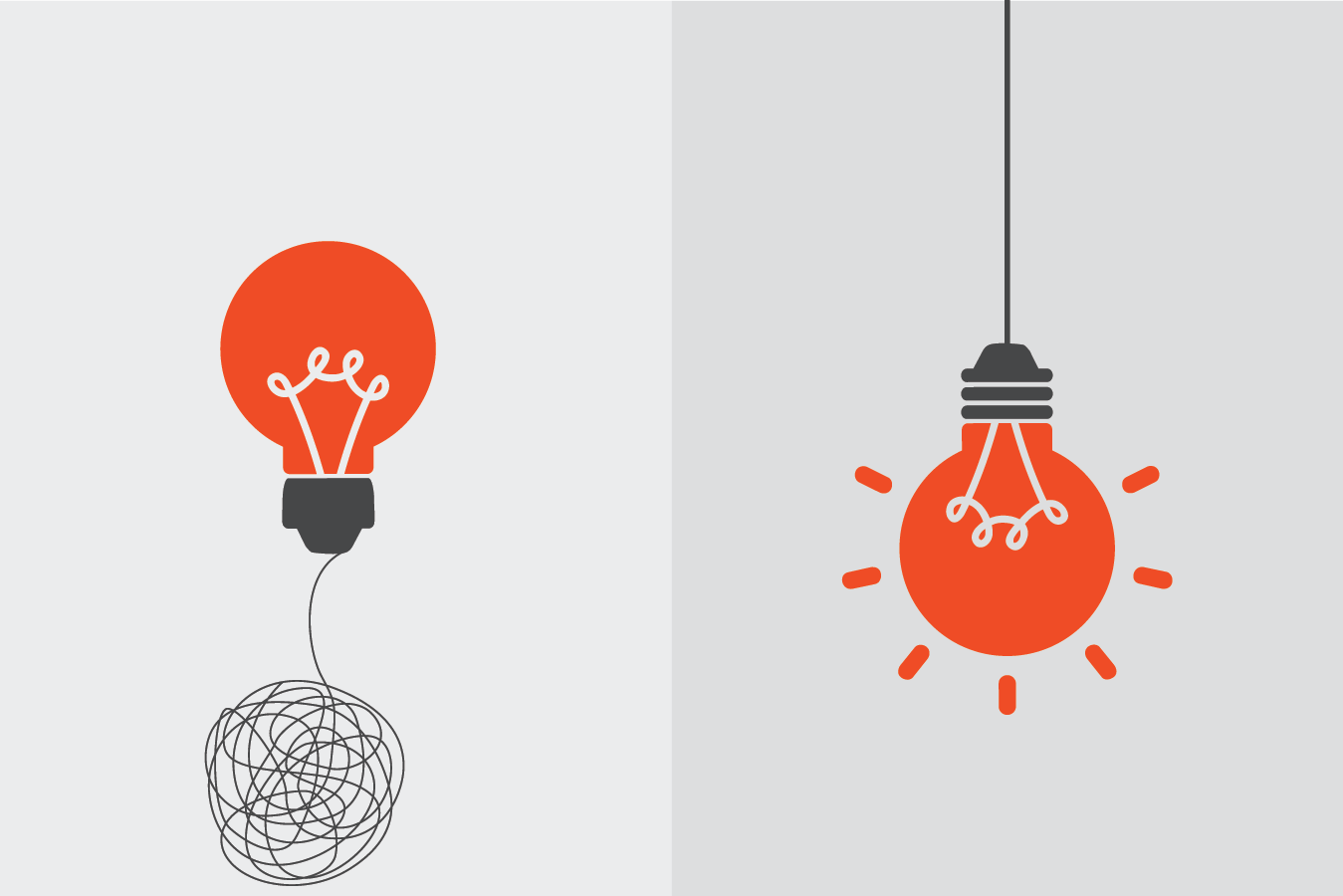
    A great design is about being simple

    Simplicity in Science: Objective, Not Aesthetic

    In science, simplicity is not about elegance or taste—it is about survival. Simple models endure because they generalize, predict, and fail gracefully. Complexity may impress, but only parsimony scales. The history of science is not a march toward greater detail, but toward fewer assumptions with broader explanatory reach.

    Parsimony Is a Survival Strategy

    Why Simpler Models Generalize Better
    A scientific model exists to explain known data and to make reliable predictions about unknown cases. Models overloaded with parameters may fit past observations perfectly, yet collapse when conditions change. Simpler models, by contrast, capture underlying structure rather than surface detail, making them more resilient to novelty.

    This is why parsimony is not aesthetic minimalism; it is functional efficiency. A model that explains more with less is easier to test, easier to falsify, and easier to extend. It survives because it travels.

    Occam’s Razor as Error Minimization
    Occam’s Razor is often misunderstood as a preference for “simple explanations.” In practice, it is a strategy for minimizing error. Each additional assumption introduces another potential point of failure. By reducing assumptions, we reduce the surface area for being wrong.

    This principle is deeply pragmatic. It acknowledges human and institutional limits: limited data, limited time, limited cognitive bandwidth. Parsimony keeps inquiry grounded when certainty is impossible.

    The Trivialization Trap

    When Simplicity Becomes Distortion
    Not all simplicity is honest. Oversimplification strips away causality in pursuit of clarity, producing explanations that are easy to repeat but wrong to apply. This is the trivialization trap: mistaking reduction for understanding.

    A model that cannot be tested, measured, or used to generate predictions is not simple—it is empty. True simplicity preserves explanatory power; false simplicity sacrifices it for comfort.

    Why Slogans Are Not Theories
    Slogans compress language, not reality. “Everything happens for a reason” or “follow your passion” may feel insightful, but they do not constrain outcomes or guide action. Scientific theories, by contrast, are accountable to evidence. They risk being wrong.

    The danger arises when slogans masquerade as science or policy. They shut down inquiry by sounding complete. Genuine simplicity invites testing; fake simplicity resists it.

    Reduction and Unification as Progress

    Newton, Maxwell, Darwin
    Scientific revolutions occur when diverse phenomena collapse into a single explanatory framework. Newton unified terrestrial and celestial motion. Maxwell unified electricity and magnetism. Darwin unified biological diversity under natural selection.

    In each case, progress did not come from adding complexity, but from discovering a deeper simplicity that made complexity intelligible.

    Fewer Assumptions, Broader Reach
    Reduction and unification reduce the number of independent assumptions needed to explain the world. This does not deny complexity at the surface; it explains it from fewer roots. Such theories are powerful precisely because they compress reality without distorting it.

    Thomas Kuhn’s The Structure of Scientific Revolutions shows that these shifts are not gradual—they require abandoning entrenched frameworks. Sean Carroll’s The Big Picture argues that the deepest explanations are those that reconcile scale, from particles to people, under coherent principles.

    Actionable Implications

    • For researchers: Favor models that fail informatively over those that succeed vacuously.
    • For educators: Teach students how theories earn their simplicity through evidence.
    • For policymakers: Beware of elegant narratives unsupported by measurable mechanisms.
    • For communicators: Aim for clarity that invites scrutiny, not slogans that silence it.

    Simplicity in science is not about making things look easy. It is about making them work—across time, scale, and uncertainty. That is why parsimony is not a stylistic preference, but an epistemic necessity.
    What is Clean User Interfaces in UX Design? | Feelpixel

    VII. Why Rote Learning Kills Genius

    Rote learning produces compliance, not competence. It creates individuals who can repeat answers but cannot reframe questions. Under pressure, memorized knowledge collapses; only structured understanding adapts. When education rewards recall over reasoning, it systematically suppresses the very conditions under which genius emerges.

    Knowing Labels vs Knowing Structures

    Memorized Facts Collapse Under Pressure
    Rote learning stores information as labels—names, formulas, definitions detached from the reasoning that produced them. Such knowledge performs adequately in controlled environments: exams, interviews, predictable tasks. But when variables change, stress rises, or novelty appears, labels offer no guidance.

    This is why high performers in academic settings often falter in real-world problem-solving. Their knowledge has no internal scaffolding. Remove the familiar cues, and the system fails.

    Conceptual Understanding Adapts
    Conceptual understanding, by contrast, encodes structure. It preserves relationships, constraints, and causal pathways. When surface details change, the underlying model still holds. This allows adaptation rather than panic.

    Knowing why a method works matters more than knowing that it works. Structure-based knowledge is slower to acquire but exponentially more useful. It enables improvisation, diagnosis, and innovation.

    Human vs Machine Intelligence

    Why Deep Learning Excels Yet Remains Brittle
    Modern machine learning systems excel at pattern recognition through massive data exposure. They interpolate impressively within learned distributions. However, without explicit abstraction formation, they remain brittle when confronted with out-of-distribution scenarios or small rule changes.

    This mirrors rote learning in humans: high performance without understanding. The system “knows” correlations, not principles.

    Pattern Recognition Without Abstraction Formation
    Human genius differs not in data volume, but in the ability to form abstractions deliberately. We can invent new categories, redefine variables, and question premises. Machines recognize patterns; humans can question whether the pattern matters.

    This distinction is critical. Overtraining humans to behave like machines—optimized for recall and repetition—squanders our comparative advantage.

    Education as the Bottleneck

    Schools Reward Recall, Not Synthesis
    Most educational systems are designed for scalability and assessment ease, not cognitive depth. Recall is easy to test; synthesis is not. As a result, curricula prioritize memorization, speed, and conformity over model-building and reasoning.

    This design choice has consequences. It selects for short-term performance and penalizes long-term adaptability.

    Why Exam Toppers Often Stall Later
    Exam success correlates weakly with real-world problem-solving in dynamic environments. Many top scorers struggle when faced with ambiguity because they were trained to find the “right answer,” not to construct one.

    Todd Rose’s The End of Average exposes how standardized systems mismeasure human potential by optimizing for conformity rather than individuality. Seymour Papert’s Mindstorms argues that learning should be about constructing ideas, not absorbing them.

    Actionable Implications

    • For students: Replace memorization with model-building; ask “why” until the structure reveals itself.
    • For educators: Design assessments that reward explanation, synthesis, and transfer across contexts.
    • For parents: Value understanding over marks; marks expire, models endure.
    • For institutions: Shift from ranking individuals to cultivating thinkers who can navigate uncertainty.

    Rote learning does not merely fail to produce genius—it actively suppresses it. In a world where machines already outperform humans at recall, educating people to behave like machines is not just inefficient; it is irresponsible.
    63,400+ Genius Stock Illustrations, Royalty-Free Vector Graphics & Clip Art  - iStock | Intelligence, Innovation, Einstein

    VIII. Cultivating Genius: Practical, Unromantic Truths

    Genius is not mystical, glamorous, or comfortable. It is built through sustained, often tedious practices that strengthen abstraction, reflection, and self-correction. What makes genius rare is not talent scarcity, but the unwillingness—personal and institutional—to tolerate the effort, humility, and discomfort required to train it.

    Daily Practices That Build Abstraction Power

    Teach-Back Journaling
    At the end of each learning session, write an explanation of what you learned as if teaching someone else. Do not summarize the source; reconstruct the idea. This practice forces compression, exposes gaps, and converts passive exposure into active understanding.

    The value lies not in eloquence but in fidelity to structure. If the explanation collapses, the model is weak.

    Analogy Notebooks
    Maintain a dedicated space for analogies. For every major concept, attempt to map it onto a different domain—biology to economics, physics to leadership, code to culture. Analogies reveal whether abstraction has preserved causality or merely surface resemblance.

    Over time, this builds a personal library of transferable models—a hallmark of high-level thinking.

    First-Principles Decomposition
    Regularly break problems down to their irreducible components. Ask: What must be true for this to work? What assumptions am I inheriting without scrutiny? This strips away convention and forces engagement with fundamentals.

    First-principles thinking is cognitively expensive, which is precisely why it is effective. It prevents drift into rote application.

    Environmental Conditions for Genius

    Psychological Safety
    Abstraction formation requires admitting confusion. Environments that punish questions or mistakes suppress learning at its root. Psychological safety is not indulgence; it is a prerequisite for intellectual honesty.

    Time to Think
    Deep understanding does not emerge in constant urgency. It requires unbroken time for reflection, synthesis, and incubation. Cal Newport’s Deep Work demonstrates that distraction fragments cognition and prevents model-building.

    Permission to Be Wrong
    Being wrong is not a failure mode; it is a feedback signal. Anders Ericsson’s Peak shows that deliberate practice depends on rapid error detection and correction. Systems that stigmatize error incentivize superficial performance over genuine growth.

    Why Genius Is Trainable—but Rarely Trained

    It Demands Effort, Humility, and Discomfort
    Training abstraction is harder than training recall. It slows visible progress, challenges identity, and exposes ignorance. Most systems optimize for speed and certainty, not depth.

    Shortcuts Produce Credentials, Not Clarity
    Certificates, grades, and titles can be acquired without understanding. Clarity cannot. This mismatch explains why societies produce increasingly credentialed populations with declining problem-solving capacity.

    Actionable Implications

    • For individuals: Schedule thinking time with the same seriousness as execution time.
    • For educators: Build curricula around iterative explanation, not content coverage.
    • For leaders: Protect deep work and reward thoughtful dissent.
    • For institutions: Redesign incentives to value learning trajectories over short-term performance.

    Genius grows where rigor meets patience. It is cultivated not through inspiration, but through environments and habits that make abstraction unavoidable and honesty safe.

    A drawing of a brain brain overflowing with creativity | Premium  AI-generated vector

    Implications for Society, AI, and the Future of Work

    The defining divide of the coming decades will not be between humans and machines, but between those who can abstract and those who cannot. As automation absorbs routine, abstraction becomes the new literacy—the capacity that determines employability, leadership, and civic relevance. AI is not replacing human intelligence; it is exposing what kind of intelligence was never deep to begin with.

    Why Abstraction Is the New Literacy

    Automation Eats Routine
    Every task that can be reduced to stable rules, repeated patterns, or predictable workflows is being automated—rapidly and irreversibly. This is not a failure of human labor; it is a consequence of clarity. Once a process is well understood, it becomes codifiable.

    The implication is stark: value migrates away from execution and toward framing. Those who merely follow procedures will be outpaced by those who design, adapt, and reinterpret them.

    Humans Must Handle Novelty
    What remains distinctly human is the ability to operate when rules are incomplete, data is sparse, and goals are contested. Novelty is not an edge case; it is the new normal. Abstraction allows humans to act under these conditions by transferring insight across contexts.

    This is why abstraction functions as literacy: without it, individuals cannot read the world as it changes.

    AI as a Mirror, Not a Threat

    What Machines Reveal About Human Thinking
    AI systems excel at pattern recognition, optimization, and scale. They fail at meaning-making, value judgment, and autonomous abstraction formation. This contrast is instructive. Machines show us what intelligence looks like when divorced from understanding.

    Rather than fearing replacement, humans should study this mirror. Where machines succeed, we should automate. Where they fail, we should educate.

    Why Abstraction Remains Our Edge
    Humans can redefine problems, invent new representations, and question objectives themselves. Abstraction allows us to step outside the frame—to decide not just how to act, but what matters.

    Max Tegmark’s Life 3.0 warns that the risk is not malicious AI, but poorly aligned objectives. Alignment requires abstraction—clear models of values, trade-offs, and long-term consequences. This is a human responsibility.

    Rebuilding Education and Employment Ecosystems

    Skill Stacks, Not Degrees
    Static credentials age poorly in dynamic environments. What endures are skill stacks: layered capabilities built on core abstractions—communication, reasoning, systems thinking, learning how to learn.

    Employment systems must shift from credential screening to capability demonstration.

    Pattern-Based Vocational Models
    Vocational training should teach patterns, not procedures. Instead of training for specific tools, teach underlying models—flows, constraints, feedback loops—that apply across industries.

    Kevin Kelly’s The Inevitable emphasizes that adaptability, not stability, is the future. Pattern-based education prepares individuals to migrate skills as contexts evolve.

    Actionable Implications

    • For policymakers: Invest in abstraction-centered education, not narrow job training.
    • For employers: Hire for learning velocity and model-building ability.
    • For educators: Integrate AI as a tool for exploring, not outsourcing, thinking.
    • For individuals: Treat abstraction as a core career skill, not an academic luxury.

    The future of work will not reward those who know more, but those who understand better. Abstraction is the currency of that future—and it must be deliberately cultivated at every level of society.

    A colorful drawing of a brain brain bursting with creativity brain shaped  like a lightbulb with co | Premium AI-generated vector

    Simplicity in Science: Objective, Not Aesthetic

    Simplicity in science is not about elegance or beauty—it is about survival. Simple models endure because they fail less often, adapt more readily, and explain more with less. Complexity is easy to create; restraint is hard-earned.

    Why Parsimony Is a Survival Strategy

    Simpler models generalize better because they make fewer commitments to noise. Every extra assumption is a liability—a potential point of failure when conditions change. Occam’s Razor is not philosophical minimalism; it is statistical humility. It minimizes error by refusing to hallucinate structure where none exists.

    In evolutionary terms, parsimonious explanations survive hostile data. Overfit theories collapse the moment reality deviates from training conditions. Science advances not by piling details, but by discarding what does not scale.

    The Trivialization Trap

    However, simplicity can rot into distortion. A slogan is not a theory. A soundbite is not an explanation. When nuance is amputated for popularity, simplicity becomes intellectual malpractice.

    True simplicity compresses complexity without lying. Trivial simplicity deletes complexity altogether. The former requires mastery; the latter requires only confidence.

    Reduction and Unification as Real Progress

    Scientific revolutions succeed by reducing assumptions while expanding explanatory reach. Newton unified celestial and terrestrial motion. Maxwell fused electricity and magnetism. Darwin explained biological diversity with a single non-teleological mechanism.

    Progress is measured not by how much we say, but by how much we no longer need to say.

    Key Insight:
    Simplicity is not the starting point of understanding—it is the end product of deep struggle.

    VII. Why Rote Learning Kills Genius

    Rote learning produces compliance, not competence. It trains memory without training mind. Under pressure, memorized facts evaporate; only structural understanding survives.

    Knowing Labels vs Knowing Structures

    Labels are fragile. Structures are resilient. When students memorize answers without understanding relationships, their knowledge collapses the moment the problem is reframed.

    Conceptual understanding adapts. It transfers. It recombines. Genius does not recall—it reconstructs.

    Human vs Machine Intelligence

    Modern AI exposes this divide mercilessly. Deep learning systems excel at pattern recognition, yet remain brittle outside familiar distributions. They interpolate; they do not truly abstract.

    Humans, at their best, form generative models—mental frameworks that can reason across domains. When education trains humans like machines—rewarding recall and speed—it strips them of their only advantage.

    Education as the Bottleneck

    Schools optimize for examinability, not insight. They reward correctness over curiosity, compliance over synthesis. This is why many exam toppers plateau later in life: the environment changes, but their cognitive strategy does not.

    The tragedy is not lack of intelligence—it is misdirected training.
    Creative Brain Lightbulb Images – Browse 179,216 Stock Photos, Vectors, and  Video | Adobe Stock

    VIII. Cultivating Genius: Practical, Unromantic Truths

    Genius is not rare because it is mystical. It is rare because it is uncomfortable. It demands sustained effort, frequent error, and the humility to rebuild one’s thinking repeatedly.

    Daily Practices That Build Abstraction Power

    Abstraction is trainable through unglamorous habits:

    • Teach-back journaling: Explain what you learned as if teaching a beginner. Gaps reveal themselves immediately.
    • Analogy notebooks: Force cross-domain mappings. Insight lives in unexpected similarities.
    • First-principles decomposition: Strip problems to irreducible constraints before rebuilding solutions.

    None of these look impressive. All of them work.

    Environmental Conditions for Genius

    Genius requires:

    • Psychological safety to ask “stupid” questions
    • Time to think without interruption
    • Explicit permission to be wrong publicly

    Most institutions provide the opposite—and then wonder why originality dies.

    Why Genius Is Trainable—but Rarely Trained

    Shortcuts produce credentials, not clarity. Hustle culture glorifies output while starving insight. But there is no bypass around deep thinking. The bill always comes due.

    63,400+ Genius Stock Illustrations, Royalty-Free Vector Graphics & Clip Art  - iStock | Intelligence, Innovation, Einstein

    Implications for Society, AI, and the Future of Work

    Abstraction is the new literacy. Those who cannot model, generalize, and reason across domains will be managed by those who can—human or machine.

    Why Abstraction Beats Automation

    Automation devours routine. What remains is novelty, ambiguity, and judgment. Humans who rely on procedural competence alone are already obsolete.

    The future belongs to those who can see patterns before they harden into processes.

    AI as a Mirror, Not a Threat

    AI does not replace human thinking—it exposes its absence. Where humans abdicate understanding, machines dominate. Where humans cultivate abstraction, machines amplify.

    AI reveals a simple truth: intelligence without understanding is fast but shallow.

    Rebuilding Education and Employment Ecosystems

    Degrees are decaying signals. Skill stacks matter more. Pattern-based vocational models—where learners master transferable mental frameworks—will outperform rigid credentialism.

    Education must shift from content delivery to cognition cultivation.

    Simplicity Is Moral Responsibility

    Clarity is kindness. Hoarding complexity is intellectual selfishness.

    Those who understand deeply owe the world usable abstractions. Not to impress. Not to dominate. But to enable others to think, act, and decide better.

    Genius is not a personal trophy.
    It is a social obligation.

    If these ideas resonate, they must not remain theory. They must translate into practice, institutions, and opportunity—especially for those systematically excluded from deep learning environments.

    Participate and Donate to MEDA Foundation

    This philosophy is not theoretical—it is operational at MEDA Foundation.

    MEDA Foundation works at the root of the problem: not employability, but thinkability. By empowering individuals—especially neurodiverse populations—to build pattern recognition, abstraction skills, and autonomous problem-solving capacity, MEDA moves people from dependency to self-sufficiency.

    Rather than training people to follow instructions, MEDA builds ecosystems where individuals learn how to think, adapt, and create value across changing environments. Pattern-based learning replaces rote instruction. Skill abstraction replaces brittle credentials. Dignity replaces charity.

    Supporting MEDA Foundation means investing in education that scales human capability, not just compliance.

    If you believe clarity is kindness, and understanding is a social responsibility, then participation is not optional—it is alignment.

    Donate. Mentor. Collaborate. Help build ecosystems that last.

    Book References (Consolidated)

    • Gödel, Escher, Bach — Douglas Hofstadter
    • Range — David Epstein
    • Deep Work — Cal Newport
    • Surely You’re Joking, Mr. Feynman! — Richard Feynman
    • The Structure of Scientific Revolutions — Thomas Kuhn
    • Life 3.0 — Max Tegmark
  • Empowering Lifelong Learners: Revolution for Self-Sustaining Knowledge

    Empowering Lifelong Learners: Revolution for Self-Sustaining Knowledge

    The shift from traditional teaching to coaching empowers learners to take ownership of their growth, fostering self-directed learning and independence. By focusing on curiosity, reflection, and personalized guidance, individuals can transform from passive recipients of information to active creators of knowledge. Modern methods like blended learning, e-learning, and knowledge management facilitate deep, lasting understanding by integrating digital tools, mentorship, and personalized pathways. Emphasizing coaching over instructing, learners are encouraged to set goals, reflect on their progress, and build the skills to navigate lifelong learning. This approach not only nurtures critical thinking and problem-solving abilities but also instills a sense of empowerment and purpose in learners of all ages.

    Lifelong Learning through a Global Lens

    From Teaching to Coaching: Cultivating the Self-Learner in the Age of Information Abundance

    Intended Audience and Purpose of the Article

    Intended Audience

    This article is designed for those who influence learning—directly or indirectly—and who recognize that the world is moving faster than traditional education systems can keep up. It speaks to:

    • Educators, instructional designers, and school leaders
      Seeking to create learning environments that ignite curiosity, not just compliance.
    • Corporate Learning & Development (L&D) professionals and HR managers
      Looking to cultivate a workforce that learns continuously, independently, and with purpose.
    • Social entrepreneurs, community builders, and NGO trainers
      Who want to empower marginalized communities to become self-reliant through knowledge and skill-building.
    • Parents, mentors, youth coaches, and self-learners
      Who want to foster lifelong learning habits in themselves and others, especially in an age where learning is no longer confined to classrooms.

    Purpose of the Article

    The goal of this article is not to add to the noise of educational reform, but to offer a clear, strategic, and transformative roadmap to help organizations, institutions, and individuals become facilitators of learning rather than providers of instruction.

    It aims to:

    • Challenge the teaching paradigm by exposing its inherent limitations in the modern context.
    • Promote self-directed learning models—backed by cognitive science and field-tested frameworks such as e-learning, blended learning, knowledge management, and personalized coaching.
    • Present a future-ready vision of what it means to be a “learning organization”—whether it’s a school, a business, a nonprofit, or a family unit.
    • Empower practitioners and policy-makers with actionable strategies that put learners at the center—encouraging curiosity, agency, accountability, and reflection.
    • Encourage readers to become learning coaches, not just content experts—curating, questioning, guiding, and walking alongside learners on their path to understanding.

    At the heart of this effort is the belief that we must evolve from the transmission of knowledge to the cultivation of wisdom. In a world overflowing with content, the greatest gift we can give a learner is not answers, but the ability to find, question, and apply them independently.

    “Education is not the filling of a pail, but the lighting of a fire.”
    — William Butler Yeats

    Lifelong learning e carreira: conheça os impactos

    1. Introduction: The Problem with Teaching and the Case for Coaching

    In an era overflowing with data, information, and “how-to” content, one would expect humanity to be wiser, more competent, and more adaptable than ever. Yet, paradoxically, we face a learning crisis—not of access, but of engagement, ownership, and application. Despite advances in technology and pedagogy, the traditional act of teaching remains largely unchanged in spirit: it is still, too often, about control rather than cultivation.

    Teaching as Command-and-Control: A Legacy of the Industrial Age

    The modern education system was born in the furnaces of the Industrial Revolution. Its purpose then was clear—create obedient, punctual, and efficient workers for factories and bureaucracies. The model was linear, mechanical, and standardized:

    • One-size-fits-all content, delivered top-down
    • Fixed curricula, ignoring individual learning styles or interests
    • Teachers as the central source of truth, with students as passive recipients

    This model served the past well—but it does not serve the future.

    Today’s learners are not assembly-line workers-in-training. They are entrepreneurs of their own intelligence, navigating a world where adaptability, curiosity, creativity, and self-direction are the true currencies of success. Yet we continue to treat them as vessels to be filled, rather than flames to be kindled.

    Passive Learning = Weak Memory, Poor Application

    The traditional teaching approach often prioritizes delivery over discovery. Information is “taught,” often disconnected from context, curiosity, or relevance. Learners, in turn, memorize for tests rather than understand for life. The results are well-documented:

    • Knowledge is quickly forgotten once assessment pressure is removed
    • Learners struggle to transfer concepts into real-world application
    • Apathy replaces enthusiasm—because being taught is passive, while learning is inherently active

    It’s not that teaching is inherently bad. It’s that it is insufficient and outdated as a default mode of learning.

    Coaching as the Empowering Alternative

    Enter the coach.

    Unlike the teacher, the coach does not aim to transfer knowledge. The coach seeks to evoke wisdom. This distinction is subtle, but revolutionary.

    • A teacher answers questions. A coach asks better ones.
    • A teacher delivers a curriculum. A coach navigates a journey.
    • A teacher grades performance. A coach guides growth.

    Coaching honors the individuality of the learner. It is built on trust, dialogue, reflection, and challenge. It focuses on activating internal motivation, not enforcing external discipline. And most importantly, it treats the learner as capable and whole, not empty and needing to be fixed.

    This is not just theory. Research in adult learning, neuroscience, and behavioral science all validate this shift:

    • Learning is deeper when the learner is active, reflective, and emotionally engaged
    • Understanding grows when concepts are discovered and connected, not dictated
    • Memory strengthens when learners retrieve, reconstruct, and apply—not when they repeat

    The Core Assertion: “Don’t Fill the Cup. Light the Fire.”

    The time has come to rethink what it means to “educate.” We must abandon the metaphor of the cup waiting to be filled, and instead embrace the image of a spark waiting to be fanned into a flame.

    When we coach instead of teach:

    • Learners build resilience and autonomy
    • Knowledge becomes a tool for life, not just a requirement for tests
    • Curiosity becomes the compass, and learning becomes lifelong

    This is not idealism—it is pragmatism. In a world of constant change, self-learning is survival. We must prepare our students, employees, and communities to learn how to learn, not merely know what to know.

    “The mind is not a vessel to be filled, but a fire to be kindled.”
    — Plutarch

    Lifelong Learning: The New Educational Trend - LOGYMY

    2. The Psychology of Self-Driven Learning

    Behind every successful learner is not a better teacher—but a more empowered mind. Self-driven learning isn’t merely a method; it is a psychological revolution in how humans internalize, retain, and apply knowledge. When learning is self-initiated, curiosity-led, and goal-directed, it becomes not only more effective but also more joyful and meaningful.

    This section explores why self-driven learning works so well, backed by research from neuroscience, motivational psychology, and cognitive science.

    The Role of Intrinsic Motivation and Autonomy (Self-Determination Theory)

    Self-Determination Theory (SDT), developed by psychologists Edward Deci and Richard Ryan, posits that humans have three fundamental psychological needs:

    1. Autonomy – the need to feel in control of one’s actions
    2. Competence – the need to feel capable and effective
    3. Relatedness – the need to feel connected and supported

    When these needs are satisfied, intrinsic motivation flourishes.

    Traditional teaching often undermines these:

    • Rigid curriculums erode autonomy
    • One-size-fits-all evaluation weakens perceived competence
    • Authoritative instruction disconnects learners from peers and mentors

    In contrast, coaching and self-learning fuel autonomy by inviting choice, responsibility, and goal-setting. Learners are no longer subjects of a lesson; they become owners of their journey.

    💡 Practical implication: Educational designs should offer choice, personalize feedback, and encourage learners to set their own goals and pace.

    How Memory Works: Why Discovery Outlasts Instruction

    Our brains are not tape recorders—they are active constructors of knowledge. When we simply hear or read information, it passes through short-term memory, often lost within hours or days unless effortfully retained.

    However, when a learner discovers knowledge—through experimentation, problem-solving, questioning, or reflection—it activates deeper cognitive networks.

    Key differences:

    • Instruction delivers ready-made answers → fleeting memory
    • Discovery requires mental effort → deeper encoding and longer retention

    This aligns with what psychologists call the “generation effect”: people remember information better when they generate it themselves rather than receive it passively.

    Cognitive Science Insights That Support Self-Learning

    Let’s dive into three powerful, science-backed tools that naturally emerge in self-directed learning environments:

    1. Active Recall

    Retrieving knowledge strengthens memory far more than re-reading or listening.
    Example: Learners quizzing themselves or explaining a concept aloud retain it longer.

    2. Spaced Repetition

    Spacing out review sessions over days/weeks helps commit knowledge to long-term memory.
    Example: Digital flashcard apps like Anki use this principle to help students master complex topics.

    3. Constructivist Learning Theory

    Constructivism, championed by thinkers like Jean Piaget and Lev Vygotsky, suggests that learners construct new understanding by building on what they already know.
    Example: When learners tackle real-world problems using prior knowledge, they deepen understanding through application and synthesis.

    💡 Practical implication: Design learning experiences around exploration, projects, and reflection—not lectures.

    Neuroplasticity and the Brain’s Reward System in Learner-Led Environments

    The human brain is not static. Through neuroplasticity, it rewires itself in response to learning, experience, and environment. Importantly, self-directed learning enhances this plasticity.

    Why?

    Because the brain’s reward system—involving dopamine and other neurotransmitters—is activated more intensely when:

    • We choose to learn something
    • We solve a challenge on our own
    • We receive positive feedback from a meaningful achievement

    This creates a virtuous cycle:

    • Autonomy → motivation → effort → success → neurochemical reward → deeper motivation

    Contrast this with forced instruction, where fear, boredom, or compliance drive behavior. Here, little to no reward is released, and learning becomes dull, stressful, or easily forgotten.

    💡 Practical implication: Build learning environments that celebrate effort, curiosity, and micro-successes. The emotional and neurological impact is lasting.

    Equip the Brain, Don’t Stuff It

    When learners are coached to take control of their learning, psychological needs are met, brain systems are optimized, and memory systems are engaged. The science is clear: Ownership enhances learning. Discovery deepens memory. Joy accelerates growth.

    The era of “teacher as transmitter” must give way to the “coach as catalyst.”
    A passive learner forgets.
    An active learner transforms.

    The Power of Lifelong Learning: Navigating Success in a Dynamic World

    3. Coach, Don’t Teach: What It Means and Why It Works

    In a world where information is ubiquitous, the role of the educator must shift from dispenser of knowledge to catalyst of growth. The distinction between teacher and coach is not semantic—it is foundational. It changes the posture of the adult in the room, the experience of the learner, and the long-term effectiveness of the learning journey.

    If we are serious about helping people learn how to think, not just what to think, then we must stop teaching and start coaching.

    The Fundamental Distinction: Teacher vs. Coach

    Let’s begin with a clear comparison:

    Traditional Teacher

    Modern Coach

    Answers questions

    Asks powerful questions

    Delivers structured content

    Designs flexible learning experiences

    Holds authority over learning

    Shares ownership of learning

    Measures compliance and correctness

    Encourages exploration and ownership

    Focuses on syllabus completion

    Focuses on learner transformation

    Teachers operate from the assumption: “You don’t know, and I’ll tell you.”
    Coaches operate from the belief: “You already have potential. I’ll help you uncover it.”

    This shift is not about abandoning structure or expertise. It’s about repositioning expertise—from being the center of learning to being a support to learning.

    A Coach Facilitates Transformation, Not Just Information

    The most profound difference between teaching and coaching is this:
    👉 Teaching imparts knowledge. Coaching builds capability.

    • A teacher may help someone pass a test.
    • A coach helps someone change how they think, solve, act, and reflect.

    Coaching unlocks internal motivation, which is more powerful than external instruction. When learners see themselves as the protagonists in their own development, they begin to stretch, adapt, and persist beyond the minimum. Coaching isn’t about faster facts—it’s about deep, durable change.

    💡 Insight: We remember those who taught us information. But we are transformed by those who believed in our capacity and held us accountable to it. That’s the coach’s legacy.

    Core Responsibilities of the Coach

    If you choose to coach rather than teach, your role becomes far more dynamic and demanding—but also more rewarding. Here are four foundational responsibilities that define the modern coach:

    1. Diagnose Curiosity, Not Problems

    Traditional teaching starts by identifying what a learner “lacks.” Coaching begins by asking:

    What is this learner curious about? Where is the energy? What do they want to figure out?

    Curiosity is not a distraction—it is a diagnostic tool. Great coaches sense where the learner’s mind is naturally heading and design around that spark.

    🔧 Actionable Practice: Begin sessions with open questions, not checklists. Use learner questions as the curriculum, not just the textbook.

    2. Design Context, Not Just Content

    Teaching tends to prioritize content delivery—syllabus, notes, lectures. Coaching designs contexts where learners must think, try, stretch, and reflect.

    A coach asks: What challenge can I design that forces the learner to confront their limits and grow?
    This is the coaching mindset: engineering insight, not just transmitting information.

    🧠 Example: Instead of explaining how a business model works, a coach challenges the learner to build one for a fictional product.

    3. Deliver Feedback, Not Grades

    Grading reduces learning to numbers. Coaching elevates learning through authentic, specific, actionable feedback. A grade tells you where you stand. Feedback tells you where to go next.

    Feedback is the mirror that helps learners self-correct, not self-judge.

    🛠️ Action Tip: Use “feedforward” techniques—focusing not just on what went wrong, but on what the learner can try next time.

    4. Drive Reflection, Not Repetition

    Repetition builds familiarity. Reflection builds wisdom.

    The coach’s most sacred role is to create spaces for reflection—after actions, after mistakes, after successes.

    Ask:

    • What surprised you?
    • What did you learn about yourself?
    • What would you do differently next time?

    🌀 Reflection transforms experience into insight. Without it, learners repeat patterns. With it, they evolve.

    Be the Mirror, Not the Map

    A teacher often hands over the map. A coach holds up the mirror.

    In a world of infinite knowledge, learners don’t need more maps—they need to learn how to navigate. Coaching provides the structure, questions, and accountability that helps learners find their own path, rather than follow someone else’s route.

    “You can’t teach a person anything; you can only help them find it within themselves.”
    Galileo Galilei

    Let us become learning guides, not academic gatekeepers. Let us measure our success not by what we taught, but by how deeply they grew.

    From Curiousity to Success: Why We All Should Embrace Lifelong Learning |  Bachelor of Applied Science

    4.1. Blended Learning: Bridging Digital and Physical

    Blended learning is not just a delivery method—it is a philosophical pivot that redefines how, when, and where learning happens. At its core, it empowers learners by combining digital autonomy with human connection, creating an environment where self-paced discovery meets real-world engagement.

    This model dismantles the walls of the traditional classroom while preserving what makes human learning powerful: mentorship, feedback, and collaboration.

    Definition and Essence

    Blended Learning integrates:

    • Asynchronous, self-paced digital content (videos, quizzes, simulations, forums)
      with
    • Synchronous, live interaction and mentorship (in-person or virtual guidance, group reflection, hands-on practice)

    Unlike fully online or fully traditional models, blended learning optimizes both worlds:

    • Learners consume foundational knowledge at their own pace.
    • Live sessions are used for higher-order tasks—discussion, critique, co-creation.

    The result is active engagement, not passive attendance.

    Popular Models of Blended Learning

    Here are three field-tested structures within the blended framework:

    1. Flipped Classroom

    • Learners watch video lessons or study materials before class.
    • In-class time is used for application, debate, and problem-solving.

    💡 Best for: Subjects requiring conceptual clarity and discussion (math, science, history, ethics)

    2. Station Rotation

    • Learners rotate between different learning stations:
      • Digital content
      • Peer collaboration
      • Teacher coaching

    💡 Best for: Schools or NGOs with varied learner needs, especially in resource-limited environments.

    3. Flex Learning

    • Core content is delivered online; physical presence is optional and tailored.
    • Learners have control over time, path, and pace.

    💡 Best for: Adult learners, workforce reskilling, rural or remote training programs.

    Use Cases Across Contexts

    Blended learning adapts beautifully across sectors:

    🏫 In Schools and Higher Education

    • Enables deeper classroom engagement
    • Reduces teacher lecture time
    • Supports differentiated instruction

    💼 In Corporate Training

    • Saves time and cost
    • Makes compliance and upskilling scalable
    • Encourages employees to own their development journey

    🧩 In NGO and Community Programs

    • Overcomes geographical barriers
    • Combines localized mentorship with scalable content
    • Engages volunteers and learners from diverse backgrounds

    Key Tools and Technologies

    The power of blended learning lies in how it is implemented, not just the tech. But here are some battle-tested platforms that make it work:

    Tool

    Use

    Moodle

    Open-source LMS to create structured learning paths

    Google Workspace

    Collaboration and content creation (Docs, Slides, Forms, Sheets)

    Zoom

    Live interaction, mentorship sessions, virtual classrooms

    Miro

    Interactive whiteboards for collaborative exercises, mapping, ideation

    Other notable mentions:
    Khan Academy, Notion, Canva, Trello, Padlet, Edmodo

    The best tools are those learners can use outside the system too, building digital fluency alongside knowledge.

    Why Blended Learning Works for the Self-Driven Learner

    1. Personalized Pacing: No one is left behind—or held back. Learners move at the speed of their understanding.
    2. Learner Autonomy: Gives learners control over how and when they learn—a key driver of motivation.
    3. Deeper Engagement: Frees up human time for what matters—dialogue, coaching, and experimentation.
    4. Scalability + Human Touch: Blends technology’s reach with mentorship’s depth—ideal for NGOs, rural programs, and large institutions.

    A System, Not a Supplement

    Blended learning isn’t a side strategy—it should be the new operating system of modern education and training. It allows organizations to scale quality, maintain human connection, and nurture self-driven learning.

    “Technology will not replace great teachers. But technology in the hands of great teachers can be transformational.” — George Couros

    If implemented thoughtfully, blended learning is not a compromise between digital and physical—it is a bridge between instruction and transformation.

    4.2. E-Learning and Microlearning: Scaling Knowledge with Precision and Agility

    E-learning is no longer a novelty—it is a foundational infrastructure of modern learning. But when deployed with strategy and sensitivity, it becomes far more than just online lectures. It becomes a personalized, scalable, learner-driven experience that adapts to both time and attention spans.

    Microlearning—the art of delivering learning in compact, laser-focused units—is the high-efficiency engine within this system.

    Together, e-learning and microlearning can reach thousands while still empowering individuals.

    The Power of Asynchronous, Bite-Sized Learning

    Unlike traditional learning, e-learning and microlearning are asynchronous—meaning learners engage when ready, not when scheduled. The content is often delivered in bite-sized formats:

    • Short videos (3–8 minutes)
    • Interactive quizzes
    • Infographics and animations
    • Case scenarios and simulations
    • Flashcards and spaced repetition decks

    This format works because it:

    • Fits busy lives (especially for working professionals, students, caregivers)
    • Boosts retention (small chunks = better cognitive processing)
    • Supports just-in-time learning (needed knowledge, delivered at the moment of need)

    🧠 Fact: Research by the Journal of Applied Psychology shows that microlearning improves retention by 17% compared to traditional methods.

    Benefits of E-Learning and Microlearning

    1. Scalability
      One piece of content can serve 10 or 10,000 learners—globally.
    2. Modularity
      Learners can pick only what they need, when they need it—curating their own path.
    3. Accessibility
      Learning is no longer bound by geography or time zones—critical for rural outreach and marginalized groups.
    4. Cost-Effective
      Once developed, content delivery incurs negligible incremental cost.
    5. Engagement through Personalization
      Advanced e-learning adapts to each learner’s pace, strengths, and needs—like a digital coach.

    Platforms Making E-Learning Universally Accessible

    Platform

    Best For

    Coursera / edX

    Structured courses from global universities

    Khan Academy

    Conceptual clarity in school subjects, totally free

    Skillshare

    Creative and entrepreneurial skills

    Duolingo

    Language learning gamified

    YouTube Learning / TED-Ed

    Short-form inspiration and discovery

    Udemy

    Affordable courses on everything from coding to cooking

    💡 Pro Tip for NGOs and Schools: Many of these platforms offer free or subsidized access to nonprofits and under-resourced learners—explore partnerships.

    How to Design Engaging E-Learning

    Poorly designed e-learning becomes digital boredom. Good e-learning pulls the learner in with narrative, challenge, and feedback.

    Here’s how:

    🪄 1. Storytelling

    Turn lessons into micro-narratives. Humans remember stories, not slides. Add characters, dilemmas, and resolutions.

    Example: Teach negotiation through a story about a street vendor and a difficult customer.

    🎮 2. Gamification

    Use rewards, progress bars, points, and levels to keep learners engaged. It turns learning into a motivating quest, not a chore.

    Duolingo’s streaks and badges are great examples of how tiny rewards can drive long-term learning.

    🔁 3. Adaptive Feedback

    Provide instant, contextual feedback. Don’t just mark an answer wrong—explain why, suggest alternatives, offer encouragement.

    “Close! You mixed up cause and correlation. Here’s a short animation that clears it up.”

    Pitfalls to Avoid

    • ❌ Overloading with content: Keep it short, focused, and spaced
    • ❌ Ignoring learner context: A flashy app is useless if it doesn’t solve a real problem
    • ❌ No feedback loop: Learning dies when it feels one-way
    • ❌ Tech-first thinking: Always design for learning outcome, not for platform bells and whistles

    Microlearning Is Macro-Empowerment

    E-learning and microlearning are not about shrinking content. They’re about expanding access, agency, and application. They reflect the modern learner’s rhythm: fast, mobile, and curious.

    “We learn best in moments of need, not in hours of lectures.”

    In the hands of educators, NGOs, parents, or corporate leaders, this model democratizes skill-building—equipping anyone, anywhere, to grow on demand.

    4.3. Knowledge Management and Learning Ecosystems: Turning Organizations into Learning Organisms

    In a world where change is exponential, knowledge decays faster than ever. What separates agile, learning-driven institutions from stagnant ones is not how much they know—but how fast they learn, share, and evolve.

    Knowledge Management (KM) is not just a set of tools. It is the nervous system of any learning organization. It ensures that:

    • Lessons are captured, not lost.
    • Insights are shared, not siloed.
    • Wisdom compounds, rather than resets with each person or project.

    When organizations embrace KM, they transform from content providers into learning ecosystems.

    What Is a Learning Ecosystem?

    A learning ecosystem is:

    • A living, breathing system that continuously collects, organizes, updates, and distributes knowledge.
    • Learner-driven and coach-enabled, where people learn from each other, not just from courses.
    • Process-oriented, embedding learning in daily work and decision-making.

    “If you don’t document it, it didn’t happen. If you don’t share it, no one grows.”

    Core Elements of Knowledge Management

    📁 1. Internal Repositories

    These are structured spaces that store, index, and update institutional wisdom—like a living library.

    Components include:

    • Process documents
    • Case studies and lessons learned
    • FAQs and how-to guides
    • Role handbooks and onboarding kits
    • Project post-mortems

    📚 2. Wikis and Shared Documents

    Wikis democratize content creation—allowing everyone to contribute, update, and refine knowledge assets.

    Example tools:

    • Notion: Flexible workspace for documentation, templates, wikis, and dashboards
    • Confluence: Powerful team wiki by Atlassian, great for structured collaboration
    • Google Docs + Drive: Simple, accessible, and familiar for most users
    • SharePoint: Enterprise-level KM platform, especially for Microsoft ecosystems

    🛠️ 3. Learning Hubs

    A central access point to all learning materials—courses, links, tools, mentors, community discussions.

    Think of it as the “learning homepage” of your organization or community.

    The Cultural Shift: From “Knowers” to “Growers”

    Tools mean little without culture. The real transformation happens when an organization adopts a mindset of “show, document, mentor.”

    1. Show: Don’t just perform. Share the thinking behind your actions.

    “Here’s how I approached that issue.”

    1. Document: Convert tacit knowledge into explicit knowledge.

    “Let me write this up as a guide.”

    1. Mentor: Use captured knowledge to uplift others.

    “I created this for others to not repeat my mistakes.”

    This behavior reinforces a growth mindset and builds leadership at every level.

    Obsidian and Personal Knowledge Management (PKM)

    While KM is often seen as organizational, tools like Obsidian are transforming individual knowledge as well. These tools:

    • Link notes through graph-like relationships
    • Enable “Zettelkasten” systems (smart note networks)
    • Turn scattered ideas into cohesive, discoverable insights

    Learners who build PKMs often become knowledge multipliers within their communities.

    MEDA-Style Application Example

    In a nonprofit like MEDA Foundation, this could mean:

    • Creating a learning wiki for autism awareness practices
    • Documenting vocational training models used in different regions
    • Sharing case stories of transformation across teams
    • Maintaining a mentor library where experienced trainers share playbooks

    This transforms volunteers, interns, and employees into knowledge stewards, not just service providers.

    Key Benefits of Knowledge Ecosystems

    Benefit

    Impact

    Reduces redundancy

    Teams don’t “reinvent the wheel”

    Faster onboarding

    New members access contextual knowledge instantly

    Supports innovation

    Builds on what exists, instead of starting from zero

    Inspires contribution

    Everyone becomes a knowledge creator

    Increases resilience

    Organizational memory survives staff turnover or disruption

    Make Knowledge Flow, Not Just Sit

    Knowledge must move—not just sit in files. Living organizations learn in public, build on collective insight, and turn every project into a springboard for the next.

    “You do not rise to the level of your goals. You fall to the level of your systems.” — James Clear

    A robust knowledge management system is the system behind all great learning transformations.

    4.4. Personal Learning Environments (PLEs): Building the Learner’s Second Brain

    In the age of information abundance, the most powerful skill is learning how to learn. And to do that, every individual needs their own personal learning environment—a curated system that turns information into insight, and insight into action.

    A PLE is not a product or platform—it’s a learning habit system, a digital garden, a thinking partner. It helps learners take charge of their growth journey, curate knowledge from multiple sources, and develop a deeply personal relationship with learning.

    “If an LMS is an institution’s bookshelf, then a PLE is the learner’s notebook, sketchpad, and compass—all rolled into one.”

    What Is a Personal Learning Environment (PLE)?

    A PLE is a self-directed, tech-enabled ecosystem of tools, routines, and resources used by a learner to:

    • Capture new knowledge
    • Organize and tag it for easy access
    • Reflect through journaling and synthesis
    • Set goals and track progress
    • Iterate based on feedback and changing goals

    Unlike institutional learning management systems (LMS), PLEs are owned by the learner, not the school or organization.

    Why PLEs Matter in a Self-Learning World

    Traditional classrooms and syllabi give learners little control. But in a future where:

    • Careers change every 5–7 years
    • Skills need constant refreshment
    • Learning happens outside classrooms—

    A PLE is your lifelong learning operating system.

    💡 Benefits of Building a PLE:

    Learner Benefit

    Description

    Autonomy

    Control what, how, and when to learn

    Retention

    Deep understanding through active processing

    Agency

    Build confidence through ownership

    Continuity

    Learning doesn’t reset after a course or job ends

    The Core Components of a Personal Learning Environment

    🧠 1. Knowledge Capture: Your “Second Brain”

    Use tools like Notion, Obsidian, Roam Research, or even Google Keep to:

    • Take smart notes (Zettelkasten or atomic notes)
    • Tag ideas by topic, relevance, or context
    • Create idea maps and backlink connections

    A second brain is not a diary. It’s a networked space for thinking in layers, not just lines.

    📓 2. Journaling and Reflection

    Reflection is the oxygen of self-directed learning. Use a daily or weekly journal to:

    • Ask “What did I learn today?”
    • Track mistakes and breakthroughs
    • Note emotional reactions to successes and failures

    Tools: Day One, Reflect.app, physical notebooks, voice memos

    🎯 3. Goal Setting and Milestone Mapping

    Set SMART goals, chunk them into weekly targets, and monitor progress.

    Example: “Learn basic Python” → Break into: watch 3 videos/week, complete 5 coding exercises, write one script per week.

    Tools:

    • Trello: For organizing tasks and visualizing progress
    • Notion: For combining task boards, notes, and templates
    • Google Calendar: For scheduling learning time

    📊 4. Learning Dashboards

    A visual hub to track:

    • Topics covered
    • Content completed
    • Reflections written
    • Key takeaways and next actions

    These dashboards build feedback loops that sharpen focus and reinforce habits.

    A PLE without feedback is a library. A PLE with feedback is a gym for your brain.

    Making It Real: How to Start Your PLE Today

    Step

    Action

    1

    Choose your core capture tool (e.g., Notion, Obsidian)

    2

    Create sections for Notes, Goals, Reflections, and Resources

    3

    Block out weekly learning time (even 30 minutes counts)

    4

    Commit to a daily journaling habit (2–3 lines is enough)

    5

    Review your week: What did I learn? What’s next? What did I struggle with?

    Applications for Different Audiences

    • 🧒 Students: Build a habit of learning outside school, stay curious
    • 👩‍💼 Professionals: Stay ahead of industry shifts, own your upskilling
    • 👪 Parents and Coaches: Help children track passions and reflect on their learning
    • 🧘‍♂️ Self-Learners and Creatives: Map your mental universe and evolve your craft

    MEDA Perspective: PLEs for Dignity and Empowerment

    At MEDA Foundation, encouraging marginalized youth and autistic individuals to build their own PLEs fosters:

    • Ownership over growth
    • Confidence in self-paced learning
    • Respect for their unique ways of processing the world

    A vocational trainee who journals their progress, tags skills learned, and builds a learning portfolio—has not just gained knowledge, but become a self-directed learner for life.

    Own Your Learning to Own Your Life

    The 21st-century learner doesn’t wait for a syllabus. They build a system.
    Your PLE is not a tool; it’s a mirror of your curiosity and a map of your mind.

    “A personal learning environment is not where you learn—it’s how you become.”

    4.5. Individualized Learning with Guided Autonomy: Freedom Within a Frame

    In today’s world, the most effective learning is not dictated from above, nor left entirely unguided—it is personalized, adaptive, and supported. This is the heart of guided autonomy.

    Autonomy without structure can lead to chaos; structure without freedom kills creativity. True transformation happens when a learner is given both: ownership over their journey, and mentorship to stay on course.

    “Guided autonomy is not about controlling learners; it’s about helping them control their own compass.”

    The Case for Individualized Learning

    Everyone learns differently:

    • Some grasp concepts through visual maps, others through hands-on experimentation.
    • Some move fast, others need time to integrate and reflect.
    • Neurodivergent learners may need radically different pacing, scaffolding, and expressions of understanding.

    Yet traditional systems continue to treat learners as if they’re interchangeable. The result? A system optimized for standardization, not for growth.

    Individualized learning flips the model:

    • Learners co-design their paths
    • Coaches observe patterns, not enforce rules
    • Systems adapt based on learner behavior, motivation, and feedback

    Core Components of Guided Autonomy

    ⚙️ 1. AI-Enabled Learning Pathways

    Modern learning tools can now:

    • Analyze learner behaviors, gaps, and strengths
    • Recommend content or challenges dynamically
    • Adjust pacing based on real-time engagement

    For example:

    • Duolingo-style streaks tap into behavioral psychology to boost consistency.
    • Platforms like Khan Academy or Coursera adapt difficulty levels to learner progress.

    AI is not the teacher—it’s the personal assistant to your curiosity.

    📊 2. Learner Analytics and Insight Dashboards

    Dashboards make learning visible. They help learners track:

    • Time spent
    • Progress through modules
    • Areas of strength and challenge

    More importantly, mentors can spot patterns: Is the learner disengaged? Are they mastering basics but avoiding challenges?

    Used wisely, analytics become a mirror for reflection—not a surveillance tool.

    🤝 3. Contracts of Learning: Accountability Without Policing

    A learning contract is a mutual agreement between the learner and the coach:

    • What the learner aims to achieve
    • How they’ll go about it
    • When and how they’ll check in
    • What success looks like (self-defined)

    This builds:

    • Commitment, not compliance
    • Clarity, not control
    • Partnership, not power dynamics

    Example: A vocational learner sets a monthly skill goal (e.g., master soldering), logs efforts weekly, and reflects with a coach every Friday.

    🧘 4. Reflection, Journaling, and Self-Assessment

    True learning is not input—it’s integration. Structured reflection helps learners:

    • Internalize what they learn
    • Spot their own cognitive and emotional patterns
    • Gain metacognitive awareness: “How do I learn best?”

    Suggested Prompts:

    • “What challenged me this week, and what did I do about it?”
    • “What’s one thing I understand better now than a week ago?”
    • “What am I avoiding, and why?”

    Journaling platforms like Daylio, Reflectly, or Notion can help with structured check-ins. Even WhatsApp voice memos can work in low-resource settings.

    🗺️ 5. Custom Learning Maps and Gamified Progress

    Tools like Classcraft, Habitica, and learning map templates make the journey fun and visual:

    • Assign XP (experience points) to completed tasks
    • Create quests and milestones
    • Build visual maps of skill trees and concept mastery

    This isn’t about turning learning into a game—it’s about making progress tangible and motivating.

    Guided Autonomy in Practice: Where and How It Works

    Domain

    Use Case

    Schools

    Learner-led projects with mentor scaffolding

    Corporate L&D

    Personalized skill plans with monthly reviews

    NGOs & Community Centers

    Youth skill tracks with digital journals and mentor circles

    Vocational Training

    Trade-specific learning contracts, reflection logs, and weekly feedback

    The Role of the Coach: Accountability Partner, Not Authority Figure

    In this model, the coach:

    • Listens more than lectures
    • Tracks effort, not just outcome
    • Celebrates reflection, not just performance
    • Nudges, not nags

    This fosters dignity, ownership, and trust—especially crucial in working with underserved populations and neurodiverse learners.

    MEDA Perspective: Personalization as Liberation

    For the communities and individuals we serve at MEDA Foundation, individualized learning is not a luxury—it’s a necessity.

    A young autistic adult may thrive with:

    • Self-paced modules
    • Weekly mentor calls
    • Visual dashboards of goals
    • Private journals instead of classroom participation

    A rural youth with limited internet access might:

    • Use WhatsApp to report weekly learning
    • Set analog goals with visual trackers
    • Reflect via audio messages to a coach

    We don’t need one system for everyone. We need many systems of one.

    The Future Learner Is the Driver, Not the Passenger

    Individualized learning with guided autonomy shifts the entire relationship between learner and institution—from compliance to co-creation.

    It prepares learners not just to pass tests—but to navigate a life of learning, adapt to change, and lead with confidence.

    “Give people a map, not a mandate. And let them draw their own route.”

    What is lifelong learning

    5. Reflection and Metacognition: The Core of True Learning

    Conclusion First:
    Information becomes knowledge only when it is processed, owned, and internalized. And this internalization happens not through repetition, but through reflection. The learners who grow most deeply are not those who consume the most content—but those who know how to pause, question, and reframe. This is the power of metacognition—learning how to learn.

    In self-driven learning systems, metacognition is the engine, and reflection is the ignition key.

    “The mind is not a vessel to be filled, but a fire to be kindled — and that fire needs oxygen. That oxygen is reflection.”

    What Is Metacognition and Why Does It Matter?

    Metacognition means thinking about your own thinking. It’s the ability to step outside your own mind, look at how you process information, and make intentional changes.

    This is not a luxury skill. It’s the foundation of:

    • Self-correction
    • Adaptive learning
    • Transfer of knowledge
    • Resilience in the face of confusion

    Without metacognition, we can become passive content consumers. With it, we become active architects of our understanding.

    Three Core Reflection Techniques

    Reflection isn’t accidental—it must be intentional, designed, and guided. Here are three simple but powerful techniques to build into every learning ecosystem:

    ✍️ 1. Learning Logs

    A learning log is a running, dated journal of insights, questions, and moments of realization.

    Sample Prompts:

    • “What stood out for me today?”
    • “Where did I struggle, and how did I respond?”
    • “What did I change my mind about?”

    Best Practice: Use structured templates (e.g., 5-minute reflection log) or digital tools like Notion, Day One, or physical notebooks.

    🌙 2. End-of-Day Recaps

    These are short, ritual-based reflections done at the end of the day.

    Format:

    • What did I learn?
    • What confused me?
    • What energized me?
    • What will I try differently tomorrow?

    For teams: share via Slack channels, WhatsApp audio logs, or Google Forms. For individuals: integrate into nightly journaling or habit trackers.

    🧠 3. The “What Did I Unlearn Today?” Prompt

    Unlearning is just as important as learning. This question encourages humility and deeper insight.

    Why it works:

    • It surfaces outdated assumptions
    • Builds cognitive flexibility
    • Encourages critical thinking

    Example: “I unlearned the idea that asking for help is a weakness.”

    Designing Reflection into Every Learning Experience

    Reflection should not be an afterthought. It should be baked into the learning architecture.

    Here’s how to do it:

    Setting

    Reflection Practice

    Workshops or classrooms

    5-minute recap journal at the end of each session

    Online modules

    Pop-up prompts: “Pause and reflect before you continue”

    Mentor check-ins

    Start every session with a reflection log review

    Team meetings

    Start with “One insight, one challenge” check-in

    Tip: Keep reflection low-barrier and high-frequency. It’s better to do 2 minutes daily than 1 hour monthly.

    Coaches as Reflection Catalysts

    The coach’s role is not to provide answers, but to ask better questions.

    Sample Coaching Questions:

    • “What’s a recent mistake that became a teacher?”
    • “What patterns do you see in how you approach problems?”
    • “What learning strategy worked for you this week?”

    In neurodiverse or underserved populations, reflection may not always take the form of written journals. Consider:

    • Audio diaries
    • Voice messages
    • Visual thinking (sketch notes, diagrams)

    Institutionalizing Metacognition: A Culture, Not a Tool

    Organizations serious about learning should normalize and celebrate reflection.

    What that looks like:

    • Leaders model public reflection
    • Teams close projects with retrospective circles
    • Classrooms display learning walls: “What we’ve discovered. What we’re questioning.”

    “We reflect not because we are uncertain—but because we are evolving.”

    Case in Point: Reflection at MEDA Foundation

    At MEDA Foundation, we embed reflection into:

    • Youth vocational training (weekly self-check forms)
    • Mentor training (journaling and peer dialogue)
    • Autistic learning programs (visual boards of “What I learned” and “How I felt”)

    These practices have built trust, improved learner retention, and created a climate of mutual growth.

    Why This Matters More Than Ever

    In an age of AI and instant information, content is cheap. But conscious learners—those who reflect, adapt, and grow—are priceless.

    Metacognition empowers learners to:

    • Take ownership of their progress
    • Recover from mistakes
    • Deepen understanding across disciplines
    • Lead themselves before leading others

    Lifelong Learning Vectors - Download Free High-Quality Vectors from Freepik  | Freepik

    6. Group Learning vs. Individual Learning: Rethinking the Balance

    Both group learning and individual learning are essential in today’s educational landscape. The key is knowing when and how to blend them for optimal outcomes. While collaboration sparks creativity and feedback, solo learning with coaching is the gold standard for developing deep, independent mastery. The future of learning is not an either/or; it’s about finding the right balance at the right time.

    “The strength of the group is the individual, and the strength of the individual is the group.” —Phil Jackson

    Group Learning: The Power of Collective Intelligence

    Benefits of Group Learning:

    • Collaboration: Group learning promotes synergy. When diverse minds come together, they produce innovative solutions, challenge assumptions, and expand perspectives.
    • Diversity of Thought: The range of ideas, experiences, and interpretations enhances critical thinking and provides multiple solutions to problems.
    • Instant Feedback: Immediate peer feedback accelerates learning. Real-time critique from a peer often provides insights that even the most seasoned instructor might miss.

    Example: A group project on sustainability might yield innovative eco-solutions when each team member brings a unique cultural or disciplinary perspective.

    Where Group Learning Shines:

    • Problem-solving in teams
    • Brainstorming and ideation
    • Critical discussions that require diverse viewpoints
    • Creativity and collective decision-making

    In environments where ideas need to be synthesized, group learning is irreplaceable. The collective action of tackling a shared challenge creates an energy that drives engagement and commitment.

    Hidden Pitfalls of Group Learning: When Collaboration Goes Wrong

    While group learning offers great benefits, it comes with several hidden pitfalls that can hinder true learning.

    1. Diffusion of Responsibility

    In group settings, individuals may feel less responsible for the outcome, believing that others will pick up the slack. This lack of accountability can lead to poor participation and reduced individual effort.

    Example: In group projects, one person often ends up doing the lion’s share of the work, while others coast along.

    How to Prevent It:

    • Clearly define roles and responsibilities at the start.
    • Use individual contributions assessments and self-reflection logs to ensure accountability.

    2. Herd Mentality

    Groupthink occurs when the desire for harmony or conformity within the group leads to poor decisions or a lack of critical thinking. Group members might silence dissenting opinions to avoid conflict or seek approval.

    Example: In a meeting, everyone agrees on an idea just to avoid disagreement, even though there are valid concerns.

    How to Prevent It:

    • Actively encourage contrarian perspectives.
    • Use structured debates and encourage healthy dissent.
    • Rotate leadership roles so everyone has a chance to guide the group.

    3. Social Loafing

    In larger groups, some individuals may become passive, relying on others to do the work or make decisions. This phenomenon, known as social loafing, stifles engagement and dilutes the quality of learning.

    Example: In team-based learning settings, some students may disengage, waiting for others to initiate discussion or contribute insights.

    How to Prevent It:

    • Set clear goals for each group member.
    • Use peer evaluations to hold individuals accountable for their contributions.
    • Implement time-bound tasks to prevent procrastination and disengagement.

    Individual Learning with Coaching: The Gold Standard

    While group learning excels in creativity, collaboration, and feedback, individual learning—with coaching—is the optimal way for learners to develop deep, self-sustained mastery. When paired with personalized mentorship, solo learning:

    • Allows learners to develop critical thinking without external influence.
    • Provides time for deliberate practice, crucial for mastering complex concepts.
    • Fosters intrinsic motivation, as learners shape their own learning goals and track progress.

    When to Use Solo Learning vs. When to Enable Peer Scaffolding

    The decision between solo learning and group learning is not one-size-fits-all. Here’s a guide to knowing when to use each:

    Solo Learning is best when:

    • Deep mastery is required: Solo learning is ideal when a learner needs time and space to work through complex material at their own pace (e.g., learning to code, mastering mathematics, writing a thesis).
    • Self-reflection and critical thinking are key: When a learner must understand their own thought process, individual work is vital. This is particularly true for metacognitive growth and self-directed learning.
    • Personalized feedback is essential: When learners need focused, individualized feedback, it’s best provided in a one-on-one setting with a coach or mentor.

    Group Learning is best when:

    • Ideas need to be synthesized: When diverse perspectives are essential to solve problems, group learning is critical. This is where the power of brainstorming and problem-solving shines.
    • Social interaction enhances learning: Collaboration and communication skills are essential in many fields. Group projects, discussions, or workshops can help develop these skills.
    • Learning needs to be contextualized: Group learning allows learners to explore real-world applications and test ideas in dynamic environments.

    Blending the Two: Hybrid Learning Models

    The future of education doesn’t require choosing one over the other but blending the best of both. Hybrid models can combine solo and group work to maximize both individual ownership and collaborative development.

    Example: “Learn Alone, Apply Together”

    • Solo Learning Phase: The learner goes through theory-heavy content at their own pace (e.g., watching a series of instructional videos on a subject like financial planning).
    • Group Application Phase: The learner then applies their knowledge in a real-world group setting—perhaps collaborating on a project, problem-solving with peers, or discussing practical applications.

    Example: In a business course, learners first individually study marketing concepts via e-learning modules. Then, in a group, they create a marketing plan for a hypothetical company. This applies the learned concepts while encouraging peer feedback and critical thinking.

    Designing Hybrid Learning Models for Maximum Impact

    Hybrid models are not just about blending group work with solo work, but about designing intentional touchpoints for collaboration and individual mastery. Here’s how to do it:

    Phase

    Solo Learning

    Group Learning

    Learning Stage

    Work through core content individually (e.g., watching tutorials, reading, practicing).

    Engage in group discussions, peer critiques, collaborative problem-solving activities.

    Integration Stage

    Reflect individually on learning progress (journals, self-assessments).

    Apply knowledge in real-world scenarios or projects with peers (apply knowledge collaboratively).

    Feedback Stage

    Receive individualized feedback from a coach or mentor.

    Exchange feedback with peers and participate in group reviews or critiques.

    Tech Tools to Support Hybrid Models:

    • Miro / MURAL: For collaborative brainstorming and project planning
    • Notion / Trello: For managing individual progress and group collaboration
    • Zoom / Slack: For hybrid meetings, virtual learning communities, and real-time feedback

    The Right Balance is Key

    Group learning and individual learning each have their unique strengths. When used in tandem, they can amplify each other, creating a learning ecosystem that is not just about gaining knowledge, but about developing wisdom, leadership, and resilience.

    The ideal model is not one or the other. It’s both, woven together into a seamless learning journey that promotes mastery, application, and collaboration.

    “Learn to stand alone, and then learn to stand together.”

    Lifelong Learning: A Path to Success and Fulfillment

    7. Implementation Framework: How Organizations Can Enable Self-Learning

    Conclusion First:
    Self-learning is not just a trend but a critical shift in how we approach education, development, and training. This framework provides actionable steps for organizations in different sectors to create environments that empower individuals to take ownership of their learning. Whether for students in schools, employees in corporates, or learners in NGOs, enabling self-learning leads to greater autonomy, sustained motivation, and more meaningful outcomes. The framework’s success depends on the adoption of coaching practices, learner-centric models, and engagement strategies that support lifelong learning.

    7.1. For Schools and Educators: Shifting to Learner-Centered Models

    In traditional education, lectures dominate, and students are passive recipients of knowledge. Moving towards self-learning requires a fundamental shift to inquiry-based models that emphasize curiosity, problem-solving, and real-world application.

    Steps to Implement:

    Shift from Lectures to Inquiry-Based Models

    • Encourage questions, not just answers: Teachers should shift from being the source of knowledge to the facilitators of discovery. Students should be prompted to ask questions, research answers, and engage in critical thinking.

    Example: Instead of lecturing about climate change, encourage students to explore it through research, debates, and project work, helping them arrive at insights on their own.

    • Inquiry-based learning promotes deeper understanding and higher retention. Students are more likely to remember what they’ve discovered and applied rather than what was simply taught to them.

    Use of Project-Based Learning (PBL) and Portfolio Evaluations

    • PBL empowers students to solve real-world problems. By engaging students in long-term, hands-on projects, they learn to integrate knowledge from various disciplines.

    Example: Students work on designing a sustainable city, considering factors such as energy, resources, and economics, demonstrating their learning across different subjects.

    • Instead of traditional exams, educators should adopt portfolio evaluations where students reflect on their learning journeys through projects, experiments, and self-assessments.

    Coaching Students in Goal-Setting, Reflection, and Self-Evaluation

    • Teachers act as coaches, guiding students in setting personal learning goals, engaging in self-reflection, and conducting self-assessments.

    Example: A teacher helps students create learning plans at the start of the semester, sets regular check-ins to track progress, and guides students in reflecting on their growth at the end of each project.

    • This approach develops meta-cognitive skills and self-directed learners who are capable of charting their own academic and personal paths.

    7.2. For Corporates and Enterprises: Building a Continuous Learning Culture

    For organizations, the goal is to shift from traditional training sessions to continuous learning journeys. These journeys should be engaging, adaptive, and personalized, with coaching and peer support embedded throughout.

    Steps to Implement:

    Transitioning from Training Programs to Learning Journeys

    • Replace traditional, one-time training events with ongoing learning journeys that are continuous and personalized to each employee’s role and career aspirations.

    Example: Instead of a single “leadership training workshop,” create an evolving leadership development program that incorporates regular feedback, microlearning sessions, and peer collaborations over the course of a year.

    • Allow employees to pursue their learning paths in bite-sized chunks, supported by regular reflection, feedback, and real-world challenges.

    Peer Coaching, Knowledge Hubs, and Mentorship Circles

    • Peer coaching can be a powerful way to engage employees in each other’s learning. Peer coaches help facilitate conversations, share knowledge, and provide ongoing guidance to their colleagues.

    Example: A new manager might be paired with a more experienced manager who acts as their coach, helping them work through real-world challenges and providing feedback on their progress.

    • Establish knowledge hubs (digital repositories of shared resources, tools, and learning materials) to allow employees to access and contribute to ongoing learning.

    Example: A company-wide knowledge management system where employees can upload resources, discuss challenges, and share best practices.

    Metrics: Engagement, Improvement, Innovation—Not Seat Time

    • **Shift the focus from traditional “seat time” metrics to more relevant metrics such as engagement, improvement, and innovation. Track learning progress through participation in discussions, the quality of contributions to knowledge hubs, and application of learning in daily work tasks.
    • Example: Track how employees are using newly learned skills to improve processes, develop innovative solutions, or mentor others in their roles.

    7.3. For NGOs and Community Learning Initiatives: Enabling Self-Learning for All

    In non-profit and community-based settings, the resources may be limited, but the impact can be extraordinary by enabling self-directed learning. NGOs can empower learners with tools, support, and guidance that allow them to thrive even with limited access to formal educational structures.

    Steps to Implement:

    Using Low-Cost/No-Cost Digital Tools for Self-Learning

    • Leverage open-source platforms and affordable digital tools to provide self-learning opportunities for communities, especially in underprivileged or remote areas.

    Example: Platforms like Khan Academy, Coursera (free version), and YouTube can provide free access to high-quality educational content. NGOs can set up learning centers with digital resources to give learners in underserved communities access to self-paced courses.

    Building Communities of Practice

    • Encourage the creation of communities of practice where learners can come together to share experiences, solve problems, and mentor one another. This social element of learning creates self-sustaining learning environments.

    Example: A group of learners studying digital literacy forms a community of practice where they meet regularly to share knowledge, discuss challenges, and help each other solve problems.

    Coaching Models for Underprivileged Learners

    • Create accessible coaching models for underprivileged learners, with local mentors guiding individuals through their self-learning journeys. These coaches act as guides and role models, fostering independence and self-sufficiency.

    Example: A literacy coach works with a group of women in rural India, guiding them through digital literacy modules, supporting their goal-setting, and offering personalized feedback.

    Micro-Certifications and Self-Paced Modules

    • Offer micro-certifications for small but impactful learning modules that allow learners to demonstrate and track their progress. These credentials can be useful in finding employment or pursuing further educational opportunities.

    Example: An NGO in the health sector offers a micro-certification for basic healthcare training, allowing community members to gain skills and recognition for jobs like health outreach workers or community health educators.

    Building a Culture of Self-Learning for All

    The move towards a self-learning environment is not an isolated trend—it is part of a larger movement towards personalized, autonomous, and lifelong learning. For schools, corporates, and NGOs, adopting frameworks that empower individuals to take charge of their learning will result in deeper engagement, more innovative solutions, and self-sustaining growth.

    As organizations and educators embrace self-directed learning, they will see not just improved performance, but also transformation in how people interact with knowledge, empowering them to learn, grow, and contribute in meaningful ways.

    Lifelong learning tree illustration symbolizing growth, education,  innovation, and sustainability with books, gears, and lightbulbs 54489377  Vector Art at Vecteezy

    8. Challenges and Barriers to the Coaching Model

    Conclusion First:
    The transition from traditional teaching to coaching presents numerous challenges. These challenges are not insurmountable but require strategic shifts in mindset, skills development, and infrastructure. By understanding and addressing barriers, organizations and educators can foster environments where self-learning and coaching thrive, creating a culture of empowerment and lifelong learning.

    8.1. Cultural Inertia: Deference to Authority and Fear of Failure

    Challenge:
    In many cultures and educational systems, the authority of the teacher is central to the learning process. Students, employees, and even educators themselves are conditioned to see knowledge transmission as a top-down process. This results in a deference to authority that stifles curiosity, initiative, and the willingness to take risks. Furthermore, there is often a fear of failure—both from the learner’s perspective (fear of making mistakes or not having all the answers) and from the teacher’s (fear of losing control or not being seen as an expert).

    Solution:

    • Encourage a Growth Mindset: A foundational principle in the coaching model is that failure is part of the learning process. The fear of failure should be reframed as an opportunity for growth and reflection. Creating an environment where mistakes are seen as learning opportunities helps reduce anxiety and encourages experimentation.

    Action Step: Implement “failure labs” or “safe spaces” where learners can experiment with new ideas without the pressure of being perfect. Recognize and reward the process, not just the result.

    • Cultural Shifts through Leadership: Leaders at all levels should embody the shift to coaching. Educators, trainers, and corporate leaders must model behaviors that emphasize curiosity, resilience, and the shared responsibility of learning. This can be done through open dialogue, transparency, and role-modeling vulnerability.

    8.2. Lack of Coaching Skills Among Educators/Trainers

    Challenge:
    In the traditional educational and corporate models, most teachers and trainers have not been trained to function as coaches. Coaching requires a different skill set—one focused on asking the right questions, empowering others to find answers, and fostering an environment of reflection and growth. Without these skills, teachers might struggle to transition from the role of a knowledge provider to that of a facilitator.

    Solution:

    • Train the Trainers as Learning Coaches: There needs to be a systematic effort to upskill educators and trainers in coaching techniques. Training should focus on active listening, questioning techniques, feedback, goal-setting, and mentoring. Programs should also equip coaches with tools to create safe, trusting relationships with learners.

    Action Step: Design coaching workshops for educators, using practical methods like role-playing, peer feedback, and observational learning. These workshops can model coaching conversations to help educators practice the skills necessary for guiding learners effectively.

    • Establish Mentorship Programs: Pairing experienced coaches with educators and trainers allows for hands-on learning. This ensures that coaching expertise is disseminated across the organization or school, creating a coaching culture.

    8.3. Infrastructure Gaps: Digital Access and Tool Adoption

    Challenge:
    The shift to a coaching model often requires digital tools (e.g., learning management systems, knowledge repositories, reflection journals, communication platforms) and access to online learning resources. In many contexts, particularly in underserved regions or communities, digital access may be limited. Additionally, educators and learners may not be comfortable with or trained to use new tools effectively.

    Solution:

    • Build Accessible Digital Infrastructure: Provide access to affordable, user-friendly tools that can facilitate self-learning and coaching. Platforms like Moodle, Google Workspace, Trello, and Notion are highly adaptable and cost-effective for managing learning and coaching processes. Offering local training on these tools can ease the transition to digital-first learning environments.

    Action Step: NGOs and educational institutions can partner with tech organizations to supply devices, provide internet access, and host digital literacy workshops. Offering mobile-friendly learning solutions can further bridge the gap in areas with limited access to desktops and laptops.

    • Adopt Hybrid Solutions: In areas where digital access is still a challenge, organizations can employ hybrid solutions that blend low-tech options (e.g., printed guides, offline resources, community-based learning) with online tools to enable both coaches and learners to benefit from a blended learning approach.

    Action Step: For NGOs and schools with limited resources, create offline learning hubs where learners can download materials onto USB drives or phones, and sync with digital resources when possible.

    8.4. Overcoming the Challenges

    Solution Strategies:
    Overcoming the barriers to the coaching model requires a deliberate and phased approach. Here are a few practical steps organizations can take:

    Train the Trainers as Learning Coaches

    • Create a continuous professional development program for educators that focuses on coaching techniques, learner engagement strategies, and learner-driven assessment models. This should include coaching certifications and professional recognition for those who successfully complete the programs.

    Action Step: Schools, universities, and businesses can offer incentives for educators who complete coaching certification programs and embed these certifications as part of their professional advancement paths.

    Build Trust-Based Learner Relationships

    • Establish a trusting learning environment where coaches and learners engage in regular feedback loops. Trust is essential for coaching, as it enables learners to be open, reflective, and willing to take risks.

    Action Step: Develop mentor-mentee agreements that set expectations for open communication, confidentiality, and mutual respect. These agreements should include regular check-ins, goal-setting sessions, and feedback cycles.

    Start Small: One Learner, One Goal, One Success Story

    • Pilot the coaching model with a small cohort of learners or employees. Choose one learner or group to work with, set clear learning goals, and use the model to demonstrate success. Document this success story and use it as a case study to inspire others to adopt the coaching model.

    Action Step: Choose early adopters in your organization or community who are excited about the coaching model. Let them lead the way, and highlight their success stories to inspire others to follow suit.

    Overcoming Challenges with Persistence and Vision

    The shift from teaching to coaching requires a comprehensive approach to overcoming cultural, structural, and logistical barriers. However, the effort is worthwhile because of the long-term impact it can have on individuals and communities. By training coaches, building trust, adapting infrastructure, and starting small, organizations can create ecosystems where self-directed learning flourishes and where individuals take ownership of their own development.

    Creative learning tree creative image_picture free download  400060067_lovepik.com

    9. Future of Learning: Human-Centered, Self-Driven, Coach-Enabled

    Conclusion First:
    The future of learning is no longer about filling minds with information—it’s about empowering learners to drive their own educational journeys. As we embrace lifelong learning, self-directed education, and coaching as a universal skill, the traditional model of education and training is giving way to a new paradigm where learners are at the center, and coaches act as guides rather than instructors. This shift will require a reimagining of institutions and roles, transforming them into ecosystems that support continuous growth and curiosity.

    9.1. Lifelong Learning as the New Default

    Why It Matters:
    In the modern world, the rapid pace of change means that skills and knowledge can quickly become outdated. Gone are the days when education was seen as a finite process tied to a specific age or milestone (e.g., graduating high school or university). Today, lifelong learning is essential for personal development, career growth, and societal well-being. With technology, automation, and global connectivity, every individual must adopt an ongoing learning mindset to stay relevant in a constantly evolving world.

    What This Means:

    • Learning is no longer confined to formal institutions or a specific phase of life.
    • Self-directed learning becomes the norm as individuals learn not just from courses, but from experiences, mentorship, and real-world applications.
    • Coaching will play a central role in guiding individuals through continuous learning, offering feedback, insight, and motivation as they navigate an ever-changing environment.

    Action Step:
    Organizations and institutions should begin integrating learning pathways that extend beyond initial education and incorporate elements like reskilling programs, learning communities, and mentorship systems to encourage lifelong learning. Similarly, individuals should embed learning into daily routines, whether through reading, experimenting, or engaging in discussions, ensuring that learning becomes a constant, evolving journey.

    9.2. Institutions Becoming Learning Networks, Not Factories

    Why It Matters:
    Traditional educational institutions were designed to process large numbers of students in a factory-style model, with fixed schedules, rigid curriculums, and a focus on standardization. This one-size-fits-all approach no longer suits the needs of modern learners who require personalized, flexible, and context-driven learning. The future of learning will see institutions evolve into learning networks—dynamic environments that foster collaboration, creativity, and continuous knowledge exchange, rather than mere knowledge transmission.

    What This Means:

    • Institutions will become hubs of lifelong learning that support the learner’s journey at all stages of life.
    • Technology will facilitate personalized learning, enabling learners to access resources, connect with peers, and receive feedback at any time.
    • Mentorship and coaching will become integral parts of institutional offerings, guiding students beyond traditional assessments and enabling them to develop into self-sufficient learners.

    Action Step:
    To transition into a learning network, institutions should integrate digital platforms for asynchronous learning, collaborative tools for peer interaction, and mentoring frameworks that extend beyond the classroom. Open-access content, peer-to-peer learning, and flexible curriculums are essential for supporting the evolving needs of learners.

    9.3. Learners as Content Creators, Not Consumers

    Why It Matters:
    In the past, learners were primarily consumers of content, absorbing information delivered by educators. However, the future of learning is increasingly about learners becoming creators—engaging in hands-on, project-based learning, producing their own knowledge, and contributing to shared knowledge pools. By creating content, learners deepen their understanding, develop problem-solving skills, and contribute to the wider community’s learning ecosystem.

    What This Means:

    • Active learning will replace passive consumption. Students and employees will create blogs, videos, podcasts, software, or even research papers as part of their learning process.
    • Collaborative content creation will foster a rich environment for sharing knowledge, leading to the co-creation of learning resources that are constantly updated, improved, and personalized.
    • Coaching will guide learners in becoming not just consumers of knowledge, but active participants in the creation and dissemination of that knowledge.

    Action Step:
    To encourage this shift, educational institutions and organizations should integrate creation-based assessments such as blogs, open-source projects, presentations, and community-focused contributions. Mentors and coaches will help learners refine their creations, develop critical thinking, and ensure the quality of their output.

    9.4. Coaching as a Universal Life Skill—Not Limited to Formal Settings

    Why It Matters:
    The ability to coach others is not just a tool for managers or educators—it is a universal skill that can enrich every part of a person’s life. In the future, coaching will be as important as any technical skill, equipping individuals to support each other in personal growth, career development, and day-to-day challenges. By embracing coaching as a fundamental skill, we create a world where everyone can help others unlock their potential.

    What This Means:

    • Coaching will become ubiquitous, not just in formal settings but also in families, communities, and workplaces.
    • Peer coaching will emerge as a primary method for fostering development, as individuals guide each other in goal-setting, problem-solving, and reflection.
    • Self-coaching will become a critical skill, enabling individuals to navigate their own development with autonomy, clarity, and purpose.

    Action Step:
    Encourage coaching practices to be embedded into everyday life. This could include training employees to coach peers, parents to coach children, or mentors to coach mentees. Offering coaching programs and train-the-trainer courses will ensure that more individuals gain the skills to empower others and themselves.

    A Future Where Learning is Limitless

    The future of learning will be defined by a human-centered, self-driven, and coach-enabled approach. In this future, institutions will evolve into dynamic learning networks, learners will take ownership of their educational journeys, and coaching will become a universal skill accessible to all. As we embrace lifelong learning, personalized coaching, and collaborative creation, we pave the way for a world where learning is no longer a rigid, formalized process, but a lifelong, empowering journey.

    Study the tree stock vector. Illustration of owls, cheerful - 95718710

    10. Conclusion: Light the Fire, Don’t Fill the Bucket

    As we move further into the 21st century, the need for empowered learners has never been more critical. The age where answers were given, and knowledge was handed down from teacher to student is now over. We are entering the age of questions and guidance—a time where the role of educators and mentors shifts from filling buckets to lighting fires.

    This concept of empowerment through self-learning revolves around the idea of nurturing independence, curiosity, and a sense of purpose. When learners are provided with the tools to self-assess, reflect, and chart their own course, they gain not only knowledge but also a deep sense of self-worth and personal agency. The goal is to help individuals develop the capacity to learn on their own, fostering critical thinking, problem-solving, and the confidence to navigate challenges with resilience.

    Whether you’re guiding a child, supporting a team member, or contributing to a community—your ultimate role is not to simply provide answers, but to help others become their own teachers. This transformation is at the heart of coaching: guiding people to discover their own solutions, set meaningful goals, and take ownership of their growth. It is through this kind of learning that individuals truly thrive, moving from passive recipients of information to active creators of knowledge.

    By shifting our educational and professional models towards coaching and self-directed learning, we empower individuals to become lifelong learners, capable of adapting to new challenges and growing independently.

    11. Participate and Donate to MEDA Foundation

    At MEDA Foundation, we believe in the power of self-empowerment. Our mission is to create self-sustaining ecosystems where individuals—especially those from marginalized communities, including autistic individuals—can learn to help themselves and contribute to society. Our programs are designed with a coaching-based approach, focusing on employment readiness, self-learning, and community resilience.

    Your support can make a profound difference in transforming the lives of those in need. By participating in or donating to our cause, you can help us build opportunities for independence and growth, creating a ripple effect that empowers not just individuals, but entire communities.

    Ways to support:

    • Donate to fund our coaching, training, and community-building programs.
    • Volunteer to mentor or coach individuals, offering your expertise and guidance.
    • Partner with us to help expand our programs and reach more communities in need.

    Together, we can create a world where everyone has the tools to learn, grow, and succeed on their own terms.

    👉 Visit www.meda.foundation to donate, volunteer, or partner with us.

    12. Book References and Inspiration Sources

    • “Make It Stick: The Science of Successful Learning” – Peter C. Brown
      A deep dive into the cognitive science of learning, offering practical strategies to enhance memory and retention.
    • “Drive: The Surprising Truth About What Motivates Us” – Daniel H. Pink
      Pink explores the science of motivation, emphasizing autonomy, mastery, and purpose—key elements in fostering self-directed learners.
    • “How People Learn: Brain, Mind, Experience, and School” – National Research Council
      An essential read for understanding how learning happens, from cognitive processes to classroom environments.
    • “The Coaching Habit: Say Less, Ask More & Change the Way You Lead Forever” – Michael Bungay Stanier
      A practical guide to coaching, with insights on how to ask the right questions and guide others toward self-directed problem-solving.
    • “Mindset: The New Psychology of Success” – Carol Dweck
      Dweck’s groundbreaking work on the power of mindset in shaping our abilities, beliefs, and overall success.
    • “Creating Cultures of Thinking: The 8 Forces We Must Master to Truly Transform Our Schools” – Ron Ritchhart
      This book provides insights into creating environments that promote critical thinking and inquiry-based learning.
    • “Designing Your Life: How to Build a Well-Lived, Joyful Life” – Bill Burnett and Dave Evans
      An exploration of how design thinking can be applied to life and career development, with an emphasis on iterative learning and personal growth.

    This article provides not only a framework for transforming the way we think about learning but also practical steps to implement a coaching-based, learner-centric approach in various settings. By embracing the principles of coaching, autonomy, and lifelong learning, we can empower learners to become the architects of their own growth.