

Traditional schooling is not the only viable pathway to competence, dignity, and life success — and for many learners, particularly neurodivergent individuals, it may not even be the most humane or effective one. A well-designed unschooling model demonstrates that education can be interest-led yet rigorous, flexible yet structured, and autonomous yet accountable. Grounded in intrinsic motivation and supported by neuroscience, mentorship, real-world projects, community ecosystems, and alternative certification pathways such as NIOS, learner-directed education can produce deep mastery, psychological safety, and strong alignment between childhood interests and adult vocation. The critical variable is not ideology but design: when families intentionally document growth, build networks, maintain feedback loops, and plan credential strategies, unschooling becomes a scalable, future-ready framework for life mastery rather than a rejection of learning.
ಸಾಂಪ್ರದಾಯಿಕ ಶಾಲಾ ಶಿಕ್ಷಣವೇ ಸಾಮರ್ಥ್ಯ, ಗೌರವ ಮತ್ತು ಜೀವನ ಯಶಸ್ಸಿನ ಏಕೈಕ ಮಾರ್ಗವಲ್ಲ — ವಿಶೇಷವಾಗಿ ನ್ಯೂರೋವೈವಿಧ್ಯ ಹೊಂದಿರುವ ಮಕ್ಕಳಿಗೆ ಅದು ಸದಾ ಮಾನವೀಯ ಅಥವಾ ಪರಿಣಾಮಕಾರಿ ವಿಧಾನವಾಗಿರದೇ ಇರಬಹುದು. ಸಮರ್ಪಕವಾಗಿ ರೂಪುಗೊಂಡ ಅನ್ಸ್ಕೂಲಿಂಗ್ ಮಾದರಿ, ಶಿಕ್ಷಣವು ಆಸಕ್ತಿ ಆಧಾರಿತವಾಗಿದ್ದರೂ ಗಂಭೀರವಾಗಿರಬಹುದು, ಲವಚಿಕವಾಗಿದ್ದರೂ ರಚಿತವಾಗಿರಬಹುದು, ಸ್ವಾಯತ್ತವಾಗಿದ್ದರೂ ಜವಾಬ್ದಾರಿಯುತವಾಗಿರಬಹುದು ಎಂಬುದನ್ನು ತೋರಿಸುತ್ತದೆ. ಅಂತರ್ನಿಹಿತ ಪ್ರೇರಣೆಯನ್ನು ಆಧಾರವಾಗಿಸಿಕೊಂಡು, ನ್ಯೂರೋವಿಜ್ಞಾನ, ಮಾರ್ಗದರ್ಶನ, ನೈಜ ಜಗತ್ತಿನ ಯೋಜನೆಗಳು, ಸಮುದಾಯ ವ್ಯವಸ್ಥೆಗಳು ಮತ್ತು NIOS ಮುಂತಾದ ಪರ್ಯಾಯ ಪ್ರಮಾಣಪತ್ರ ಮಾರ್ಗಗಳಿಂದ ಬೆಂಬಲಿತವಾದ ಸ್ವಯಂ-ನಿರ್ದೇಶಿತ ಶಿಕ್ಷಣವು ಆಳವಾದ ಪಾಂಡಿತ್ಯ, ಮಾನಸಿಕ ಸುರಕ್ಷತೆ ಮತ್ತು ಬಾಲ್ಯದ ಆಸಕ್ತಿಗಳು ಹಾಗೂ ವಯಸ್ಕ ವೃತ್ತಿ ನಡುವಿನ ಬಲವಾದ ಹೊಂದಾಣಿಕೆಯನ್ನು ನಿರ್ಮಿಸಬಹುದು. ಇಲ್ಲಿ ನಿರ್ಣಾಯಕ ಅಂಶವು ತತ್ವಶಾಸ್ತ್ರವಲ್ಲ, ವಿನ್ಯಾಸ: ಕುಟುಂಬಗಳು ಉದ್ದೇಶಪೂರ್ವಕವಾಗಿ ಪ್ರಗತಿಯನ್ನು ದಾಖಲಿಸಿ, ಜಾಲಗಳನ್ನು ನಿರ್ಮಿಸಿ, ಪ್ರತಿಕ್ರಿಯೆ ವ್ಯವಸ್ಥೆಗಳನ್ನು ಉಳಿಸಿ ಮತ್ತು ಪ್ರಮಾಣಪತ್ರ ಯೋಜನೆಗಳನ್ನು ರೂಪಿಸಿದಾಗ, ಅನ್ಸ್ಕೂಲಿಂಗ್ ಶಿಕ್ಷಣವನ್ನು ತಿರಸ್ಕರಿಸುವ ವಿಧಾನವಾಗಿರದೆ, ಜೀವನ ಪಾಂಡಿತ್ಯಕ್ಕಾಗಿ ವಿಸ್ತರಿಸಬಹುದಾದ ಮತ್ತು ಭವಿಷ್ಯೋನ್ಮುಖವಾದ ಚೌಕಟ್ಟಾಗುತ್ತದೆ.
School Isn’t for Everyone: A Practical Neuro-Affirming Guide to Unschooling
1. Introduction
Education must be redesigned around the learner — not the system. When schooling consistently erodes curiosity, self-worth, and mental well-being, the responsible response is not to force adaptation at all costs, but to reconsider the structure itself. Unschooling, when approached with rigor and responsibility, is not an escape from education — it is a re-engineering of it.
Purpose
This article frames unschooling as a viable, thoughtful, and accountable pathway for learners who are underserved — and sometimes actively harmed — by conventional schooling models. It does not romanticize rebellion. It does not dismiss structure. It does not claim that school is inherently broken for everyone.
Instead, it asks a harder question:
What happens when the educational system is misaligned with a child’s neurological wiring, temperament, pace of development, or learning style?
For a significant minority of children — particularly those navigating traits associated with Autism spectrum disorder, Attention deficit hyperactivity disorder, sensory processing differences, gifted asynchronous development, or anxiety disorders — school is not merely challenging. It can be chronically dysregulating.
In such cases, persistence within the system may not build resilience. It may instead normalize distress.
Unschooling proposes an alternative:
Learning anchored in autonomy, real-world engagement, psychological safety, and intrinsic motivation — while still cultivating competence, literacy, and responsibility.
Intended Audience
This article speaks to three groups who hold meaningful influence over children’s futures:
1. Parents and Caregivers Exploring Alternatives
Those who sense that something is not working — despite tutoring, accommodations, therapy, or discipline strategies.
Those witnessing a once-curious child become anxious, withdrawn, oppositional, or self-critical.
Those who are asking quietly: “Is there another way?”
This is not written to validate impulsive withdrawal from school. It is written to help families think structurally, ethically, and practically before making decisions.
2. Educators and Advocates for Neuro-Affirming Learning
Teachers, therapists, and school leaders who recognize systemic constraints.
Those who understand that equity is not sameness.
Those seeking frameworks that honor neurological diversity rather than merely accommodating it.
The conversation is shifting globally toward neuro-affirming practice — especially in response to research and lived experience surrounding Autism spectrum disorder and Attention deficit hyperactivity disorder. The question now is not simply how to “include” neurodivergent learners — but whether the dominant structure itself requires redesign.
3. Policymakers and Community Builders
Educational equity cannot be reduced to enrollment rates or standardized outcomes. True equity examines whether systems serve diverse cognitive profiles without demanding conformity as the price of participation.
In India, conversations around homeschooling and unschooling are increasing. Public dialogue platforms such as India Research & Innovation Watch (iriw.in) have documented growing interest in alternative education pathways. This reflects a broader global shift — seen across progressive education movements, democratic schools, microschools, and learner-led communities.
Policymakers must grapple with a complex reality:
Uniform systems create administrative efficiency.
Human development does not.
Problem Statement
Modern schooling was historically designed for scale, predictability, and workforce preparation. Its architecture reflects industrial priorities:
- Age-based batching
- Fixed schedules
- Standardized curricula
- Uniform assessments
- Extrinsic reward systems
- Behavioral compliance frameworks
These are not accidents. They are features of a system optimized for standardization.
However, this optimization comes at cost.
When standardization becomes the primary value, several collateral effects emerge:
- Curiosity is subordinated to coverage.
- Intrinsic motivation is replaced with grade dependency.
- Psychological safety is compromised by constant evaluation.
- Divergent thinking is reframed as distraction.
- Sensory overwhelm is mislabeled as misbehavior.
Compliance becomes measurable.
Curiosity becomes incidental.
For some children, this trade-off is manageable.
For others, it is corrosive.
The concern is not that school is universally harmful. It is that its design assumptions are narrow, and its tolerance for neurological variation remains limited.
If education’s purpose is human flourishing — not merely credentialing — then we must examine whether the system’s incentives align with that purpose.
Why This Matters Now
This discussion is not fringe. It is timely.
Globally, there is increasing interest in:
- Self-directed learning models
- Democratic education
- Project-based and experiential approaches
- Hybrid and microschool ecosystems
- Portfolio-based assessment
- Alternative credentialing
Post-pandemic disruptions accelerated parental questioning of conventional schooling. Many families witnessed firsthand how learning changes when removed from rigid schedules. Some children thrived. Others did not — revealing variability that had long been masked.
In India, dialogue around homeschooling and unschooling has expanded in recent years. Educational commentators and platforms such as India Research & Innovation Watch have highlighted debates about regulatory frameworks, parental autonomy, and alternative certification pathways.
Simultaneously, awareness of neurodivergence has increased. The language of inclusion is evolving into the language of affirmation.
We are at an inflection point:
- The workforce is changing.
- Digital skill acquisition bypasses traditional pipelines.
- Mental health concerns among students are rising.
- Credential inflation is colliding with employability gaps.
The old assumption — “school works for everyone if you try hard enough” — is increasingly difficult to defend.
Preview of the Solution
Unschooling is not the rejection of education. It is the rejection of compulsory uniformity.
At its best, unschooling provides:
- A structured framework of autonomy
- Real-world engagement instead of abstract compliance
- Skill acquisition through meaningful projects
- Mentorship over surveillance
- Mastery over memorization
- Neuro-affirmation rather than remediation
This does not mean:
- No literacy
- No numeracy
- No accountability
- No discipline
It means discipline rooted in purpose, not punishment.
It means structure built around human development, not bureaucratic scheduling.
It means competence cultivated through application — not merely examination.
The remainder of this article will examine:
- What unschooling actually entails (beyond caricature)
- The neuroscience of interest-driven learning
- Practical implementation frameworks
- Risks and safeguards
- Legal realities (including Indian context)
- Long-term educational and career implications
Because the real question is not:
“Is school good or bad?”
The real question is:
What kind of learning environment allows this specific child to become competent, confident, ethical, and self-directed — without sacrificing mental health or dignity?
That is the conversation worth having.

2. What Is Unschooling? A Clear Definition
Unschooling is not the absence of education — it is the deliberate relocation of education from institutional control to learner agency. It is structured around curiosity, lived experience, and self-directed mastery rather than imposed curriculum and standardized pacing.
Where conventional schooling asks, “What should a child learn at this age?”
Unschooling asks, “What is this child ready, motivated, and wired to learn now?”
That distinction changes everything.
2.1. Unschooling vs. Homeschooling
Before meaningful discussion, clarity is essential. Many critiques of unschooling collapse it into homeschooling or mistake it for academic neglect. These are category errors.
Let us distinguish three models clearly.
Conventional Schooling
Structure: Institution-led
Curriculum: Standardized and age-sequenced
Assessment: Grades, exams, comparative metrics
Authority: Teacher/system-directed
Pacing: Fixed timelines
Conventional schooling is optimized for scalability. Its design assumes uniform progression and centralized accountability. This structure can work well for many learners. However, its efficiency depends on conformity to average developmental norms.
Homeschooling
Structure: Parent-led, home-based
Curriculum: Often pre-designed (textbooks, online programs, state frameworks)
Assessment: Parent-administered tests, formal evaluation, or board exams
Authority: Parent-directed
Pacing: Flexible but often structured
Homeschooling typically replicates school architecture in a smaller, more flexible setting. The classroom moves home. The timetable may loosen. The adult remains the instructional authority.
This can be highly effective when thoughtfully implemented. It provides customization within curricular boundaries.
Unschooling
Structure: Learner-led
Curriculum: Emergent, interest-driven
Assessment: Demonstrated competence, projects, portfolios, lived application
Authority: Collaborative mentorship
Pacing: Natural developmental rhythm
Unschooling does not recreate school at home.
It does not attempt to “cover” subjects.
It does not assume learning must follow externally imposed sequences.
The philosophy articulated by communities such as Unschooling Every Family emphasizes that unschooling is about partnering with a child’s curiosity rather than directing it. The parent’s role shifts from instructor to facilitator, connector, co-learner, and boundary-setter.
In unschooling:
- Mathematics emerges through budgeting, entrepreneurship, coding, engineering, or game design.
- Literacy develops through storytelling, research, scripting, blogging, or debate.
- Science arises from experimentation, gardening, robotics, mechanics, or ecological exploration.
- Social studies unfold through civic participation, travel, history inquiry, or policy discussions.
Learning is not compartmentalized into subjects because life is not compartmentalized into subjects.
However, clarity is crucial:
Unschooling is not permissive parenting. It is not the abdication of adult responsibility.
It requires:
- Intentional exposure
- Strategic scaffolding
- Access to mentors
- Resource-rich environments
- Thoughtful boundary-setting
Without structure, unschooling devolves into drift.
With structure aligned to autonomy, it becomes powerful.
2.2. Core Philosophy
Unschooling rests on a coherent psychological foundation. It is not improvisational ideology. It is grounded in decades of research on human motivation.
Intrinsic Motivation as Engine
At the heart of unschooling lies the principle that learning is biologically natural when autonomy is respected.
This aligns closely with Self-Determination Theory developed by Edward Deci and Richard Ryan. Their research identifies three core psychological needs essential for optimal motivation and growth:
- Autonomy – A sense of volition and ownership over one’s actions.
- Competence – The experience of effectiveness and mastery.
- Relatedness – Meaningful connection with others.
When these three conditions are supported, intrinsic motivation flourishes. When they are undermined — through excessive control, surveillance, or extrinsic reward dependence — motivation becomes fragile and externally dependent.
Unschooling attempts to optimize all three:
- Autonomy through learner-directed inquiry.
- Competence through real-world application and visible mastery.
- Relatedness through mentorship, collaboration, and community engagement.
Critically, autonomy does not mean absence of standards. It means internalized standards.
The difference is developmental, not semantic.
Learning Arises From Life, Not Constraints
The philosophical roots of unschooling trace significantly to John Holt, who argued that children are natural learners and that schooling often interferes with this innate drive.
Holt’s position was radical in its simplicity:
Children learn to walk, speak, negotiate, and reason without formal instruction. Why assume academic learning requires coercion?
His critique was not anti-education. It was anti-fear.
He observed that:
- Evaluation anxiety suppresses experimentation.
- Comparison erodes intrinsic curiosity.
- Forced pacing disconnects learning from readiness.
Unschooling extends this philosophy by reframing education as participation in life rather than preparation for it.
Instead of “learning for later,” children engage in:
- Apprenticeship
- Entrepreneurship
- Craftsmanship
- Digital creation
- Community service
- Inquiry-based research
- Practical problem-solving
Learning becomes embedded in relevance.
A Critical Clarification
Unschooling does not assume children will magically acquire all necessary skills without guidance.
It assumes:
- Curiosity is a stronger engine than coercion.
- Mastery requires challenge.
- Adults must curate environments rich with opportunity.
- Exposure precedes interest.
- Responsibility grows gradually.
The adult’s role is not diminished — it is transformed.
From controller → to architect of opportunity.
From evaluator → to mentor.
From enforcer → to guide.
The Ethical Question Beneath the Model
At its core, unschooling forces an uncomfortable inquiry:
Do we believe children are fundamentally lazy and must be compelled to learn?
Or do we believe they are inherently curious and require meaningful conditions to thrive?
If the former is true, schooling must rely on surveillance and incentives.
If the latter is true, education must protect autonomy.
Unschooling stands firmly on the second premise — while acknowledging that autonomy without responsibility is incomplete.
The model is demanding.
It requires patient adults, intentional design, and long-term vision.
But for learners whose nervous systems and cognitive profiles diverge from institutional averages, it can restore something school often diminishes:
Self-trust.
3. Why Traditional School Fails Some Learners
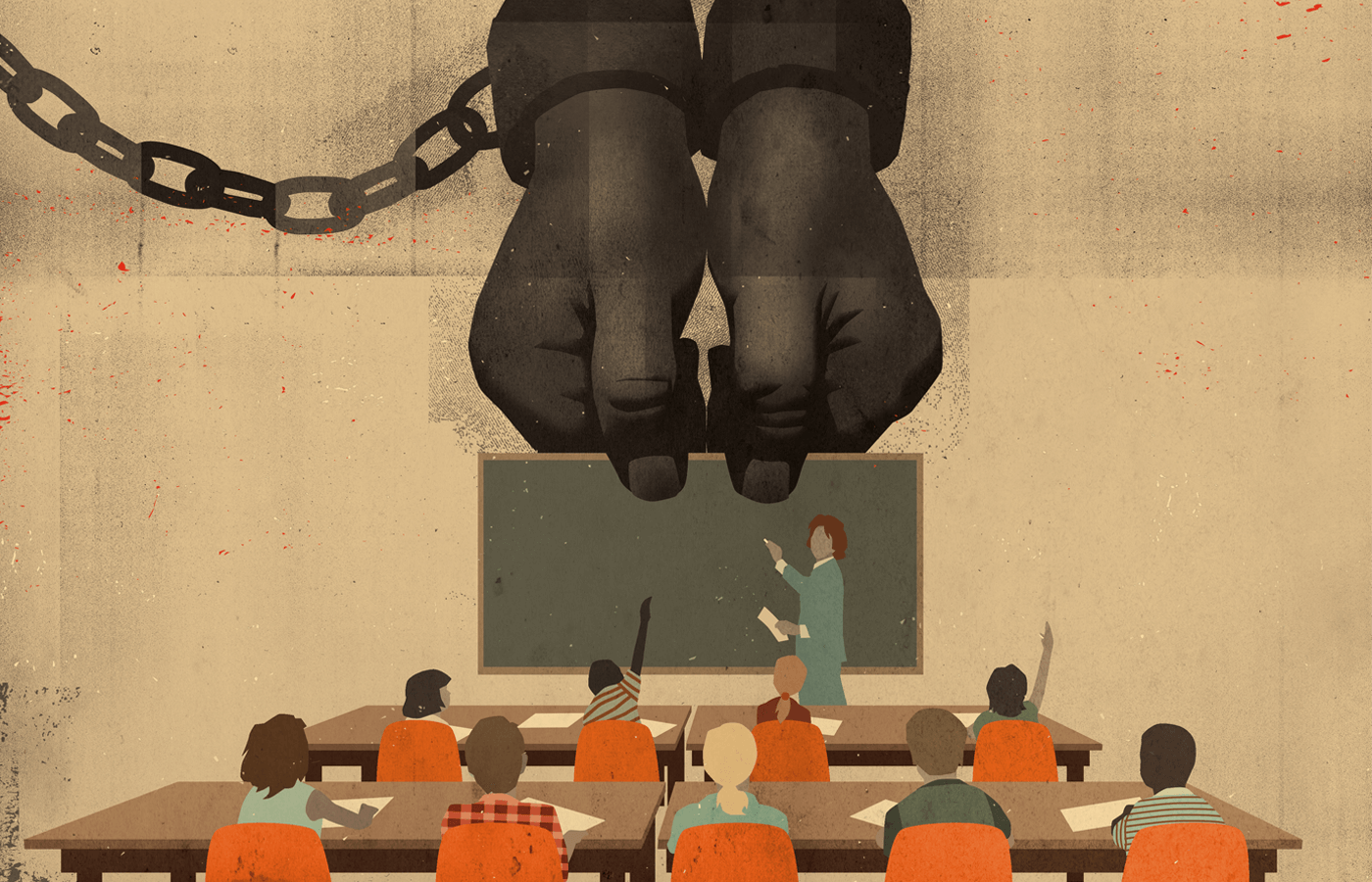
Traditional schooling does not fail because it is malicious. It fails some learners because it was engineered for predictability, standardization, and administrative efficiency — not neurological diversity.
When a system optimized for uniform progression encounters brains wired for variability, intensity, or nonlinear learning, friction is inevitable. That friction is too often misinterpreted as deficiency in the child rather than misalignment in the structure.
This section examines that misalignment without romanticism or blame.
3.1. System Design vs. Nervous System Needs
Modern schooling is structurally optimized around three pillars:
- Standard timelines (age-based grade levels, fixed pacing)
- External rewards (grades, ranks, certificates)
- Behavioral compliance (rules, transitions, uniform expectations)
These design features allow scalability. They enable large populations to move through a system predictably. They make measurement administratively convenient.
But human neurobiology does not develop uniformly.
The Industrial Template
Schools assume:
- Attention should be sustained for prescribed durations.
- Transitions should occur on schedule (bell-based shifts).
- Knowledge should be acquired in pre-determined sequences.
- Motivation should respond to extrinsic incentives.
- Social interaction should follow classroom norms.
For many children, this works adequately.
For others, it creates chronic stress.
Neurodivergent Nervous Systems
Children navigating traits associated with Autism spectrum disorder or Attention deficit hyperactivity disorder often demonstrate:
- Intense focus on specific interests
- Heightened sensory sensitivity
- Asynchronous skill development
- Variable executive functioning
- Reduced tolerance for arbitrary tasks
- Deep pattern recognition
- Nonlinear problem-solving
These traits are not inherently deficits. They are differences in cognitive processing and regulatory capacity.
The difficulty emerges when:
- Sustained focus is demanded on low-interest material.
- Transitions occur before cognitive closure.
- Noise levels exceed sensory tolerance.
- Instructions are abstract without contextual meaning.
- Performance is constantly compared to peers.
Under these conditions, the nervous system shifts from learning mode to threat management mode.
And when the body is managing threat — through overwhelm, shutdown, hyperactivity, or withdrawal — learning is neurologically secondary.
The Motivation Mismatch
Traditional schooling heavily relies on extrinsic motivators:
- Grades
- Praise
- Punishment
- Competition
- Ranking
For some learners, these are sufficient.
For many neurodivergent learners, motivation is interest-driven, not reward-driven.
Research aligned with Self-Determination Theory (developed by Edward Deci and Richard Ryan) demonstrates that autonomy-supportive environments enhance intrinsic motivation, persistence, and deeper conceptual learning.
When learning is self-directed and interest-anchored:
- Dopaminergic pathways support sustained attention.
- Memory consolidation improves.
- Cognitive flexibility increases.
When learning is externally controlled:
- Motivation becomes contingent.
- Effort is minimized to requirement thresholds.
- Curiosity is replaced with grade optimization.
In practical terms:
A child with ADHD may struggle to complete repetitive worksheets yet spend six uninterrupted hours designing a game mod, coding, building circuits, or researching astronomy.
The difference is not capacity.
The difference is engagement.
Self-Pacing as Regulation
Self-paced learning is not indulgence. It is neurological regulation.
Many neurodivergent learners require:
- Extended time for deep focus
- Fewer abrupt transitions
- Opportunities for movement
- Environmental sensory adjustments
- Flexible sequencing of topics
Traditional school structures often allow limited modification. Even with accommodations, the system’s core architecture remains unchanged.
Unschooling reorients pacing to readiness rather than calendar.
That shift alone can radically alter learning outcomes.
3.2. Psychological Safety & Identity
If system design explains structural friction, psychological safety explains emotional consequence.
Learning requires vulnerability.
A student must:
- Attempt
- Fail
- Revise
- Question
- Express uncertainty
But vulnerability collapses under chronic evaluation.
Forced Transitions
School days are fragmented by bells and rigid schedules.
For many children — especially autistic learners — abrupt transitions are not minor inconveniences. They are regulatory disruptions.
Incomplete cognitive closure creates agitation. Sensory overload compounds stress. Over time, the body anticipates disruption.
The result may look like:
- Irritability
- Meltdowns
- Withdrawal
- Oppositional behavior
- Somatic complaints (headaches, stomach aches)
These are not character flaws. They are stress signals.
Social Surveillance
Classrooms are socially dense environments.
Children are:
- Observed constantly
- Compared publicly
- Corrected in groups
- Ranked implicitly or explicitly
For students with social anxiety, autistic social processing differences, or rejection sensitivity (common in ADHD), this environment can become hypervigilant territory.
When every mistake risks embarrassment, experimentation declines.
And without experimentation, learning stagnates.
Evaluative Stress
Grades and rankings are presented as neutral metrics. They are not emotionally neutral.
Persistent evaluation can shape identity:
- “I am bad at math.”
- “I am lazy.”
- “I am disruptive.”
- “I am behind.”
Repeated negative feedback, even when well-intentioned, accumulates into self-concept.
The tragedy is not low performance.
The tragedy is internalized inadequacy.
When children begin to associate learning with shame, avoidance replaces curiosity.
Psychological Safety as Precondition
Unschooling prioritizes psychological safety as a precondition to learning.
This does not mean absence of challenge. It means:
- Challenge without humiliation
- Feedback without ranking
- Boundaries without shaming
- Accountability without identity attack
In psychologically safe environments:
- Mistakes are data.
- Questions are welcomed.
- Interests are validated.
- Pace is individualized.
- Comparison is minimized.
This fosters dignity.
And dignity is not a soft variable. It is foundational to long-term resilience.
Identity Formation
Childhood and adolescence are identity-forming years.
If a child repeatedly experiences school as:
- Overwhelming
- Punitive
- Alienating
- Exhausting
They may begin to believe:
“I am not built for learning.”
Unschooling challenges that narrative.
It reframes learning as:
- Self-directed exploration
- Real-world competence
- Gradual mastery
- Collaborative growth
When a child builds a functional robot, launches a small online store, masters video editing, grows food, or writes a novel — identity shifts from “struggling student” to “capable creator.”
That shift is not cosmetic.
It is developmental.
A Balanced Perspective
It must be stated clearly:
Traditional schooling does not fail all learners.
Many thrive within it.
The argument here is not abolitionist. It is diagnostic.
If a system consistently dysregulates a child despite reasonable accommodations, we must ask whether persistence is wise — or whether redesign is responsible.
Education should expand human potential.
When it contracts it, alternatives deserve serious consideration.

4. What Neuroscience and Learning Science Say
Unschooling is not merely a philosophical stance; it aligns with established principles in neuroscience and motivational psychology. When learning is self-directed, meaningful, and autonomy-supportive, it activates neural systems associated with attention, memory consolidation, executive functioning, and long-term cognitive resilience. Conversely, learning driven primarily by external pressure and rote repetition often produces shallow retention and fragile motivation.
The science does not claim that structure is unnecessary. It suggests that the type of structure matters — particularly whether it supports autonomy or suppresses it.
4.1. Intrinsic Motivation
The Brain Is Not a Compliance Machine
Learning is not a mechanical process of information transfer. It is a biologically mediated experience shaped by emotion, relevance, and reward circuitry.
When a learner is genuinely interested in a topic, the brain’s dopaminergic pathways are activated. Dopamine is not simply a “pleasure chemical.” It is central to:
- Motivation
- Anticipation
- Focus
- Memory encoding
- Goal-directed behavior
Interest-driven learning creates a reinforcing feedback loop:
Curiosity → Exploration → Competence → Increased Curiosity.
In contrast, rote repetition without relevance often fails to activate this motivational circuitry meaningfully. The learner may comply, but the depth of encoding and retention is typically reduced.
This is why students can forget weeks of memorized material shortly after examinations yet retain intricate details about hobbies, games, technology, or personal passions for years.
Autonomy as a Cognitive Catalyst
The work of Edward Deci and Richard Ryan in developing Self-Determination Theory (SDT) provides a robust psychological framework for understanding why unschooling’s scaffolds may be effective. Their research identifies three core psychological needs:
- Autonomy – A sense of volitional choice.
- Competence – Feeling effective and capable.
- Relatedness – Experiencing meaningful connection.
According to SDT, when autonomy is supported rather than undermined, intrinsic motivation strengthens. When individuals feel coerced or excessively controlled, motivation becomes externally regulated and more fragile.
Research published in peer-reviewed education journals (including analyses accessible via academic repositories such as OAPub) consistently demonstrates that autonomy-supportive environments are associated with:
- Greater persistence
- Deeper conceptual learning
- Enhanced creativity
- Improved psychological well-being
This does not mean that learners should never encounter structure or deadlines. It means that structure functions best when internalized rather than imposed.
Unschooling attempts to create conditions in which structure emerges from purpose — a project deadline, a collaborative goal, a self-chosen challenge — rather than from arbitrary compliance demands.
Rote Learning vs. Deep Encoding
Neuroscience distinguishes between surface processing and deep processing.
- Surface processing: memorization, repetition, minimal conceptual integration.
- Deep processing: integration with prior knowledge, emotional relevance, practical application.
Interest-driven, self-directed inquiry tends to promote deep processing because the learner actively organizes, questions, and applies information. The neural networks formed under these conditions are more interconnected and resilient.
By contrast, learning solely for grades often encourages short-term memorization strategies optimized for test performance rather than conceptual mastery.
Unschooling, when implemented responsibly, emphasizes:
- Inquiry-based exploration
- Project-based application
- Long-form problem solving
- Reflective documentation
These modes of engagement are more likely to stimulate durable neural integration.
4.2. Real-World Neuroplasticity
The Brain Changes With Use
Neuroplasticity refers to the brain’s ability to reorganize itself through experience. Synaptic pathways strengthen with repeated, meaningful activation. They weaken with disuse.
However, not all repetition is equal.
Repetition tied to personal relevance and problem-solving produces stronger, more flexible neural networks than repetition divorced from meaning.
When learners engage deeply in:
- Designing a functional product
- Writing and editing for a real audience
- Managing finances in a small enterprise
- Building software
- Conducting field research
- Repairing mechanical systems
They are activating distributed neural systems simultaneously:
- Executive functioning
- Working memory
- Emotional regulation
- Motor coordination
- Planning and sequencing
- Social cognition
This integrated activation supports more holistic cognitive development than isolated drill tasks.
Executive Function Through Engagement
Executive function — including planning, impulse control, cognitive flexibility, and goal management — is often cited as an area of challenge for learners with ADHD.
Traditional interventions frequently focus on remediation through structured exercises.
Yet real-world engagement may naturally strengthen executive skills when:
- A learner must plan steps for a meaningful project.
- Time management affects a personally valued outcome.
- Collaboration requires negotiation and organization.
- Problem-solving demands iteration and adjustment.
In such contexts, executive functioning is not abstractly trained. It is practiced in situ.
This distinction matters.
Skills practiced in authentic contexts generalize more effectively than those practiced in artificial drills.
Cognitive Resilience
Cognitive resilience involves the ability to adapt, recover from setbacks, and sustain effort over time.
Engagement-driven learning fosters resilience because:
- Failure is framed as iteration rather than judgment.
- Mastery emerges through visible progress.
- Motivation is internally anchored.
- Challenges are voluntarily embraced.
When learning is externally imposed and failure carries identity implications (“You are behind,” “You are weak in math”), resilience may erode rather than strengthen.
Unschooling environments, when psychologically safe yet intellectually demanding, allow learners to encounter difficulty without humiliation.
This distinction is critical.
Resilience grows in environments where:
- Challenge is real.
- Support is available.
- Autonomy is respected.
- Identity remains intact.
A Necessary Caution
Neuroscience does not provide blanket endorsement of any educational model.
Interest alone is insufficient.
Novelty alone is insufficient.
Freedom alone is insufficient.
Unschooling must intentionally incorporate:
- Exposure to diverse domains
- Increasing complexity over time
- Constructive feedback
- Community interaction
- Accountability mechanisms
When poorly implemented, it risks superficial engagement.
When thoughtfully structured, it aligns with established principles of motivation, neuroplasticity, and deep learning.
The Larger Implication
If the brain learns best through autonomy, relevance, and integrated engagement, then educational systems must decide:
Do we prioritize administrative efficiency?
Or do we prioritize cognitive architecture?
Unschooling argues for the latter — not as ideology, but as alignment with how human brains actually develop.
The challenge is not whether learning science supports autonomy.
It is whether institutions are willing to adapt to what the science implies.

5. The Practical Framework for Neuro-Affirming Unschooling
Unschooling succeeds or fails on structure — not the rigid structure of bells and textbooks, but the intentional structure of developmental scaffolding. Freedom without architecture becomes drift. Autonomy without progression becomes stagnation.
A neuro-affirming unschooling model must therefore be phased, observable, and accountable. The following five-phase framework transforms abstract philosophy into executable practice. Each phase can stand alone as a guide, yet together they create a coherent pathway from school exit to long-term competence.
5.1. Phase 1 — Deschooling: Psychological Unwinding
Core Principle
Before rebuilding learning, one must dismantle survival patterns.
Children exiting traditional schooling often carry invisible residue:
- Performance anxiety
- Grade dependency
- Learned helplessness
- Authority fear
- Burnout
- Identity damage (“I am bad at school”)
Deschooling is not a vacation. It is neurological decompression.
Time-Based Transition
A practical rule often cited in alternative education communities is one month of deschooling for each year spent in formal school. While not a strict formula, it illustrates a truth: recovery takes time.
During this phase:
- Avoid imposing a replacement curriculum.
- Minimize academic correction.
- Remove performance comparison.
- Allow boredom without panic.
Parents frequently experience anxiety here. The silence after structure feels like collapse. It is not collapse. It is recalibration.
Nervous System Regulation
Focus shifts to:
- Sleep restoration
- Sensory regulation
- Physical movement
- Outdoor exposure
- Reduced time pressure
- Emotional processing
For learners navigating traits associated with Autism spectrum disorder or Attention deficit hyperactivity disorder, regulation is foundational. Executive functioning cannot strengthen in chronic dysregulation.
Interest Documentation
Rather than “teaching,” observe.
Document:
- What do they gravitate toward?
- When do they lose track of time?
- What problems do they spontaneously try to solve?
- What content do they consume voluntarily?
- What frustrates them constructively?
Maintain a learning journal — not for evaluation, but for pattern recognition.
This phase ends when:
- Curiosity re-emerges.
- Anxiety reduces.
- Initiative appears organically.
Only then does structured pathway design begin.
5.2. Phase 2 — Strength Mapping
Core Principle
Education should amplify strengths before remediating weaknesses.
Traditional systems often diagnose deficits. Neuro-affirming frameworks begin with capacity mapping.
Fascination Audit
Ask directly:
- What topics feel endlessly interesting?
- What skills feel satisfying?
- What environments feel energizing?
Observe indirectly:
- Which YouTube channels?
- Which books?
- Which games?
- Which conversations?
- Which frustrations trigger determination rather than shutdown?
Passion is data.
Environmental Mapping
Different learners thrive under different conditions.
Document:
- Noise tolerance
- Preferred time of day
- Movement needs
- Social density comfort
- Solitary vs collaborative preference
- Visual vs auditory processing strengths
This informs workspace design and scheduling rhythm.
Energy Cycle Tracking
Track for 2–4 weeks:
- When is cognitive peak?
- When does irritability rise?
- When is social energy strongest?
- When is quiet work optimal?
Learning aligned with energy cycles increases efficiency without increasing hours.
Social Comfort Zones
Some learners thrive in small peer groups. Others prefer adult mentorship. Some prefer digital collaboration before physical interaction.
Map before forcing exposure.
Social growth should stretch comfort — not shatter it.
5.3. Phase 3 — Building Learning Pathways
Core Principle
Replace “subjects” with “domains of competence.”
Subjects fragment knowledge. Domains integrate it.
Instead of asking, “Have we covered math?”
Ask, “Can they apply quantitative reasoning meaningfully?”
Below are seven foundational domains adaptable across ages.
1. Personal Finance
Competencies:
- Budgeting
- Saving and investing basics
- Understanding debt
- Income generation
- Tax awareness
Applications:
- Running a small venture
- Managing project budgets
- Simulating investments
- Freelancing
Mathematics becomes practical necessity.
2. Systems Thinking
Competencies:
- Pattern recognition
- Cause-and-effect modeling
- Feedback loops
- Strategic planning
Applications:
- Game design
- Coding
- Environmental study
- Business modeling
- Mechanical troubleshooting
Systems thinking strengthens interdisciplinary reasoning.
3. Communication and Persuasion
Competencies:
- Writing
- Public speaking
- Debate
- Storytelling
- Negotiation
Applications:
- Blogging
- Podcasting
- Video creation
- Community presentations
- Advocacy campaigns
Literacy deepens when audience exists.
4. Creative Practice
Competencies:
- Iterative design
- Aesthetic development
- Craft mastery
- Risk-taking
Applications:
- Visual arts
- Music production
- Digital design
- Film editing
- Maker projects
Creativity trains resilience through revision.
5. Scientific Inquiry
Competencies:
- Hypothesis formation
- Experimentation
- Observation
- Data interpretation
Applications:
- Home lab experiments
- Gardening
- Robotics
- Environmental field study
Science becomes inquiry, not memorization.
6. Civic Engagement
Competencies:
- Ethical reasoning
- Policy literacy
- Community participation
- Empathy
Applications:
- Volunteering
- Local governance observation
- Social entrepreneurship
- Debate forums
Education connects to society.
7. Digital Fluency
Competencies:
- Coding basics
- Digital safety
- Content creation
- AI literacy
- Information verification
Applications:
- App development
- Online business
- Automation projects
- Collaborative platforms
Digital fluency is no longer optional.
Each domain scales in complexity with age. The goal is not exposure alone, but progressive mastery.
5.4. Phase 4 — Integration, Mentorship, and Community
Core Principle
Learning isolated at home becomes fragile. Learning embedded in community becomes durable.
Unschooling must extend beyond family.
Mentorship
Connect with:
- Artisans
- Entrepreneurs
- Scientists
- Technicians
- Writers
- Craftspeople
Apprenticeship accelerates skill acquisition.
A teenager shadowing a mechanic may learn applied physics faster than through textbooks.
Community Networks
Seek:
- Local clubs
- Maker spaces
- Co-learning groups
- Alternative education circles
- Sports teams
- Volunteer organizations
Diverse age interaction strengthens social cognition.
Online Platforms
Strategic use of:
- MOOCs
- Skill platforms
- Open-source communities
- Global interest forums
The digital world can expand access — if curated responsibly.
5.5. Phase 5 — Assessment Without Tests
Core Principle
Evaluation must measure competence, not compliance.
Portfolio-Based Review
Maintain a living portfolio including:
- Project descriptions
- Reflection essays
- Financial logs
- Prototypes
- Creative works
- Research summaries
- Client feedback (if applicable)
Portfolios demonstrate growth over time.
Public Exhibitions
Encourage:
- Presentations
- Demonstrations
- Community showcases
- Online publishing
Public articulation consolidates mastery.
Project Documentation
For each major project, document:
- Goal
- Research
- Obstacles
- Iterations
- Outcomes
- Lessons learned
Reflection transforms activity into learning.
Accountability Without Standardized Tests
While standardized exams may still be required for certain pathways (e.g., board certifications), daily learning need not orbit them.
Instead of asking, “What score did you get?”
Ask, “What problem did you solve?”
The Structural Warning
Unschooling fails when:
- Adults withdraw guidance entirely.
- Projects remain shallow.
- Exposure narrows excessively.
- Long-term planning is absent.
It succeeds when:
- Autonomy is paired with progression.
- Mentorship is intentional.
- Skill depth increases annually.
- Reflection becomes habit.
Freedom must be engineered.

6. Unschooling Methods, Techniques, and Tools
Unschooling is not powered by ideology — it is powered by method. Without robust techniques, it collapses into abstraction. With the right tools and disciplined implementation, it becomes a high-agency, high-competence learning model.
This section translates philosophy into actionable practice. These are not trends. They are mechanisms.
6.1. Self-Directed Projects and Long-Term Inquiry
Core Principle
Deep learning requires sustained engagement.
Short-term assignments build compliance.
Long-term inquiry builds mastery.
Writers and practitioners in alternative education spaces such as Alternative Amie emphasize that self-directed projects allow learners to pursue curiosity without artificial interruption. The power lies not merely in choosing a topic, but in committing to it long enough to confront complexity.
Designing a Self-Directed Project
A serious project should include:
- A meaningful question or problem
- How can I build a low-cost irrigation system?
- Can I design a basic mobile app?
- What factors influence local air quality?
- A defined output
- Prototype
- Research paper
- Functional product
- Public presentation
- Digital platform
- Research phase
- Books
- Interviews
- Fieldwork
- Online courses
- Iteration
- Version 1, 2, 3…
- Testing and revision
- Reflection
- What worked?
- What failed?
- What would improve it?
Without iteration, projects remain hobbies. With iteration, they become training grounds for resilience and competence.
Long-Term Inquiry
Inquiry differs from project completion. It is longitudinal.
For example:
- A learner fascinated by astronomy may spend years progressively studying physics, mathematics, telescope construction, and astrophotography.
- A teenager interested in entrepreneurship may experiment with multiple small ventures over time, refining financial literacy and customer understanding.
Long-term inquiry strengthens:
- Sustained attention
- Research literacy
- Strategic planning
- Identity formation around mastery
Unschooling thrives when curiosity is allowed to compound rather than reset every term.
6.2. Mentorship and Resource Networks
Core Principle
Learning accelerates in proximity to expertise.
Parents are facilitators — not universal instructors.
A neuro-affirming unschooling ecosystem deliberately integrates mentors, practitioners, and real-world professionals.
Forms of Mentorship
- Apprenticeship
- Shadowing artisans, technicians, entrepreneurs.
- Skill Coaching
- Music teachers, coding mentors, writers’ groups.
- Professional Dialogue
- Interviews with domain experts.
- Peer Mastery Circles
- Small groups working on aligned goals.
Mentorship provides:
- Modeling of excellence
- Realistic feedback
- Industry exposure
- Accountability beyond the household
For neurodivergent learners, mentorship can be transformative. A mentor who shares similar cognitive traits may normalize differences and model pathways to success.
Resource Networks
Intentional resource curation includes:
- Local workshops
- Maker spaces
- Libraries
- Volunteer organizations
- Online learning platforms
- Open-source communities
The adult role shifts from content delivery to ecosystem design.
Ask continuously:
- Who already knows this skill?
- Where is this practiced in the real world?
- How can exposure increase challenge level?
Isolation is a risk in unschooling. Networks are the antidote.
6.3. Project-Based, Real-World Problem Solving
Core Principle
Real problems demand integrated thinking.
Practitioners in alternative education circles, including those writing at Alternative Amie, frequently highlight project-based learning as central to unschooling practice. However, effective project-based learning must be anchored in authentic stakes.
Characteristics of High-Quality Real-World Projects
- They solve an actual problem.
- They produce value for someone beyond the learner.
- They require cross-domain knowledge.
- They involve measurable outcomes.
Examples:
- Designing a rainwater harvesting prototype.
- Launching a small digital service.
- Organizing a community event.
- Conducting a local environmental study.
- Building a website for a nonprofit.
In such projects:
- Mathematics becomes budgeting and measurement.
- Language becomes proposal writing and negotiation.
- Science becomes experimentation.
- Civics becomes stakeholder engagement.
Knowledge integrates naturally.
Failure as Data
Real-world projects include uncertainty.
Unlike school assignments with known answers, authentic problems:
- Contain ambiguity.
- Require negotiation.
- Demand adaptability.
Failure under these conditions becomes instructive rather than shameful.
This strengthens executive functioning and cognitive flexibility far more effectively than artificial tasks.
6.4. Technology as a Learning Amplifier
Core Principle
Technology is neither villain nor savior. It is an amplifier.
Used passively, it becomes distraction.
Used intentionally, it becomes a global laboratory.
Productive Technology Use
- Creation over Consumption
- Coding apps
- Video editing
- Digital art
- Podcast production
- Global Collaboration
- Open-source projects
- International forums
- Peer critique platforms
- Access to Expertise
- MOOCs
- Virtual mentorship
- Skill certification courses
- Simulation Tools
- Financial modeling software
- Design software
- Physics simulators
- AI-assisted research tools
Technology collapses barriers to entry. A teenager can now:
- Launch a global micro-business.
- Publish research.
- Develop software.
- Build an audience.
- Learn advanced skills from global experts.
Digital Discipline
Unschooling must differentiate between:
- Passive scrolling
- Active building
Families should establish:
- Clear device boundaries
- Creation targets
- Scheduled deep-work blocks
- Offline integration
Technology amplifies intention. It does not replace it.
Integrating Methods into a Coherent System
These methods are not modular accessories. They interlock:
- Self-directed inquiry generates projects.
- Projects attract mentorship.
- Mentorship strengthens real-world engagement.
- Technology expands reach and sophistication.
- Documentation creates accountability.
When combined, they create a virtuous cycle of:
Curiosity → Competence → Confidence → Contribution.
The Critical Caveat
Tools alone do not guarantee depth.
Without:
- Progressive challenge
- Skill benchmarking
- Exposure beyond comfort zones
- Structured reflection
Unschooling risks intellectual narrowness.
Therefore, adult oversight must remain strategic and developmental.
The question is never:
“Is the child busy?”
The question is:
“Is the child building durable competence?”
That standard must remain uncompromising.

7. Addressing Criticisms & Real Risks
Unschooling fails when it is romanticized. It succeeds when it is engineered.
Criticism is not the enemy of alternative education — vagueness is. The model must withstand scrutiny regarding academic rigor, social integration, parental capacity, and long-term outcomes. When implemented with structure (not control), unschooling can mitigate real risks while preserving autonomy.
This section addresses concerns directly, without defensiveness.
7.1. Academic Gaps and Structure Concerns
The Criticism
“If children are not required to study structured subjects, they will miss essential knowledge.”
This concern is valid. Breadth does not emerge automatically. Curiosity alone does not guarantee exposure to foundational domains such as mathematics, scientific reasoning, history, and communication.
The Reality
Unschooling does not eliminate structure — it redistributes it.
Instead of imposed curriculum sequencing, unschooling uses:
- Developmental timing
- Applied context
- Competency mapping
- Iterative exposure
The goal is mastery through relevance rather than compliance through syllabus.
Strategies to Ensure Breadth and Depth
1. Domain Mapping
Create a living “competency dashboard” covering:
- Quantitative reasoning
- Scientific literacy
- Historical awareness
- Communication skills
- Financial literacy
- Civic understanding
- Digital fluency
Review periodically. Identify weak exposure areas. Introduce experiences — not worksheets.
2. Applied Mathematics and Science
Instead of abstract drills:
- Budgeting real projects
- Tracking health metrics
- Running experiments
- Designing prototypes
- Analyzing data sets
Breadth arises when real problems demand interdisciplinary thinking.
3. Rotational Exposure Cycles
Every quarter or biannual cycle, deliberately introduce:
- A new discipline
- A new tool
- A new cultural lens
- A new community
Autonomy remains intact. Exposure expands.
4. Skill Benchmarking Without Coercion
Use:
- Portfolio audits
- External competitions (optional)
- Standardized tests as diagnostics (not identity markers)
- Mentor feedback
Testing can inform — without dominating.
The difference is psychological framing.
7.2. Socialization Myths
The Criticism
“Unschoolers will lack social skills.”
This criticism assumes school is an optimal social training environment.
In reality, conventional schooling often creates:
- Age-segregated peer bubbles
- Social hierarchy based on conformity
- Surveillance-driven behavior
Unschooling must intentionally design richer social ecosystems.
Intentional Community Engagement
High-functioning unschooling integrates:
- Skill-based clubs (robotics, theatre, debate)
- Co-operatives
- Volunteer service
- Internships
- Multi-age learning groups
- Cultural organizations
Community is not accidental. It is curated.
Real-World Socialization
Authentic environments provide:
- Intergenerational dialogue
- Professional communication
- Conflict resolution in meaningful contexts
- Exposure to diversity beyond classroom demographics
When engagement is intentional, social competence deepens.
7.3. Parental Burnout
The Risk
Unschooling can collapse under the weight of unrealistic parental expectations.
Common stressors:
- Feeling responsible for total educational delivery
- Social criticism
- Logistical overload
- Financial constraints
- Isolation
Burnout is not rare. It is predictable without support systems.
Mitigation Strategies
1. Co-Learning Communities
Create or join:
- Shared facilitation groups
- Resource-sharing collectives
- Rotational teaching models
- Community skill exchanges
Responsibility distributed is sustainability achieved.
2. Outsourced Expertise
Parents are not subject-matter omniscients.
Leverage:
- Tutors
- Mentors
- Online instructors
- Apprenticeships
- Digital platforms
The adult role shifts from instructor to systems architect.
3. Clear Boundaries
Unschooling does not mean 24-hour engagement.
Parents must:
- Protect personal time
- Avoid over-scheduling
- Separate child curiosity from parental anxiety
Burned-out parents cannot model lifelong learning.
7.4. Myth vs. Reality in Alternative Education
Myth: “Unschooling Means No Learning.”
This is inaccurate.
Unschooling replaces imposed curriculum with self-directed, project-based, and interest-driven mastery pathways.
Educational platforms such as BetterSchooling highlight that many learners from alternative models pursue:
- Higher education
- Entrepreneurship
- Creative industries
- Technical careers
Outcomes depend less on schooling format and more on:
- Cognitive agency
- Exposure to challenge
- Access to networks
- Skill documentation
Reality: Prestige Is Not the Only Metric
While some unschoolers enter traditional universities, others:
- Launch ventures
- Pursue apprenticeships
- Build digital businesses
- Enter creative or technical freelancing
- Engage in social entrepreneurship
Success must be defined by alignment, competence, and contribution — not merely institutional validation.
The Hard Truth
Unschooling requires:
- Active facilitation
- Continuous reflection
- Strategic exposure
- Social ecosystem design
- Financial planning
- Documentation discipline
It is not passive freedom. It is structured autonomy.
Poorly implemented, it creates intellectual blind spots.
Well implemented, it creates self-authoring adults.
Strategic Questions Every Family Must Answer
- How will we ensure breadth?
- How will we document mastery?
- How will we maintain community?
- How will we prevent burnout?
- How will we evaluate long-term direction?
If these questions are ignored, criticism gains validity.
If they are answered systematically, unschooling becomes defensible — and powerful.

8. Legal and Policy Realities in India
Unschooling in India exists in a legal gray zone — not prohibited, not formally institutionalized, but operationally possible.
Families who proceed without understanding regulatory contours risk unnecessary anxiety. Families who understand the framework can design compliant, future-ready learning pathways without compromising autonomy.
Clarity removes fear. Strategy replaces speculation.
8.1. Right to Education Act and Homeschooling
The Concern
“Is homeschooling or unschooling illegal under Indian law?”
The Right of Children to Free and Compulsory Education Act, 2009 (RTE Act) mandates free and compulsory education for children aged 6–14. However, it does not explicitly criminalize homeschooling or alternative education formats.
Analyses in publications such as Forbes India have noted that while the RTE Act emphasizes school enrollment, it does not clearly outlaw home-based education. Enforcement largely focuses on ensuring access, not prosecuting educational choice.
Legal Interpretation in Practice
In India:
- There is no explicit ban on homeschooling.
- There is no formal regulatory framework endorsing it either.
- Implementation and scrutiny vary by state.
- Most homeschooling families operate without legal interference.
The legal tension arises because:
- RTE assumes institutional schooling as default.
- Homeschooling lacks standardized recognition.
Thus, unschooling families must operate strategically — not confrontationally.
Practical Recommendations
- Maintain documentation of learning activities.
- Align broad competencies with national educational expectations.
- Plan for recognized certification pathways (see next section).
- Avoid public positioning that frames alternative education as anti-law.
Operate within the system — not against it.
8.2. NIOS and Alternative Certification
The Strategic Question
How does an unschooled learner obtain recognized credentials?
India provides flexible certification pathways.
National Institute of Open Schooling (NIOS)
The National Institute of Open Schooling (NIOS) is a government-recognized board under the Ministry of Education. It allows learners to:
- Study at their own pace.
- Choose subject combinations.
- Appear for exams when prepared.
- Complete secondary and senior secondary education flexibly.
NIOS is widely accepted for:
- Higher education admissions.
- Competitive exams.
- Professional courses.
For unschoolers, NIOS functions as a bridge — autonomy during learning, recognition during transition.
International and Private Board Options
Some families explore:
- IGCSE as private candidates under boards like Cambridge Assessment International Education.
- Other open or distance education boards.
These options may provide:
- International recognition.
- Structured subject pathways.
- Examination-based credentialing without full-time school attendance.
However:
- Costs may be higher.
- Administrative coordination is required.
- Subject alignment must be planned early.
Strategic Certification Planning
Families should decide by age 13–15:
- Whether university is a target.
- Whether vocational or entrepreneurial paths are preferred.
- Which certification pathway aligns with long-term goals.
Unschooling does not mean avoiding credentials. It means sequencing them intelligently.
8.3. Building Local Support Systems
The Risk
Unschooling without community leads to isolation — socially, emotionally, and intellectually.
India’s alternative education ecosystem is growing but still fragmented.
Co-ops and Learning Communities
Learning cooperatives can provide:
- Shared resource pools.
- Rotational facilitation.
- Collective project work.
- Social interaction.
Organizations such as Swashikshan promote self-learning ecosystems and community-based models that resonate with unschooling principles.
Parent Forums and Networks
Participation in:
- Online forums
- Regional meetups
- Skill-sharing gatherings
- Alternative education conferences
Provides:
- Legal awareness updates
- Emotional support
- Mentorship referrals
- Collective bargaining power
Community reduces anxiety.
Mentorship Hubs
Cities like Bangalore, Mumbai, Pune, and Delhi increasingly offer:
- Maker spaces
- Entrepreneurship incubators
- Arts studios
- STEM labs
- Volunteer networks
These hubs convert theory into exposure.
For neurodivergent learners especially, thoughtfully chosen mentorship environments provide:
- Psychological safety
- Skill validation
- Real-world belonging
Hard Realities
- You may face skepticism from relatives.
- Some institutions may misunderstand alternative credentials.
- Bureaucratic paperwork will require persistence.
- You must document consistently.
Unschooling in India requires administrative literacy alongside educational vision.
Strategic Outlook
India’s education policy is evolving toward flexibility, skill integration, and competency-based evaluation. Alternative pathways are gaining visibility, but normalization will take time.
Families who:
- Document rigorously,
- Align with recognized certification pathways,
- Build networks,
- Maintain clarity of long-term goals,
Will navigate successfully.
Autonomy is sustainable when it is informed.

9. Success Stories & Data
The strongest argument for unschooling is not ideological — it is longitudinal.
When learners are allowed to organize their childhood around genuine interests, many demonstrate unusually high alignment between early fascinations and adult vocation. Retrospective surveys, community case studies, and long-term observation across unschooling networks suggest three recurring outcomes:
- Deep specialization emerges naturally.
- Career alignment tends to be high.
- Autonomy skills often transfer directly into entrepreneurship, creative fields, research, and adaptive professional paths.
This does not mean every unschooler succeeds automatically. It means when autonomy is paired with mentorship, exposure, and structured pathways to credentials, outcomes can be strong — especially for learners who struggled in traditional systems.
Now we examine what the data and lived examples actually show.
9.1. What Retrospective Surveys Indicate
Organizations such as Stimpunks Foundation have collected survey data from neurodivergent adults reflecting on their childhood learning environments. While methodologies vary and samples are often community-based rather than nationally randomized, several patterns emerge:
Reported Themes from Neurodivergent Respondents
- High correlation between early intense interests and adult careers.
- Greater long-term wellbeing when childhood autonomy was preserved.
- Lower trauma markers when psychological safety was prioritized over compliance.
- Stronger identity coherence in adulthood when interests were respected.
Importantly, respondents frequently report that forced compliance in conventional schooling produced burnout, masking behaviors, or disengagement — whereas self-directed environments supported skill depth.
Career Alignment Findings
Across multiple retrospective unschooling and homeschooling surveys (international and Indian communities):
- A significant percentage report pursuing careers directly related to childhood passions.
- Many enter creative industries, software development, research, design, skilled trades, or entrepreneurial ventures.
- Self-employment and freelance work are disproportionately common.
This is not accidental.
Unschooling cultivates:
- Initiative
- Self-teaching ability
- Comfort with ambiguity
- Long-form project execution
- Social navigation across age groups
These are entrepreneurial competencies.
9.2. Case Profiles — Patterns, Not Mythology
Below are composite case summaries drawn from community reports, interviews, and public narratives within unschooling networks.
Case 1 — The Deep Technical Specialist
Profile:
Child intensely interested in computers from age 8.
Unschooling allowed 6–8 hours daily immersion in coding, forums, and open-source contributions.
Outcome:
- By mid-teens: advanced programming fluency.
- Contributed to global software projects.
- Entered university through open schooling certification.
- Later founded a technology startup.
Pattern Observed:
Extended, uninterrupted immersion produces mastery far beyond grade-level pacing.
Case 2 — The Creative Professional
Profile:
Learner obsessed with visual storytelling, animation, and graphic design.
Minimal interest in textbook subjects; high interest in digital tools.
Learning Environment:
- Portfolio-based growth.
- Mentorship under a local designer.
- Online courses and collaborative projects.
Outcome:
- Built professional portfolio by 17.
- Secured freelance work.
- Entered design institute via portfolio route.
- Currently working in creative media.
Pattern Observed:
Portfolio replaces transcript when structured intentionally.
Case 3 — The Social Entrepreneur
Profile:
Learner drawn to environmental issues and civic engagement.
Learning Process:
- Volunteered with local NGOs.
- Studied public policy informally.
- Organized community waste management initiatives.
Outcome:
- Enrolled via open board certification.
- Studied environmental sciences.
- Founded grassroots sustainability initiative.
Pattern Observed:
Early civic immersion creates leadership fluency.
Case 4 — The Late Academic Bloomer
Profile:
Neurodivergent learner (ADHD traits), struggled in conventional school.
Unschooling Phase:
- 2 years of deschooling and interest rebuilding.
- Developed passion for psychology and neuroscience.
Outcome:
- Completed secondary through open schooling.
- Entered university.
- Now pursuing research in cognitive sciences.
Pattern Observed:
Autonomy restores intrinsic drive before academic rigor is reintroduced.
9.3. Indian Unschooling Ecosystem — Longitudinal Growth
India’s unschooling movement remains relatively small but steadily expanding.
Over the past decade:
- Urban clusters in Bangalore, Pune, Mumbai, and Delhi have formed learning collectives.
- Parent-led co-ops have matured into sustained communities.
- Networks have evolved from informal WhatsApp groups into structured mentorship circles.
- Alternative certification planning (NIOS, IGCSE private candidates) has become more strategic.
Community organizations such as Swashikshan have helped catalyze ecosystem thinking — shifting from isolated homeschooling toward collaborative self-learning networks.
Observed Trends in Indian Context
- Many unschoolers pursue design, coding, music production, filmmaking, and entrepreneurship.
- Some transition into mainstream universities via open schooling boards.
- A minority pursue international higher education.
- Families increasingly combine unschooling with structured certification planning.
The Indian ecosystem is still data-light but narrative-rich. Formal large-scale longitudinal research remains limited — a gap policymakers should address.
9.4. What the Data Does NOT Prove
A critical stance is necessary.
Most unschooling success data:
- Is self-reported.
- May suffer from selection bias.
- Often reflects families with moderate socio-economic stability.
- Rarely captures unsuccessful cases comprehensively.
Unschooling is not automatically superior.
It works best when:
- Parents are engaged but not controlling.
- Community networks exist.
- Learners have access to mentors and tools.
- Certification pathways are pre-planned.
Autonomy without structure becomes drift.
Structure without autonomy becomes suppression.
Balance is the operational variable.
9.5. Career Alignment and Identity Stability
Perhaps the most compelling theme across surveys and anecdotal longitudinal evidence is identity coherence.
Adults who were allowed to:
- Explore deeply,
- Change direction without stigma,
- Pursue authentic interests,
Report lower levels of identity fragmentation.
Traditional schooling often requires children to:
- Suppress interests.
- Conform socially.
- Perform for evaluation.
Unschooling, when well-executed, allows children to:
- Integrate interests with competence.
- Integrate competence with purpose.
- Integrate purpose with livelihood.
This integration is rare.
9.6. The Forward View
India lacks national-scale longitudinal data on unschooling outcomes.
This presents an opportunity:
- Universities could study long-term alumni trajectories.
- Policy think tanks could compare career satisfaction metrics.
- Community networks could document anonymized case histories.
- Neurodiversity advocacy groups could analyze wellbeing outcomes.
The future of educational reform should not be ideology-driven. It should be data-informed.
Unschooling’s promise must be measured rigorously — not romanticized.
Summary
Evidence from community surveys and retrospective reports suggests:
- Strong interest-career alignment.
- High entrepreneurial representation.
- Deep domain mastery in self-selected fields.
- Improved psychological wellbeing in autonomy-supportive environments.
However:
- Outcomes depend on execution quality.
- Documentation and certification planning are essential.
- Socioeconomic access shapes opportunity.
Unschooling is neither miracle nor menace.
It is a high-autonomy model that amplifies both strengths and weaknesses.
Handled well, it can produce adults who are not merely employable — but self-directed, coherent, and adaptive.
Handled poorly, it can produce fragmentation and gaps.
The difference is not ideology.
It is design.

10. Roadmap: Starting Unschooling Tomorrow
If you want to begin unschooling, do not wait for perfect clarity. Begin with structure — not syllabus.
A successful start does not require a dramatic withdrawal from society. It requires disciplined observation, intentional ecosystem building, and measurable reflection cycles. When executed deliberately, unschooling transitions from philosophical aspiration to operational system.
Below is a practical six-step launch framework.
Step 1 — Document Interests (Weeks 1–4)
Objective: Replace assumptions with data.
Do not ask, “What should my child learn?”
Ask, “What patterns of curiosity are already visible?”
How to Execute
- Maintain a daily observation log:
- What activities absorb attention?
- When does energy rise?
- What topics trigger spontaneous research?
- What environments calm or stimulate?
- Track:
- Time spent voluntarily on activities.
- Emotional states during engagement.
- Recurring themes across media consumed.
- Conduct structured conversations:
- “If time disappeared, what would you work on?”
- “What problem would you love to solve?”
- “What skill would make you feel powerful?”
The goal is not entertainment tracking. It is pattern recognition.
Within 30 days, dominant domains will emerge.
Step 2 — Map Community Partners (Weeks 2–6)
Objective: Prevent isolation from the start.
Unschooling fails in isolation and thrives in networks.
Identify Ecosystem Nodes
- Maker spaces
- Libraries
- Coding clubs
- Theatre groups
- Art studios
- Science labs
- Volunteer organizations
- Entrepreneurship hubs
- Sports collectives
In India, organizations such as Swashikshan have helped build alternative learning ecosystems. Engage similar local networks wherever possible.
Build a Mentor Map
Create a simple spreadsheet:
Skill Area | Potential Mentor | Contact | Engagement Plan |
Even one committed mentor can accelerate growth dramatically.
Step 3 — Build Daily Rhythms (Month 2)
Objective: Replace school timetable with intentional structure.
Unschooling is not absence of rhythm. It is autonomy within rhythm.
Recommended Framework
Morning (High Cognitive Energy):
- Deep work block (2–3 hours)
- Self-directed project development
Midday:
- Physical activity
- Community interaction
- Skill practice
Afternoon:
- Reading, reflection, research
- Creative experimentation
Evening:
- Documentation
- Light exploration
- Family discussion
Maintain:
- Clear sleep cycles
- Device boundaries
- Creation > consumption ratio
Consistency stabilizes the nervous system and strengthens executive function.
Step 4 — Establish Feedback Loops (Month 2–3)
Objective: Prevent drift.
Without feedback, autonomy becomes stagnation.
Weekly Check-ins
Ask:
- What did you build?
- What did you struggle with?
- What skill improved?
- What do you want to try next?
Monthly Review
Evaluate:
- Depth of learning
- Breadth of exposure
- Social engagement levels
- Emotional wellbeing
External Feedback
- Mentor evaluations
- Peer critique
- Public presentations
- Community exhibitions
Feedback must inform growth — not induce shame.
Step 5 — Connect with Alternative Assessments (Month 3–6)
Objective: Future-proof autonomy.
Even if university is uncertain, credential pathways should be explored early.
Indian Context
The National Institute of Open Schooling (NIOS) provides flexible certification options aligned with government recognition.
Some families explore international certification routes such as Cambridge Assessment International Education for IGCSE private candidates.
Portfolio Strategy
Regardless of board:
Maintain:
- Project documentation
- Skill logs
- Public showcases
- Written reflections
- Community testimonials
In many fields — especially creative and technical — portfolios speak louder than transcripts.
Step 6 — Review Quarterly (Every 3 Months)
Objective: Maintain alignment and adjust trajectory.
Every quarter, conduct a structured review:
- What domains deepened?
- What gaps are emerging?
- Is social engagement sufficient?
- Are mentors active?
- Is burnout visible?
- Are long-term pathways still aligned?
If drift appears, recalibrate.
Introduce:
- New domain exposure
- New challenge levels
- New community engagement
- Certification planning adjustments
Autonomy must remain dynamic.
Critical Safeguards
Before declaring the system stable, confirm:
- There is documented growth.
- There is community exposure.
- There is skill benchmarking.
- There is long-term credential planning.
- There is parent sustainability.
Unschooling is a long game.
The First 90 Days at a Glance
Month 1: Observe and document.
Month 2: Build rhythm and network.
Month 3: Introduce external feedback and certification planning.
No drama. No ideological declarations. Just disciplined iteration.
Final Reflection
Unschooling does not begin with withdrawal from school.
It begins with reclaiming agency.
Start small. Track carefully. Build ecosystems.
And remember: autonomy without accountability becomes drift.
Autonomy with accountability becomes leadership.
In the final section, we synthesize all ten chapters into a unified implementation blueprint for families, communities, and policymakers.
Conclusion
The Core Truth
Traditional schooling is not the only legitimate path to education — and for many learners, especially neurodivergent individuals, it may not be the optimal one.
Standardized timelines, compliance-based evaluation, and externally imposed motivation structures do not serve every nervous system. When misalignment persists, the cost is not merely academic underperformance — it is erosion of identity, intrinsic drive, and psychological safety.
Unschooling, when responsibly designed, offers an alternative architecture:
- Structured without coercion
- Rigorous without standardization
- Social without surveillance
- Motivated by curiosity rather than reward systems
It is not a rejection of learning. It is a reorganization of how learning emerges.
Why This Matters
Modern economies reward:
- Self-teaching ability
- Cognitive flexibility
- Deep specialization
- Entrepreneurial initiative
- Cross-domain synthesis
These competencies align closely with autonomy-supportive learning models grounded in Self-Determination Theory — articulated by scholars such as Edward L. Deci and Richard M. Ryan.
When autonomy, competence, and relatedness are supported:
- Motivation strengthens internally.
- Learning becomes durable.
- Identity integrates with skill.
- Resilience increases.
Unschooling, at its best, operationalizes these psychological foundations.
What This Means for Families and Communities
Unschooling is not passive freedom. It demands:
- Intentional structure
- Community building
- Documentation discipline
- Certification strategy
- Mentorship networks
- Quarterly review systems
It is scalable when ecosystems exist.
It is sustainable when community support replaces isolation.
It is powerful when autonomy is balanced with accountability.
For neurodivergent learners — including autistic and ADHD individuals — environments that prioritize nervous system regulation and intrinsic interest often unlock capabilities that standardized systems suppress.
The issue is not whether school works for some. It clearly does.
The issue is whether we are willing to acknowledge it does not work for all.
A Forward-Looking View
India stands at a pivotal educational moment.
As policy discussions increasingly emphasize skill development, competency-based education, and flexibility, there is room to advocate for neuro-affirming pathways that:
- Protect dignity
- Preserve curiosity
- Enable mastery
- Recognize diverse cognitive profiles
Unschooling is not anti-education.
It is education redesigned around human variability.
The next decade will likely see:
- Hybrid models
- Community learning hubs
- Alternative certification growth
- Portfolio-based evaluation systems
- Increased neurodiversity awareness
Families who approach this thoughtfully are not rebelling. They are prototyping the future.
Participate and Donate to the MEDA Foundation
If we want neuro-affirming learning ecosystems to flourish in India, advocacy must move beyond discussion into infrastructure.
The MEDA Foundation works toward:
- Supporting autistic individuals
- Building employment ecosystems
- Creating self-sustaining community models
- Helping people help themselves
Your participation can help:
- Develop community learning hubs
- Support families exploring alternative education
- Create mentorship pipelines
- Document research on neuro-affirming practices
- Build vocational pathways aligned with strengths
Educational transformation requires collaboration — and funding.
If this work resonates with you:
- Volunteer expertise
- Mentor a learner
- Partner in ecosystem building
- Contribute financially
- Help expand awareness
Support is not charity. It is investment in human potential.
Book References
For deeper scholarly grounding and practical frameworks, the following works are recommended:
- Unschooling by Kerry McDonald (often referenced in contemporary alternative education discourse; sometimes associated with Riley discussions in unschooling communities)
- Explores modern unschooling movements and family case studies.
- Intrinsic Motivation and Self-Determination in Human Behavior by Edward L. Deci and Richard M. Ryan
- Foundational academic text outlining Self-Determination Theory.
- Self-Determination Theory by Richard M. Ryan and Edward L. Deci
- Comprehensive synthesis of decades of research.
- Springer Nature publications on alternative schooling models in India
- Peer-reviewed discussions on non-formal education, democratic schooling, and community-based learning initiatives.
- Indian alternative schooling case studies published across academic platforms and independent research collectives focusing on self-directed and community learning ecosystems.
Final Reflection
The question is no longer whether unschooling is possible.
The question is whether we are willing to design systems that respect human diversity, cultivate life mastery, and prioritize dignity over uniformity.
Education must evolve.
And evolution does not begin in policy documents.
It begins in families, communities, and courageous experiments grounded in responsibility.
If we are serious about inclusion — especially for neurodivergent learners — then structured autonomy must be part of the conversation.
Let us build ecosystems where curiosity compounds, competence grows, and contribution becomes natural.
That future is not theoretical.
It is waiting to be constructed.


