

Habits shape nearly half of our daily actions, yet few recognize their profound role in personal liberation, social transformation, and community empowerment. Grounded in neuroscience and psychology, the habit loop—cue, routine, reward—reveals how automatic behaviors can be redesigned to serve higher goals. From replacing harmful routines with empowering ones, to cultivating keystone habits that ripple across identity, to building structured rituals for neurodivergent individuals, habit architecture becomes a tool for healing and progress. Whether transforming corporations, uplifting underserved communities, or supporting autistic individuals with dignity and structure, mastering habits offers a roadmap for sustainable change rooted in intention, discipline, and belief.
The Habit Code: Reprogramming Ourselves and Society, One Loop at a Time
I. MASTERING HABITS IS A FORM OF LIBERATION
We are creatures of habit—not by choice, but by neurological design. Our daily routines, emotional responses, social behaviors, and even our identities are stitched together by unseen loops of cue, routine, and reward. Most of us live these loops unconsciously, believing we are making rational choices when, in reality, we are following scripts written long ago by repetition, trauma, or imitation.
But here is the liberating truth: habits are not destiny. They are code—programmable, editable, and deeply responsive to intentional change. Understanding this rewires not just our behavior, but our power to influence who we are and how we live. And this is not only personal—it is political, educational, economic, and communal.
Just as individuals can change their life’s trajectory by swapping one habit for another—say, replacing nightly doom-scrolling with journaling—entire organizations, communities, and systems can be re-engineered through the mindful design of behavioral rituals. From reducing school dropouts to rehabilitating addiction, from managing autistic support needs to cultivating entrepreneurial discipline in underserved youth, the mastery of habits offers a pathway to autonomy, resilience, and dignity.
This is more than behavior change—it is personal and social liberation through design.
Why is this so critical today?
Because in an era of overstimulation, algorithmic manipulation, and deep uncertainty, discipline is not just self-control—it is self-respect. And habit is its delivery mechanism.
Because in communities where resources are limited, attention is fractured, and trauma is generational, building small, powerful routines may be the most reliable path to equity, healing, and sustainable empowerment.
Because for neurodivergent individuals—especially those on the autism spectrum—habits are not just behavioral tools; they are lifelines, scaffolds of safety and predictability that support thriving amidst sensory and cognitive overwhelm.
And because at every level—individual, organizational, systemic—we are seeing that change does not come from massive effort, but from small things done consistently.
In short: habits shape identity, identity shapes outcomes, and outcomes shape futures.
To master habits is to master the architecture of change itself.
“Change might not be fast and it isn’t always easy. But with time and effort, almost any habit can be reshaped.”
— Charles Duhigg, The Power of Habit

II. INTRODUCTION: THE INVISIBLE FORCE SHAPING EVERYTHING
Every morning, from the moment we wake up—before a single conscious decision is made—we are swept into the gravitational pull of our habits. The way we reach for our phones, the sequence of brushing teeth, the thoughts we rehearse, the foods we crave, the emotions we default to when confronted with stress—most of it is not deliberate. It is habitual.
In fact, research reveals that up to 40% of our daily behaviors are not conscious choices but automated actions. These patterns, once learned, repeat themselves with little to no active thought. What feels like a “day” is often a pre-scripted series of routines shaped long before we’re even aware of them.
This explains why so many of us struggle to change, even when we deeply desire it. We tell ourselves, “I need more motivation,” or “I just lack discipline.” But in truth, we don’t have a willpower problem—we have an automation problem.
The Myth of Willpower
Willpower has been sold as the universal solution to personal transformation. But neuroscience paints a different picture. Willpower is a finite resource—it fatigues under stress, decision overload, and emotional burnout. It is unreliable, especially for those navigating trauma, poverty, or neurological divergence.
Habits, however, require no ongoing willpower once established. They are governed by a different mechanism—automaticity—the brain’s energy-efficient system that allows behaviors to run on autopilot once enough repetition has occurred. This is not laziness. It’s biology. The basal ganglia, a deep part of the brain, stores these loops to conserve energy for novelty and emergencies.
Habits: The Bridge Between Self-Mastery and Social Change
When we understand habits as the scaffolding of behavior, a radical idea emerges: change doesn’t begin with grand resolutions. It begins with tiny, consistent loops. A five-minute walk after lunch. A deep breath before reacting. Turning off notifications. Making eye contact.
These aren’t just lifestyle tweaks. They are the building blocks of self-regulation, mental resilience, leadership, community belonging, and even economic mobility. They are teachable. Scalable. And most importantly—accessible, even in low-resource environments.
In the context of underserved communities, students with special needs, or traumatized populations, habit training becomes a tool for restoring agency and dignity. A structure that holds people up when emotions and circumstances threaten to pull them down.
For autistic individuals, especially, predictable routines and visual habit loops offer a language of safety—a way to engage with a chaotic world through patterns they can rely on and adapt.
What This Article Will Explore
Inspired by Charles Duhigg’s The Power of Habit, this article will break down the habit loop framework, demystify the science behind behavior automation, and go beyond the individual to explore how habits shape institutions, movements, and cultures.
You’ll learn:
- How habits are neurologically wired
- How to intentionally change habits using the “cue → routine → reward” model
- The concept of keystone habits and why they matter
- How communities, organizations, and schools can redesign culture through collective habits
- Practical strategies for breaking bad habits and building empowering ones
- And how habit-based design can support neurodivergent individuals, including those on the autism spectrum
Ultimately, this article is both a map and a call to action. Because when we change our habits, we don’t just change ourselves—we change the systems we live in.

III. THE NEUROSCIENCE OF HABITS: CUE → ROUTINE → REWARD
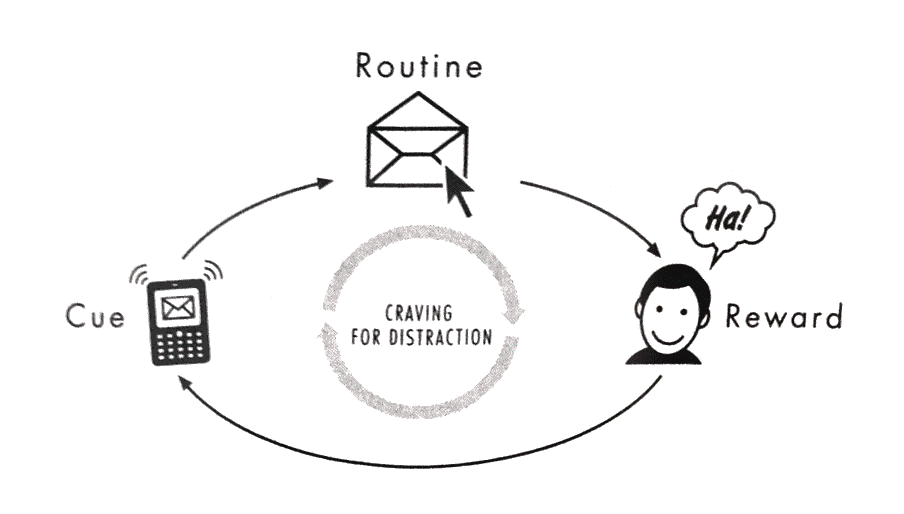
At the core of every habit lies a neurological pattern that Charles Duhigg calls the “Habit Loop.” This loop, rooted in our brain’s deepest survival mechanisms, is the invisible script that governs how habits are formed, maintained, and broken. Understanding this loop is not only the key to reshaping personal behavior, but also to redesigning educational systems, managing neurodivergent needs, and creating more humane communities.
The Habit Loop: Cue → Routine → Reward
The habit loop consists of three components:
- Cue: A trigger that tells your brain to go into automatic mode.
- Routine: The behavior itself—physical, mental, or emotional.
- Reward: The benefit or relief the brain receives, which helps it remember the loop for future use.
Once a habit is formed, your brain stops fully participating in the decision-making process. Unless you deliberately fight the loop—or rewire it—it will unfold again and again with robotic precision.
Where It Lives in the Brain
The basal ganglia, a cluster of neurons deep in the brain, plays a central role in storing these habit loops. It’s the brain’s efficiency center—responsible for controlling motor movements, emotions, and procedural learning. It is what allows us to drive home without thinking, tie our shoelaces while talking, or boil tea while planning the day.
In contrast, the prefrontal cortex, responsible for conscious thought and decision-making, is mostly silent once a habit is entrenched. This neurological handoff—from the thinking brain to the automatic brain—is what makes habits so hard to change, yet so powerful to leverage.
How a Craving for Sugar Becomes a Lifestyle
Consider a simple example. Every afternoon, you feel mentally drained and reach for a sugary snack.
- Cue: Low energy, perhaps the clock striking 4:00 PM.
- Routine: Walk to the kitchen and grab a biscuit or soda.
- Reward: A burst of pleasure and temporary alertness.
Do this repeatedly, and your brain begins to anticipate the reward as soon as the cue appears. Eventually, you don’t even think about it—it happens automatically. The craving, triggered by the cue, becomes a craving for the reward, and the habit loop locks in.
Over time, this “one biscuit” becomes a daily ritual, then a lifestyle, and finally, a health risk. Not because you lack control, but because your brain optimized for efficiency—not wisdom.
Brain Automation: A Blessing and a Trap
This automation isn’t inherently bad. Without it, we would be mentally exhausted by breakfast. The ability to delegate actions to habit frees up cognitive bandwidth for creativity, problem-solving, and emotional regulation.
But automation is also a trap. The brain does not discriminate between good and bad habits. It simply reinforces what is repeated. In high-stress environments—poverty, trauma, or information overload—people often automate behaviors that bring short-term relief but long-term harm: procrastination, avoidance, emotional eating, substance use, digital addiction.
And once these habits are wired, they resist change. Not because the person is weak, but because the brain is efficient.
This is where awareness and deliberate design come in.
Chunking: How the Brain Compresses Complex Actions
Another feature of habit formation is “chunking”—the brain’s process of converting a series of actions into a single automatic routine. For example, driving a car once required constant attention: ignition, gear, clutch, mirrors, road. Now, it’s a smooth chunk that runs with minimal thought.
Similarly, entire emotional or social behaviors can become chunked:
- Conflict → Withdrawal → Disconnection
- Criticism → Defense → Blame
- Praise → Dopamine spike → Repetition
In education, therapy, and autism care, chunking can be used strategically. By breaking down complex tasks into micro-actions and then reinforcing them in sequence, we can help individuals learn, relearn, and automate productive behaviors.
Key Insight
Your brain is constantly looking for ways to save energy and reduce friction. If you don’t design your habits, it will default to whatever pattern was easiest—even if that pattern disempowers you.
Understanding the habit loop isn’t just about self-improvement. It’s about reclaiming agency from the automation of culture, fear, addiction, and unconscious repetition.
IV. HABITS ARE PROGRAMMABLE: THE GOLDEN RULE OF BEHAVIOR CHANGE
The most empowering discovery in the science of habit is this: you don’t need to be ruled by your habits, but you can’t simply erase them either.
Habits are encoded in the brain’s neural architecture. Once formed, they rarely vanish. Instead, they lie dormant—waiting to be reactivated by familiar cues.
This is why behavior change is so notoriously difficult. People believe that they must “break the habit” by cutting it out entirely. But neuroscience tells us otherwise: habits cannot be deleted; they can only be overwritten.
Keep the Cue, Change the Routine, Maintain the Reward
This is the Golden Rule of Habit Change as outlined by Charles Duhigg:
🔁 Cue → New Routine → Same Reward
In other words:
- The cue stays the same. The trigger that initiates the habit remains (a time of day, an emotional state, a place, or a social context).
- The routine changes. Instead of the old behavior, you install a new, more constructive action.
- The reward is preserved. The brain still receives the benefit it was craving—just from a healthier or more aligned source.
This strategy works because it respects the brain’s architecture. You’re not fighting the habit loop—you’re hijacking it.
Real Case Example: Smoking and Deep Breathing
Let’s say someone smokes every day after lunch. They feel stress relief and a momentary high afterward. The loop looks like this:
- Cue: Lunch ends
- Routine: Smoke a cigarette
- Reward: Emotional decompression + nicotine hit
To change this habit, we keep the cue (end of lunch) and the reward (emotional relief), but we swap the routine:
- New Routine: Take a 5-minute walk, chew gum, or do deep breathing
- Same Reward: Calm the nerves, reset the mind
Over time, as the new routine becomes embedded and the brain receives a similar reward, the old habit loses its grip. This is not a “quitting” mindset—it’s a replacement mindset.
Emotional Anchors and Psychological Triggers
Not all cues are external. Some of the most powerful habit triggers are internal emotional states:
- Boredom triggers scrolling
- Anxiety triggers nail biting
- Loneliness triggers overeating
- Shame triggers withdrawal
To change such emotionally-rooted habits, we must build awareness of the emotional cue and then anchor a different response that still offers a sense of safety, connection, or release.
This is especially crucial in trauma-informed care and for neurodivergent individuals, where habits often serve as coping mechanisms for overstimulation, unpredictability, or anxiety. In such cases, replacing, not removing, is the ethical and effective approach.
The Power of Belief and Community in Making Changes Stick
Neuroscience explains how to change habits. But belief—both in oneself and in the possibility of change—is what sustains the transformation.
Duhigg highlights how belief, even if irrational, is a vital component of habit reprogramming. This belief becomes most resilient when embedded in community. Consider:
- Alcoholics Anonymous works because it builds a belief system around shared transformation and accountability.
- Group fitness classes succeed because people anchor their new identity in a shared social space.
- School routines work better when classrooms function as habit-shaping communities.
Community provides two things individuals often lack:
- Social reinforcement when motivation dips
- A mirror for identity—you see yourself becoming who the group reflects back to you
This is why social programs, family interventions, and even team cultures must focus not just on individual behaviors, but on shared rituals, group cues, and collective rewards.
From Willpower to Design
In summary:
- You don’t need more willpower—you need a better routine in response to the same cue.
- You don’t need to fight the brain—you need to work with it.
- You don’t need to do it alone—you need belief and community.
This reframing turns habit change from a battle into a design challenge—one that you, your family, your students, or your team can win with structure, support, and self-compassion.
V. KEYSTONE HABITS: SMALL SHIFTS, MASSIVE RIPPLE EFFECTS
Not all habits are created equal. Some habits don’t just affect one part of our life—they spark chain reactions that influence multiple domains, reshape self-image, and shift entire cultures. These are known as keystone habits.
Coined by Charles Duhigg in The Power of Habit, keystone habits are the small but powerful routines that act like architectural keystones: remove them and everything collapses; build them, and entire systems become stronger and more resilient.
What is a Keystone Habit?
A keystone habit is a behavior that:
- Leads to the development of multiple other positive habits
- Changes how people see themselves
- Creates a sense of momentum, discipline, or self-respect
- Affects patterns across emotional, social, and professional domains
These habits are unique because they don’t work in isolation. Instead, they reshape the structure of thought, routines, and identity. When cultivated deliberately, they can become the foundation for lasting transformation—personal or institutional.
Examples of Keystone Habits
Here are a few high-leverage keystone habits that create disproportionate impact:
- Journaling
Promotes emotional regulation, reflection, goal clarity, and improved mental health. - Sleep Hygiene
Improves decision-making, impulse control, focus, and emotional resilience. - Family Meals
Builds communication, emotional bonding, nutritional awareness, and family stability (strong evidence shows this reduces risky behaviors in adolescents). - Regular Exercise
Enhances mood, energy, willpower, discipline, and often triggers improvements in diet, time management, and sleep. - Morning Planning or Reflection Ritual
Creates intentionality, reduces reactivity, builds self-mastery. - Acts of Kindness or Volunteering
Reinforces empathy, social bonding, and a purpose-driven identity.
For autistic individuals or neurodivergent groups, keystone habits may include:
- Visual schedules
- Daily sensory regulation routines
- Predictable transition cues
These small anchors can help manage anxiety, enhance independence, and build trust with caregivers.
How One Habit Rewires Identity and Cascades into Other Behaviors
A powerful feature of keystone habits is their identity-shaping nature. When someone consistently maintains even one constructive routine, their self-narrative changes.
For example:
A person who starts running daily doesn’t just “run.” They begin to see themselves as a disciplined person or an athlete-in-the-making.
This identity shift fuels related habits: better eating, reduced screen time, improved scheduling, and more confidence in challenges.
In schools, a keystone habit like a daily gratitude circle can improve not only emotional literacy but reduce bullying, improve classroom behavior, and deepen peer support structures.
In families, something as simple as a fixed bedtime ritual can improve child-parent bonding, reduce tantrums, improve sleep, and create more space for adult recovery time.
Case Study: Paul O’Neill and Alcoa’s Safety Habit
When Paul O’Neill became CEO of Alcoa in 1987, Wall Street expected talk of profit, cost-cutting, or shareholder value. Instead, he declared a radical focus: worker safety.
Analysts were confused. But O’Neill understood something deeper. Safety was a keystone habit. By focusing on safety:
- Communication improved across departments
- Workers felt valued and empowered to report problems
- Operational processes became more transparent and optimized
- Leadership trust deepened
Over time, this seemingly narrow habit produced explosive growth in productivity, morale, and profit. By focusing on one non-financial metric—safety—O’Neill changed the culture of the company.
Designing a Personal or Organizational Keystone Habit
To identify and build your own keystone habit, ask:
- What small action would naturally improve multiple areas of life/work?
- What behavior reflects the person or culture I/we aspire to become?
- What routine, if made non-negotiable, would reinforce our values daily?
Design Guidelines:
- Keep it small and repeatable (e.g., 5-minute journaling, not 45 minutes)
- Attach it to an existing cue (e.g., after brushing teeth)
- Make the reward visible or felt (e.g., endorphin rush, clarity, praise)
- Involve others if possible—shared habits amplify accountability
- Make it part of the environment (e.g., posted affirmations, visual schedules, community rituals)
Final Thought
Keystone habits are proof that small changes don’t just change routines—they change people. They make transformation feel possible. They unlock hidden confidence. They reprogram identities. And when designed collectively, they can uplift schools, organizations, and even entire communities.
“Small wins fuel transformative changes by leveraging success into motivation. Keystone habits create these small wins. They are the roots of radical outcomes.”
— Charles Duhigg

VI. INSTITUTIONAL HABITS: HOW ORGANIZATIONS AUTOMATE CULTURE
Habits are not only personal—they are institutional. Just as individuals run on routines, so do organizations. Whether it’s a multinational company, a local school, a healthcare clinic, or a rural NGO, patterns of behavior become codified into culture. These institutional habits influence how people communicate, solve problems, make decisions, or—even more critically—how they respond to crises.
Organizations that understand and intentionally shape their behavioral patterns can cultivate cultures of trust, discipline, resilience, and excellence. Those that ignore habit dynamics often fall into bureaucratic inertia, toxicity, or burnout.
Habits in Companies, Schools, and Government Offices
Think about the routines embedded in any organization:
- A teacher’s default approach to handling disruptions
- The way a team starts its meetings
- How complaints are addressed in a hospital
- How frontline government workers react to new policies
- Whether deadlines are treated seriously or casually
These patterns are not usually the result of strategy—they are the product of repetition, imitation, and convenience. Once embedded, they become the “way we do things here”—which is another word for culture.
Changing culture, therefore, doesn’t begin with speeches or vision statements. It begins with identifying and reshaping the small, daily behaviors that define organizational life.
Case Study: Starbucks and Willpower as a Corporate Habit
Starbucks isn’t just a coffee company—it’s a habit factory. In his book, Duhigg explores how Starbucks systematically trains employees to respond to difficult customer interactions without losing emotional control.
They found that willpower—the ability to remain calm and follow protocol under pressure—could be taught and habituated.
How? Through role-playing, scripts, and repetition. Employees were given specific routines to use in high-stress moments, such as:
- “When a customer yells, I will take a deep breath and say, ‘I understand how frustrating this must be.’”
This is not improvisation. It’s behavioral automation.
The goal was to create predictable emotional responses that kick in automatically—just like muscle memory in sports.
The result: fewer breakdowns, higher consistency, and a scalable service culture—even in high-turnover environments. Starbucks didn’t rely on “hiring good people.” It created good habits.
The “Crisis as Opportunity” Principle for Habit Change
Duhigg also introduces a powerful organizational insight: crises create habit change windows.
During a crisis, people become more open to rethinking assumptions. Old routines are already disrupted, so resistance to new habits is lower. Smart leaders leverage this instability to introduce positive change.
Example applications:
- A school facing a bullying crisis redesigns hallway supervision and peer interaction protocols.
- A hospital after a tragic error implements a “speak-up” safety culture with morning briefings.
- An NGO after a funding loss uses the moment to re-evaluate team roles and reporting structures.
These moments of breakdown are also moments of cultural leverage. But they must be seized quickly, with new routines ready to install, otherwise the organization simply reverts to old patterns once the crisis fades.
Empowering NGOs to Create Habit-Building Programs
For grassroots organizations—especially in low-resource settings—habit design offers a low-cost, high-impact toolkit for behavior change. Instead of one-off trainings, NGOs can embed habit loops into community life.
Examples:
- Punctuality:
Cue: Village bell or group chant at 9 AM
• Routine: Begin meeting with gratitude or pledge
• Reward: Recognition, visual sticker chart, social praise - Hygiene Habits (e.g., handwashing, toilet use):
Cue: Visual reminders near water sources
• Routine: Wash with soap, dry hands properly
• Reward: Group game points, parent praise, colorful habit cards - Empathy and Emotional Regulation (especially for children):
Cue: “How are you feeling today?” cards
• Routine: Share feeling, listen without judgment
• Reward: Social connection, calming effect, adult validation - Financial Responsibility:
Cue: Weekly self-check-ins or SMS reminders
• Routine: Budgeting time, savings update
• Reward: Group accountability or micro-reward (digital badge, community shout-out)
Why it works:
Because communities don’t need motivation—they need structure. And habits provide a structure for doing the right thing repeatedly, until it becomes identity.
When NGOs begin seeing themselves not just as service providers, but as habit architects, their impact scales naturally through behavior loops embedded in daily life.
Closing Insight
Institutions are nothing but networks of people behaving in patterns. Change the behavior, and you change the system.
“You can’t order people to change, but you can give them new habits. That’s the way institutions become more effective.”
— Charles Duhigg
VII. SOCIAL HABITS AND MOVEMENT BUILDING
“Social habits are what bind communities and catalyze revolutions. They create belonging, enforce norms, and quietly carry movements forward — one shared routine at a time.”
— Inspired by Charles Duhigg
Behavioral change scales through networks. When individuals shift habits in isolation, transformation is limited. But when shared behaviors ripple across a group, they become movements. These social habits — rituals, routines, role models, and collective responses — are the silent engines behind cultural revolutions, public health breakthroughs, and civil rights milestones.
Understanding the science and structure of social habits gives us a blueprint for catalyzing wide-scale change — especially in under-resourced communities where formal power is scarce, but human connection is abundant.
How Societal Change Happens Through Social Habit Loops
At the individual level, habits follow a loop:
Cue → Routine → Reward.
At the societal level, the loop expands:
- Cue: A shared trigger (injustice, crisis, opportunity)
- Routine: Collective response (protests, rituals, discussions, storytelling)
- Reward: Social validation, progress, hope, solidarity
This creates a contagious behavioral ecosystem:
- People start modeling new behavior.
- Others copy it due to peer visibility or belonging.
- The group normalizes it.
- Institutions adapt to the new “social code.”
Social change isn’t just about bold speeches. It’s about new patterns of behavior becoming normalized.
Case Study: Rosa Parks, Peer Pressure, and the Civil Rights Network
When Rosa Parks refused to give up her seat in Montgomery in 1955, it wasn’t the first such protest — but it was the one that ignited a movement.
Why?
- Her personal reputation was that of a responsible, respected, quietly firm woman. Her story was credible and relatable.
- She had strong ties in her community: close relationships in churches, social clubs, and women’s groups.
- After her arrest, social pressure from strong ties mobilized local support.
- Then weak ties — acquaintances and distant allies across the South — were activated through phone trees, church bulletins, and emerging media.
Within days, the Montgomery Bus Boycott became a structured movement. It wasn’t a spontaneous reaction; it was a social habit system:
- Cue: Rosa’s story and the injustice of arrest
- Routine: Boycott, daily walking, community organizing
- Reward: Dignity, media attention, moral clarity, shared power
What began as a protest became a daily practice. People walked miles together. They made carpooling routes. They shared hardship. In doing so, they built an identity.
Weak Ties vs. Strong Ties in Community Habit Change
Sociologist Mark Granovetter coined the idea that “weak ties” are key to spreading ideas. Duhigg builds on this in analyzing movements.
- Strong ties = close relationships, deep loyalty, emotional intimacy
→ These initiate action: people take risks when they know others have their back. - Weak ties = acquaintances, peripheral networks, neighbors, Facebook friends
→ These spread action: they connect clusters, expand visibility, and create norm shifts.
In practice:
A village hygiene initiative starts with mothers (strong ties) doing group handwashing.
It spreads to neighboring communities via schoolteachers or WhatsApp groups (weak ties).
As it becomes visible and repeated, it becomes a community habit.
Understanding and designing for both tie types is critical to scaling impact without losing trust.
Leveraging Rituals, Stories, and Shared Routines to Build Collective Identity
To transform a community, don’t just teach values — embed them into rituals.
Stories and routines are stickier than slogans.
Effective social habits involve:
- Rituals: Weekly community meals, team huddles, shared moments of silence
- Symbols: Badges, scarves, bracelets — physical tokens of belonging
- Stories: Origin stories, transformation testimonies, local heroes
- Norms: “This is what we do here” → punctuality, mutual respect, open feedback
- Rewards: Visibility, celebration, collective pride
These behaviors create micro-movements inside daily life.
When a child sees their parent pick up litter as a routine, it teaches environmentalism more powerfully than any lecture.
When youth greet elders with consistency and respect, it becomes a social fabric, not a moral directive.
Special Application: Habit Loops for Inclusion of Autistic Individuals
Social habits are especially vital for integrating neurodiverse individuals.
By designing predictable, inclusive routines, communities can become safe, enabling spaces.
Examples:
- Shared cue: Bell to transition from one activity to another
- Inclusive routine: Everyone moves together calmly, no sudden changes
- Universal reward: Recognition, affirmations, structured free time
These adaptations not only support autistic individuals — they strengthen group coherence and empathy.
Closing Insight
Social habits are the muscle memory of a culture. If we want equity, compassion, and justice to thrive, we must ritualize them.
Not just once. But daily. Collectively. Visibly.
This is how movements become societies, and how good intentions become everyday reality.

VIII. BREAKING BAD HABITS: THE WAR WITHIN
“Change might not be fast and it isn’t always easy. But with time and effort, almost any habit can be reshaped.”
— Charles Duhigg
Breaking Bad Habits Is a Battle for Identity, Not Just Behavior
Most bad habits don’t come from weakness — they come from wiring. But wiring can be re-routed.
To break free from destructive patterns — whether it’s procrastination, smoking, excessive screen time, emotional eating, or toxic self-talk — we must stop fighting the symptom and start reprogramming the loop.
Bad habits often satisfy a deeper need: certainty, control, or escape.
Until we identify what the habit reliably delivers, we cannot outgrow it.
But here’s the good news:
Change isn’t about killing a bad habit. It’s about replacing it with a better one that serves the same need — in a way that uplifts.
Why Bad Habits Are Addictive: Dopamine, Comfort, Predictability
Neurologically, bad habits hijack the brain’s reward system:
- Dopamine spikes even in anticipation of the reward (not the reward itself).
- The brain craves certainty — even if it’s destructive.
- Repetition strengthens neural pathways in the basal ganglia.
- Over time, habits become comfort zones, not because they feel good — but because they feel familiar.
For example:
A person who binge-watches TV every night may not enjoy the content — but the act provides emotional anesthesia for loneliness or anxiety.
We are not addicted to the habit. We are addicted to the relief it temporarily provides.
Trigger Mapping: Identifying Emotional, Environmental, and Social Cues
Before breaking a habit, one must understand it deeply.
Charles Duhigg recommends tracking the habit loop:
- Cue: What triggered the behavior?
- Time of day?
- Location?
- Emotional state?
- Who was present?
- What just happened?
- Routine: What did you actually do?
- Reward: What need was satisfied?
- Was it stimulation? Connection? Escape? Dopamine hit?
This process is called “trigger mapping.”
Example:
Habit: Reaching for sweets at 3 PM.
Cue: Energy dip and boredom at work.
Reward: Stimulation + break from monotony.
With this clarity, you can intervene at the source — instead of reacting at the surface.
Habit Journaling and Data-Driven Awareness
To decode a habit’s grip, use habit journaling. Over a few days or weeks, track:
- Time and place of the behavior
- What you were feeling or thinking
- Who was around
- Outcome of the habit
- Level of satisfaction after
Patterns will emerge. The habit isn’t random — it’s a response to a predictable pattern of internal discomfort or environmental setup.
Use this data to:
- Create “If → Then” plans (If I feel anxious, then I will go for a walk)
- Design pattern interrupts before the routine begins
- Test alternate behaviors that meet the same need
Replacement Routines + Identity-Based Reinforcement
Bad habits leave behind psychological space. If left empty, they return.
To prevent relapse, insert replacement routines that provide similar benefits.
But the real game-changer?
🔁 Identity reinforcement
Don’t say:
“I’m trying to quit.”
Say:
“I’m not a smoker.”
“I’m someone who cares for my future.”
“I’m an athlete in training.”
“I’m a mindful parent.”
Identity-based habit change shifts focus from what you do to who you are becoming.
Over time, actions that contradict this identity feel unnatural — and you start aligning behaviors to match your self-image.
Tools for Habit Disruption
- Accountability Partners
- Choose someone who shares your values, not just someone who checks in.
- Regular, compassionate, honest check-ins build integrity and momentum.
- Habit Contracts
- Make commitments public.
- Add stakes (e.g., donate to a cause you don’t support if you fail).
- Use apps like StickK or simple WhatsApp groups.
- Environment Engineering
- Make bad habits harder and good habits easier.
- Examples:
- Lock screens for specific apps
- Keep snacks out of sight
- Schedule breaks for dopamine hits
- Use noise-canceling headphones to block distractions
- Replace late-night scrolling with a book on your pillow
“Willpower is not a strategy. Design is.”
Special Focus: Breaking Harmful Habits in Neurodivergent or High-Stress Contexts
Autistic individuals or those with ADHD often develop repetitive, self-soothing behaviors (e.g., stimming, screen dependency, emotional outbursts).
These are not “bad” habits but adaptive responses to overwhelm.
Instead of suppression:
- Identify the sensory or emotional need behind the habit.
- Offer calming, structured alternatives (e.g., fidget tools, weighted blankets, movement breaks).
- Use visual schedules and predictable routines to reduce environmental stressors.
- Celebrate every micro-shift as progress, not perfection.
Closing Insight
You don’t “break” bad habits. You outgrow them — by designing better ones that nourish your values, identity, and wellbeing.
The war within is not won with force, but with clarity, compassion, and conscious design.

IX. BUILDING NEW HABITS WITH INTENTION AND PURPOSE
“Every action you take is a vote for the type of person you wish to become.”
— James Clear
Intentional Habits are Blueprints for a Transformed Life
Forming new habits isn’t just about personal optimization — it’s about aligning daily action with deeper purpose. When we build habits with intention, we’re not just changing behavior — we’re constructing identity, anchoring meaning, and shaping the future we want for ourselves and those we serve.
Whether you’re trying to establish a morning routine, promote emotional regulation in a neurodivergent child, create punctuality in a team, or bring structure to a community program — habits built with purpose outlast those built on guilt, hype, or social media trends.
Let’s explore how to do it right.
Habit Stacking and Anchoring to Existing Behaviors
Habits are more likely to stick when they piggyback on behaviors that are already automatic. This principle, championed by James Clear in Atomic Habits, is called habit stacking.
Formula:
After [current habit], I will [new habit]
Examples:
- After I brush my teeth, I will do 3 minutes of deep breathing.
- After my morning coffee, I will journal one gratitude sentence.
- After team meetings, I will immediately send follow-up notes.
Why it works:
- You don’t have to invent a new time slot.
- The existing routine becomes your cue.
- It reduces decision fatigue and strengthens neural anchoring.
For autistic individuals and children:
- Pair calming behaviors (e.g., deep pressure, breathing, visual schedule review) with routine transitions like after meals or before outings.
The 21/66/90-Day Myth: What Real Science Says
You’ve probably heard:
- “It takes 21 days to form a habit.”
- Or 66.
- Or 90, if you’re hardcore.
🔍 Reality Check:
- A 2009 study from UCL found that, on average, habits take 66 days to become automatic — but the range is wide: 18 to 254 days, depending on complexity and context.
- Simpler habits (e.g., drinking water after waking) take less time.
- Complex behaviors (e.g., daily meditation, regular workouts) can take several months.
🧠 Habit formation isn’t about time — it’s about consistency + emotional reward + contextual anchoring.
So instead of asking how long, ask:
- Is this behavior easy enough to start daily?
- Does it tie into something I already do?
- Does it feel meaningful, not mechanical?
Cues from Environment, Social Group, or Even Apps
Habits are cue-driven. So design your surroundings to whisper reminders.
🌱 Environmental Cues
- Lay out your gym clothes the night before.
- Put your journal next to your morning coffee mug.
- Place a book on your pillow to remind you to read at night.
- For kids with autism, use visual timetables, color-coded bins, and structured zones.
🤝 Social Cues
- Surround yourself with people who live the behavior you want.
- Join communities (online or offline) that normalize your new habit.
- Share your goal with a trusted friend or support group.
We rise or fall to the level of the culture around us.
📱 Digital Cues
- Use habit-tracking apps (e.g., Streaks, Habitica, Coach.me).
- Set intentional reminders, not noise.
- Turn off toxic notifications and highlight mission-aligned ones (e.g., a daily quote about your long-term goal).
Start With Why – Anchoring Habits to Higher Purpose
When the going gets tough, the only thing that keeps a habit alive is meaning.
Surface-level habits (e.g., “I want to lose weight”) often fizzle.
But when anchored to purpose, they endure.
Instead of:
“I want to eat healthy.”
Say:
“I want to live long and strong to raise my child with dignity.”
Instead of:
“I want to meditate more.”
Say:
“I want to stop passing on generational anxiety to my students.”
Purpose turns pain into persistence.
For caregivers, therapists, and social entrepreneurs — help clients link micro-habits to macro-values:
- “I practice patience so I can be a safe space for my child.”
- “I show up on time to model respect for those I serve.”
- “I write every morning because my words may one day help someone survive.”
Special Insight for Neurodivergent and Underserved Populations
Structure is not just helpful — it is vital.
- Autistic individuals often thrive with visual cues, fixed routines, and predictable transitions.
- For those in high-stress or trauma-impacted environments, externalizing structure (charts, boards, sensory routines) offers psychological safety.
- For marginalized groups, small daily victories build the confidence and consistency that larger systems often deny.
Example:
An NGO working in slums introduces a morning routine with:
- Gratitude circles
- Cleaning rituals
- One-minute personal intention statements
This isn’t trivial — it’s neurological empowerment in disguise.
Closing Insight
When you build habits on the foundation of who you are and who you wish to become, they stop being tasks — and start becoming truths.
Design your day not just for efficiency, but for elevation.
Stack purpose into every routine.
And remember — it’s not about doing more. It’s about doing what matters on repeat.
X. SPECIAL FOCUS: HABITS FOR NEURODIVERGENT INDIVIDUALS (INCLUDING AUTISM)
Habit Design is a Gateway to Dignity, Safety, and Self-Expression
For neurodivergent individuals — especially those on the autism spectrum — habits are not just behavioral tools. They are lifelines. A well-structured routine isn’t limiting; it’s liberating. Predictability reduces anxiety. Visuals reduce cognitive load. Sensory-aware environments reduce meltdowns. And most importantly, consistent habits create islands of competence in a world that often feels chaotic.
In this section, we explore how habit science can be adapted to serve the unique neurological wiring of autistic individuals and empower caregivers to scaffold — not control — routines that lead to autonomy, confidence, and joy.
Predictability as Safety: Why Structured Routines Matter
Autistic individuals often live in a world of overwhelming sensory input, unpredictable social rules, and shifting expectations. In such a world:
- Predictability = Safety
- Consistency = Control
- Routine = Regulation
Neuroscience explains this need:
- The amygdala, responsible for threat detection, is often hyperactive in autistic individuals.
- Structured habits reduce uncertainty, lower cortisol, and create a neurological sense of calm.
Key Insight: The habit loop (cue → routine → reward) provides a frame within which the autistic brain can thrive — provided it’s adapted with care.
Building Adaptive Habits Through Visual Cues and Rewards
Visual processing is often a strength in autism. Verbal instructions fade. Visual anchors endure.
🧩 Tools and Strategies:
- Visual Schedules: Step-by-step images showing morning or bedtime routines
- First–Then Boards: “First brush teeth, then story time”
- Choice Boards: Empowering individuals to choose their preferred sequence or activity
- Visual Social Scripts: Guides for expected behaviors in unfamiliar situations (e.g., “How to say hello”)
🎁 Meaningful Rewards:
- Rewards must align with intrinsic interests (e.g., time with trains, favorite music, sensory activities).
- Use immediate reinforcement, especially early in habit building.
- Celebrate micro-successes. Even one step forward is neurologically significant.
Case Examples: Daily Routines, Transitions, and Social Skills
- Morning Routine for a 9-year-old Autistic Child
- Cue: Wake-up song
- Routine: Bathroom → get dressed → breakfast (with picture board support)
- Reward: 5 minutes of iPad time before leaving for school
- Transition Help for an Autistic Teen
- Uses a timer app + visual countdown chart before transitions (e.g., from play to homework)
- Co-regulation script: “We have 3 more minutes, then we pause the game and go to study zone. Want to set the timer?”
- Social Interaction Habit for a Nonverbal Adult
- Daily practice using an AAC device to initiate one social interaction
- Cue: Visual reminder + caregiver modeling
- Reward: Preferred sensory activity (e.g., water play)
Each example respects the individual’s rhythm and uses positive patterning — not punishment — to teach structure.
Caregivers: Scaffold, Don’t Micromanage
The goal of habit design isn’t control — it’s capacity-building.
❌ Don’t:
- Nag, force, or rigidly enforce routines
- Overwhelm with too many changes at once
✅ Do:
- Create simple, visualized routines
- Use collaborative planning: “Which shirt do you want to wear today?”
- Offer autonomy within structure (e.g., options, visual calendars)
Scaffolding = guided independence
Like training wheels, eventually, good habits support self-reliance.
Also important: Caregiver habits matter too. Modeling calmness, keeping consistent routines, and using shared language supports mutual regulation.
Digital Habit Boards, Sensory-Aware Environments, and Co-Regulation
Modern tools can make habit-building more engaging and supportive:
📱 Digital Habit Boards & Apps
- Tools like Choiceworks, Brili, or Autiplan offer visual routines with checklists
- Audio + visual + reward integration
- Can sync across caregiver and school devices
🌈 Sensory-Aware Environments
- Lighting, textures, sound levels — all impact habit adherence
- Use calming colors, weighted items, or sensory zones to support transitions
- Make sure the environment supports the habit, not sabotages it (e.g., cluttered space ≠ peaceful reading)
🤝 Co-Regulation as a Habit
- Co-regulation means modeling calm responses, shared breathing, or mirrored routines
- Adults act as neurobiological anchors until the habit becomes internalized
- Example: “We both do our breathing exercises together after lunch”
This shared rhythm builds trust, predictability, and neural safety.
Closing Insight
For autistic individuals and other neurodivergent minds, habit isn’t just a behavior science tool — it’s life architecture.
Done right, it builds:
- Emotional security
- Functional independence
- Social dignity
- Daily joy
For caregivers, therapists, and educators, the shift is simple but profound: from “fixing behavior” to “designing pathways for flourishing.”

XI. HABITS FOR SOCIAL IMPACT: DESIGNING COMMUNITY RITUALS
Habit is the Most Scalable Tool for Social Transformation
While policies and programs create the scaffolding of change, habits create the culture. If we want a cleaner India, a kinder community, or a more self-reliant youth population, we must start not with slogans, but with daily, visible, replicable behaviors. Communities rise or fall not by intentions, but by routines — from handwashing before meals to turning off taps, from greeting with respect to managing waste responsibly.
Social impact begins when private routines become public rituals.
This section explores how habit science — when combined with empathy, design thinking, and grassroots mobilization — becomes the most cost-effective, scalable, and dignified intervention for uplifting communities.
Introducing Cleanliness Habits in Urban Slums
Case Studies: Sulabh International, Swachh Bharat Mission
The challenge of sanitation is not primarily one of infrastructure — it’s one of behavior adoption.
🧼 Sulabh International
- Introduced low-cost, eco-friendly toilets in slums and rural areas
- But more importantly, created daily sanitation rituals: how to use, clean, and maintain the space
- Employed local people as habit ambassadors, turning users into custodians
🇮🇳 Swachh Bharat (Clean India Mission)
- Combined public infrastructure (toilets, garbage disposal) with behavioral nudges
- Prime-time celebrity endorsements, school campaigns, and visual cues (murals, mascots)
- Success varied by how deeply daily habits (like open defecation or littering) were replaced
“A community that flushes one toilet properly teaches the next generation dignity.”
The real success lies not in infrastructure rollout, but in ritualizing responsible usage through micro-habits.
Group Rituals: Assemblies, Wellness Hours, Silent Meals
Schools, community centers, and workspaces are ideal environments to normalize shared behaviors that reflect larger values.
🧘♀️ Morning Assemblies or Wellness Hours
- Begin with deep breathing, gratitude, short affirmations or movement
- Anchor the day in presence and intention
- Long-term benefits: higher attentiveness, lower aggression, improved mood
🍛 Silent Meals in Schools or Hostels
- Encourage mindful eating, reduce sensory overload, promote respect for food
- Can be followed by reflection moments or group gratitude
- Helps inculcate discipline and self-regulation, especially among hyperactive children
♻️ Eco-Rituals
- Collective composting routines
- “Plastic-free Friday” or “Green Hour” every week
- Peer-led waste segregation competitions
When the group models the behavior daily, it becomes identity — not just instruction.
Empowering Schools to Instill Life Habits Beyond Textbooks
Schools are not just learning spaces — they are habit-shaping factories. Most children learn by imitation and ritual, not lectures.
🔑 Habit-Based Curriculum Integration:
- Teach money habits through daily budgeting simulations
- Introduce nutrition habits with kitchen gardens and meal planning
- Reinforce communication habits through morning sharing circles
🧒 Teacher Habits That Influence Students:
- Consistent greetings and feedback routines
- Use of visual habit trackers (e.g., sticker charts for punctuality or kindness)
- Modeling emotional regulation
When teachers treat discipline as a habit, not a punishment, students mirror it faster.
How NGOs Can Drive Scalable Behavior Change Through Micro-Habit Campaigns
For NGOs aiming to build capacity in rural, underserved, or special-needs populations, a habit-based model is low-cost, locally adaptable, and scalable.
🎯 Principles for Habit Campaign Design:
- Simplicity wins: One clear action per campaign (e.g., “wash hands before every meal”)
- Public visibility: Posters, wall art, group pledges, school assemblies
- Repetition with celebration: Track completion with colors, songs, rewards
- Peer modeling: Choose local champions — children, elders, teachers — to demonstrate
🛠️ Tools:
- Behavioral playbooks for teachers and facilitators
- Story-based habit scripts for community outreach
- Habit apps customized for low-literacy environments (with icons and voice cues)
🌍 Examples:
- Rural hygiene program using color-coded toothbrush routines
- Empathy-building exercises in anganwadis via daily kindness cards
- Youth clubs introducing career-readiness habits (punctuality, accountability, teamwork)
“Don’t teach a community what to do. Help them practice it daily, celebrate it loudly, and own it proudly.”
Closing Insight
For social entrepreneurs, community leaders, educators, and changemakers, designing public rituals that encode desirable habits is one of the most profound interventions possible. It’s not glamorous — but it is permanent.
Habits are:
- Cheaper than policy
- Stickier than posters
- More human than algorithms
And when habit becomes culture, transformation no longer depends on outside aid — it becomes self-propelled.

XII. PRACTICAL TOOLKIT SECTION: FROM THEORY TO ACTION
Design Beats Discipline When It Comes to Habits
We don’t rise to the level of our motivation — we fall to the strength of our systems. While the science of habits empowers us with understanding, true transformation comes only through structure, planning, and consistent reflection. This toolkit turns the insights from neuroscience and behavioral psychology into hands-on, replicable instruments for personal, institutional, and community change.
This section provides templates, guides, and visual frameworks to help readers design, track, and sustain habit change, especially when working with neurodivergent individuals or in group/community settings.
1. Habit Mapping Worksheet
A tool to understand the current habit ecosystem of an individual or group.
Purpose:
To map existing daily routines, identify embedded habits (good, neutral, bad), and pinpoint high-leverage areas for intervention.
Sections:
- Morning / Midday / Evening routines
- Physical, Emotional, Cognitive, and Social behaviors
- Automatic vs Intentional behaviors
- “Hidden” habits (e.g., negative self-talk, avoidance behaviors)
Instructions:
- Observe or journal behaviors over 3 days
- Color-code based on outcomes (positive/negative)
- Use findings to identify patterns and areas for habit redesign
Use Case:
Can be used with autistic children by caregivers to document sensory-sensitive behaviors during transitions or unstructured time.
2. Trigger Logging Template
A habit diagnostic tool to identify cues that initiate routines.
Purpose:
To raise awareness of the internal and external stimuli that activate both helpful and unhelpful habits.
Template Fields:
- Time of Day
- Location
- People Present
- Emotional State
- Triggering Event or Cue
- Resulting Habitual Action
Instructions:
- Log 3–5 habit episodes daily for 1 week
- Highlight repeating patterns
- Identify most common cue types (stress, boredom, hunger, social dynamics)
Example Entry:
“5:30 PM – At work, alone. Felt anxious. Craved sugar → bought junk food.”
Use Case:
Helps educators or therapists identify anxiety triggers in neurodiverse learners during school hours.
3. Keystone Habit Selector
A decision framework to choose the most impactful habit to focus on.
Purpose:
To help individuals or groups select a habit that acts as a multiplier for identity shift and other positive behaviors.
Evaluation Criteria:
- Does this habit improve my health, focus, or emotional regulation?
- Does this habit benefit others around me?
- Does it have cascading effects on other routines?
- Is it easy to measure and celebrate?
Scoring Tool:
A weighted scorecard (0–10 scale) across five criteria: simplicity, influence, identity impact, scalability, emotional payoff.
Example Keystone Habits:
- Morning sunlight and movement
- Daily reflection journal
- Eating a consistent nutritious breakfast
- Scheduled digital detox blocks
Use Case:
Useful for NGOs designing scalable interventions around health, education, or employment readiness.
4. Group Habit Ritual Design Template
A structured planner to create recurring group routines for values and behavior anchoring.
Purpose:
To institutionalize habits through rituals that reinforce collective identity, empathy, and shared responsibility.
Template Fields:
- Ritual name and purpose
- Frequency and timing
- Physical and sensory elements (space, sound, symbols)
- Roles (who leads, who participates)
- Cue to start and reward mechanism
- Emotional tone: celebration, reflection, reverence
Sample Rituals:
- “Silent Minute” after lunch in schools
- “Gratitude Circle” before community meetings
- “Work Reset Bell” every 90 minutes in an NGO office
Use Case:
Community leaders or school principals can use this to establish rhythms that support emotional safety, discipline, and dignity.
5. Accountability Habit Contract
A simple behavioral agreement to lock in motivation and social reinforcement.
Purpose:
To make new habits visible, trackable, and communal, thus reducing drop-off.
Contract Fields:
- My new habit is: _______
- Cue: ________
- When and where I will do it: ________
- If I miss it, I will: ________
- Reward or celebration: ________
- Witness/Accountability Partner: ________
- Review Date: ________
Optional Add-ons:
- “Failure consequence” (e.g., donate ₹100 to a cause I don’t support!)
- Public declaration wall/poster
Use Case:
Can be used in recovery programs, student mentorship setups, or group coaching cohorts.
6. Special Tools for Autism-Focused Habit Planning
Designed with sensory regulation, predictability, and co-regulation in mind.
- Visual Schedule Cards (PECS-style):
- Morning → Bathroom → Breakfast → School → Free time
- Use icons, not just text
- Laminate and velcro-based for adaptability
- Sensory-Friendly Cue System:
- Color-coded zones: Red = Overwhelmed, Yellow = Need help, Green = Ready to engage
- Helps autistic individuals signal emotional state without verbal effort
- Co-Regulation Partner Checklist (for caregivers):
- Are the transitions predictable?
- Is the reward meaningful to the child?
- Did I give sufficient time and processing cues?
- Is the environment overstimulating?
- Digital Habit Boards:
- Apps like Choiceworks, Time Timer, or Brili to support routine tracking
- Reinforced with sound cues, visuals, and celebratory feedback
Use Case:
Empowers parents, special educators, or caregivers to scaffold autonomy in neurodivergent individuals while preserving emotional safety.
🔚 Final Words: Build, Don’t Force. Ritualize, Don’t Nag.
True habit change is not about force, shame, or punishment — it’s about scaffolding. This toolkit is designed for compassionate, intelligent habit-building that promotes dignity and ownership, not dependency.
XIII. PARTICIPATE AND DONATE TO MEDA FOUNDATION
From Habit to Hope: Let’s Build Systems That Serve All
If this article inspired you to reflect on the invisible architecture of habits in your own life, imagine what intentional, supportive, and inclusive habit design could do for a child struggling to navigate autism… for a family trapped in the poverty loop… for a classroom that lacks structure… or for a slum where hygiene habits could save lives.
At MEDA Foundation, we believe that habits are humanity’s grassroots technology — simple routines that can rewire identities, uplift communities, and build self-sufficient ecosystems of dignity and purpose.
💛 Here’s how you can make a real difference:
👉 Participate
Join us in rolling out habit-based transformation programs across:
- Schools (empathy, punctuality, mindfulness, digital discipline)
- Shelters (routine-building for displaced children)
- Neurodivergent support centers (co-regulation, visual routine systems)
👉 Donate
Support our initiatives to:
- Build Autism-Friendly Habit Labs with sensory-safe environments and digital visual schedulers
- Provide habit coaching toolkits to under-resourced educators and caregivers
- Conduct micro-behavioral campaigns on hygiene, nutrition, attention, and social inclusion
🌐 Visit Us: www.MEDA.Foundation
Every rupee helps us nurture resilience — one habit, one human, one hopeful day at a time.
👉 Partner with Us
Are you a school, CSR team, therapist, or tech innovator? Let’s collaborate to design behavior architecture that empowers — not controls — and teaches autonomy, not dependency.
XIV. BOOK REFERENCES & RECOMMENDED READING
To deepen your understanding and design your own journey of habit mastery, we recommend the following classics and thought-leaders in the field:
📚 Core Texts on Habit Science and Behavior Change
- Charles Duhigg. The Power of Habit: Why We Do What We Do in Life and Business
- James Clear. Atomic Habits: An Easy & Proven Way to Build Good Habits & Break Bad Ones
- J. Fogg. Tiny Habits: The Small Changes That Change Everything
- Chip & Dan Heath. Switch: How to Change Things When Change Is Hard
- Roy Baumeister & John Tierney. Willpower: Rediscovering the Greatest Human Strength
📘 For Deeper Insight into Mind and Motivation
- Daniel Kahneman. Thinking, Fast and Slow (on System 1/System 2 behavior and automaticity)
- Carol Dweck. Mindset: The New Psychology of Success
- Gretchen Rubin. Better Than Before (on personal habit tendencies)
📖 For Social Movements and Cultural Habit Change
- Dan Ariely. Predictably Irrational
- Malcolm Gladwell. The Tipping Point
- Yuval Noah Harari. Sapiens (on how shared stories form collective behavior)
Final Reflection:
“You do not rise to the level of your goals, you fall to the level of your systems.” — James Clear
At MEDA Foundation, we build those systems — for one person, one community, one country at a time.
Let’s build better habits — and a better world — together.
