

Dr. H. Narasimhaiah’s life stands as a rigorous call to restore scientific temper as a moral discipline essential for a plural, democratic society. His unwavering insistence on inquiry over authority, humanism over dogma, and education over indoctrination exposes the dangers of superstition, intellectual silence, and rote learning in an age saturated with information but starved of reasoning. By challenging unexamined tradition, confronting public irrationality, and redefining the role of educators, universities, and intellectuals as guardians of social sanity, he offered a blueprint for civilizational resilience. His legacy urges a second renaissance—one grounded in reasoned dissent, ethical courage, inclusive education, and ecological responsibility—reminding us that societies which fear questions ultimately forfeit their future.
ಡಾ. ಎಚ್. ನರಸಿಂಹಯ್ಯ ಅವರ ಜೀವನವು ಬಹುಮುಖ, ಪ್ರಜಾಸತ್ತಾತ್ಮಕ ಸಮಾಜಕ್ಕೆ ಅಗತ್ಯವಾದ ವೈಜ್ಞಾನಿಕ ಮನೋಭಾವವನ್ನು ಒಂದು ನೈತಿಕ ಶಿಸ್ತಾಗಿ ಪುನಃ ಸ್ಥಾಪಿಸುವ ದೃಢವಾದ ಕರೆಯಾಗಿದೆ. ಅಧಿಕಾರಕ್ಕಿಂತ ಪ್ರಶ್ನೆಯನ್ನು, ಧರ್ಮಾಧಾರಿತ ನಂಬಿಕೆಗಿಂತ ಮಾನವತಾವಾದವನ್ನು, ಹಾಗೂ ಪಾಠಶಾಲಾ ಪಾಠದಂತೆ ಜಪಿಸುವ ಶಿಕ್ಷಣಕ್ಕಿಂತ ಚಿಂತನೆಗೆ ಪ್ರಾಧಾನ್ಯ ನೀಡಿದ ಅವರ ಅಚಲ ನಿಲುವು, ಮಾಹಿತಿಯಿಂದ ತುಂಬಿದರೂ ವಿವೇಚನೆಯಿಂದ ಬರಿದಾದ ಯುಗದಲ್ಲಿ ಅಂಧಶ್ರದ್ಧೆ, ಬೌದ್ಧಿಕ ಮೌನ ಮತ್ತು ಯಾಂತ್ರಿಕ ಶಿಕ್ಷಣದ ಅಪಾಯಗಳನ್ನು ಬಹಿರಂಗಪಡಿಸುತ್ತದೆ. ಪರಿಶೀಲಿಸದ ಪರಂಪರೆಯನ್ನು ಪ್ರಶ್ನಿಸುವುದು, ಸಾರ್ವಜನಿಕ ಅಯುಕ್ತತೆಯನ್ನು ಎದುರಿಸುವುದು, ಮತ್ತು ಶಿಕ್ಷಕರು, ವಿಶ್ವವಿದ್ಯಾಲಯಗಳು ಹಾಗೂ ಬೌದ್ಧಿಕರನ್ನು ಸಾಮಾಜಿಕ ವಿವೇಕದ ರಕ್ಷಕರಾಗಿ ಪುನರ್ವ್ಯಾಖ್ಯಾನಿಸುವ ಮೂಲಕ, ಅವರು ನಾಗರಿಕತೆಯ ಸ್ಥೈರ್ಯಕ್ಕೆ ಸ್ಪಷ್ಟವಾದ ದಿಕ್ಕು ನೀಡಿದರು. ಅವರ ಪರಂಪರೆ ಯುಕ್ತಿವಾದಿ ಭಿನ್ನಾಭಿಪ್ರಾಯ, ನೈತಿಕ ಧೈರ್ಯ, ಸಮಾವೇಶಿತ ಶಿಕ್ಷಣ ಮತ್ತು ಪರಿಸರ ಹೊಣೆಗಾರಿಕೆಯಲ್ಲಿ ನೆಲೆಯೂರಿದ ಎರಡನೇ ಪುನರುಜ್ಜೀವನವನ್ನು ಆಗ್ರಹಿಸುತ್ತದೆ—ಪ್ರಶ್ನೆಗಳನ್ನು ಭಯಪಡುವ ಸಮಾಜಗಳು ಅಂತಿಮವಾಗಿ ತಮ್ಮ ಭವಿಷ್ಯವನ್ನೇ ತ್ಯಜಿಸುತ್ತವೆ ಎಂಬುದನ್ನು ನೆನಪಿಸುತ್ತಾ.
Modern Lessons from Dr. H. Narasimhaiah: Reclaiming Scientific Temper in an Age of Noise
Why Dr. H. Narasimhaiah Matters More Than Ever
Dr. H. Narasimhaiah matters today because he represents a vanishing species—an intellectual who combined courage with clarity, skepticism with compassion, and modern science with moral responsibility. In an era intoxicated by information but starved of wisdom, his life stands as a living rebuttal to confusion, cowardice, and complacency. He reminds us that progress is not guaranteed by technology, democracy, or tradition alone; it is secured only when citizens cultivate the discipline to think, question, and act ethically.
Why this is true:
India—and the world—stands at a dangerous crossroads: unprecedented access to information paired with a declining capacity for reasoning. We carry supercomputers in our pockets, yet increasingly outsource our thinking to algorithms, authorities, influencers, and inherited beliefs. Facts are abundant; discernment is rare. Opinions are loud; understanding is thin.
Dr. H. Narasimhaiah’s life offers not nostalgia, but a corrective lens. His insistence on scientific temper, secular humanism, and courageous intellectual responsibility provides a framework for civilizational resilience in an age of misinformation, identity politics, and manufactured belief systems. He understood, long before it became fashionable to say so, that societies do not collapse from lack of data—they collapse from the erosion of reasoning.
HN was not anti-tradition; he was anti-unexamined tradition. This distinction is crucial. He respected culture, history, and human longing for meaning, but he rejected the idea that age, authority, or popularity should exempt any belief from scrutiny. For him, reverence without reasoning was not faith—it was abdication of responsibility.
The future, as Narasimhaiah saw it, does not belong to the loudest voices or the most powerful institutions. It belongs to citizens who can:
- Think clearly amid noise
- Disagree without dehumanizing
- Act ethically without outsourcing morality to gods, gurus, or governments
This article argues, without apology, that reviving Narasimhaiah’s principles is not optional—it is existential. Without scientific temper as a shared civic value, democracy degrades into spectacle. Without humanism, diversity becomes division. Without intellectual courage, education becomes mere credentialing.
Why This Article, Why Now (Context and Urgency)
This article is necessary now because many of the failures Dr. H. Narasimhaiah warned us about are no longer theoretical—they are visible, normalized, and dangerously celebrated.
Why this urgency exists:
- Rising superstition despite technological progress
Satellites orbit Mars while miracle cures trend on social media. Advanced medicine coexists with pseudoscience, not because science failed, but because scientific temper was never internalized as a way of life. - Decline of public reasoning and civil discourse
Debate has been replaced by shouting. Dissent is mistaken for disloyalty. Complexity is treated as weakness. Narasimhaiah warned that when questioning authority becomes taboo, society drifts toward intellectual authoritarianism. - Education systems producing credentialed non-thinkers
Degrees multiply, but judgment does not. Students are trained to pass exams, not to evaluate claims. HN saw early that rote learning does not create stability—it creates obedience without understanding. - Science treated as utility, not as a value system
Science is celebrated for gadgets, GDP growth, and military power, but ignored as an ethical discipline that teaches humility, uncertainty, and respect for evidence. This selective embrace hollows it out. - Identity, belief, and outrage replacing inquiry
When belonging matters more than truth, inquiry becomes dangerous. Narasimhaiah understood that unexamined identities—religious, cultural, or ideological—are fertile ground for manipulation.
What Narasimhaiah offers instead:
Dr. H. Narasimhaiah anticipated these failures decades ago. His work offers preventive wisdom, not reactive outrage. He did not wait for crises to explode before speaking; he challenged the root causes—intellectual laziness, fear of questioning, and moral outsourcing.
He showed us that:
- Superstition is not harmless—it is anti-human
- Silence by intellectuals is not neutrality—it is betrayal
- Education without inquiry is social negligence
To revisit HN today is not to look backward. It is to recover a compass we have dropped while racing forward.

Introduction: The Legacy of “HN”
Dr. H. Narasimhaiah’s legacy is not confined to institutions he led or controversies he confronted; it lives in a far more demanding place—in the character of a thinking citizen. He demonstrated, through an uncompromising life of inquiry, that scientific temper is not a technical skill to be acquired, but a moral character to be cultivated. In remembering HN, we are not honoring a man alone; we are confronting a standard we have gradually lowered.
Intended Audience and Purpose of the Article
Who this article speaks to—and why that matters:
This article is written for those who shape minds, systems, and public conscience:
- Educators, policymakers, and students, because classrooms are where civilizations quietly succeed or fail.
- Social entrepreneurs and NGO leaders, because social change without intellectual clarity often reproduces the very problems it seeks to solve.
- Rationalists, scientists, and public intellectuals, because silence from the informed is more dangerous than noise from the ignorant.
- Citizens concerned about India’s intellectual future, because democracy cannot survive on sentiment alone—it requires discernment.
Purpose—what this article intends to do:
The goal is not to eulogize Dr. H. Narasimhaiah, but to operationalize his philosophy. This article seeks to translate his ideas into actionable modern lessons for:
- Education that produces thinkers, not followers
- Governance anchored in reason, not ritual
- Social reform guided by evidence, not emotion
- Ethical leadership grounded in human responsibility, not borrowed authority
Overview: Who “HN” Really Was
Dr. H. Narasimhaiah defies easy categorization, and that itself is instructive.
- He was a Gandhian physicist rooted in modern science, proving that moral conviction and scientific rigor are not opposites but allies.
- As Vice-Chancellor, he weaponized inquiry, not authority, using the university as a tool to challenge superstition, not to preserve comfort.
- As a rationalist, he saw superstition not as harmless belief, but as a social disease—one that exploits fear, discourages responsibility, and stalls progress.
- As an educationist, he believed thinking was a moral duty, not an optional luxury reserved for elites.
HN did not ask people to abandon faith; he asked them to abandon intellectual laziness. He did not mock belief; he challenged immunity from questioning. That distinction made him controversial—and indispensable.
Thesis: The Measure of the Man
At the heart of Dr. H. Narasimhaiah’s life lies a simple but unsettling truth:
Scientific temper is not a skill—it is character.
It is revealed in how one responds to uncertainty, how one treats disagreement, how one balances conviction with humility, and how one chooses truth over convenience. HN lived this character publicly, often at personal cost, because he understood that a society unwilling to question itself is already in decline.
This article proceeds from that premise—and asks an uncomfortable question of its readers:
Not who was Dr. H. Narasimhaiah, but who are we becoming without him?

Lesson 1: Scientific Temper Is a Moral Discipline, Not a Degree
Dr. H. Narasimhaiah taught us that scientific temper is not something one has after acquiring a degree—it is something one becomes through disciplined honesty with reality. It is a moral posture, not a professional credential. Without this posture, education produces technicians who can calculate precisely while believing foolishly.
Core Insight: An Ethical Posture Toward Reality
Scientific temper, as Narasimhaiah understood it, is an ethical commitment to truth over comfort. It governs how one approaches claims, authority, uncertainty, and disagreement. A person may be highly educated and yet entirely unscientific in temperament—obedient to power, allergic to doubt, and hostile to evidence that disturbs cherished beliefs.
HN insisted that the scientific spirit begins not in laboratories, but in everyday life:
- How we evaluate news
- How we respond to disagreement
- How we handle uncertainty
- How we revise our opinions
In this sense, scientific temper is a form of moral hygiene—it protects society from intellectual contagion.
Expanded Themes: What This Discipline Demands
- Skepticism with Empathy
HN’s skepticism was never cruel. It was firm but humane. He questioned claims without humiliating claimants, understanding that people often cling to false beliefs out of fear, not malice. Scientific temper does not ridicule; it illuminates. - Evidence Over Hierarchy
Titles, traditions, seniority, and popularity meant nothing unless supported by evidence. Narasimhaiah rejected the idea that authority confers truth. In his worldview, a student with a valid question stood higher than a powerful figure with an unexamined claim. - Willingness to Abandon Cherished Beliefs
The most painful sacrifice scientific temper demands is the abandonment of comforting illusions. HN modeled the rare courage to let go of beliefs—personal, cultural, or ideological—when evidence contradicted them. - The Courage to Say “I Don’t Know”
In a culture that rewards certainty and punishes doubt, HN normalized intellectual humility. He understood that saying “I don’t know” is not weakness; it is the starting point of knowledge.
Modern Reinforcement: Why This Lesson Is Urgent Today
Carl Sagan’s “Baloney Detection Kit”
Sagan warned that societies that cannot distinguish sense from nonsense are vulnerable to manipulation. Narasimhaiah lived this warning long before it became popular—challenging miracle claims, exposing pseudoscience, and demanding testable evidence.
Kahneman and the Illusion of Certainty
Modern psychology confirms HN’s intuition: humans are riddled with cognitive biases. We mistake confidence for competence, familiarity for truth, and repetition for evidence. Without scientific temper, these biases quietly govern public life.
Misinformation as an Industry
Today, misinformation is not accidental—it is profitable. Algorithms reward outrage, not accuracy. Where scientific temper is absent, falsehood spreads faster than truth, because it demands less thinking and offers more emotional payoff.
HN foresaw this danger: a society without scientific temper becomes easy to govern, easy to mislead, and impossible to liberate.
Actionable Implication: Start Before It Is Too Late
Scientific temper cannot be injected at the postgraduate level. By then, habits of obedience and intellectual fear are already formed.
It must be cultivated:
- In childhood, by encouraging questions
- In classrooms, by rewarding reasoning over recall
- In homes, by allowing respectful disagreement
- In public life, by normalizing uncertainty
Dr. H. Narasimhaiah’s most radical idea was not that people should think—but that they must be trained to think early, often, and without fear.
Without this discipline, science remains a tool. With it, science becomes a civilizational safeguard.

III. Lesson 2: Open Minds Require Strong Filters
Dr. H. Narasimhaiah’s enduring warning—“An open mind is not an empty mind”—may be one of the most urgent intellectual instructions of our time. In a world drowning in information, openness without discernment has become a liability. HN taught that true openness requires filters forged from evidence, logic, and ethical responsibility. Without them, the open mind becomes a dumping ground for manipulation.
Core Insight: Openness Without Discernment Is Intellectual Negligence
HN rejected the romantic notion that all beliefs deserve equal respect. Respect for persons does not require surrender to falsehoods. An open mind, in his philosophy, is curious but disciplined, receptive yet rigorous, humble yet uncompromising about standards of proof.
Empty-mindedness, by contrast, disguises itself as tolerance while quietly abandoning responsibility. It accepts claims not because they are true, but because questioning them is uncomfortable, unpopular, or socially risky. Narasimhaiah understood that societies do not fall because people are closed-minded—they fall because people stop filtering what they let in.
Case Studies: Inquiry as Public Service
- The 1976 Anti-Superstition Committee
As Vice-Chancellor, HN institutionalized skepticism. The committee was not an attack on faith, but a defense of public reasoning. By subjecting supernatural claims to controlled examination, he asserted that universities exist not merely to preserve knowledge, but to protect society from organized irrationality. - Public Challenge to Miracle Claims
HN’s challenges to miracle workers were calm, methodical, and transparent. He asked only for what science always asks: repeatability, verification, and independent observation. The hostility he faced exposed a deeper truth—many beliefs collapse not under attack, but under simple scrutiny. - Universities as Instruments of Social Sanity
HN believed that higher education institutions had a civic duty beyond degrees and research papers. In times of collective delusion, universities must function as anchors of reason, even at the cost of controversy. Neutrality in the face of mass irrationality, he argued, is moral abdication.
Modern Parallels: The Shape Has Changed, the Danger Has Not
The players have changed; the pattern remains.
- Godmen → Influencers
Authority today is measured not by wisdom but by follower count. Influence replaces insight, and charisma substitutes for credibility. - Miracles → Algorithms
What once required spectacle now requires optimization. Algorithms amplify emotional content, not accurate content, creating digital “miracles” of virality that bypass critical thinking. - Faith → Virality
Belief is no longer slow and communal; it is instant and contagious. Truth competes with trendiness—and usually loses.
HN anticipated this transformation. He knew that unfiltered openness scales irrationality faster than reason ever could.
Intellectual Standard: Scrutiny Is Not Hostility
The principle Narasimhaiah stood by was simple and non-negotiable:
Extraordinary claims demand extraordinary scrutiny—not emotional immunity.
Being offended is not evidence. Popularity is not proof. Sincerity does not guarantee truth. Scientific temper requires the courage to disappoint, the patience to explain, and the resolve to stand firm when reason is unpopular.
HN showed us that compassion without clarity is dangerous, and clarity without compassion is ineffective. The balance of both is the mark of an open mind with strong filters.
In an age that confuses questioning with cruelty, Narasimhaiah’s lesson remains a moral anchor:
Do not close your mind—but never leave it unguarded.
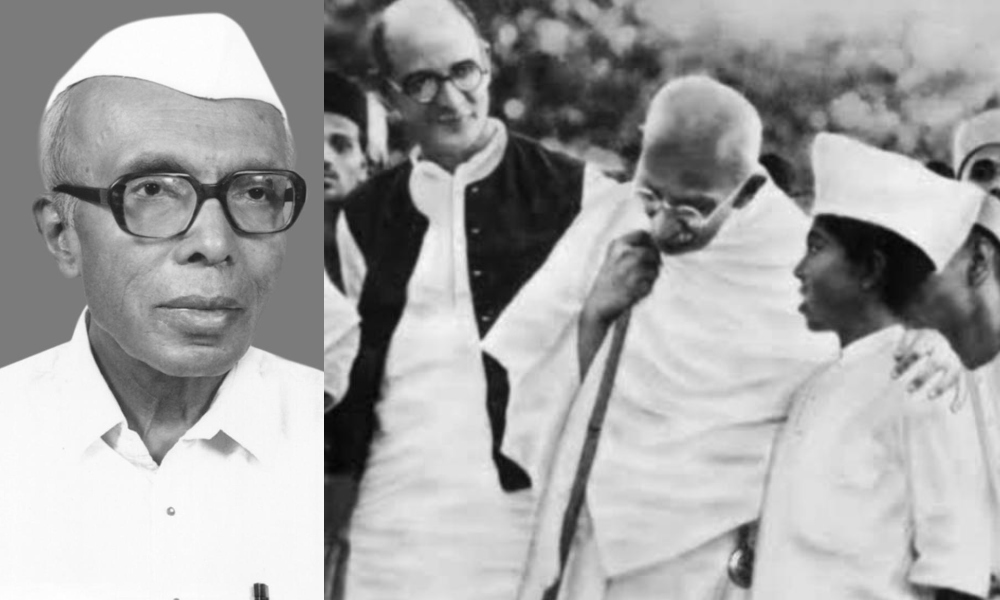
Lesson 3: Education Must Produce Thinkers, Not Echoes
Dr. H. Narasimhaiah believed that an education system that does not teach people how to think is not merely inefficient—it is dangerous. When schools and universities produce echoes instead of thinkers, they manufacture obedience without understanding. Such systems may create order, but they cannot create progress.
Core Critique: Rote Learning Is Anti-Scientific by Design
Scientific temper thrives on curiosity, doubt, and exploration. Rote learning crushes all three. HN argued that memorization-based education mimics discipline while quietly eliminating inquiry. It rewards repetition over reasoning and compliance over comprehension.
In doing so, it creates a tragic paradox: students study science while being trained in unscientific habits of mind. They learn answers without learning how those answers were discovered—or how they might one day be disproved.
Failures Identified: Where Education Goes Wrong
- Exams as Memory Contests
High-stakes examinations often test recall, not reasoning. Students learn to optimize for marks rather than understanding. The result is credentialed certainty without intellectual depth. - Teachers as Broadcasters, Not Facilitators
Classrooms become one-way transmission systems. Teachers speak; students receive. Questioning is seen as disruption rather than engagement. HN warned that such classrooms resemble auditoriums, not laboratories of thought. - Students Trained to Comply, Not Question
From an early age, students internalize a dangerous lesson: agreement is rewarded, dissent is risky. This trains future citizens to defer rather than deliberate—an outcome incompatible with democracy or innovation.
Reform Blueprint: Learning as Liberation (HN + Freire + Krishnamurti)
Dialogue Over Monologue
Paulo Freire argued that education should be a conversation among equals. HN practiced this principle by encouraging debate, contradiction, and respectful challenge. Knowledge must be co-created, not deposited.
Continuous Assessment Over Terminal Exams
Learning is a process, not an event. Continuous assessment allows reasoning, reflection, and growth to matter more than performance under pressure. It shifts focus from ranking students to developing them.
Question Formulation as a Learning Outcome
The ability to ask a good question is more valuable than memorizing an answer. HN believed that education should explicitly train students to frame problems, challenge assumptions, and test ideas.
Teachers as Intellectual Midwives
Borrowing from Krishnamurti’s emphasis on self-discovery, teachers must help ideas emerge rather than impose conclusions. Their role is not to fill minds, but to awaken them.
MEDA Alignment: Education That Includes, Not Excludes
This model is not merely idealistic—it is essential.
For autistic individuals and marginalized learners, rigid systems punish difference and reward conformity. Thinking differently is misread as deficiency. HN’s vision flips this logic: diversity of cognition becomes an asset, not an inconvenience.
MEDA Foundation’s work aligns directly with this philosophy—creating learning and employment ecosystems where:
- Neurodiversity is respected
- Strengths are cultivated, not suppressed
- Independence replaces dependency
HN understood that a just education system does not ask everyone to think the same—it asks everyone to think honestly.
If education is to serve the future, it must stop producing echoes of the past.

Lesson 4: Humanism Is the Only Stable Ethics in a Plural Society
Dr. H. Narasimhaiah recognized a hard truth that many societies avoid: in a plural, democratic nation, humanism is not an optional philosophy—it is the only stable ethical foundation. When morality is outsourced to divine authority or inherited dogma, it fractures along religious, caste, and ideological lines. Humanism alone offers a shared moral language grounded in dignity, reason, and mutual responsibility.
Core Claim: Outsourced Morality Is Structurally Fragile
HN did not argue against personal faith; he argued against moral outsourcing. When ethics are justified solely by divine command, three dangers arise:
- Competing revelations produce competing moralities
- Authority replaces accountability
- Obedience is valued over empathy
Such systems collapse under diversity. In contrast, Narasimhaiah insisted that morality must be human-made, human-tested, and human-correctable. Ethics, in his view, emerge from social need, lived consequence, and shared vulnerability—not fear of punishment or hope of reward after death.
Humanist Principles: The Ethical Architecture HN Advocated
- Dignity Without Hierarchy
Human worth does not scale with caste, creed, gender, wealth, or belief. HN rejected all moral hierarchies that rank human beings. In a humanist ethic, dignity is intrinsic, not conferred. - Ethics Rooted in Empathy and Social Consequence
Right and wrong are evaluated by their impact on real lives. Humanism asks not “Is this sanctioned?” but “Whom does this harm?” and “Whom does this uplift?” This shifts ethics from abstract obedience to lived responsibility. - Rights Independent of Belief Systems
Rights must protect believers and non-believers alike. Narasimhaiah understood that freedoms grounded in theology can be revoked by theology. Only secular, rational ethics offer durable protection.
Contemporary Relevance: Problems That Theology Cannot Solve
Identity Conflicts
Religious or ideological absolutism deepens division because it claims exclusive access to truth. HN argued that identity conflicts require reasoned negotiation, not sacred justification.
Caste, Gender, and Economic Injustice
These are not spiritual puzzles; they are social structures sustained by unexamined tradition. Addressing them demands evidence, empathy, and policy—not ritual or rhetoric.
HN was blunt: social reform delayed in the name of tradition is injustice with good manners.
Amartya Sen’s Contribution: Reasoned Dissent as Heritage
Amartya Sen reminds us that India’s deepest tradition is not uniform belief, but argumentative pluralism. From ancient debates to modern constitutionalism, India advanced when reasoned dissent was protected.
HN embodied this lineage. He showed that disagreement is not disloyalty, and questioning is not cultural betrayal. A society confident in its values invites scrutiny; an insecure one suppresses it.
The Enduring Lesson
Humanism does not weaken society—it stabilizes it. It allows difference without division, conviction without cruelty, and ethics without exclusion.
Dr. H. Narasimhaiah’s lesson is unambiguous:
In a diverse society, only a morality rooted in our shared humanity can hold us together.

Lesson 5: Intellectuals Must Descend from the Ivory Tower
Dr. H. Narasimhaiah understood that knowledge hoarded is knowledge wasted. Worse, knowledge isolated from society becomes complicit in its decay. His life stands as a clear indictment of intellectual withdrawal and a call to action: those who understand must also engage. When scholars retreat into ivory towers, irrationality rushes into the vacuum.
Core Responsibility: Knowledge That Does Not Circulate Rots
HN rejected the notion that intellectual excellence absolves social responsibility. Expertise, in his view, carried an obligation—not merely to discover truth, but to defend it in public life. Knowledge that remains confined to journals and conferences slowly loses relevance, ethical grounding, and transformative power.
He warned that when scientists and educators abandon the public sphere, it is not neutral ground that fills the gap—it is superstition, propaganda, and spectacle.
HN’s Model: Scholarship in Service of Society
Popular Science in Local Languages
HN insisted that science must speak the language of the people. Knowledge inaccessible to the masses is functionally elitist. By advocating popular science in Kannada and other regional languages, he democratized inquiry and broke the monopoly of English-mediated authority.
Direct Engagement with Social Beliefs
Rather than dismissing harmful beliefs from a distance, HN confronted them openly—publicly, patiently, and with evidence. He understood that beliefs do not dissolve under ridicule; they dissolve under exposure to reasoning.
Universities as Public Institutions, Not Credential Factories
HN envisioned universities as guardians of societal sanity. Their mandate extended beyond degrees and placements to include critical thinking, public reasoning, and ethical leadership. A university indifferent to social delusion, he argued, betrays its purpose.
Modern Extension: The Cost of Silence
Scientists Must Engage Media
Today’s battleground is digital. If scientists avoid media, misinformation dominates it. Narasimhaiah’s legacy demands that experts learn to communicate clearly, calmly, and courageously—without diluting rigor.
Educators Must Shape Public Discourse
Teaching does not end at the classroom door. Educators must help society interpret crises, evaluate claims, and resist manipulation. Intellectual neutrality in public discourse often functions as passive endorsement of falsehood.
Silence Is Complicity
HN was unapologetic on this point: when falsehood spreads and the informed remain silent, responsibility shifts. Silence is not humility; it is abdication.
Ecological Dimension: From Scientific Temper to Ecological Wisdom
HN’s rationalism matured into a holistic view of interdependence.
- Stewardship Over Extraction
Nature is not an infinite warehouse but a living system. Scientific temper must restrain technological arrogance and replace it with responsibility. - Systems Thinking Over Short-Term Fixes
Environmental crises cannot be solved by isolated interventions. HN’s insistence on interconnected reasoning aligns with modern ecological science: every action ripples through the system.
He anticipated what is now undeniable—that the survival of humanity depends not on smarter tools alone, but on wiser thinking.
The Enduring Mandate
Dr. H. Narasimhaiah left us with a demanding standard:
If you know better, you must do better—publicly.
The ivory tower is comfortable, but civilization is not saved from comfort. It is saved when intellect steps into the street, the classroom, the media, and the moral fray—armed with clarity, courage, and compassion.

VII. Toward a Second Renaissance: From Information to Wisdom
If the first renaissance freed humanity from blind obedience to authority, the second must free us from blind obedience to noise. Dr. H. Narasimhaiah’s life offers not a memorial to admire, but a methodology to practice. The question before us is stark: will we preserve his name in stone, or his ideas in action?
The 2025 Context: Remembering the Man Without Freezing the Mind
The establishment of the Dr. H. Narasimhaiah Development Authority in 2025 signals recognition—but recognition alone is insufficient. Institutions, statues, and anniversaries do not carry forward a legacy unless they embody its operating principles.
HN would have been the first to caution against symbolic reverence without intellectual continuity. Memorials matter, but methodologies matter more:
- How do we train teachers?
- How do universities respond to public irrationality?
- How do leaders justify decisions—by evidence or by applause?
A living legacy demands uncomfortable application, not comfortable admiration.
Defining the New Renaissance: What Must Replace the Old Habits
A second renaissance is not about new technology—it is about new intellectual discipline.
Inquiry Over Outrage
Outrage is easy, contagious, and often profitable. Inquiry is slow, demanding, and frequently unpopular. Narasimhaiah showed that societies mature when questions are rewarded, not punished.
Reason Over Rhetoric
Rhetoric seduces; reason persuades. The former seeks loyalty, the latter seeks understanding. HN insisted that persuasion without evidence is manipulation, regardless of who practices it.
Compassion Over Conformity
True compassion respects human dignity, not ideological alignment. Narasimhaiah refused to equate unity with uniformity. He understood that conformity silences difference, while compassion engages it.
Final Provocation: The Price of Fear
HN left us with a warning disguised as wisdom:
A society that fears questions has already surrendered its future.
Fear of questioning produces obedience, not excellence. It breeds certainty without understanding and loyalty without ethics. History shows that such societies do not collapse suddenly—they decay quietly, convinced of their righteousness until reality intervenes.
The second renaissance Narasimhaiah invites us into is neither glamorous nor easy. It demands courage without arrogance, skepticism without cruelty, and conviction without dogma.
The choice remains ours:
to accumulate information—or to cultivate wisdom.
Closing Invitation: From Agreement to Action
Ideas do not change societies—committed people do. If the principles articulated in this article resonate, then agreement alone is insufficient. Dr. H. Narasimhaiah did not spend his life collecting admirers; he cultivated participants. The most fitting tribute to his legacy is not applause, but engagement.
Why Participation Matters
Scientific temper, humanism, and ethical courage do not survive on sentiment. They survive through institutions, ecosystems, and sustained effort. Without platforms that translate inquiry into opportunity and dignity, even the best ideas remain intellectual ornaments.
This is where organizations like MEDA Foundation play a decisive role—working at the intersection of:
- Inquiry-driven education
- Dignified and inclusive employment
- Self-sustaining social ecosystems
- Empowerment of neurodiverse individuals and marginalized communities
This is not philanthropy in the traditional sense. It is capacity building for a healthier civilization.
Participate and Donate to MEDA Foundation
If we are serious about building education systems that reward thinking, employment models that respect difference, and social structures that promote independence over dependency, this work requires more than goodwill.
It requires:
- Thoughtful collaboration
- Skilled volunteering
- Financial support
- Long-term commitment
MEDA Foundation invites citizens, educators, professionals, and institutions to participate and donate—not as benefactors, but as co-creators of a more rational, humane, and inclusive future.
Supporting MEDA is not charity.
It is civilizational investment.
Book References (Indicative)
For readers who wish to deepen their engagement with the ideas explored in this article:
- The Demon-Haunted World – Carl Sagan
- Science and Human Values – J.B.S. Haldane
- The Argumentative Indian – Amartya Sen
- Education and the Significance of Life – J. Krishnamurti
- Pedagogy of the Oppressed – Paulo Freire
- Thinking, Fast and Slow – Daniel Kahneman
- The Death of Expertise – Tom Nichols
These works do not merely inform—they train the mind to resist manipulation, much in the spirit of Dr. H. Narasimhaiah.
The invitation stands:
Do not merely admire the legacy.
Live it. Build it. Support it.
