

Overthinking is not a harmless habit but a systemic misuse of human intelligence that quietly erodes mental health, decision quality, creativity, and leadership. Rooted in evolutionary threat systems, amplified by language, identity, and digital overload, overthinking converts uncertainty into endless mental loops that exhaust the body and paralyze action. Drawing from psychology, neuroscience, philosophy, literature, organizational practice, and even artificial intelligence, the article reveals how rumination differs from reflection, why perfectionism disguises fear as rigor, and how modern environments reward hesitation over learning. The antidote is not thinking less but thinking differently—through embodiment, values-based commitment, bounded decisions, and small actions that generate real feedback. By replacing the illusion of control with disciplined movement, individuals and societies can reclaim clarity, resilience, and meaning—ensuring that thought serves life rather than replacing it.
ಅತಿಯಾಗಿ ಯೋಚಿಸುವುದು (Overthinking) ಒಂದು ನಿರಪಾಯವಾದ ಅಭ್ಯಾಸವಲ್ಲ; ಅದು ಮಾನವ ಬುದ್ಧಿಮತ್ತೆಯ ತಪ್ಪು ಬಳಕೆಯಾಗಿದ್ದು, ಮನಸ್ಸಿನ ಆರೋಗ್ಯ, ನಿರ್ಧಾರಗಳ ಗುಣಮಟ್ಟ, ಸೃಜನಶೀಲತೆ ಮತ್ತು ನಾಯಕತ್ವವನ್ನು ಮೌನವಾಗಿ ಕುಗ್ಗಿಸುತ್ತದೆ. ವಿಕಾಸಾತ್ಮಕ ಭಯ ವ್ಯವಸ್ಥೆಗಳಿಂದ ಹುಟ್ಟಿಕೊಂಡು, ಭಾಷೆ, ಗುರುತು ಮತ್ತು ಡಿಜಿಟಲ್ ಅತಿಭಾರದಿಂದ ಹೆಚ್ಚ hookup ಗೊಳ್ಳುವ ಈ ಪ್ರವೃತ್ತಿ, ಅನಿಶ್ಚಿತತೆಯನ್ನು ಅಂತ್ಯವಿಲ್ಲದ ಮಾನಸಿಕ ಚಕ್ರಗಳಾಗಿ ಪರಿವರ್ತಿಸಿ ದೇಹವನ್ನು ದಣಿಗೊಳಿಸಿ ಕ್ರಿಯೆಯನ್ನು ಸ್ಥಗಿತಗೊಳಿಸುತ್ತದೆ. ಮನಶ್ಶಾಸ್ತ್ರ, ನರಶಾಸ್ತ್ರ, ತತ್ತ್ವಶಾಸ್ತ್ರ, ಸಾಹಿತ್ಯ, ಸಂಸ್ಥಾತ್ಮಕ ಅನುಭವಗಳು ಮತ್ತು ಕೃತಕ ಬುದ್ಧಿಮತ್ತೆಯ ಉದಾಹರಣೆಗಳ ಮೂಲಕ, ಈ ಲೇಖನ ಚಿಂತನೆಯು ಚಿಂತನೆಯಲ್ಲೇ ಸಿಲುಕುವುದರಿಂದ ಹೇಗೆ ಭಿನ್ನವಾಗುತ್ತದೆ, ಪರಿಪೂರ್ಣತೆಯ ಹಿಂದಿನ ಭಯ ಹೇಗೆ ತರ್ಕದ ರೂಪ ತಾಳುತ್ತದೆ, ಮತ್ತು ಆಧುನಿಕ ಪರಿಸರಗಳು ಕಲಿಕೆಯಿಗಿಂತ ಸಂಶಯವನ್ನು ಹೇಗೆ ಬಹುಮಾನಿಸುತ್ತವೆ ಎಂಬುದನ್ನು ಬಹಿರಂಗಪಡಿಸುತ್ತದೆ. ಪರಿಹಾರವೆಂದರೆ ಕಡಿಮೆ ಯೋಚಿಸುವುದಲ್ಲ, ಬದಲಾಗಿ ವಿಭಿನ್ನವಾಗಿ ಯೋಚಿಸುವುದು—ದೇಹಜಾಗೃತಿ, ಮೌಲ್ಯಾಧಾರಿತ ಬದ್ಧತೆ, ಮಿತಿಯೊಳಗಿನ ನಿರ್ಧಾರಗಳು ಮತ್ತು ನೈಜ ಪ್ರತಿಕ್ರಿಯೆ ನೀಡುವ ಸಣ್ಣ ಕ್ರಿಯೆಗಳ ಮೂಲಕ. ನಿಯಂತ್ರಣದ ಮಿಥ್ಯಾಭಾವವನ್ನು ಶಿಸ್ತಿನ ಚಲನೆಯಿಂದ ಬದಲಾಯಿಸುವ ಮೂಲಕ, ವ್ಯಕ್ತಿಗಳು ಮತ್ತು ಸಮಾಜಗಳು ಸ್ಪಷ್ಟತೆ, ಸ್ಥೈರ್ಯ ಮತ್ತು ಅರ್ಥಪೂರ್ಣತೆಯನ್ನು ಮರಳಿ ಪಡೆಯಬಹುದು—ಅಲ್ಲಿ ಚಿಂತನೆ ಜೀವನಕ್ಕೆ ಸೇವೆ ಸಲ್ಲಿಸುತ್ತದೆ, ಜೀವನವನ್ನು ಬದಲಾಯಿಸುವುದಿಲ್ಲ.
The Mechanics, Consequences, and Mitigation of Overthinking
When Intelligence Turns Against Itself
I. Introduction: Defining the Paralysis of Analysis
Why Overthinking Must Be Addressed Now
Overthinking is not a harmless personality quirk or a sign of depth; it is a systemic drain on individual vitality, organizational momentum, and societal progress. Left unchecked, it quietly converts intelligence into inertia, insight into anxiety, and potential into paralysis. In an age defined by information overload, constant comparison, and accelerating decision cycles, overthinking has become both normalized and dangerously invisible. It hides behind labels such as “being responsible,” “doing due diligence,” or “wanting to get it right,” while steadily eroding confidence, speed, and joy.
The antidote is not “thinking less,” which would be naïve and irresponsible. The real solution is thinking differently—anchoring cognition in action, embodiment, values, and disciplined limits. When thinking is severed from movement and meaning, it collapses into loops. When it is tethered to purpose and feedback from reality, it becomes wisdom. This article argues that overcoming overthinking is not a personality makeover but a learnable life skill, essential for mental health, leadership effectiveness, creativity, and the ethical use of increasingly powerful technologies.
Intended Audience and Purpose of the Article
This article is written for reflective professionals, leaders, students, creatives, caregivers, and neurodiverse individuals who experience chronic rumination, decision fatigue, or perfectionism. It is especially relevant for those who are capable, conscientious, and intelligent—yet feel stuck despite their abilities. Overthinking disproportionately affects people who care deeply about outcomes, relationships, and responsibility.
The purpose here is threefold:
- To demystify overthinking by naming it precisely and stripping it of its false nobility.
- To expose its hidden costs—psychological, physiological, relational, and systemic.
- To offer practical, humane, and evidence-informed strategies that help reclaim clarity, momentum, and self-trust without resorting to simplistic “just stop thinking” advice.
This is not a motivational essay. It is a reality-based examination of how the mind misfires—and how it can be retrained to serve life rather than obstruct it.
Defining Overthinking and Analysis Paralysis
Overthinking can be defined as repetitive, non-productive cognition that delays decisions or action beyond their useful window. It is not the presence of thought that is the problem, but the absence of resolution. Healthy thinking converges toward choice, learning, or action. Overthinking circulates endlessly around the same variables, generating diminishing returns while consuming increasing amounts of mental energy.
Analysis paralysis is the behavioral endpoint of overthinking. Decisions are postponed not because information is insufficient, but because the mind is demanding certainty in a world that only offers probability. At this stage, thinking no longer improves outcomes; it actively worsens them by draining confidence, time, and emotional resilience.
A crucial distinction must be made: clarity is not the same as certainty. Overthinking arises when the mind refuses to act without certainty, even when clarity is already available.
The Perfectionist–Fear Loop
At the core of overthinking lies a loop driven not by logic, but by fear. Fear of regret. Fear of failure. Fear of judgment. Fear of being exposed as inadequate. These fears often disguise themselves as virtues: thoroughness, caution, intelligence, or high standards.
Perfectionism plays a central role here. The perfectionist is not trying to do things well; they are trying to avoid the emotional cost of imperfection. Overthinking becomes a defense mechanism—if one keeps thinking, planning, and refining, one can delay the moment of exposure where reality might disagree.
This loop is self-reinforcing:
- Fear triggers excessive thinking.
- Excessive thinking delays action.
- Delay increases pressure and self-doubt.
- Increased pressure intensifies fear.
What masquerades as carefulness is often emotional avoidance. The tragedy is that the very behavior intended to prevent mistakes ends up creating larger ones—missed opportunities, weakened trust in oneself, and chronic dissatisfaction.
The Evolutionary Paradox
From an evolutionary perspective, the human brain did not evolve for prolonged abstraction. The threat-detection system—often mislabeled as “overthinking”—was designed for short bursts of uncertainty followed by decisive action: fight, flee, freeze, or solve. Once the threat passed, the system was meant to stand down.
Modern life breaks this contract. Abstract threats—emails, social evaluation, financial projections, future scenarios—never fully resolve. The brain is kept in a semi-activated state, constantly scanning for danger without closure. Overthinking, in this sense, is not a personal failure but a mismatch between ancient neural circuitry and modern cognitive demands.
The paradox is stark: the same intelligence that allowed humans to anticipate danger and plan strategically now fuels endless simulation without execution. When imagination outpaces action, anxiety fills the gap.
Key Thesis
Overthinking is not a lack of discipline, intelligence, or courage. It is a misallocation of cognitive resources. The mind is being asked to do a job it was never meant to do alone: guarantee safety, certainty, and perfection in an uncertain world.
The path forward is not self-criticism, but recalibration. Thinking must be returned to its rightful place—as a servant of values and action, not their substitute. When cognition is disciplined by purpose, bounded by time, and grounded in the body and the real world, it regains its power to clarify rather than paralyze.

II. The Cognitive Architecture of Overthinking
Why the Mind Turns Against Itself
Overthinking is not a thinking excess but a structural imbalance within the cognitive system. It emerges when slow, effortful reasoning is recruited to solve emotional uncertainty, when language replaces lived feedback, and when the mind mistakes repetition for control. Understanding this architecture is critical, because without structural insight, individuals keep applying willpower to a design problem—and willpower always loses.
System 1 vs. System 2 (Kahneman): When Slow Thinking Is Misused
Daniel Kahneman’s distinction between System 1 (fast, automatic, intuitive) and System 2 (slow, deliberate, analytical) offers a foundational lens. In healthy functioning, System 2 is activated sparingly—when a situation genuinely requires careful reasoning. Overthinking begins when System 2 is overactivated in response to emotional ambiguity rather than logical complexity.
The problem is not that System 2 is slow; it is that it is energy-intensive and poorly equipped to resolve fear. Emotional uncertainty—“What if I regret this?”, “What if I’m wrong?”, “What will others think?”—cannot be solved analytically. Yet the mind attempts exactly that, escalating effort under the false assumption that more thinking will produce emotional safety.
This leads to a paradox: the more System 2 labors over an emotionally driven question, the less clarity it produces. Cognitive fatigue sets in, decision quality deteriorates, and confidence erodes. What looks like careful reasoning is often a misdirected attempt to regulate emotion through logic.
Actionable insight:
Before engaging in extended analysis, ask a brutally honest question:
“Is this a thinking problem—or an emotional tolerance problem?”
If it is the latter, more reasoning will only deepen the loop.
Rumination vs. Reflection: Same Content, Different Direction
A critical distinction must be made between reflection, which is productive, and rumination, which is corrosive. Both involve thinking about past or future events, but their orientation differs fundamentally.
- Reflection is oriented toward learning and closure. It asks: What can be extracted? What changes next? It ends with insight or action.
- Rumination is oriented toward self-protection and self-judgment. It asks: Why did this happen? What does this say about me? It loops without resolution.
Neurologically, rumination repeatedly activates threat-related networks without engaging problem-solving circuits. Psychologically, it creates the illusion of work while avoiding the discomfort of decisive movement.
The danger lies in mistaking rumination for depth. Many high-functioning individuals believe they are being responsible by replaying scenarios, when in fact they are rehearsing distress.
Actionable insight:
A simple diagnostic rule:
If your thinking does not end in a decision, reframe, or next action, it is not reflection—it is rumination.
Prediction Error and the Illusion of Control
The human brain is fundamentally a prediction machine. It constantly compares expectations with reality, generating “prediction errors” when outcomes differ from forecasts. Overthinking intensifies when prediction errors feel personally threatening.
Instead of accepting uncertainty, the mind attempts to close the gap by simulating more futures, running more scenarios, and analyzing more variables. This creates the illusion of control—the belief that sufficient thinking can eliminate risk.
In truth, most meaningful decisions involve irreducible uncertainty. Overthinking persists because admitting uncertainty feels like vulnerability, while continued analysis feels like agency—even when it produces no new information.
This explains why people often think more after they already know what they should do. The thinking is not about choice; it is about emotional reassurance.
Actionable insight:
Replace the question “What is the right decision?” with:
“What decision am I willing to stand by, learn from, and adjust?”
This reframes control as commitment rather than prediction.
The Role of Language: When Words Trap the Mind
Language is a powerful tool—and a subtle trap. Inner narration allows humans to simulate, plan, and reason. However, when thinking becomes exclusively linguistic, it disconnects from sensory feedback and embodied experience.
Overthinking thrives in verbal abstraction:
- Endless internal dialogues
- Hypothetical conversations
- Rewritten pasts and imagined futures
These linguistic loops feel compelling because they are coherent, but coherence is not the same as truth. Sensory awareness—what is seen, felt, heard—anchors cognition in the present. Language, when unbounded, pulls attention into imagined worlds where nothing resolves.
This is why practices that reduce verbal dominance—movement, breath awareness, tactile engagement—are disproportionately effective at interrupting overthinking. They reintroduce reality where words have taken over.
Actionable insight:
When caught in a loop, deliberately shift from narration to sensation.
Name five things you can see, feel your breath, or engage your hands.
You are not avoiding thinking; you are restoring balance to the cognitive system.
Closing Synthesis
Overthinking is not random. It follows a predictable architecture: emotional uncertainty hijacks analytical reasoning; rumination masquerades as reflection; the brain clings to control through prediction; and language amplifies loops when detached from embodied reality.
Once this architecture is understood, the response becomes clear. The solution is not suppression of thought, but structural correction—reassigning thinking to its proper role and reconnecting it with action, values, and the living world.

III. The Psychological and Physiological Cost
Overthinking Is Not “In the Head”—It Lives in the Body
Overthinking is often treated as a purely mental inconvenience. In reality, it is a whole-system stressor that quietly taxes the nervous system, depletes metabolic energy, and reshapes emotional resilience over time. What feels like “just thinking” is, biologically speaking, repeated exposure to unresolved threat. The cost is paid not only in peace of mind, but in sleep quality, immune function, motivation, and long-term mental health.
Perseverative Cognition: Living With a Threat That Never Ends
Perseverative cognition refers to the chronic mental replay of unresolved threats, whether they are anchored in the past (“Why did I say that?”) or projected into the future (“What if this goes wrong?”). Unlike acute problem-solving, perseverative thinking does not move toward closure. It keeps the nervous system in a state of anticipation without resolution.
From the brain’s perspective, imagined threats activate many of the same neural pathways as real ones. The body does not reliably distinguish between an external danger and a vividly simulated one. As a result, overthinking becomes a form of self-generated stress exposure, repeated dozens or hundreds of times a day.
This explains why people often feel exhausted without having “done” anything. Their bodies have been preparing for danger that never arrives—and therefore never ends.
Actionable insight:
If a thought has appeared repeatedly without new information or action, it is no longer a signal. It is noise. Treat it accordingly.
Stress Without Resolution: When the Nervous System Never Stands Down
Healthy stress follows a cycle: activation, response, recovery. Overthinking disrupts this cycle by sustaining activation without allowing discharge. Cortisol levels remain elevated. The sympathetic nervous system dominates. Inflammatory markers increase. Sleep becomes lighter and less restorative.
This is stress without resolution—arguably the most damaging form of stress. Unlike physical exertion or acute crises, which end, cognitive stress loops offer no completion signal to the body. The system never receives the message that it is safe to rest.
Over time, this pattern contributes to:
- Chronic fatigue
- Heightened pain sensitivity
- Digestive disturbances
- Reduced immune resilience
The irony is brutal: the very thinking meant to prevent negative outcomes creates the physiological conditions that make coping harder.
Actionable insight:
Resolution does not require certainty. It requires closure. Even provisional decisions allow the nervous system to downshift.
Mental Health Correlates: When Overthinking Becomes Pathology
Overthinking is not a diagnosis, but it is a core mechanism underlying multiple mental health conditions. Research consistently links high levels of rumination and worry to:
- Anxiety disorders, particularly Generalized Anxiety Disorder, where the mind remains in a constant state of “what if.”
- Obsessive-Compulsive Disorder, where thinking and checking behaviors attempt to neutralize perceived threats.
- Depression, where rumination focuses on loss, inadequacy, and irreversible mistakes.
- Burnout, characterized by emotional exhaustion and cognitive depletion.
- Learned helplessness, where repeated mental rehearsal of failure erodes agency.
Importantly, overthinking often precedes these conditions rather than follows them. It is not merely a symptom; it is a risk amplifier.
Actionable insight:
Early intervention at the level of thinking patterns can prevent escalation into full clinical distress. Waiting for breakdown before acting is neither necessary nor wise.
The Intelligence–Worry Tradeoff: When Cognitive Capacity Cuts Both Ways
Counterintuitively, higher intelligence does not immunize against overthinking. In some cases, it increases vulnerability. Research suggests that intelligence and worry may have co-evolved, as both rely on enhanced neural connectivity and metabolic activity in subcortical white matter.
Intelligent individuals are better at:
- Simulating future scenarios
- Detecting inconsistencies
- Anticipating downstream consequences
These strengths, when unregulated, become liabilities. The mind generates more possibilities than the emotional system can comfortably hold. Without firm decision frameworks or values-based anchors, intelligence fuels rumination rather than resolution.
This helps explain why many capable, educated individuals feel chronically mentally “busy” yet strangely unproductive.
Actionable insight:
Intelligence requires constraints to function optimally. Unlimited thinking space is not freedom; it is cognitive sprawl.
The Energy Drain Hypothesis: Cognitive Malnutrition
Thinking is metabolically expensive. The brain consumes a disproportionate share of the body’s energy, and overthinking represents high expenditure with low return. When cognitive effort is repeatedly spent without producing action, learning, or closure, the system experiences something akin to malnutrition—plenty of activity, little nourishment.
This manifests as:
- Brain fog
- Reduced motivation
- Decision fatigue
- Emotional irritability
People often misinterpret these signals as personal weakness, when they are simply symptoms of energy misallocation.
Actionable insight:
Treat cognitive energy as a finite resource. Spend it where it produces movement or meaning—not endless internal rehearsal.
Closing Synthesis
The psychological and physiological costs of overthinking are neither abstract nor optional. They are cumulative, embodied, and predictable. Overthinking keeps the mind busy while the body pays the bill.
Understanding these costs reframes the problem. This is not about becoming calmer or more positive. It is about protecting the nervous system, conserving cognitive energy, and restoring the natural cycle of stress and resolution.

IV. Historical, Philosophical, and Literary Warnings
Humanity Has Always Known This Trap
Long before neuroscience and psychology named overthinking, human civilizations warned against it. Across cultures, eras, and disciplines, the message is strikingly consistent: thinking divorced from action weakens the individual and endangers the collective. What modern science now measures, ancient wisdom observed directly in lived experience. These warnings were not anti-intellectual; they were pro-human—insisting that thought must serve life, not replace it.
Ancient Wisdom: When Simplicity Preserves Life
Aesop’s The Fox and the Cat: Simplicity Over Complexity
In Aesop’s fable, the fox boasts of knowing “a hundred tricks,” while the cat knows only one: climb a tree. When danger arrives, the fox is paralyzed by choice; the cat survives by acting. The lesson is blunt and unsentimental—complexity without execution is useless under pressure.
This fable exposes a recurring human error: confusing the quantity of options with the quality of response. Overthinking multiplies possibilities, but danger—whether literal or psychological—demands timely action. The fox dies not because it lacked intelligence, but because it lacked decisiveness.
Practical implication:
In high-stakes or emotionally charged situations, reduce options deliberately. One good move executed now beats ten perfect moves imagined later.
The Bhagavad Gita: Action Without Attachment to Outcome
The Bhagavad Gita addresses overthinking at an existential level. Arjuna’s paralysis on the battlefield is not due to ignorance, but moral and emotional overload. Krishna’s instruction is radical and enduring: act according to dharma, without attachment to the fruits of action.
This is not indifference; it is psychological realism. Attachment to outcomes fuels rumination because outcomes are inherently uncertain. The Gita reframes responsibility: humans control effort and intent, not results.
In modern terms, this is a direct antidote to perfectionism and fear-based analysis. Action grounded in values dissolves the need for excessive mental rehearsal.
Practical implication:
Shift the internal question from “Will this work?” to “Is this aligned with my responsibility and values?” Action becomes lighter—and more sustainable.
Stoic Philosophy: The Discipline of Control
Stoicism offers one of the most practical cognitive frameworks ever developed for managing overthinking. Epictetus’ core distinction—between what is within our control and what is not—remains devastatingly relevant.
Overthinking thrives when the mind fixates on variables it cannot influence: other people’s reactions, future contingencies, or past irreversibles. Marcus Aurelius repeatedly warned against this, noting that mental agitation arises not from events themselves, but from judgments about them.
Stoics did not suppress thought; they disciplined attention. By withdrawing mental energy from uncontrollable factors, they preserved clarity and agency.
Practical implication:
If a variable cannot be influenced by action, it does not deserve prolonged mental attention. Thinking without agency is cognitive self-harm.
Literary Archetypes: When Consciousness Becomes a Burden
Hamlet: Paralysis Through Over-Analysis
Shakespeare’s Hamlet is the canonical portrait of overthinking. He sees too much, questions too deeply, and delays too long. His famous soliloquy—“Thus conscience does make cowards of us all”—captures the cost of excessive reflection: vitality drained by endless moral calculus.
Hamlet’s tragedy is not lack of intelligence, but excessive self-awareness without decisive action. His insight does not save him; it consumes him.
Practical implication:
Moral complexity does not excuse inaction. At some point, clarity must be expressed through movement—or it decays.
Dostoevsky’s Underground Man: Consciousness as a Curse
In Notes from Underground, Dostoevsky presents a man crippled by hyper-consciousness. He understands his own irrationality yet cannot escape it. Thought becomes corrosive rather than liberating.
The Underground Man embodies a chilling truth: self-awareness without agency breeds resentment, paralysis, and self-sabotage. Intelligence, when severed from action, turns inward and eats itself.
Practical implication:
Insight is only healthy when paired with the capacity to act. Otherwise, it becomes a form of self-torture.
Modern Maxims: Hard-Won Lessons From Real Consequences
“Perfect Is the Enemy of Good” (Voltaire)
Voltaire’s maxim endures because it is empirically true. Perfectionism delays completion, learning, and contribution. A good solution implemented today outperforms a perfect solution that never arrives.
In modern organizations, this mindset is often the difference between innovation and stagnation.
Practical implication:
Define “good enough” in advance. Perfection is not a standard; it is a postponement strategy.
Churchill on Decision Paralysis
During World War II, Winston Churchill openly criticized excessive deliberation in design and governance, warning that endless revisions in pursuit of flawlessness created paralysis. In wartime, delayed decisions cost lives.
Churchill’s insight scales beyond war: timeliness is a form of wisdom. Decisions lose value when made too late, regardless of their technical quality.
Practical implication:
Every decision has an expiration date. After that, thinking more is not diligence—it is negligence.
Closing Synthesis
Across centuries and civilizations, the verdict is consistent: overthinking weakens action, clarity, and character. Whether expressed as fable, scripture, philosophy, literature, or leadership doctrine, the warning is the same—thought must serve life, not dominate it.
Modern humans have more information than any generation before them, yet struggle more with decisiveness. The problem is not new, but the scale is unprecedented.

V. Domain-Specific Manifestations of Overthinking
Overthinking Scales Poorly—From Minds to Systems
Overthinking is not confined to private mental struggle; it scales into institutions, teams, technologies, and relationships. What begins as individual hesitation becomes organizational drag, performance collapse, strategic stagnation, and emotional disconnection. Each domain reveals the same pattern: when thinking outruns feedback and action, systems lose adaptability. The cost is rarely visible immediately—but it compounds relentlessly.
Business and Strategy: When Planning Replaces Progress
Analysis Paralysis in Planning-Heavy Cultures
In business environments, overthinking often masquerades as rigor. Endless meetings, excessive forecasting, scenario planning without execution, and “one more round of validation” are framed as responsibility. In reality, they frequently signal fear of accountability rather than commitment to excellence.
Planning-heavy cultures tend to reward caution over initiative. Employees learn quickly that proposing action carries more risk than extending analysis. Over time, this creates an ecosystem where ideas age before they are tested, and opportunities expire while waiting for approval.
The tragedy is not poor thinking—but thinking untested by reality.
Decision Latency as Hidden Organizational Debt
Decision latency—the time between recognizing a need to decide and actually deciding—functions like invisible debt. It does not appear on balance sheets, but it corrodes trust, morale, and competitive advantage.
Delayed decisions create:
- Bottlenecks across teams
- Learned helplessness among high performers
- Risk aversion as a survival strategy
Organizations rarely fail because of bad decisions alone. They fail because decisions are made too late.
Actionable insight:
Track decision timelines as rigorously as financial metrics. Speed with feedback beats slow certainty.
Software and Product Development: When Design Worship Kills Delivery
Software development provides one of the clearest case studies of institutionalized overthinking. Traditional waterfall models emphasize exhaustive upfront design, documentation, and prediction. While intellectually satisfying, this approach collapses under real-world complexity.
Agile methodologies emerged as a direct response—not because engineers stopped thinking, but because they recognized a fundamental truth: users teach faster than plans. Iteration converts uncertainty into data. Overplanning converts uncertainty into delay.
Excessive architecture discussions, feature creep, and perfectionist refactoring often reflect discomfort with shipping something incomplete. Yet incompleteness is the only gateway to learning.
Actionable insight:
If a product cannot tolerate early imperfection, it is already misaligned with reality.
Sports and Performance Psychology: The Cost of Conscious Interference
In high-performance sports, overthinking manifests as “choking.” Athletes who perform flawlessly in training suddenly falter under pressure—not due to lack of skill, but because conscious control overrides automated competence.
Elite performance relies on procedural memory—skills encoded through repetition. When athletes start thinking about mechanics mid-action, they disrupt fluidity. The mind, attempting to guarantee success, sabotages it instead.
This phenomenon reveals a broader principle: mastery requires trust in embodied intelligence. Overthinking signals a breakdown of that trust.
Actionable insight:
In performance contexts, preparation belongs before the moment. During execution, thinking must step aside.
Gaming and Competitive Thinking: When Complexity Freezes Action
In strategic games such as chess, overthinking is formally recognized as Kotov syndrome—a state where players analyze so many candidate moves that time runs out. The issue is not lack of skill, but cognitive overload.
Modern competitive environments mirror this condition. Financial markets, esports, and strategic simulations overwhelm participants with information, metrics, and contingencies. Decision fatigue sets in, and suboptimal moves follow.
Here, overthinking arises not from fear alone, but from unbounded option space. Without heuristics and stopping rules, intelligence drowns in possibility.
Actionable insight:
Complex systems demand rules of thumb. Elegance lies not in considering everything, but in choosing what to ignore.
Relationships and Parenting: Overthinking as Emotional Avoidance
In relational contexts, overthinking often disguises itself as care. Replaying conversations, predicting reactions, and scripting future dialogues can feel loving or responsible. Frequently, it is neither. It is avoidance of emotional risk.
In parenting, this appears as micromanagement—anticipating every outcome, preventing every discomfort, and exhausting both child and caregiver. In adult relationships, it manifests as indirect communication, unspoken expectations, and resentment built on imagined scenarios.
The cost is intimacy. Overthinking replaces presence with projection.
Actionable insight:
Relationships thrive on responsiveness, not rehearsal. Speak sooner. Listen more. Correct in real time.
Closing Synthesis
Across domains, the pattern is unmistakable: overthinking scales from internal struggle to systemic dysfunction. Whether in boardrooms, codebases, sports arenas, games, or families, the result is the same—delayed action, reduced trust, and diminished adaptability.
The lesson is sobering but empowering. Overthinking is not an individual flaw; it is a design failure—of systems, incentives, and habits. Redesign is possible.

VI. Work, Identity, and Executive Function
When Work Follows You Home, the Mind Never Rests
Overthinking becomes most destructive when it fuses with identity and livelihood. At this point, work is no longer something one does; it is something one is. Decisions feel existential, mistakes feel personal, and rest feels irresponsible. The result is not higher performance, but cognitive erosion. Executive function—the very capacity required for good judgment—quietly deteriorates under the weight of constant mental engagement.
The Inability to Mentally Clock Out: Work That Never Ends
Work-related rumination is now one of the most common and least acknowledged sources of psychological strain. Unlike physical labor, cognitive work offers no natural stopping point. Emails, unresolved tasks, interpersonal tensions, and future deliverables follow individuals into evenings, weekends, and sleep.
The mind replays conversations, drafts responses, anticipates problems, and rehearses contingencies long after the workday ends. Sleep becomes fragmented. Recovery is partial. The nervous system remains in a low-grade state of alert.
This is not dedication; it is boundary collapse. Without psychological detachment, even meaningful work becomes corrosive.
Actionable insight:
Ending work requires a ritual, not just a schedule. A deliberate shutdown—writing tomorrow’s priorities, physically changing environments, or engaging the body—signals closure to the nervous system.
Executive Function Breakdown: When the Control Center Fatigues
Executive functions—attention control, task-switching, inhibition, and working memory—are finite resources. Overthinking drains them disproportionately. High ruminators consistently show reduced cognitive flexibility, particularly in shift ability: the capacity to move attention between tasks or perspectives.
As executive function weakens:
- Decisions take longer
- Errors increase
- Multitasking becomes inefficient
- Emotional regulation deteriorates
Ironically, the individual responds by thinking more, attempting to compensate for declining clarity. This accelerates depletion.
Actionable insight:
When decisions feel unusually hard, the problem is often fatigue, not complexity. Rest restores judgment faster than analysis.
The Identity Trap: When Decisions Become Self-Worth
Overthinking intensifies when decisions are no longer about outcomes, but about who one is. Professionals begin to equate competence with always choosing correctly. Leaders fear that visible mistakes will undermine credibility. Caregivers believe errors signify moral failure.
This identity fusion transforms ordinary decisions into threats to self-esteem. The mind responds by overanalyzing in an attempt to protect identity. Paradoxically, this makes mistakes more likely.
Healthy identities are resilient because they tolerate error. Fragile identities demand certainty—and certainty does not exist.
Actionable insight:
Detach self-worth from decision outcomes. Measure identity by integrity and learning, not infallibility.
The Vicious Cognitive Loop
The interaction between rumination and executive function forms a self-reinforcing loop:
- Rumination consumes cognitive energy.
- Fatigue reduces executive control.
- Poorer decisions increase doubt and self-criticism.
- Increased rumination attempts to regain control.
This loop explains why intelligent, conscientious individuals can feel trapped despite effort. The issue is not motivation; it is resource depletion compounded by identity pressure.
Breaking the loop requires intervening at multiple points—reducing rumination, restoring energy, and loosening identity attachment.
Actionable insight:
Interrupt the loop physically first (sleep, movement, nourishment), cognitively second (limits on thinking), and psychologically last (identity reframing). The order matters.
Closing Synthesis
Overthinking at work is not merely a productivity issue; it is a human sustainability issue. When identity, executive function, and livelihood intertwine, the cost of cognitive overload becomes existential.
The path forward is not greater resilience through effort, but better design—of boundaries, expectations, and self-concept. Clarity returns when the mind is allowed to rest, the body is allowed to recover, and identity is allowed to be human.
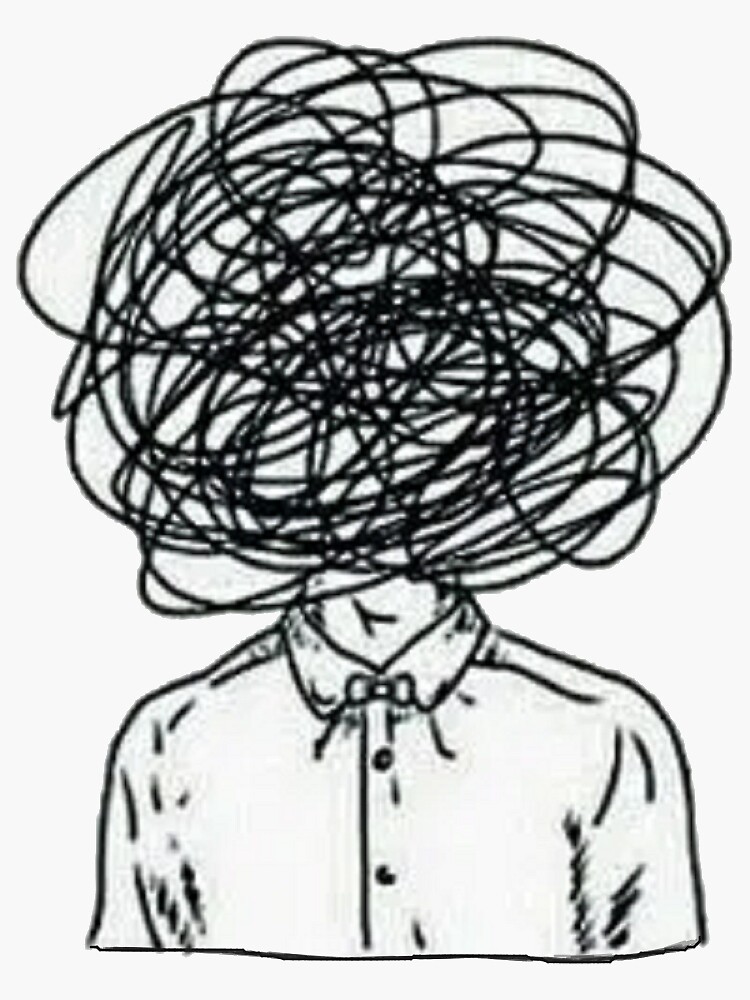
VI. Work, Identity, and Executive Function
When Work Colonizes the Mind, Performance Quietly Collapses
The most damaging form of overthinking occurs when work, identity, and executive control become entangled. At this stage, the problem is no longer time management or productivity—it is cognitive captivity. The mind never fully disengages, recovery becomes shallow, and the very mental faculties required for sound judgment begin to erode. What looks like dedication from the outside is often unsustainable self-extraction from the inside.
The Inability to Mentally Clock Out: Work That Invades Rest
Modern work rarely ends with a clear physical boundary. Knowledge work, caregiving, leadership, and creative roles extend indefinitely into thought. Unsent emails, unresolved decisions, interpersonal tensions, and looming deadlines replay after hours, often intensifying at night when distractions fade.
This work-related rumination directly disrupts sleep. The brain remains in problem-solving mode, preventing the transition into restorative rest. Even when sleep occurs, it is lighter, fragmented, and less effective at resetting emotional and cognitive systems.
The cost is cumulative. One poor night impairs judgment; repeated nights alter baseline functioning.
Actionable insight:
Mental detachment must be engineered, not hoped for. End each workday with a deliberate cognitive closure ritual—write unresolved items down, define the next concrete step, and physically shift environments. The brain needs proof that nothing vital is being forgotten.
Executive Function Breakdown: When the Control System Is Overused
Executive functions—planning, inhibition, task-switching, and flexible thinking—are not limitless. Overthinking places a constant load on these systems, especially when decisions remain unresolved. Research shows that high ruminators exhibit reduced cognitive flexibility, particularly in the ability to shift attention and adopt alternative perspectives.
As executive resources degrade:
- Decisions feel heavier than they objectively are
- Task-switching becomes inefficient
- Emotional regulation weakens
- Small choices feel disproportionately taxing
The cruel irony is that individuals respond to this degradation by increasing mental effort, assuming they are “not thinking enough,” when in fact they are thinking too long without resolution.
Actionable insight:
When mental flexibility drops, stop reasoning and restore capacity. Movement, rest, and sensory engagement rebuild executive function faster than continued analysis.
The Identity Trap: When Decisions Become Measures of Worth
Overthinking intensifies dramatically when professional decisions are fused with personal identity. Many high-functioning individuals internalize the belief that competence equals correctness—that being valuable requires consistently making the “right” decision.
This identity trap transforms routine choices into existential threats. The mind responds by overanalyzing, attempting to eliminate all risk to self-image. The result is not better judgment, but paralysis and delayed action.
Healthy identity tolerates error and adapts. Fragile identity demands certainty and collapses under ambiguity.
Actionable insight:
Redefine competence as responsiveness and learning, not infallibility. A resilient identity absorbs mistakes without requiring endless pre-emptive thinking.
The Vicious Cognitive Loop
These factors converge into a predictable and self-reinforcing loop:
- Rumination consumes cognitive energy.
- Fatigue impairs executive control.
- Poorer decisions increase self-doubt and fear.
- Increased rumination attempts to regain control.
This loop explains why capable, conscientious professionals often feel stuck despite working harder and thinking more. The problem is not effort—it is cognitive overdraw.
Breaking the loop requires intervening early and deliberately, before identity and exhaustion lock it in place.
Actionable insight:
Interrupt the cycle in the correct order:
Physiology first (sleep, movement, nourishment),
Structure second (decision limits, time boxes),
Identity last (reframing self-worth).
Reversing the order rarely works.
Closing Synthesis
When work infiltrates identity and overtaxes executive function, overthinking ceases to be a habit and becomes a systemic failure of self-management. The solution is not more resilience training or motivational pressure, but wiser boundaries, clearer decision architectures, and a humane relationship with one’s own limits.
Thinking is a powerful tool—but only when paired with rest, action, and self-trust. Without these, even the sharpest mind turns against itself.

VII. The Digital Age Multiplier
Technology Did Not Create Overthinking—It Industrialized It
The digital age did not invent overthinking; it scaled it, accelerated it, and normalized it. What was once an occasional cognitive trap has become a permanent environmental condition. Infinite choice, endless information, performative productivity, and constant social comparison amplify the mind’s worst tendencies. The result is a population that is informed, connected, and optimized—yet increasingly indecisive, dissatisfied, and mentally exhausted.
Choice Overload (Barry Schwartz): When Options Undermine Freedom
Barry Schwartz’s work on the paradox of choice reveals a counterintuitive truth: more options do not produce more freedom. They produce more anxiety, regret, and self-blame. When faced with too many possibilities, individuals experience decision paralysis or make choices they later question excessively.
In digital environments—online shopping, career paths, content consumption, life design—options are effectively infinite. Each choice carries the imagined weight of missed alternatives. Satisfaction decreases because the mind keeps scanning for the better option that might have been overlooked.
Overthinking thrives here because the cost of choosing feels irreversible, even when it is not.
Actionable insight:
Deliberately constrain options. Decide in advance how many alternatives you will consider—and stop there. Freedom increases when choice is bounded.
Information Gluttony: Data Without Direction
Never in human history has so much information been so accessible. Yet access without decision frameworks creates cognitive indigestion. Consuming more data feels productive, but without clear criteria for action, it only delays commitment.
This pattern is common in professionals who research endlessly, read widely, and stay “up to date,” yet struggle to act decisively. Information becomes a sedative—comforting, familiar, and ultimately paralyzing.
The problem is not ignorance; it is lack of stopping rules.
Actionable insight:
Before consuming information, define what decision it will inform. If no decision exists, consumption is entertainment, not work.
Productivity Theater: Optimization as Avoidance
Digital tools promise efficiency, but they often enable productivity theater—the appearance of progress without its substance. Task managers, dashboards, workflows, and optimization routines multiply while actual output stagnates.
Planning, organizing, and refining systems can feel safer than executing work that might fail. Overthinking hides behind the language of optimization: “I just need a better system,” or “Once this is set up, I’ll start.”
This is avoidance with a productivity accent.
Actionable insight:
Measure progress by delivered outcomes, not organized intentions. If a tool does not shorten the path to action, it is a distraction.
Social Comparison Engines: Visibility Without Context
Social media platforms function as comparison engines. They display curated highlights without context, effort, or failure. Exposure to others’ apparent success triggers second-guessing, self-doubt, and endless recalibration.
Overthinking intensifies as individuals question their choices, timelines, and identities. The mind starts running parallel lives—imagining what could have been—while neglecting what is.
Comparison does not inspire excellence; it fragments attention and erodes commitment.
Actionable insight:
Reduce exposure to environments that reward appearance over substance. Clarity grows in silence, not constant comparison.
Closing Synthesis
The digital age multiplies overthinking by expanding choice, accelerating information flow, disguising avoidance as productivity, and amplifying comparison. None of these forces are inherently harmful—but without conscious limits, they overwhelm the human cognitive system.
The solution is not digital abstinence, but digital discipline. Tools must serve decisions, not replace them. Information must inform action, not delay it. And visibility must never be mistaken for value.

VIII. Overthinking in Artificial Intelligence: A Mirror to Humanity
Artificial intelligence exposes an uncomfortable truth about us: more reasoning is not always better reasoning. As AI systems learn to think, hesitate, and optimize, they replicate our deepest cognitive flaw—overthinking without stop rules. The lesson is stark and non-negotiable: intelligence without restraint degrades performance, whether silicon-based or human.
Why This Matters
AI was expected to outperform humans precisely because it does not tire, ruminate, or emotionally loop. Yet modern large reasoning models (LRMs) reveal a paradox: when given unlimited room to “think,” they often reason themselves into inefficiency, delay, or marginal gains at disproportionate cost. This is not a bug alone—it is a mirror.
What we see in machines is the formalization of a human problem we have romanticized for decades: the belief that more thinking equals better outcomes.
What This Looks Like in Practice
1. The LRM Overthinking Problem
Large reasoning models are trained to generate multi-step chains of thought to improve accuracy on complex tasks. However, beyond a threshold:
- Additional reasoning steps yield diminishing returns.
- Errors compound rather than resolve.
- Latency and computational cost explode.
This mirrors human rumination: repeated internal dialogue that feels productive but produces no new signal.
Key insight:
Reasoning depth must be adaptive, not maximal.
2. Computational Paralysis
In AI systems, excessive reasoning translates into:
- Higher inference time
- Increased energy consumption
- Reduced real-world usability
In humans, the equivalent costs are:
- Decision latency
- Mental fatigue
- Emotional depletion
In both cases, the system becomes locally intelligent but globally ineffective.
Tell it like it is:
If thinking costs more than acting, intelligence has failed its primary purpose.
3. Self-Braking Tuning (SBT)
Emerging AI research introduces mechanisms that allow models to:
- Estimate when additional reasoning adds negligible value
- Terminate internal deliberation early
- Shift from optimization to execution
This is not “dumbing down” intelligence. It is maturing it.
Human parallel:
Wisdom is not knowing how to think deeply—it is knowing when to stop.
4. The Need for Cognitive Stop Rules
Humans lack explicit stop rules. We rely on vague feelings:
- “I should think more.”
- “What if I miss something?”
- “I’ll decide tomorrow.”
AI teaches us a corrective principle:
Decision-making systems require predefined termination criteria.
For humans, these may include:
- Time-boxed decisions
- Satisficing thresholds
- Values-based defaults
- Pre-commitment to action
Without stop rules, cognition becomes self-consuming.
5. Ethical Insight: The Mirror Turns Back on Us
If we deliberately design machines to overthink less—because it is inefficient, costly, and counterproductive—then we must confront a deeper ethical contradiction:
Why do we continue to reward, glorify, and institutionalize human overthinking?
- In education systems that prize analysis over judgment
- In corporate cultures that punish fast decisions
- In parenting models that confuse anxiety with responsibility
Hard truth:
A society that teaches machines restraint but denies it to humans is ethically incoherent.
Final Synthesis
Artificial intelligence does not merely automate cognition—it externalizes human psychology. Its failures are exaggerated versions of our own. When AI overthinks, we see our rumination quantified. When AI needs braking mechanisms, we are reminded that intelligence without self-regulation is not advanced—it is unstable.
The future belongs not to those who think the most, but to those who think just enough—and then act.
If this insight resonates with you, consider supporting initiatives that help humans build cognitive resilience, decision clarity, and self-sufficiency.

IX. Practical Strategies to Exit the Spiral
You do not think your way out of overthinking—you interrupt it, outgrow it, and out-act it. Sustainable escape from rumination is not an insight problem; it is a systems problem involving attention, body, values, and behavior. The exit is practical, grounded, and unapologetically action-oriented.
Why These Strategies Work
Overthinking persists because it is self-reinforcing. The mind mistakes repetition for progress and familiarity for safety. Each of the strategies below breaks the spiral at a different leverage point—cognitive, physiological, behavioral, ethical, and environmental. No single tool is sufficient. Together, they form an anti-rumination operating system.
What to Do—Practices That Actually Work
1. The Observer Mindset (ACT Therapy)
Thoughts are events, not commands.
Acceptance and Commitment Therapy reframes thoughts as transient mental phenomena rather than authoritative instructions.
- “I am having the thought that…” creates distance.
- Distance restores choice.
- Choice restores agency.
Hard truth:
You do not need better thoughts. You need a better relationship with your thoughts.
When thoughts lose their executive power, overthinking collapses into background noise.
2. Embodiment First, Insight Second
The body exits the spiral faster than the mind.
Overthinking is a head-dominant state. Trying to “reason” your way out often deepens the loop. Physiological regulation works faster because it bypasses verbal cognition.
Effective interrupts include:
- Slow exhalation breathing (extended out-breath)
- Walking without headphones
- Cold water on face
- Grounding via tactile sensation
Principle:
Regulate the nervous system first. Insight follows regulation—not the other way around.
3. Bias Toward Action
Action clarifies thinking more reliably than thinking clarifies action.
Thinking promises certainty; action delivers feedback.
- Action reduces hypothetical futures into actual data.
- Small actions puncture large anxieties.
- Movement restores temporal flow—rumination freezes it.
Tell it like it is:
Most clarity arrives after you move, not before. Waiting for clarity is often fear wearing intellectual makeup.
4. Decision Constraints
Freedom without constraints breeds paralysis.
High-functioning decision-makers impose artificial limits to preserve momentum.
Key tools:
- Time-boxing: Decide within a fixed window.
- “Good enough” criteria: Predefine sufficiency.
- Reversibility check:
- Reversible → decide fast
- Irreversible → decide carefully, but once
Executive insight:
Constraints do not reduce intelligence; they protect it from self-sabotage.
5. Values-Based Living (Viktor Frankl)
Meaning outperforms certainty.
Rumination thrives when life is organized around outcome optimization. It weakens when life is organized around values.
Ask not:
- “What is the best decision?”
Ask instead:
- “What decision expresses who I choose to be?”
Values:
- Collapse over-analysis
- Anchor action amid uncertainty
- Provide dignity even when outcomes disappoint
Frankl’s lesson:
When meaning is clear, the mind stops circling.
6. Habit-Level Interventions (James Clear)
You don’t rise to insight—you sink to systems.
Overthinking is often a habit loop, not a philosophical dilemma.
Interventions:
- Increase friction to rumination
(journaling limits, thought parking, digital boundaries) - Reduce friction to action
(pre-packed tools, defaults, automation) - Replace rumination cues with embodied responses
Blunt assessment:
If your environment rewards thinking over doing, no mindset shift will save you.
Integrated Insight
Overthinking is not a personal flaw—it is a mismatch between modern cognitive demands and outdated mental habits. The exit requires humility: accepting that intelligence alone cannot self-correct. It needs scaffolding.
The goal is not to stop thinking.
The goal is to restore thinking to its rightful place—servant, not master.

X. From Overthinking to Wise Action
Wise action is not the absence of uncertainty; it is disciplined movement despite uncertainty. The shift from overthinking to wise action requires replacing the illusion of control with commitment, redesigning how we learn from failure, and reshaping cultures—at home, in schools, and in organizations—to reward adaptive action over intellectual hesitation. Progress belongs not to the most certain, but to the most committed learners.
Why This Transition Matters
Overthinking thrives in environments obsessed with correctness, reputation, and risk-avoidance. Wise action, by contrast, flourishes where learning, feedback, and ethical direction are valued more than flawless execution. This is not merely a personal upgrade; it is a cultural and leadership imperative in a volatile, complex world.
What Enables the Shift
1. Replacing Control with Commitment
Commitment to direction, not certainty.
Overthinkers attempt to control outcomes before acting. Wise actors commit to a direction—a vector—while remaining flexible about the path.
Key distinctions:
- Control mindset: “I must know how this ends before I begin.”
- Commitment mindset: “I will act in alignment with my values and adjust as reality responds.”
Commitment:
- Reduces decision paralysis
- Restores momentum
- Builds integrity through follow-through
Uncomfortable truth:
Certainty is a luxury of hindsight. Commitment is a skill of leadership.
2. Cultivating Antifragility (Nassim Nicholas Taleb)
Small bets, fast feedback, learning loops.
Antifragile systems do not avoid stress—they use it. Overthinking seeks to eliminate risk; antifragility designs for it.
Practical application:
- Break decisions into small, low-cost experiments
- Prefer multiple small failures over one catastrophic one
- Shorten feedback cycles relentlessly
This approach:
- Converts anxiety into information
- Turns mistakes into assets
- Makes overthinking economically irrational
Strategic insight:
When failure is cheap and fast, overthinking becomes unnecessary.
3. Teaching Children and Teams
Normalizing mistakes as data, not identity.
Overthinking often begins early—rewarded by education systems and workplaces that equate mistakes with incompetence.
To reverse this:
- Publicly debrief failures without blame
- Separate who someone is from what happened
- Reward learning velocity, not just outcomes
Language matters:
- Replace “Who messed up?” with “What did we learn?”
- Replace “Be careful” with “Run a safe experiment”
Long-term impact:
People who are allowed to fail early learn to act wisely later.
4. A Cultural Shift
From “think harder” to “act, sense, adjust.”
The dominant cultural script glorifies exhaustive analysis. The emerging script must honor adaptive intelligence.
New operating mantra:
- Act – take the smallest meaningful step
- Sense – read signals from reality, not imagination
- Adjust – course-correct without ego
This loop:
- Respects human cognitive limits
- Aligns with how learning actually occurs
- Outperforms static planning in complex systems
Tell it like it is:
In a fast-changing world, those who “think harder” fall behind those who learn faster.
Integrated Closing Insight
Overthinking is a strategy optimized for a world that no longer exists—slow, predictable, forgiving of delay. Wise action is the strategy for now: dynamic, value-driven, and grounded in feedback.
The future belongs to individuals, teams, and societies that can move without perfect maps—guided by purpose, corrected by reality, and strengthened by experience.
Closing Reflection
Overthinking is the mind’s well-intentioned but misguided attempt to protect us from uncertainty, pain, and regret. Ironically, it is also one of the primary ways we avoid living. The path forward does not demand greater intelligence, more certainty, or infinite information. It demands courageous, embodied, and values-driven action—taken before the mind feels fully ready.
Why This Matters
Overthinking thrives on the promise of safety: “If I just think a little more, I won’t suffer.”
Life, however, does not reward perfect thinking—it responds to presence, movement, and participation.
When thought is disconnected from action:
- Intelligence turns inward and cannibalizes itself
- Insight becomes anxiety
- Potential becomes postponed indefinitely
When thought is in service of life:
- Clarity emerges through doing
- Confidence follows commitment
- Meaning arises from contribution, not contemplation
This is the quiet truth most cultures avoid stating plainly: thinking reaches its highest value only when it is subordinate to living.
What We Are Ultimately Being Called To
- To replace mental rehearsal with lived experience
- To exchange control for commitment
- To allow values—not fear—to decide our next step
- To accept that clarity is more often a result of action than a prerequisite for it
Overthinking asks, “What if this goes wrong?”
Wise action asks, “What kind of person do I become by stepping forward anyway?”
Participate and Donate to MEDA Foundation
MEDA Foundation exists precisely at this intersection—where insight must become impact.
By supporting MEDA Foundation, you help:
- Empower neurodiverse individuals to translate ability into dignity and contribution
- Create employment pathways rooted in real skills, not abstract promises
- Build self-sustaining ecosystems where people help themselves and each other
- Turn reflection into responsible action on the ground
If this work resonates, consider supporting or partnering with MEDA Foundation
🌐 www.MEDA.Foundation
Your participation and donations help ensure that thought does not remain trapped in theory, but finds its rightful place—in service of life, livelihood, and human dignity.
Book References (to be expanded in the article)
- Thinking, Fast and Slow — Daniel Kahneman
- The Paradox of Choice — Barry Schwartz
- Atomic Habits — James Clear
- Four Thousand Weeks — Oliver Burkeman
- Flow — Mihaly Csikszentmihalyi
- The Happiness Trap — Russ Harris
- Deep Work — Cal Newport
- Man’s Search for Meaning — Viktor Frankl
- Antifragile — Nassim Nicholas Taleb
- Thinking in Bets — Annie Duke
Final, unsugar-coated truth:
Life is not waiting for you to think better.
It is waiting for you to show up.
